
Nazi Germany was the dictatorship that Adolf Hitler and the Nazi Party built on the ruins of Germany's first democracy and ran from 1933 to 1945. It started the Second World War, murdered six million Jews and millions of others, and ended with the country in ruins, occupied and cut in two.
The regime lasted from 1933 to 1945. This timeline covers 1918 to 1949, because it also includes the republic the Nazis destroyed and what the world did with Germany afterward.
Nazi Germany lasted twelve years, from Hitler's appointment as chancellor in January 1933 to the surrender of May 1945, and it started the Second World War and carried out the Holocaust. The events below run from November 1918, when the republic the Nazis would destroy was born, to 1949, when the Allies' four zones became two German states. Most of them are the result of something earlier on the list: a lie about 1918, a treaty signed under protest, a currency that died, a president who gave in.
Germany's first democracy lasted fourteen years, and this timeline follows what happened to it: the defeat it was born in, the treaty it had to sign, the murders, the Ruhr, Germany's industrial region, the hyperinflation, the good years on borrowed money, the Depression, and the three years in which an old field marshal governed by decree and then handed the country to Hitler. The Nazi Party's own rise is on its own view.
Fourteen years separate the army informer who walked into a Munich beer hall in September 1919 from the chancellor sworn in on January 30th, 1933. This timeline follows the party: the 25 points, the SA, the failed putsch and the trial that made him famous, the legal road, the years of 2.6 percent, and the Depression elections that made the Nazis the largest party without ever giving them a majority.
On January 30th, 1933 Hitler was chancellor of a coalition with three Nazi ministers. By August 1934 he was head of state, head of government, leader of the only party and the man to whom every soldier had sworn a personal oath. This timeline follows the eighteen months in between, step by legal step: the fire in the Reichstag, Germany's parliament, the decree, the Enabling Act, the camps, the Gestapo, the secret police, the end of the unions and the parties, the purge and the oath.
This timeline is about the Germans who lived under the regime: what they heard on the radio, what their children did after school, where they went on holiday, what happened to their churches, and what the war did to their cities. It is also about the few who said no, from a carpenter with a homemade bomb to a colonel with a briefcase, and what it cost them.
This timeline follows what the German state did to the people it decided were not part of the nation: Jews first and most, and also Roma, gay men, the disabled and the people it called asocial. It runs from a one-day boycott to the trains, and it stays inside Germany's borders. What happened in the camps and in the east is on the Holocaust timeline.
Hitler broke the Treaty of Versailles clause by clause, and each time the other powers protested and did nothing. This timeline follows the six years from Germany walking out of the League to the invasion of Poland, through rearmament, the Rhineland, the alliances with Italy and Japan, the Anschluss, the union with Austria, the Munich conference, Prague and the pact with Stalin. Read it from Berlin: every step was a test, and every test was passed.
This is the Second World War as the regime fought it, from the decisions in Berlin: the staged attack that started it, the revenge at Compiegne, the invasion of Russia that Mein Kampf had promised, the declaration of war on the United States that nobody required, the shock of Stalingrad, total war, the bombing of the cities, the bomb plot, the boys of the Volkssturm and the bunker. The battles themselves are on the World War II timeline.
The regime ended in a bunker and a surrender with no conditions, and then the question was what to do with a country of 70 million people who had, most of them, gone along. This timeline follows the answer: four zones, the party abolished, its leaders tried and hanged at the Nuremberg trial, every adult made to fill in a form about their past, the word genocide written into law, and two new German states built to make sure it could not happen again.
The Weimar Republic had a constitution that gave every adult the vote. Why did it last only fourteen years?
The Weimar Republic was the democratic government of Germany from 1919 to 1933, named for the town where its constitution was written, and it ended when President Paul von Hindenburg appointed Adolf Hitler chancellor.
Every German party hated the Treaty of Versailles. How did the Nazis turn that hatred into their own?
The Treaty of Versailles, signed on June 28th, 1919, ended the First World War, blamed Germany for it, took an eighth of its land and all its colonies, limited its army to 100,000 men and ordered it to pay reparations.
President Paul von Hindenburg beat Hitler in an election and refused to make him chancellor. Why did he appoint him nine months later?
Paul von Hindenburg was the field marshal who commanded Germany's armies in the First World War, the president of the republic from 1925 to 1934, and the man who appointed Hitler chancellor on January 30th, 1933.
In 1919 Adolf Hitler was an army informer with no job and no country. How was he chancellor of Germany fourteen years later?
Adolf Hitler's rise to power ran from his joining the German Workers Party in September 1919 to his appointment as chancellor on January 30th, 1933, and it went through a failed coup, a prison sentence and eight years of elections.
Was Hitler voted into power? Follow the numbers from 1928 to 1933 and decide.
Between 1928 and March 1933 Germany held five elections to the Reichstag, its parliament, and two presidential ones, and the Nazi share of the vote went from under three percent to just under 44, never reaching a majority.
The Nazi Party got 2.6 percent in 1928 and 37 percent in 1932. What happened in between?
The Great Depression reached Germany within months of the Wall Street crash of October 1929, because German recovery had been built on American loans that were now called home, and by early 1932 six million Germans were out of work.
The Nazi vote was falling in November 1932. Who put Hitler in power two months later, and why?
Hitler's appointment as chancellor on January 30th, 1933 was arranged over three weeks by Franz von Papen, a former chancellor, who persuaded President Paul von Hindenburg that Hitler could be controlled inside a conservative cabinet.
The SA won the streets for Hitler. Why did he have its leaders shot the year after he took power?
The SA, or Sturmabteilung, was the Nazi Party's paramilitary force from 1921 to 1945, the brownshirts who fought communists in the streets, and its leadership was destroyed by Hitler in the Night of the Long Knives of June 30th, 1934.
Hitler became chancellor with three Nazis in a cabinet of eleven. How did he have absolute power by summer?
The Nazi seizure of power, which the Nazis themselves called the national revolution, ran from January 30th to July 14th, 1933, and turned a coalition government into a one-party dictatorship using laws, decrees and the police.
Who did the arresting, and how did a state with 32,000 secret policemen control 70 million people?
The Nazi police state grew out of three organizations, the SA, the SS and the Gestapo, which by 1936 were all under Heinrich Himmler and answerable to nobody but Hitler.
How did Hitler's personal bodyguard of 1925 become the organization that ran the camps and the murder of the Jews?
The SS, or Schutzstaffel, began in 1925 as an eight-man bodyguard for Hitler, grew under Heinrich Himmler into the regime's police, intelligence and camp system, and was declared a criminal organization at Nuremberg, Bavaria.
The Nazis never won a majority in a free election. They were put into office by a small group of conservatives around President Paul von Hindenburg who thought they could control him. Where was the last chance?
Six months in which a democracy was dismantled using its own rules.
Goebbels said propaganda worked best when people did not notice it. How did his ministry reach into every German home?
Nazi propaganda was run from March 1933 by Joseph Goebbels' Ministry of Public Enlightenment and Propaganda, which controlled the press, radio, film, theater and the arts of Germany until 1945.
The Nazis said they would have every German child for eight years and then forever. Did it work?
The Hitler Youth, founded in 1926, became the only youth organization in Germany in 1936 and compulsory in 1939, and by the war it had more than eight million members between the ages of ten and eighteen.
Two thirds of Germans were Protestant and a third Catholic, and both churches were older than the state. What did they do about Hitler?
The German churches under the Nazis ranged from the German Christians, who wanted a Nazi church, through the Confessing Church, which refused, to the Catholic bishops, who made a treaty with Hitler in 1933 and protested in private for most of the years after.
Was there a German resistance, and why did it fail?
Resistance to the Nazi regime inside Germany was small, scattered and mostly fatal: a carpenter with a bomb in 1939, a bishop in 1941, students with leaflets in 1943, and army officers with a briefcase in 1944.
The Nazis ended unemployment in four years. Where did the money come from, and who paid in the end?
The German economy under the Nazis went from six million unemployed in 1932 to labor shortages by 1937, paid for by rearmament, borrowing and the seizure of Jewish property, and by 1944 it ran on seven million forced laborers.
Germany's Jews were less than one percent of the population and had lived there for a thousand years. How did the state strip them of everything in eight years?
The persecution of the Jews in Germany ran from the boycott of April 1st, 1933 to the deportations that began in October 1941, and proceeded by more than 400 laws and decrees, each one going a little further than the last.
Half of Germany's Jews got out before the war. Why not the other half?
Jewish emigration from Germany ran from 1933 to October 1941, when the regime banned it; about 300,000 of Germany's 525,000 Jews left, and the rest were trapped by a world that would not take them and a state that took everything they owned.
The regime's racial ideas were not only about Jews. Who else did it decide had no place in Germany?
Nazi racial policy targeted, alongside Jews, the disabled, Roma and Sinti, gay men, Jehovah's Witnesses and people the regime called asocial, and it did so through the same doctors, police and courts.
After 1945 a great many Germans said they had not known. The camps were advertised in newspapers, neighbors disappeared and soldiers wrote home. What is the honest answer?
From a boycott in the street to a bishop preaching against murder from a pulpit.
Britain and France could have stopped Germany in 1936 at almost no cost. Why did they wait until 1939?
Appeasement was the policy Britain and France followed toward Nazi Germany from 1935 to 1939, giving Hitler what he asked for in the hope that each demand would be the last, and it ended with the guarantee to Poland in March 1939.
Germany went to war in 1939 with Italy as an ally, Japan as a partner and Stalin as a friend. How did that happen?
The Axis was the alliance of Germany, Italy and Japan, built from the Rome-Berlin agreement of 1936 and the Anti-Comintern Pact of the same year to the Pact of Steel of 1939 and the Tripartite Pact of 1940, and Hitler's pact with Stalin in August 1939 was the odd one out.
Hitler wrote in 1925 that Germany would take land in the east by war. Was September 1939 the plan, or an accident?
The question of whether Hitler planned the Second World War runs from Mein Kampf in 1925, through the Four Year Plan memorandum of 1936 and the Hossbach meeting of 1937, to the invasion of Poland in 1939, and it was the first charge at Nuremberg, Bavaria.
Germany won every campaign for two years and then lost the war. Which decisions in Berlin turned it?
Nazi Germany's war ran from the invasion of Poland on September 1st, 1939 to the surrender of May 8th, 1945, and its course was set by a handful of decisions Hitler made in Berlin, several of them against his generals' advice.
Germany bombed Warsaw and Rotterdam in 1939 and 1940. What happened when the war came home?
The German home front went from victory parades and looted French goods in 1940 to a thousand bombers over Cologne in 1942, total war in 1943, the firestorms and, in the last winter, the Volkssturm.
The German army was the one institution that could have stopped Hitler. Why did it swear an oath to him instead, and what did the oath cost?
The relationship between Hitler and the German army ran from the personal oath of August 1934, through his takeover of the high command in 1938 and of the army itself in 1941, to the bomb plot of 1944, and it explains why the regime was never overthrown from inside.
The war was lost by the summer of 1944. Why did Germany fight for another ten months, and how did it finally stop?
The fall of Nazi Germany ran from the destruction of Army Group Center in June 1944 to the surrender of May 8th, 1945, and it took the deaths of Hitler and Joseph Goebbels and the arrest of the last Nazi government to end it.
How do you punish a state? What the Allies tried at Nuremberg, and what came of it.
The reckoning with Nazi Germany ran from the abolition of the party in October 1945 through the Nuremberg trial of 1945 to 1946 and the denazification of millions to the Genocide Convention of 1948, and it invented most of international criminal law on the way.
Germany's first democracy lasted fourteen years. Its second has lasted more than seventy. What did the people who wrote the 1949 constitution change?
The Basic Law of the Federal Republic of Germany, adopted on May 23rd, 1949, was written by people who had lived through the Weimar Republic and the Nazi regime, and almost every article answers something on this timeline.
Germany's first democracy was born in November 1918, on the day the country admitted it had lost the war, and it never escaped that. Versailles, the myth of the stab in the back, political murder, the Ruhr, Germany's industrial region, and the hyperinflation of 1923 all landed on it in its first five years. In a Munich beer hall, meanwhile, a small party found a speaker named Adolf Hitler, and in November 1923 he tried to overthrow the republic by force and failed.
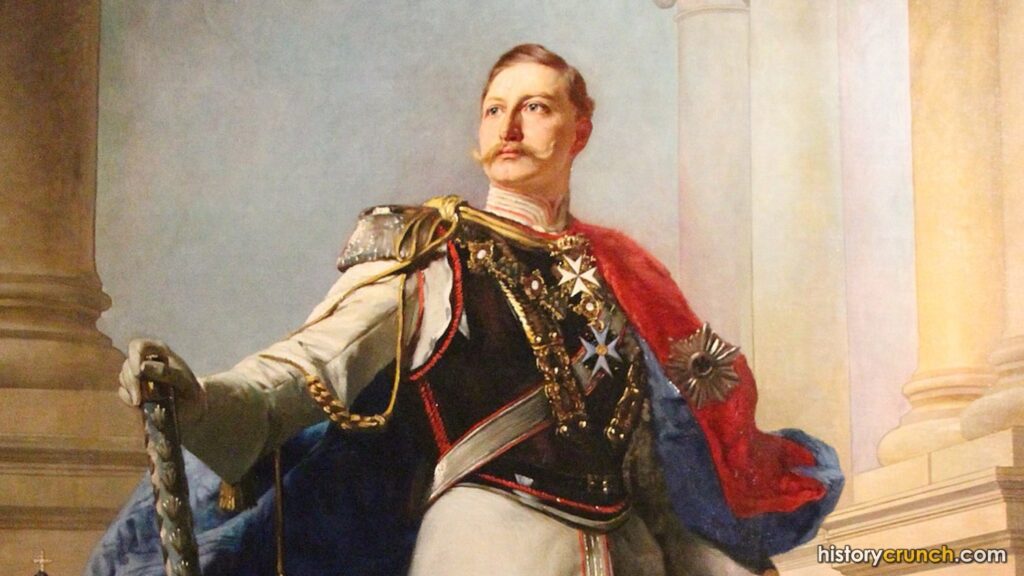
With sailors in mutiny at Kiel and crowds in the streets of Berlin, Kaiser Wilhelm II was told he had been made to abdicate and that it had already been announced. That afternoon the Social Democrat Philipp Scheidemann stood at a window of the Reichstag, Germany's parliament, and proclaimed a German republic.
LEARN MORESHOW LESSwhy it matters · key numbers · a sourcePOLITICALThe republic was born on the day Germany admitted it had lost the war. From its first hour it was tied to defeat, and the men who signed the Armistice two days later became the villains of every nationalist speech for the next fifteen years.
IN THEIR OWN WORDS“The old and rotten, the monarchy, has collapsed. Long live the German Republic!”
Philipp Scheidemann, from a Reichstag window, November 9th, 1918WHAT TO NOTICEScheidemann spoke without permission from his own party leader, Friedrich Ebert, who had wanted to keep the monarchy. Two hours later a communist, Karl Liebknecht, proclaimed a rival socialist republic from the royal palace. The fight over which Germany this would be had already begun.
The same week, Austria-Hungary broke into pieces and its emperor gave up power, and the influenza pandemic was killing more people in Berlin than the war had that month.
Armed communists seized newspaper offices in Berlin and called for a Soviet-style revolution. The new government, with no reliable army of its own, turned to the Freikorps, gangs of demobilized soldiers, who retook the city in a week and murdered the movement's leaders, Karl Liebknecht and Rosa Luxemburg.
LEARN MORESHOW LESSwhy it matters · key numbersPOLITICALThe republic survived its first month by hiring men who despised it. The Freikorps learned that political killing went unpunished, and the left never forgave the Social Democrats for using them. Both lessons came back in 1933.
A railway locksmith named Anton Drexler and a handful of friends founded the German Workers Party, the DAP, in a Munich beer hall. It had a few dozen members, no money and a program that mixed nationalism, hatred of Jews and talk of helping the workers.
LEARN MORESHOW LESSwhy it matters · key numbersPOLITICALThis tiny club was the seed of the Nazi Party. It began on the same day communists rose in Berlin, and it grew in the fear of revolution that the Berlin rising left behind.
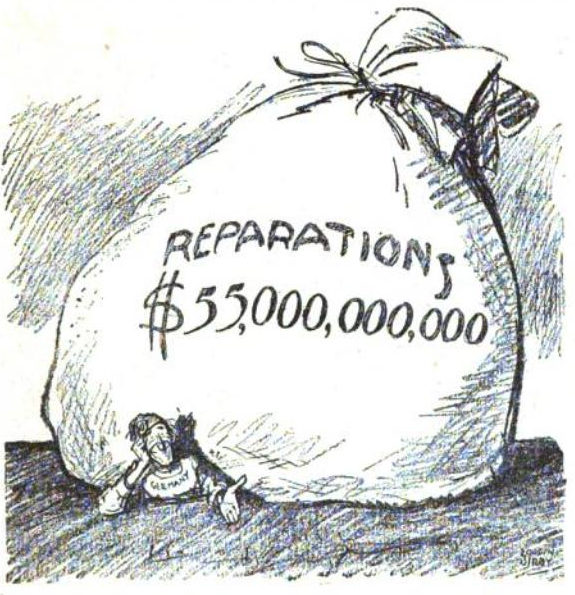
Given the choice between signing and an Allied invasion, the republic's ministers signed a treaty it had not been allowed to negotiate. Germany lost an eighth of its land and all its colonies, had its army cut to 100,000 men, accepted the blame for the war and agreed to pay for the damage.
LEARN MORESHOW LESSwhy it matters · key numbers · a sourcePOLITICALEvery German party called it the Diktat, the dictated peace. The Nazis did not invent the anger at Versailles; they were simply the party that promised most loudly to tear it up, and every time Hitler broke a clause of it in the 1930s, Germans cheered.
IN THEIR OWN WORDS“Germany accepts the responsibility of Germany and her allies for causing all the loss and damage.”
Article 231 of the Treaty of VersaillesWHAT TO NOTICEThis is the sentence Germans called the war guilt lie. The Weimar Republic's own governments spent the 1920s trying to disprove it; Hitler simply promised to ignore it.
Did Versailles make Hitler possible?
Yes. The treaty humiliated Germany, wrecked its economy with reparations and handed every extremist a grievance that democrats could never answer.
No. Germany recovered by 1928 and the Nazis were a fringe party until the Depression. The treaty gave Hitler a slogan, but it was mass unemployment, not Versailles, that gave him voters.
The assembly meeting in the town of Weimar, away from the street fighting in Berlin, gave Germany a constitution more democratic than Britain's or America's. Every man and woman over 20 could vote, seats were shared out in exact proportion to votes, and Article 48 let the president rule by emergency decree.
LEARN MORESHOW LESSwhy it matters · key numbers · a sourcePOLITICALThe strengths and the weakness were in the same document. Proportional voting meant a dozen parties and no majorities, and Article 48 meant that when the parties deadlocked, one old man could govern alone. From 1930 that is exactly what happened.
IN THEIR OWN WORDS“If public security and order are seriously disturbed or endangered, the Reich President may take the measures necessary to restore them, if necessary with the help of the armed forces.”
Article 48 of the Weimar ConstitutionWHAT TO NOTICEThe article was written for a real emergency, a rising or an invasion. Its authors did not imagine a president using it to govern for three years because parliament could not agree, or a chancellor using it to switch off civil rights on the morning after a fire.
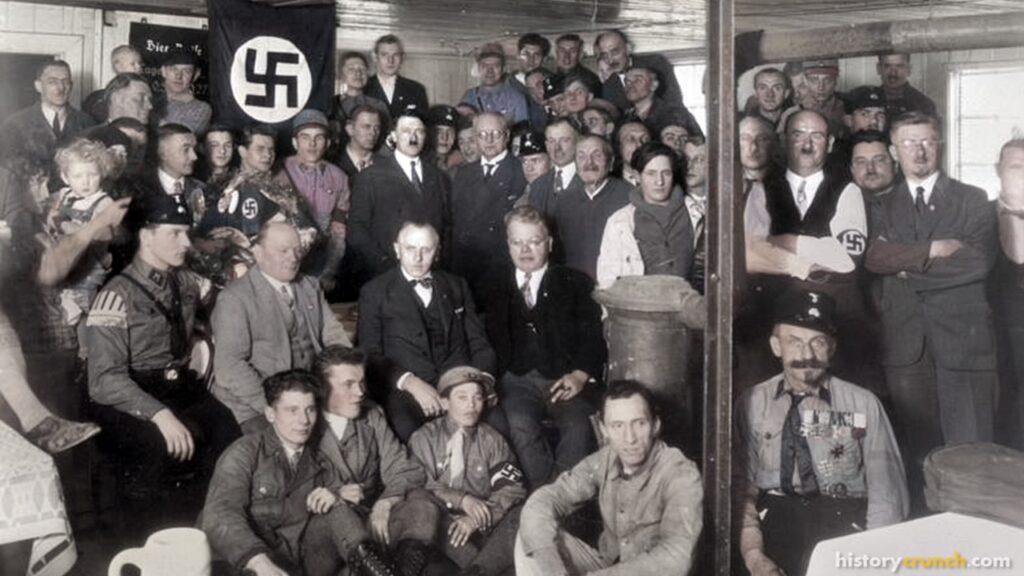
Corporal Adolf Hitler, still in the army and working as an informer, was sent to report on a meeting of the German Workers Party in a Munich beer hall. He argued with a speaker, impressed Drexler, and joined within days. His membership card was number 555, because the party started its numbering at 501 to look bigger.
LEARN MORESHOW LESSwhy it matters · key numbers · 1 key figurePOLITICALHitler found the one thing he was good at: talking to a room. Within a year his speeches were filling halls and the tiny party had become his. Everything on this timeline after 1919 runs through the man who walked into that meeting to spy on it.
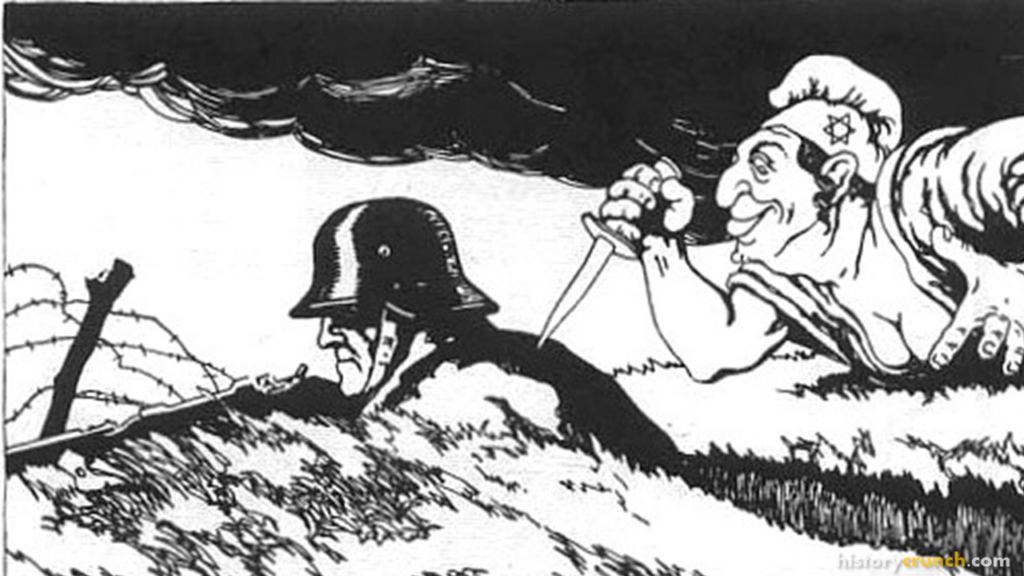
Called before a Reichstag committee investigating why Germany lost the war, the country's most famous general, Field Marshal Paul von Hindenburg, refused to answer the questions and read a statement instead. The army, he said, had not been beaten in the field; it had been stabbed in the back by the home front.
LEARN MORESHOW LESSwhy it matters · key numbers · a sourceIDEASIt was false. Hindenburg and Ludendorff had themselves told the Kaiser in September 1918 that the war was lost. But the lie had the authority of a national hero behind it, and it gave millions of Germans someone to blame: socialists, democrats and Jews. The Nazis built their whole story of 1918 on it.
IN THEIR OWN WORDS“The German army was stabbed in the back.”
Paul von Hindenburg, testimony to the Reichstag inquiry, November 18th, 1919WHAT TO NOTICEHindenburg said he was quoting an English general. No such general has ever been found. The postcard shown here, printed in Austria the same year, shows who the myth was already pointing at.
At the party's first mass meeting, in the Hofbrauhaus beer hall in Munich, Hitler read out a program of 25 points to about 2,000 people. It demanded the union of all Germans in one country, the end of the Versailles treaty, land for German settlers, and the rule that no Jew could be a German citizen. Days later the party renamed itself the National Socialist German Workers Party.
LEARN MORESHOW LESSwhy it matters · key numbers · a sourceIDEASAlmost everything the regime did after 1933 is in these 25 points, written thirteen years earlier. The Nuremberg Laws, the Anschluss, the war for land in the east: the program told anyone who read it what was coming.
IN THEIR OWN WORDS“Only a member of the race can be a citizen. A member of the race can only be one who is of German blood. Consequently no Jew can be a member of the race.”
Point 4 of the Nazi Party program, February 24th, 1920WHAT TO NOTICEThe program was declared unchangeable in 1926. The Nuremberg Laws of 1935 turned this point into German law almost word for word.
A Freikorps brigade that the government had ordered to disband marched into Berlin instead and installed a right-wing official, Wolfgang Kapp, as chancellor. The army refused to fire on the rebels, so the government fled and called a general strike. Berlin stopped working, and after four days the putsch collapsed.
LEARN MORESHOW LESSwhy it matters · key numbersMILITARYThe republic could beat the right, but only when the workers saved it, because the army would not. The generals' line, that troops do not fire on troops, told every future plotter that the army might stand aside. Hitler was in Berlin during the putsch, watching.
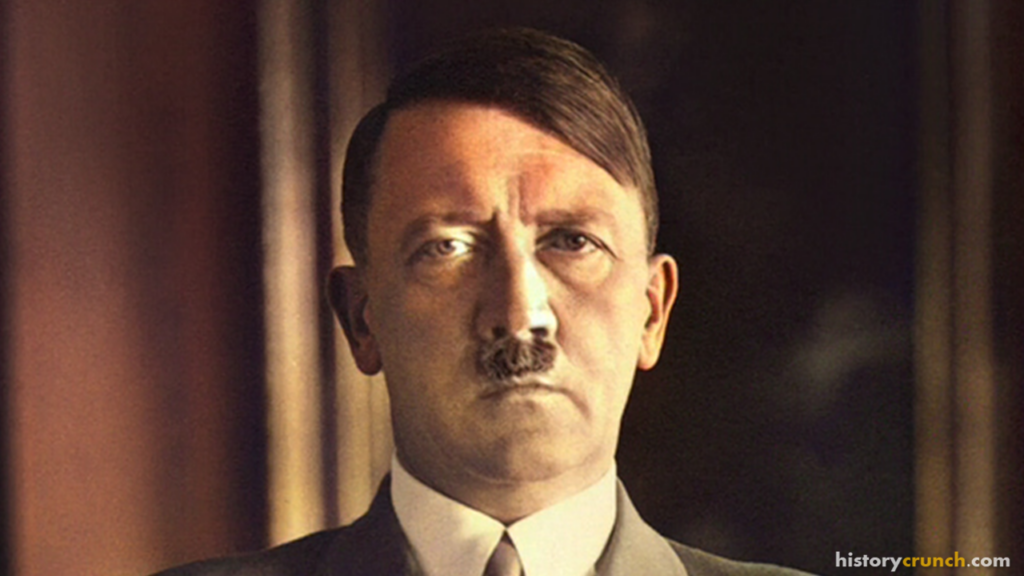
When the party committee tried to merge with a rival group while he was away, Hitler resigned and demanded to be made chairman with absolute power, or he would take his crowds with him. The committee gave in. A special meeting voted 553 to 1 to make him leader.
LEARN MORESHOW LESSwhy it matters · key numbers · 1 key figurePOLITICALFrom this day the party had no committees, no votes and no program that Hitler did not approve. The leader principle, one man deciding everything, was a dictatorship in miniature and was how the Nazi Party worked from 1921 and how Germany worked from 1934.
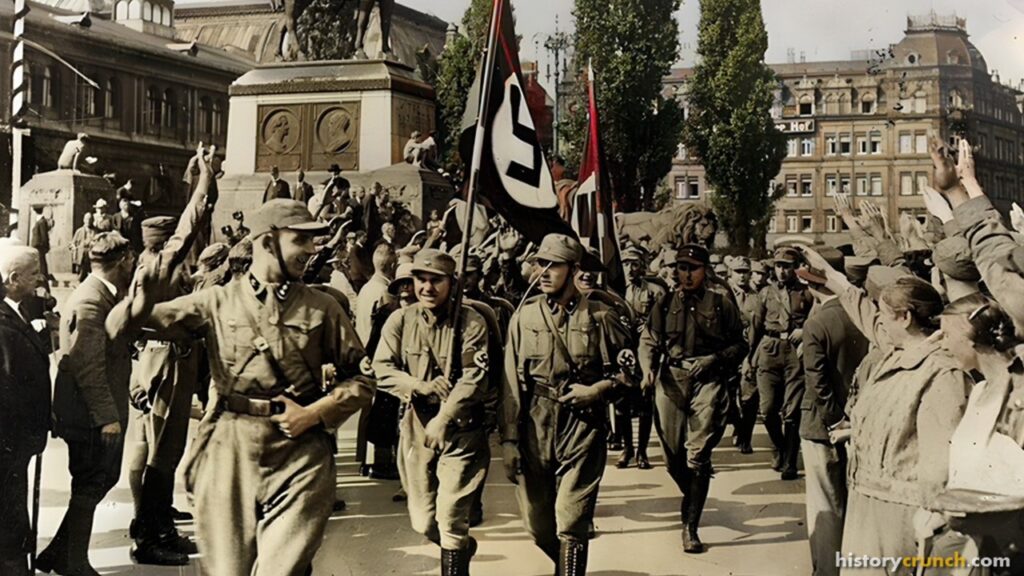
The party set up a 'Gymnastics and Sports Division' of ex-soldiers and young toughs to guard its meetings and break up other people's. By the autumn it had a real name, the Sturmabteilung or Storm Detachment, and by the following year brown shirts.
LEARN MORESHOW LESSwhy it matters · key numbers · 2 key figuresMILITARYThe SA gave the Nazis what no other party had: an army of their own. It made politics a street fight, and it made the party look like the only force strong enough to stop the communists, which is what many middle-class Germans wanted to hear.
Walther Rathenau, the foreign minister who had organized Germany's war economy and was trying to make the republic work with the Allies, was machine-gunned in his open car on his way to work in Berlin. His killers were young nationalists from a secret Freikorps network. Rathenau was Jewish, and the men who sang songs about shooting him had said so.
LEARN MORESHOW LESSwhy it matters · key numbersPOLITICALRathenau was Jewish, and anti-Semitism was the gunmen's stated motive. Political murder had become normal. Between 1919 and 1922 the right killed more than 350 people in Germany and the courts let most of them off lightly. A republic whose ministers could be shot for doing their jobs did not look like a state that would last.
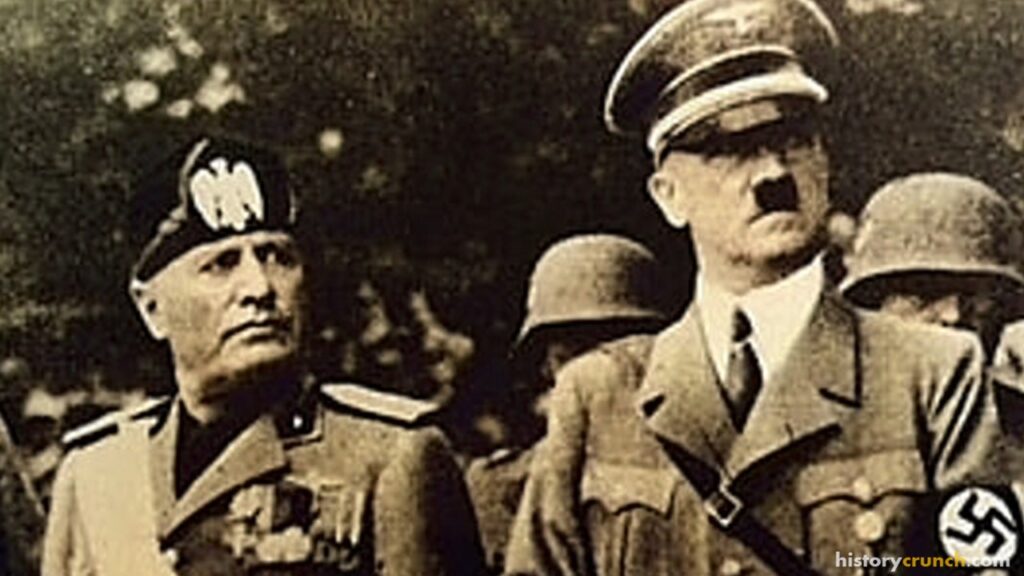
Benito Mussolini's Fascist squads converged on Rome and the King of Italy, rather than fight them, made Mussolini prime minister. Fascism had taken a European state without winning an election. A movement of ex-soldiers and street fighters had taken a European country in a week.
LEARN MORESHOW LESSwhy it matters · key numbers · elsewherePOLITICALHitler watched and drew the obvious lesson: a march on the capital could work. A year later he tried it in Munich, Bavaria. The lesson he drew after that failure, that power had to be taken legally with the old elites' help, was the one that actually worked.
The same month, the BBC began broadcasting in Britain and Howard Carter was days away from opening Tutankhamun's tomb in Egypt.
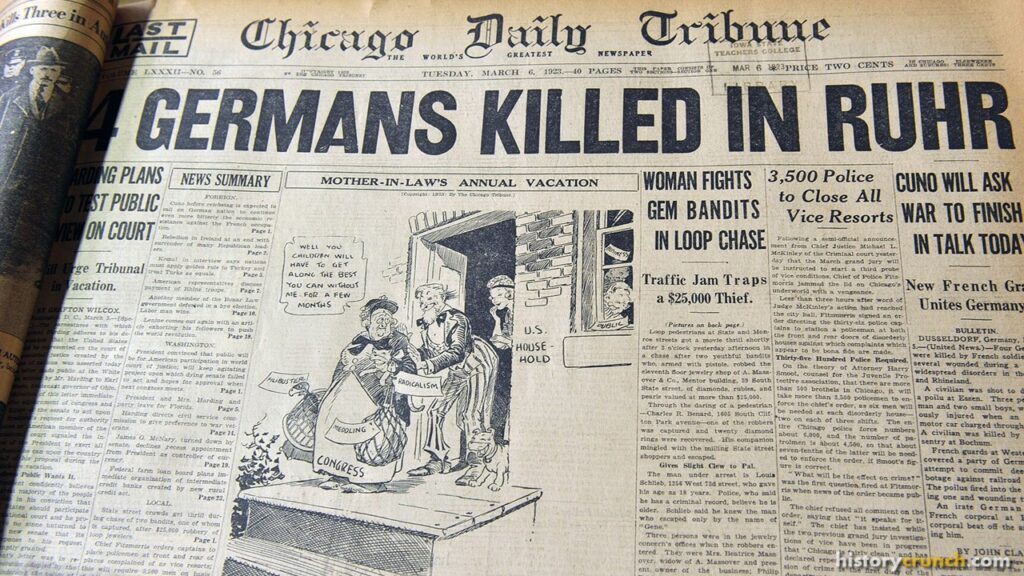
After Germany fell behind on reparations deliveries of coal and timber, 60,000 French and Belgian soldiers marched into the Ruhr, the industrial heart of Germany, to take what was owed by force. Chancellor Wilhelm Cuno's government told workers to refuse all cooperation, and promised to pay their wages while they did.
LEARN MORESHOW LESSwhy it matters · key numbers · 1 key figureECONOMICPaying millions of idle workers with money it did not have, the government printed it. The occupation turned Germany's bad inflation into a collapse of the currency within months, and it gave the nationalists a picture of the republic on its knees to France.
With the currency in free fall, Gustav Stresemann became chancellor of a new coalition. Six weeks later, on September 26th, he called off passive resistance in the Ruhr, Germany's industrial region, a surrender to France that nationalists never forgave, and set out to stabilize the mark.
LEARN MORESHOW LESSwhy it matters · key numbersPOLITICALStresemann's hundred days as chancellor saved the republic, at the price of looking like the man who gave in. The Beer Hall Putsch six weeks later was, in part, the nationalist answer to his decision.
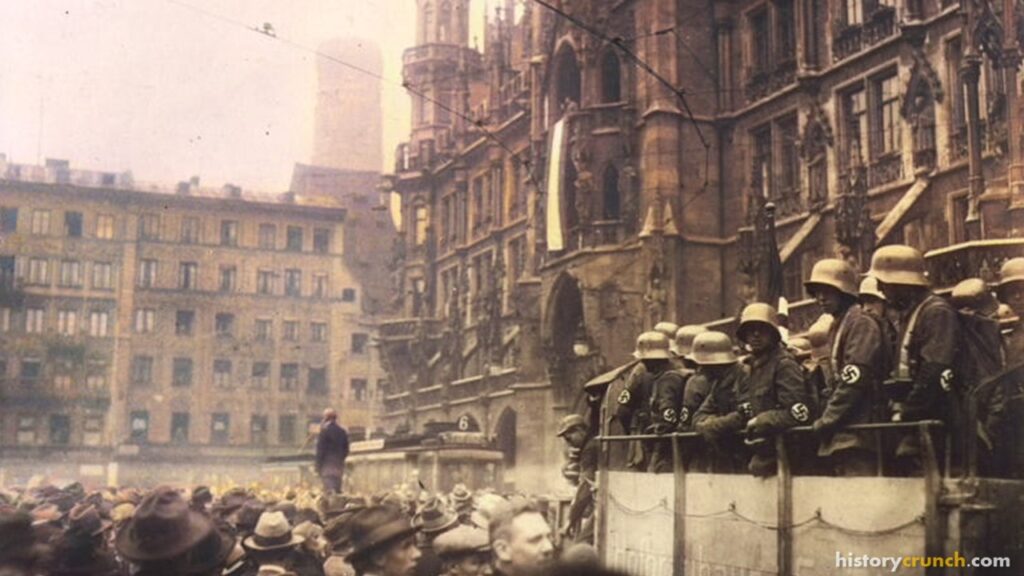
Hitler and 600 stormtroopers surrounded the Burgerbraukeller beer hall, where Bavaria's leaders were speaking, fired a pistol into the ceiling and announced a national revolution. The next morning about 2,000 Nazis marched into the center of Munich, where police opened fire. Sixteen Nazis and four policemen died and Hitler fled, to be arrested two days later.
LEARN MORESHOW LESSwhy it matters · key numbers · a sourceMILITARYIt was a failure that made Hitler's career. The march gave the party its first martyrs, the trial gave Hitler a national audience, and the lesson he took from it, that he could not beat the state by force and would have to be voted in, was the plan that worked ten years later.
IN THEIR OWN WORDS“The national revolution has begun!”
Adolf Hitler, in the Burgerbraukeller, November 8th, 1923WHAT TO NOTICEHitler said it standing on a chair, after firing a shot into the ceiling to get the room quiet. By the next afternoon the revolution was over and he was hiding with a dislocated shoulder in a friend's house.
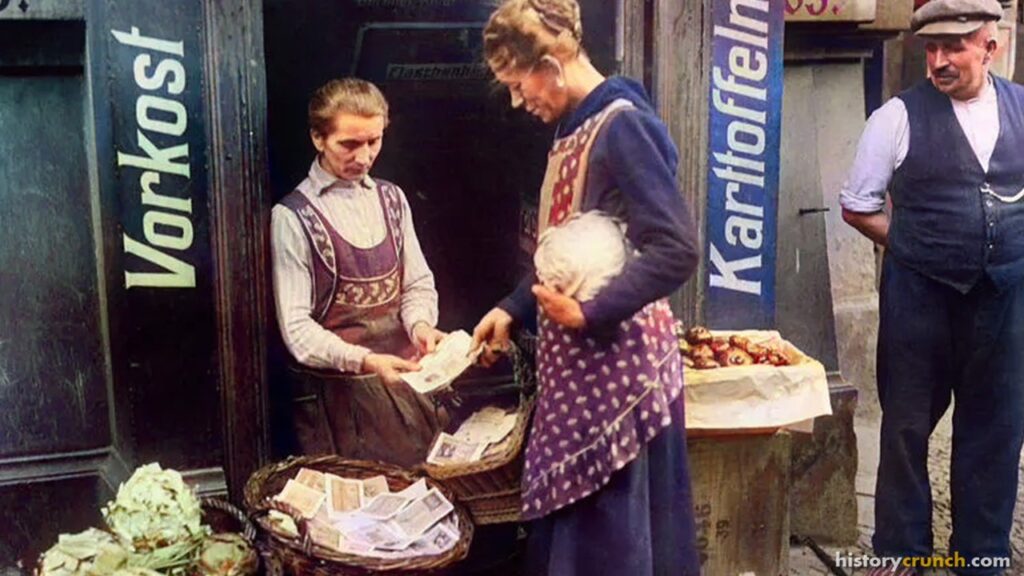
The mark had lost value all year, but in the autumn of 1923 it stopped being money. Prices doubled every few days, workers were paid twice a day and spent the wages within the hour, and a loaf of bread cost billions. On November 15th the government introduced a new currency, the Rentenmark, and struck twelve zeros off the old one.
LEARN MORESHOW LESSwhy it matters · key numbers · a debateECONOMICThe people ruined were the careful ones: pensioners, savers, anyone on a fixed income. The middle class that lost everything in 1923 never trusted the republic again, and when the Depression came six years later many of them remembered who had been in charge the last time.
Who was to blame for the hyperinflation?
France. The occupation of the Ruhr, Germany's coal and steel region, forced Germany to pay idle workers with printed money, and the collapse followed within months.
Germany's own governments. They had paid for the war by borrowing, kept printing money after it, and used inflation to shrink their debts and to prove they could not pay reparations. The Ruhr only finished what Berlin had started.
Prison taught Hitler that power would have to be voted in, not seized. Between 1924 and 1929 he rebuilt the party under his sole command, wrote its book, founded its youth movement and its SS, and waited. Germany, living on American loans, prospered and ignored him: in 1928 the Nazis won 2.6 percent. Then the loans stopped.
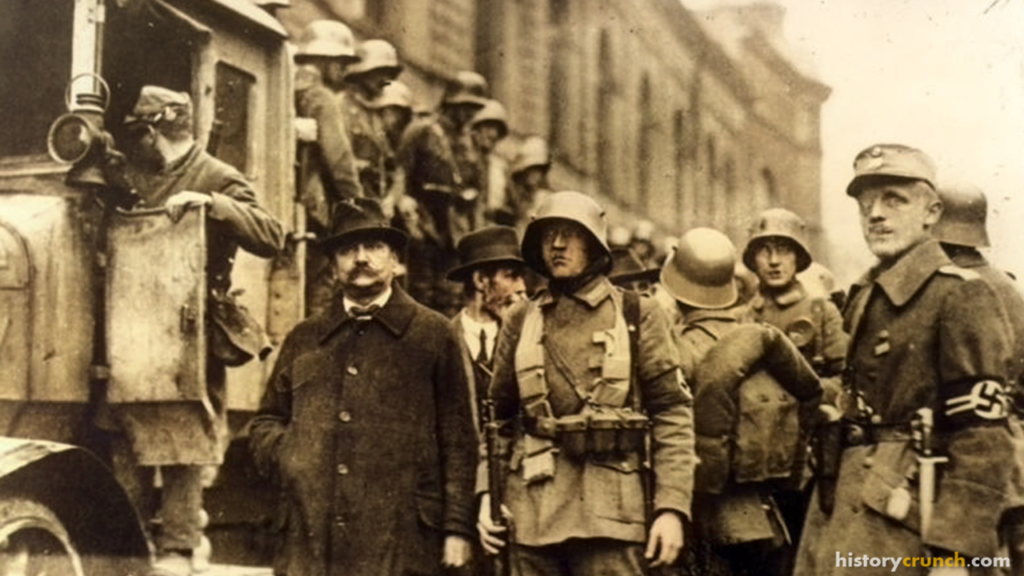
Tried for high treason in Munich, Hitler admitted everything and put the republic on trial instead, speaking for hours to sympathetic judges and a national press. He was sentenced to the minimum five years and served nine months in comfort at Landsberg, where he wrote Mein Kampf.
LEARN MORESHOW LESSwhy it matters · key numbers · a sourcePOLITICALA Bavarian court gave a convicted traitor a platform, a light sentence and early release. The trial made Hitler known across Germany for the first time, and it showed how much of the state's own machinery, judges and police included, was on his side.
IN THEIR OWN WORDS“Pronounce us guilty a thousand times over: the goddess of the eternal court of history will smile and tear to pieces the verdict of this court.”
Adolf Hitler, closing speech at his trial, March 27th, 1924WHAT TO NOTICELudendorff, the war hero who had marched beside him, was acquitted. Hitler, an Austrian, should have been deported under Bavarian law. The court decided not to.
An American banker, Charles Dawes, led a committee that cut Germany's yearly reparations payments, arranged an 800 million mark loan and got the French to promise to leave the Ruhr. American money poured into Germany to rebuild factories and cities.
LEARN MORESHOW LESSwhy it matters · key numbers · elsewhereECONOMICThe good years of the republic, 1924 to 1929, were built on borrowed dollars. Germany paid France with American loans and France paid America back with the same money. When the loans stopped in 1929, the whole arrangement collapsed at once.
The same year, the first Winter Olympics were held in France, Lenin died in Russia, and Stalin began the fight to succeed him.
Released on parole five days before Christmas, after nine months of a five-year sentence, Hitler came out to find his party banned, his newspaper shut and his movement split between rivals. He also came out with a manuscript and a new plan.
LEARN MORESHOW LESSwhy it matters · key numbers · 1 key figurePOLITICALPrison had given Hitler time to think, and what he thought was that the putsch had been a mistake. The party would now aim for the Reichstag, Germany's parliament, not the barricades. It would take eight years.
In the same beer hall where the putsch had begun, Hitler announced the rebirth of the Nazi Party under his sole leadership and promised the Bavarian government he would seek power only through elections. Bavaria promptly banned him from speaking in public for two years anyway.
LEARN MORESHOW LESSwhy it matters · key numbers · 1 key figurePOLITICALThe legal road was not a change of heart; it was a change of method. Hitler said privately that they would hold their noses and enter the Reichstag, Germany's parliament, and that outvoting the democrats would take longer than shooting them but would be certain.
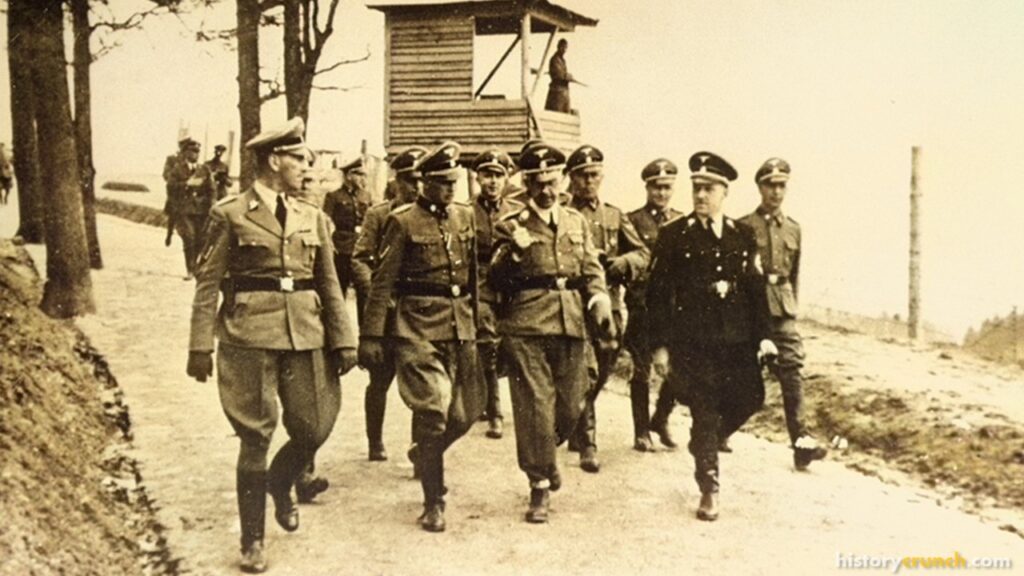
Hitler ordered a small guard of eight trusted men to protect him at meetings, separate from the unruly SA. It was called the Schutzstaffel, the Protection Squad, and it swore loyalty to him personally rather than to the party.
LEARN MORESHOW LESSwhy it matters · key numbers · 1 key figureMILITARYEight bodyguards became the most feared organization in Europe. The SS ran the concentration camps, the Gestapo, the secret police, and the death squads, and it did so because, from the first day, it answered to one man and no law.
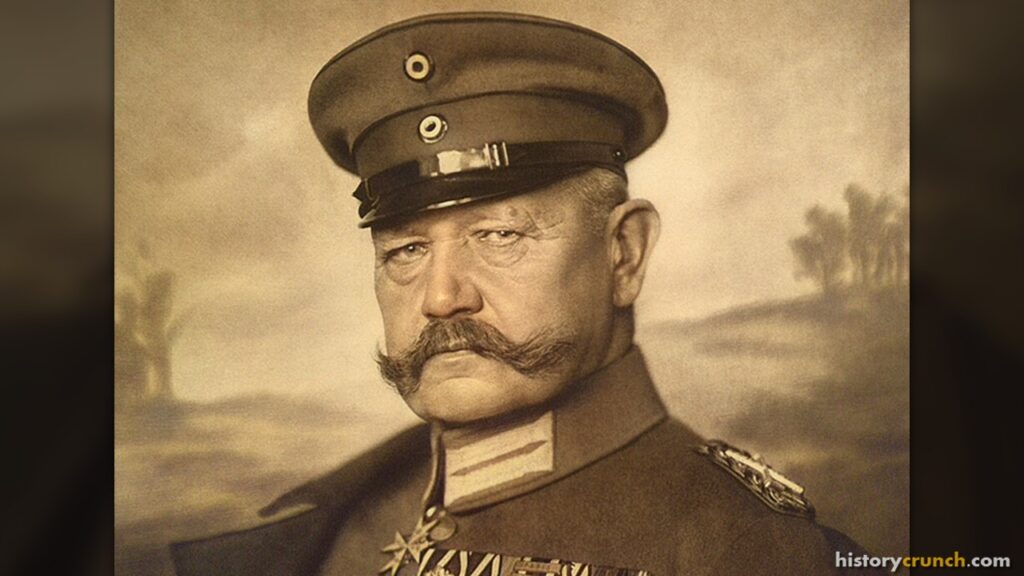
After the death of Friedrich Ebert, the republic's first president, Germans elected the 77-year-old war hero Paul von Hindenburg, a monarchist who had never wanted the republic. He swore to uphold the constitution and, for five years, did.
LEARN MORESHOW LESSwhy it matters · key numbers · a debatePOLITICALThe republic now had a head of state who symbolized the old empire and who held Article 48 in his hands. Hindenburg's decisions in 1930, 1932 and 1933 decided whether Germany's democracy lived or died, and he made every one of them with the advice of generals and landowners who despised it.
Was Hindenburg a guardian of the republic or its gravedigger?
A guardian, for a while. He kept his oath, refused Hitler full power in 1932 and beat him at the polls. Without him the republic might have fallen years earlier.
Its gravedigger. He governed by decree from 1930, dismissed chancellors on the advice of his friends, and in the end handed power to the man he had called the Bohemian corporal. The constitution died in his hands.
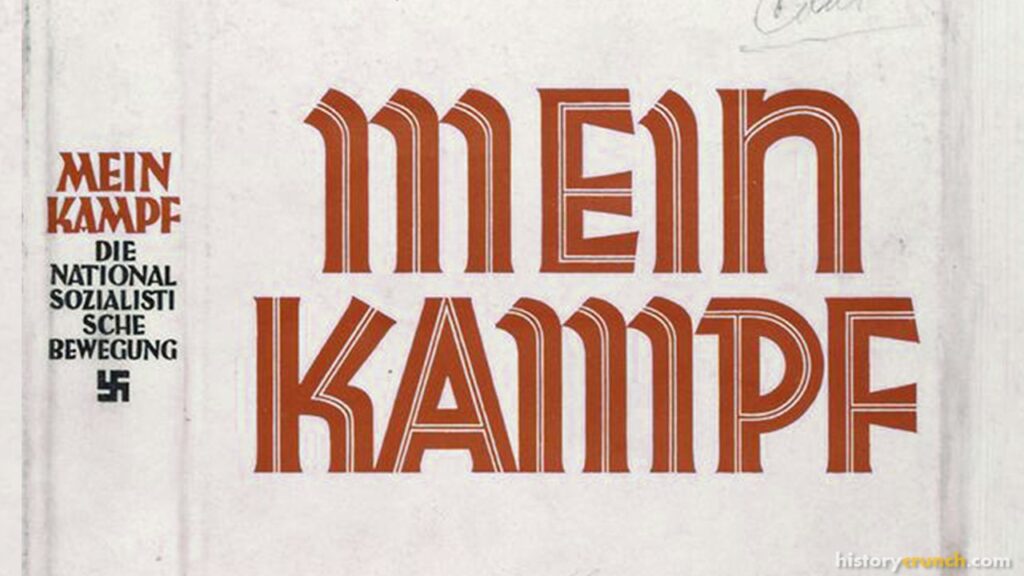
The first volume of Hitler's book, written in Landsberg prison, went on sale under the title My Struggle. It was part memoir, part program, and the place Lebensraum becomes policy: Germany's defeat blamed on Jews and Marxists, the Aryan race described as the creator of all culture, and a demand for living space to be taken from Russia by war.
LEARN MORESHOW LESSwhy it matters · key numbers · a sourceIDEASNobody who read Mein Kampf could say they had not been warned. The war in the east and the destruction of Europe's Jews are both in it. The trouble was that almost nobody outside the party read it until it was too late, including the foreign leaders who negotiated with its author.
IN THEIR OWN WORDS“If we speak of soil in Europe today, we can primarily have in mind only Russia and her vassal border states.”
Adolf Hitler, Mein Kampf, volume 2, 1926WHAT TO NOTICEThis is the plan for Operation Barbarossa, published fifteen years before the invasion. Hitler's original title was Four and a Half Years of Struggle Against Lies, Stupidity and Cowardice; his publisher shortened it.
Nazi leaders in northern Germany, led by Gregor Strasser, wanted the party to take its socialism seriously: nationalize industry, seize the estates of the old princes, side with Russia against the West. Hitler called a meeting in Bamberg, spoke for two hours, and the northern leaders gave way. The 25 points were declared unchangeable and the leader's word final.
LEARN MORESHOW LESSwhy it matters · key numbers · 2 key figuresPOLITICALThe party's 'socialism' died at Bamberg and its leader principle won. One of the northern rebels, a young Joseph Goebbels, switched sides on the spot and became Hitler's most devoted follower. Strasser was murdered in 1934.
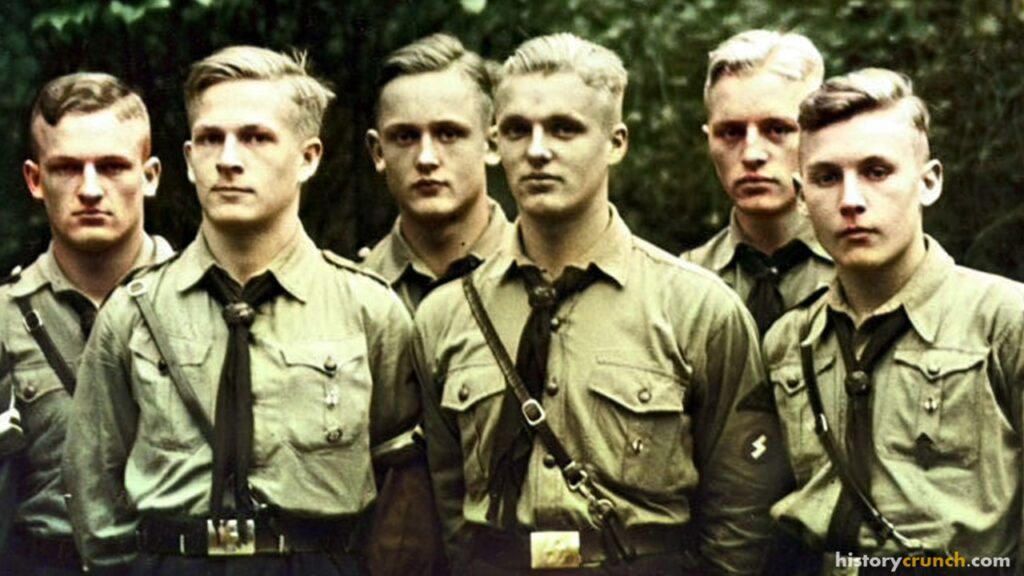
At the party rally in Weimar, the Nazis' small youth group was reorganized and renamed the Hitler Youth. It took boys from 14 to 18, ran them through hikes, sports and political lessons, and marched them in uniform behind the SA.
LEARN MORESHOW LESSwhy it matters · key numbers · 1 key figureSOCIALThe Nazis understood earlier than any other party that the children would decide the future. In 1926 the Hitler Youth had a few hundred members. By 1939 membership was compulsory and it had eight million.
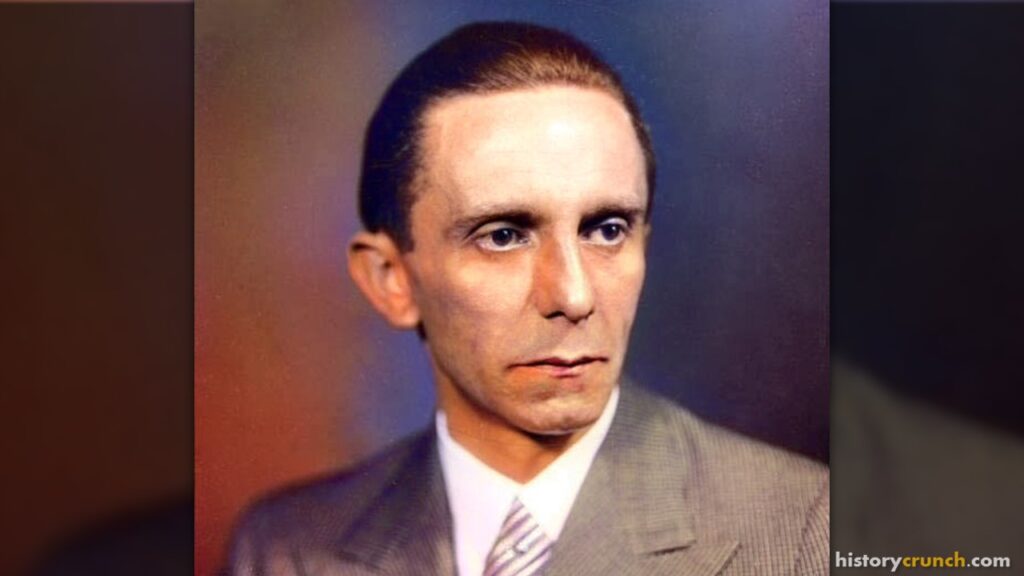
Hitler sent Joseph Goebbels, a 29-year-old with a doctorate in literature and a gift for invective, to run the party in Berlin, a communist city where the Nazis had a few hundred quarrelling members. Goebbels picked fights with the police and the communists, staged brawls to get into the newspapers, and founded his own paper, The Attack.
LEARN MORESHOW LESSwhy it matters · key numbers · 2 key figuresPOLITICALBerlin was where Goebbels learned propaganda: that a fight in the street was worth more than a speech in a hall, and that any headline, even a hostile one, was better than silence. He ran the whole country's news on the same rules from 1933.
The party held its rally in Nuremberg for the first time, with 20,000 SA men marching past Hitler in the old city and torchlight parades at night. The city was chosen partly because its police were friendly and partly because it looked medieval and German.
LEARN MORESHOW LESSwhy it matters · key numbers · 1 key figureCULTUREThe rallies were the Nazi Party's church. Uniforms, flags, drums and one voice from the platform gave people who had lost a war and their savings a feeling of belonging to something strong. From 1933 every September, Nuremberg was where the regime showed itself to the world.
In the last election of the good years, the Nazis won 2.6 percent of the vote and twelve seats out of 491. The Social Democrats won 153 and formed a government. Germany had 100,000 Nazi Party members and did not think much of them.
LEARN MORESHOW LESSwhy it matters · key numbers · 2 key figuresPOLITICALThis is what the Nazi Party looked like when Germany was prosperous: a fringe of cranks and street fighters. Two years and one Depression later, the same party with the same leader and the same program won 107 seats. The difference was not Hitler. It was unemployment.
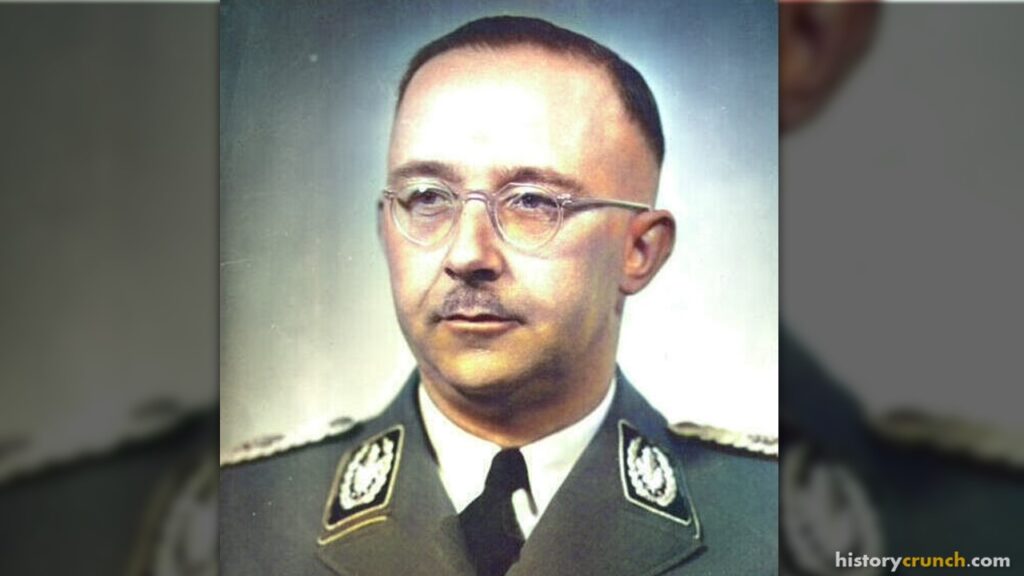
Heinrich Himmler, a 28-year-old failed chicken farmer with a diploma in agriculture, was made Reichsfuhrer of the SS, which then had 290 members. He set out to make it a racial elite: members had to prove their ancestry, marry approved wives and swear absolute loyalty to Hitler.
LEARN MORESHOW LESSwhy it matters · key numbers · 2 key figuresPOLITICALHimmler turned a bodyguard into a state within the state. Within ten years his SS ran the police, the camps and the intelligence service, and within fifteen it was carrying out the murder of Europe's Jews.
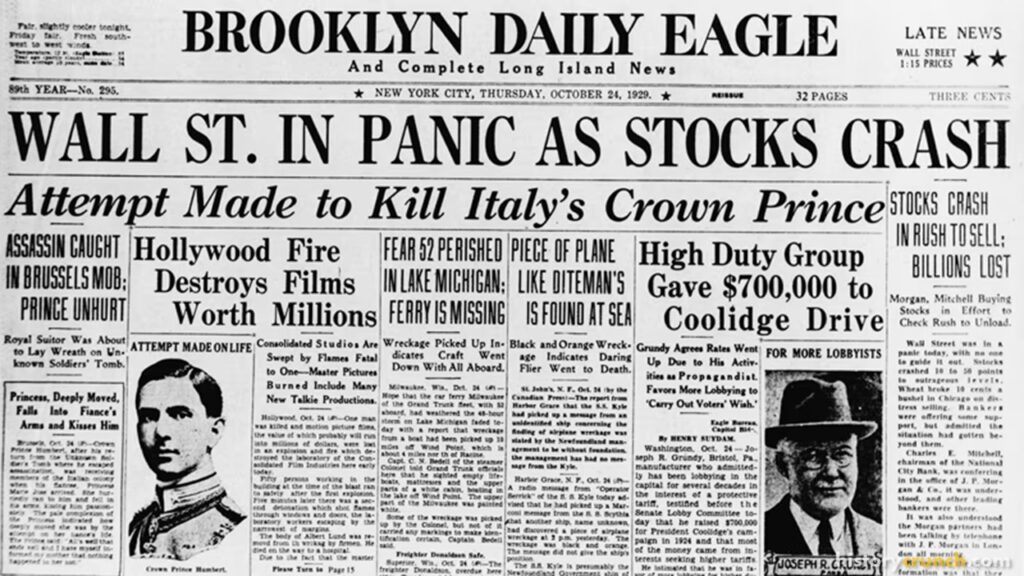
The New York stock market collapsed, and American banks that had lent Germany the money for its recovery called their loans home. German factories that depended on that money closed, and unemployment, already 1.3 million, began to climb toward six million.
LEARN MORESHOW LESSwhy it matters · key numbers · elsewhereECONOMICNo country outside the United States was hit harder than Germany, because no country had borrowed more. The Depression did what Versailles, hyperinflation and the putsch had not: it gave the Nazis a mass of desperate voters. Every election from here on, their vote went up.
Three weeks earlier Gustav Stresemann, the one Weimar statesman other countries trusted, had died of a stroke at 51.
The Depression put six million Germans out of work and the republic's parliament stopped working with them. From 1930 chancellors governed by presidential decree, and in each election the Nazis grew: 107 seats, then 230. Paul von Hindenburg refused Hitler twice. In January 1933 the men around the president talked him into it, sure they could control the man they were letting in.
The last government with a Reichstag majority fell apart over who should pay for unemployment insurance. Paul von Hindenburg appointed Heinrich Bruning, who had no majority, and when the Reichstag rejected his budget in July he issued it as an emergency decree under Article 48 and dissolved parliament.
LEARN MORESHOW LESSwhy it matters · key numbers · 1 key figurePOLITICALFrom this day the republic was governed by the president, not by parliament. Bruning's cuts to wages and benefits, made to prove Germany could not pay reparations, deepened the Depression and earned him the name the Hunger Chancellor. The election he called was the one that made the Nazis a mass party.
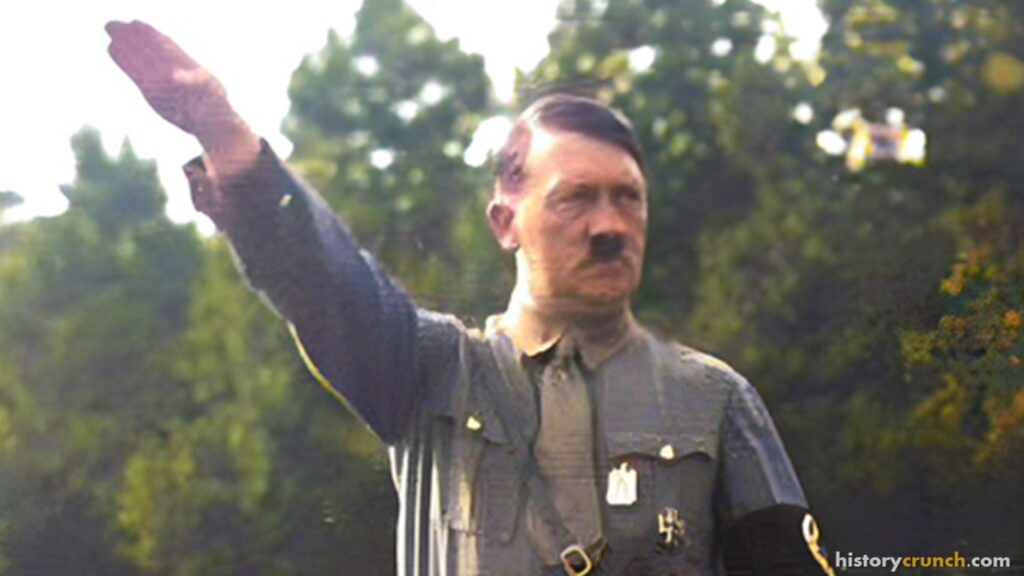
In the election Bruning had called to strengthen his hand, the Nazi vote jumped from 800,000 to 6.4 million. The party went from 12 seats to 107 and was suddenly the second largest in the Reichstag, Germany's parliament. The communists gained too. The parties that supported the republic lost.
LEARN MORESHOW LESSwhy it matters · key numbers · 2 key figuresPOLITICALNothing about the Nazis had changed since 1928 except the number of Germans out of work. The 107 brownshirted deputies made the Reichstag impossible to run, which suited them, and from here on every chancellor governed by decree because there was no other way.
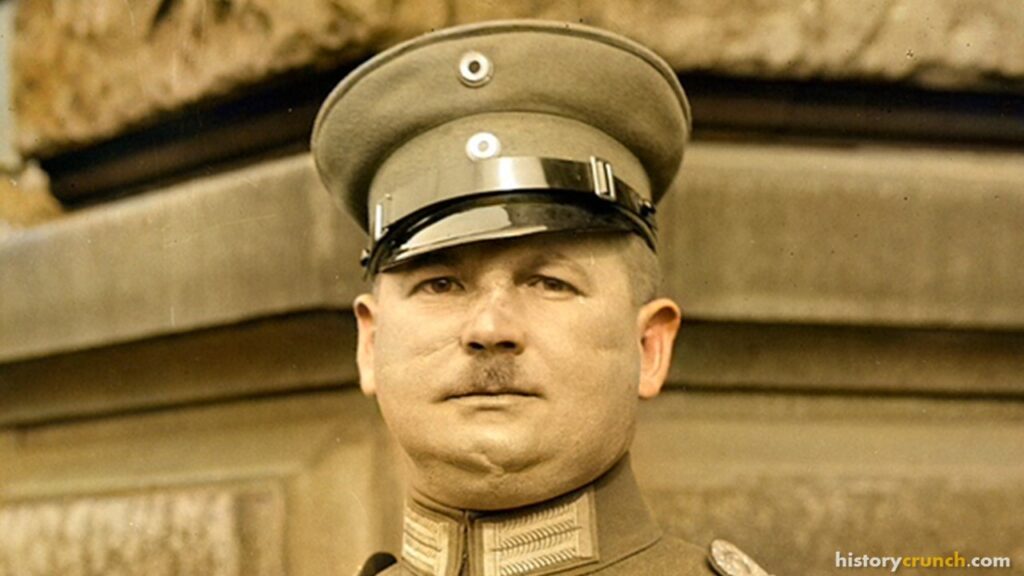
Hitler called Ernst Roehm, an old comrade from the putsch, back from Bolivia to take charge of the SA after its Berlin branch had mutinied over pay. Roehm built it from 77,000 men into a private army that fought communists in the streets every weekend.
LEARN MORESHOW LESSwhy it matters · key numbers · 2 key figuresMILITARYThe SA under Roehm was the muscle that made the Nazis look unstoppable in 1932. It was also a problem: Roehm wanted it to replace the real army, and the real army wanted it gone. Hitler settled that argument in 1934 by having Roehm shot.
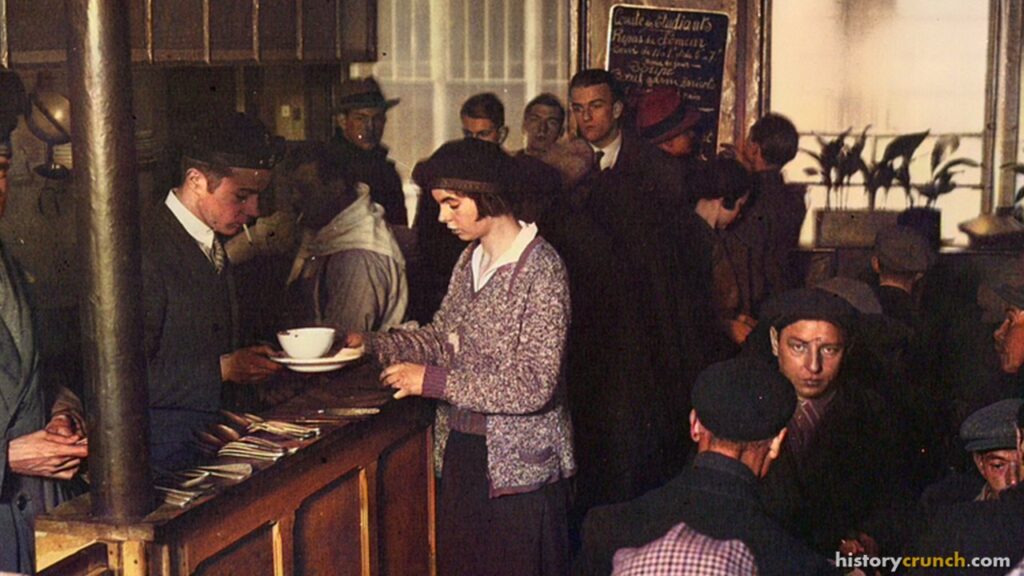
In the winter of 1931 to 1932 registered unemployment in Germany passed six million, about one worker in three, and the real figure was higher. Benefits had been cut and ran out after months. Men queued at soup kitchens and stood on corners with signs asking for any work at all.
LEARN MORESHOW LESSwhy it matters · key numbers · a sourceECONOMICThis is the number behind everything on this timeline from 1930 to 1933. A country where a third of the workers had nothing to do and nothing to lose listened to a man who promised work, bread and someone to blame.
IN THEIR OWN WORDS“Work and bread!”
Nazi election poster slogan, 1932WHAT TO NOTICEThe other Nazi poster of that year showed a crowd of grey faces and the words Our Last Hope: Hitler. The party's propaganda in 1932 said almost nothing about Jews and a great deal about jobs.
Hitler was still an Austrian and could not stand for office in Germany. The Nazi interior minister of the small state of Brunswick solved that by appointing him to a government job, which made him a German citizen automatically. The job did not exist for long; the citizenship did.
LEARN MORESHOW LESSwhy it matters · key numbers · 1 key figurePOLITICALThe leader of Germany's second largest party had been a foreigner for thirteen years. The trick that fixed it shows how the Nazis used every scrap of state power they won in the provinces, and how little the rules meant once they held an office.
The 84-year-old president, who had not wanted to run, stood again because he was the only man who could beat Hitler. He won the second round with 53 percent to Hitler's 37, carried by the votes of the Social Democrats and Catholics he had spent his life opposing.
LEARN MORESHOW LESSwhy it matters · key numbers · a sourcePOLITICALHitler lost, but 13 million Germans had voted for him, and he had flown from city to city in a chartered aircraft, the first politician in the world to campaign by air. The old man who beat him would hand him the chancellorship within a year.
IN THEIR OWN WORDS“Hitler over Germany”
Slogan of the Nazi air campaign, April 1932WHAT TO NOTICEThe phrase was meant two ways. Joseph Goebbels' campaign flew Hitler to 21 cities in a week, and newsreels of the aircraft made him look like the future.
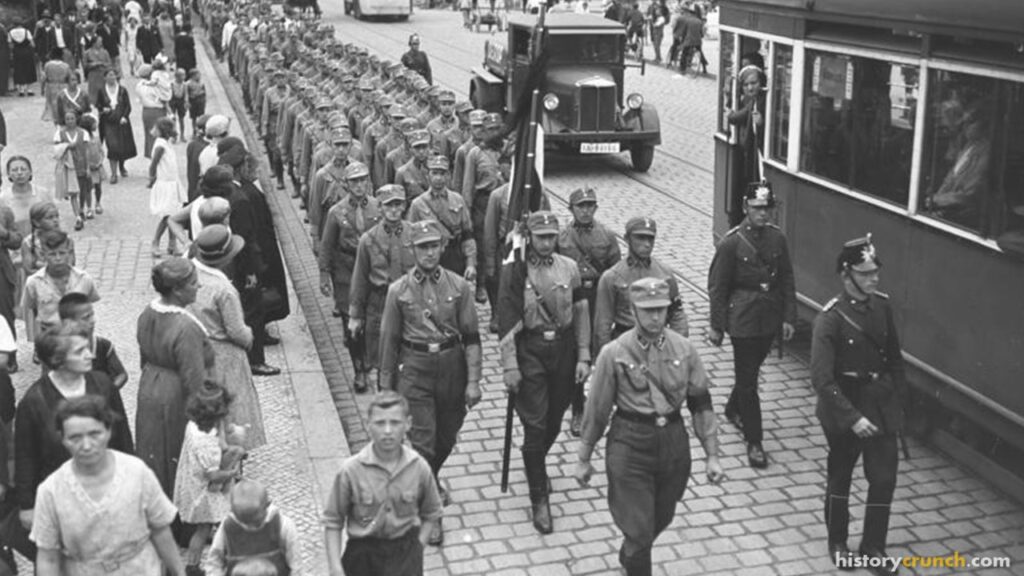
Three days after the election, with police reports showing the SA had been ready to seize power if Hitler won, the government banned the SA and SS by decree. The 400,000 stormtroopers took off their uniforms and kept meeting. Two months later a new chancellor lifted the ban to win Nazi support.
LEARN MORESHOW LESSwhy it matters · key numbers · 1 key figurePOLITICALThe republic showed it could act against the Nazis' private army, and then showed it would not follow through. Lifting the ban in June set off the bloodiest summer of street fighting the republic had seen.
Hindenburg, angry that Bruning wanted to break up bankrupt estates in eastern Germany, dismissed him and appointed Franz von Papen, a wealthy aristocrat with almost no supporters in the Reichstag, Germany's parliament. Papen's 'cabinet of barons' lifted the SA ban and called another election, hoping to win Hitler's support.
LEARN MORESHOW LESSwhy it matters · key numbers · 1 key figurePOLITICALPapen thought the Nazis could be used. He lifted the ban, called an election that made them the largest party, and in January 1933 arranged Hitler's appointment, certain that he could control him. He was wrong at every step.
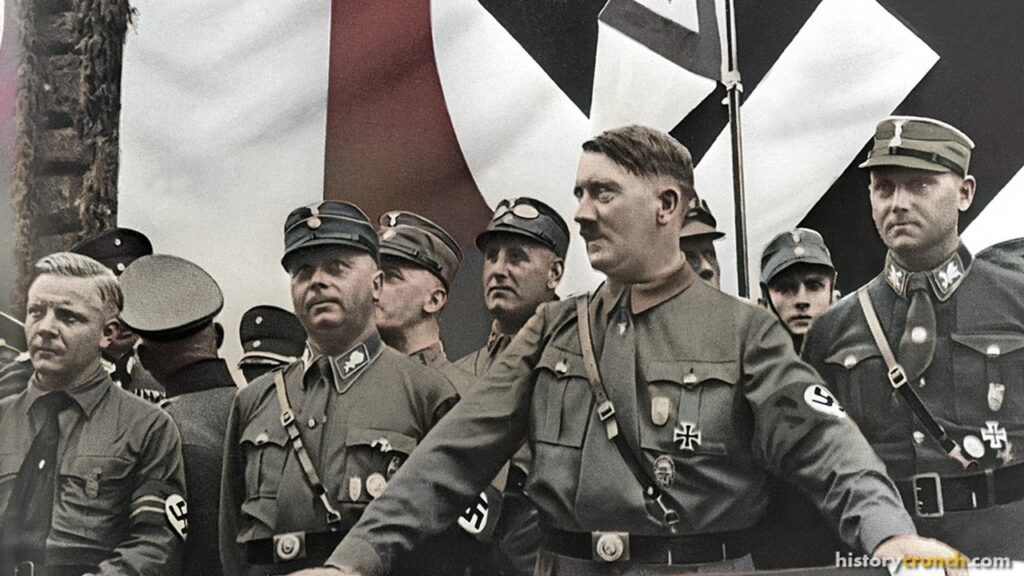
After a campaign in which about 100 people were killed in street fighting, the Nazis won 37.3 percent of the vote and 230 seats, the most any party had ever won in the republic. Together with the communists they now held more than half the Reichstag, Germany's parliament, and both wanted it destroyed.
LEARN MORESHOW LESSwhy it matters · key numbers · 3 key figuresPOLITICALThis was the Nazis' best result in a free election, and it was not a majority. Six Germans in ten had voted against them. But the parties that wanted the republic to survive could no longer form a government without them, and Hitler now demanded the chancellorship.
Hitler came to the presidential palace expecting to be offered the chancellorship with full powers, as the leader of the largest party. Hindenburg offered him the vice-chancellorship under Franz von Papen instead, and when Hitler refused, the president lectured him about honor and had the refusal published.
LEARN MORESHOW LESSwhy it matters · key numbers · a sourcePOLITICALFor five months Hindenburg held the line: he would not hand the country to a man he distrusted. What changed his mind was not Hitler but the men around the president, who convinced him that Hitler in office, surrounded by conservatives, would be safer than Hitler in opposition.
IN THEIR OWN WORDS“He could not answer before God, his conscience and the fatherland if he handed over the whole power of the government to a single party, and one that was so intolerant of those who did not share its views.”
Official statement of President Hindenburg's meeting with Hitler, August 13th, 1932WHAT TO NOTICEThe statement was released to the press to humiliate Hitler, and it did. Joseph Goebbels wrote in his diary that night that the party faced a terrible crisis.
Franz von Papen dissolved the Reichstag, Germany's parliament, again and in the fifth national vote of the year the Nazis lost two million voters and 34 seats. The party's funds were gone, the SA was restless, and Gregor Strasser, its second man, resigned in December after Hitler refused to join a government he did not lead.
LEARN MORESHOW LESSwhy it matters · key numbers · a sourcePOLITICALIn November 1932 the Nazi wave was going out. Joseph Goebbels wrote that the party was near collapse. Hitler did not come to power because his support was rising; he came to power two months later because the men around Paul von Hindenburg decided to bring him in while he was weak.
IN THEIR OWN WORDS“The year 1932 has been one long streak of bad luck. It must be smashed to pieces.”
Joseph Goebbels, diary, December 1932WHAT TO NOTICEGoebbels was as close to Hitler as anyone. If he thought the movement was finished in December 1932, the men who brought Hitler in five weeks later cannot say they were forced to.
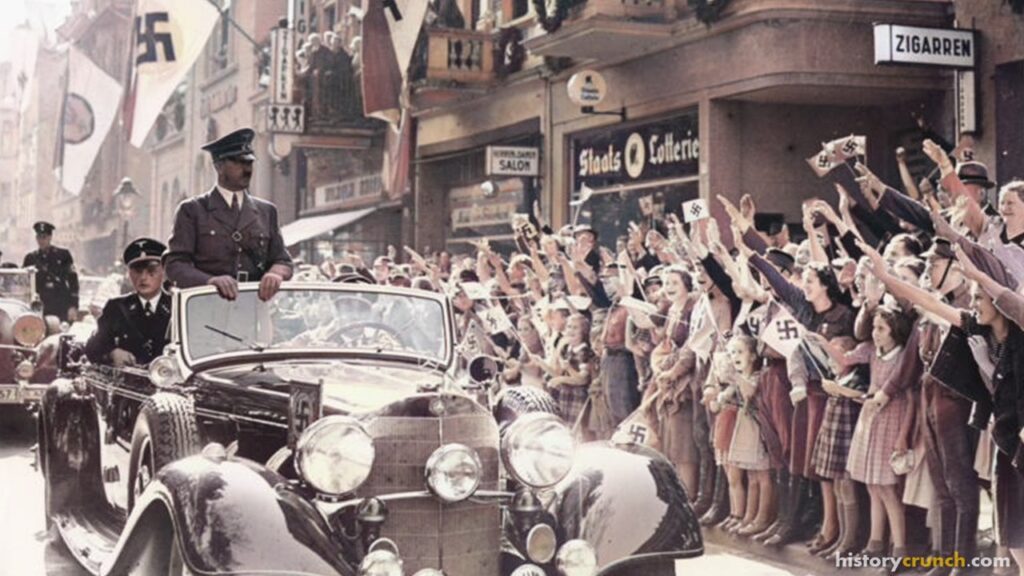
Franz von Papen, dismissed by Paul von Hindenburg in December in favor of General Kurt von Schleicher, wanted his revenge. He met Hitler in secret at the house of a Cologne banker and agreed to work for a government with Hitler as chancellor and himself as vice-chancellor. Over the next three weeks he sold the idea to the president.
LEARN MORESHOW LESSwhy it matters · key numbers · a sourcePOLITICALHitler was not swept into office. He was carried in by conservatives who thought they were using him. Papen told a friend that within two months they would have pushed Hitler so far into a corner that he would squeak. Within two months Hitler had the Enabling Act.
IN THEIR OWN WORDS“In two months we will have pushed Hitler so far into a corner that he will squeak.”
Franz von Papen, to a friend, January 1933WHAT TO NOTICEPapen survived the regime he created, was acquitted at Nuremberg and lived until 1969. Schleicher, the general he outmaneuvered, was shot with his wife in the Night of the Long Knives.
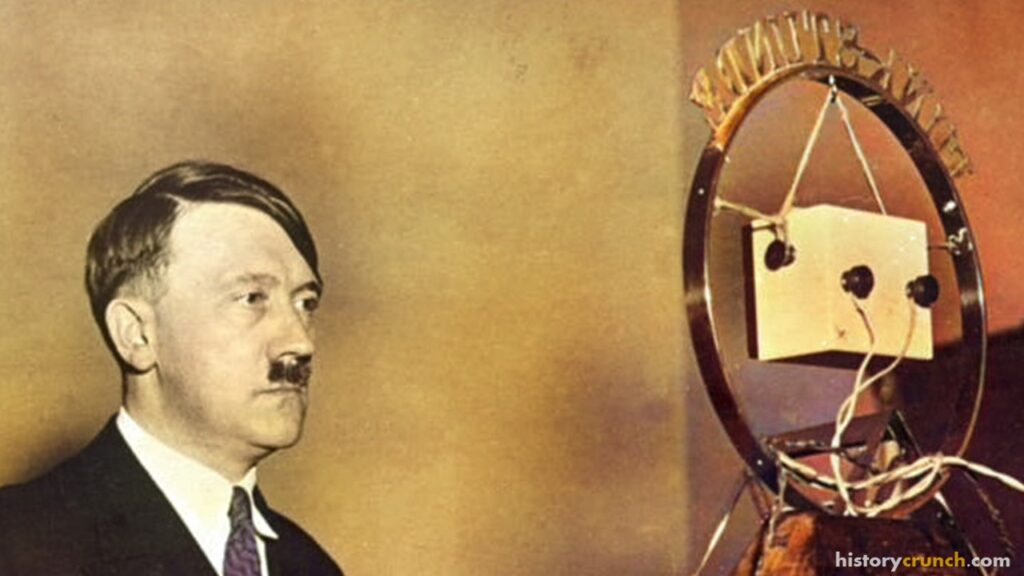
At about half past eleven in the morning, Hindenburg swore in Adolf Hitler as chancellor of Germany at the head of a coalition cabinet in which only three of the eleven ministers were Nazis. That night the SA marched through the Brandenburg Gate with torches for six hours while Hitler watched from a window of the chancellery.
LEARN MORESHOW LESSwhy it matters · key numbers · a sourcePOLITICALThe Weimar Republic did not fall to a coup. Its president, acting within the constitution, handed power to a man who had said for years that he would destroy it. The conservatives who arranged it believed the other eight ministers would keep him in check. They lasted less than two months.
IN THEIR OWN WORDS“No power on earth will get me out of here alive.”
Adolf Hitler, to Joseph Goebbels and others, on the evening of January 30th, 1933WHAT TO NOTICELudendorff, who had marched beside Hitler in 1923, wrote to Hindenburg the same week that he had handed the fatherland to one of the greatest demagogues of all time and prophesied that future generations would curse him for it. Historians still argue about whether the letter is real.
Two months later Franklin Roosevelt took office in Washington in the same Depression that had put Hitler in Berlin, and answered it with the New Deal instead.
Could the republic have survived January 1933?
Yes. The Nazi vote was falling, the party was bankrupt and Hindenburg had refused Hitler twice. A president who held out a few more months might have watched the movement break up.
No. With Nazis and communists holding a majority between them and every chancellor ruling by decree, the republic was already dead. The only question was which dictator would replace it.
In eighteen months Hitler turned a coalition with three Nazi ministers into a dictatorship with none of the republic left. The fire in the Reichstag, the parliament building, gave him emergency powers, the Enabling Act gave him the right to make law alone, and by July 1933 there were no other parties, no unions and no free press. The Night of the Long Knives bought the army, and Paul von Hindenburg's death made Hitler the state.
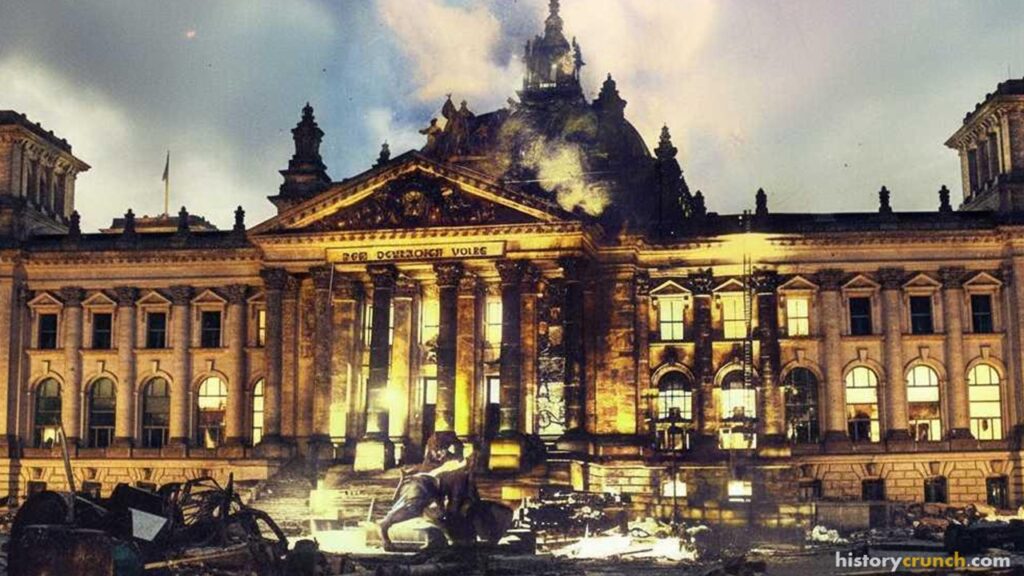
Four weeks after Hitler took office, the Reichstag building went up in flames. Police caught a young Dutch communist, Marinus van der Lubbe, inside with firelighters; he said he had done it alone. Hitler, arriving at the fire, declared it the signal for a communist uprising.
LEARN MORESHOW LESSwhy it matters · key numbers · a sourcePOLITICALWhoever lit the fire, the Nazis used it. Within hours thousands of communists were being arrested, and by the next morning the president had signed away Germany's civil rights. The fire gave the regime the emergency it needed six days before an election.
IN THEIR OWN WORDS“This is a God-given signal! If this fire, as I believe, turns out to be the handiwork of communists, then there is nothing that shall stop us now crushing out this murderous pest with an iron fist.”
Adolf Hitler, at the burning Reichstag, as reported by the British journalist Sefton DelmerWHAT TO NOTICEDelmer of the Daily Express was standing beside Hitler. Van der Lubbe was tried, sentenced to death under a law passed after the fire, and beheaded in January 1934. A German court overturned his conviction in 2008.
Who set the Reichstag fire?
Van der Lubbe, alone, as he always said. He had tried to burn other buildings that week, and no evidence has ever linked the Nazis to the fire itself.
The Nazis, or at least the SA, with van der Lubbe as the fall guy. The fire came at the perfect moment, the decree was ready overnight, and Hermann Goering's office had a tunnel into the building.
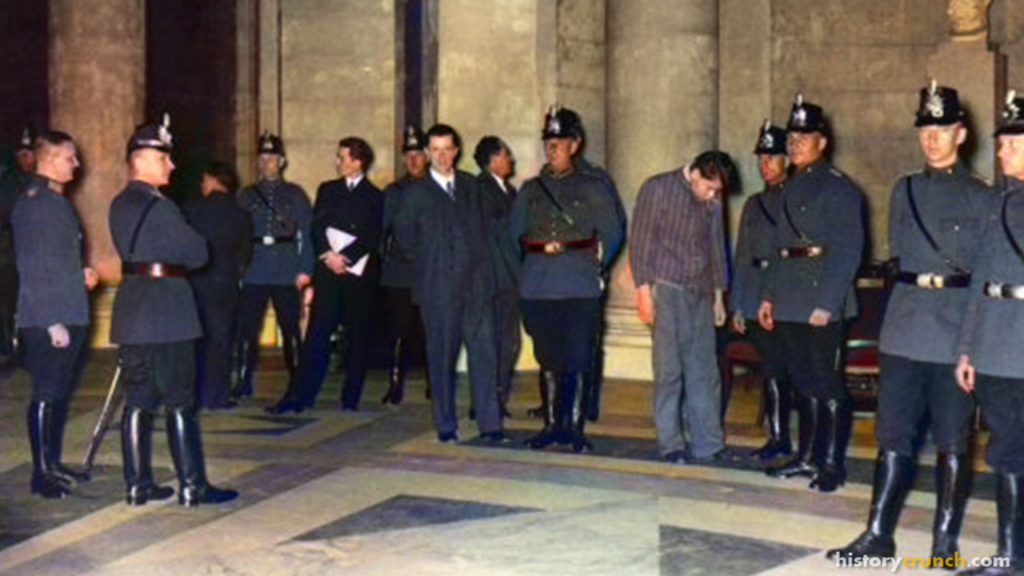
The morning after the parliament building burned, Paul von Hindenburg signed a decree under Article 48 that suspended freedom of speech, of the press, of assembly and from arbitrary arrest, 'until further notice'. The police could now hold anyone indefinitely without charge. The notice never came.
LEARN MORESHOW LESSwhy it matters · key numbers · a sourcePOLITICALThis one page was the legal basis of the Nazi police state for twelve years. Every arrest without trial, every camp, every banned newspaper rested on a decree that a democratic president signed to fight a communist plot that did not exist.
IN THEIR OWN WORDS“Restrictions on personal liberty, on the right of free expression of opinion, including freedom of the press, on the rights of assembly and association, and violations of the privacy of postal, telegraphic and telephonic communications are permissible beyond the legal limits otherwise prescribed.”
Decree of the Reich President for the Protection of People and State, February 28th, 1933WHAT TO NOTICEThe words 'beyond the legal limits otherwise prescribed' are the whole point. From this morning there were no limits.
With the communist press banned, its candidates in jail, the SA acting as auxiliary police and the radio in Nazi hands, Germany voted. The Nazis won 43.9 percent, their best result ever, and still not a majority. Only with their Nationalist allies did they pass half.
LEARN MORESHOW LESSwhy it matters · key numbers · 2 key figuresPOLITICALEven with the state, the streets and the airwaves on its side, the Nazi Party could not get most Germans to vote for it. It was the last multi-party election in Germany until 1946, and it is the answer to anyone who says Hitler was elected by a majority.
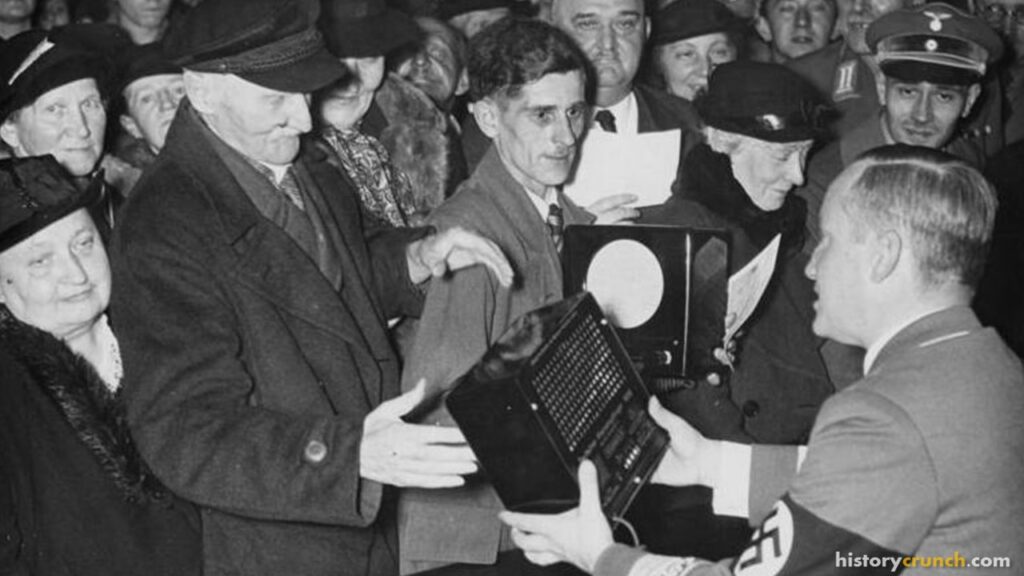
Hitler created a Ministry of Public Enlightenment and Propaganda and gave it to Goebbels, with power over the press, radio, film, theater, music and art. Within months every newspaper had a Nazi-approved editor, every radio station carried the same news, and a cheap 'People's Receiver' was being sold so every home could hear the Fuhrer.
LEARN MORESHOW LESSwhy it matters · key numbers · a sourceCULTURENo government had ever tried to control everything a nation read, heard and watched. Goebbels' ministry did, and the measure of its success is that after 1933 there was no place in Germany where a citizen could hear a different account of events.
IN THEIR OWN WORDS“It is the absolute right of the state to supervise the formation of public opinion.”
Joseph Goebbels, March 1933WHAT TO NOTICEThe People's Receiver was built so that it could not easily pick up foreign stations. From 1939 listening to them was a crime, and people were executed for it.
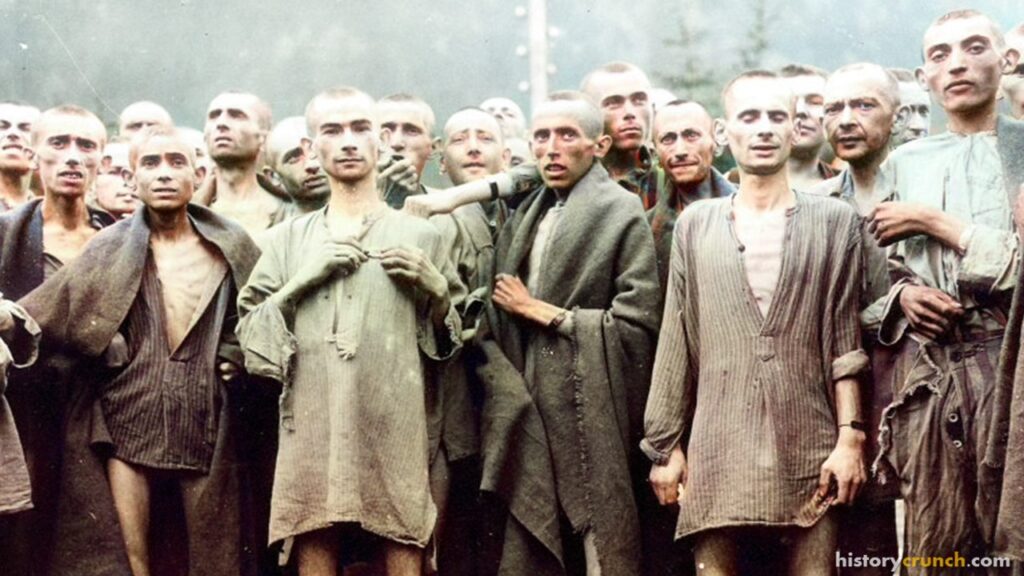
Heinrich Himmler, as police chief of Munich, Bavaria, announced a camp for 5,000 political prisoners in an old munitions factory at Dachau. The first prisoners were communists, then Social Democrats, trade unionists and anyone else the police wanted out of the way. The SS took over the guard within weeks.
LEARN MORESHOW LESSwhy it matters · key numbers · a sourcePOLITICALDachau was the model. Its rules, its guards and its commandant's methods were copied in every camp the SS built afterward, and it stayed open until American troops reached it in April 1945. The camps were built first for Germans; the rest of Europe came later.
IN THEIR OWN WORDS“On Wednesday the first concentration camp is to be opened in Dachau with an accommodation for 5,000 people.”
Heinrich Himmler, press announcement, March 20th, 1933WHAT TO NOTICEThe announcement was printed in the newspapers. The camps were never a secret inside Germany; the phrase 'you'll end up in Dachau' was a joke and a threat by the summer of 1933.
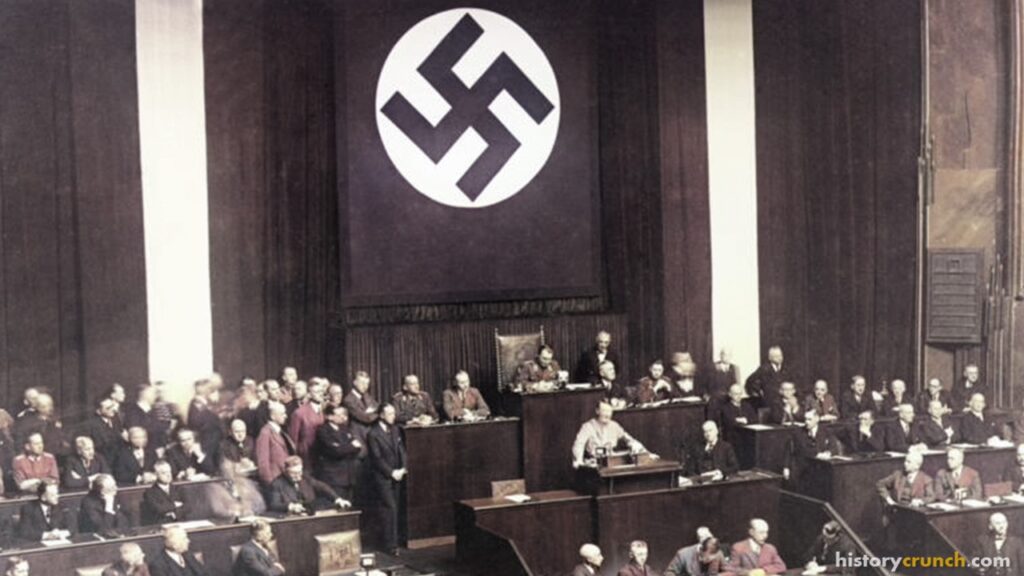
Meeting in an opera house because their own building had burned, and with SA men lining the walls, the Reichstag voted 444 to 94 to let Hitler's cabinet make laws without parliament or the president for four years. The communist deputies were in prison; only the Social Democrats voted no.
LEARN MORESHOW LESSwhy it matters · key numbers · a sourcePOLITICALThe Reichstag voted itself out of existence, legally, by the two-thirds majority the constitution required. From this day Hitler needed nobody's signature, and Germany was a totalitarian state in law as well as in fact. The Act was renewed in 1937 and 1939 and was still in force in 1945.
IN THEIR OWN WORDS“You can take our freedom and our lives, but not our honor.”
Otto Wels, leader of the Social Democrats, speaking against the Act, March 23rd, 1933WHAT TO NOTICEWels spoke knowing SA men were waiting in the corridors. It was the last free speech made in a German parliament for twelve years. He died in exile in Paris in 1939.
Why did the Center Party vote for the Enabling Act?
Fear. With the SA in the building and their communist colleagues in camps, the Catholic deputies believed voting no would mean the same for them.
Calculation. Hitler promised to protect the Church and respect the states, and the Center's leaders thought a legal dictatorship was better than an illegal one. They were wrong, and the party dissolved itself in July.
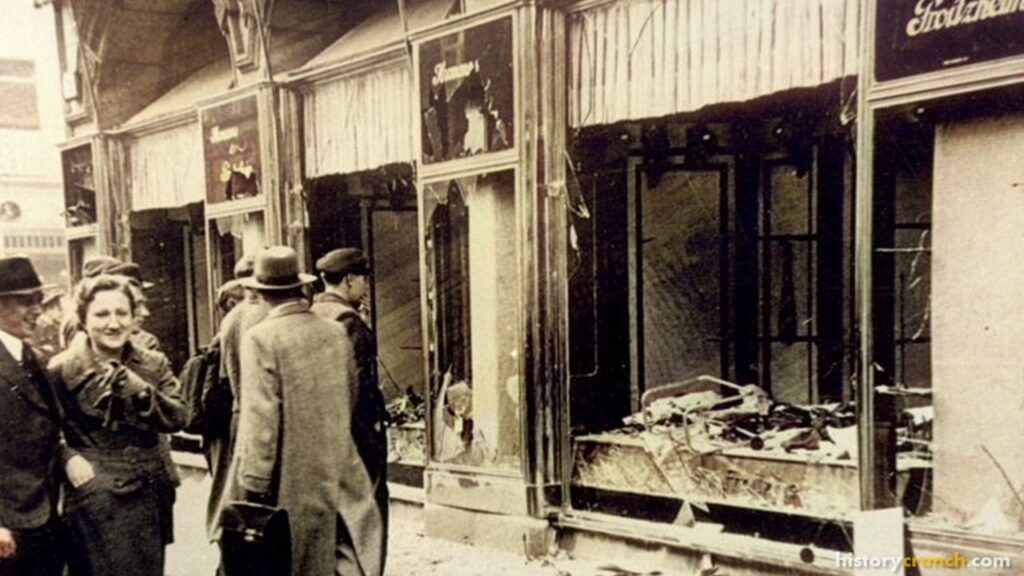
On a Saturday morning SA men took up positions outside Jewish-owned shops, doctors' offices and law practices across Germany with signs telling Germans not to buy from Jews. It was the regime's first national action against Jews, ordered from the top and organized by Julius Streicher.
LEARN MORESHOW LESSwhy it matters · key numbers · a sourceSOCIALThe boycott lasted one day and most Germans ignored it, which the regime noticed. It learned to move by law and decree instead of by street action, and the laws began within the week. Germany's 525,000 Jews learned that the state itself was now against them.
IN THEIR OWN WORDS“Germans! Defend yourselves! Do not buy from Jews!”
SA placard, April 1st, 1933WHAT TO NOTICEAbout 100,000 German Jews had fought for Germany in the First World War and 12,000 had died. Many shop owners put their medals in the window that morning.
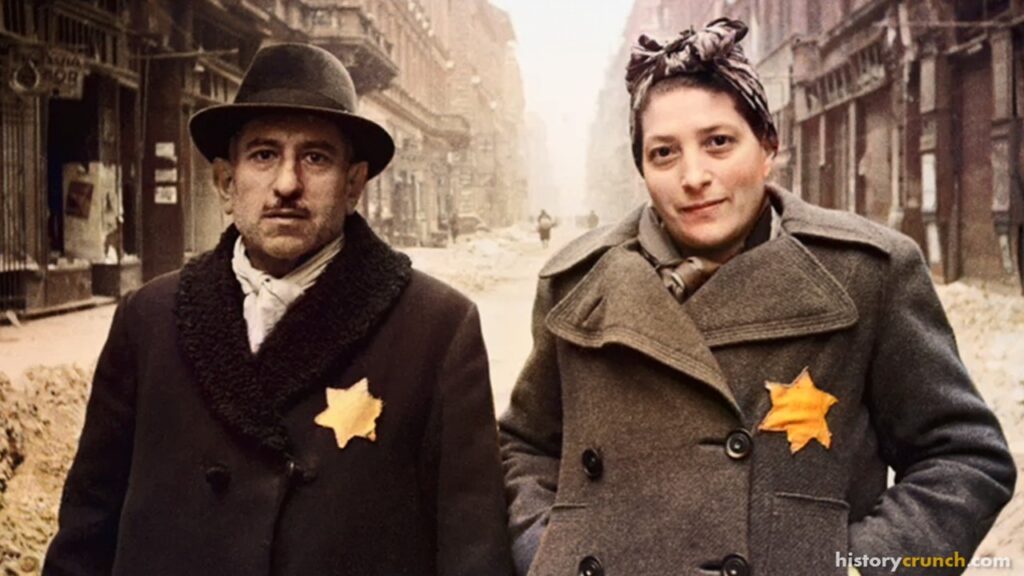
The Law for the Restoration of the Professional Civil Service dismissed 'non-Aryans' and political opponents from every government job, from teachers and judges to postmen. Its Aryan Paragraph was the first time a German law had defined people by race. Paul von Hindenburg insisted on an exception for Jewish war veterans, which lasted two years.
LEARN MORESHOW LESSwhy it matters · key numbers · 2 key figuresPOLITICALThis was the first anti-Jewish law and the template for hundreds more. Doctors, lawyers, professors and musicians were pushed out by similar rules within months, and Germany's universities lost a quarter of their physicists, including Einstein.
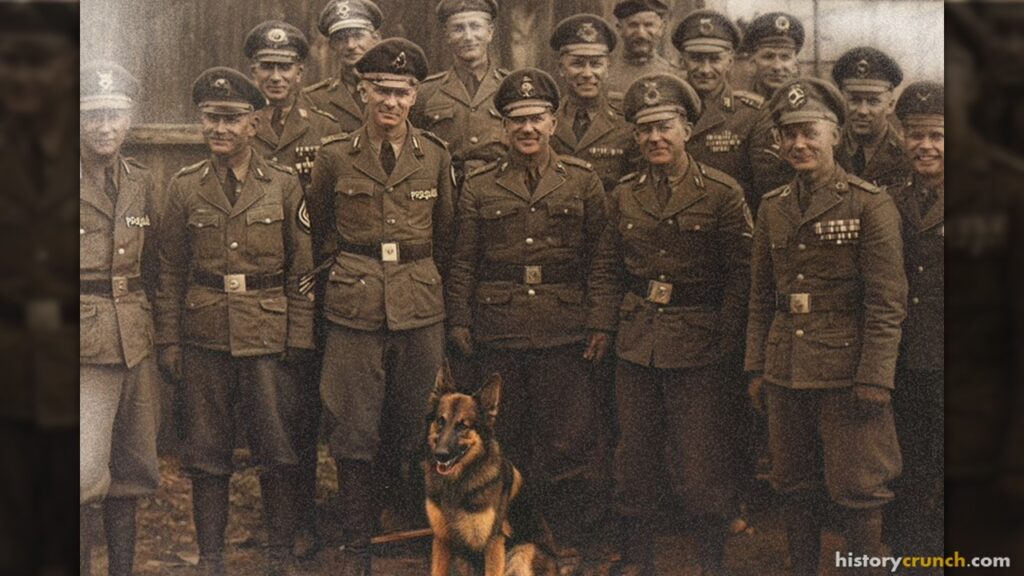
As minister of the interior for Prussia, Germany's largest state, Hermann Goering turned the political police into a new force answerable to himself alone: the Geheime Staatspolizei, the Secret State Police, soon shortened to Gestapo. Its job was to find and destroy enemies of the regime.
LEARN MORESHOW LESSwhy it matters · key numbers · a sourcePOLITICALThe Gestapo never had more than about 32,000 staff for a country of 70 million. It did not need more, because Germans informed on each other: most Gestapo cases began with a tip from a neighbor, a colleague or a relative.
IN THEIR OWN WORDS“Every bullet which leaves the barrel of a police pistol now is my bullet. If one calls this murder, then I have murdered.”
Hermann Goering, speech to police officers, February 1933WHAT TO NOTICEGoering said this before the Gestapo existed, to the ordinary Prussian police, to tell them they would not be punished for shooting communists. The Gestapo was built on that promise.
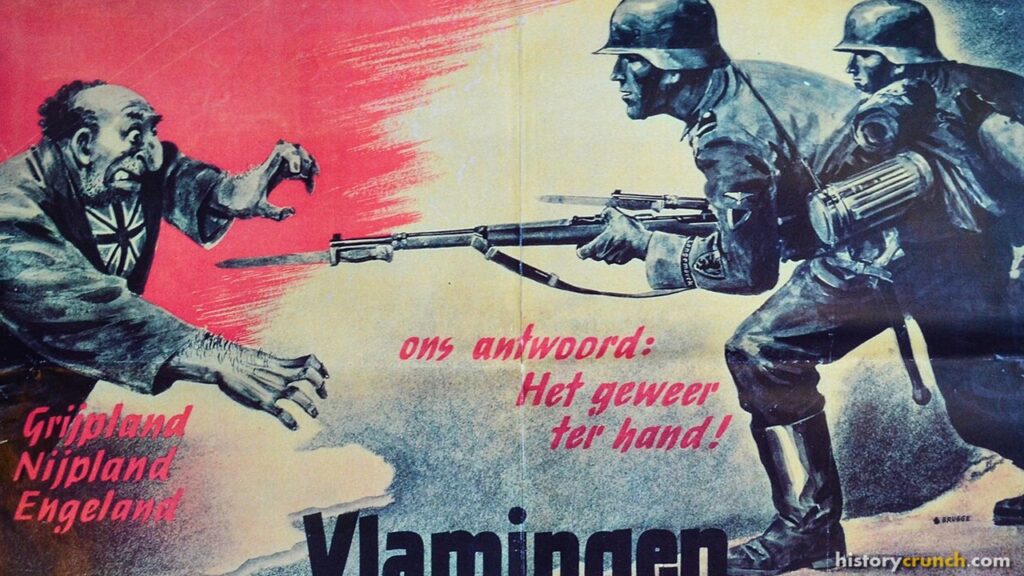
On May 1st the regime made May Day a national holiday and invited the unions to march. On May 2nd SA and SS men seized every union office in Germany, arrested the leaders and took the funds. A week later all workers were enrolled in a single Nazi organization, the German Labor Front.
LEARN MORESHOW LESSwhy it matters · key numbers · 1 key figureECONOMICThe largest trade union movement in the world, five million members, disappeared in a day without a strike. Workers could no longer bargain, strike or choose their own leaders. Wages were set by the state, which kept them low to pay for rearmament.
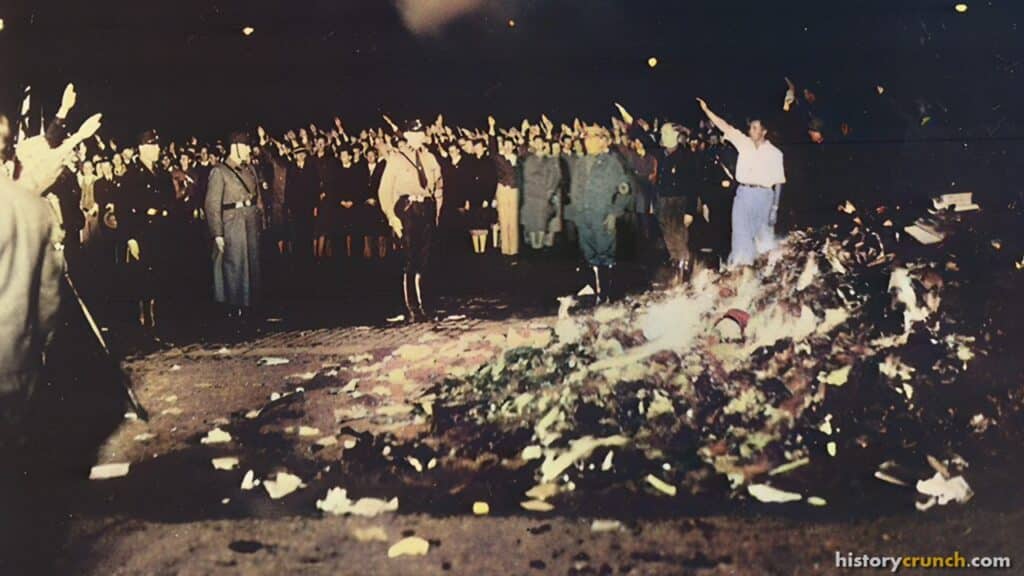
In Berlin's Opera Square and in 33 other university towns, Nazi student groups threw books onto bonfires while bands played and crowds watched. The authors included Einstein, Freud, Thomas Mann, Erich Maria Remarque, Helen Keller and Heinrich Heine. Joseph Goebbels spoke at the Berlin fire.
LEARN MORESHOW LESSwhy it matters · key numbers · a sourceCULTUREThe students, not the state, organized the burnings, which tells you how far the regime's ideas had spread among the educated young. Heine, one of the authors burned, had written a century earlier that where they burn books, they will in the end burn people too.
IN THEIR OWN WORDS“Where they burn books, they will in the end burn people.”
Heinrich Heine, in his play Almansor, 1821WHAT TO NOTICEHeine was a German Jew, and his books were on the fire. The line is now carved into the memorial on the square where the Berlin burning took place.
A law of one sentence made the Nazi Party the only legal party in Germany and forming any other a crime. The communists had been banned in March; the Social Democrats in June; the rest, including the Catholic Center that had voted for the Enabling Act, had dissolved themselves in the first two weeks of July rather than wait.
LEARN MORESHOW LESSwhy it matters · key numbers · a sourcePOLITICALSix months after taking office with three ministers in eleven, Hitler had no opposition left in Germany: no parties, no unions, no free press, no state governments. Historians call this process Gleichschaltung, bringing into line, and it was over by the summer.
IN THEIR OWN WORDS“The National Socialist German Workers Party constitutes the only political party in Germany.”
Law Against the Formation of New Parties, July 14th, 1933WHAT TO NOTICEThe same cabinet meeting passed the sterilization law, a law stripping citizenship from emigrants, and the plebiscite law that let Hitler ask the nation yes-or-no questions with no other choice on the ballot.
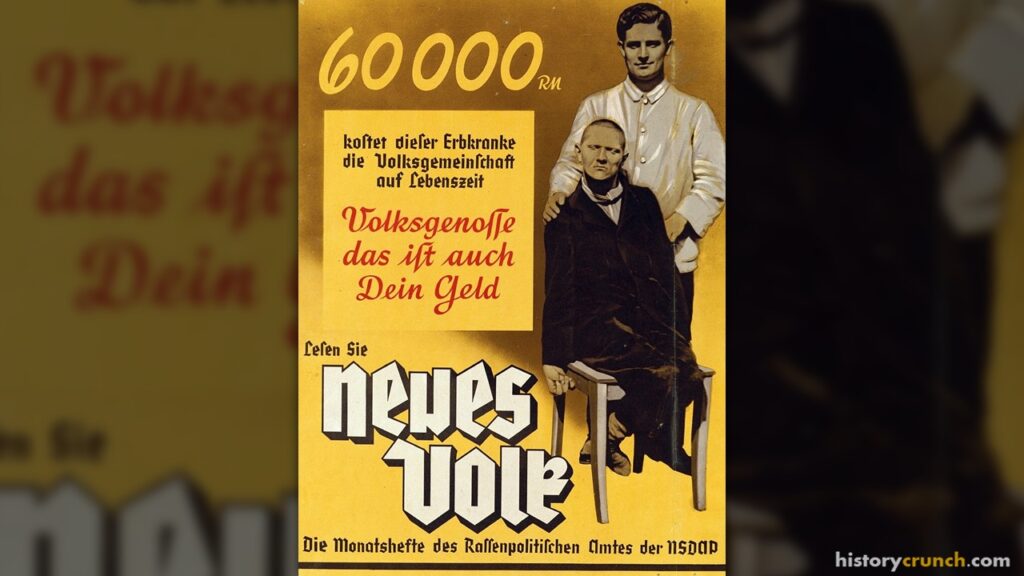
The Law for the Prevention of Hereditarily Diseased Offspring ordered the forced sterilization of people with conditions the regime called hereditary: schizophrenia, epilepsy, blindness, deafness, 'feeble-mindedness' and severe alcoholism. Special courts of two doctors and a judge decided each case, usually without meeting the patient.
LEARN MORESHOW LESSwhy it matters · key numbers · a debateSCIENCEAbout 400,000 Germans were sterilized under this law, most of them in the first four years. Eugenics was respectable science in a dozen countries at the time, and several had sterilization laws of their own. The doctors who ran the courts, the categories they used and the idea that some lives cost the nation too much were all carried straight into the killing of the disabled in 1939.
Was Nazi eugenics a German invention?
No. Sterilization laws already existed in more than two dozen American states, and German eugenicists cited California as their model. The Nazis took an idea that was respectable across the West and applied it without limits.
The idea was borrowed, but the scale and the logic were Nazi. No other country sterilized hundreds of thousands, and no other country's eugenics program ended in gas chambers.
Franz von Papen, a Catholic, negotiated a treaty with the Vatican that guaranteed the Church's schools, property and freedom of worship in Germany. In return the Church withdrew its priests and bishops from politics. The Catholic Center Party had already dissolved itself two weeks earlier.
LEARN MORESHOW LESSwhy it matters · key numbersRELIGIONThe Concordat gave the new regime its first international agreement and a great deal of respectability at home: the Church had made its peace with Hitler. The regime broke the treaty within months, closing Catholic schools and youth groups, and the Church's protests stayed private for years.
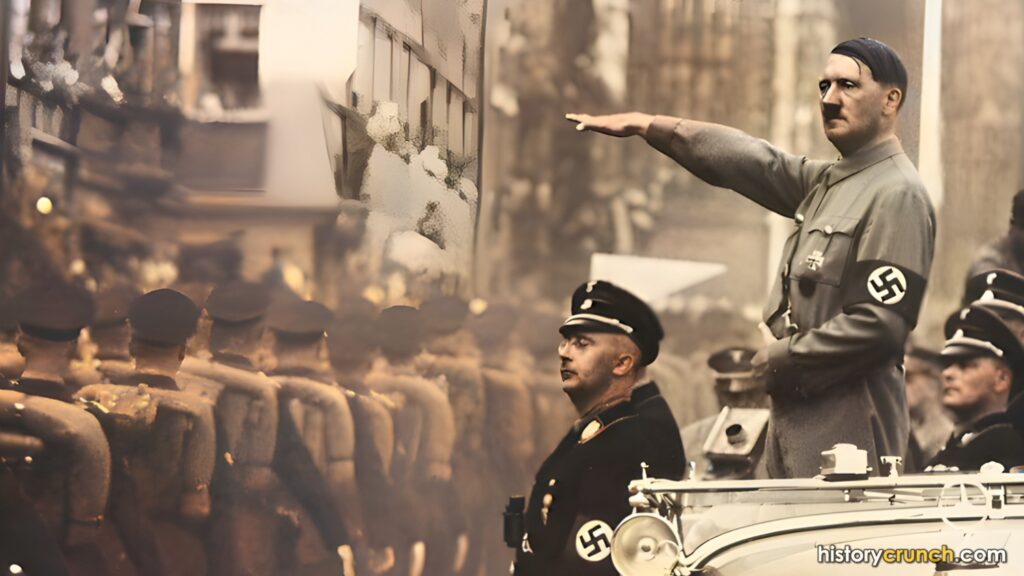
When the other powers at the Geneva disarmament conference refused to let Germany arm to their level, Hitler pulled Germany out of the conference and out of the League of Nations in the same day. He then held a vote on his decision in which 95 percent of Germans said yes.
LEARN MORESHOW LESSwhy it matters · key numbers · 1 key figurePOLITICALIt was Hitler's first move in foreign policy and it set the pattern: break the rules, blame Britain and France, and ask the nation to cheer. Nobody in London or Paris did anything, and he noticed.
The Labor Front set up a leisure organization called Strength Through Joy, which sold workers cheap cruises, hikes, concerts and theater tickets, and from 1938 took deposits for a People's Car. By 1939 it was the largest tour operator in the world.
LEARN MORESHOW LESSwhy it matters · key numbersSOCIALThe regime knew that fear alone would not hold a country. Strength Through Joy was the reward side of the bargain: give up your union and your vote and you get a week at the seaside. Millions took it, and most remembered the 1930s afterward as good years. Nobody ever received a People's Car.
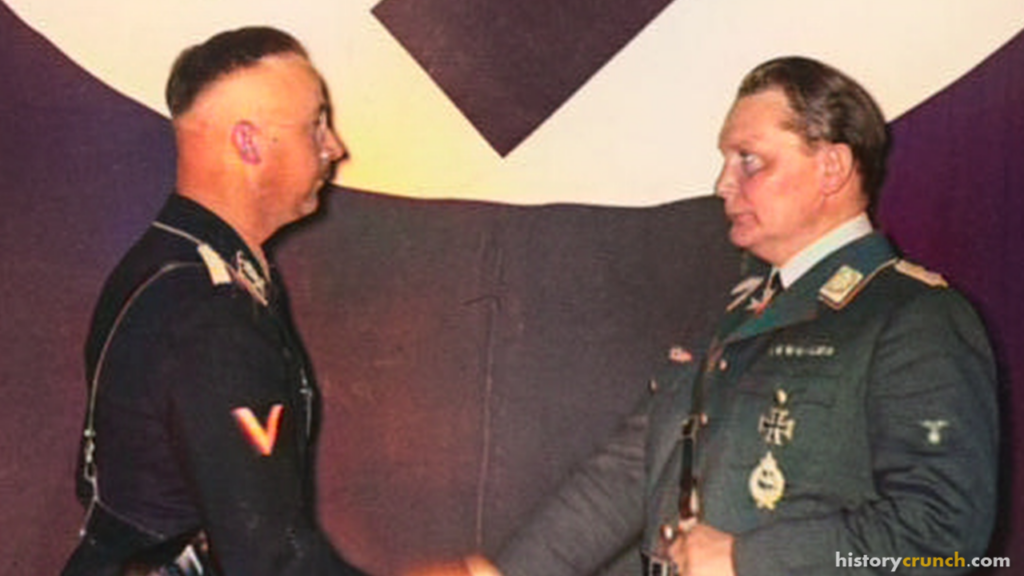
Hermann Goering handed the Prussian Gestapo to Himmler, who already controlled the political police of every other German state. Himmler's deputy, Reinhard Heydrich, took charge of it. For the first time one organization, the SS, controlled every political policeman in Germany.
LEARN MORESHOW LESSwhy it matters · key numbers · 2 key figuresPOLITICALFrom here the SS and the police grew into one machine. Himmler was made chief of all German police in 1936, and the Gestapo, the criminal police and the SS intelligence service were run from the same building. The Night of the Long Knives, ten weeks later, was their first operation.
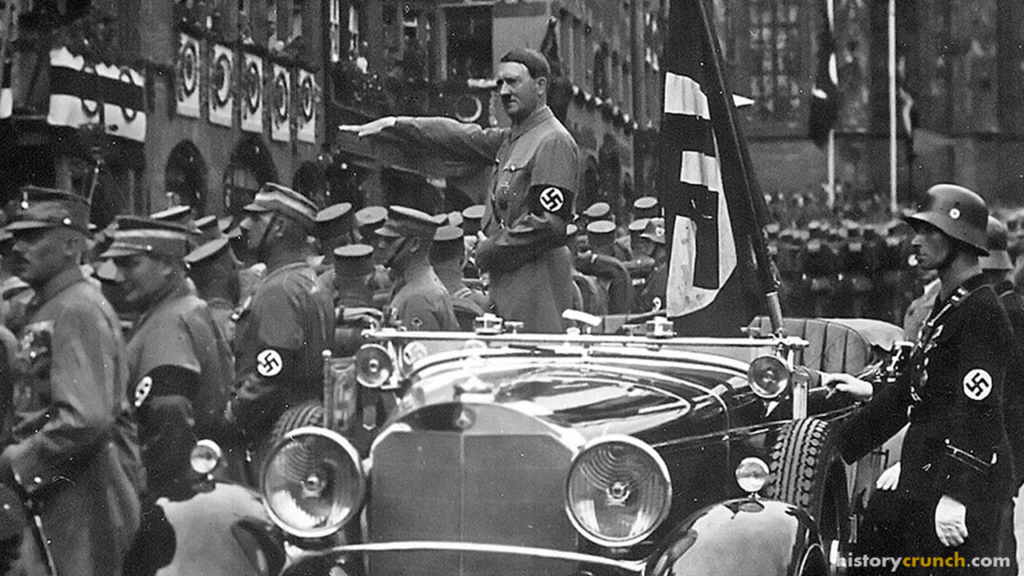
Hitler flew to Bavaria before dawn and personally arrested Ernst Roehm and the SA leadership at a lakeside hotel. Over three days SS squads shot Roehm, dozens of SA chiefs, and old enemies who had nothing to do with the SA: General Schleicher and his wife, Gregor Strasser, and the men who had crushed the 1923 putsch.
LEARN MORESHOW LESSwhy it matters · key numbers · a sourceMILITARYThe army had wanted the SA broken and got it; in return it accepted murder as state policy and swore an oath to Hitler five weeks later. Hitler told the Reichstag, Germany's parliament, he had been the supreme judge of the German people. Nobody in Germany was safe from that judge again.
IN THEIR OWN WORDS“In this hour I was responsible for the fate of the German people, and thereby I became the supreme judge of the German people.”
Adolf Hitler, speech to the Reichstag, July 13th, 1934WHAT TO NOTICEA law passed on July 3rd declared the killings legal after the fact. Paul von Hindenburg sent Hitler a telegram of thanks. Germany's leading legal scholar, Carl Schmitt, published an essay titled The Fuhrer Protects the Law.
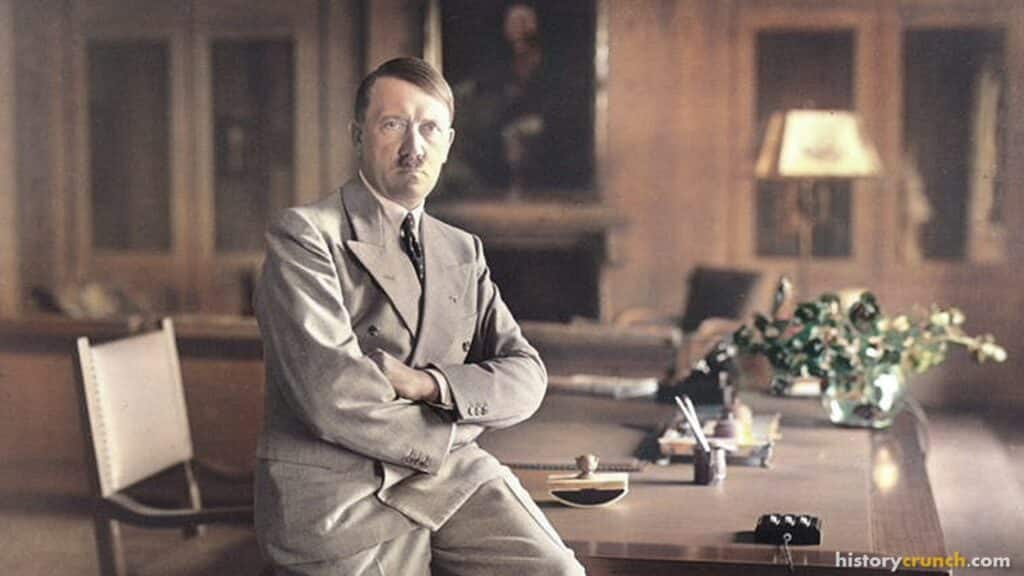
Hindenburg died at 86 at his estate in East Prussia. A law passed the day before, while he was dying, merged the presidency into Hitler's office, and that same afternoon every soldier in Germany swore a new oath, not to the constitution or the country but to Adolf Hitler by name. A plebiscite on August 19th approved it with 90 percent.
LEARN MORESHOW LESSwhy it matters · key numbers · a sourcePOLITICALThe last check on Hitler was gone. He was head of state, head of government, leader of the only party and commander of an army whose men had sworn to obey him personally. Officers who plotted against him in 1944 said the oath was what had held most of their colleagues back.
IN THEIR OWN WORDS“I swear by God this sacred oath, that I will render unconditional obedience to the Fuhrer of the German Reich and people, Adolf Hitler, the supreme commander of the armed forces.”
The soldier's oath introduced on August 2nd, 1934WHAT TO NOTICEThe previous oath had been to the constitution and the president. The new one was to a man. Hitler had not asked for it; the war minister, Blomberg, offered it, hoping to bind Hitler to the army. It bound the army to Hitler instead.
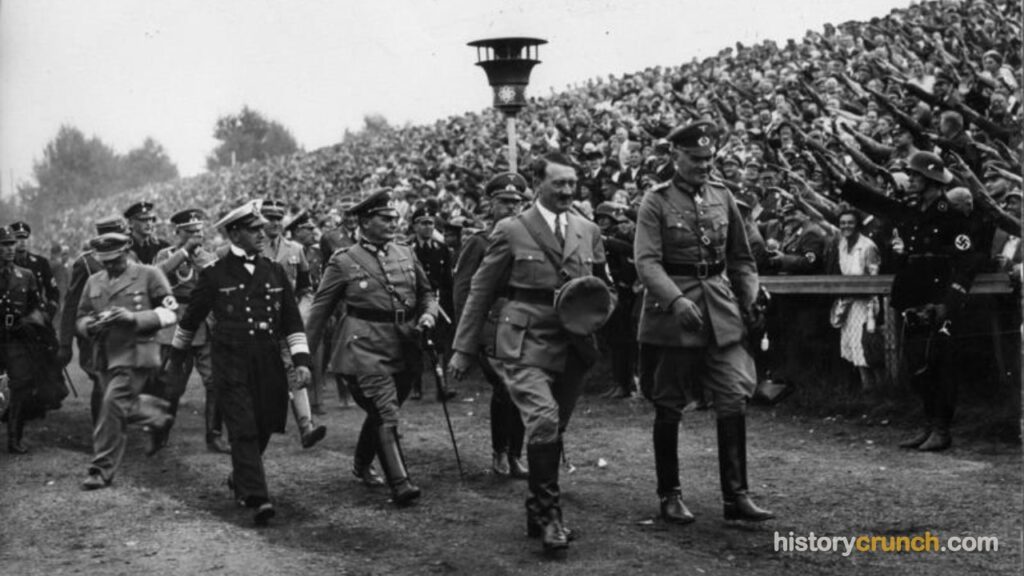
Hitler commissioned the filmmaker Leni Riefenstahl to record the 1934 party rally at Nuremberg, and gave her 30 cameras, 120 crew and a city built to be filmed. Her movie, Triumph of the Will, showed Hitler descending from the clouds in an aircraft to a nation waiting in perfect ranks.
LEARN MORESHOW LESSwhy it matters · key numbers · 2 key figuresCULTUREThe film was the cult of personality made visible: one leader, one people, no argument. It won prizes abroad and is still studied as the most effective propaganda film ever made, which is why it is also still banned from public showing in Germany.
With power secure, the regime rebuilt Germany in its own image: an economy geared to war, a youth taught to march, an Olympics staged for the world, and a legal machine for turning Jews, Roma, gay men and the disabled into outcasts. Abroad, Hitler broke Versailles clause by clause, marched into the Rhineland and Austria, and was handed the Sudetenland, the German-speaking border region of Czechoslovakia, at the Munich conference. In November 1938 the persecution turned to open violence.
The Saar coal basin, run by the League of Nations since Versailles, voted on its future under League supervision. Ninety percent chose to rejoin Germany, Nazi rule and all, over staying under the League or joining France.
LEARN MORESHOW LESSwhy it matters · key numbers · 1 key figurePOLITICALIt was a fair vote and Hitler won it, which mattered: the first territory to come home came by ballot, not by force, and the world saw Germans choosing the Reich. The Nazis used the result for the next four years as proof that Germans everywhere wanted in.
A week after revealing that Germany had an air force, which Versailles forbade, Hitler announced conscription and an army of 36 divisions, more than five times the treaty limit. Germany had been rearming in secret since 1933; now it was doing so in public.
LEARN MORESHOW LESSwhy it matters · key numbers · 2 key figuresMILITARYBritain, France and Italy met, protested and did nothing, and two months later Britain signed a naval deal that accepted the breach. Germany could now mobilize on a scale the treaty had been written to prevent. Rearmament put Germans back to work, which is what most of them noticed, and it put the country on a path where war was the only way to pay for the guns.
The regime rewrote the old law against sex between men so that almost any contact could be prosecuted, and set the Gestapo, the secret police, to enforce it. Arrests rose tenfold. Men convicted a second time were sent from prison to concentration camps, where they wore a pink triangle.
LEARN MORESHOW LESSwhy it matters · key numbers · 1 key figurePOLITICALGay men were the regime's other target in 1935, the same summer as the Nuremberg Laws. About 100,000 were arrested by 1945 and up to 15,000 sent to the camps, where more than half died. The law itself stayed on the books in West Germany until 1969.
At the end of the party rally, Hitler had the Reichstag, Germany's parliament, summoned to Nuremberg to pass two laws written over the previous two days. The Reich Citizenship Law made Jews subjects without political rights; the Law for the Protection of German Blood banned marriage and sex between Jews and Germans. A decree in November defined a Jew by the religion of the grandparents.
LEARN MORESHOW LESSwhy it matters · key numbers · a sourcePOLITICALFor two years the persecution had been piecemeal. Now it was the law of the land, with a racial definition that the courts, the registrars and later the deportation lists all used. Point 4 of the 1920 program had become the constitution.
IN THEIR OWN WORDS“Marriages between Jews and citizens of German or kindred blood are forbidden.”
Article 1 of the Law for the Protection of German Blood and German Honor, September 15th, 1935WHAT TO NOTICEThe laws were drafted so fast that the interior ministry's civil servants wrote them on menu cards in a Nuremberg hotel. Hitler chose the milder of the four drafts he was offered, and then crossed out the sentence that said the law applied only to full Jews.
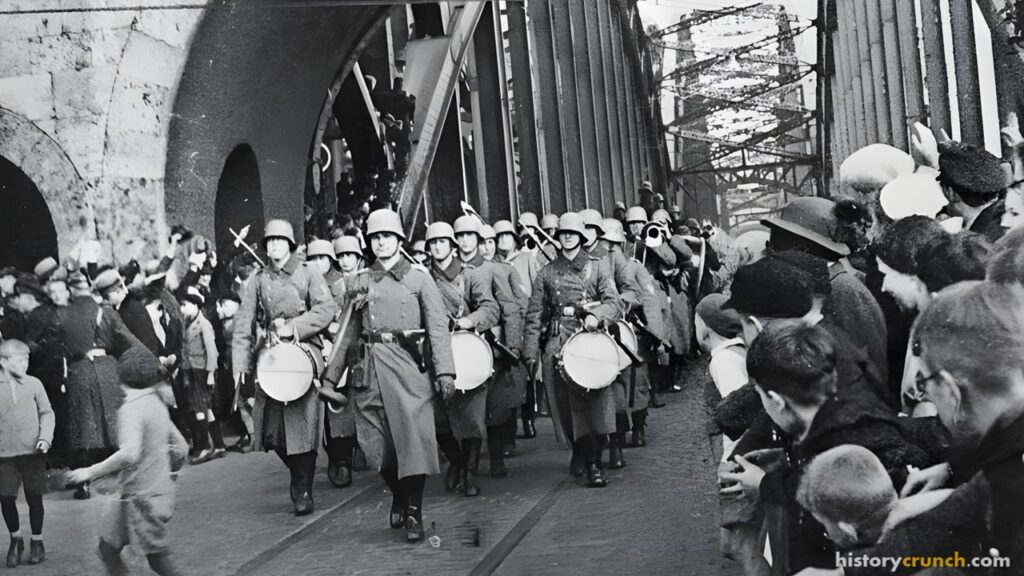
On a Saturday morning about 3,000 German soldiers crossed the Rhine bridges into the zone that Versailles and the Locarno treaties had said must stay empty of troops forever. Hitler's generals had begged him not to; the orders said to withdraw if France moved. France did not move.
LEARN MORESHOW LESSwhy it matters · key numbers · a sourceMILITARYHitler said afterward that the 48 hours after the march were the most nerve-racking of his life, and that a French advance would have forced a humiliating retreat. It never came. From here on he trusted his own instinct over his generals' fears, and the generals stopped arguing.
IN THEIR OWN WORDS“If the French had then marched into the Rhineland we would have had to withdraw with our tails between our legs.”
Adolf Hitler, recalling March 1936WHAT TO NOTICEFrance had an army of 100 divisions to Germany's handful of trained ones. Its generals told the government that a response meant full mobilization, and the government, weeks from an election, chose not to.
Two weeks before the Olympics, Berlin police rounded up about 600 Roma and Sinti, the people the Germans called Gypsies, and moved them to a fenced field beside a sewage works and a cemetery at Marzahn, to keep them out of the visitors' sight. They were never allowed to leave.
LEARN MORESHOW LESSwhy it matters · key numbers · 1 key figureSOCIALThe Roma were the other people the regime marked for destruction by race. Marzahn's inhabitants were registered, studied by race scientists and in 1943 sent to Auschwitz. Of the roughly 500,000 Roma and Sinti in Europe under Nazi rule, about half were murdered.
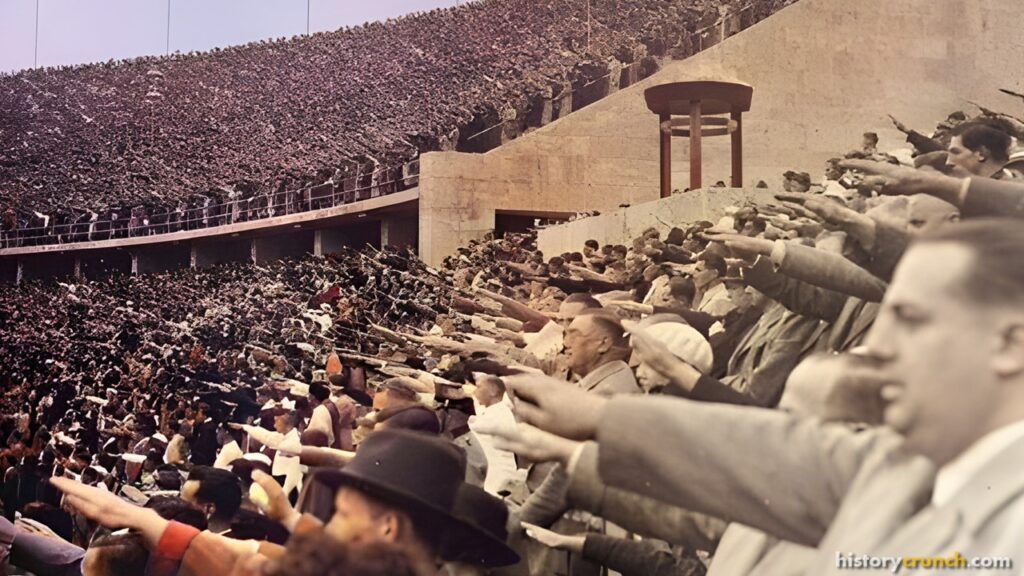
Hitler opened the Games in a new 100,000-seat stadium before visitors from 49 countries. The 'Jews not wanted' signs had been taken down for the fortnight, the anti-Jewish newspaper was off the newsstands, and Berlin was clean, orderly and welcoming. A Black American, Jesse Owens, won four gold medals.
LEARN MORESHOW LESSwhy it matters · key numbers · a debateCULTUREThe Games were the regime's greatest propaganda success. Visitors went home saying that the stories about Germany were exaggerated. The signs went back up the week they left, and the Nuremberg Laws had been in force the whole time.
The same month, the Spanish Civil War began, and within days Hitler had sent aircraft to carry Franco's army across from Morocco.
Should the world have boycotted the 1936 Games?
Yes. The Nuremberg Laws were nine months old. Every athlete who marched past Hitler helped him look respectable, and the American Olympic Committee knew it and went anyway.
No. Owens' four golds did more to embarrass Nazi racial theory than a boycott would have, and the Games let foreigners see Germany for themselves. The mistake was in what they chose to see.
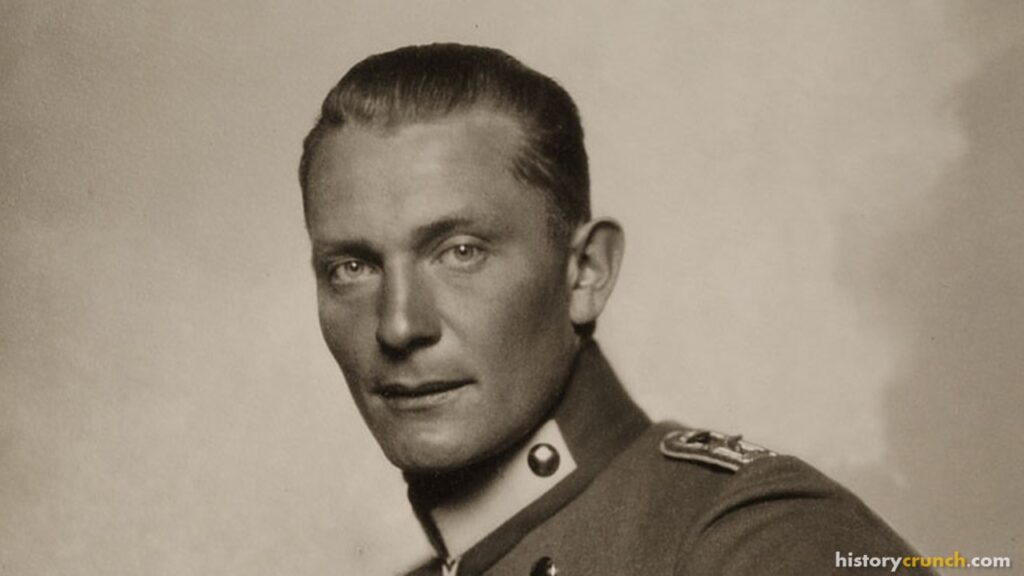
At the Nuremberg rally Hitler announced a Four Year Plan to make Germany self-sufficient in food and raw materials. A secret memo he had written that August was blunter: the German army must be ready for action in four years and the economy ready for war in four years. Hermann Goering was put in charge.
LEARN MORESHOW LESSwhy it matters · key numbers · a sourceECONOMICFrom this point the economy existed to arm. Synthetic fuel and rubber plants were built regardless of cost, consumer goods were squeezed, and the bills could only be paid by conquest. Hitler's memo set the deadline; the war began three years and one week later.
IN THEIR OWN WORDS“The German army must be operational within four years. The German economy must be fit for war within four years.”
Adolf Hitler, memorandum on the Four Year Plan, August 1936WHAT TO NOTICEThe memo was secret; only Goering, Blomberg and Speer ever saw it before 1945. Speer read it out at Nuremberg, where it was used to prove that the war had been planned.
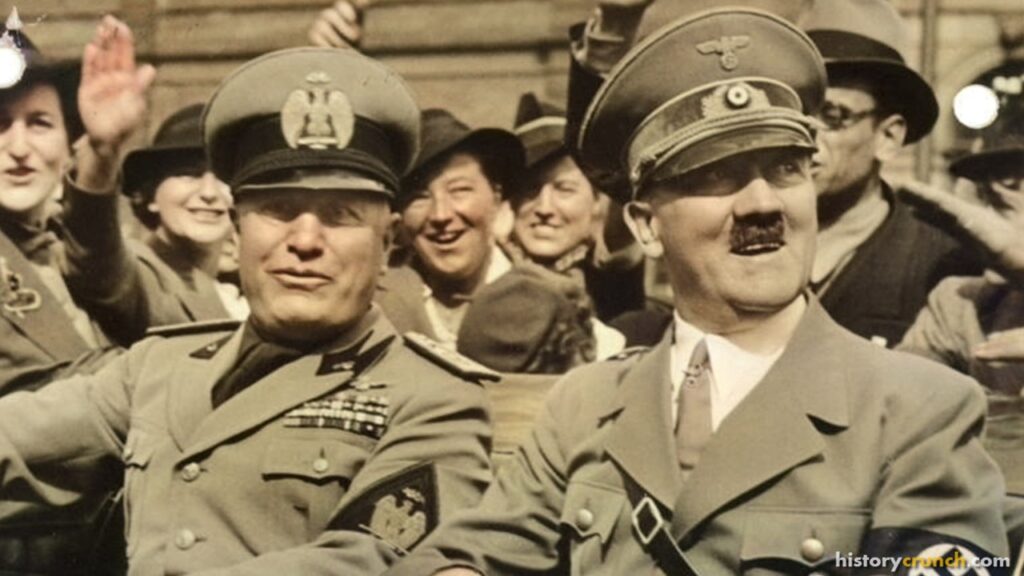
Benito Mussolini, isolated after his conquest of Ethiopia and fighting alongside Germany in Spain, signed a friendship agreement with Hitler. A week later he told a crowd in Milan that Europe would now turn on a Rome-Berlin axis, and the name stuck.
LEARN MORESHOW LESSwhy it matters · key numbers · 2 key figuresPOLITICALTwo years earlier Mussolini had moved troops to the Austrian border to stop Hitler. Now the two dictators were partners, and Austria's protector had changed sides. The Anschluss, the takeover of Austria, followed within eighteen months.
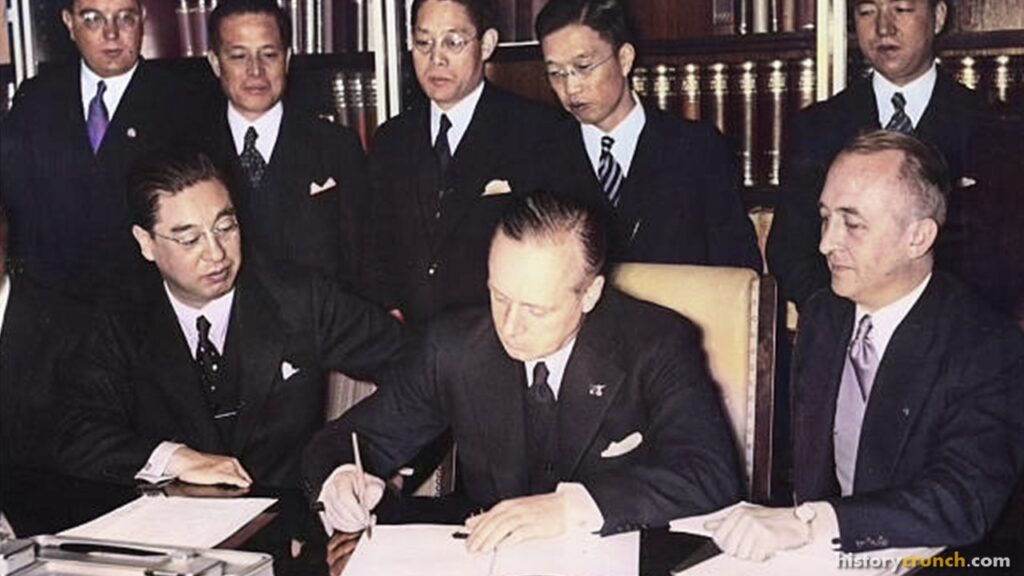
Germany and Japan signed a pact against the Communist International, promising to consult each other about the Soviet threat. A secret clause said neither would help the Soviet Union if it went to war with the other. Italy joined a year later.
LEARN MORESHOW LESSwhy it matters · key numbers · 1 key figurePOLITICALThe three countries that would form the Axis were now in the same document, and the enemy they named was Moscow. Three years later Hitler would sign a pact with Stalin instead; the Anti-Comintern Pact was a statement of ideology, not a plan.
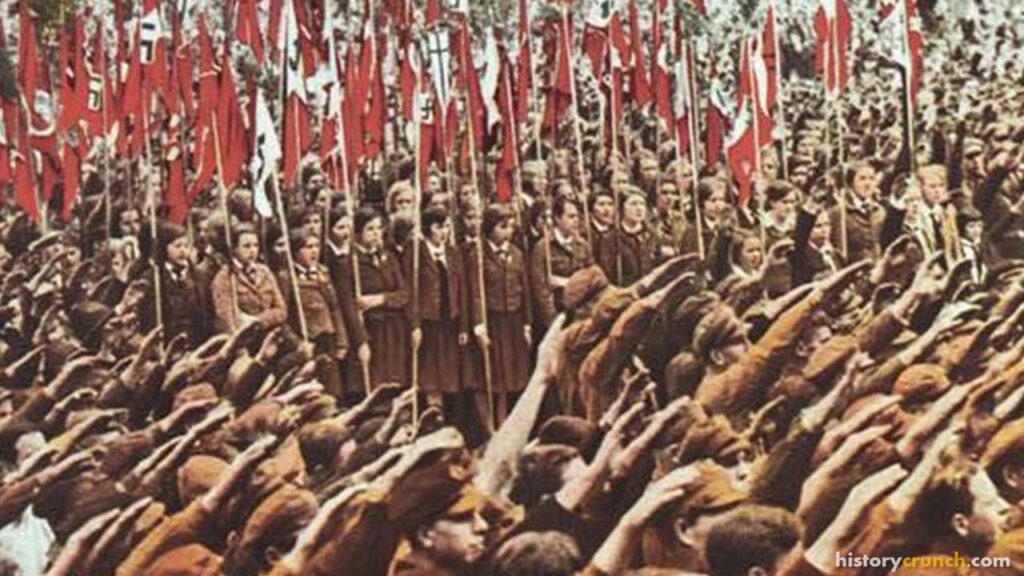
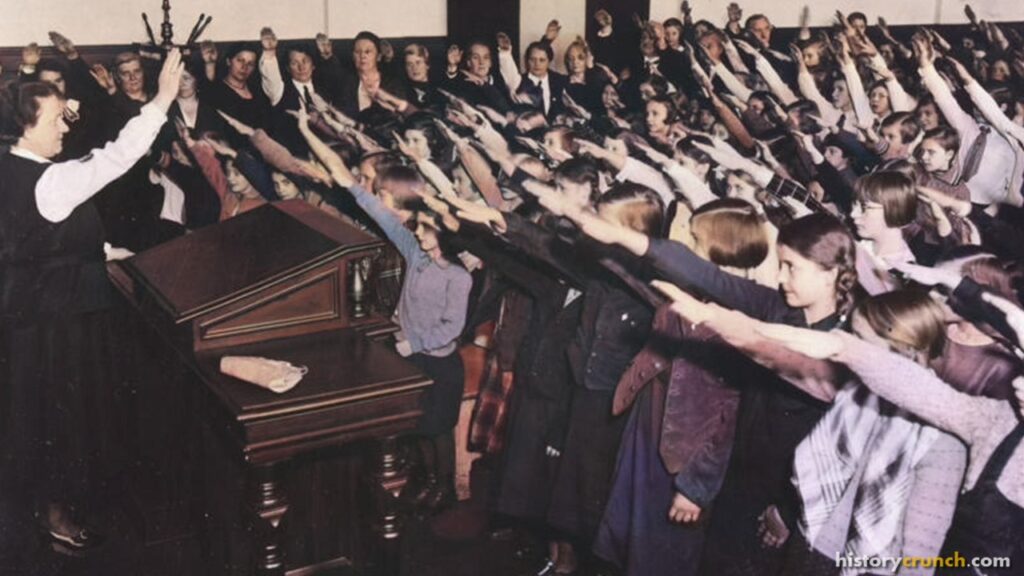
A law made the Hitler Youth the only youth organization in Germany and gave it charge of every young German outside school and home. Church youth groups, scouts and sports clubs were absorbed or closed. From March 1939 membership was compulsory for every boy and girl from ten to eighteen.
LEARN MORESHOW LESSwhy it matters · key numbers · a sourceSOCIALThe regime now had the children six days a week: school taught race and the Fuhrer, the Hitler Youth taught marching and shooting, and the League of German Girls taught motherhood. A generation grew up that had never heard any other voice, and it was that generation the Volkssturm sent to fight in 1945.
IN THEIR OWN WORDS“These boys and girls enter our organizations at ten years of age, and often for the first time get a little fresh air; after four years in the Young Folk they go on to the Hitler Youth, where we have them for another four years, and then we take them immediately into the party.”
Adolf Hitler, speech at Reichenberg, December 1938WHAT TO NOTICEHe went on: and they will never be free again, not in their whole lives.
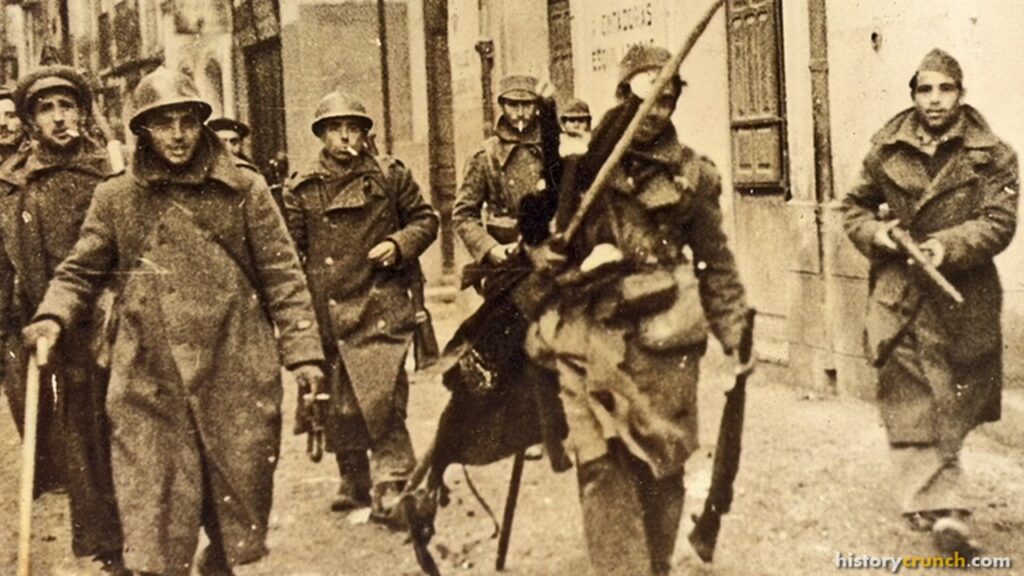
German aircraft fighting for Franco in the Spanish Civil War bombed the Basque market town of Guernica for three hours on a market day, then machine-gunned the roads. The town was not a military target. Several hundred people died and the center was burned out.
LEARN MORESHOW LESSwhy it matters · key numbers · 2 key figuresMILITARYSpain was where the Luftwaffe learned its trade, and Guernica showed the world what the new German air force meant to do to cities. Picasso's painting of it was seen by millions. The bombing of Warsaw, Rotterdam and the English city of Coventry was three years away.
Martin Niemoller, a U-boat commander in the First World War and now a Berlin pastor, had voted Nazi in 1933 and then led the Protestant ministers who refused to let the party run their church. After four years of sermons against the regime he was arrested by the Gestapo, the secret police, and, when a court let him off with time served, sent to a concentration camp as Hitler's personal prisoner.
LEARN MORESHOW LESSwhy it matters · key numbers · a sourceRELIGIONNiemoller spent eight years in Sachsenhausen and Dachau, and afterward wrote the lines that begin 'First they came for the communists, and I did not speak out'. His story is the story of the German churches: a few who resisted, most who did not, and a regime that took the churches' silence as consent.
IN THEIR OWN WORDS“First they came for the communists, and I did not speak out, because I was not a communist.”
Martin Niemoller, after the warWHAT TO NOTICENiemoller gave the lines in different forms in different speeches, which is why several versions exist. He always included himself among the guilty.
The regime confiscated about 16,000 modern paintings and sculptures from German museums and hung 650 of them in a Munich show called Degenerate Art, crammed together under mocking labels next to the prices the museums had paid. Two million people came to laugh. Across the street a show of approved German art drew a fifth as many.
LEARN MORESHOW LESSwhy it matters · key numbers · 1 key figureCULTUREModern art was declared un-German, and the artists, among them Kandinsky, Klee, Kirchner and Nolde, were banned from working, exhibiting or in some cases buying paints. Much of the confiscated art was sold abroad for foreign currency and about 5,000 pieces were burned in Berlin in 1939.
In a four-hour meeting with his war minister, foreign minister and service chiefs, Hitler said that Germany's problem was living space, that he intended to annex Austria and Czechoslovakia, that it could only be solved by force, and that it had to be solved by 1943 at the latest, before the other powers caught up. Austria and Czechoslovakia would come first. His adjutant, Colonel Hossbach, wrote it down.
LEARN MORESHOW LESSwhy it matters · key numbers · a sourceMILITARYThe generals who raised objections, Blomberg and Fritsch, were both out of their jobs within three months. Hossbach's notes survived the war and became the prosecution's proof at the Nuremberg trial that the war was planned, not stumbled into.
IN THEIR OWN WORDS“The question for Germany was where the greatest possible conquest could be made at the lowest cost.”
The Hossbach Memorandum, notes of Hitler's meeting of November 5th, 1937WHAT TO NOTICEHossbach wrote his notes from memory five days later, which is why some historians treat the document with care. Nobody disputes what Hitler did in the two years after it.
After the war minister, Blomberg, was forced out over his marriage and the army chief, Fritsch, was framed on a false charge, Hitler abolished the war ministry and made himself supreme commander of the armed forces, with a personal staff under General Keitel. He sacked sixteen generals and moved 44 more. The same day Ribbentrop became foreign minister.
LEARN MORESHOW LESSwhy it matters · key numbers · 1 key figureMILITARYThe last professional brake on Hitler's foreign policy was gone. The men who had argued at the Hossbach meeting were out; the men who replaced them said yes. Five weeks later the army marched into Austria.
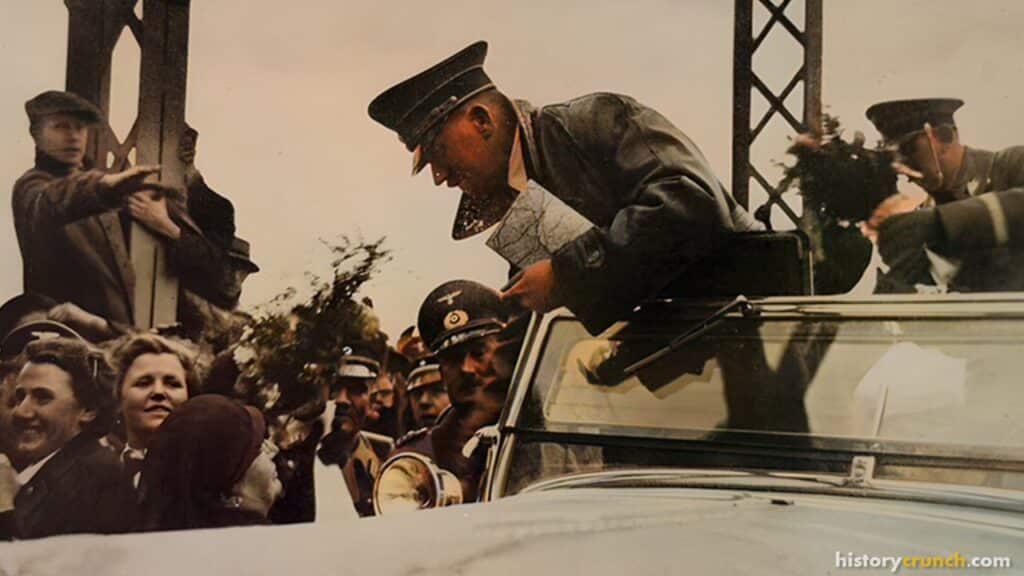
After bullying the Austrian chancellor into resigning, Hitler sent the army across the border at dawn. It met flowers, not bullets. He followed it to Linz, the town of his boyhood, and the next day signed the law that made Austria part of Germany. In Vienna, crowds cheered while others were made to scrub the pavements with toothbrushes.
LEARN MORESHOW LESSwhy it matters · key numbers · a sourceMILITARYVersailles had forbidden this union and Hitler did it in a weekend without a shot. For Austria's 190,000 Jews it was Germany's five years of persecution arriving overnight: in the first weeks there were hundreds of suicides, and the Gestapo, the secret police, opened an office in Vienna whose job was to force Jews out. It was run by Adolf Eichmann.
IN THEIR OWN WORDS“I can report to the German people the greatest accomplishment of my life: the entry of my homeland into the German Reich.”
Adolf Hitler, to the crowd in the Heldenplatz, Vienna, March 15th, 1938WHAT TO NOTICEAbout 250,000 people filled the square. Vienna had also been the city where Hitler lived in hostels as a failed art student and, by his own account, learned to hate Jews.
Delegates from 32 countries met at a resort hotel on Lake Geneva, at President Franklin Roosevelt's invitation, to discuss the flood of Jewish refugees from Germany and Austria. Nearly every delegate explained why his country could not take more. Only the Dominican Republic offered to.
LEARN MORESHOW LESSwhy it matters · key numbers · 1 key figurePOLITICALThe regime was watching, and drew the conclusion it wanted: nobody else wanted the Jews either. A German newspaper's headline was 'Jews for sale, who wants them? No one.' Emigration got harder just as it became a matter of life and death.
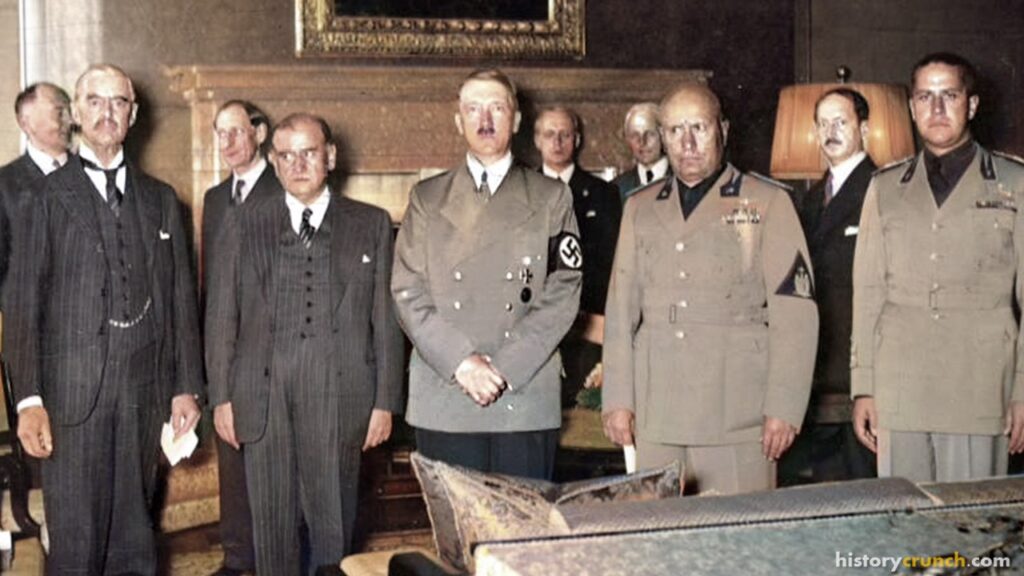
With Europe days from war, Neville Chamberlain, Edouard Daladier, Benito Mussolini and Hitler met in Munich and agreed that Germany would take the Sudetenland, the German-speaking rim of Czechoslovakia with all its fortifications. The Czechs were not in the room. Chamberlain went home to cheering crowds and called it peace for our time.
LEARN MORESHOW LESSwhy it matters · key numbers · a sourcePOLITICALFrom Hitler's side Munich was a defeat. He had wanted his war against Czechoslovakia and been talked out of it; he told his staff that fellow Chamberlain had spoiled his entry into Prague. He took the rest of the country in March, and this time nobody offered a conference.
IN THEIR OWN WORDS“That fellow Chamberlain has spoiled my entry into Prague.”
Adolf Hitler, to his staff after Munich, as recorded by his interpreter Paul SchmidtWHAT TO NOTICEChamberlain's paper promising peace, which he waved at the airport, was a separate note he had asked Hitler to sign that morning. Hitler signed it without reading it carefully; he told Ribbentrop that the piece of paper meant nothing.
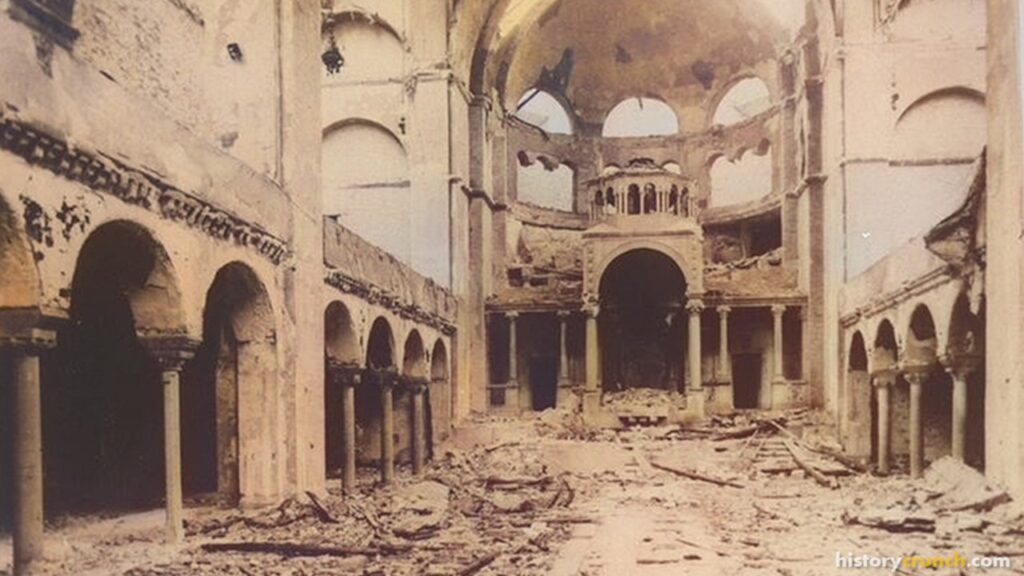
After a Jewish teenager shot a German diplomat in Paris, Joseph Goebbels told party leaders gathered in Munich, Bavaria, that the Fuhrer would not stand in the way of spontaneous demonstrations. Overnight, SA men in civilian clothes burned synagogues, smashed shops and beat and killed Jews across Germany and Austria, while the police stood back. Thirty thousand Jewish men were taken to the Dachau camp, Buchenwald and Sachsenhausen.
LEARN MORESHOW LESSwhy it matters · key numbers · a sourceSOCIALIt was organized by the state and presented as the anger of the people, and it was the moment persecution became violence. Some Germans were sickened; the regime noticed that too, and decided that the next steps would be taken out of sight. Every Jew who could now tried to leave.
IN THEIR OWN WORDS“The demonstrations should not be prevented by the police.”
Reinhard Heydrich, telegram to all police headquarters, 1:20 a.m., November 10th, 1938WHAT TO NOTICEThe official count was 91 dead. Counting suicides and the men who died in the camps that winter, the United States Holocaust Memorial Museum now puts the toll in the hundreds. The name, the night of broken glass, came from the pavements the next morning.
Three days after the pogrom, Hermann Goering chaired a meeting that fined Germany's Jews one billion marks for the damage done to them, confiscated their insurance payouts and barred them from owning businesses, attending theaters or going to school with Germans. In October their passports had been stamped with a red J.
LEARN MORESHOW LESSwhy it matters · key numbers · a sourceECONOMICThe regime turned its own riot into a robbery. By the end of 1938 a German Jew could not work, trade, study, drive or sit in a park, and had to pay for the privilege. About half of Germany's Jews had left by 1939; the ones who could not afford to go were the ones left when the trains began.
IN THEIR OWN WORDS“I would not like to be a Jew in Germany.”
Hermann Goering, closing the meeting of November 12th, 1938WHAT TO NOTICEThe minutes of the meeting survived and were read at the Nuremberg trial. Goering was joking; the room laughed.
Three weeks after the Kristallnacht pogrom, Britain agreed to take in Jewish children from the Reich without their parents. The first train of 196 children from a Berlin orphanage reached Harwich on December 2nd. Over the next nine months about 10,000 children followed, from Germany, Austria and Czechoslovakia.
LEARN MORESHOW LESSwhy it matters · key numbersSOCIALThe trains were the German end of a story that ends in the camps: parents putting children on a platform knowing they might not see them again, and mostly not. The transports stopped the day the war began. Most of the parents were murdered.
Hitler got the war he had planned for in September 1939, and for two years it went his way: Poland in five weeks, France in six, and revenge in the railway carriage of 1918. The regime used the war as cover to murder the disabled and to begin deporting Germany's Jews. Then Hitler invaded the Soviet Union, declared war on the United States, and took personal command of an army that had begun to lose.
On the sixth anniversary of his taking office, Hitler told the Reichstag, Germany's parliament, that if international Jewish finance plunged the nations into another world war, the result would not be the victory of Jewry but the annihilation of the Jewish race in Europe. The speech was broadcast and printed everywhere.
LEARN MORESHOW LESSwhy it matters · key numbers · a sourceIDEASHe said it in public, seven months before the war he was planning. From 1941, with the Final Solution under way, he referred back to this 'prophecy' again and again, always dating it to the day the war began rather than to January, as if the Jews had brought it on themselves.
IN THEIR OWN WORDS“If the international Jewish financiers in and outside Europe should succeed in plunging the nations once more into a world war, then the result will not be the Bolshevization of the earth, and thus the victory of Jewry, but the annihilation of the Jewish race in Europe!”
Adolf Hitler, Reichstag speech, January 30th, 1939WHAT TO NOTICEJoseph Goebbels' propaganda ministry built a newsreel around the passage. Historians disagree about whether Hitler had a plan of murder in 1939 or a threat that later became one.
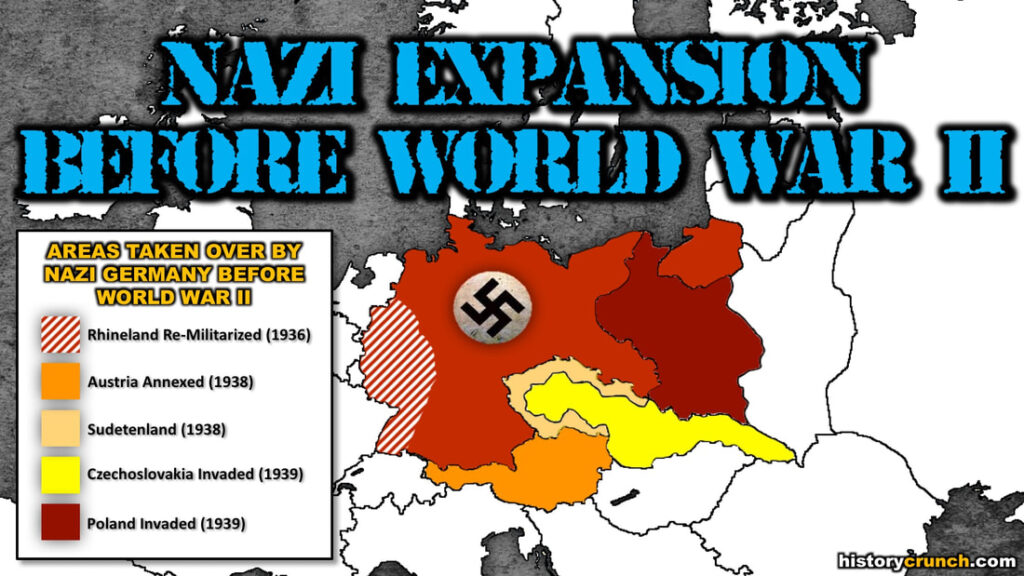
Hitler summoned the Czech president to Berlin, threatened to bomb Prague, and the old man signed his country away at four in the morning. German troops were in Prague by nine, in snow, and Hitler slept that night in the castle of the kings of Bohemia. Slovakia became a German puppet state.
LEARN MORESHOW LESSwhy it matters · key numbers · 2 key figuresMILITARYThere were no Germans to liberate in Prague; the excuse of the last five years was gone. Neville Chamberlain, who had said Munich meant peace, announced within days that Britain would fight for Poland. Six months after the Munich agreement, appeasement was over.
The Rome-Berlin Axis became a full military alliance: each country would join any war the other fought, with no conditions. Benito Mussolini signed it believing Hitler had promised no war for three years. Hitler was planning one for the autumn.
LEARN MORESHOW LESSwhy it matters · key numbers · 2 key figuresPOLITICALItaly was now tied to whatever Germany did next. When the war came in September, Mussolini stayed out anyway, and joined only in June 1940 when France was already beaten. The pact's real meaning was that Hitler no longer had to worry about Italy on his southern border.
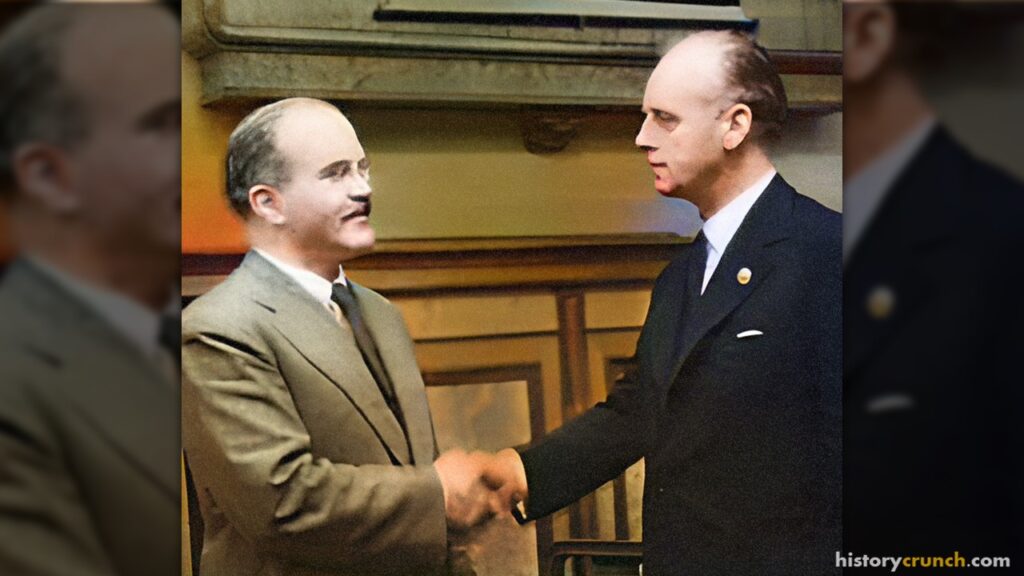
Ribbentrop flew to Moscow and signed a non-aggression pact with the Soviet Union, the country Hitler had spent twenty years calling the enemy of mankind. A secret protocol divided Poland, the Baltic states and Romania between them. Germans who had been taught to hate Bolshevism woke to photographs of Ribbentrop smiling beside Stalin.
LEARN MORESHOW LESSwhy it matters · key numbers · a sourcePOLITICALThe pact removed the one thing that could have stopped the invasion of Poland: a war on two fronts. Hitler had told his generals a day earlier that he would give a propaganda reason for starting the war and that nobody would ask afterward whether it was true. Eight days later he did.
IN THEIR OWN WORDS“Now Poland is in the position in which I wanted her. Our enemies are little worms. I saw them at Munich.”
Adolf Hitler, to his commanders at the Berghof, August 22nd, 1939WHAT TO NOTICEMunich is the conference of September 1938, where Britain and France handed Hitler Czechoslovakia's border regions rather than fight. The speech was made the day before the pact was signed, to explain it. Several versions of the notes exist; this line appears in all of them.
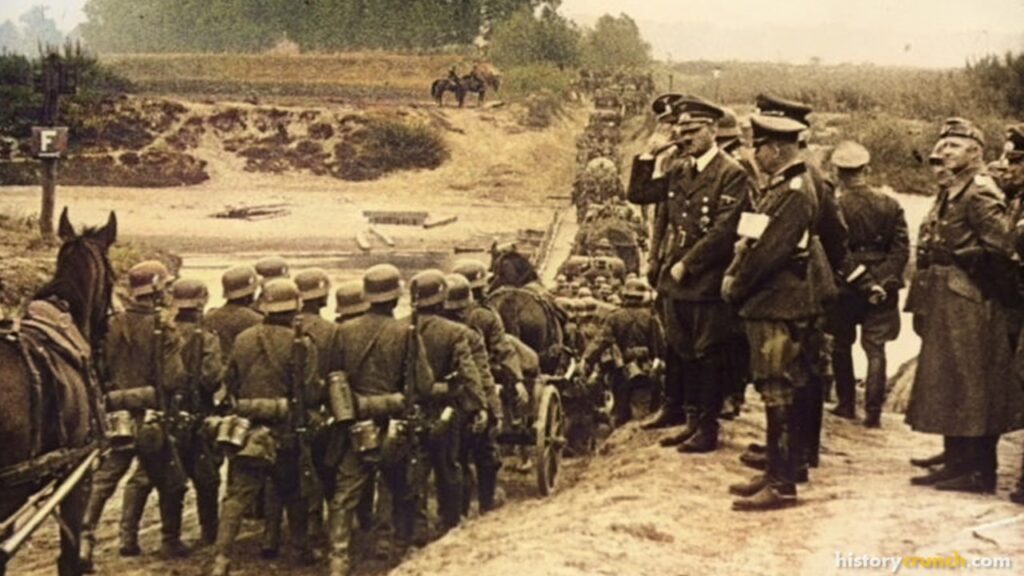
At 4:45 in the morning the battleship Schleswig-Holstein opened fire on a Polish fort at Danzig and 1.5 million German soldiers crossed the border. The excuse was a faked Polish attack on a German radio station, staged by the SS the night before. Britain and France declared war two days later.
LEARN MORESHOW LESSwhy it matters · key numbers · a sourceMILITARYThis was the war Hitler wanted, and the German home front did not cheer. The American journalist William Shirer, walking through Berlin that morning, saw no crowds and no flags, only people going to work in silence. They remembered 1918. The regime would spend the next six years making sure they did not say so.
IN THEIR OWN WORDS“Since 5:45 a.m. we have been returning the fire.”
Adolf Hitler, Reichstag speech, September 1st, 1939WHAT TO NOTICEEven the time was wrong; the shooting had started an hour earlier. The 'Polish attack' at Gleiwitz was carried out by SS men in Polish uniforms, who left behind a murdered prisoner from the Dachau camp dressed as a Pole.
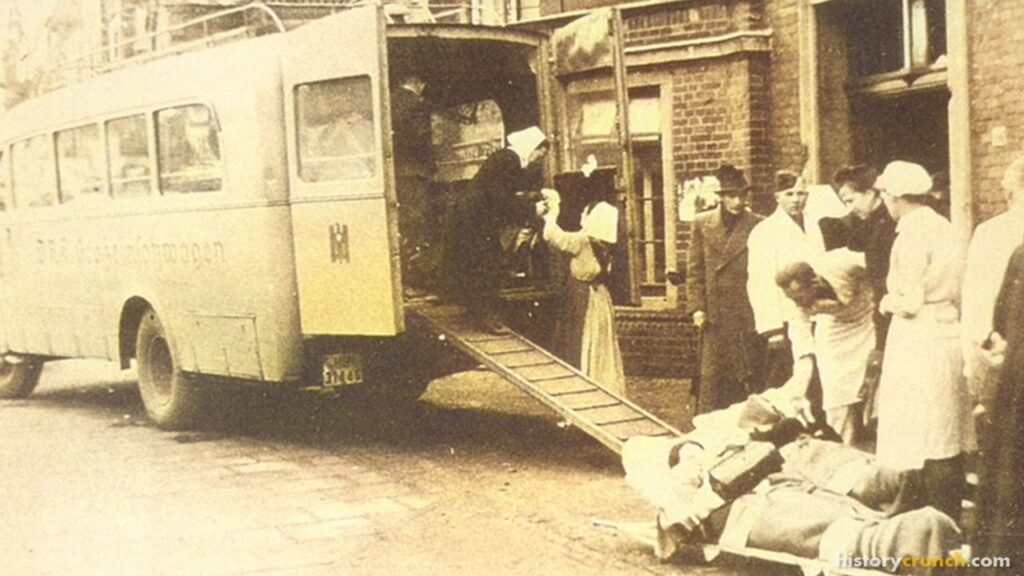
On his private notepaper, Hitler authorized named doctors to grant a mercy death, a euthanasia, to patients judged incurable. He dated the order September 1st, the day the war began, so that the killing would look like a wartime measure. Patients were selected by doctors from forms, taken by grey bus to six killing centers and gassed with carbon monoxide.
LEARN MORESHOW LESSwhy it matters · key numbers · a sourceSCIENCEAktion T4 was the regime's first program of mass murder, and it was aimed at Germans. About 70,000 disabled adults and children were killed before public protest made Hitler halt the official program in August 1941. The gas chambers, the staff and the lie of the shower room went east to the death camps.
IN THEIR OWN WORDS“Reich Leader Bouhler and Dr. Brandt are charged with the responsibility of enlarging the authority of certain physicians so that patients who, after a most careful diagnosis of their condition, are considered incurable, can be granted a mercy death.”
Adolf Hitler, authorization dated September 1st, 1939WHAT TO NOTICEIt is the only order for mass killing Hitler ever put his signature to. Everything that came afterward was given by word of mouth.
A carpenter named Georg Elser, working alone, spent thirty nights hollowing out a pillar in the Munich beer hall where Hitler spoke every November 8th and packed it with a bomb on a clock. Hitler cut his speech short to catch a train. The bomb went off thirteen minutes after he left, killing eight people and bringing down the roof over the platform.
LEARN MORESHOW LESSwhy it matters · key numbers · 1 key figurePOLITICALOne working man with a stolen clock came closer to killing Hitler than any general. Elser was caught at the Swiss border that night, held for five years, and shot at the Dachau camp in April 1945. The regime never believed he had acted alone, because it could not imagine that an ordinary German would.
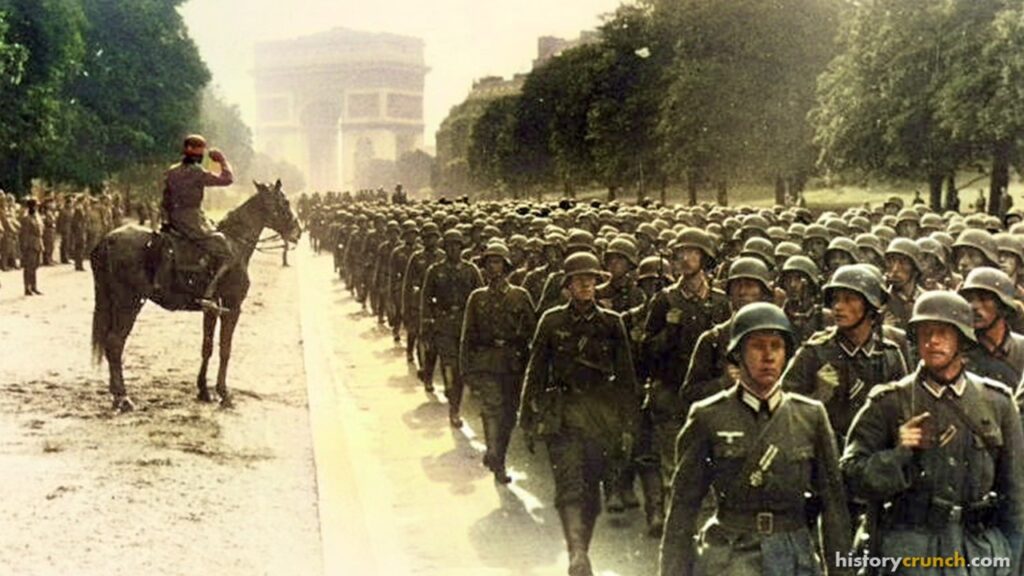
Six weeks after the attack in the west began, France asked for terms. Hitler had the railway carriage in which Germany had signed the 1918 Armistice taken out of its museum and placed on the exact spot in the forest of Compiegne, sat in Foch's chair, and had the French sign there. Newsreels showed him dancing a little step of joy.
LEARN MORESHOW LESSwhy it matters · key numbers · elsewhereMILITARYThis was the high point of Hitler's popularity in Germany. The defeat of 1918 had been avenged in the same carriage, at a cost of 27,000 German dead, and church bells rang across the country for a week. Almost every German believed the war was won.
The same day, Britain stood alone; Winston Churchill had told the Commons four days earlier that the Battle of Britain was about to begin.
After two months in which Hermann Goering's Luftwaffe had failed to drive the Royal Air Force from the sky, Hitler postponed Operation Sea Lion, the invasion of Britain, until further notice. The bombing of London went on all winter, but the barges gathered in the Channel ports were sent back.
LEARN MORESHOW LESSwhy it matters · key numbers · 3 key figuresMILITARYIt was the first thing Hitler had tried since 1933 that had not worked. Unable to finish Britain, he turned to the plan he had wanted all along, the war against Russia, and told his generals in December to be ready by May. Britain stayed in the war as the base from which Germany would eventually be invaded.
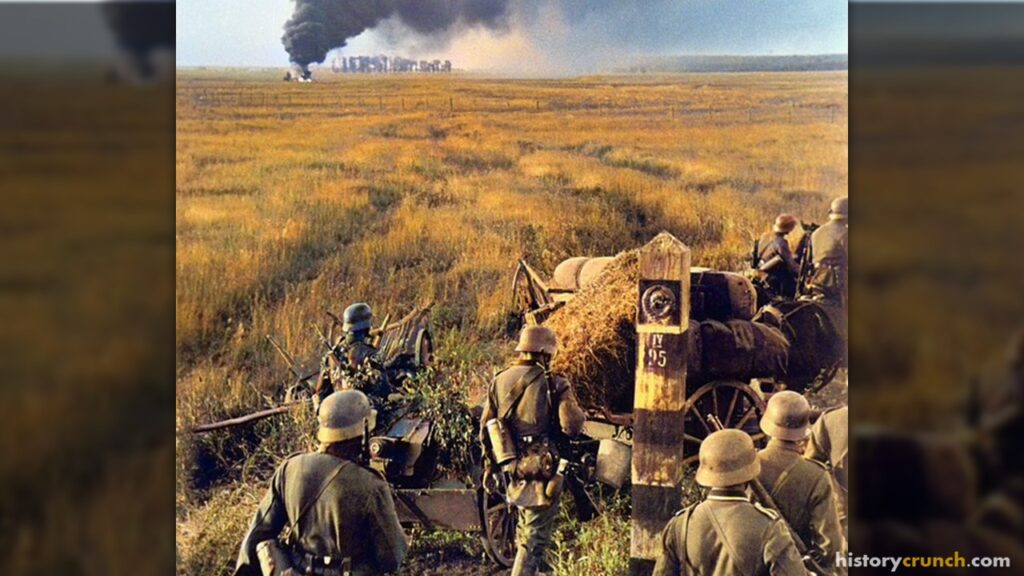
Three million German soldiers, with Finnish, Romanian and Hungarian allies, attacked the Soviet Union along a front of 1,800 miles. It was the war Mein Kampf had promised: living space in the east, the destruction of the Bolsheviks, and a colonial empire of German farmers ruling Slavic laborers. Orders issued in advance told the army that Soviet commissars were to be shot and that crimes against civilians would not be prosecuted.
LEARN MORESHOW LESSwhy it matters · key numbers · a sourceMILITARYFrom this day the regime was fighting the war it had been built for, and the murder of the Jews began behind the front lines within days, carried out by the Einsatzgruppen following the army in. It was also the war Germany could not win. Hitler had bet on victory before winter, and when winter came the army was outside Moscow without coats.
IN THEIR OWN WORDS“We have only to kick in the door and the whole rotten structure will come crashing down.”
Adolf Hitler, to Field Marshal von Rundstedt, before the invasionWHAT TO NOTICEThe Commissar Order of June 6th, telling the army to shoot captured Soviet political officers, and the Barbarossa Decree of May 13th, excusing soldiers from prosecution for crimes against civilians, were issued before a shot was fired. This was planned as a war of extermination.
Why did Hitler attack the Soviet Union while Britain was still fighting?
Ideology. The war in the east was the reason he had wanted power. Britain was a distraction; Russia was the point, and he had said so in 1925.
Strategy. He believed Britain was only fighting on because it hoped Russia would join in. Knock Russia out, he argued, and Britain would have to make peace. Both reasons were true at once.
Clemens von Galen, the Catholic bishop of Munster, told his cathedral from the pulpit that the state was murdering the sick and disabled and named the process by which it did it. Copies of the sermon were passed hand to hand across Germany and dropped by British aircraft. Three weeks later Hitler ordered the official killing program halted.
LEARN MORESHOW LESSwhy it matters · key numbers · a sourceRELIGIONIt was the one protest in twelve years that made the regime step back, which shows both what open opposition could do and how rarely anyone tried it. Galen was not arrested; Hitler said he would settle with him after the war. The killing went on quietly in hospitals until 1945.
IN THEIR OWN WORDS“If you establish and apply the principle that you can kill unproductive human beings, then woe betide us all when we become old and frail.”
Bishop Clemens von Galen, sermon of August 3rd, 1941WHAT TO NOTICEJoseph Goebbels wanted Galen hanged. Hitler decided that arresting a bishop in wartime would cost more than it gained, and that the score would be settled later.
A police decree ordered every Jew in the Reich over the age of six to wear a yellow six-pointed star sewn on the left breast, with the word Jew in the middle, from September 19th. Jews had to buy the stars themselves, ten pfennigs each, and could be arrested for covering them.
LEARN MORESHOW LESSwhy it matters · key numbers · 1 key figureSOCIALThe star made the Nuremberg Laws visible on the street. It marked the people to be avoided, insulted and, within six weeks, put on trains. Some Germans looked away; a few made a point of greeting star-wearers, and the Gestapo noted their names.
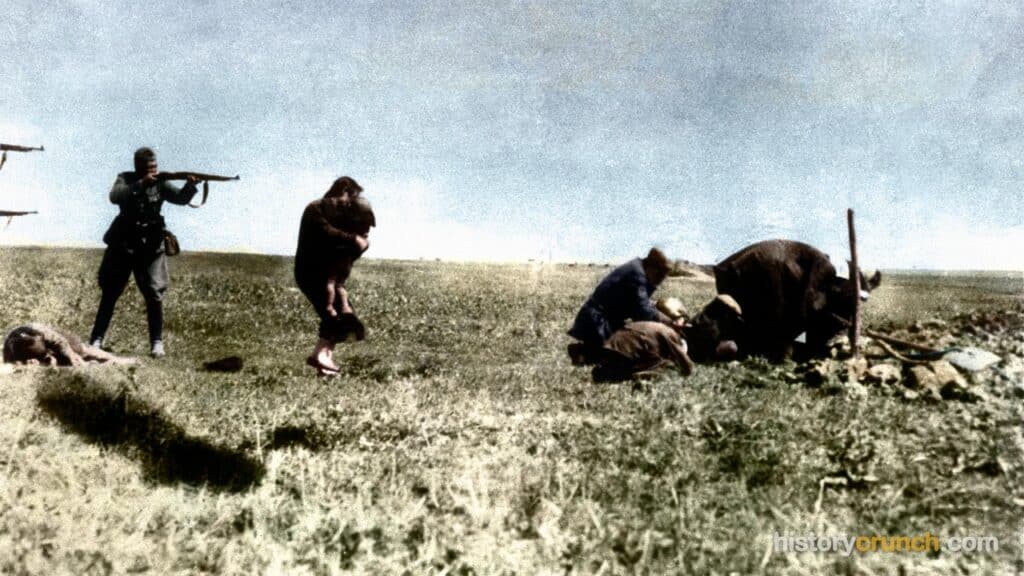
The first trains carrying German Jews east left Vienna, Prague and Berlin for the ghetto at Lodz in Poland, with a thousand people on each. Over the next four years the trains ran from every German city, the passengers told they were being resettled for work. Emigration was banned a week later.
LEARN MORESHOW LESSwhy it matters · key numbers · a sourcePOLITICALHeinrich Himmler gave the order; this is the German end of the Holocaust: the platform in Berlin, the neighbors who watched, the flats that were emptied and reallocated. About 165,000 German Jews were deported. Fewer than 10,000 came back. The camps they went to are on the Holocaust timeline.
IN THEIR OWN WORDS“The Fuhrer wishes that the Old Reich and the Protectorate be emptied and freed of Jews from west to east as quickly as possible.”
Heinrich Himmler, to the Gauleiter of the Warthegau, September 18th, 1941WHAT TO NOTICEHimmler's letter is the closest thing to a written order for the deportations. The decision itself was Hitler's, given verbally in mid-September, and no document of it exists.
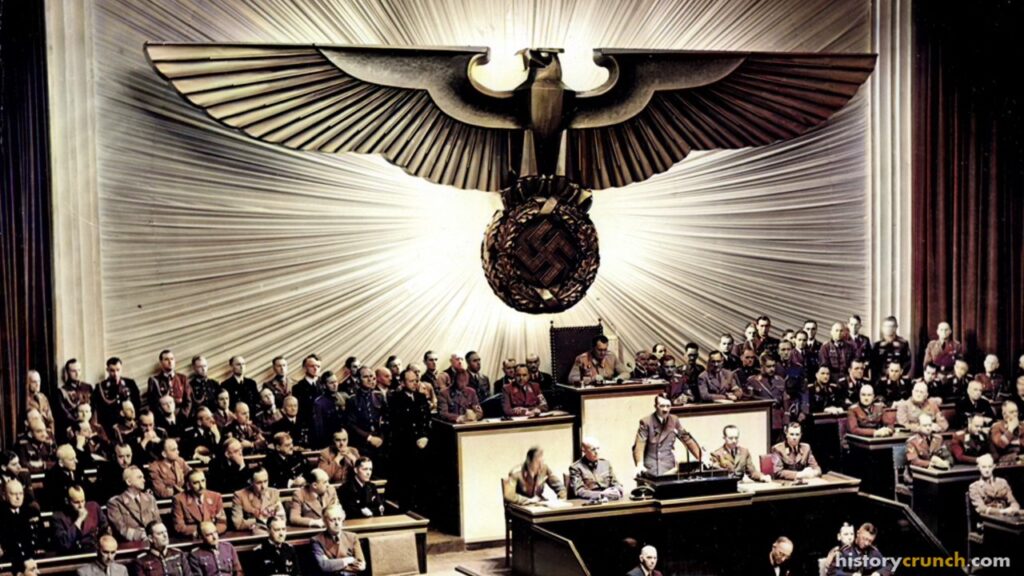
Four days after Pearl Harbor, with his army stalled in the snow outside Moscow, Hitler summoned the Reichstag, Germany's parliament, and declared war on the United States. The Tripartite Pact did not require it; Japan had attacked, not been attacked. He did it anyway, in a speech that blamed Franklin Roosevelt and the Jews behind him.
LEARN MORESHOW LESSwhy it matters · key numbers · a sourcePOLITICALGermany was now at war with the three largest industrial powers on earth at once. Nobody had forced the decision, and it made the outcome a matter of time: the American factories that had been supplying Britain would now supply an army, and Germany could not match them.
IN THEIR OWN WORDS“I can only be grateful to Providence that it entrusted me with the leadership in this historic struggle.”
Adolf Hitler, declaring war on the United States, December 11th, 1941WHAT TO NOTICEThe next day Hitler told his party leaders privately that the world war had arrived and that the destruction of the Jews must be its consequence. Joseph Goebbels recorded it in his diary.
With the attack on Moscow broken and the Soviet counteroffensive driving his frozen army back, Hitler dismissed the commander in chief of the army, Field Marshal von Brauchitsch, and took the job himself. Generals who ordered retreats were sacked. The order was to stand fast and hold every position.
LEARN MORESHOW LESSwhy it matters · key numbers · 1 key figureMILITARYFrom here Hitler ran the war in the east personally, down to the movement of divisions, from a map table hundreds of miles away. The stand-fast order may have saved the army that winter. The same order in the battle for Stalingrad a year later destroyed one.
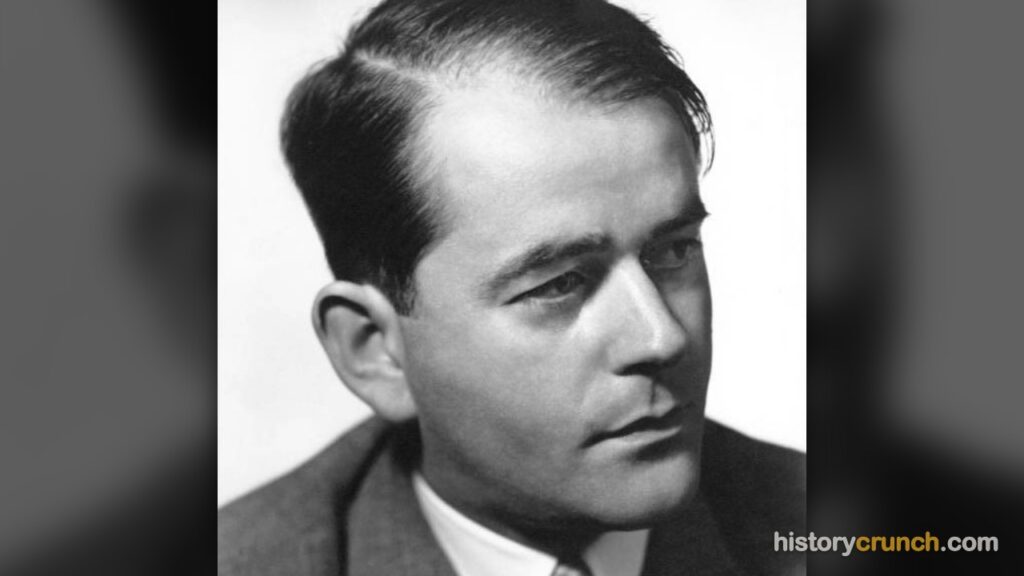
When the armaments minister died in an air crash, Hitler gave the job to his architect, Albert Speer, a 36-year-old with no experience of industry. Speer centralized production, cut the number of weapon types and put the factories under the men who ran them. Output of tanks, aircraft and guns roughly tripled by 1944.
LEARN MORESHOW LESSwhy it matters · key numbers · 2 key figuresECONOMICSpeer's miracle kept Germany fighting for two more years, and it ran on slave labor: by 1944 more than seven million foreign workers and prisoners were working in the Reich, many of them to death. Speer admitted the system at the Nuremberg trial and denied knowing where the workers came from. The evidence says otherwise.
Two Czech soldiers trained in Britain and dropped by parachute ambushed Reinhard Heydrich, head of the SS security police and ruler of the Czech lands, as his open car slowed at a bend in Prague. He died of his wounds a week later. In revenge the SS shot every man in the village of Lidice, sent the women to a camp and the children to be gassed or Germanized, and burned the village to the ground.
LEARN MORESHOW LESSwhy it matters · key numbers · 1 key figureMILITARYHeydrich had chaired the Wannsee Conference four months earlier; the murder of the Jews of Poland was named Operation Reinhard in his memory. Lidice showed the world what the regime did to a village, and the name was taken up by towns from Illinois to Brazil.
Britain's Bomber Command put every aircraft it could find, including training planes, over Cologne on a single night: 1,047 of them, in ninety minutes. About 480 people died, 45,000 lost their homes and 600 acres of the city burned. The cathedral survived.
LEARN MORESHOW LESSwhy it matters · key numbers · 1 key figureMILITARYHermann Goering had promised in 1939 that no enemy bomber would reach the Ruhr, Germany's industrial region. From this night on, the war came home to German cities every week, and the regime that had bombed Warsaw and Rotterdam discovered what it was like. Hamburg, Berlin and Dresden were still to come.
Stalingrad told Germans the war was lost; Joseph Goebbels asked them for total war instead. Bombs destroyed the cities, the officers' bomb failed to kill Hitler, and the regime sent boys and grandfathers to fight in its last winter. Hitler shot himself with the Russians a few streets away, and Germany surrendered without conditions. Then the Allies cut the country in four, put its leaders on trial, and gave the word genocide to the world. Two Germanies emerged in 1949, and the Cold War timeline takes it from there.
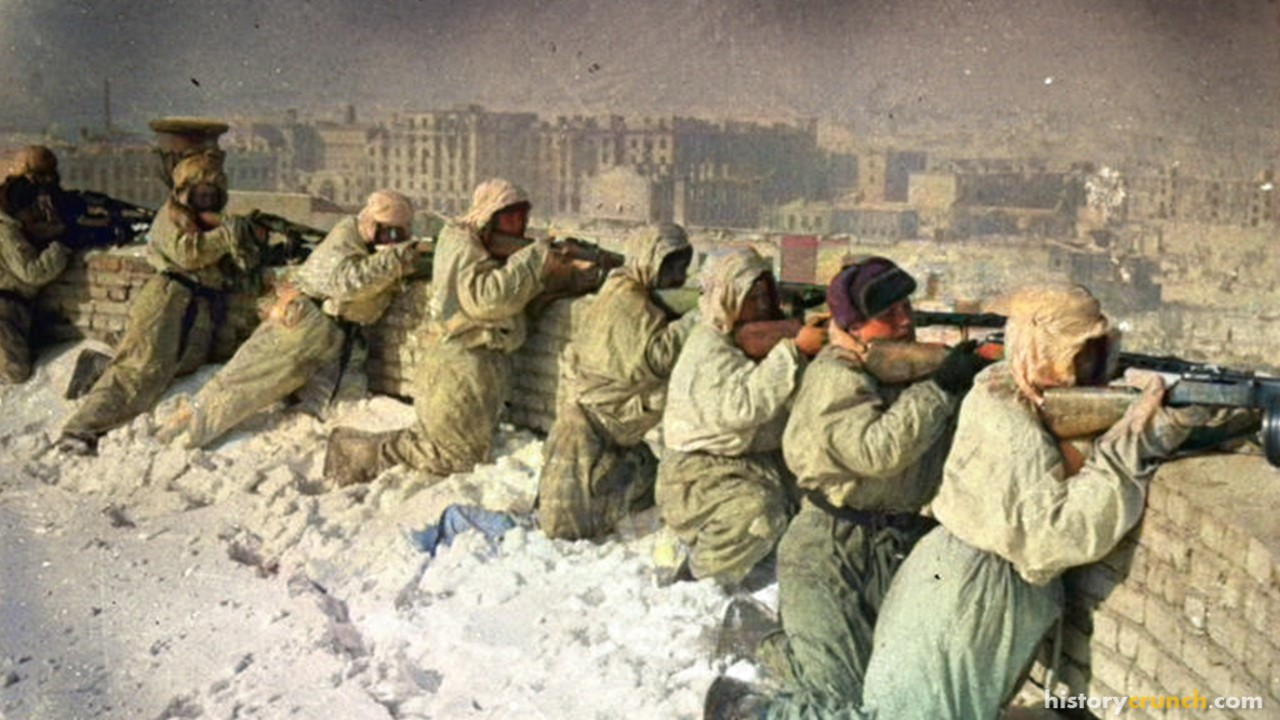
Surrounded since November, starving and out of ammunition, the last German troops in Stalingrad gave up. Hitler had forbidden surrender and promoted the commander, Friedrich Paulus, to field marshal the day before, on the grounds that no German field marshal had ever been taken alive. Paulus surrendered anyway. About 91,000 men went into Soviet captivity; about 5,000 came home.
LEARN MORESHOW LESSwhy it matters · key numbers · a sourceMILITARYGermany declared three days of national mourning and, for the first time, the radio admitted a defeat. The war that had been all victories now had a direction, and Germans could see it. From Stalingrad on, the regime's propaganda stopped promising triumph and started promising revenge.
IN THEIR OWN WORDS“The Sixth Army, true to its oath and conscious of its lofty and important mission, has held its position to the last man and the last round.”
German High Command communique, February 3rd, 1943WHAT TO NOTICEIt was a lie; the army had surrendered. The communique was read on the radio after a roll of drums and followed by the slow movement of Beethoven's Fifth. Cinemas and theaters closed for three days.
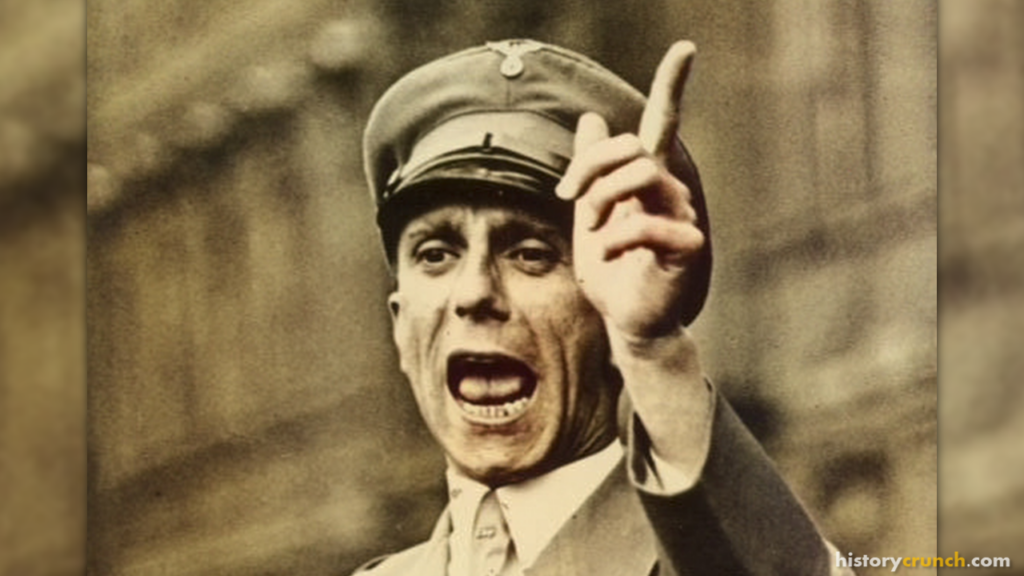
Two weeks after the surrender at Stalingrad, Joseph Goebbels filled the Berlin Sportpalast with a hand-picked crowd and asked them ten questions, each answered with a roar. Do you want total war? Do you want it, if necessary, more total and more radical than we can even imagine today? The speech was broadcast to the nation and filmed for the newsreels.
LEARN MORESHOW LESSwhy it matters · key numbers · a sourceCULTUREIt was Goebbels' masterpiece and a confession: the regime that had promised a short war was now asking Germans to give up everything for a long one. Theaters closed, women were registered for work and the last luxuries disappeared. The crowd's yes was on film, and the regime treated it as the nation's.
IN THEIR OWN WORDS“I ask you: do you want total war? If necessary, do you want a war more total and radical than anything that we can even imagine today?”
Joseph Goebbels, Sportpalast speech, February 18th, 1943WHAT TO NOTICEGoebbels wrote afterward that it had been an hour of idiocy: if he had told the crowd to jump from the third floor, they would have done it.
Hans and Sophie Scholl, students at Munich University, and their friend Christoph Probst were tried for treason in a single morning and beheaded that afternoon. Their group, the White Rose, had printed six leaflets calling on Germans to resist, and Sophie had been caught scattering the last of them from a balcony into the university courtyard four days earlier.
LEARN MORESHOW LESSwhy it matters · key numbers · a sourceIDEASThey were the regime's own children, raised in the Hitler Youth, and they had decided that silence was guilt. They changed nothing in 1943 and everything afterward: their leaflets were dropped over Germany by the Allies that summer, and their names are on squares and schools across the country.
IN THEIR OWN WORDS“Somebody, after all, had to make a start. What we wrote and said is also believed by many others. They just don't dare express themselves as we did.”
Sophie Scholl, to the People's Court, February 22nd, 1943WHAT TO NOTICEThe judge, Roland Freisler, screamed at the defendants through the trial. The Scholls' cellmate reported Sophie's last words before the guillotine as: such a fine, sunny day, and I have to go.
On the third night of a week of British and American raids on Hamburg, the fires in the working-class districts joined into a single storm that pulled in winds of hurricane force and burned at more than 800 degrees. About 37,000 people died in the week, most of them in one night, and a million fled the city.
LEARN MORESHOW LESSwhy it matters · key numbers · 2 key figuresMILITARYGermans had been told the Luftwaffe, the German air force, would protect them and now knew it could not. Joseph Goebbels called the raids a catastrophe that staggered the imagination, and Speer told Hitler that six more like it would end the war. The bombing did not break the regime, but it ended any belief in the city that the war could be won.
Three years to the day after Barbarossa, the Red Army attacked Army Group Center in Belarus with 1.7 million men and broke it in two weeks. Hitler's stand-fast orders trapped whole corps; 28 divisions were destroyed and about 300,000 men killed, wounded or captured. By August the Soviets were on the Vistula and in East Prussia.
LEARN MORESHOW LESSwhy it matters · key numbers · 1 key figureMILITARYBagration was the worst defeat in German military history, worse than Stalingrad, and it happened while the world was watching Normandy. From here Germany was fighting on its own soil in the east, and the officers who tried to kill Hitler four weeks later did so knowing the war was lost.
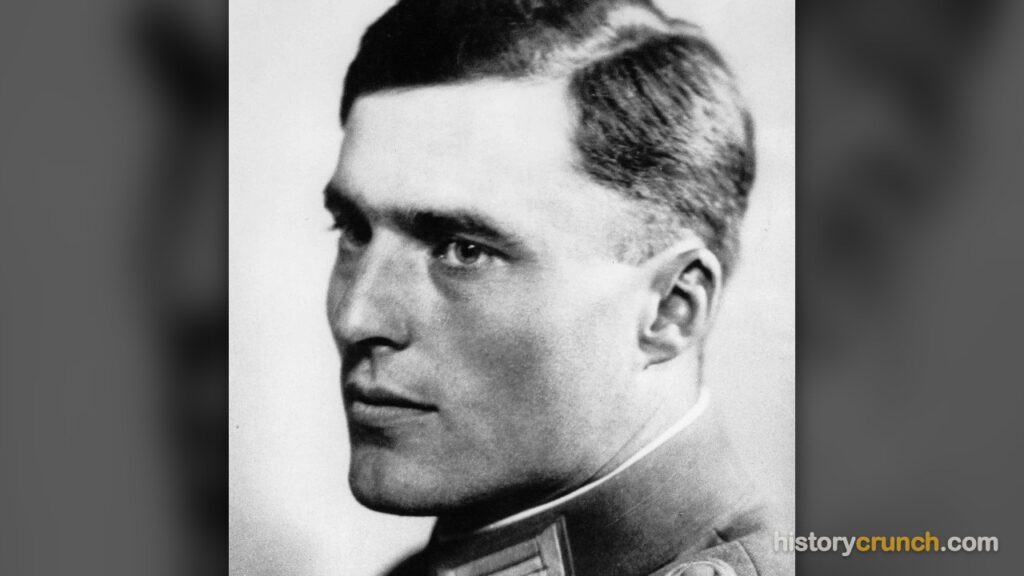
Colonel Claus von Stauffenberg, who had lost an eye and a hand in Africa, left a briefcase bomb under the map table at Hitler's headquarters and flew to Berlin to lead a coup. The bomb killed four men; Hitler, shielded by the table's leg, walked out with singed trousers. By midnight the coup had collapsed and Stauffenberg had been shot by firing squad in a courtyard in Berlin.
LEARN MORESHOW LESSwhy it matters · key numbers · a sourceMILITARYIt was the closest anyone came to ending the regime from inside. The revenge that followed was total: about 200 people executed, many of them slowly, families arrested, the army put under the Nazi salute. Hitler took his survival as proof that Providence wanted him to finish the war, and Germany paid for the next ten months.
IN THEIR OWN WORDS“Long live sacred Germany!”
Claus von Stauffenberg, before the firing squad, shortly after midnight on July 21st, 1944WHAT TO NOTICEThe plotters' plan used Operation Valkyrie, the army's own scheme for putting down a revolt at home. Joseph Goebbels, who had radio, and Hitler, who had a telephone, beat it. The regime's rule after the plot was that it would fight to the end, because there was no one left inside to stop it.
Were the July plotters heroes?
Yes. They risked and lost everything to stop a criminal regime, and they were the only Germans in a position to do it who tried.
Late ones. Most had served the regime for a decade and turned against it only when the war was lost. Germans after 1945 called them traitors for years; it took a generation before Stauffenberg was honored.
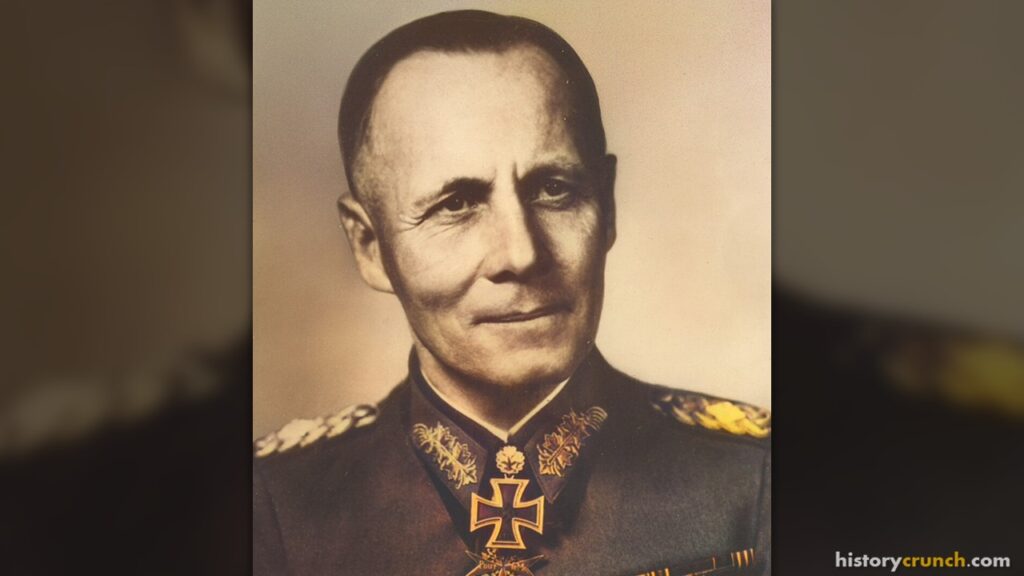
Two generals arrived at Field Marshal Rommel's house with a choice from Hitler: a trial before the People's Court for his knowledge of the July plot, with his family and staff punished, or a cyanide capsule, a state funeral and a pension for his widow. Rommel put on his uniform, said goodbye to his wife and son, and took the poison in the generals' car.
LEARN MORESHOW LESSwhy it matters · key numbers · 2 key figuresMILITARYGermany's most popular soldier, the Desert Fox of the newsreels, was murdered by the regime that had made him famous and then buried with full honors as a hero who had died of his wounds. The lie held until after the war. It is the regime in one afternoon: the cult, the fear and the funeral.
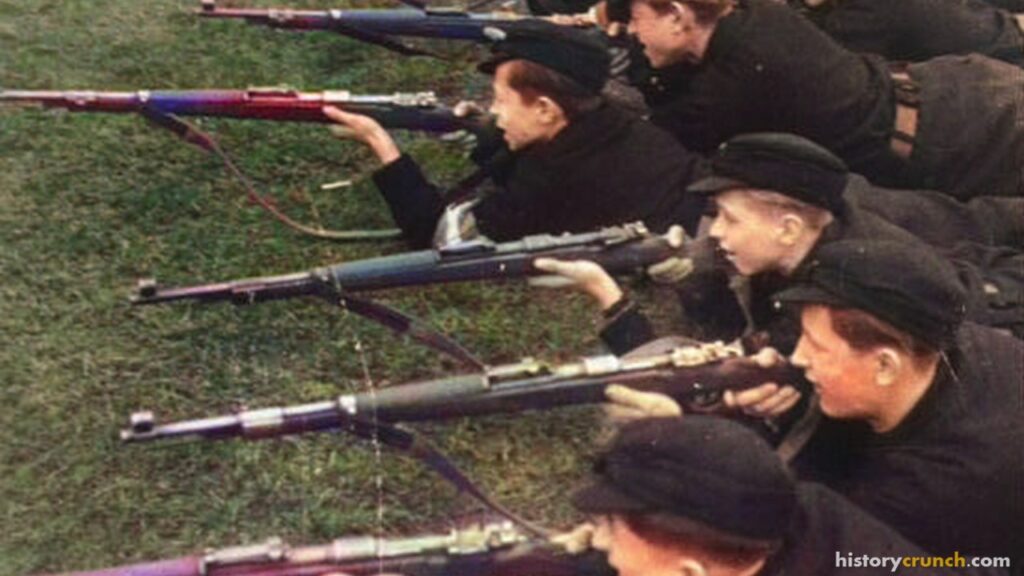
With the Allies at the German border, Hitler ordered every male from 16 to 60 not already in uniform into a home guard called the Volkssturm, the People's Storm. It was run by the party, not the army, armed with whatever was left, and trained for a few hours. Hitler Youth boys of 15 and 14 were taken as well.
LEARN MORESHOW LESSwhy it matters · key numbers · elsewhereMILITARYThe regime had run out of soldiers and was sending its children and grandfathers to die for it. The Volkssturm slowed nothing, but it was the party's answer to defeat: Germany would go down fighting, and every German would go down with it.
Announced on the anniversary of the 1813 Battle of Leipzig, when a people's rising had helped drive out Napoleon; the name was chosen to make the connection.
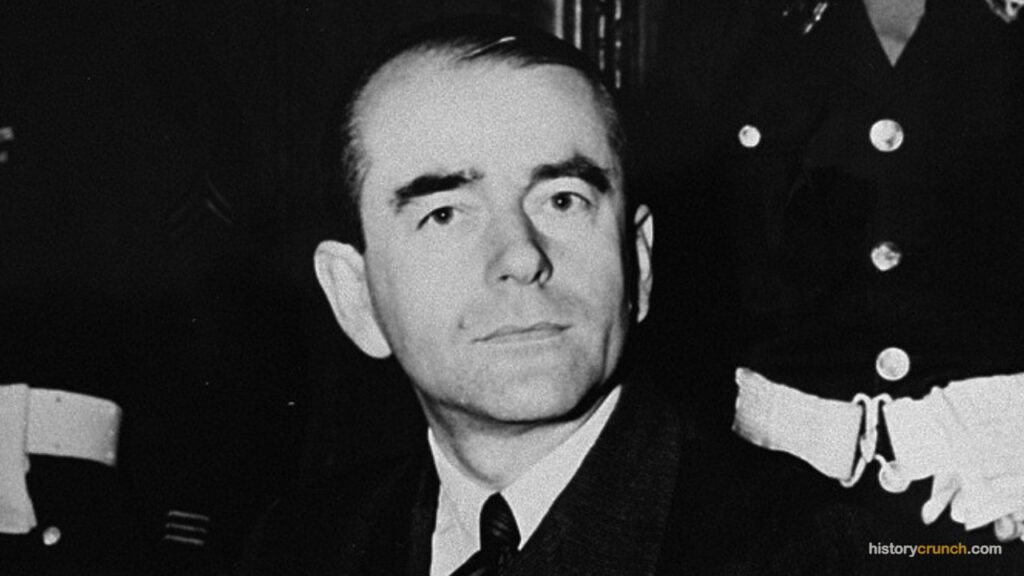
With the Allies across the Rhine, Hitler ordered that everything of value in Germany, factories, bridges, railways, power stations, mines and food stores, be destroyed before the enemy could take it. Speer, who had argued for a day against the order, spent the last weeks of the war traveling the country persuading governors and generals to ignore it.
LEARN MORESHOW LESSwhy it matters · key numbers · a sourcePOLITICALHitler told Speer that if the war was lost the German people were lost too, and that there was no need to consider what they would need to survive, because the best had already fallen. It was the regime's last word on the nation it claimed to serve. Most of the order was never carried out, which is why Germany had a country to rebuild.
IN THEIR OWN WORDS“If the war is lost, the people will be lost also. It is not necessary to worry about what the German people will need for elemental survival. On the contrary, it is best for us to destroy even these things.”
Adolf Hitler, to Albert Speer, March 18th, 1945, as Speer recorded itWHAT TO NOTICESpeer's account of this conversation is the only one, and Speer was defending himself at the Nuremberg trial when he gave it. The written decree of the next day, which survives, orders the destruction in plain terms.
With Soviet troops a few hundred yards from the Chancellery, Hitler, who had lived underground since January, married Eva Braun after midnight, dictated a testament that blamed the Jews for the war and expelled Hermann Goering and Heinrich Himmler from the party, and in the afternoon shot himself. She took cyanide. Their bodies were burned in the garden with petrol from the motor pool.
LEARN MORESHOW LESSwhy it matters · key numbers · a sourcePOLITICALHe had said in 1933 that no power on earth would get him out of the Chancellery alive, and he was right. He left no successor with any authority, a capital in ruins and an order to fight on. Germany surrendered eight days later. The regime that had promised a thousand years had lasted twelve.
IN THEIR OWN WORDS“Above all I charge the leaders of the nation and those under them to scrupulous observance of the laws of race and to merciless opposition to the universal poisoner of all peoples, international Jewry.”
Adolf Hitler, political testament, April 29th, 1945WHAT TO NOTICEThe last sentence he wrote for the record was about the Jews. He named Admiral Donitz as president and Joseph Goebbels as chancellor; Goebbels lasted one day.
Did Hitler's death end Nazism?
Yes. The regime was built on one man's will, and without him it had no idea and no leader. It was gone in a week.
No. Millions of Germans had believed, and belief does not die with a leader. Denazification, the trials and two generations of teaching were needed, and the ideas still surface.
Chancellor for a day, Goebbels tried to negotiate with the Soviets, was told the only terms were unconditional surrender, and gave up. That evening his wife Magda had an SS doctor poison their six children, aged four to twelve, in their beds. The parents then went up to the garden and were shot, or shot themselves, and burned beside Hitler.
LEARN MORESHOW LESSwhy it matters · key numbers · 1 key figurePOLITICALThe man who had made the regime's words had nothing left to say, and he took his children with him rather than let them grow up in a world without Hitler. Of the men who had run Germany for twelve years, only one now remained in charge of anything, and he was in Flensburg trying to surrender.
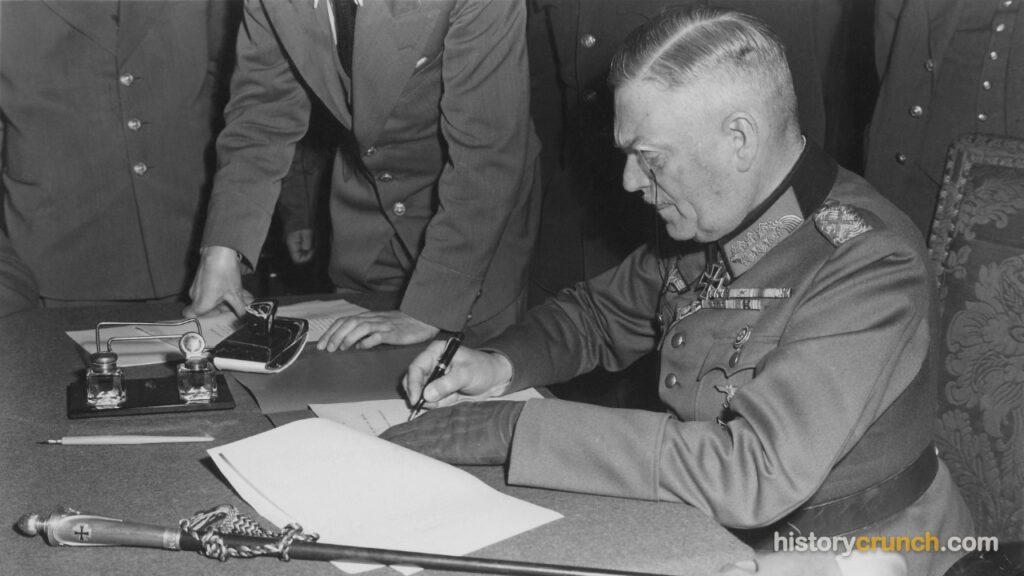
Admiral Donitz, Hitler's chosen successor, sent General Jodl to Dwight Eisenhower's headquarters at Reims to sign an unconditional surrender on May 7th, and Field Marshal Keitel signed it again for the Soviets in Berlin the next night. The Wehrmacht laid down its arms at one minute past midnight on May 9th. There was no armistice, no negotiation and no government left to sign for.
LEARN MORESHOW LESSwhy it matters · key numbers · a sourceMILITARYIn 1918 the army had gone home undefeated, or said it had, and the lie had made Hitler possible. In 1945 the Allies made sure there could be no second stab-in-the-back: the surrender was total, the country was occupied, and the generals signed it in person. Germany had ceased to exist as a state.
IN THEIR OWN WORDS“With this signature the German people and the German armed forces are, for better or worse, delivered into the victors' hands.”
Alfred Jodl, after signing at Reims, May 7th, 1945WHAT TO NOTICEJodl asked that the victors treat Germany with generosity. Eisenhower declined to shake his hand. Jodl was hanged at Nuremberg after the trial, seventeen months later.
Himmler, who had tried to negotiate a surrender behind Hitler's back and been expelled from the party for it, was caught at a British checkpoint in disguise, with a shaved mustache and an eye patch. During a medical examination he bit a cyanide capsule hidden in his mouth. The same day the British arrested Donitz's government at Flensburg.
LEARN MORESHOW LESSwhy it matters · key numbers · 1 key figurePOLITICALThe man who had run the camps, the police and the murder of Europe's Jews died in fifteen minutes on a barracks floor, and was buried in an unmarked grave. With the Flensburg arrests Admiral Donitz's government, the last pretense of one, ended. From this day the Allies ruled.
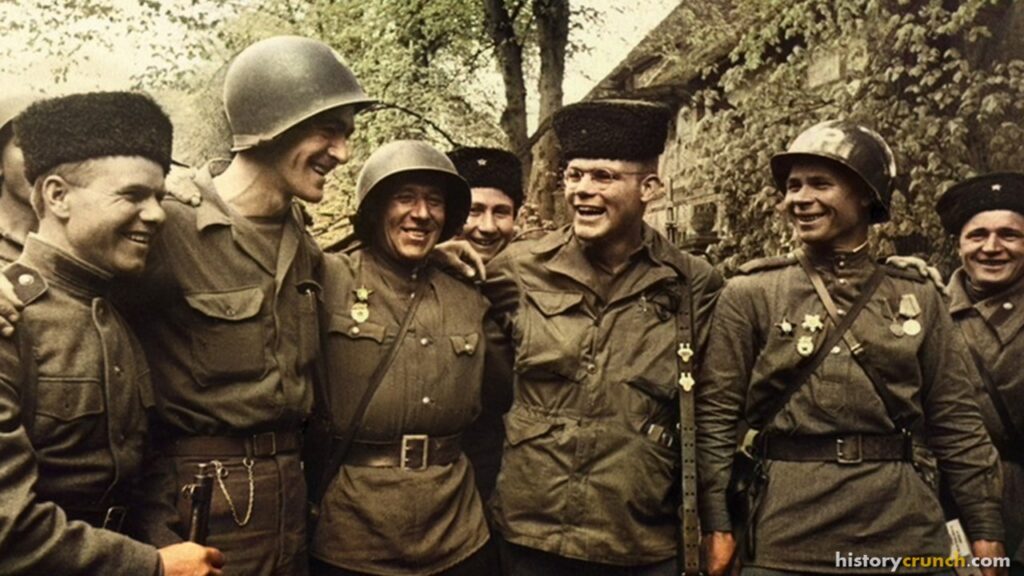
The four Allied commanders met in Berlin and declared that they now held supreme authority in Germany. The country was divided into American, British, French and Soviet zones of occupation, and Berlin, inside the Soviet zone, into four sectors. Germany's eastern lands were handed to Poland and the Soviet Union, and about 12 million Germans were expelled from them.
LEARN MORESHOW LESSwhy it matters · key numbers · elsewherePOLITICALFor the first time in its history Germany had no government of its own. The zones were meant to be temporary; they hardened into two countries within four years. The Potsdam conference in July confirmed the plan: Germany would be demilitarized, denazified, democratized and made to pay.
Six weeks later, at the Potsdam conference, Harry Truman told Joseph Stalin that the United States had a new weapon of unusual destructive force. Stalin, whose spies had already told him, said he hoped it would be put to good use against the Japanese.
The Allied Control Council, the four-power body running Germany, abolished the Nazi Party and every organization attached to it, from the SS to the Hitler Youth, and made it a crime to revive them. The swastika, the salute and the uniforms were banned, and the party's property was seized.
LEARN MORESHOW LESSwhy it matters · key numbers · a sourcePOLITICALA party of eight million members ceased to exist on paper in an afternoon. What its members believed was another matter, and the Allies knew it: the next question was what to do with the eight million, and the answer was denazification.
IN THEIR OWN WORDS“The National Socialist German Workers Party, its subordinate organizations and affiliated associations are abolished and declared to be illegal.”
Allied Control Council Law No. 2, October 10th, 1945WHAT TO NOTICEThe ban is still in force in Germany today, where the swastika and the Hitler salute remain criminal offenses.
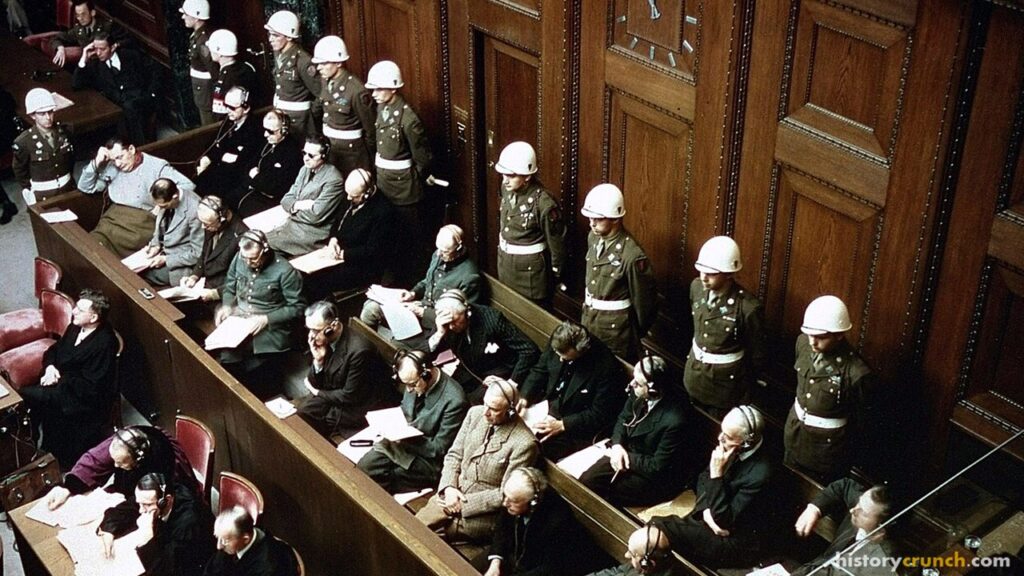
In the city where the party had held its rallies and passed its race laws, 21 of the surviving leaders of the regime, Hermann Goering first among them, went on trial before judges from the United States, Britain, the Soviet Union and France. The charges were conspiracy, crimes against peace, war crimes and a new one, crimes against humanity.
LEARN MORESHOW LESSwhy it matters · key numbers · a sourcePOLITICALNobody had ever put the leaders of a defeated state on trial before; the usual thing was to shoot them, which Winston Churchill and Stalin had both suggested. The Americans insisted on a court with evidence and defense lawyers. The regime's own paperwork, which it had never thought to destroy, convicted it.
IN THEIR OWN WORDS“The wrongs which we seek to condemn and punish have been so calculated, so malignant and so devastating that civilization cannot tolerate their being ignored, because it cannot survive their being repeated.”
Robert H. Jackson, chief American prosecutor, opening statement, November 21st, 1945WHAT TO NOTICEJackson was a justice of the United States Supreme Court who took leave to prosecute. His opening statement is still taught in law schools as the founding text of international criminal law.
The Control Council ordered every German adult to fill in a questionnaire of 131 questions about their past, and set up tribunals to sort them into five classes from major offender to exonerated. Millions of forms were filled in; former members were barred from jobs, fined, or in the worst cases interned. Each zone did it differently.
LEARN MORESHOW LESSwhy it matters · key numbers · a debatePOLITICALIt was the first attempt in history to cleanse a whole society of a political creed, and it half worked. The Americans tried the hardest and gave up first, as the Cold War made anti-communists useful; the West German state that followed employed many of the judges, teachers and civil servants it had been meant to remove. What did work was time, schools and the trials.
Did denazification work?
No. It punished small fry and let the powerful buy certificates, the Persilscheine that washed a past white, and by 1948 the Allies had handed it to Germans who wanted it over.
Yes, in the way that mattered. It broke the party's hold on public life, put its ideas beyond respectability, and made a generation of Germans explain to a tribunal what they had done. No Nazi party has won a seat in the Bundestag since.
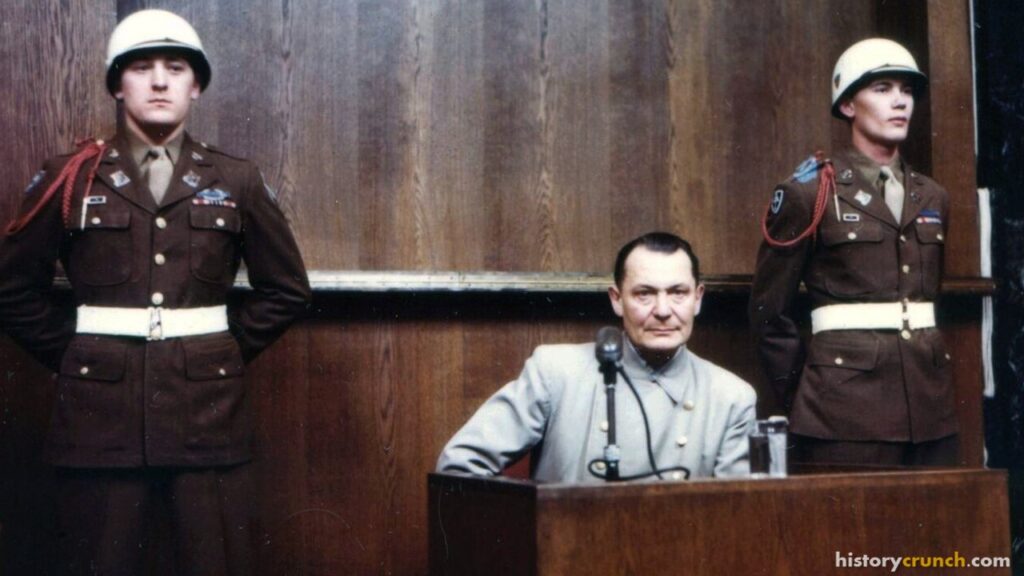
After ten months, the judges found nineteen defendants guilty and acquitted three. Twelve were sentenced to death, among them Hermann Goering, Ribbentrop, Keitel and Jodl, and one of the twelve, Bormann, in his absence. Speer got twenty years, Hess life. On the night before the hangings Goering swallowed cyanide in his cell. The other ten were hanged in the prison gym on October 16th.
LEARN MORESHOW LESSwhy it matters · key numbers · a sourcePOLITICALThe trial established that following orders is no defense and that starting a war of aggression is a crime, and it wrote the first full record of what the regime had done, from its own files. The Genocide Convention, the Geneva Conventions of 1949 and the International Criminal Court all descend from this courtroom.
IN THEIR OWN WORDS“The true test, which is found in varying degrees in the criminal law of most nations, is not the existence of the order, but whether moral choice was in fact possible.”
Judgment of the International Military Tribunal, October 1st, 1946WHAT TO NOTICETwelve further trials at Nuremberg between 1946 and 1949 judged the doctors, the judges, the industrialists and the Einsatzgruppen commanders. The bodies of the hanged men were cremated and the ashes scattered in a river so that there could be no graves.
The United Nations General Assembly adopted a convention making genocide, the attempt to destroy a national, ethnic, racial or religious group, a crime under international law. The word had been invented four years earlier by Raphael Lemkin, a Polish Jewish lawyer who had lost 49 relatives to the regime. The Universal Declaration of Human Rights was adopted the next day.
LEARN MORESHOW LESSwhy it matters · key numbersPOLITICALWhat the regime had done now had a name and a law. The convention came into force in 1951 and was first used to convict anyone in 1998, for Rwanda. It is the direct answer to Nazi Germany in the world's rulebook, and it exists because one man spent the war insisting that there had to be a word for it.
The three western zones became the Federal Republic of Germany, with a constitution written to make another Hitler impossible: a president with no emergency powers, a five percent hurdle to keep small parties out, and a first article that says human dignity is inviolable. The Soviet zone became the German Democratic Republic on October 7th. Berlin stayed divided.
LEARN MORESHOW LESSwhy it matters · key numbers · a sourcePOLITICALThe republic that Hitler destroyed had lasted fourteen years. The one built on its ruins learned from every failure on this timeline, and it has now lasted more than seventy. Nazi Germany ends here, with the country cut in two by the war it started, and the Cold War timeline picks up the story.
IN THEIR OWN WORDS“Human dignity is inviolable. To respect and protect it is the duty of all state authority.”
Article 1 of the Basic Law of the Federal Republic of Germany, May 23rd, 1949WHAT TO NOTICEThe Basic Law also bans parties that seek to undermine the democratic order. The framers had read the Weimar Constitution closely and written the opposite of Article 48.

I'm a passionate history and geography teacher with over 15 years of experience working with students in the middle and high school years. I have an Education Degree with a focus in World History. I have been writing articles for History Crunch since 2015 and love the challenge of creating historical content for young learners!

I'm the founder of History Crunch, which I first began in 2015 with a small team of like-minded professionals. I have an Education Degree with a focus in Social Studies education. I spent nearly 15 years teaching history, geography and economics in secondary classrooms to thousands of students. Now I use my time and passion researching, writing and thinking about history education for today's students and teachers.

K.L. is a content writer for History Crunch. She is a fantastic history and geography teacher that has been helping students learn about the past in new and meaningful ways since the mid-2000s. Her primary interest is Ancient History, but she is also driven by other topics, such as economics and political systems.
To cite this timeline as a source, use one of the formats below.
MLA: Beck, E., et al. “Nazi Germany Timeline.” HistoryCrunch, 11 September 2026, https://historycrunch.com/nazi-germany-timeline/.
APA: Beck, E., Millar, B., & Woida, K.L. (2026). Nazi Germany Timeline. HistoryCrunch. https://historycrunch.com/nazi-germany-timeline/
Chicago: Beck, E., B. Millar, and K.L Woida. “Nazi Germany Timeline.” HistoryCrunch. September 11, 2026. https://historycrunch.com/nazi-germany-timeline/
© History Crunch
The Weimar Republic had a constitution that gave every adult the vote. Why did it last only fourteen years?
Historians disagree about whether Weimar was doomed. Some argue that a republic born in defeat, with proportional voting and Article 48, could never have survived a real crisis. Others point out that it survived 1919, 1920 and 1923, that the Nazis were a fringe until 1930, and that the decisions of a few men in 1932 and 1933, above all Hindenburg's, ended a democracy that might have lasted.
Every German party hated the Treaty of Versailles. How did the Nazis turn that hatred into their own?
Some historians hold that Versailles was the root of everything: it humiliated Germany and made revenge the only politics that sold. Others argue that the treaty was milder than the one Germany had imposed on Russia in 1918, that Germany had recovered by 1928, and that Versailles was a grievance the Nazis used rather than a wound that made them.
President Paul von Hindenburg beat Hitler in an election and refused to make him chancellor. Why did he appoint him nine months later?
Historians disagree about Hindenburg's responsibility. One view holds him the republic's guardian for as long as his strength lasted, a man who kept his oath and beat Hitler at the polls. Another holds that he had governed by decree since 1930, had never believed in the republic, and in the end gave Hitler the power he had refused him, for reasons of tiredness and bad advice.
In 1919 Adolf Hitler was an army informer with no job and no country. How was he chancellor of Germany fourteen years later?
Historians disagree about how much of the rise was Hitler. One view is that without his speaking, his instinct for timing and his refusal to compromise, the Nazi Party would have stayed one of a dozen nationalist sects. Another is that the Depression would have brought some dictator to power in Germany whoever led the largest party, and that Hitler's talent was in being available.
Was Hitler voted into power? Follow the numbers from 1928 to 1933 and decide.
Historians argue about how to read the 1932 results. Some see a nation choosing Hitler: 13.7 million people voted for him with his program in plain sight. Others stress that six in ten Germans voted against him even at his peak, and that the decisive votes in 1933 were cast in Paul von Hindenburg's study, not at the ballot box.
The Nazi Party got 2.6 percent in 1928 and 37 percent in 1932. What happened in between?
Historians agree the Depression made the Nazis a mass party and disagree about why. One argument is economic: people voted for whoever promised jobs. Another is that the Depression discredited the republic itself, so that voters turned to the parties that wanted to abolish it, the Nazis on the right and the communists on the left, and the Nazis were the ones the middle class could stomach.
The Nazi vote was falling in November 1932. Who put Hitler in power two months later, and why?
Historians disagree about how close the Nazis were to collapse in December 1932. Some argue the party was bankrupt and splitting, and that a few more months of exclusion might have broken it. Others argue that the Nazis were still the largest party by far, that the republic had no other majority, and that some form of Hitler government was coming whatever Papen did.
The SA won the streets for Hitler. Why did he have its leaders shot the year after he took power?
Historians disagree about whether Roehm was plotting anything. The regime claimed a second revolution was hours away; no evidence for a plot has ever been found. The purge is now generally read as Hitler choosing the army over his own movement, and using the SA's wildness and Roehm's private life as the story.
Hitler became chancellor with three Nazis in a cabinet of eleven. How did he have absolute power by summer?
Historians argue about whether the seizure was planned or improvised. One view is that Hitler had a program and followed it, using each crisis as the excuse for the next step. Another is that the Nazis reacted to events, above all the fire, with a speed and ruthlessness their opponents could not match, and that the shape of the dictatorship was made up as they went.
Who did the arresting, and how did a state with 32,000 secret policemen control 70 million people?
Historians disagree about how much force the regime needed. The older view was of a nation held down by terror. Newer research on Gestapo files shows a small police force that depended on denunciations, and suggests that most Germans were not terrorized, because most Germans were not in the groups the regime targeted.
How did Hitler's personal bodyguard of 1925 become the organization that ran the camps and the murder of the Jews?
Historians disagree about whether the SS was a 'state within the state' or the state itself. One view sees it as a rival power that took over the police, the camps and eventually the economy from the normal government. Another argues the distinction is false: by 1939 the SS was the regime's way of doing anything it wanted done outside the law, and the normal government cooperated at every step.
The Nazis never won a majority in a free election. They were put into office by a small group of conservatives around President Paul von Hindenburg who thought they could control him. Where was the last chance?
Historians differ on inevitability. Structuralists point to the Depression, the weakness of Weimar's design and the hostility of elites to the republic, and see collapse as very likely. Others emphasize contingency: the Nazis were in decline in late 1932, and a handful of men made a specific choice in January 1933 that need not have been made.
Goebbels said propaganda worked best when people did not notice it. How did his ministry reach into every German home?
Historians disagree about how well propaganda worked. One view is that it made a nation: Germans believed in Hitler because they were told to, every day, in every medium. Another is that propaganda worked only where it pushed at open doors, that Germans believed what they wanted to about jobs and revenge and ignored the rest, and that by 1943 most of them no longer believed the radio at all.
The Nazis said they would have every German child for eight years and then forever. Did it work?
Historians disagree about how deep the indoctrination went. Some argue the regime raised a generation that believed, and point to the fanaticism of the young in 1945. Others point to the Edelweiss Pirates, the swing kids and the White Rose, and to the speed with which the young turned away after 1945, and argue that the Hitler Youth produced conformity more than conviction.
Two thirds of Germans were Protestant and a third Catholic, and both churches were older than the state. What did they do about Hitler?
Historians disagree about how to judge the churches. One view is that they were the largest institutions in Germany not controlled by the party, and that their silence on the Jews, and on most other things, made the regime possible. Another is that the churches were the only bodies that ever forced the regime to retreat, that thousands of clergy went to the camps, and that judging institutions by their bravest members or their worst is equally unfair.
Was there a German resistance, and why did it fail?
Historians disagree about how to judge the German resistance. One view honors it: a few hundred people risked everything against a police state while the rest of the world watched, and their example is what postwar Germany built on. Another notes that it never had popular support, that the officers of July 1944 had served the regime for a decade, and that a country of 70 million produced remarkably few who tried.
The Nazis ended unemployment in four years. Where did the money come from, and who paid in the end?
Historians disagree about the Nazi economic miracle. One view is that it was real: unemployment vanished, and most Germans were better off in 1938 than in 1932. Another is that it was a fraud that could only end in war, because the state was spending money it did not have on weapons it would have to use, and because the living standard depended, from 1939, on robbing the rest of Europe.
Germany's Jews were less than one percent of the population and had lived there for a thousand years. How did the state strip them of everything in eight years?
Historians disagree about whether the road from the boycott to the deportations was planned. The 'intentionalist' view holds that Hitler meant murder from the start and moved as fast as he could. The 'functionalist' view sees a regime that radicalized step by step, each measure creating the problem the next one solved, until war made the last step possible.
Half of Germany's Jews got out before the war. Why not the other half?
Historians disagree about how much the outside world could have done. One view is that the democracies' refusal to take refugees in 1938 and 1939 cost tens of thousands of lives that a change in visa rules would have saved. Another is that the regime made emigration ever harder on purpose, and that no country could have absorbed half a million people in the middle of the Depression.
The regime's racial ideas were not only about Jews. Who else did it decide had no place in Germany?
Historians disagree about whether the persecution of the disabled, the Roma and gay men was the same policy as the persecution of the Jews or a different one. One view treats them as one racial project with one logic. Another notes that only Jews were marked for total extermination everywhere, and that the other groups were persecuted by different rules, which does not make them lesser victims.
After 1945 a great many Germans said they had not known. The camps were advertised in newspapers, neighbors disappeared and soldiers wrote home. What is the honest answer?
Historians have moved a long way on this. Earlier work accepted widespread ignorance about the death camps in the east. Later research on rumor, soldiers' letters and local records found far wider awareness that Jews were being killed, even where details were unclear. The remaining argument is about the difference between knowing something is happening and being able to picture it.
Britain and France could have stopped Germany in 1936 at almost no cost. Why did they wait until 1939?
Historians disagree about appeasement. The traditional view is that it was a failure of nerve that made the war bigger. A newer view is that Britain and France were rearming as fast as they could, that public opinion would not have supported war in 1936 or 1938, and that Munich bought a year in which the Spitfires were built. Both sides agree that Hitler read it as weakness.
Germany went to war in 1939 with Italy as an ally, Japan as a partner and Stalin as a friend. How did that happen?
Historians disagree about whether the Axis was a real alliance. One view sees three powers with a shared enemy and a shared plan to divide the world. Another sees three countries that never coordinated a single campaign, kept secrets from each other, and were held together mainly by the enemies they had made.
Hitler wrote in 1925 that Germany would take land in the east by war. Was September 1939 the plan, or an accident?
Historians divide into two camps. The 'intentionalists' argue that Hitler had a program from the 1920s, living space and racial war, and followed it step by step. The 'structuralists' argue that he had aims but no timetable, that the regime's own chaos and the need to pay for rearmament drove it toward war, and that 1939 came sooner than Hitler wanted. Both agree the war was his.
Germany won every campaign for two years and then lost the war. Which decisions in Berlin turned it?
Historians disagree about which decision was fatal. Some choose Barbarossa: Germany could not conquer Russia and everything after followed. Others choose the declaration of war on the United States, which turned a European war into a global one Germany could not win. A third view is that the war was lost the day it began, because Germany's economy could never match the coalition its own aggression assembled.
Germany bombed Warsaw and Rotterdam in 1939 and 1940. What happened when the war came home?
Historians disagree about whether the bombing of German cities was justified or effective. One view is that it tied down a million men and thousands of guns, wrecked German industry and shortened the war. Another is that German production rose until late 1944 despite it, that it killed hundreds of thousands of civilians, and that Dresden in particular cannot be defended. The argument is still going on.
The German army was the one institution that could have stopped Hitler. Why did it swear an oath to him instead, and what did the oath cost?
Historians disagree about the army's responsibility. For decades the myth of the clean Wehrmacht held that the army fought honorably and the SS did the crimes. Since the 1990s research has shown the army shooting commissars, starving prisoners and supporting the Einsatzgruppen, and the myth has largely collapsed. The argument now is about how much choice individual officers had.
The war was lost by the summer of 1944. Why did Germany fight for another ten months, and how did it finally stop?
Historians disagree about why Germany fought to the end. One view is terror: after July 1944 the SS shot deserters and hanged 'defeatists' from lampposts, and nobody dared stop. Another is belief: enough Germans still trusted Hitler, or feared the Russians more than him, to keep the machine running. A third is that the demand for unconditional surrender left the generals nothing to negotiate, so they fought on.
How do you punish a state? What the Allies tried at Nuremberg, and what came of it.
Historians and lawyers disagree about Nuremberg. Critics call it victors' justice: the Soviet judges had their own crimes, the charge of aggressive war did not exist in 1939, and the Allies' bombing was not on trial. Defenders reply that the alternative was firing squads, that the trial made a record the world has relied on ever since, and that every war crimes court since 1946 descends from it.
Germany's first democracy lasted fourteen years. Its second has lasted more than seventy. What did the people who wrote the 1949 constitution change?
Historians disagree about why the second republic succeeded. One view credits the constitution: the Weimar mistakes were fixed on paper. Another credits conditions: an economic miracle instead of a Depression, an occupation that lasted until democracy was habit, and a Cold War that made West Germany's allies invest in its success. Most would say the constitution mattered and was not enough.
No question matches that word.
Research question 1The Weimar Republic had a constitution that gave every adult the vote. Why did it last only fourteen years?
Research question 2Every German party hated the Treaty of Versailles. How did the Nazis turn that hatred into their own?
Research question 3President Paul von Hindenburg beat Hitler in an election and refused to make him chancellor. Why did he appoint him nine months later?
Research question 4In 1919 Adolf Hitler was an army informer with no job and no country. How was he chancellor of Germany fourteen years later?
Research question 5Was Hitler voted into power? Follow the numbers from 1928 to 1933 and decide.
Research question 6The Nazi Party got 2.6 percent in 1928 and 37 percent in 1932. What happened in between?
Research question 7The Nazi vote was falling in November 1932. Who put Hitler in power two months later, and why?
Research question 8The SA won the streets for Hitler. Why did he have its leaders shot the year after he took power?
Research question 9Hitler became chancellor with three Nazis in a cabinet of eleven. How did he have absolute power by summer?
Research question 10Who did the arresting, and how did a state with 32,000 secret policemen control 70 million people?
Research question 11How did Hitler's personal bodyguard of 1925 become the organization that ran the camps and the murder of the Jews?
Research question 12The Nazis never won a majority in a free election. They were put into office by a small group of conservatives around President Paul von Hindenburg who thought they could control him. Where was the last chance?
Research question 13Goebbels said propaganda worked best when people did not notice it. How did his ministry reach into every German home?
Research question 14The Nazis said they would have every German child for eight years and then forever. Did it work?
Research question 15Two thirds of Germans were Protestant and a third Catholic, and both churches were older than the state. What did they do about Hitler?
Research question 16Was there a German resistance, and why did it fail?
Research question 17The Nazis ended unemployment in four years. Where did the money come from, and who paid in the end?
Research question 18Germany's Jews were less than one percent of the population and had lived there for a thousand years. How did the state strip them of everything in eight years?
Research question 19Half of Germany's Jews got out before the war. Why not the other half?
Research question 20The regime's racial ideas were not only about Jews. Who else did it decide had no place in Germany?
Research question 21After 1945 a great many Germans said they had not known. The camps were advertised in newspapers, neighbors disappeared and soldiers wrote home. What is the honest answer?
Research question 22Britain and France could have stopped Germany in 1936 at almost no cost. Why did they wait until 1939?
Research question 23Germany went to war in 1939 with Italy as an ally, Japan as a partner and Stalin as a friend. How did that happen?
Research question 24Hitler wrote in 1925 that Germany would take land in the east by war. Was September 1939 the plan, or an accident?
Research question 25Germany won every campaign for two years and then lost the war. Which decisions in Berlin turned it?
Research question 26Germany bombed Warsaw and Rotterdam in 1939 and 1940. What happened when the war came home?
Research question 27The German army was the one institution that could have stopped Hitler. Why did it swear an oath to him instead, and what did the oath cost?
Research question 28The war was lost by the summer of 1944. Why did Germany fight for another ten months, and how did it finally stop?
Research question 29How do you punish a state? What the Allies tried at Nuremberg, and what came of it.
Research question 30Germany's first democracy lasted fourteen years. Its second has lasted more than seventy. What did the people who wrote the 1949 constitution change?