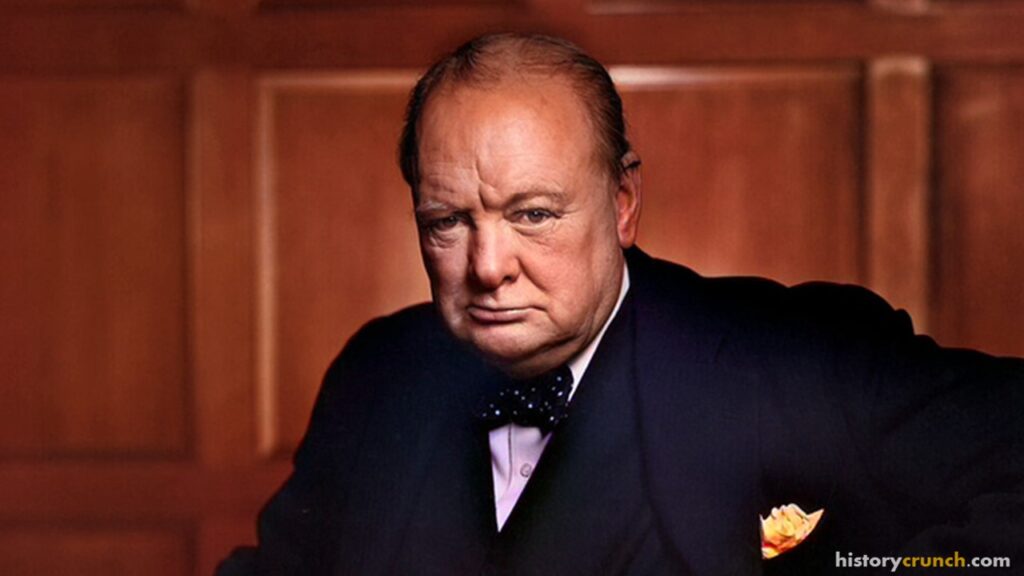
Winston Churchill was one of the most important and controversial leaders of the 20th century and played an important role in British History, including events such as: British Imperialism, World War II and the Cold War. For instance, he is likely best known for leading Britain during the events of World War II. As such, Churchill is considered to be amongst one of the most influential people in all of British History, and one of the most respected leaders in the history of the 20th century.
 FactsthatCrunch
Churchill led Britain through its most difficult years of World War II, refusing to negotiate with Nazi Germany after France fell in June 1940. His speeches and decisions helped hold the Allied coalition together until victory in Europe was secured in May 1945.
Winston Churchill – Early Life
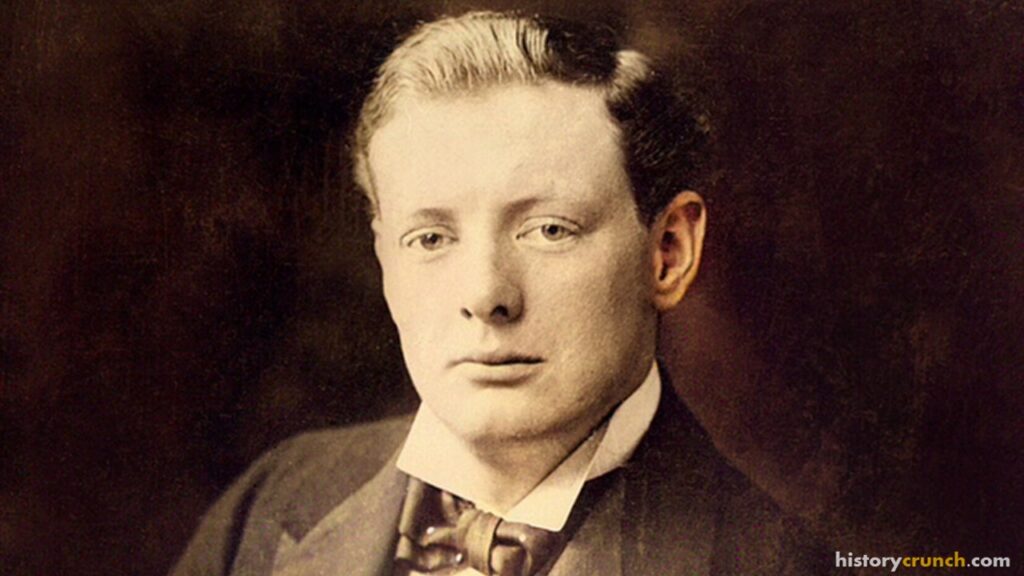
Sir Winston Leonard Spencer Churchill was born on November 30th, 1874, at Blenheim Palace in Oxfordshire, England. He came from a wealthy, aristocraticBelonging to the highest social class, usually wealthy families with noble titles and political power. family. In fact, his father, Lord Randolph Churchill, was a famous British politician, and his mother, Jennie Jerome, was an American socialite.
Churchill often struggled in school as a child. In fact, he did not attend university but, rather, attended the Royal Military Academy at Sandhurst, where he trained to become an army officer. After graduation, he served in the British Army and also worked as a war correspondentA journalist who travels with military forces to report on events during a war.. These experiences took him to places such as Cuba, India, Sudan and South Africa. Furthermore, he became famous as a political correspondent and wrote books about his time in the army. Churchill left the army in 1899 to enter politics.
 FactsthatCrunch
What jobs did Winston Churchill hold before entering politics in 1899?
Winston Churchill – World War I
As stated above, Winston Churchill eventually became famous for his role in British politics and history throughout the 20th century. For instance, he entered British politics in 1900 when he was first elected to Parliament. Over the next several decades, he held many important government positions. More specifically, he served in several major roles, including: President of the Board of Trade, Home Secretary and First Lord of the Admiralty. As well, as a politician, Churchill gained a reputation as an excellent speaker. This is a skill he would later use to inspire English citizens during the harrowing days of World War II.
During World War I, however, his reputation suffered a setback when he supported the Gallipoli Campaign, which was a failed Allied invasion of the Ottoman Empire. The disaster cost many lives and Churchill was blamed for helping plan it. For instance, Winston Churchill argued for an Allied naval attack against the Dardanelles during the Gallipoli Campaign. At the time, Churchill was the First Lord of the Admiralty for the British Royal Navy.
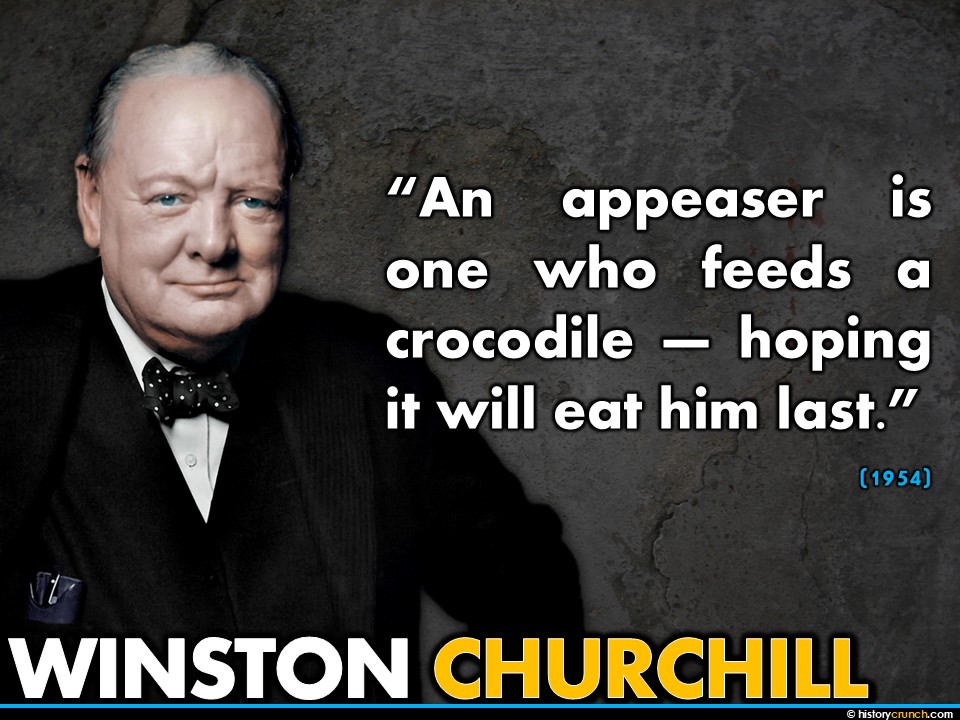
Regardless, Churchill remained influential in British politics. For example, during the 1930s, he warned repeatedly that Nazi Germany, under Adolf Hitler, was becoming a dangerous threat to Europe and Britain. At the time, many British leaders, including Prime Minister Neville Chamberlain, wanted peace and believed war could be avoided. As such, this put him at odds with the main political leaders in Britain at the time. For instance, Neville Chamberlain famously used a policy of appeasement with Adolf Hitler and Nazi Germany, because he believed that giving into some of Hitler’s territorial demands would prevent another large-scale war. Churchill categorically disagreed with this approach, and the policy of appeasementA policy of giving in to some of an aggressor’s demands in hopes of preventing a larger conflict. ultimately failed when Nazi Germany invaded Poland on September 1st, 1939. This is the event that historians consider to be the start of World War II.
 FactsthatCrunch
In early 1915, Churchill, serving as First Lord of the Admiralty, pushed hard for a naval assault on the Dardanelles Straits in Ottoman Turkey. When Turkish mines sank or badly damaged six Allied battleships on the 18th of March, 1915, the naval attack failed, and the ground campaign that followed at Gallipoli also collapsed with heavy Allied losses.
Churchill was a rising, respected figure in British politics with a senior naval role
Churchill was blamed for the disaster, lost his position as First Lord of the Admiralty, and his reputation in government was badly damaged for years afterward
Winston Churchill – British Imperialism in India
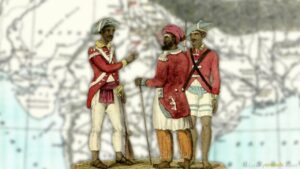
As mentioned above, Winston Churchill played an important role in the period of British imperialism in India. For instance, Churchill believed firmly in the British Empire and thought it was Britain’s duty to rule over large parts of the world. Furthermore, he did not support Indian independence or the Indian Independence Movement and strongly opposed Indian leaders such as Mahatma Gandhi.
Churchill saw Gandhi as a threat to imperial control and spoke about him with open disrespect. He believed that British rule brought order and civilization to India. In fact, this was a popular view that was shared by many British imperialists of his time.
Churchill’s attitudes toward India have also been linked to the events of the Bengal Famine of 1943. This terrible time saw millions of people in India die from starvation and disease. Historians continue to debate exactly how much blame Churchill deserves, but many argue that his government failed to respond adequately and that his policies ultimately worsened the crisis.
As such, Churchill’s legacy in India is complex and controversial. Some view him as protecting British imperialist interests, while others have criticized him for causing harm to the people of India and denying them the path of self-governance.
Winston Churchill – World War II
Winston Churchill became Prime Minister of Britain in May 1940. He replaced Neville Chamberlain, who had failed to deal with the rise to power of Adolf Hitler through the policy of appeasement. At the time, Nazi Germany was rapidly conquering much of Europe with its assault on France during the Battle of France. This was terrible for the Allied Powers of World War II, because the loss of France meant that Britain was essentially isolated and left to fight alone in Western Europe. In fact, Britain came close to the brink of defeat during the events of the Battle of Britain.
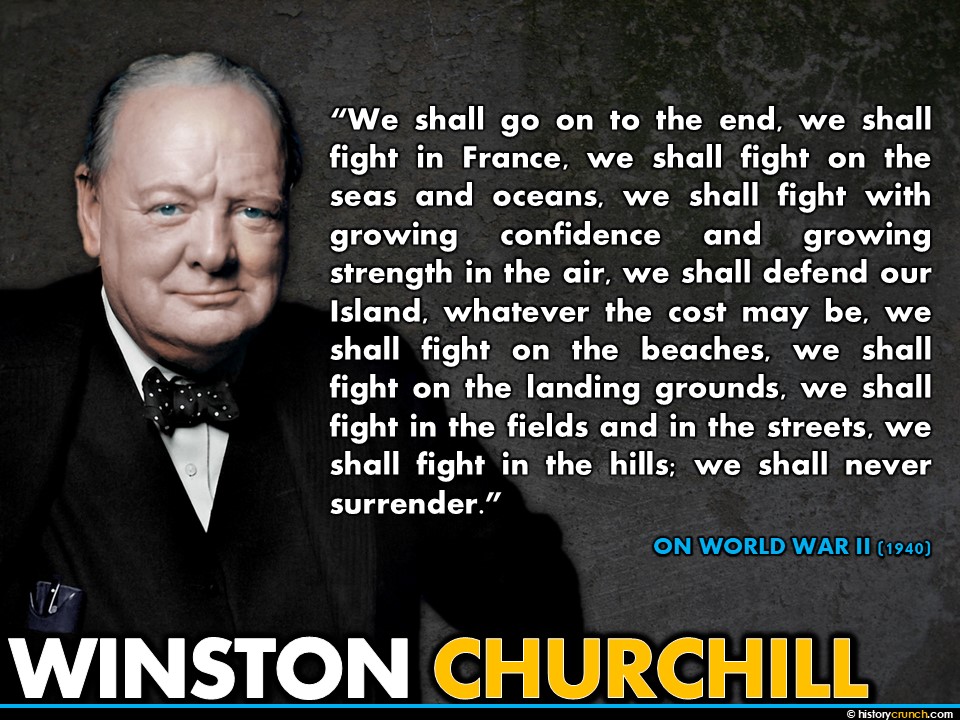
Churchill’s leadership during this time made him famous as a wartime leader. For instance, Churchill was well respected and his speeches and radio broadcasts were influential, and helped inspire British resistance against Germany. He was an important leader in the active opposition to Adolf Hitler during the early war days. For instance, his steadfast refusal to consider defeat in the face of Nazi aggression is often remembered as one of his characteristic features. When Britain was facing defeat during the Battle of Britain, he remained a voice of confidence and leadership for British citizens and the Allied Powers.
The Battle of Britain took place from July 10th to October 31st in 1940 and was one of the most significant battles of World War II. It was the first major military conflict in history fought entirely by air forces and saw the Royal Air Force (RAF) of Britain battle in the skies against the Luftwaffe, which was Nazi Germany’s air force. As such, it was an air superiorityControl of the skies in a military conflict, meaning one side can fly and fight without being stopped. battle that occurred following the defeat of France in the Battle of France. The Battle of Britain was particularly important in World War II, because Britain’s victory prevented the continued advancement of the Nazi German Army and was a significant turning point in World War II. Churchill famously praised the RAF pilots with one of his most famous quotes: “Never in the field of human conflict was so much owed by so many to so few.”
Also, Winston Churchill worked closely with the other Allied leaders, including United States President Franklin D. Roosevelt and Soviet leader Joseph Stalin. Although they had very different political systems and beliefs, they cooperated to defeat Nazi Germany and bring an end to World War II in Europe. As a result, Churchill played a key role in military planning and diplomacy throughout the war. For instance, he participated in the Yalta Conference in 1945, in relation to planning the end of the war against Nazi Germany.
When the war in Europe finally ended in 1945, Churchill was celebrated as a hero. However, shortly after the victory in World War II, his party lost the general election and he ended his first term as the British Prime Minister.
Winston Churchill – Later Years and Death
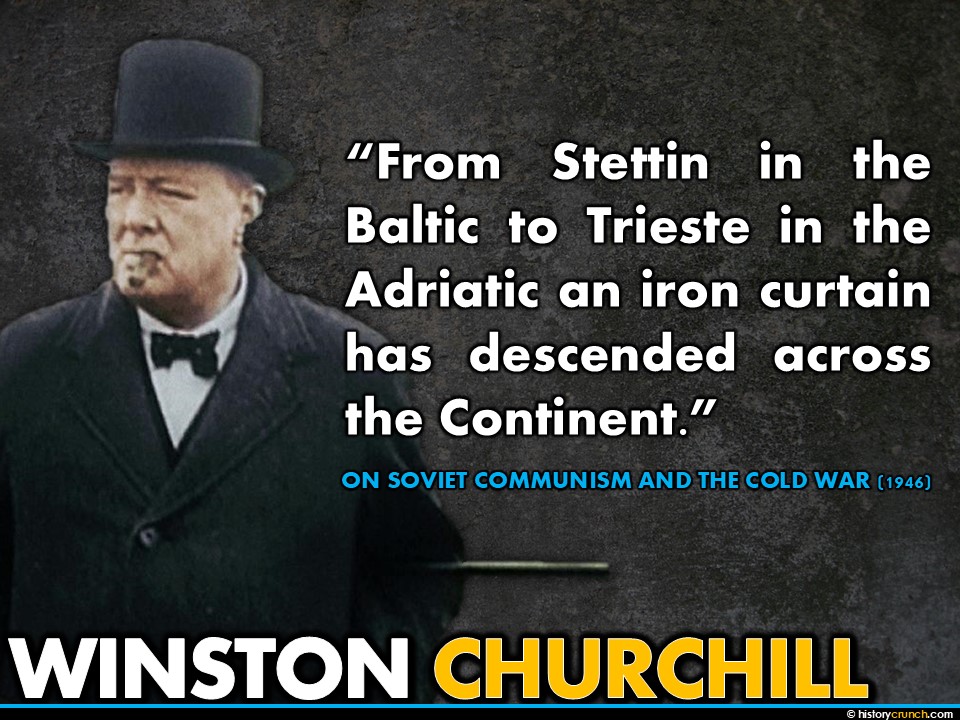
Regardless, Winston Churchill remained an important political figure in Britain and around the world. For instance, he famously warned about growing tensions between the Soviet Union and the Western democracies. In a famous speech in 1946, he said that an ‘Iron Curtain’ had descended across Europe.
Churchill returned as Prime Minister in 1951, and served until 1955. He oversaw Britain’s role in the events of the Cold War and worked to maintain British interests around the world. In 1953, Churchill was awarded the Nobel Prize in Literature for his historical writing and speeches. This award highlighted the powerful nature of his writings and speeches, especially during the wartime of World War II. He finally retired as Prime Minister in 1955, though he remained a member of Parliament for several more years.
Winston Churchill died on January 24th, 1965, at the age of 90. He was given a state funeralAn official, government-organized funeral given to honor a person of great national importance., which is one of the highest honors in Britain. Winston Churchill remains one of the most significant figures in modern history. He is remembered above all for his leadership during World War II. At a time when Britain faced possible defeat, he gave people courage and determination. His speeches, confidence, and refusal to give in helped shape the Allied fight against Nazi Germany.
Explore World War II · 1939 – 1945
Keep exploring World War II with these History Crunch resources.
Key Vocabulary
Aristocratic
War correspondent
Appeasement
Imperialism
Air superiority
Iron Curtain
State funeral
Frequently Asked Questions
When did Winston Churchill become Prime Minister?
Winston Churchill became Prime Minister of Britain in May 1940. He replaced Neville Chamberlain, whose policy of appeasement had failed to stop Adolf Hitler. Churchill took office as Nazi Germany was quickly conquering much of Western Europe.
Why is Winston Churchill famous?
Winston Churchill is best known for leading Britain during World War II. His speeches and radio broadcasts inspired British resistance when the country faced possible defeat. He also warned about Nazi Germany in the 1930s and later helped shape early Cold War thinking.
What was Churchill’s role in the Gallipoli Campaign?
Churchill helped plan the Gallipoli Campaign during World War I while serving as First Lord of the Admiralty. He argued for an Allied naval attack against the Dardanelles in the Ottoman Empire. The invasion failed and cost many lives, which damaged his reputation at the time.
Why is Churchill’s legacy in India controversial?
Churchill firmly believed in the British Empire and opposed Indian independence and leaders like Mahatma Gandhi. His attitudes have been linked to the Bengal Famine of 1943, when millions died from starvation and disease. Many historians argue his government failed to respond well and worsened the crisis.
Did Churchill win a Nobel Prize?
Churchill won the Nobel Prize in Literature in 1953 for his historical writing and speeches. He wrote dozens of books, including a six-volume history of the Second World War. His wartime speeches were widely printed and broadcast across Britain.
When did Winston Churchill die?
Winston Churchill died on January 24th, 1965, in London at the age of 90. He was given a state funeral, which is one of the highest honors in Britain. He had served as Prime Minister a second time from 1951 to 1955.
Cite This Article
To cite this article as a source, use one of the formats below.
MLA: Woida, K.L. “Winston Churchill: A Detailed Biography.” HistoryCrunch, 1 October 2026, https://historycrunch.com/winston-churchill/.
APA: Woida, K. L. (2026). Winston Churchill: A Detailed Biography. HistoryCrunch. https://historycrunch.com/winston-churchill/
Chicago: Woida, K.L. “Winston Churchill: A Detailed Biography.” HistoryCrunch. October 1, 2026. https://historycrunch.com/winston-churchill/
Sources
- Fordham Modern History Sourcebook
- Imperial War Museum