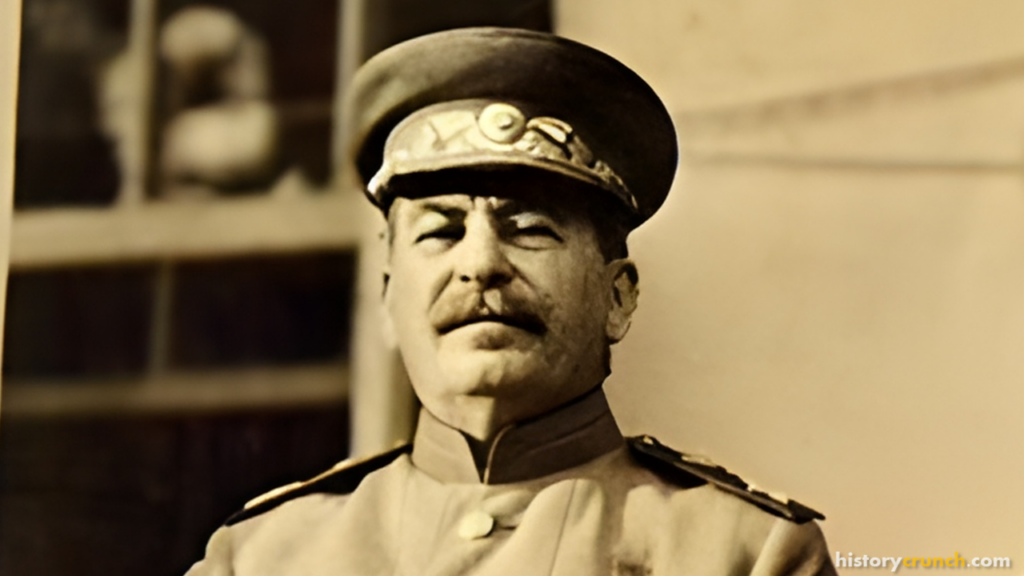
Joseph Stalin is one of the most famous dictators from the 20th century. He ruled over the Soviet Union as a communist dictator from 1924 until his death in 1953. As such, Stalin led the Soviet Union through several major world events, such as: World War II, the Cold War and the Korean War. Today, he is remembered as a brutal dictator who was responsible for the death of over 20 million people. For instance, he imprisoned millions of his own people in gulagsForced labor camps where Stalin sent people he considered undesirable or threatening to his authority. (labor camps), carried out devastating purgesOrganized campaigns in which Stalin ordered mass arrests, executions, or exile of people seen as political threats. and caused the Ukraine Famine.
 FactsthatCrunch
Stalin led the Soviet Union through World War II, directing the Red Army's defense against the German invasion that began in June 1941 and pushing German forces back all the way to Berlin by May 1945. His decisions shaped the Eastern Front, where the Soviet Union suffered losses on a scale no other Allied nation experienced.
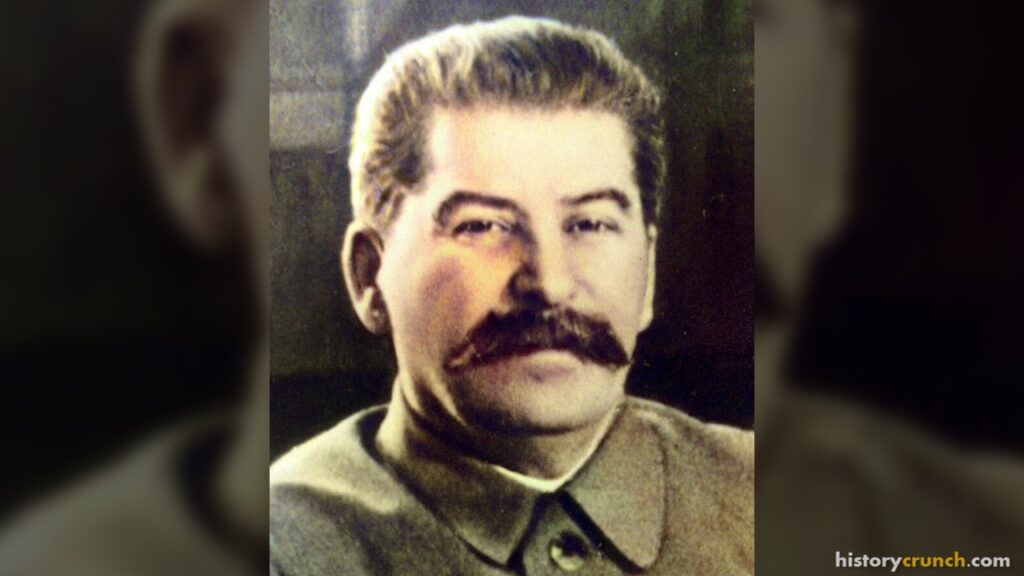
Joseph Stalin – Early Life
Joseph Stalin was born on December 18th, 1878, in Gori, Georgia. Georgia was a country that was located between Eastern Europe and West Asia, but was still part of the Russian Empire. He was born Ioseb Besarionis dze Jughashvili and began using the name Joseph Stalin in his early 20s.
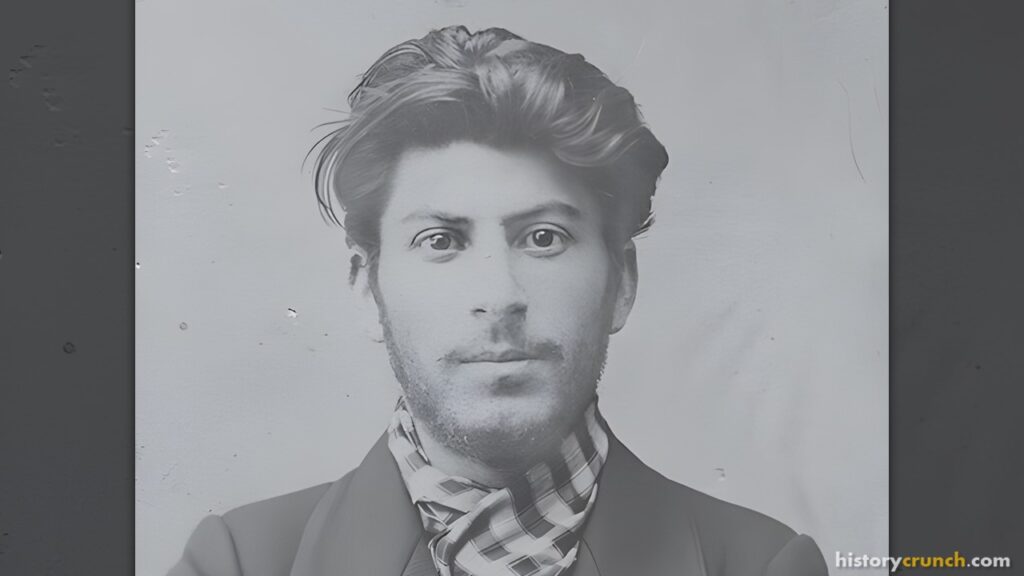
At an early age, his father struggled with alcoholism and then left Joseph and his mother. Soon after, Stalin gained a scholarship to a seminary school in order to study to become a priest. He didn’t finish with the school and instead became an atheist. After he left the seminary school he began reading the writings of Vladimir Lenin and joined the Russian Social Democratic Labour Party which practiced Marxism. The group would eventually form into the Bolsheviks under the leadership of Lenin, which Stalin also joined.
As part of his membership in the Social Democratic Labour Party, he often found himself in trouble with Russian authorities and was sent to Siberia several times as punishment. When World War I broke out, Stalin was drafted into the Russian Army but did not serve due to a badly injured arm that he had hurt as a child. During the course of World War I, Russia suffered a massive loss of life which negatively impacted the morale of the country. As such, the Marxist movement led by Vladimir Lenin gained strength and popularity.
 FactsthatCrunch
What lay beneath young Joseph Stalin's path to becoming a revolutionary?
Joseph Stalin – Russian Revolution
At the time, Russia was led by a tsar, which was the title for the Russian absolute monarchs before 1917. Tsar Nicholas II ruled over Russia before and during the first parts of World War I. The mounting Russian casualties and lack of supplies led to an increased amount of anger directed at the Tsar and his handling of the Russian war effort. At the same time, Russia was a society that was sharply divided and the poorest Russians struggled to survive day-to-day. Poverty was widespread, especially among Russian peasants, who worked for the landowning nobility. This all combined to set the stage for a revolution against the Tsar and his rule over Russia.
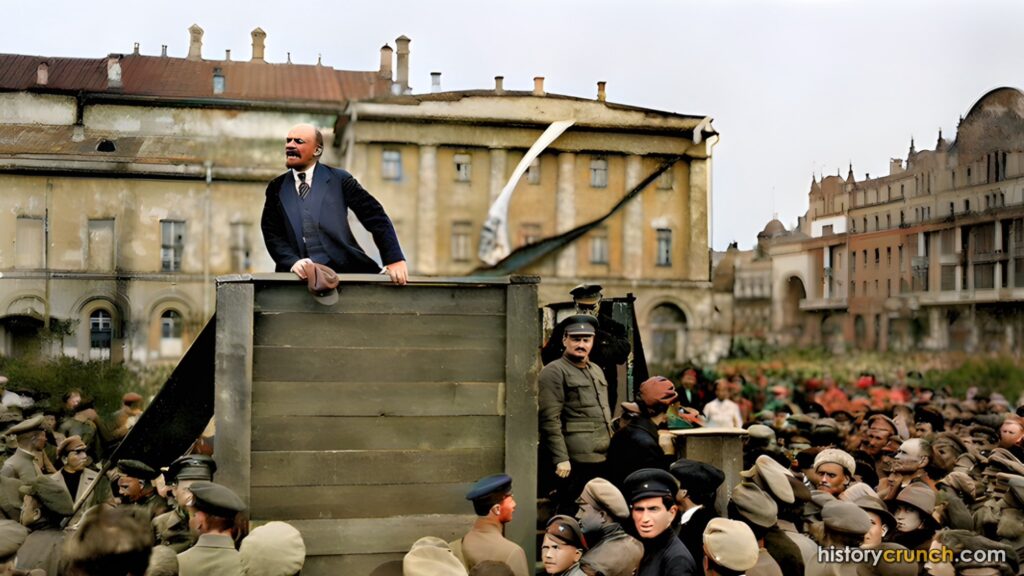
In March of 1917, Tsar Nicholas II was forced to abdicateTo formally give up a throne or position of ruling power., and he and his family were imprisoned. In November of 1917, Lenin and the Bolsheviks seized power from the Provisional Government. For his part, Stalin assumed control of the Communist Party Newspaper ‘Pravda’ or ‘Truth’ and used the paper to publicly support Lenin and the Bolsheviks’ actions in the country. In the years following the Russian Revolution and the resulting civil war, Stalin worked his way up into a leadership position within the Communist Party established by Lenin. By 1922, Lenin had appointed Stalin General Secretary, which allowed him the ability to begin appointing close allies to positions of power.
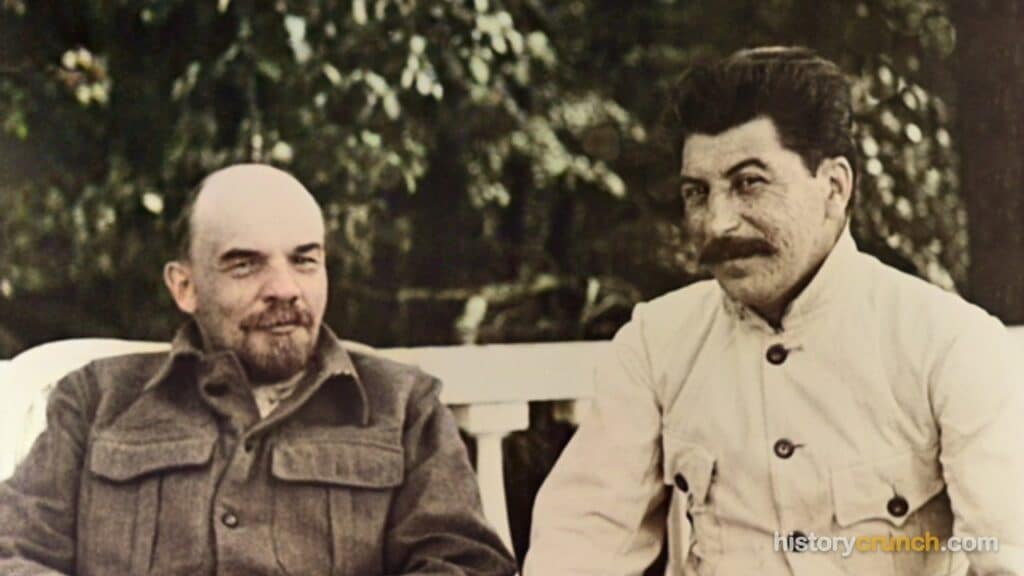
Also in 1922, Lenin suffered a series of strokes. As a result he essentially retired from the leadership role and Stalin gained more control. However, it was during this time that Lenin began to grow suspicious towards Stalin. Lenin was critical of Stalin’s political views and the methods he was using to maintain power. In fact, Lenin wrote a ‘Testament’ in which he criticized Stalin’s leadership and argued that he should be removed from the position of General Secretary. However, Stalin and his allies prevented Lenin’s testament from being presented to others in the Communist Party. Lenin died of another stroke on January 21st, 1924.
 FactsthatCrunch
Stalin's path to power began not with a sudden takeover but with a slow buildup during Lenin's illness. Each step gave Stalin more control until no rival was left to challenge him.
Joseph Stalin – The Dictator
Following Lenin’s death there was a power struggle in the Soviet Union between Stalin and his allies and Leon Trotsky, a trusted ally of Lenin. Stalin eventually isolated Trotsky within the power structure of the Soviet Union and forced him into exile. Stalin’s rise to power was complete as he centralized all power in the Soviet Union under himself and ran the country as a Communist dictatorship. Although Stalin claimed to be a Marxist-Leninist, his own interpretations of communism were influenced heavily by his desire to maintain absolute power and control. As such, historians refer to Stalin’s form of communism as ‘Stalinism‘. For instance, Stalin established gulags during his time as the dictator of the Soviet Union.
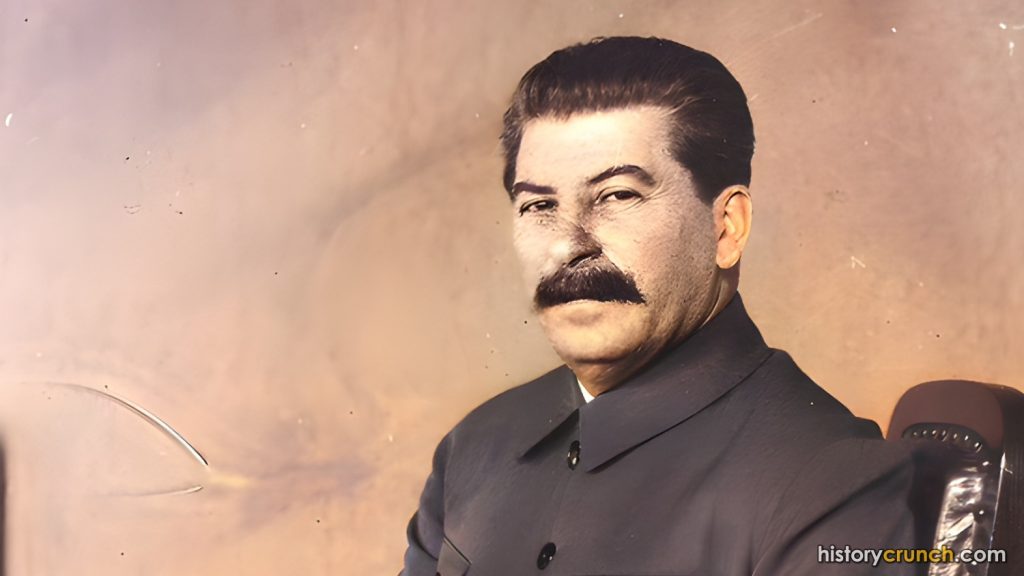
In short, a gulag was a labor camp, where people who were considered undesirable were sent. Stalin often had people who questioned his authority sent to the gulags as a form of punishment. As well, Stalin was also known to remove important religious leaders, teachers and other educated groups as he feared they could threaten his leadership. Because of this, Stalin is often viewed historically as a very paranoid and controlling figure. Further to this point, Stalin famously carried out a series of purges against his own people. To maintain his power over the country Stalin organized a series of purges in which he oversaw mass executions of political rivals and potential threats to his authority. Between 1934 and 1939, Stalin carried out purges in which millions were arrested and either executed or sent to the gulags. The accused included people from across Soviet society but focused in on members of the Soviet military and members of the communist party.
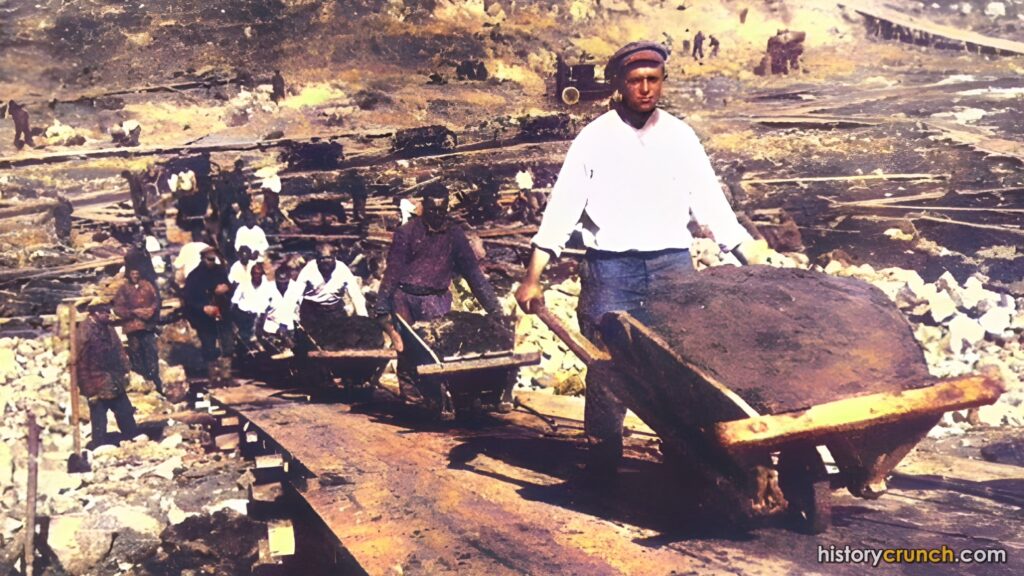
Over the remaining years of his life he ruled the Soviet Union as dictator through several key events, including: the Ukraine Famine, World War II, and the Cold War.
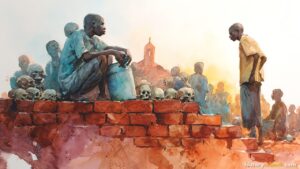
The Ukraine Famine, which is also known as the Holodomor, was a period of starvation caused by the policies of Joseph Stalin in 1932 and 1933 in the country of Ukraine. The famine was caused when Stalin collectivizedBrought privately owned farms under government control and ownership as a group. the farms of ethnic Ukrainians and seized stores of grain for use in industrializing the Soviet Union. Many historians view the famine as a result of actions taken by Stalin and therefore categorize the event as genocide. It is estimated that between 3.5 and 5 million people died of starvation during the Ukraine Famine.
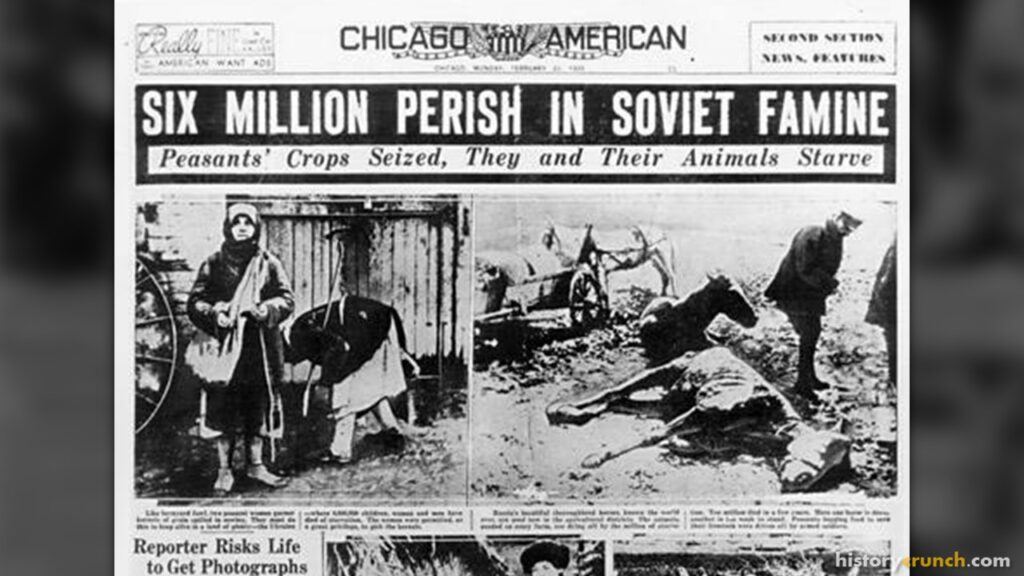 FactsthatCrunchEvidence Photo
Joseph Stalin – World War II & the Cold War
Stalin’s involvement in World War II was also very important. He tried to form an alliance with France and Britain in the face of growing German nationalism and aggression in Central Europe, but the talks failed. However, just before the start of the war, Adolf Hitler and Stalin agreed to a non-aggression pact, which allowed Stalin to better prepare his country for the industrial needs of war at that time. The non-aggression pactA formal agreement between two countries promising not to attack each other. between the two nations ended after Hitler decided to invade the Soviet Union in 1941. This immediately turned Stalin into an enemy of Hitler and the Soviet Union joined forces with the other Allied nations against Nazi Germany. Stalin remained leader over the Soviet Union throughout the entire history of World War II, and led the Soviet Union to victory against Nazi Germany. For instance, the war in Europe ended in 1945 when Soviet troops defeated Nazi Germany in the Battle of Berlin. To learn more about World War II and Stalin’s role in the war, click on the links above.
The Cold War occurred immediately following the end of World War II and saw the Soviet Union face off against the United States in a war of ideologies that lasted for 45 years. Stalin was the leader of the Soviet Union in the early years of the Cold War and played a significant role in Cold War events such as the Berlin Blockade, Berlin Airlift and the Korean War. This was significant because it saw Joseph Stalin face off against the United States. In particular, Stalin and American President Harry S. Truman went head to head in the Berlin Blockade. As well, Stalin oversaw early examples of Soviet Expansionism in the Cold War.
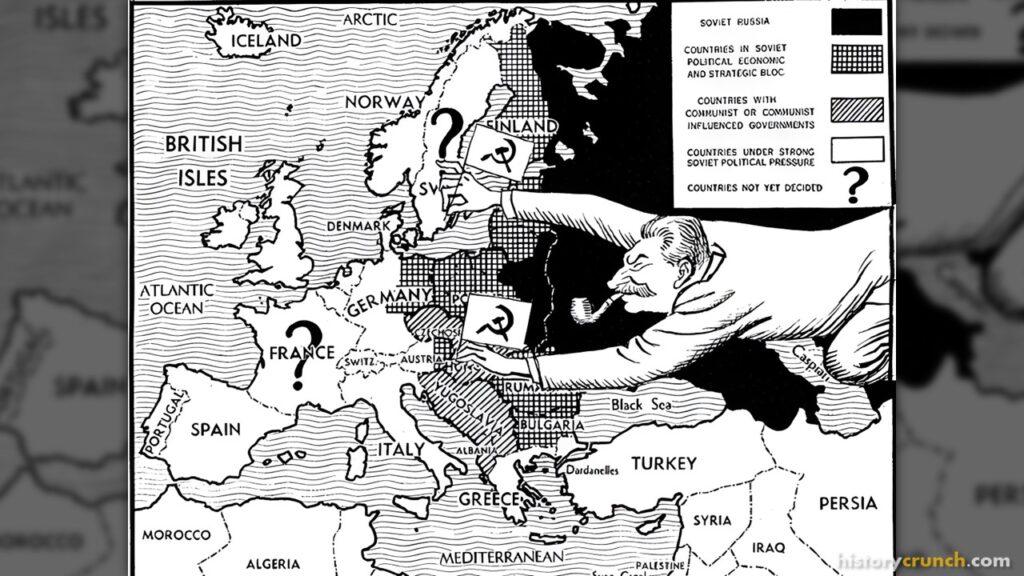
ExpansionismA foreign policy strategy of spreading a country’s power and influence into other regions of the world. as a foreign policy strategy was used by the Soviet Union in the timeframe of the Cold War. For instance, the Soviet Union sought to spread communism and its influence to other regions of the world in the years following the end of World War II. This is important, because in the Cold War both the United States and the Soviet Union worked to spread their ‘sphere of influence’. Both wanted to expand their influence around the world in order to gain support for their separate ideologies, which included communism (for the Soviets) and liberalism (for the Americans). Soviet expansionism in the Cold War was often met with containment on the part of the United States, because the Americans hoped to stop the spread of communism. As such, Soviet expansionism and American containmentThe American Cold War strategy of preventing communism from spreading to new countries. led to many different examples of conflict between the two superpowers, which heightened tensions throughout the 20th century. As for Stalin, he backed North Korea in the Korean War. To learn more about the Cold War and Stalin’s role in the war, click on the links above.
 FactsthatCrunch
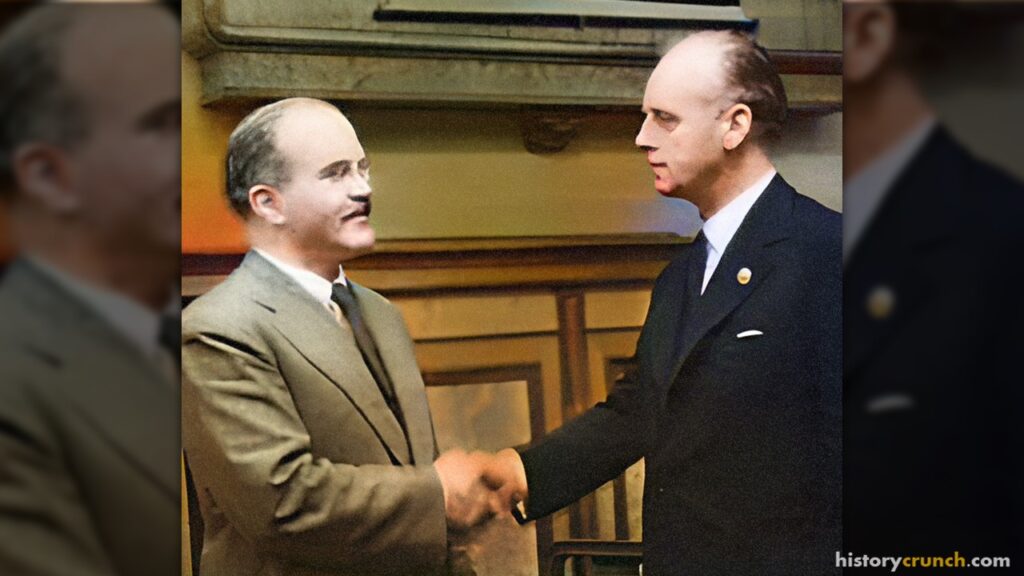
Both High Contracting Parties obligate themselves to desist from any act of violence, any aggressive action, and any attack on each other, either individually or jointly with other Powers.
Nazi-Soviet Non-Aggression Pact, Article I · Moscow · August 23rd, 1939
Foreign ministers Vyacheslav Molotov of the Soviet Union and Joachim von Ribbentrop of Germany signed this pact in Moscow on August 23rd, 1939, promising that neither country would attack the other. The deal gave Stalin time to prepare Soviet industry for war, while a secret protocol divided Poland and parts of Eastern Europe into German and Soviet spheres of influence. Germany broke the pact by invading the Soviet Union on June 22nd, 1941, which pushed Stalin onto the Allied side.
Joseph Stalin – Death & Significance
Stalin died on March 5th in 1953 from a bleed in his brain (cerebral bleed). While he was officially mourned in the Soviet Union, his death was also welcomed by many as he was a brutal dictator towards his people. As such, today he is remembered as a tyrant for the terrible acts he carried out against millions of people. For example, he carried out a mass genocide of people in the Ukraine Famine. As well, he established gulag labor camps wherein he imprisoned millions of his own people. As such, he is often associated with other 20th century dictators and remembered for his brutal rule over the Soviet Union. He also played a key role in several major world events including World War II and the Cold War.
 FactsthatCrunch
 Black & whiteColor
Key Vocabulary
Gulags
Purges
Abdicate
Collectivized
Non-aggression pact
Expansionism
Containment
Frequently Asked Questions
How did Joseph Stalin rise to power?
Stalin rose to power by becoming General Secretary of the Communist Party in 1922. This role let him appoint close allies to important positions across the Soviet Union. After Lenin died in 1924, Stalin pushed aside his main rival, Leon Trotsky, and forced him into exile. By doing this he gained complete control of the country.
What were Stalin’s gulags?
Gulags were brutal labor camps where Stalin sent people he saw as a threat. Prisoners included political rivals, religious leaders, teachers, and other educated groups. Conditions were harsh, and many people died from overwork, hunger, and cold. Millions of Soviet citizens were imprisoned in these camps during his rule.
What was the Ukraine Famine?
The Ukraine Famine, also called the Holodomor, was a period of mass starvation in 1932 and 1933. It happened after Stalin took over Ukrainian farms and seized stored grain for Soviet industry. Between 3.5 and 5 million people died from hunger. Many historians view the event as a genocide against ethnic Ukrainians.
What role did Stalin play in World War II?
Stalin led the Soviet Union to victory over Nazi Germany in World War II. He first signed a non-aggression pact with Adolf Hitler to buy time to prepare. Hitler broke the deal by invading the Soviet Union in 1941, which made the two nations enemies. The Soviets then joined the Allies and defeated Germany at the Battle of Berlin in 1945.
How is Joseph Stalin remembered today?
Stalin is remembered as a brutal dictator who caused the deaths of over 20 million people. His purges, gulags, and famine policies killed and imprisoned huge numbers of his own citizens. He died on March 5th, 1953, from a bleed in his brain. Many people welcomed his death because of his cruel and paranoid rule.
Cite This Article
To cite this article as a source, use one of the formats below.
MLA: Beck, Elias. “Joseph Stalin: A Detailed Biography.” HistoryCrunch, 3 October 2026, https://historycrunch.com/joseph-stalin/.
APA: Beck, E. (2026). Joseph Stalin: A Detailed Biography. HistoryCrunch. https://historycrunch.com/joseph-stalin/
Chicago: Beck, Elias. “Joseph Stalin: A Detailed Biography.” HistoryCrunch. October 3, 2026. https://historycrunch.com/joseph-stalin/
Sources
- Imperial War Museum
- The National WWII Museum
- Gerhard L. Weinberg, A World at Arms.
- Max Hastings, Inferno / All Hell Let Loose.