ContainmentThe U.S. strategy of actively preventing Soviet communism from spreading to new countries or regions. in the Cold War was significant because it was a major factor of American foreign policyA government’s plan for how it deals with and relates to other countries around the world. for decades, especially in relation to conflicts, such as the Korean War and Vietnam War. The Cold War lasted from the end of World War II in 1945 until the early 1990s, and was one of the most significant events of the 20th century. At its heart, the Cold War was essentially a ‘face off’ or competition between the United States and the Soviet Union in the years following World War II. This conflict between the two major superpowers led to different foreign policy strategies, including the policy of containment.

Summary
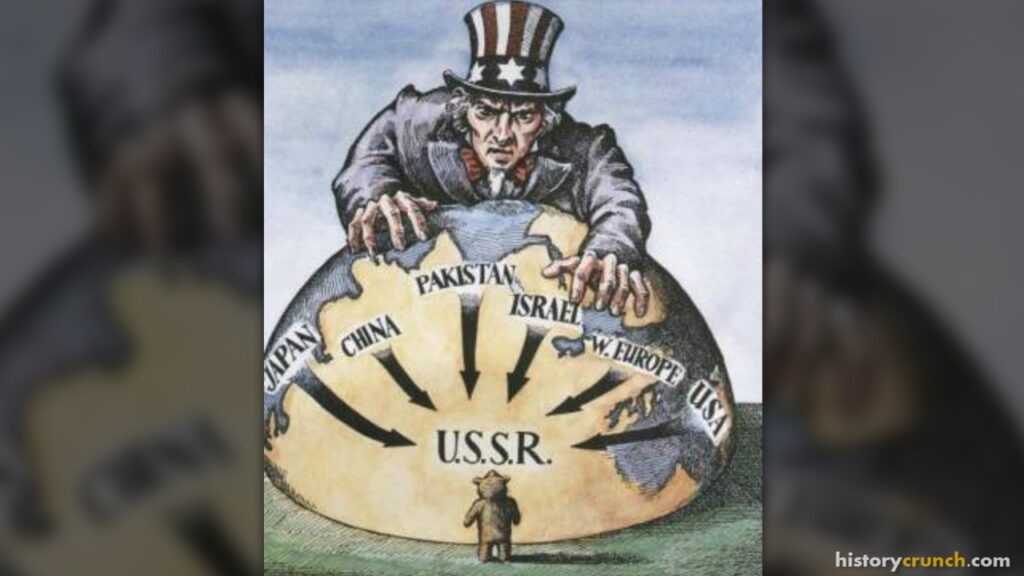
Containment was a foreign policy strategy used by the United States in the timeframe of the Cold War. More specifically, the United States used the policy of containment against the Soviet Union from the mid-1940s until the end of the Cold War in the early 1990s. As a strategy, containment involved the United States working to prevent the spread or influence of Soviet communism. This is because, during the Cold War, the Soviet Union was following a policy of expansionism in which it attempted to spread its influence to other regions of the world. In the competitive nature of the Cold War, the United States wanted to prevent this from occurring and worked actively to contain Soviet expansionismA country’s effort to extend its power and influence into other regions of the world..
In general, the United States used several different techniques to carry out its policy of containment in the Cold War. First, the United States intervened militarily throughout the Cold War in events such as the Korean War and Vietnam War. Second, the United States offered financial assistance to nations with the goal of preventing the spread of communism. This is best displayed with the implementation of the Marshall Plan. Third, the United States used espionage and CIA operations to try to influence countries from allowing the spread of communism into their borders.
 FactsthatCrunch
What were the three main methods the United States used to carry out containment during the Cold War?
Harry Truman
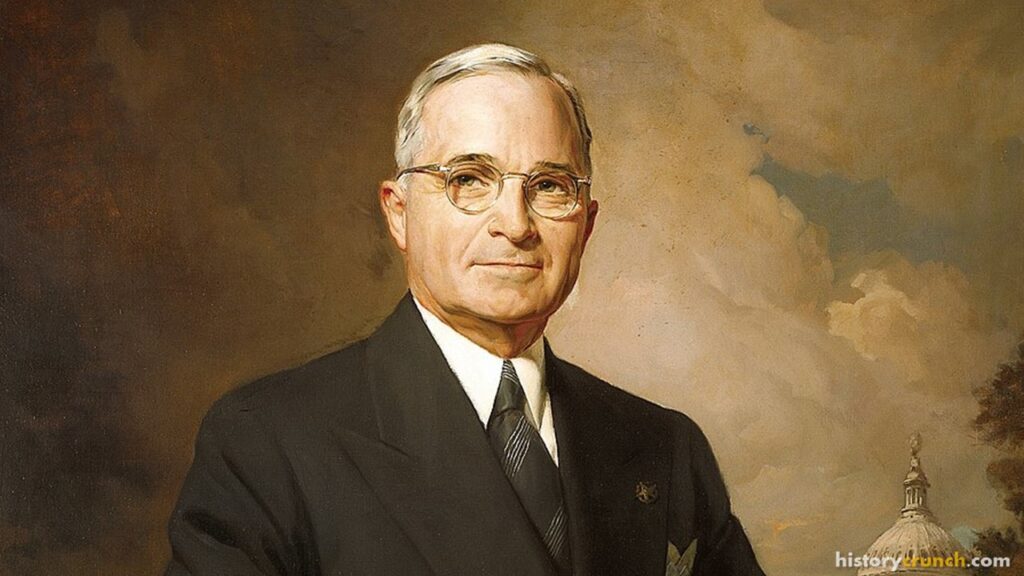
While the United States used the policy of containment throughout the entirety of the Cold War, it is most often associated with the presidency of Harry S. Truman. Truman became the 33rd President of the United States in April 1945 following the death of then President Franklin D. Roosevelt. Furthermore, Truman remained as President of the United States until 1953. Truman is a very historically significant President in the history of the United States. First, he oversaw the end of the fighting in World War II and was responsible for the use of two atomic bombs against Japan in August of 1945. Second, Truman was the President of the United States at the start of the Cold War and helped form American foreign policy, including the use of containment. Out of this emerged the ‘Truman Doctrine’, which is the idea that Soviet expansionism should be resisted and contained wherever it occurs.
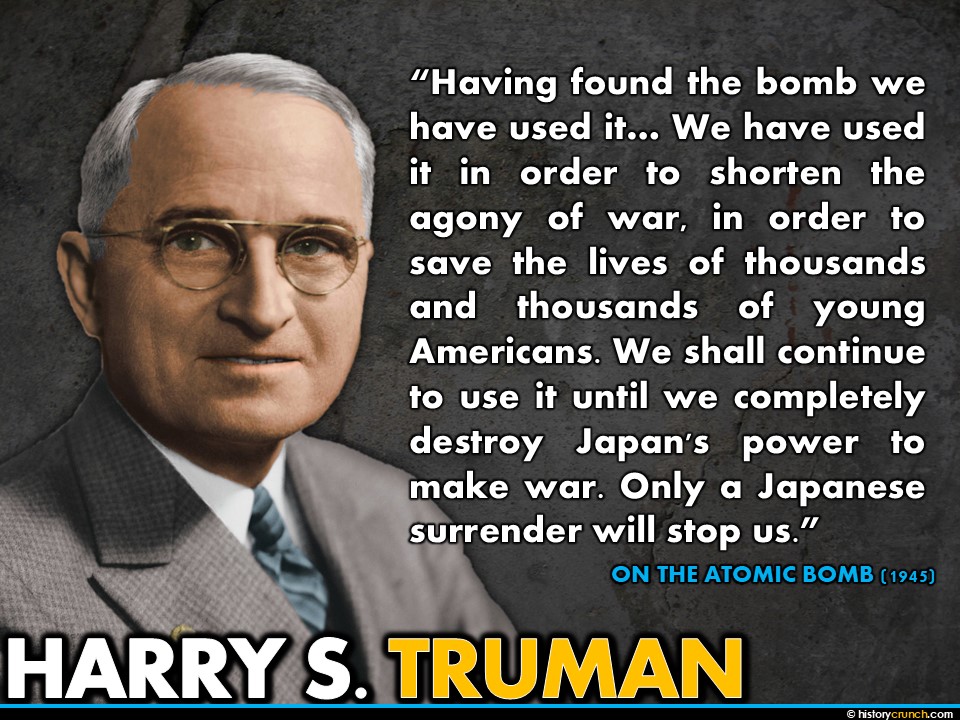
The Truman DoctrineThe idea that the United States should resist and contain Soviet expansionism wherever it appears. was followed by the United States throughout the course of the Cold War and was an important reason for America’s involvement in events, such as the Berlin Blockade, Korean War and the Vietnam War. In general, historians refer to this as ‘containment’ because the Truman Doctrine involved the United States trying to contain Soviet expansionism wherever it emerged.
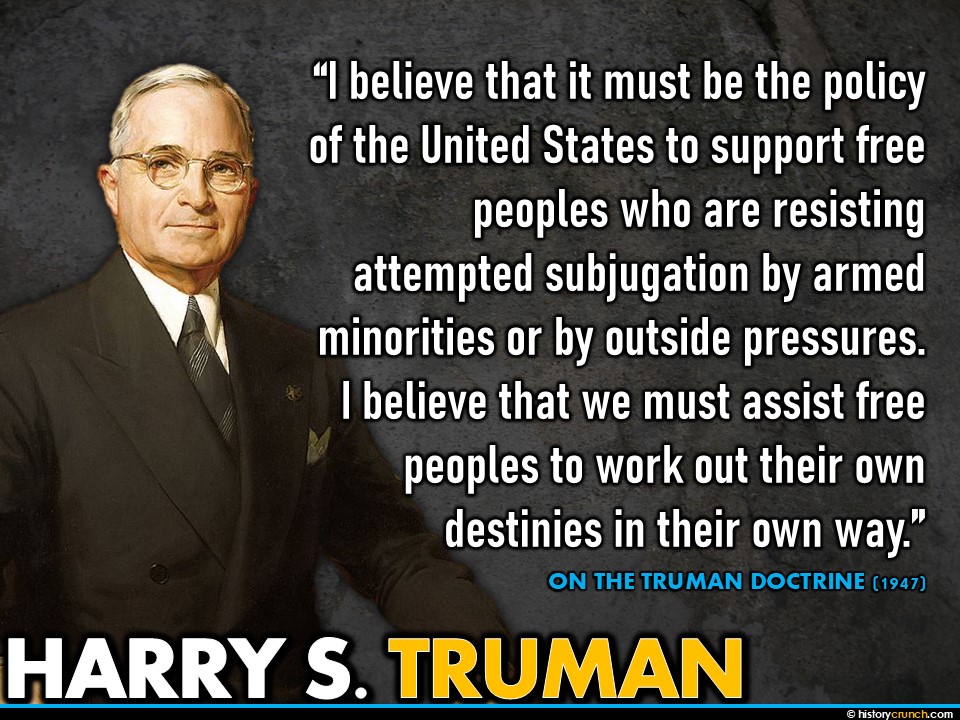
At the start of the Cold War in the mid-1940s, Truman feared that communism, as an ideology, would spread throughout Europe and the rest of the world. For example, after World War II both Greece and Turkey were facing financial crises. Due to their proximity to Soviet territory and the rise of communism in recent decades, it was feared that the two countries might fall into the Soviet sphere of influence and become communist. In a speech in 1947 on the crisis facing both countries, Harry S. Truman stated:
“I believe that it must be the policy of the United States to support free peoples who are resisting attempted subjugationBeing brought under the forceful control or domination of another power. by armed minorities or by outside pressures. I believe that we must assist free peoples to work out their own destinies in their own way. I believe that our help should be primarily through economic and financial aid, which is essential to economic stability and orderly political processes.”
In this passage, Truman is promoting the idea that the United States should financially support the two nations to avoid them turning to communism. This approach by Truman formed the basis of American foreign policy throughout the remainder of the Cold War in the form of containment, which historians refer to as the Truman Doctrine.
Another example of American containment during the Presidency of Harry Truman was the Marshall PlanA U.S. program that gave about $13 billion to rebuild Western Europe and prevent the spread of communism.. Following the events of World War II, Joseph Stalin’s Soviet forces captured and held control over the Eastern European territory that they ‘liberated’. United States President Harry S. Truman, along with others, viewed this as a threat to the democratic world, because it saw the ideology of communism spreading throughout Europe. Truman was concerned that many other nations would ‘fall’ to communism and threaten democracy around the world.
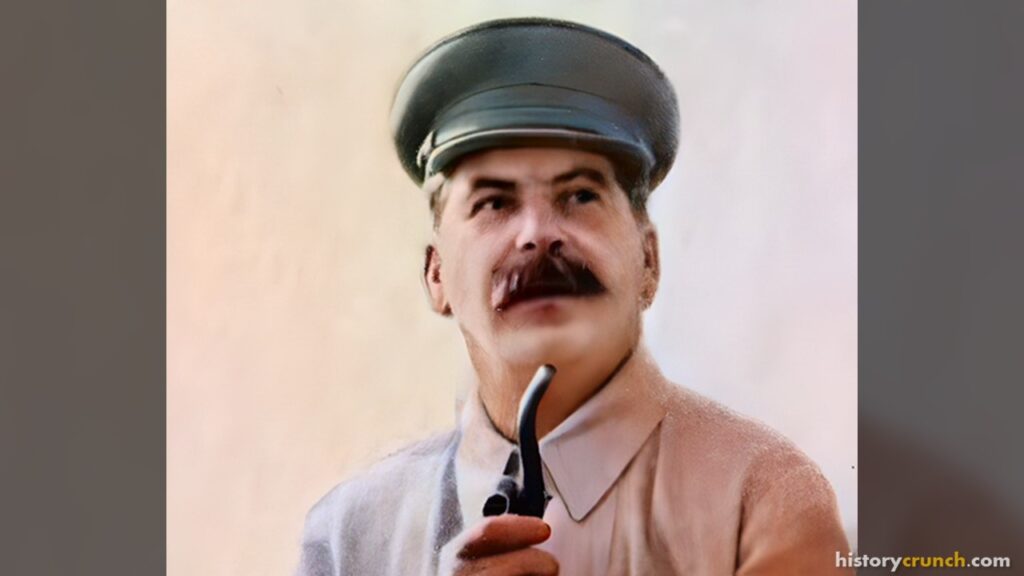
In response, Truman argued that the United States and its allies should actively combat the spread of communism. As such, the United States worked to help rebuild Europe following the destruction of World War II. It was hoped that by rebuilding Europe, the United States could help prevent European countries from turning to communism.
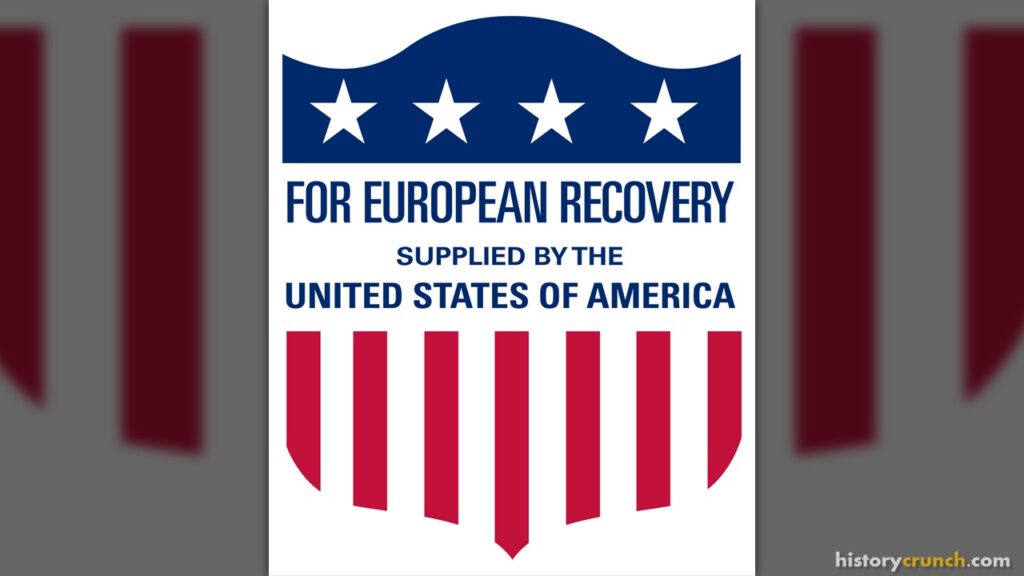
In order to rebuild Europe, the United States implemented the economic policy called the European Recovery Program, although it is commonly known as the Marshall Plan. The plan took effect in April of 1948 and over a course of four years it saw the United States commit $13 billion (well over $150 billion in today’s currency) to rebuild Western Europe. The plan was named after Secretary of State George Marshall, who supported the economic recovery of Europe in the hopes that it would prevent the spread of communism and restore Western European democracies. At its heart, the Marshall Plan saw countries receive financial support when they adopted free marketAn economic system based on open trade and private ownership rather than government control of the economy. economic principles and opened their countries to free trade. Thus, it was aimed at containing communist economic policies and preventing the spread of communism into parts of Europe.
 FactsthatCrunch
 Evidence Photo
After Harry Truman
While the American foreign policy of containment is often most attributed to Harry Truman, it was used continually throughout the rest of the Cold War. As stated above, the United States attempted to stop the spread of communism in both Korea and Vietnam. The Korean War and the Vietnam War were pivotal moments in the history of the Cold War, as they are both considered to be examples of a ‘proxy warA conflict where two superpowers fight each other indirectly through smaller countries, to avoid direct war.’. Essentially, a proxy war is a conflict in which the two superpowers fought each other in an indirect fashion, as they did not want to risk a direct war with each other. This is because it was feared that a direct war between the United States and the Soviet Union could result in the use of atomic weaponry. Regardless, the United States intervened in both Korea and Vietnam with the goal of preventing the spread of communism.
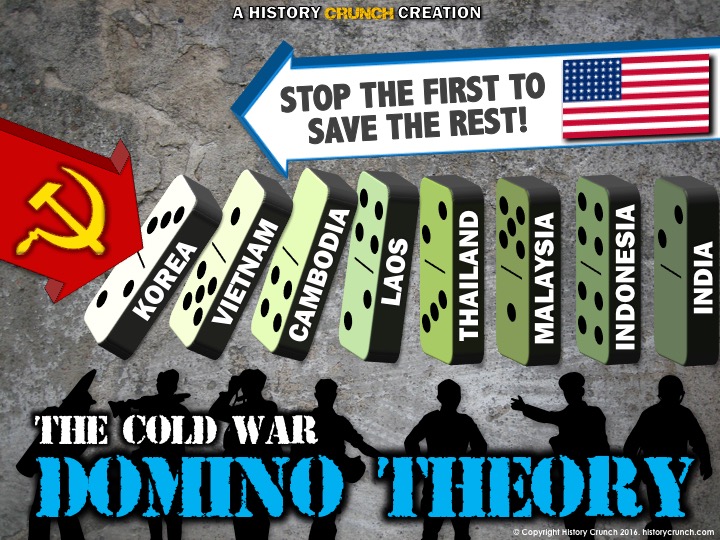
In fact, one of the main reasons for American involvement in both the Korean War and the Vietnam War was the Domino Theory. Based on the Truman Doctrine and American containment, the theory held the idea that if Soviet communism was able to spread into a single country, then it had the potential to spread to all of the other surrounding countries. The basic idea was that the Americans needed to prevent the first domino from falling (country turning to communism) in order to prevent the spread of communism. American containment was based on stopping communism any place it spread to, and as such, the domino theoryThe belief that if communism took hold in one country, it would spread to all neighboring countries next. helped explain the perceived need for the United States’ involvement in international issues.
 FactsthatCrunch
Where did the Domino Theory push the United States to act during the Cold War?
Explore Cold War · 1947 – 1991
Keep exploring Cold War with these History Crunch resources.
Key Vocabulary
Containment
Expansionism
Truman Doctrine
Marshall Plan
Proxy war
Domino Theory
Espionage
Frequently Asked Questions
What was containment in the Cold War?
Containment was a foreign policy strategy the United States used to stop the spread of Soviet communism. It shaped American actions from the mid-1940s until the Cold War ended in the early 1990s. The Soviet Union was trying to grow its influence, and the United States worked to hold that expansion back.
What was the Truman Doctrine?
The Truman Doctrine was the idea that Soviet expansionism should be resisted and contained wherever it appeared. President Harry Truman explained it in a 1947 speech about Greece and Turkey, which both faced financial crises. He argued that the United States should support free peoples through economic and financial aid.
What was the Marshall Plan?
The Marshall Plan was an American program to rebuild Western Europe after World War II. It took effect in April of 1948 and committed about $13 billion over four years, well over $150 billion in today’s money. The goal was to restore European economies so nations would not turn to communism.
How did the United States carry out containment?
The United States used three main methods to contain communism. It intervened militarily in conflicts like the Korean War and Vietnam War. It also offered financial aid through programs like the Marshall Plan and used espionage and CIA operations to influence other countries.
What was the Domino Theory?
The Domino Theory held that if one country turned to communism, nearby countries would soon follow. It grew out of the Truman Doctrine and American containment. This idea helped explain why the United States got involved in the Korean War and the Vietnam War.
Cite This Article
To cite this article as a source, use one of the formats below.
MLA: Beck, Elias. “Containment in the Cold War: A Detailed Summary.” HistoryCrunch, 18 September 2026, https://historycrunch.com/containment-in-the-cold-war/.
APA: Beck, E. (2026). Containment in the Cold War: A Detailed Summary. HistoryCrunch. https://historycrunch.com/containment-in-the-cold-war/
Chicago: Beck, Elias. “Containment in the Cold War: A Detailed Summary.” HistoryCrunch. September 18, 2026. https://historycrunch.com/containment-in-the-cold-war/
Sources
- John Lewis Gaddis, The Cold War: A New History.
- Odd Arne Westad, The Global Cold War.
- Wilson Center Digital Archive
- Vladislav Zubok, A Failed Empire.