Harry Truman was the 33rd President of the United States and took office in 1945 after the death of Franklin D. Roosevelt. He made significant decisions such as authorizing the atomic bombings of Japan and leading the United States into the Cold War with policies like the Truman Doctrine and the Marshall Plan. As such, historians consider Truman to be significant in both World War II and the Cold War.
 FactsthatCrunch
Harry Truman grew up on a farm in Missouri and graduated from high school before working on the railways. He served in World War I as a captain in the United States Army. After the war, he opened a haberdashery with his army friend Eddie Jacobson, but the store went bankrupt, which led him toward politics. He joined the Democratic Party and was elected as County Court Judge in 1922, beginning his rise through American political life.
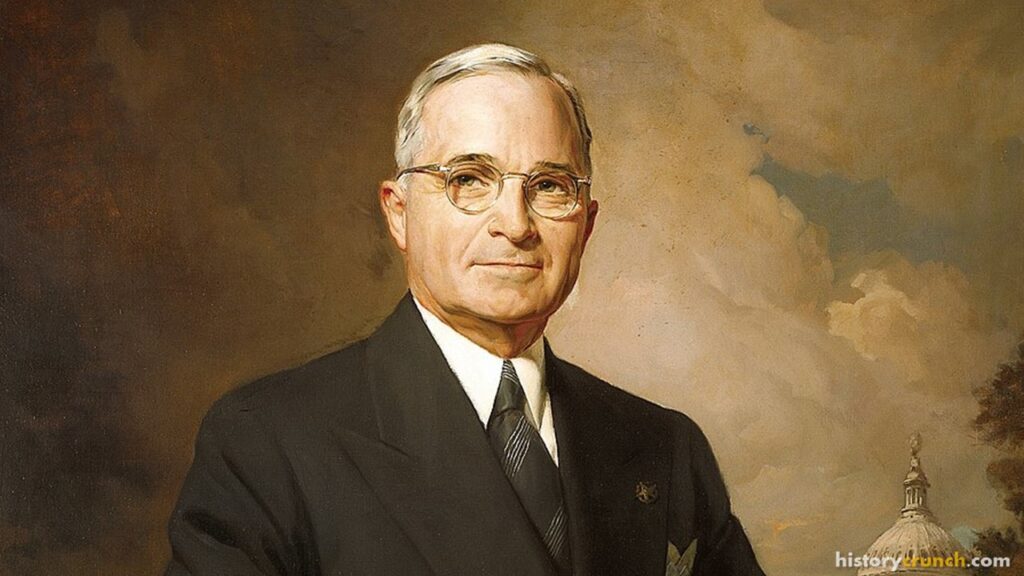
Harry Truman – Early Life
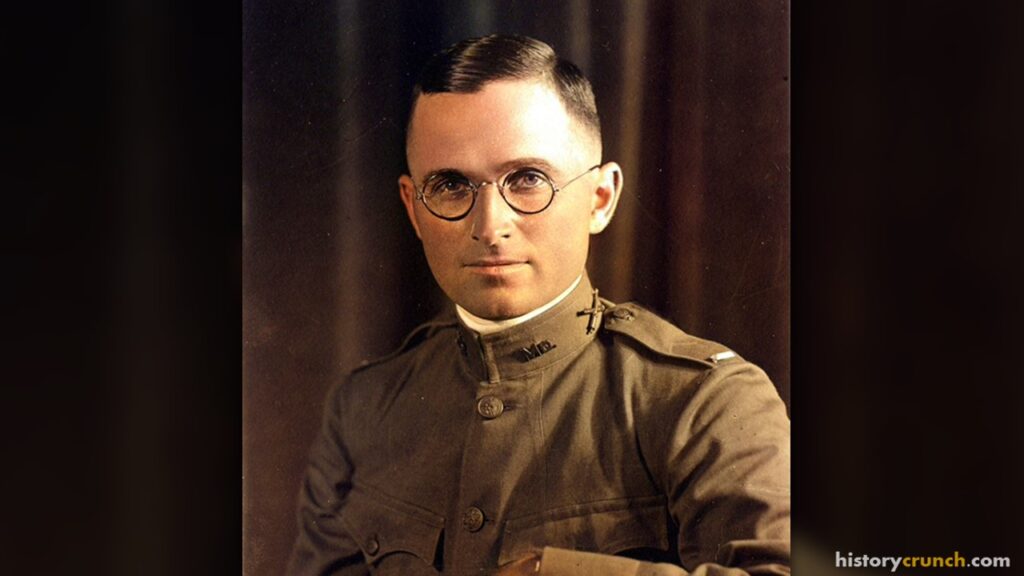
Harry S Truman was born in Lamar, Missouri on May 8th, 1884. He spent much of his childhood on a farm. Truman graduated from high school and worked on the railways. Later, Truman served in the army and fought during World War I. In fact, he served in World War I as a captain in the United States Army. After returning home, he opened a haberdasheryA shop that sells men’s clothing and accessories like hats, shirts, and ties. shop with his army friend Eddie Jacobson. Unfortunately, the store went bankruptWhen a business fails and can no longer pay its debts, forcing it to close., which caused Truman to seek an alternative profession. For instance, he became interested in politics and joined the Democratic Party. Truman was elected as County Court Judge in 1922. As time passed, Truman’s political interests continued, and he made his way up the political ranks of American society.
 FactsthatCrunch
In 1922, Harry Truman ran for County Court Judge in Missouri and won, launching his political career. That step into politics came directly because his men's clothing shop had gone bankrupt, leaving him without a job and needing a new direction.
Truman had opened the haberdashery with his army friend Eddie Jacobson after returning from World War I. The business could not pay its debts and was forced to close, so Truman looked for a new path and turned to politics.
Harry Truman – Vice President of the United States
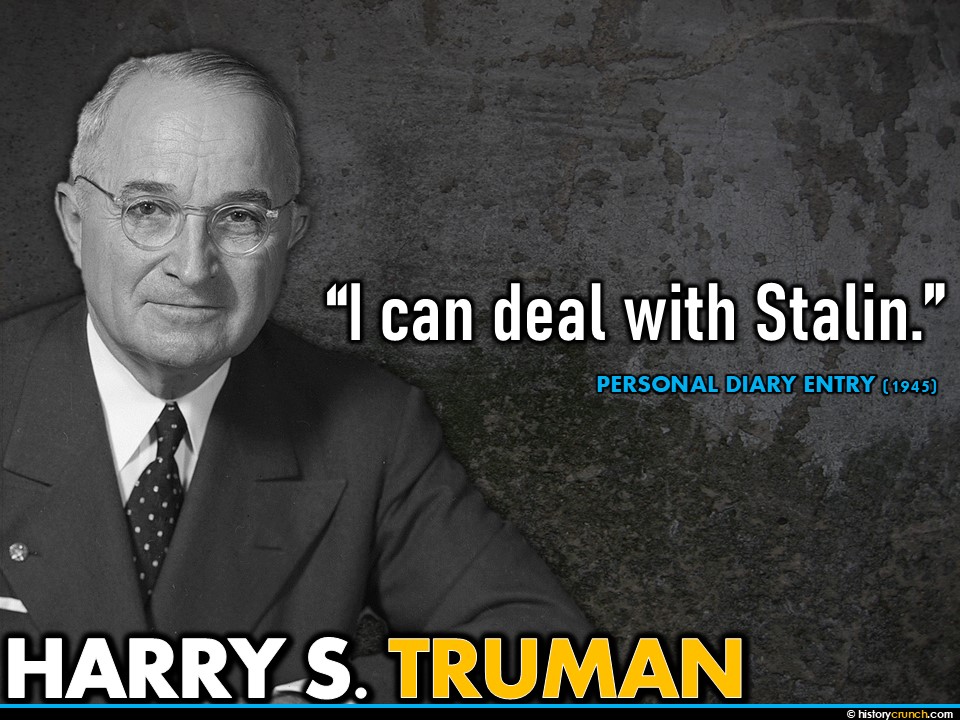
In 1934 Truman ran for the United States Senate, and in 1935, he became a United States Senator from Missouri. With time, Truman continued to gain political popularity and in 1945 Truman was chosen as Vice President under President Franklin D. Roosevelt. However, just 82 days after Truman became Vice President, Roosevelt died. At the time, the United States was in the end stages of World War II against Nazi Germany in the European Theater and Imperial Japan in the Pacific Theater. With the death of Roosevelt, Truman was sworn in as the 33rd President of the United States.
Harry Truman – President of the United States
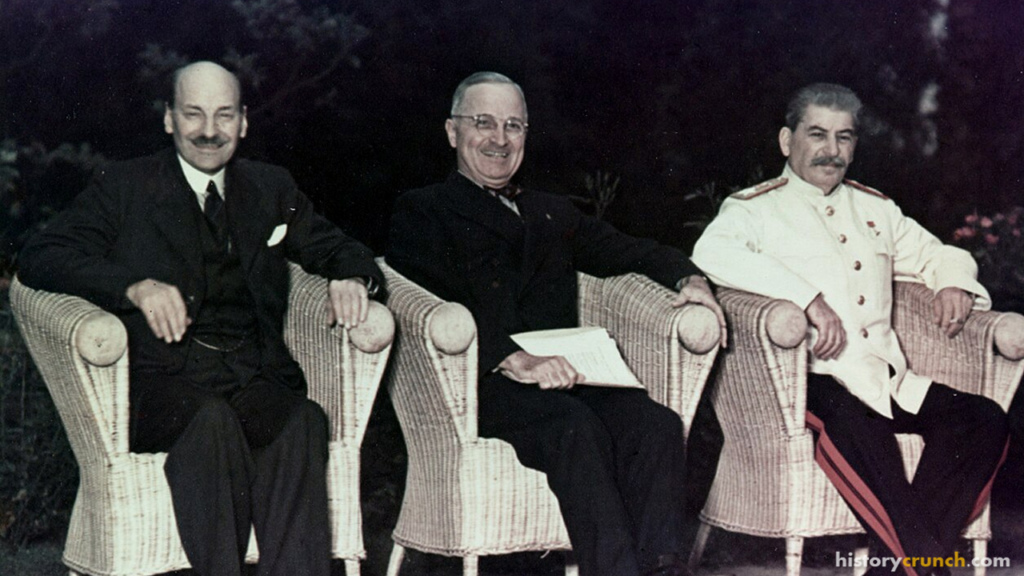
Although World War II was nearly over when Truman became President, he played a significant role in the history of the war and the decades that followed. First, he participated in the Potsdam Conference which occurred from July 17th to August 2nd in 1945 and was a wartime meeting of the Allied leaders, including: Truman, Winston Churchill and Joseph Stalin. The meeting took place in Potsdam, which at the time was in the Allied controlled area of Germany. The purpose of the conference was for the three Allied powers to begin discussing how to handle the defeat of Nazi Germany, which had occurred just recently. Other goals focused on how the world would carry on after the war. While World War II in the Pacific was not over yet, the Allies could see that the end of the war was near and that Japan would soon be defeated.
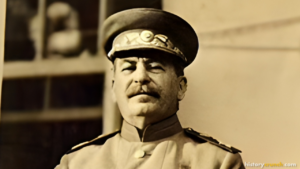
It was at the Potsdam Conference that Truman told Stalin that the United States had a powerful new weapon, though he did not call it an atomic bomb. The weapon had been built by the American atomic weapons program (Manhattan Project). It was also at this conference that a deep divide was created between the United States and the Soviet Union. Truman was incredibly suspicious of Stalin and his intentions and Stalin felt a similar way towards Truman. In general terms, the seeds of the Cold War were planted at the Potsdam Conference.
 FactsthatCrunch
Truman chose to tell Stalin about the new weapon as briefly and casually as possible, describing it only as a new weapon of unusual destructive force without naming it as an atomic bomb. In his memoirs he recalled that Stalin showed no special interest and simply said he was glad to hear it. Truman believed this vague approach let him meet his duty to inform an ally while giving away as little as possible about the Manhattan Project.
Harry Truman – Atomic Bombing of Japan
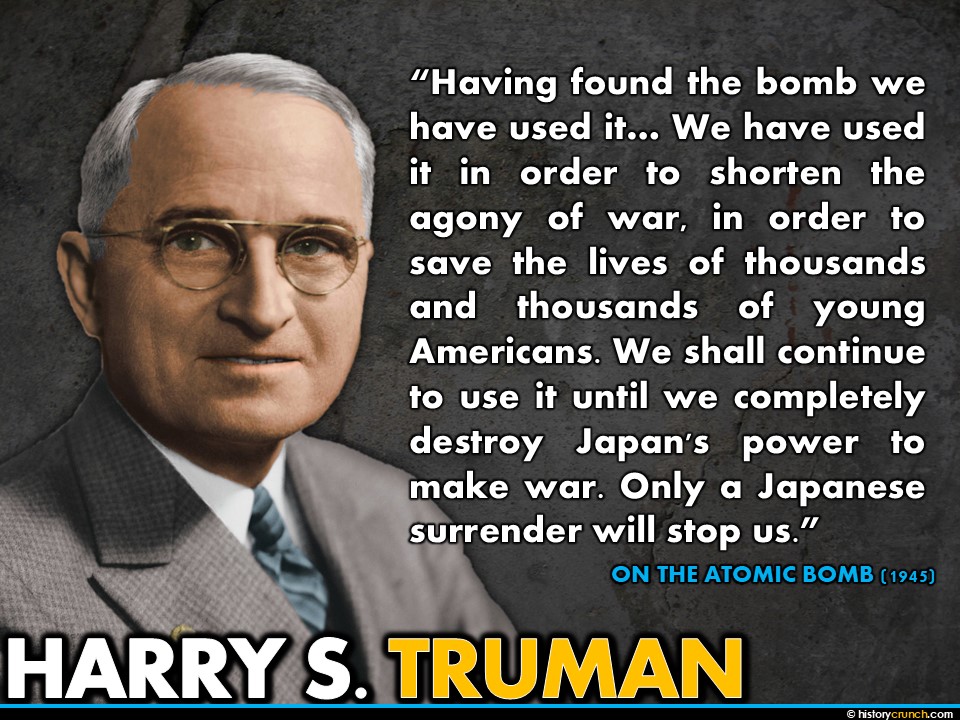
Next, Truman was involved in one of the most significant events in his entire presidency and the 20th century. Just days after the Potsdam Conference, Truman made the decision to use the atomic bomb against Japan to end World War II in the Pacific. The first atomic bomb dropped on Japan was codenamed Little Boy and was detonated over the city of Hiroshima on August 6th, 1945. The bombing of Hiroshima was the greatest loss of life ever caused by a single weapon.
Immediately after the bombing, the United States called for the full and unconditional surrenderGiving up completely in a war with no conditions or negotiations allowed. of Japan. However, the Japanese leadership delayed and did not respond to the American demands for surrender and on August 9th, the United States carried out another atomic bombing against Japan in the city of Nagasaki. The city of Nagasaki was located in the southwest of Japan and had approximately 240,000 people. The atomic bomb used against Nagasaki was called the Fat Man and was delivered to the city on August 9th by the American B-29 bomber Bockscar. Japan surrendered soon after and World War II was over.
The use of the two atomic bombs against Japan was controversial. While the bombs ended World War II, many have questioned the ethics of using such destructive weapons against an enemy that was essentially defeated. For his part, Truman stated that he decided to use the bombs after being informed of potential American casualtiesSoldiers or civilians killed, wounded, or missing as a result of war or conflict. of the planned American Invasion of Japan called Operation Downfall. It was reported that the United States might face as many as 1 million casualties in its attempt to invade the mainland islands of Japan. As a result, Truman argued that the atomic bombs offered a way of ending the war as quickly as possible while potentially saving the lives of many American soldiers. Regardless, his decision to use the atomic bombs remains one of the most significant events of the 20th century.
Harry Truman – Cold War
In 1948, Truman was re-elected and served as President of the United States during another important event in American and World History: the beginning of the Cold War. As the Allied countries liberatedFreed from enemy occupation or control during or after a war. Europe from Nazi control and pushed the German army back into its own country, another development began to emerge. More specifically, Joseph Stalin’s forces captured and retained control over the European territory that they ‘liberated’. United States President Harry Truman, along with others, viewed this as a threat to the democratic world, because it saw the ideology of communism spreading throughout Europe. Truman was concerned that many other nations would ‘fall’ to communism and threaten democracy around the world.
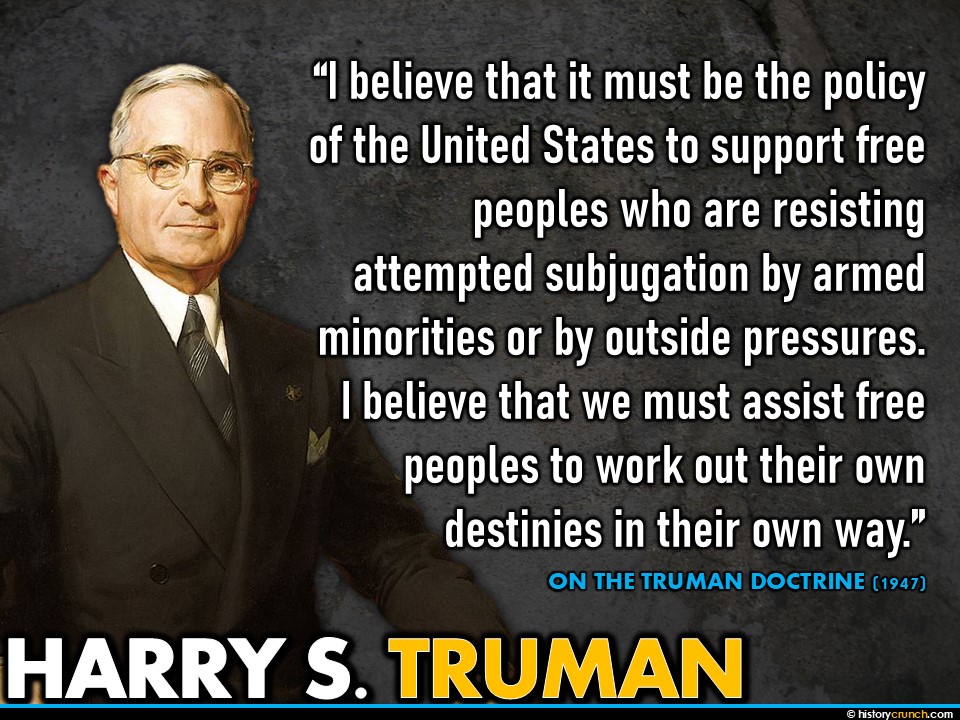
In response Truman argued that the United States and its allies should actively combat the spread of communism wherever it emerged. Historians refer to this idea as the ‘Truman Doctrine‘. The Truman Doctrine was followed by the United States throughout the course of the Cold War and was an important reason for America’s involvement in events, such as: the Berlin Blockade, Korean War and the Vietnam War. In general, historians refer to this as ‘containment‘ because the Truman Doctrine involved the United States trying to contain Soviet expansionismA country’s push to extend its power or territory into other nations or regions. wherever it emerged.
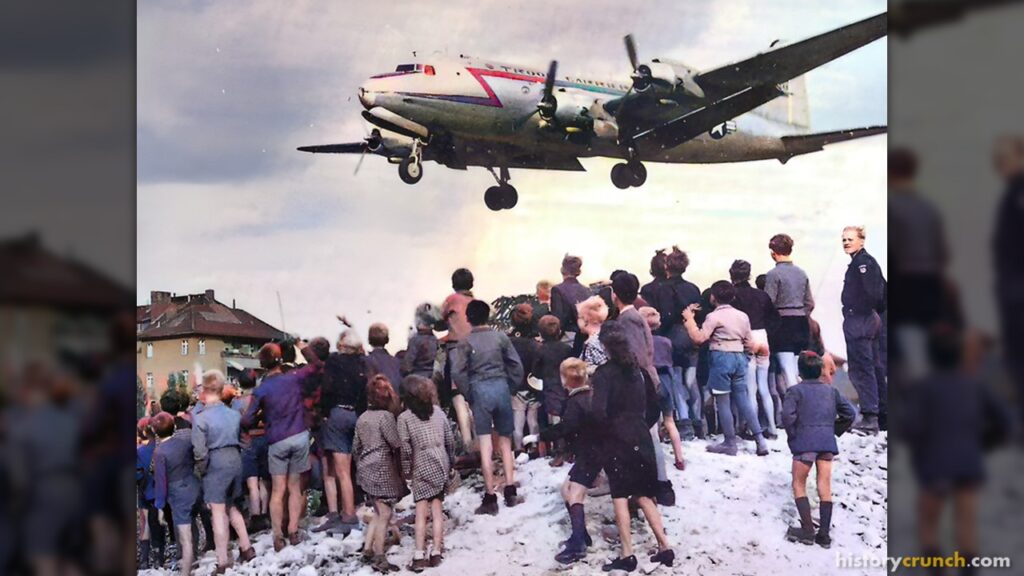
Another major event that Truman oversaw as President of the United States was the Berlin Blockade. The event saw Joseph Stalin attempt to take West Berlin from the Allied nations. Truman, believing in containmentThe American Cold War policy of stopping Soviet communism from spreading to new countries., refused to give in to Soviet pressure and carried out the Berlin Airlift to maintain control over West Berlin.
 FactsthatCrunch
What were the 4 main methods the United States used to carry out containment in the early Cold War?
Harry Truman – Later Years and Death
After leaving the presidency in 1953, Truman returned to his hometown of Independence, Missouri, where he lived a modest life and remained active in public affairs. More specifically, he wrote his memoirs, gave speeches, and helped establish the Harry S. Truman Presidential Library and Museum, which opened in 1957.
Truman died on December 26th, 1972 at the age of 88 from organ failure. He is buried at the Truman Library in Independence, alongside his wife, Bess Truman. He is remembered today for his significance in the major events of World War II and the Cold War, which are two of the most important events of the 20th century.
 FactsthatCrunch
After leaving the presidency in 1953, Truman returned to his hometown of Independence, Missouri. He wrote his memoirs and helped set up the Harry S. Truman Presidential Library and Museum, which opened in 1957.
The Truman Library is still open in Independence today, run by the National Archives. Harry Truman and his wife, Bess, are buried there.
The library Truman helped build still lets students and researchers study the decisions he made during World War II and the Cold War.
Key Vocabulary
Haberdashery
Bankrupt
Unconditional surrender
Containment
Expansionism
Liberated
Casualties
Frequently Asked Questions
Why did Harry Truman become president in 1945?
Truman became president after Franklin D. Roosevelt died in April 1945. He had served as vice president for only 82 days before being sworn in. At the time, World War II was in its final months against both Germany and Japan.
Why did Truman decide to drop the atomic bombs on Japan?
Truman chose to use the bombs to end World War II in the Pacific as quickly as possible. He said a planned invasion of Japan, called Operation Downfall, could cause as many as 1 million American casualties. The first bomb fell on Hiroshima on August 6th, 1945, and the second on Nagasaki on August 9th.
What was the Truman Doctrine?
The Truman Doctrine was the idea that the United States should fight the spread of communism wherever it appeared. Truman feared that many nations would fall to communism and threaten democracy. Historians also call this policy containment, and it guided American actions throughout the Cold War.
What happened at the Potsdam Conference?
The Potsdam Conference brought together Truman, Winston Churchill, and Joseph Stalin from July 17th to August 2nd, 1945. The leaders discussed how to handle the recent defeat of Nazi Germany and the postwar world. It was there that Truman told Stalin about the American atomic weapons program, deepening the divide between the two nations.
How did Truman respond to the Berlin Blockade?
Truman responded to the Berlin Blockade with the Berlin Airlift to keep control of West Berlin. Stalin had tried to cut off the city, but Truman refused to give in to Soviet pressure. This choice fit his belief in containing the spread of communism.
What did Truman do after leaving the presidency?
Truman returned to Independence, Missouri, in 1953 and lived a modest life. He wrote his memoirs, gave speeches, and helped create the Harry S. Truman Presidential Library and Museum. He died on December 26th, 1972, at the age of 88 and is buried at the library beside his wife, Bess.
Cite This Article
To cite this article as a source, use one of the formats below.
MLA: Beck, Elias. “Harry Truman: A Detailed Biography.” HistoryCrunch, 3 October 2026, https://historycrunch.com/harry-truman/.
APA: Beck, E. (2026). Harry Truman: A Detailed Biography. HistoryCrunch. https://historycrunch.com/harry-truman/
Chicago: Beck, Elias. “Harry Truman: A Detailed Biography.” HistoryCrunch. October 3, 2026. https://historycrunch.com/harry-truman/
Sources
- Imperial War Museum
- Gerhard L. Weinberg, A World at Arms.