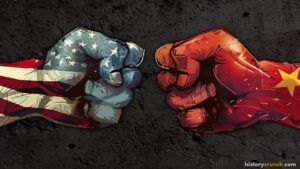
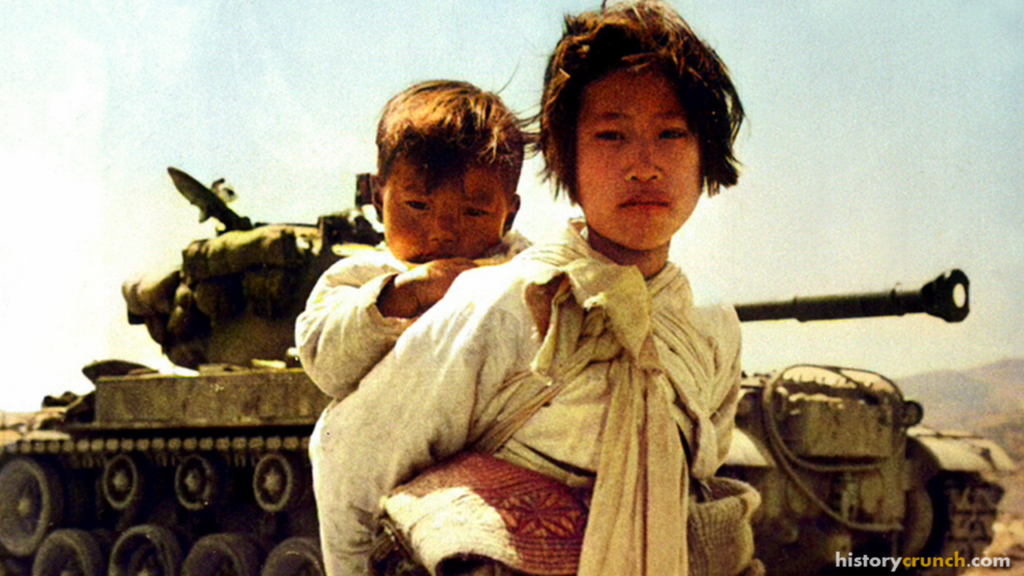
The Korean War was the first major conflict following the end of World War II and the first war of the Cold War between the United States and Soviet Union. The Korean War was fought between North Koreans and the South Koreans throughout the early part of the 1950s. The north had the support of communist allies including the Soviet Union and China, while the south had the support of the west with the United States. In fact, the United States would play a large role in the conflict for several years. Due to the time period and nature of the Korean War historians today consider it to be a Cold War era proxy warA conflict where two powerful nations fight indirectly by supporting opposite sides rather than fighting each other directly. between the United States and Soviet Union.

Why Did the United States Get Involved?
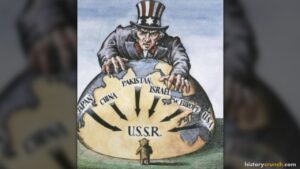
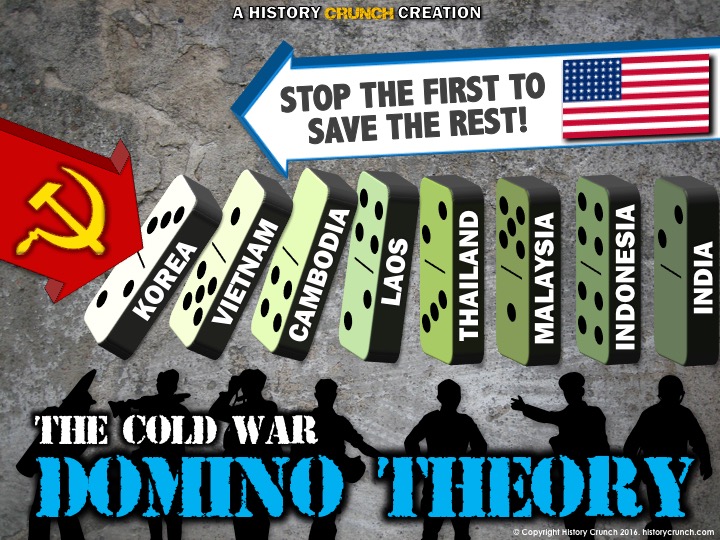
The main reason the United States got involved in Korea was the purpose of doing everything possible to keep communism from spreading around the world. Since the beginning of the Cold War the United States had practiced a policy of containment against the expansion of communism, and wanted to prevent the ideology from taking root in different regions of the world. This containmentAn American policy aimed at stopping communism from spreading to new countries during the Cold War. policy is often referred to as the Truman Doctrine, since American President Harry S. Truman argued that the United States should actively support the containment of Soviet Communism in the years immediately after World War II. Further to this idea, the reasons for American involvement in the Korean War are often held to be part of the Domino TheoryA Cold War belief that if communism took hold in one country, it would spread to all neighboring countries like falling dominoes..
The Domino Theory was a Cold War era belief popular within the United States from the 1950s until the end of the Cold War. Based on the Truman DoctrinePresident Truman’s argument that the United States should actively support efforts to stop Soviet communism from expanding., the theory held the idea that if Soviet communism was able to spread into a single country, then it had the potential to spread to all of the other surrounding countries. The basic idea was that the Americans needed to prevent the first domino from falling (country turning to communism) in order to prevent the spread of communism. As such, historians now argue that the United States used the Domino Theory to justify its involvement in Korea, just as it did in the later Vietnam War.
Background
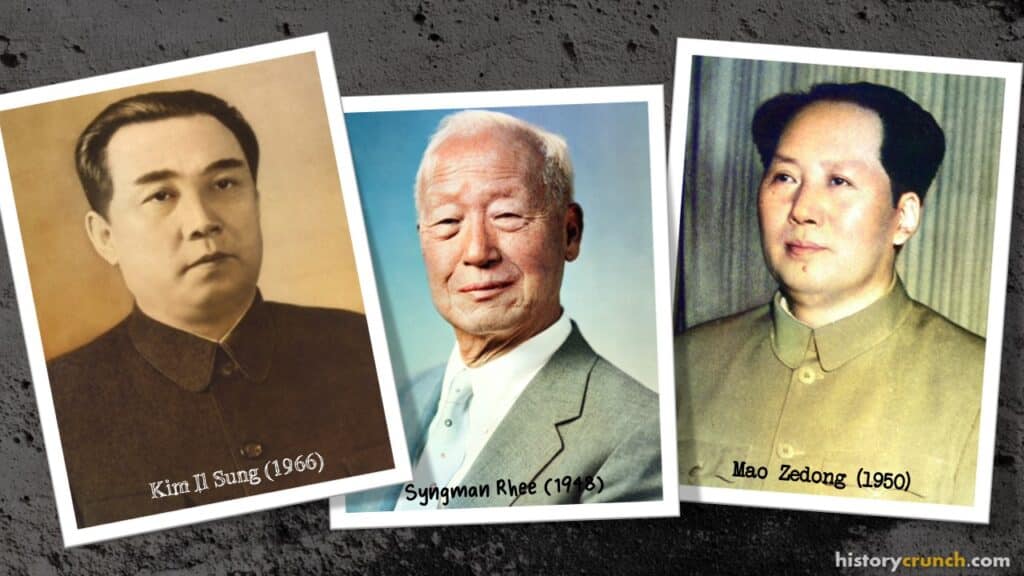
The conflict in Korea had its beginnings in 1945, at the end of World War II. Because Japan had occupied the Korean Peninsula in the years before and during World War II, both the Soviet Union and the United States worked to liberate the region from the Japanese. The Soviet Union invaded the northern half of Korea in August of 1945 and liberated it from Japanese control, with American forces liberating the southern half soon after. By 1948, Korea had been officially split into two halves with separate governments, along the 38th parallel. North Korea would be led during the war, by Kim Il-Sung, who ruled over the country as a dictator. South Korea would be led by President Syngman Rhee, an anti-communist statesman.
Between 1948 and 1950, the tensions between the two sides escalated until finally fighting began in 1950. During the Korean War, several key world leaders played significant roles. The President of the United States was Harry S. Truman, who today is best known for his decision to use the atomic bombs against Japan at the end of World War II. During the Korean War, he supported South Korea and the government of Syngman Rhee. On the side of North Korea was the Soviet Union, which was led by Joseph Stalin. Stalin is regarded today as a brutal dictator who oversaw the early years of the Cold War against the United States. Finally, Mao Zedong led China, which entered the war after the United Nations forces crossed the 38th parallel into North Korea. Mao Zedong, was the communist ruler of China after having led the communist revolution in the country in 1949.
Early Years
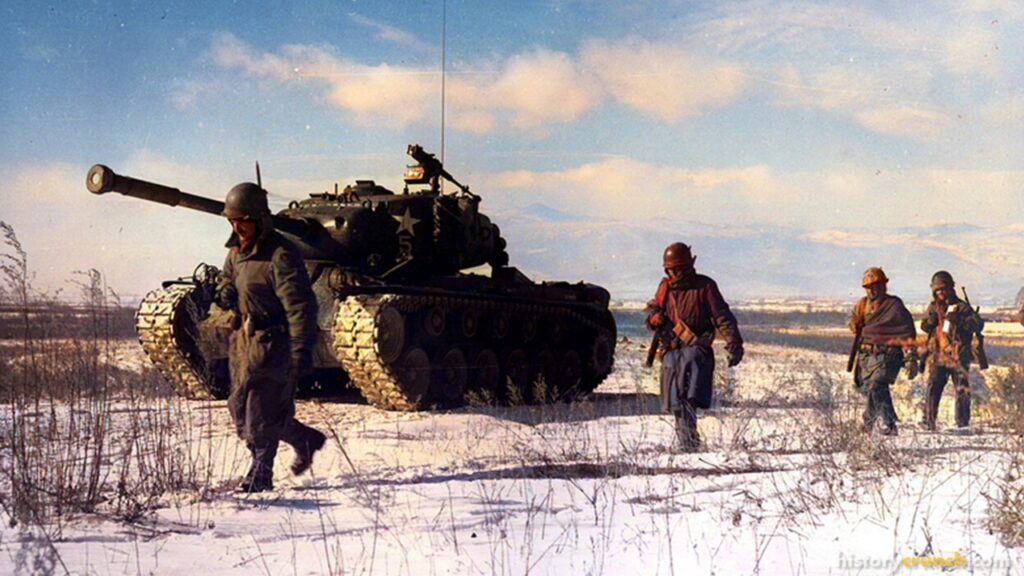
On June 25th, 1950, the conflict escalated when forces from North Korea invaded the south with the support of the Soviet Union. Over 80,000 troops marched from the north all the way to the southern borders where they captured Seoul, the capital of South Korea in just three days. North Korean forces were successful against the south due to their overwhelming military advantage. Stalin had supported the war effort by sending hundreds of advisors in the form of Soviet Generals who had extensive experience from World War II. As well, North Korea attacked across the 38th parallel with divisions of heavily armored tanks. South Korean forces did not have similar access to tanks and lacked anti-tank weapons to stop or slow the assault of the north.
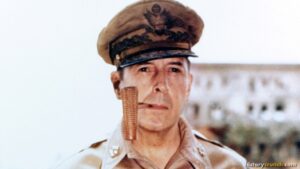
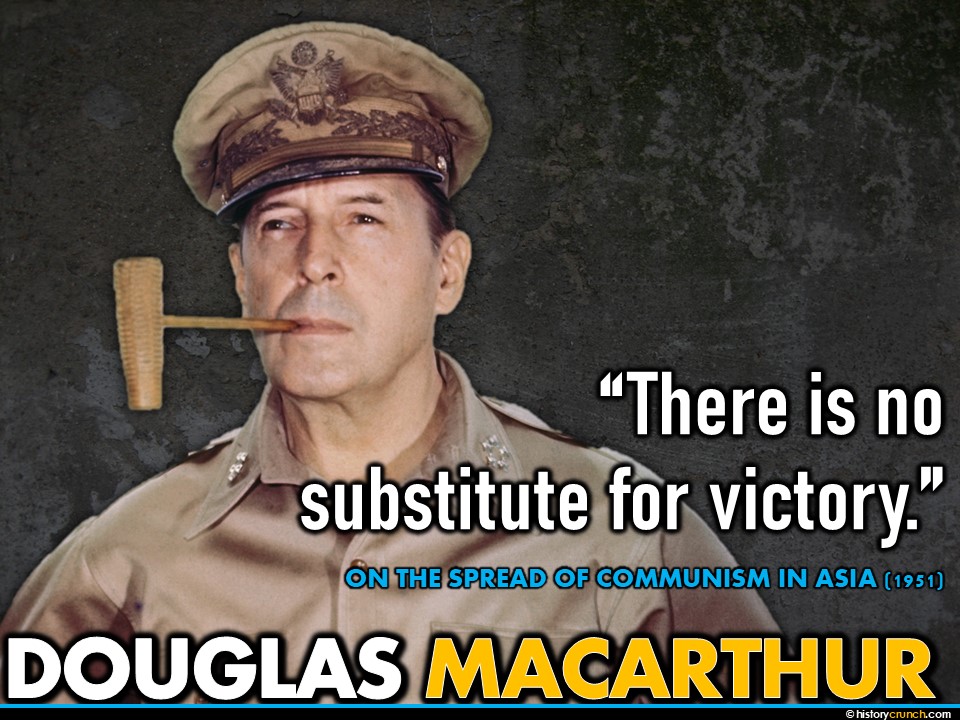
It was at this time when the United Nations decided to intervene and assist South Korea in the conflict. The United Nations Security Council voted to recognize the North Korean actions as an attack and set about creating a United Nations force to intervene in the region. Eventually, several countries contributed to the United Nations’ mission, but the United States was the main proponent of the mission with soldiers and military assistance. In fact, the United Nations’ mission was led by United States General Douglas MacArthur. American President Harry S. Truman wished to stop the spread of communism in the region and viewed the Korean War as related to the American policy of containment against communism around the world.
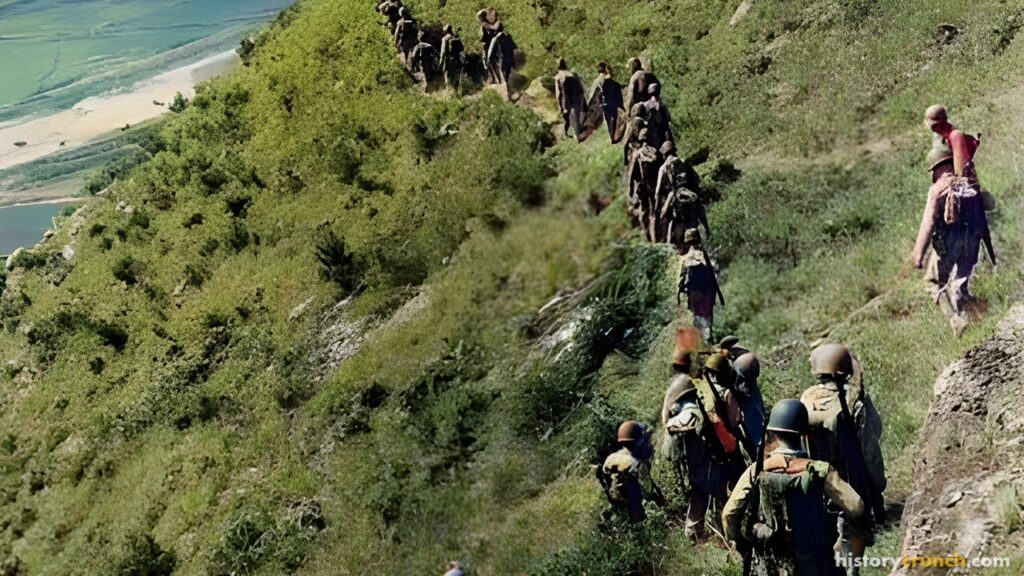
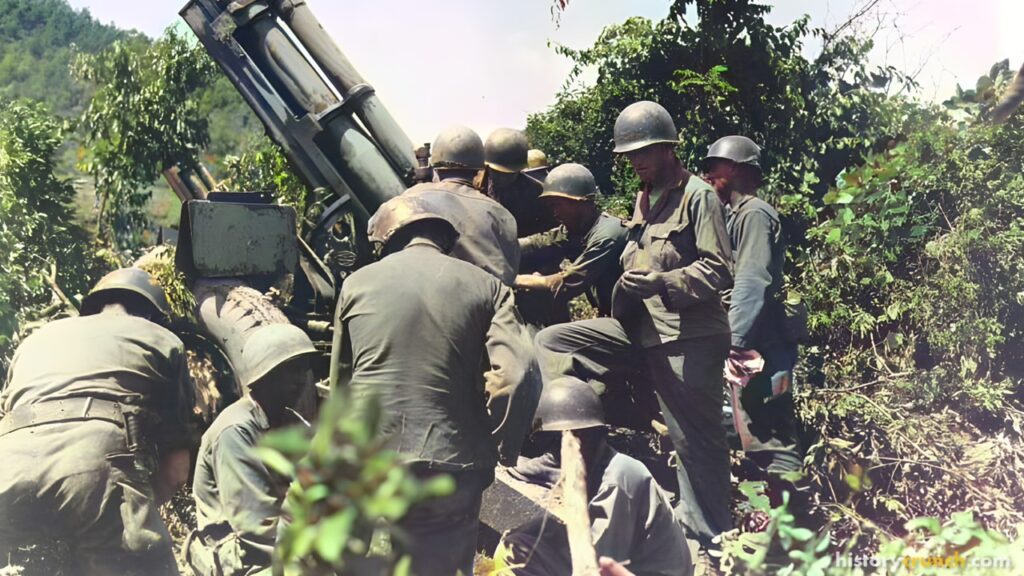
The initial attack by North Korea was so successful that it was able to push back South Korean and American troops to the Pusan region in southeast Korea and came dangerously close to capturing the entire Korean peninsula. In fact, the North Korean army was larger and better equipped than the South Koreans. By 1950, the North Korean forces totaled about 135,000 soldiers including a tank division and an air force division. In comparison, South Korean forces totaled less than 100,000 and lacked any tanks. They had a small air force that paled in comparison to the North Korean air force. As well, as the North Korean army made its way through South Korea, thousands of South Korean soldiers either retreated or defectedAbandoned one’s own side during a conflict and joined the opposing force. and joined the North Koreans.
MacArthur defended the major strongholds in South Korea and they managed to halt the advance of the North Korean troops and their allies. By September 12th, 1950, the attempts to advance further were completely put to a halt. Then, General MacArthur decided to launch an attack at Inchon that would cut off all of the supply lines for the North Koreans and this would force them to retreat even further.
 FactsthatCrunch
The U.S. Department of Defense recorded 36,574 American deaths during the Korean War, from the opening invasion on June 25th, 1950, through the armistice.
South Korea suffered even heavier losses, with United Nations Command figures recording 137,899 South Korean soldiers killed. Communist forces lost an estimated 1.1 million or more military casualties across the three years of fighting. The total death toll on all sides, military and civilian combined, is estimated at more than 2.5 million people.
Americans Advance North
On September 15th, 1950, United Nations troops landed at Inchon, near Seoul. The hope was to relieve the pressure in the Pusan region and begin the process of forcing the North Koreans out of South Korea. The battle at Inchon, which was led by MacArthur, was over in just four days on September 19th and was a resounding success for the United Nations. Seoul was liberated from North Korean control just two weeks later and the balance of power in the war had shifted in favor of the Americans and South Koreans. The landing was such a huge success that it effectively cut the North Korean army in half and pushed them out of South Korea. MacArthur helped rebuild the government of Syngman Rhee and re-establish the government of South Korea.
Then MacArthur, with the support of Defense Secretary George Marshall, decided it was time to move his troops to the north to force the North Koreans past the 38th parallel and deep into North Korea. Just two weeks after they started to move on the offensive inside North Korea, United Nations forces managed to capture Pyongyang, the capital of North Korea, on October 19th, 1950. Believing his troops had the momentum to carry on, MacArthur expressed his intentions to carry the war into China, as Chinese officials were helping fund and supply the North Korean army. However, Mao Zedong reported that China would enter the conflict in Korea militarily if it needed to, because Mao wanted to prevent foreign forces, such as the Americans, from occupying territory just off of China’s border. Also, both Stalin and Kim Il-Sung sent messages to Mao in October of 1950 requesting China’s military assistance in Korea. Stalin wanted to prevent the Soviet Union from getting involved in the conflict and facing off directly against the United States, while Kim Il-Sung was desperate for any assistance due to his mounting losses. As a result, this ultimately led to China entering the Korean War on the side of the North Koreans.
 FactsthatCrunch
The same features that made Inchon look impossible to military planners also made North Korean defenders unprepared for the attack. The extreme tides, confined channel, and seawall were real dangers, but they convinced the enemy the site would never be chosen, which is exactly why it was.
China Enters
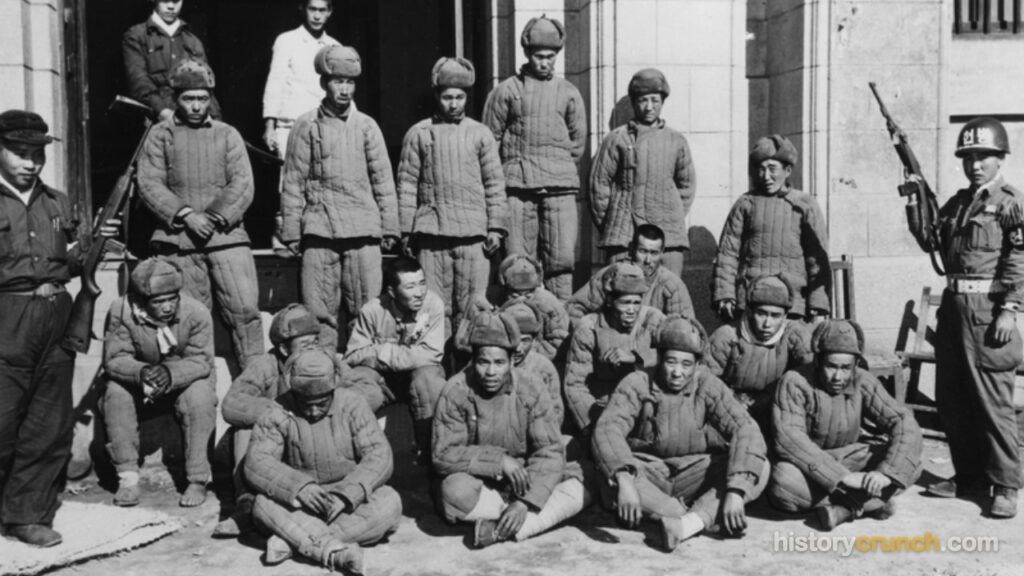
Chinese forces secretly crossed the Yalu River into North Korea in late October of 1950 and within days attacked the United Nations forces in North Korea. With the Soviets providing air support, the Chinese engaged American forces on November 1st in a surprise attack. After being encircled by advancing Chinese troops, the United States 8th Cavalry Regiment was forced to retreat to Ch’ongch’on River in North Korea while the Chinese withdrew into mountain hideouts.
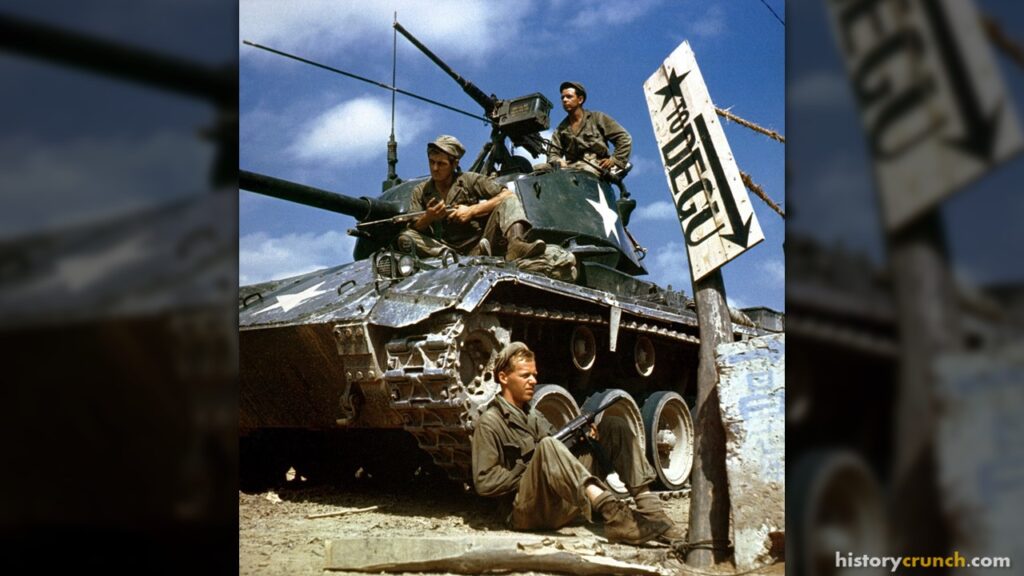
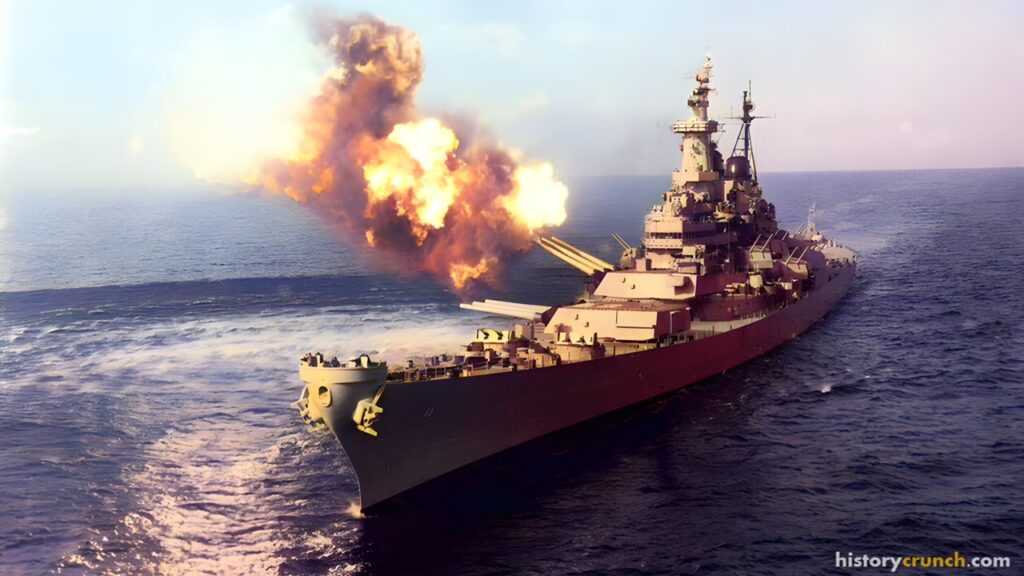
The United Nations mission responded with MacArthur’s “Home-by-Christmas” offensive on November 24th. It was MacArthur’s hope that the offensive would force the Chinese to withdraw their army from the war and bring an end to the Korean War. In reality, the Chinese undertook their own offensive campaign called the “Second Offensive Campaign” against the advancing United Nations forces. The majority of the fighting occurred along the valley of the Ch’ongch’on River between the Chinese 13th Army and United States’ 8th Army. While this time, the Americans were able to avoid being encircled, they still suffered heavy losses. As a result, the “Home-by-Christmas” offensive failed and the United Nations troops were forced to retreat back to the 38th parallel.
Fighting resumed near the end of 1950 when the Chinese army began their Third Phase Offensive at the 38th parallel. Launched on New Year’s Eve 1950, the Chinese soldiers attacked at night and encircled the United States’ 8th Army, which was commanded by Lieutenant-General Matthew Ridgway. Within a short time, the American forces were overwhelmed and again forced to retreat deeper into South Korea. As such, the Chinese, along with the North Koreans, were able to recapture Seoul on the 4th of January, 1951. Seoul would change sides several times in the Korean War and would essentially be destroyed by the war’s end.
Truman Fires MacArthur
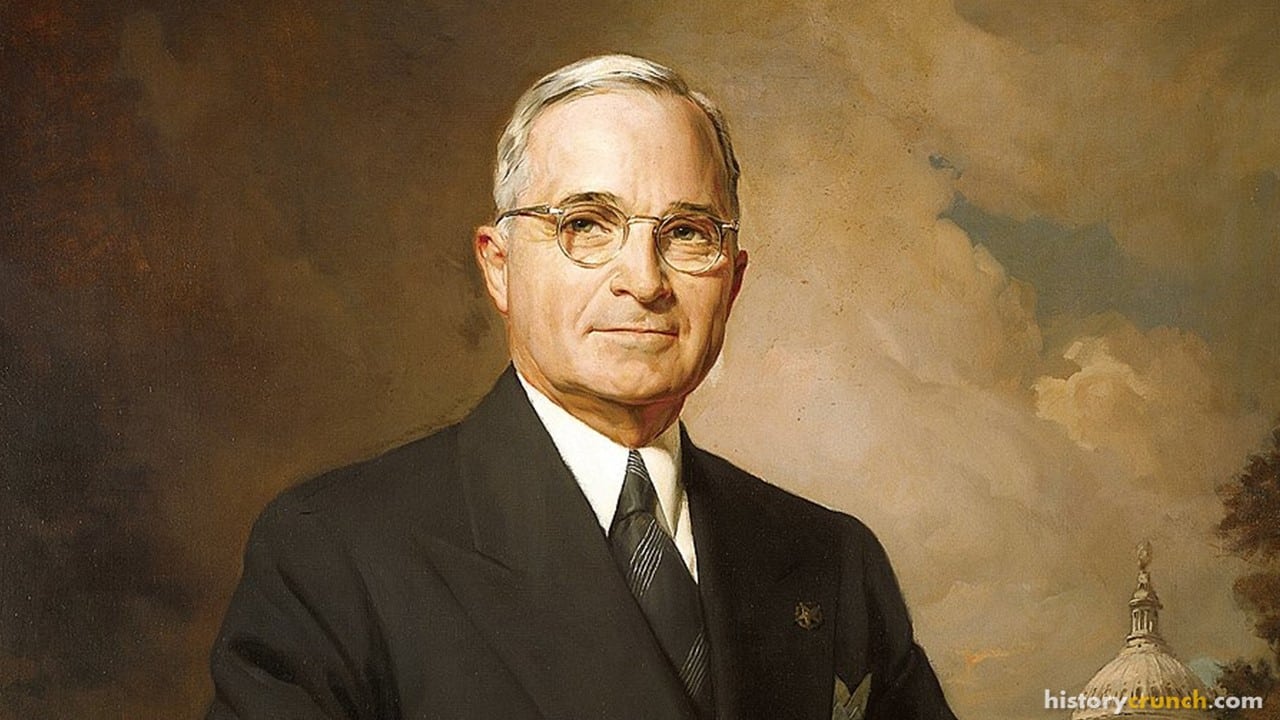
Also in 1951, President Truman famously fired General Douglas MacArthur and replaced him with General Ridgway. MacArthur had angered Truman with his handling of the war and for insubordinationDisobeying or acting against the orders or wishes of a superior officer or leader., which means that MacArthur was going against the orders or wishes of the president. Specifically, MacArthur believed it was in the best interest of the United States to begin a war with China and push the Korean War onto the mainland of Asia. As well, MacArthur was in favor of using atomic weapons in order to defeat the North Koreans and the Chinese. He believed that any other approach was a form of appeasementGiving in to the demands of an aggressive power to avoid conflict, seen by MacArthur as a weakness. and did not want to give into the pressure of the communist nations. Truman felt differently and generally wanted to avoid a war with China. Truman did not want to overextend the United States in Asia and wanted to avoid the possibility of an atomic war with the Soviet Union. Ultimately, Truman fired MacArthur for trying to start a war with China and refusing to follow the orders of the president.
 FactsthatCrunch
Final Years and Significance
The remaining years of the battle saw the two sides develop a stalemateA situation in a conflict where neither side is able to gain an advantage or capture significant territory from the other. along the 38th parallel with neither side capturing much territory from the other. While fighting still occurred from 1951 to 1953, commanders on both sides sought to reach a ceasefire. The war in Korea was finally over on July 27th, 1953 with the signing of the armisticeA formal agreement between warring sides to stop fighting, signed to end the Korean War in 1953.. With the armistice, the two sides agreed to several things, including: the creation of a demilitarized zone between North and South Korea near the 38th parallel, and how to handle the exchange of prisoners of war.
The Korean War was an important world event for several key reasons. First, it highlighted the tensions of the United States and Soviet Union during the larger Cold War. It is considered to be a proxy war of the two superpowers and saw the two nations face off against each other through the conflict in Korea. Second, the Korean War created a literal divide in the country that still exists to this day. North and South Korea are still very much divided along the ideological lines of communism and democracy and regularly face conflict with each other. Finally, the Korean War was a brutal and deadly war that saw many people die or be wounded. In the war, nearly 34,000 American soldiers died while over another 103,000 were wounded. As well, it has been estimated that nearly 3 million Korean civilians died in the war, making it a particularly bloody war.
 FactsthatCrunch
What fraction of South Korea's industrial facilities were destroyed during the Korean War?
Korean War timeline · 1950 – 1953
Key Vocabulary
Containment
Domino Theory
Proxy war
Defected
Insubordination
Stalemate
Armistice
Frequently Asked Questions
When did the Korean War start and end?
The Korean War began on June 25th, 1950, when North Korea invaded the south. It ended on July 27th, 1953, with the signing of an armistice. No formal peace treaty was ever signed, so the two sides technically remain at war today.
Why did the United States get involved in the Korean War?
The United States joined the war to stop the spread of communism around the world. This goal was part of a policy called containment, tied to the Truman Doctrine. American leaders also feared the Domino Theory, the idea that one country turning communist could push nearby countries to follow.
Why is the Korean War called a proxy war?
The Korean War is called a proxy war because the United States and Soviet Union fought each other indirectly through Korea. The Soviet Union and China backed North Korea, while the United States led United Nations support for the south. This let the two superpowers clash without fighting directly on their own soil.
Why did President Truman fire General MacArthur?
Truman fired MacArthur in 1951 for insubordination, which means going against the president’s orders. MacArthur wanted to expand the war into China and even use atomic weapons. Truman wanted to avoid a wider war with China and the risk of an atomic war with the Soviet Union.
How many people died in the Korean War?
Nearly 34,000 American soldiers died in the Korean War, and more than 103,000 were wounded. It has been estimated that close to 3 million Korean civilians also died. These heavy losses made it one of the bloodiest conflicts of the Cold War era.
Why are North and South Korea still divided?
The war ended in a stalemate near the 38th parallel, so neither side won clear control of the peninsula. The armistice created a demilitarized zone between the two countries. North and South Korea remain split along the lines of communism and democracy, and they still face conflict today.
Cite This Article
To cite this article as a source, use one of the formats below.
MLA: Beck, Elias. “Korean War: A Detailed Overview.” HistoryCrunch, 18 September 2026, https://historycrunch.com/korean-war-overview/.
APA: Beck, E. (2026). Korean War: A Detailed Overview. HistoryCrunch. https://historycrunch.com/korean-war-overview/
Chicago: Beck, Elias. “Korean War: A Detailed Overview.” HistoryCrunch. September 18, 2026. https://historycrunch.com/korean-war-overview/
Sources
- Wilson Center Digital Archive
- Max Hastings, The Korean War.