
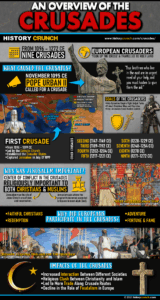
Crusades: Infographic
This Crusades infographic was created by History Crunch to help students and teachers quickly understand the key causes, major events and lasting significance of the Crusades, one of the most important events in the history of Europe and the Middle East. It covers all nine major Crusades and their impact on medieval society. Designed for students in grades 5 to 12.

Weapons in the Vietnam War: A Detailed Summary
The weapons of the Vietnam War ranged from simple bamboo traps to powerful bombers and jet aircraft. They showed how modern firepower could not guarantee victory in a jungle war, and they reflected the larger struggle of the Cold War.
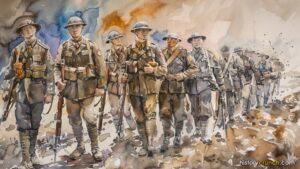
Allied Powers of World War I: A Detailed Summary
The Allied Powers of World War I included nations such as France, Russia and Britain, along with their numerous colonies. Together, the Allied Powers fought against the Central Powers in fronts across Europe and the Middle East.
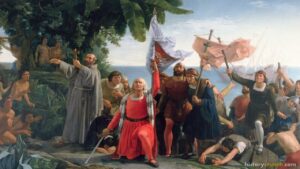
Christopher Columbus Legacy: A Detailed Summary
Christopher Columbus’s legacy is highly complex and debated, since he is credited with opening the Americas to European exploration and colonization. This article details the legacy of Christopher Columbus.

Henry Kissinger: A Detailed Biography
Henry Kissinger was one of the most influential and controversial American diplomats of the 20th century, serving as National Security Advisor and Secretary of State under Presidents Nixon and Ford. This article details the life and significance of Henry Kissinger.
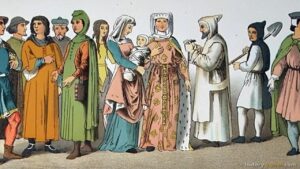
Clothing in the Middle Ages: A Detailed Summary
Clothing in the Middle Ages varied greatly depending on social class and was an important communicator of wealth, status and identity in medieval European society. This article details the history and significance of clothing in the Middle Ages.