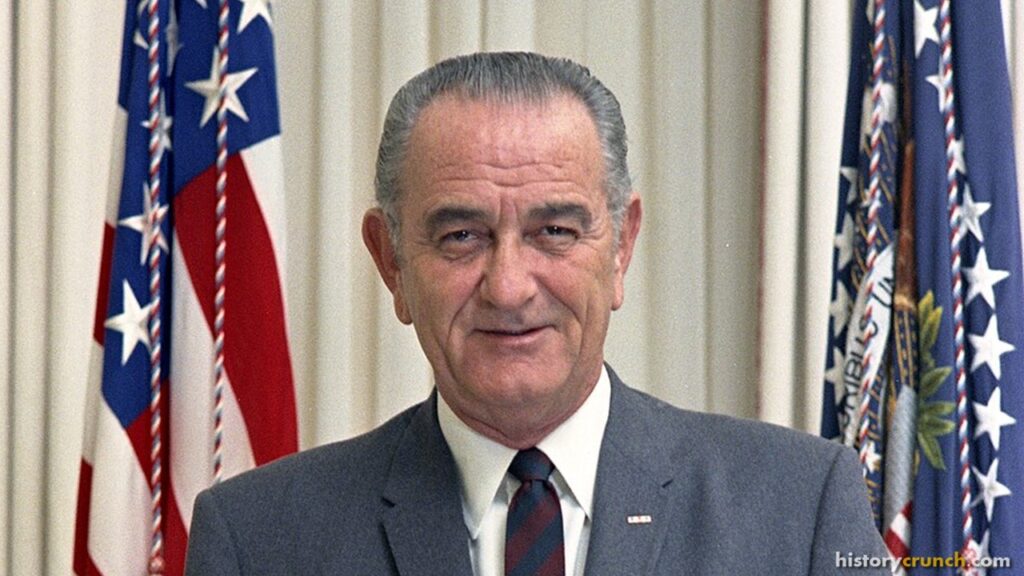
Lyndon B. Johnson was one of the most important American political leaders of the 20th century because his presidency reshaped domestic policy in the United States while also becoming deeply tied to the events of the Vietnam War. He was an American politician from Texas who served as the 36th president of the United States from November 22nd, 1963 to January 20th, 1969, after earlier serving in Congress, the Senate, and as vice president under John F. Kennedy. Due to his timeframe in office, he is most closely linked with the events of the Vietnam War and the overall Cold War.
 FactsthatCrunch
Johnson shaped how Americans thought about the role of government by pushing, through his Great Society programs, the idea that federal policy could and should reduce poverty, expand civil rights, and guarantee access to education and health care. His speeches and legislative work made him one of the most forceful voices for liberal reform in modern American history, and his policies continued to influence political debate long after he left office.
Lyndon B. Johnson – Early Life
Lyndon Baines Johnson was born on August 27th, 1908, near Stonewall, Texas. He grew up in the Texas Hill Country, later attended college, and trained as a teacher before moving fully into public life. This early background was important to his later image because Johnson often presented himself as someone who understood rural poverty, education, and the needs of ordinary Americans.
Johnson’s early adult years did not begin in the presidency or even in the Senate. Instead, he worked his way upward through Texas and national politics, and that long climb helped make him a highly skilled politician. In fact, his reputation for pressure, persuasion, and personal force developed long before he reached the White House.
FactsthatCrunchLyndon B. Johnson – Rise in Politics
Johnson entered national politics during the 1930s and became increasingly influential over time. He served in the U.S. House of Representatives from April 10th, 1937 to January 3rd, 1949, and then served in the U.S. Senate from January 3rd, 1949 to January 20th, 1961. During World War II, he also served in the Navy between 1941 and 1942, which added military service to his political experience.
His Senate career was especially important to his rise. Johnson became Senate Minority Leader in January of 1953 and Senate Majority Leader in January of 1955, and he developed a reputation as one of the most effective legislative leaders in modern American history. As such, by the late 1950s Johnson was already a major national figure, even before becoming vice president.
In the election of 1960, John F. Kennedy chose Johnson as his running mate, and the Kennedy-Johnson ticket defeated Richard Nixon. Johnson then served as vice president from January 20th, 1961 until November 22nd, 1963. That position did not always give him large independent power, but it placed him directly next to the presidency at a crucial moment in American history.
FactsthatCrunchIn what order did Lyndon B. Johnson climb through public office before becoming president?
Lyndon B. Johnson – President of the United States
Johnson became president on November 22nd, 1963, after Kennedy was assassinated in Dallas, Texas. He took the oath of office aboard Air Force One following the assassination and quickly tried to show continuityAn unbroken transfer of leadership and government so that the country keeps functioning without interruption. and stability during a moment of national shock. This was important because Johnson understood that the country needed an immediate transfer of power after the assassination.
As president, Johnson pushed through a remarkable amount of domestic legislation. His administration became closely connected to the Great SocietyA broad set of government programs Johnson pushed to reduce poverty and expand opportunity for Americans., which was a broad set of programs aimed at reducing poverty and expanding opportunity for American citizens. These measures included civil rights laws, aid for education, medical insurance programs, and anti-poverty efforts. More specifically, Johnson signed the Civil Rights Act on July 2nd, 1964, the Voting Rights Act on August 6th, 1965, and the Social Security Amendments of 1965, which created MedicareA federal medical insurance program created in 1965 to help older Americans pay for health care. and MedicaidA federal medical insurance program created in 1965 to help people with low incomes pay for health care.. Those laws were central to his presidency because they expanded the role of the federal government in American life and gave legal force to major civil rights protections.
Johnson’s domestic record also included the ‘War on Poverty’ and large investments in education and infrastructure. For instance, his administration supported federal aid to schools and backed broad anti-poverty efforts, while the Interstate and road-building era continued to reshape the country. Therefore, Johnson’s presidency became associated with the high point of modern liberal reformGovernment efforts to expand rights, reduce poverty, and grow federal programs to improve ordinary people’s lives. in the United States.
However, Johnson’s presidency was also dominated by the events of the Vietnam War. After the Gulf of Tonkin Incident in August of 1964, Congress passed the Gulf of Tonkin Resolution, which gave Johnson broad authority to use military force without a formal declaration of war. This resulted in a major escalationA major buildup of military troops and involvement in a conflict over a period of time. of American involvement in the Vietnam War. By the end of 1965, the United States had nearly 200,000 troops in Vietnam, and by 1968 that number had risen to over 500,000. That shift became one of the central problems of Johnson’s presidency because the war steadily eroded public trust, increased casualties, and fueled major anti-war protests across the United States.
Johnson also governed during a major period in the Civil Rights Movement. For instance, the passage of the Voting Rights Act in August of 1965 showed that Johnson was willing to use presidential power in support of major civil rights legislation, even while the country remained deeply divided over race.
By 1968, Johnson faced growing criticism over Vietnam, domestic unrest, and the widening divisions inside the Democratic Party. On March 31st, 1968, he announced that he would not seek another term as president. That decision was an important sign of how much the war and unrest had weakened his political position by the final year of his presidency.
FactsthatCrunchCongress passed the Social Security Amendments of 1965, creating Medicare and Medicaid as part of President Lyndon B. Johnson's Great Society. Medicare was designed to help older Americans pay for health care, while Medicaid was designed to help people with low incomes. Johnson signed the bill into law on July 30th, 1965, at the Truman Library in Independence, Missouri, with former President Harry Truman present, honoring Truman's earlier push for national health insurance.
Medicare and Medicaid together now cover more than 150 million Americans, making them the two largest health insurance programs in the United States. Medicare serves people aged 65 and older as well as certain younger people with disabilities, while Medicaid covers low-income adults, children, and families. Both programs are administered by the Centers for Medicare and Medicaid Services and account for a large share of the federal health care budget each year.
The programs Johnson signed in 1965 grew from targeted safety nets into the foundation of American public health insurance, still shaping who receives care and how it is paid for today.
Lyndon B. Johnson – Later Years and Death
After leaving office on January 20th, 1969, Johnson returned to his ranch in Texas. He remained a major former president, but his post-presidency was much shorter than those of many other modern presidents. He died on January 22nd, 1973, at the age of 64.
Johnson’s later years were shaped by reflection on his presidency and by the fact that his domestic achievements were often discussed alongside the failures and controversies of Vietnam. Regardless, by the time of his death he had already left a very large mark on American political life, especially in civil rights, social policy, and the growth of federal government programs.
Johnson signed the Voting Rights Act on August 6th, 1965, giving legal force to major civil rights protections for Black Americans.
Lyndon B. Johnson – Significance
Lyndon B. Johnson was significant because he changed the United States in lasting ways at home while leading the country through one of the most divisive foreign policy crises in modern American history. His domestic programs helped expand civil rights protections, anti-poverty efforts, and access to medical care, and many of those changes remained part of American life long after he left office.
At the same time, Johnson is important because his presidency shows how one leader can leave two very different historical legacies. On one side, he pushed through some of the most important reform laws of the 1960s. On the other side, his escalation of the Vietnam War helped divide the country and damage his presidency. For that reason, Lyndon B. Johnson remains one of the most influential and debated presidents in modern American history.
FactsthatCrunchJohnson's presidency left two very different marks on American history: major reform at home and deep damage from the Vietnam War.
Explore Cold War · 1947 – 1991
Keep exploring Cold War with these History Crunch resources.
Key Vocabulary
Continuity
Great Society
Escalation
Gulf of Tonkin Resolution
Medicare
Medicaid
Liberal reform
Frequently Asked Questions
How did Lyndon B. Johnson become president?
Johnson became president on November 22nd, 1963, after President John F. Kennedy was assassinated in Dallas, Texas. He took the oath of office aboard Air Force One to show a fast and steady transfer of power. At the time, he was serving as Kennedy’s vice president.
What was the Great Society?
The Great Society was Johnson’s wide set of programs meant to reduce poverty and expand opportunity for Americans. It included civil rights laws, aid for schools, and medical insurance programs. These efforts grew the role of the federal government in daily American life.
What major civil rights laws did Johnson sign?
Johnson signed the Civil Rights Act on July 2nd, 1964, and the Voting Rights Act on August 6th, 1965. These laws gave legal force to major civil rights protections for Black Americans. He pushed them through even while the country remained deeply divided over race.
How was Johnson connected to the Vietnam War?
Johnson greatly increased American involvement in the Vietnam War during his presidency. After the Gulf of Tonkin Incident in August of 1964, Congress gave him broad power to use military force. By 1968, the United States had more than 500,000 troops in Vietnam.
Why did Johnson decide not to run for reelection in 1968?
Johnson announced on March 31st, 1968, that he would not seek another term as president. By then he faced heavy criticism over Vietnam, domestic unrest, and splits in the Democratic Party. The war had badly weakened his political standing by his final year in office.
What are Medicare and Medicaid, and when did they start?
Medicare and Medicaid are medical insurance programs created by the Social Security Amendments of 1965. Medicare helps older Americans pay for health care, while Medicaid helps people with low incomes. Both programs remained part of American life long after Johnson left office.
Cite This Article
To cite this article as a source, use one of the formats below.
MLA: Millar, B. “Lyndon B. Johnson: A Detailed Biography.” HistoryCrunch, 10 October 2026, https://historycrunch.com/lyndon-b-johnson/.
APA: Millar, B. (2026). Lyndon B. Johnson: A Detailed Biography. HistoryCrunch. https://historycrunch.com/lyndon-b-johnson/
Chicago: Millar, B. “Lyndon B. Johnson: A Detailed Biography.” HistoryCrunch. October 10, 2026. https://historycrunch.com/lyndon-b-johnson/
Sources
- Vladislav Zubok, A Failed Empire.
- John Lewis Gaddis, The Cold War: A New History.
- Wilson Center Digital Archive