Korea before the Korean War was a period of occupation, division, and rising Cold War tensions that reshaped the Korean Peninsula. From the end of Japanese rule in 1945, following the end of World War II, to the outbreak of war on June 25th, 1950, Korea before the Korean War changed from a single Japanese-controlled colony into two rival states, North Korea and South Korea, each claiming the right to rule all of Korea.
 FactsthatCrunch
Japan Formally Surrenders Southern Korea, Ending 35 Years of Colonial Rule
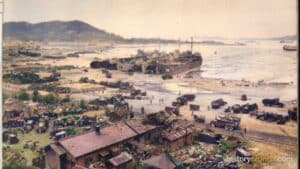
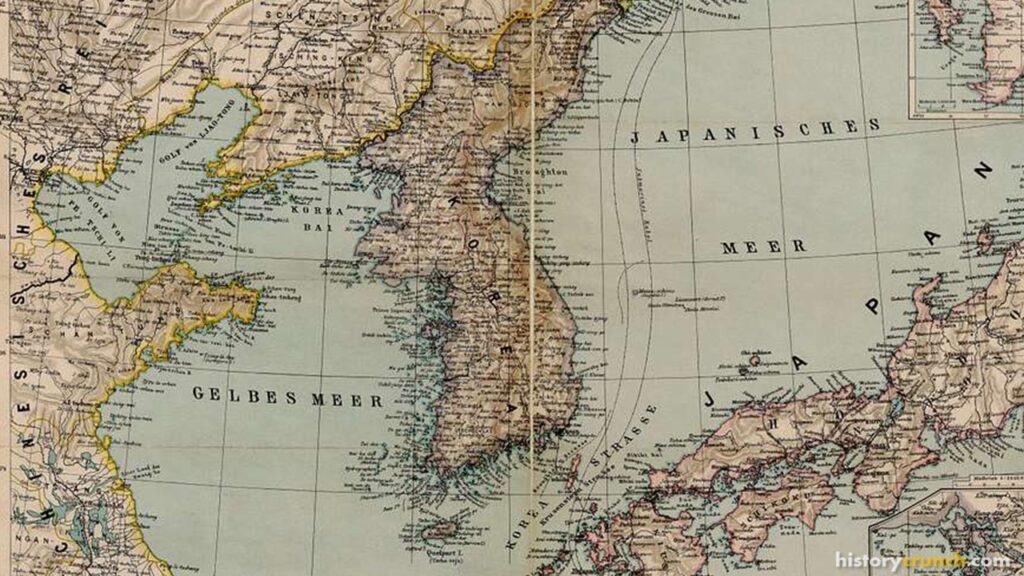
On September 9th, 1945, U.S. General John R. Hodge accepted the formal surrender of Japanese forces south of the 38th parallel at the Japanese General Government Building in Seoul, ending Japan's rule over Korea, which had begun with annexation on August 29th, 1910. Allied planners had already divided the peninsula along the 38th parallel, with Soviet forces accepting the Japanese surrender to the north and U.S. forces handling the south, a line chosen using a National Geographic map with no input from Korean leaders. This division, meant to be temporary, set up two separate occupation zones that hardened into rival governments and laid the conditions that made the Korean War possible five years later.
Japanese Rule and Liberation
To understand Korea before the Korean War, it is necessary to begin with Imperial Japanese rule. Japan formally annexedTook control of another country’s territory and made it part of one’s own nation. Korea in 1910 and governed the peninsula as a colony for 35 years. During that period, Korean political freedom was heavily restricted, and many Koreans resisted Japanese control through protests, nationalism, and independence movements at home and abroad. This colonial experience was significant because when World War II ended, Korea did not regain independence with a stable national government already in place.
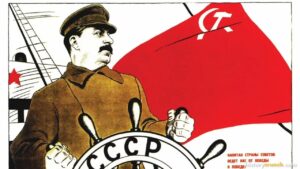
The situation changed in August of 1945, when Japan was defeated in World War II. Soviet forces moved into northern Korea, while American forces moved into the south. The peninsula was divided along the 38th parallelThe line of latitude used to divide Korea into northern and southern occupation zones after 1945. as a temporary measure for accepting the surrender of Japanese forces. At first, this division was not meant to become a permanent border. However, the growing rivalry between the Soviet Union and the United States, during the early stages of the Cold War, quickly turned it into the foundation of a much deeper political split.
FactsthatCrunchAnnexation is when one country takes control of another territory and adds it to itself, usually by force or political pressure, without the agreement of the people living there. The territory loses its separate status and comes under the laws and government of the country that seized it. Annexation differs from an alliance because the absorbed territory is no longer independent.
Japan's annexation of Korea in 1910 ended Korean self-rule and placed the peninsula under Japanese law, a condition that lasted until Japan's defeat in 1945 and set the stage for the division that led to the Korean War.
Division of the Peninsula
Korea before the Korean War was shaped most directly by the division of the peninsula after 1945. In the north, the Soviet Union helped build a communistFollowing a political system where the state controls the economy and private ownership is abolished. political structure. In the south, the United States Army Military Government in Korea ruled from September 9th, 1945, to August 15th, 1948. What began as two occupation zonesAreas of a defeated country temporarily controlled and governed by foreign military forces. slowly turned into two different political systems.
This division became more serious because the Soviet Union and the United States did not agree on how Korea should be reunited. Talks failed, and both sides supported leaders who matched their own political interests. In the north, Kim Il-Sung rose with Soviet backing. In the south, Syngman Rhee became the leading anti-communist figure. As a result, Korea before the Korean War was no longer simply about liberation from Japan. It was now also about whether Korea would become communist or anti-communist in the early Cold War.
Separate States Emerge
By 1948, the division had hardened. Elections supervised by the United Nations were held only in the south, and this deepened the split because many Koreans had hoped for one national government across the whole peninsula. On August 15th, 1948, the Republic of Korea was established in Seoul, South Korea, with Syngman Rhee as president. On September 9th, 1948, the Democratic People’s Republic of Korea was established in Pyongyang, North Korea, with Kim Il-Sung as leader.
This was one of the most important developments in Korea before the Korean War because both new governments claimed to be the legitimateRecognized as the lawful and rightful authority by those it claims to govern. government of all Korea. In other words, the peninsula was not simply divided into two separate countries that accepted each other. Instead, both governments believed reunification should happen under their own rule. Therefore, the political crisis built directly toward future conflict.
FactsthatCrunchWhy were separate elections held only in southern Korea in 1948?
The United Nations passed a resolution calling for nationwide elections across Korea, but the Soviet Union refused to allow UN observers into the northern zone it controlled, so the UN decided to hold elections only where it could oversee the vote. On May 10th, 1948, southern Koreans elected a National Assembly, which produced the government that became the Republic of Korea. The Soviet-backed north held its own separate vote in August 1948 and established the Democratic People's Republic of Korea, leaving the peninsula formally divided into two governments.
Violence and Rising Tensions
Korea before the Korean War was not peaceful, even before full-scale war began in 1950. Political violence, repression, and unrest appeared in both parts of the peninsula. In the south, opposition to separate elections and the growing division of Korea contributed to serious internal conflict, including the Jeju UprisingA violent conflict that began April 3rd, 1948, on Jeju Island, sparked by opposition to separate elections and Korea’s division., which began on April 3rd, 1948, on Jeju Island, South Korea. The suppression of that uprising became extremely violent and showed how unstable southern Korea had already become before the Korean War officially started.
At the same time, the border along the 38th parallel became increasingly dangerous. Small clashes, raids, and military confrontations took place between northern and southern forces in 1949 and early 1950. These incidents mattered because they showed that Korea before the Korean War was already moving toward open armed conflict. The peninsula had become one of the first major Cold War flashpointsPlaces where conflict between rival powers is especially likely to break out., and both sides were preparing for a wider struggle.
The international situation also made war more likely. In 1949, communist victory in the Chinese Civil War changed the balance of power in East Asia, and the Soviet Union tested its first atomic bomb that same year. At the same time, most Soviet and American occupation troops had left Korea, but both superpowers continued backing their allies. Regardless, the deeper issue remained the same: Korea before the Korean War had become divided between two rival states, two rival ideologiesSets of political beliefs and values, such as communism or anti-communism, that guide how a government is run., and two rival claims to national legitimacy.
The Jeju Uprising began on April 3rd, 1948, more than two years before the Korean War officially started.
Significance
Korea before the Korean War was significant because it explains why the war began in the first place. The conflict of 1950 did not appear suddenly out of nowhere. It grew out of Japanese colonial rule, the temporary division of 1945, the failure of reunification, the rise of Cold War rivalry, and the creation of two competing Korean governments.
Korea before the Korean War was also important because it showed how the Cold War could turn a local national crisis into a much larger international struggle. By 1950, Korea had become a place where the Soviet Union, the United States, communism, anti-communism, nationalism, and the legacy of Japanese empire all collided. As such, Korea before the Korean War set the stage for one of the first and most important wars of the Cold War.
FactsthatCrunchTap each impact to read what it led to.
Korean War timeline · 1950 – 1953
Key Vocabulary
Annexed
38th parallel
Occupation zones
Jeju Uprising
Flashpoints
Ideologies
Legitimate
Frequently Asked Questions
Why was Korea divided along the 38th parallel?
Korea was divided along the 38th parallel in August of 1945 as a temporary step for accepting the surrender of Japanese forces. Soviet troops moved into the north, while American troops moved into the south. The line was not meant to be permanent, but Cold War rivalry soon turned it into a lasting political border.
How long did Japan rule Korea?
Japan ruled Korea for 35 years after formally annexing it in 1910. During that time, Korean political freedom was heavily restricted, and many Koreans resisted through protests and independence movements. Because of this long colonial period, Korea had no stable national government ready when World War II ended.
When were North Korea and South Korea created?
The Republic of Korea, or South Korea, was established in Seoul on August 15th, 1948, with Syngman Rhee as president. The Democratic People’s Republic of Korea, or North Korea, was established in Pyongyang on September 9th, 1948, with Kim Il-Sung as leader. Both new governments claimed to be the rightful ruler of all Korea.
What was the Jeju Uprising?
The Jeju Uprising began on April 3rd, 1948, on Jeju Island in southern Korea. It grew out of anger over separate elections and the deepening division of the country. The government’s suppression of the uprising became extremely violent and showed how unstable the south had already become.
Why did the two Koreas move toward war?
The two Koreas moved toward war because both governments claimed the right to rule the entire peninsula. Reunification talks failed, and each side had a powerful backer during the Cold War. Border clashes along the 38th parallel in 1949 and early 1950 showed that open armed conflict was already close.
Cite This Article
To cite this article as a source, use one of the formats below.
MLA: Millar, B. “Korea Before the Korean War: A Detailed Summary.” HistoryCrunch, 18 September 2026, https://historycrunch.com/korea-before-the-korean-war/.
APA: Millar, B. (2026). Korea Before the Korean War: A Detailed Summary. HistoryCrunch. https://historycrunch.com/korea-before-the-korean-war/
Chicago: Millar, B. “Korea Before the Korean War: A Detailed Summary.” HistoryCrunch. September 18, 2026. https://historycrunch.com/korea-before-the-korean-war/
Sources
- Truman Presidential Library
- Max Hastings, The Korean War.