World War II occurred from 1939 until 1945 and was one of the most significant events of the 20th century. It involved the majority of the world’s nations, including all of the great powers, organized into two opposing alliances: the Allied Powers and the Axis Powers. The Allied Powers were led primarily by Britain, the Soviet Union, and the United States. The Axis Powers consisted of Nazi Germany, Fascist Italy, and Imperial Japan. Historians estimate that World War II resulted in between 70 and 85 million deaths in total, making it the deadliest conflict in human history. The vast majority of those deaths were civilians. World War II also produced the Holocaust, the systematic murder of six million Jewish people and millions of others by the Nazi German regime. The main events of World War II include: the German invasion of Poland, the fall of France, the Battle of Britain, Operation BarbarossaGermany’s massive surprise invasion of the Soviet Union launched on June 22nd, 1941, the largest land invasion in history., the attack on Pearl Harbor, the Holocaust, the Battle of Stalingrad, the Normandy Invasion, and the atomic bombings of Japan.
 FactsthatCrunch
When Did World War II Start and End?
World War II began on September 1st, 1939, and ended on September 2nd, 1945. It started when Nazi Germany invaded Poland, and Britain and France declared war on Germany two days later. The war in Europe ended when Germany surrendered on May 8th, 1945, a day known as V-E Day. The war in the Pacific ended when Japan formally signed its surrender on September 2nd, 1945.
Causes of World War II
World War II was caused by a combination of long-term and short-term factors that developed throughout the 1920s and 1930s. Historians have identified several main causes of World War II, including: the harsh terms of the Treaty of Versailles, the rise of fascism and Adolf Hitler in Germany, the failure of appeasementMaking concessions to aggressive nations hoping to avoid war, as Britain and France did with Hitler in the 1930s., and the aggressive expansionism of the Axis Powers.
The Treaty of Versailles, which ended World War I in 1919, placed enormous burdens on Germany. Germany was forced to accept full responsibility for the war, pay massive financial reparations, give up significant territory, and severely reduce the size of its military. These terms caused deep resentment among the German population and damaged the German economy. The economic hardship and national humiliation created by the treaty created fertile conditions for the rise of extreme political movements in Germany.
The rise of fascism in Europe was a central cause of World War II. Fascism is a political ideology based on extreme nationalism, dictatorship, and the suppression of opposition. Adolf Hitler and his Nazi Party rose to power in Germany in 1933 by exploiting the economic despair and national resentment left by World War I. Hitler quickly dismantled German democracy and established a dictatorship. He pursued an aggressive program of rearmament, expansion of German territory, and racial persecution. In Italy, Benito Mussolini had established a fascist dictatorship in the early 1920s. Both leaders saw war and conquest as tools of national greatness.
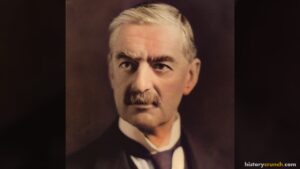
The policy of appeasement pursued by Britain and France in the 1930s also contributed to the outbreak of World War II. Appeasement was the practice of making concessions to aggressive nations in the hope of avoiding war. For example, at the Munich Conference of 1938, Britain and France allowed Germany to annex a portion of Czechoslovakia called the Sudetenland in exchange for Hitler’s promise that he had no further territorial demands. Appeasement ultimately failed because Hitler’s demands did not stop. When Germany invaded Poland on September 1st, 1939, Britain and France declared war, and World War II began.
FactsthatCrunchReparations are payments or goods that a defeated country is required to provide to countries it harmed during a war. The payments are meant to help repair damage caused by the conflict. The Treaty of Versailles in 1919 required Germany to pay 132 billion gold marks in reparations to the Allied powers after World War I.
"The heavy reparations placed on Germany after World War I damaged its economy and created anger among many Germans, which some historians connect to the rise of Adolf Hitler and the conditions that led to World War II."
The Road to World War II
Before Germany’s invasion of Poland in 1939, a series of aggressive actions by the Axis Powers demonstrated that another major war was becoming unavoidable. Germany remilitarized the Rhineland in 1936 in violation of the Treaty of Versailles. In 1936, Germany and Italy signed the Rome-Berlin Axis agreement, formalizing their alliance. Japan had invaded China in 1937, beginning a brutal conflict known as the Second Sino-Japanese War. In 1938, Germany annexed Austria in an event known as the Anschluss. The Molotov-Ribbentrop Pact of August 1939, a non-aggression agreement between Germany and the Soviet Union, removed the last obstacle to Germany’s invasion of Poland. Each of these events pushed Europe and the world closer to war.
The War in Europe
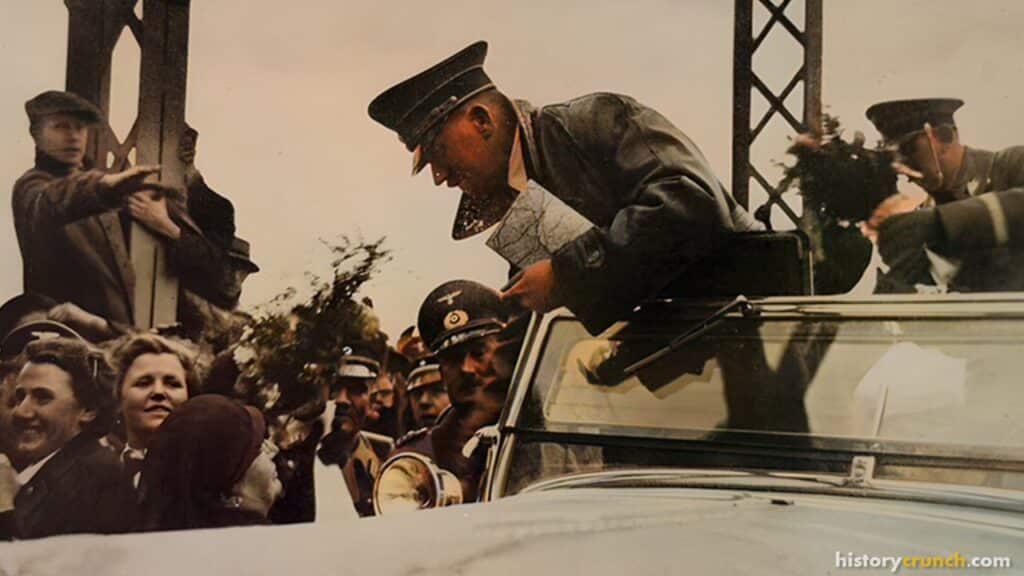
On September 1st, 1939, Nazi Germany invaded Poland using a fast-moving style of warfare known as blitzkrieg, which combined armored tank units, motorized infantry, and air support to rapidly overwhelm enemy defenses. Poland fell within weeks. Britain and France declared war on Germany on September 3rd, 1939, but little fighting took place in the west for several months, in a period known as the Phoney War.
In the spring of 1940, Germany launched a rapid offensive into Western Europe. Denmark and Norway fell in April of 1940. In May of 1940, Germany invaded France, Belgium, the Netherlands, and Luxembourg. German forces bypassed the Maginot Line, France’s main defensive fortification, by attacking through the Ardennes forest. A large Allied force was trapped near the French coast and evacuated from the beaches of Dunkirk in a dramatic rescue operation. France fell to Germany in June of 1940, leaving Britain standing largely alone against the Axis Powers in Europe.
Germany then launched the Battle of Britain, a sustained air campaign against Britain from July to October of 1940. The Royal Air Force successfully resisted the German Luftwaffe, preventing a German invasion of Britain. German bombing of British cities during this period became known as the Blitz. The successful defense of Britain was one of the first significant Allied victories of the war.
Operation Barbarossa and the Eastern Front
On June 22nd, 1941, Germany launched Operation Barbarossa, the largest land invasion in history, against the Soviet Union. Germany initially made enormous gains, advancing deep into Soviet territory and capturing hundreds of thousands of prisoners. However, the Soviet Union was able to resist the German advance, and the fighting on the Eastern Front became the largest and most destructive theater of the entire war.
The Battle of Stalingrad, fought from August of 1942 to February of 1943, was one of the most important turning points of World War II. German forces became bogged down in brutal urban fighting in the city of Stalingrad, and a Soviet counteroffensive encircled and destroyed the German Sixth Army. The German defeat at Stalingrad was the first major German defeat on the Eastern Front and marked the beginning of a sustained Soviet advance westward that would ultimately end in Berlin. The Battle of Kursk in the summer of 1943, the largest tank battle in history, confirmed that the balance of power on the Eastern Front had shifted decisively in favor of the Soviet Union. The Siege of Leningrad, which lasted from 1941 to 1944, was another defining event of the Eastern Front, during which the city endured nearly 900 days of German blockade.
Can you put these Eastern Front turning points in World War II in the correct order?
The War in North Africa
While the fighting continued in Europe, a separate campaign was taking place across the deserts of North Africa. Italy had invaded Egypt from its colony of Libya in September of 1940, and Germany sent the Afrika Korps under General Erwin Rommel to support the Italian forces in early 1941. The North African Theater involved mobile tank warfare across vast stretches of desert and saw the front line shift back and forth multiple times. The Second Battle of El Alamein in October and November of 1942 was a decisive Allied victory that ended the Axis threat to Egypt. The Allied Operation Torch landings in Morocco and Algeria in November of 1942 opened a second front against Axis forces in North Africa. Axis forces in North Africa surrendered in Tunisia in May of 1943.
FactsthatCrunch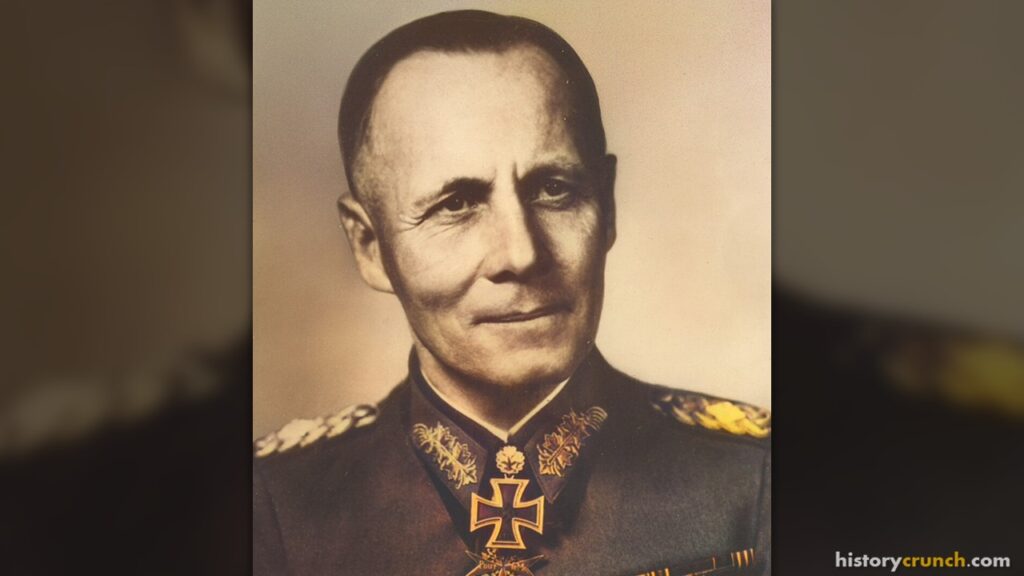
The Allied Invasion of Europe
With North Africa secured, the Allied Powers used it as a base to invade Southern Europe. Allied forces invaded Sicily in July of 1943 and then landed on the Italian mainland in September of 1943. Italy surrendered to the Allied Powers in September of 1943, and Benito Mussolini’s fascist government collapsed. However, Germany occupied much of Italy and continued to resist the Allied advance, making the Italian Campaign a long and difficult struggle that lasted until the end of the war in Europe.
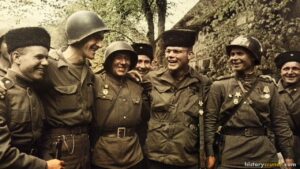
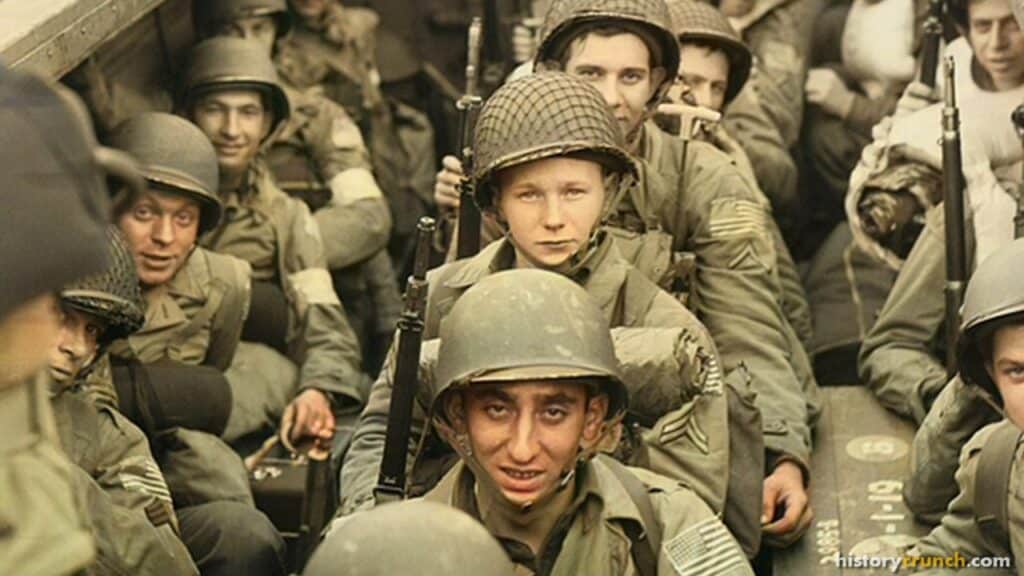
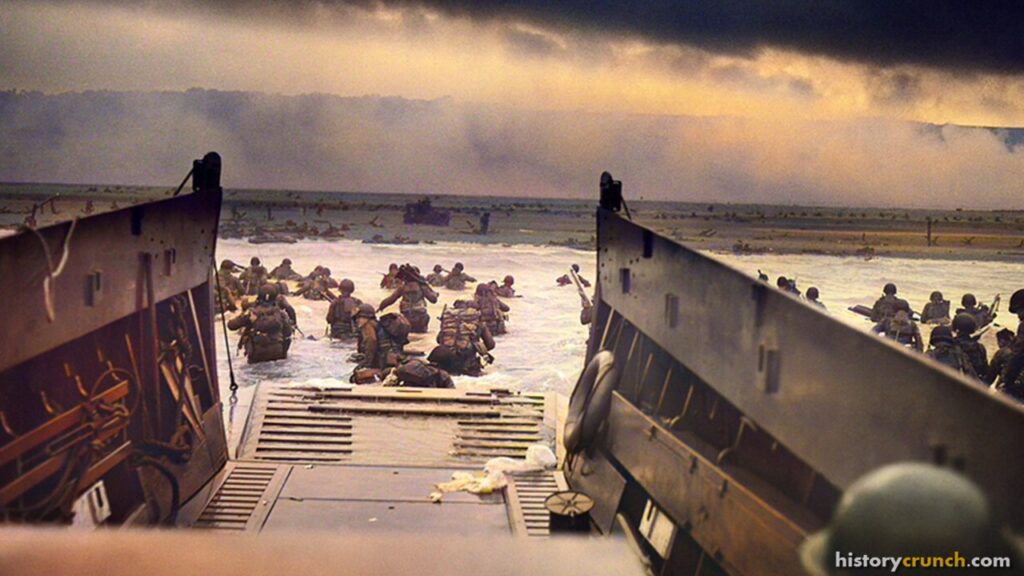
The most decisive Allied operation of the war was the Normandy Invasion, commonly known as D-Day, which took place on June 6th, 1944. On that day, Allied forces under the command of General Dwight D. Eisenhower landed on five beaches along the coast of Normandy in northern France in the largest amphibiousA military operation launched from the sea onto land, like the D-Day landings on the beaches of Normandy. operation in history. The successful landings opened a new front in Western Europe and allowed the Allied Powers to advance eastward through France, Belgium, the Netherlands, and into Germany. Germany launched a final major counteroffensive, the Battle of the Bulge, in December of 1944, but it failed to reverse the Allied advance. Soviet forces closed in on Berlin from the east while Allied forces advanced from the west. Adolf Hitler committed suicide on April 30th, 1945, and Germany surrendered unconditionally on May 8th, 1945, a date known as Victory in Europe Day, or V-E Day.
FactsthatCrunchAllied Forces Land on the Beaches of Normandy, Opening the Western Front
On the 6th of June, 1944, nearly 160,000 Allied troops from the United States, United Kingdom, Canada, and other nations landed along a 50-mile (80 km) stretch of Normandy coastline in northern France, in an operation code-named Overlord. The assault opened just after midnight, when 23,400 airborne troops dropped behind enemy lines to secure roads and bridges, followed by a naval bombardment and amphibious landings across five beaches, code-named Utah, Omaha, Gold, Juno, and Sword, beginning at 6:30 a.m. The invasion had originally been planned for the 5th of June but was pushed back one day after bad weather over the English Channel made a landing too risky.
The War in the Pacific
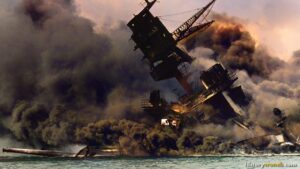
The Pacific Theater of World War II began on December 7th, 1941, when Imperial Japan launched a surprise attack on the American naval base at Pearl Harbor in Hawaii. The attack drew the United States into World War II. In the months that followed, Japan rapidly expanded its control across the Pacific and Southeast Asia, capturing the Philippines, Singapore, Hong Kong, Malaya, Burma, and many Pacific island chains.
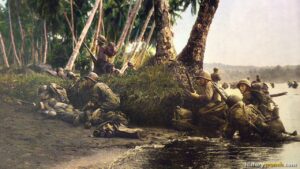
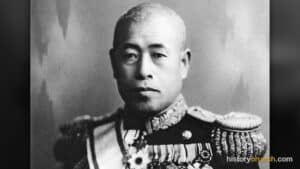
The Battle of Midway in June of 1942 was the turning point of the Pacific War. American forces sank four Japanese aircraft carriers in a single engagement, destroying a significant portion of Japan’s naval air power. Following Midway, the Allied Powers began a strategy of island hopping, capturing strategically important islands across the Pacific to use as bases for advancing toward Japan. Key battles included the Guadalcanal Campaign, the Battle of Leyte Gulf, the Battle of Iwo Jima, and the Battle of Okinawa. The battles of Iwo Jima and Okinawa demonstrated that Japanese forces would resist any invasion with extraordinary determination, raising concerns among Allied planners about the cost of invading the Japanese home islands. A plan for such an invasion, known as Operation Downfall, was developed but never carried out.
FactsthatCrunchWhat made the Battle of Midway in June 1942 a turning point in the Pacific War?
The Atomic Bombing of Japan
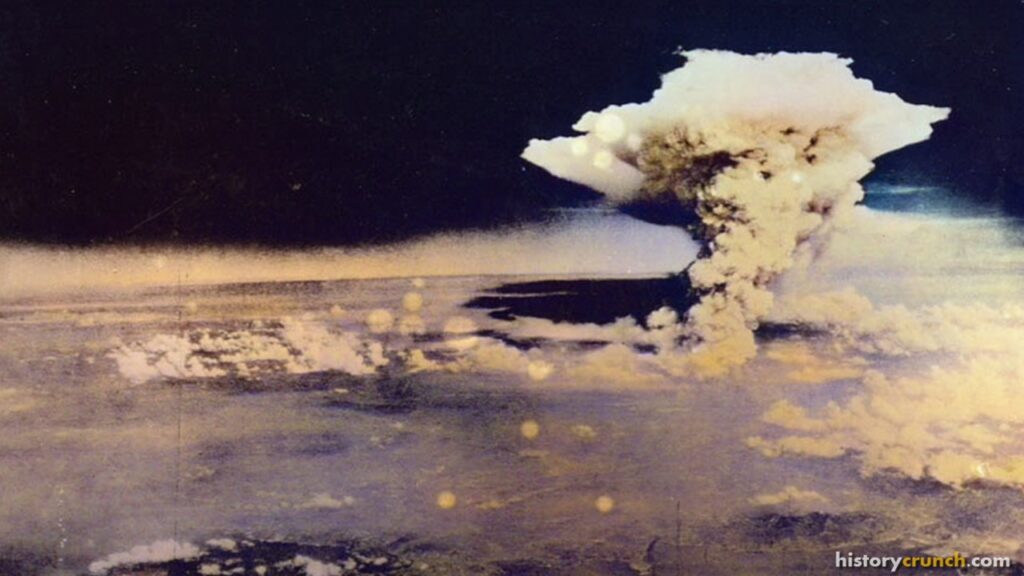
In August of 1945, the United States used a powerful new weapon to bring the war in the Pacific to an end. On August 6th, 1945, an atomic bomb was dropped on the Japanese city of Hiroshima, killing approximately 70,000 to 80,000 people immediately. A second atomic bomb was dropped on the city of Nagasaki on August 9th, 1945. On the same day, the Soviet Union declared war on Japan and invaded Japanese-held Manchuria. Japan announced its surrender on August 15th, 1945, and formally signed the surrender documents on September 2nd, 1945. The use of atomic weapons in warfare was a defining event not only of World War II but of the entire 20th century.
The Holocaust
One of the most significant and horrific aspects of World War II was the Holocaust, the systematic murder of six million Jewish people and millions of others by the Nazi German government. Following Hitler’s rise to power in 1933, the Nazi regime began a process of persecution against Jewish people in Germany that escalated steadily throughout the 1930s. The Nuremberg Laws of 1935 stripped Jewish people of their citizenship and legal rights. Kristallnacht, a nationwide pogromAn organized, violent attack on a group of people, used here to describe the nationwide assault on Jewish communities during Kristallnacht. carried out in November of 1938, saw Jewish businesses, homes, and synagogues attacked and destroyed across Germany.
Following the German invasion of the Soviet Union in 1941, the Nazis began systematically murdering Jewish people in occupied territories through mobile killing units known as the Einsatzgruppen. The Nazi regime then established a network of concentration camps and extermination camps across occupied Europe, where Jewish people and others were transported and killed in mass numbers. The Warsaw Ghetto Uprising of 1943 was a significant act of Jewish resistance against Nazi forces in occupied Poland. As Allied forces advanced into Germany and occupied Europe toward the end of the war, they liberated the concentration camps and revealed the full scale of the Nazi atrocities to the world. Following the end of the war, surviving Nazi leaders were put on trial at the Nuremberg Trials for war crimes and crimes against humanity.
FactsthatCrunchTap each impact to read what it led to.
The Home Front in World War II
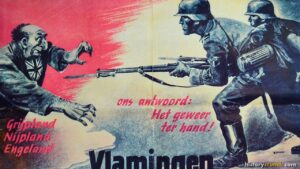
The home front was a major aspect of World War II and played a central role in the history of the conflict. World War II required an unprecedented level of civilian participation in the war effort. Governments across the Allied and Axis nations used propaganda extensively to encourage citizens to support the war, conserve resources, purchase war bonds, and maintain morale during difficult periods. Propaganda in World War II was produced by all major nations involved, including the United States, Britain, the Soviet Union, Nazi Germany, and Imperial Japan.
In the United States, the home front saw dramatic changes in society. Women entered the workforce in large numbers to fill jobs left by men who had gone to war, playing a vital role in industrial production. Japanese-American citizens were forcibly removed from their homes and placed in internment camps following the attack on Pearl Harbor, one of the most controversial civil liberties violations in American history. In Britain, the home front experience was shaped by rationing, evacuation of children from cities, and the experience of German bombing during the Blitz.
FactsthatCrunchJapanese-American Internment was the forced relocation and confinement of people of Japanese ancestry living on the U.S. West Coast during World War II. The U.S. government ordered it after the Japanese attack on Pearl Harbor on December 7th, 1941, claiming it was a military security measure. Most of those confined were American citizens, and the policy was later widely recognized as a violation of their constitutional rights.
"After President Franklin D. Roosevelt signed Executive Order 9066 on February 19th, 1942, more than 110,000 Japanese Americans were forced to leave their homes and live in government camps for up to three years."
End of World War II and Its Aftermath
World War II came to an end in two stages. Germany surrendered unconditionally on May 8th, 1945, ending the war in Europe. Japan surrendered on September 2nd, 1945, following the atomic bombings of Hiroshima and Nagasaki and the Soviet declaration of war, ending the war in the Pacific. In total, World War II lasted from September 1st, 1939 to September 2nd, 1945.
The aftermath of World War II reshaped the entire world. The Yalta Conference of February 1945 and the Potsdam Conference of July 1945 determined the post-war order in Europe, dividing Germany into zones of occupation and establishing the boundaries of Soviet influence in Eastern Europe. The United Nations was founded in 1945 to provide an international forum for resolving disputes and preventing future conflicts. The destruction caused by the war left much of Europe and Asia in ruins and required years of rebuilding. The Marshall Plan, announced in 1947, provided American economic assistance to help rebuild Western Europe. At the same time, the competition between the United States and the Soviet Union that emerged from the war’s end laid the groundwork for the Cold War, which would shape global politics for the next four decades. In all, World War II was the most significant event of the 20th century and continues to shape the world today.
Explore World War II · 1939 – 1945
Keep exploring World War II with these History Crunch resources.
Key Vocabulary
Blitzkrieg
Appeasement
Operation Barbarossa
Island hopping
Einsatzgruppen
Pogrom
Amphibious
Frequently Asked Questions
When did World War II start and end?
World War II lasted from September 1st, 1939 to September 2nd, 1945. It began when Nazi Germany invaded Poland, which led Britain and France to declare war. The fighting ended in two stages, with Germany surrendering in May of 1945 and Japan surrendering that September.
What caused World War II?
World War II had several main causes, including the harsh terms of the Treaty of Versailles and the rise of fascism in Europe. The treaty left Germany angry and in economic trouble, which helped Adolf Hitler gain power in 1933. The failed policy of appeasement and Axis expansion also pushed the world toward war.
Who fought in World War II?
World War II was fought between the Allied Powers and the Axis Powers. The Allied Powers were led mainly by Britain, the Soviet Union, and the United States. The Axis Powers were Nazi Germany, Fascist Italy, and Imperial Japan.
How many people died in World War II?
Historians estimate that between 70 and 85 million people died in World War II. This makes it the deadliest conflict in human history. Most of those who died were civilians rather than soldiers, and millions were murdered in the Holocaust.
What were the major turning points of the war?
The war had several key turning points on different fronts. The Battle of Stalingrad from 1942 to 1943 stopped the German advance in the east, while the Battle of Midway in June of 1942 turned the tide in the Pacific. The Normandy Invasion on June 6th, 1944 opened a new front in Western Europe.
Why did the United States drop atomic bombs on Japan?
The United States dropped atomic bombs on Hiroshima and Nagasaki in August of 1945 to force Japan to surrender. Battles like Iwo Jima and Okinawa had shown that invading Japan would cost many lives. Japan announced its surrender on August 15th, 1945, soon after the bombings.
Cite This Article
To cite this article as a source, use one of the formats below.
MLA: Millar, B. “World War II: A Detailed Overview.” HistoryCrunch, 1 October 2026, https://historycrunch.com/world-war-ii-overview/.
APA: Millar, B. (2026). World War II: A Detailed Overview. HistoryCrunch. https://historycrunch.com/world-war-ii-overview/
Chicago: Millar, B. “World War II: A Detailed Overview.” HistoryCrunch. October 1, 2026. https://historycrunch.com/world-war-ii-overview/
Sources
- Max Hastings, Inferno / All Hell Let Loose.
- Antony Beevor, The Second World War.