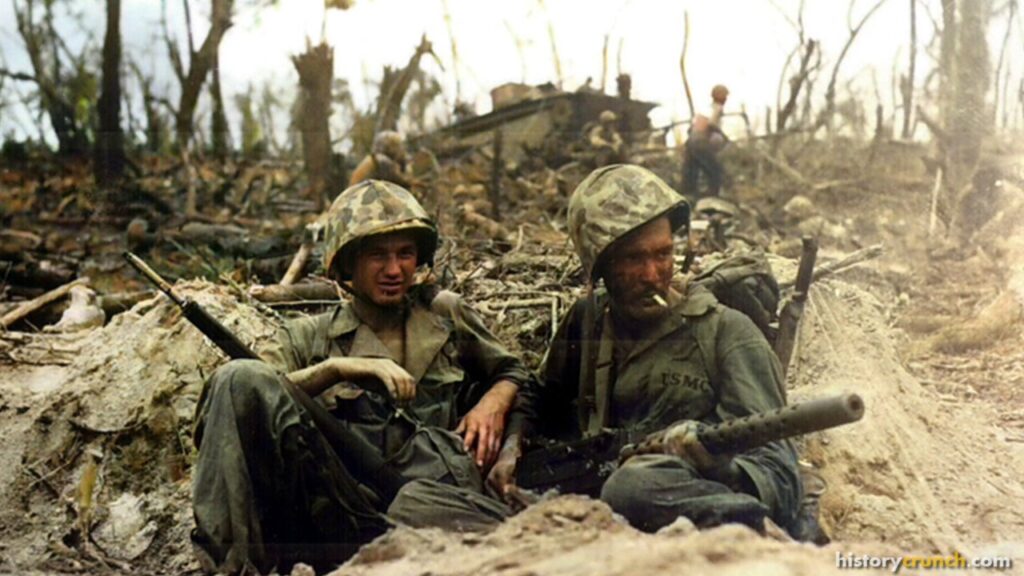
The Pacific Theater of World War II was the region of fighting that occurred across the Pacific Ocean and the surrounding lands, including the islands of the Pacific, Southeast Asia, China, the Philippines and Australia. World War II was a global conflict that was fought on several theaters, including the European Theater, the North African Theater, and the Pacific Theater. The Pacific Theater began on December 7th, 1941, when Imperial Japan launched a surprise attack on the American naval base at Pearl Harbor in Hawaii, and lasted until the formal surrender of Japan on September 2nd, 1945. During that time, the Pacific Theater primarily involved fighting between the Allied Powers of the United States, Britain, Australia, New Zealand, and China against the Axis Power of Imperial Japan.
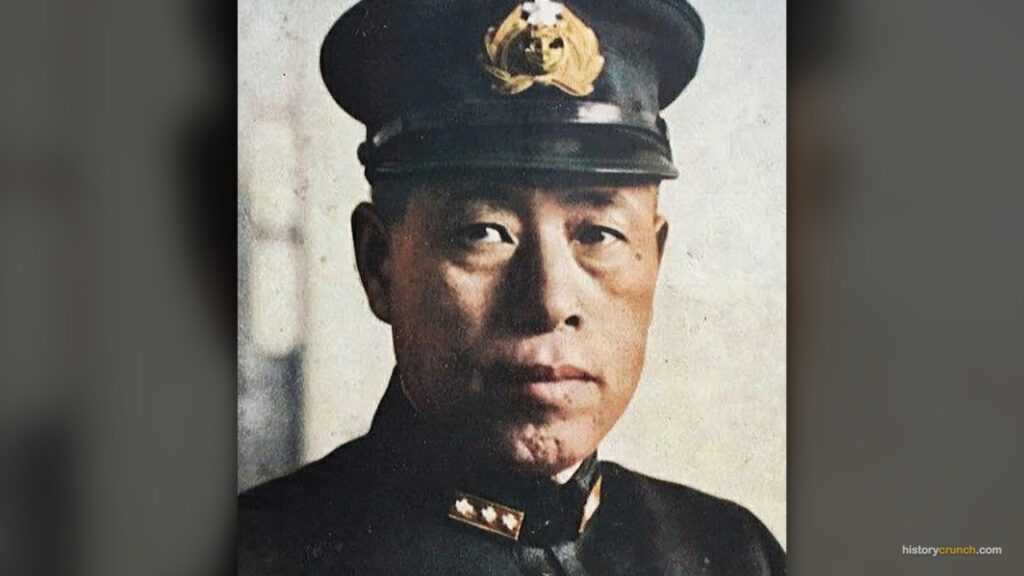

Pacific Theater of World War II – Formation
Japan had been an aggressive military power in Asia long before the Pacific Theater of World War II formally began. As early as 1931, Japan had invaded the Chinese region of Manchuria and established it as a Japanese-controlled territory. In 1937, Japan launched a full-scale invasion of China, drawing the two nations into a prolonged and brutal conflict called the Second Sino-Japanese War. Japan’s military leadership sought to expand Japanese control across Asia and the Pacific in order to gain access to the natural resources it needed, including oil, rubber, and metals. This imperial expansion brought Japan into increasing conflict with the Western powers that had their own colonial territories and interests in the region.
By 1940, Japan had signed the Tripartite Pact with Nazi Germany and Fascist Italy, formally joining the Axis Powers. Japan also occupied French Indochina in 1940, which brought it closer to the oil-rich territories of Southeast Asia. In response, the United States placed economic sanctions on Japan, including an oil embargoA ban on selling or shipping oil to another country, used by the United States to pressure Japan., which cut off Japan’s most important source of fuel. Japan’s military leadership viewed these sanctions as a serious threat and concluded that war with the United States was likely unavoidable.
On December 7th, 1941, Japan launched a surprise attack on the American naval base at Pearl Harbor, Hawaii. The attack destroyed or damaged much of the American Pacific Fleet, including eight battleships, and killed approximately 2,400 Americans. On the same day, Japan also launched attacks on the Philippines, Guam, Wake Island, Malaya, and Hong Kong. The United States and Britain declared war on Japan the following day, on December 8th, 1941. Germany and Italy then declared war on the United States several days later. This means that the attack on Pearl Harbor transformed what had been a largely European war into a truly global conflict.
In the months following Pearl Harbor, Japan rapidly expanded its control across a vast area of the Pacific and Southeast Asia. Japanese forces captured the Philippines, Singapore, Hong Kong, Malaya, Burma, the Dutch East Indies, and many Pacific island chains. Japan’s early victories gave it control over a large defensive perimeterA wide border of controlled territory Japan built across the Pacific to block Allied forces from advancing. across the Pacific, which its military planners believed would be difficult for the Allied Powers to penetrate.
The main Allied nations fighting in the Pacific Theater included: the United States, Britain, Australia, New Zealand, China, the Netherlands, and the Philippines. The United States, under the commands of Admiral Chester Nimitz and General Douglas MacArthur, took the leading role in directing the Allied war effort against Japan.
FactsthatCrunchTap each impact to read what it led to.
Pacific Theater of World War II – Battles
The Pacific Theater was the site of some of the most significant naval and land battles of World War II. The fighting took place across an enormous geographic area and involved combat on remote islands, in dense jungle environments, and across vast stretches of open ocean. The most significant battles and operations of the Pacific Theater are listed below. In these battles, the Allied Powers faced off against the Axis Power of Imperial Japan.
- Attack on Pearl Harbor
- Battle of the Philippines
- Doolittle Raid
- Battle of Midway
- Guadalcanal Campaign
- Battle of Saipan
- Battle of Leyte Gulf
- Battle of Iwo Jima
- Battle of Okinawa
- Atomic Bombings of Hiroshima and Nagasaki
FactsthatCrunchIn what order did these Allied advances across the Pacific unfold from 1942 to 1945?
Pacific Theater of World War II – Nature of Warfare
One of the most defining features of the Pacific Theater was the enormous geographic scale of the fighting. The Pacific Ocean is the largest ocean on Earth, and the theater stretched across millions of square miles of open water, from the coast of Asia in the west to the islands of Hawaii in the east, and from the Aleutian Islands in the north to the waters near Australia in the south. As such, the Pacific Theater was geographically the largest theater of the entire war, and this scale shaped every aspect of how the fighting was conducted.
Naval warfare was central to the Pacific Theater in a way that was not true of any other theater of World War II. Because the fighting took place across vast stretches of ocean and among thousands of islands, control of the sea was essential to moving troops, supplies, and equipment. Both the United States and Japan relied heavily on their naval fleets, and some of the largest naval battles in history took place in the Pacific Theater. A key development in Pacific naval warfare was the rise of the aircraft carrier as the most important warship of the theater. Traditional battleships, which had previously been considered the most powerful vessels in any navy, were largely replaced in importance by aircraft carriers, which could launch airplanes over great distances and strike targets far beyond the range of any surface ship’s guns.
‘Island hopping‘ was the central land strategy of the Allied Powers in the Pacific Theater. This means that rather than attacking every Japanese-held island in the Pacific, Allied commanders chose to capture only the most strategically important islands, bypassing and cutting off Japanese forces on others. Each captured island provided the Allied Powers with airfields and supply bases that could be used to launch the next advance further toward Japan. General Douglas MacArthur and Admiral Chester Nimitz were the main architects of this strategy, which allowed the Allies to advance steadily across the Pacific while avoiding the enormous cost of attacking every heavily defended Japanese position.
The terrain of the Pacific Theater created distinct and difficult conditions for soldiers fighting on land. Many of the battles took place on small tropical islands covered in dense jungle, where visibility was extremely limited and movement was difficult. The heat, humidity, and heavy rainfall of tropical environments made the campaigns physically demanding. Furthermore, disease was a constant problem for soldiers on both sides. Malaria, dysentery, and other tropical illnesses caused large numbers of casualties throughout the campaign, in some cases exceeding battle casualties.
Japanese soldiers were known for fighting with extraordinary determination and rarely surrendering, even when their position was clearly lost. This was connected to Japan’s military culture, which placed great importance on honor and self-sacrifice in battle. As Japan’s military situation worsened in the later stages of the war, this determination produced tactics that the Allied Powers had not encountered elsewhere, including ‘banzai chargesDesperate Japanese infantry attacks in which soldiers rushed enemy positions rather than retreat or surrender.‘, in which Japanese soldiers would rush enemy positions, and ‘kamikaze‘ attacks, in which Japanese pilots deliberately flew their airplanes into Allied warships. These tactics caused significant Allied casualties, particularly during the battles of Iwo Jima and Okinawa.
Air power was also a decisive factor in the Pacific Theater. Control of the air above the battlefield and above the ocean allowed whichever side held it to protect its ships and troops while attacking the enemy’s. The Battle of Midway in June of 1942 was a turning point in the air and naval war, when American airplanes sank four Japanese aircraft carriers in a single engagement. After Midway, Japan was never able to fully replace the carriers and experienced pilots it had lost, and Allied air power grew steadily stronger for the remainder of the war.
FactsthatCrunchHow did the aircraft carrier change naval warfare in World War II?
Pacific Theater of World War II – Significance
The Pacific Theater of World War II was one of the most significant conflicts of the modern era. The fighting in the Pacific Theater occurred from December 7th, 1941 until September 2nd, 1945. During this time, tens of millions of soldiers and civilians lost their lives across the Pacific and Asia. Historians estimate that the Pacific Theater resulted in approximately 36 million total deaths, the majority of which were Chinese civilians killed during Japan’s prolonged war in China. The United States suffered approximately 111,000 military deaths in the Pacific Theater, while Japan suffered military deaths estimated at over 2 million.
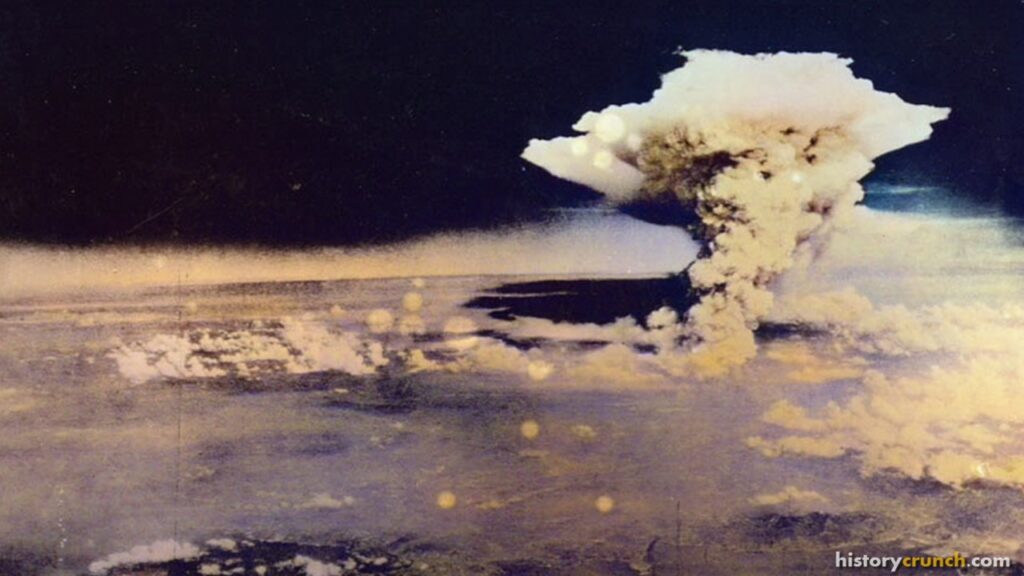
The Pacific Theater was significant because it ended with the first and only use of atomic weaponsBombs using nuclear reactions to create massive explosions, used for the first and only time in warfare in 1945. in warfare. Following the costly battles of Iwo Jima and Okinawa, Allied planners estimated that a full invasion of the Japanese home islands would result in enormous casualties on both sides. In response, United States President Harry Truman authorized the use of a new and devastating weapon. On August 6th, 1945, an atomic bomb was dropped on the Japanese city of Hiroshima, killing an estimated 70,000 to 80,000 people immediately. A second atomic bomb was dropped on the city of Nagasaki on August 9th, 1945, killing an estimated 40,000 people immediately. Japan announced its surrender on August 15th, 1945, and formally signed the surrender documents on September 2nd, 1945. The use of atomic weapons brought the Pacific Theater to a close but also marked the beginning of the nuclear age, which would shape global politics and military strategy for decades to come. As such, some argue in favor of the use of the atomic bombs while others have expressed arguments against it.
The Pacific Theater was significant because it fundamentally changed the political and colonial order of Asia and the Pacific. Japan’s rapid early conquests had dismantled the colonial empires of Britain, the Netherlands, and France across Southeast Asia, demonstrating that European powers were not invincible. Following Japan’s defeat, many of these territories did not simply return to European control. Instead, independence movements gained momentum across Asia, leading to the eventual independence of countries including India, Indonesia, Malaya, the Philippines, and Vietnam in the years following the war. As such, the Pacific Theater played an important role in accelerating the end of the European colonial era in Asia.
The Pacific Theater was also significant because it established the United States as the dominant power in the Pacific region. The defeat of Japan, combined with the occupation of Japan by American forces following the surrender, gave the United States considerable influence over the future direction of Japan and the broader region. The United States helped rebuild Japan as a democratic and economically productive nation, and Japan became one of America’s most important allies during the Cold War that followed World War II. Furthermore, the experience of the Pacific Theater reinforced the importance of naval power and air power in modern warfare, lessons that shaped the military strategies of the major powers in the decades that followed.
FactsthatCrunchThe United States dropped atomic bombs on Hiroshima on August 6th, 1945 and on Nagasaki on August 9th, 1945. They remain the only atomic weapons ever used in warfare.
Japan announced its surrender on August 15th, 1945 and formally signed the surrender documents on September 2nd, 1945, ending the Pacific Theater.
Explore World War II · 1939 – 1945
Keep exploring World War II with these History Crunch resources.
Key Vocabulary
Tripartite Pact
Oil embargo
Defensive perimeter
Island hopping
Banzai charges
Kamikaze
Atomic weapons
Frequently Asked Questions
When did the Pacific Theater of World War II begin and end?
The Pacific Theater began on December 7th, 1941, with Japan’s surprise attack on Pearl Harbor in Hawaii. It ended when Japan formally signed its surrender on September 2nd, 1945. The fighting lasted nearly four years and stretched across the largest ocean on Earth.
Why did Japan attack Pearl Harbor?
Japan attacked Pearl Harbor to cripple the American Pacific Fleet before it could stop Japan’s expansion in Asia. The United States had placed an oil embargo on Japan, cutting off its most important source of fuel. Japan’s leaders saw war with America as unavoidable and hoped a quick strike would buy them time.
What was the island hopping strategy?
Island hopping was the main Allied land strategy of capturing only the most important Pacific islands while bypassing others. This let the Allies avoid the heavy cost of attacking every Japanese position. Each captured island gave the Allies airfields and supply bases to push closer to Japan. Admiral Chester Nimitz and General Douglas MacArthur were the main architects of this plan.
Why was the Battle of Midway a turning point?
The Battle of Midway in June of 1942 was a turning point because American airplanes sank four Japanese aircraft carriers in one engagement. Japan could never fully replace those carriers or its experienced pilots. After Midway, Allied air and naval power grew steadily stronger for the rest of the war.
How did the Pacific Theater end?
The Pacific Theater ended after the United States dropped atomic bombs on two Japanese cities. An atomic bomb hit Hiroshima on August 6th, 1945, and a second hit Nagasaki on August 9th, 1945. Japan announced its surrender on August 15th and signed the formal documents on September 2nd, 1945.
How many people died in the Pacific Theater?
Historians estimate the Pacific Theater caused about 36 million total deaths. Most of these were Chinese civilians killed during Japan’s long war in China. The United States suffered roughly 111,000 military deaths, while Japan lost over 2 million soldiers.
Cite This Article
To cite this article as a source, use one of the formats below.
MLA: Millar, B. “Pacific Theater of World War II: A Detailed Summary.” HistoryCrunch, 2 October 2026, https://historycrunch.com/pacific-theater-of-world-war-ii/.
APA: Millar, B. (2026). Pacific Theater of World War II: A Detailed Summary. HistoryCrunch. https://historycrunch.com/pacific-theater-of-world-war-ii/
Chicago: Millar, B. “Pacific Theater of World War II: A Detailed Summary.” HistoryCrunch. October 2, 2026. https://historycrunch.com/pacific-theater-of-world-war-ii/
Sources
- The National WWII Museum
- Antony Beevor, The Second World War.
- Imperial War Museum
- Max Hastings, Inferno / All Hell Let Loose.