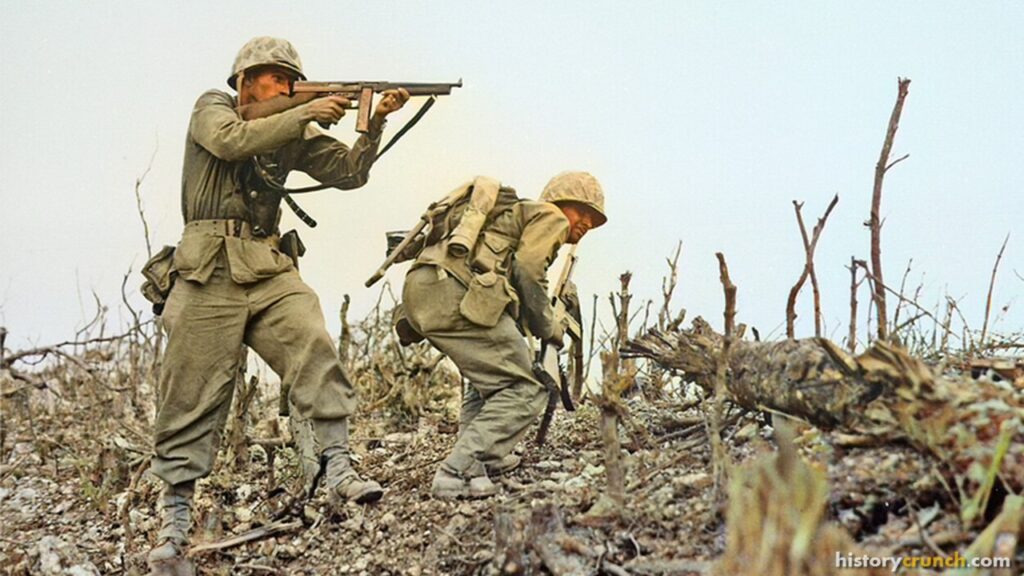
The Battle of Okinawa in World War II was a major battle between the United States and Japan and is often considered to be the bloodiest battle in the Pacific Theater of the war. The battle took place from April 1st to June 22nd in 1945. Similar to the Battle of Iwo Jima, the United States’ plan was to invade the island and use it as a staging groundA base used to prepare and launch further military attacks on another location. for a larger assault on the homeland islands of Japan. The Battle of Okinawa was one of the bloodiest in the Pacific Theater of World War II and included the largest amphibious assaultA military attack launched from the sea onto land, involving both naval ships and ground troops. of World War II in the Pacific.
How many American troops took part in the amphibious assault at the Battle of Okinawa on April 1st, 1945?

Battle of Okinawa in World War II – Background
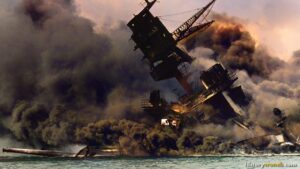
The attack on Pearl Harbor on December 7th, 1941 was the event that ultimately brought the United States into the fighting of World War II. As well, it essentially launched the Pacific Theater of World War II, which resulted in many more conflicts, such as: the Battle of Midway and the Battle of Guadalcanal. Furthermore, after the attack on Pearl Harbor, Japan rapidly expanded across the Pacific, capturing key territories including the Philippines, Malaya, Singapore, and parts of New Guinea. In fact, by mid-1942, Japanese forces threatened to isolate Australia and dominate the entire Pacific.
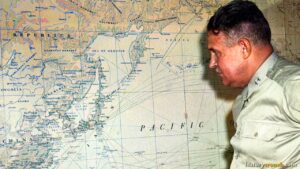
However, by 1945, Japan was struggling due to significant losses at both the Battle of Midway and the Battle of Guadalcanal. In fact, these losses allowed the American forces to advance towards the Japanese home-islands through the use of ‘island-hopping’. As such, this eventually led to the arrival of American forces on the island of Okinawa, which is a large island located about 340 miles south of mainland Japan. Its capture was vital for several strategic reasons for the Americans. First, it provided a base for airfields and naval operations for the planned invasion of Kyushu, the southernmost of Japan’s main islands. Second, it offered a launching point for bombing raids and a potential stationing ground for Allied troops. As such, this set the stage for the Battle of Okinawa in World War II.
FactsthatCrunchBattle of Okinawa in World War II – Summary
As stated above, the Battle of Okinawa in World War II occurred from April 1st to June 22nd in 1945. At the time, the island was defended by approximately 100,000 Japanese soldiers, who were led by General Mitsuru Ushijima. Japanese forces constructed extensive fortifications, tunnels, and artillery positions, especially in the southern part of the island. Unlike earlier battles, the Japanese adopted a defensive strategy, aiming to inflict maximum Allied casualties through attritionA military strategy of slowly wearing down the enemy by causing continuous casualties rather than one decisive attack. rather than frontal assaults.
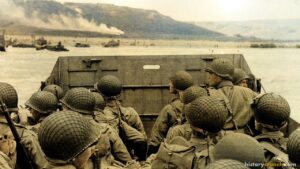
Known as ‘L-Day’, over 180,000 American troops, primarily from the United States Tenth Army, landed on the western coast of Okinawa on April 1st, 1945. Initially, the resistance from the Japanese forces was minimal. This was due to the fact that the Japanese forces had withdrawn to fortified southern positions. As a result, the American forces quickly moved north and secured the northern part of the island with relatively little opposition. Instead, the main battle unfolded in the south, where the Japanese had concentrated their defenses.
The fighting in the south of the island was along the ‘Shuri Line’, which was a network of bunkers, tunnels, and caves around Shuri Castle. This region became the focal point of the conflict. Fighting was intense, with heavy artillery, rain, mud, and close-quarters combat.
Since this was one of the last major battles of World War II in the Pacific, it involved the weakened Japanese forces defending the island of Okinawa with extreme desperation. Just as during the earlier Battle of Iwo Jima, the Japanese defenders suffered massive losses. The Japanese defenders generally refused to surrender, due to their code of bushidoA Japanese warrior code that emphasized honor and death over surrender., and instead carried out a brutal fight to the death. As well, Okinawa saw the use of kamikazeA Japanese tactic in which pilots deliberately crashed their planes into enemy ships as suicide missions. tactics by the Japanese. This involved Japanese pilots crashing their airplanes into American ships on purpose with the hopes of sinking American naval ships. In fact, the Japanese launched over 1,500 kamikaze attacks against the Allied fleet during this time. These suicide missions sank over 30 ships, damaged hundreds more, and killed nearly 5,000 sailors.
Ultimately, the American military superiority prevailed and the Battle of Okinawa was the last major victory for American forces before the atomic bombing of Japan to end World War II. Okinawa had a large civilian population, many of whom were caught in the crossfire or coercedForced or pressured into doing something against one’s will. into suicide by Japanese propaganda. Up to 100,000 civilians were killed or committed suicide during the battle, although estimates vary.
FactsthatCrunchCan you match each term from the Battle of Okinawa to what it means?
Battle of Okinawa in World War II – Significance
The Battle of Okinawa in World War II was significant for several key reasons. First, the Battle of Okinawa was a brutal battle for both sides, and its outcome would come to play a major role in the United States’ decision to use the atomic bombs to end World War II in the Pacific. For example, the Japanese defenders suffered over 75,000 casualties in the Battle of Okinawa while the United States suffered over 49,000 casualties, including more than 12,000 dead. The number of casualties on both sides would convince American President Harry S. Truman that a full-scale American assault of the Japanese home-land islands would cause a massive amount of American and Japanese casualties. Some historians now argue that this led to him being in favor of the use of the atomic bombs to end the war.
Second, the island of Okinawa in World War II was of important strategic value to the United States. For instance, the capture of Okinawa gave the United States a critical base that was just 340 miles from the mainland of Japan. As such, it allowed future air raids against Japan, although the atomic bomb missions themselves flew from Tinian, in the Mariana Islands.
FactsthatCrunchIt is late July 1945, and President Harry S. Truman faces a defining choice in World War II in the Pacific. The Battle of Okinawa, which ended on June 22nd, 1945, left American forces with over 12,000 dead and total American casualties surpassing 49,000. Truman has been warned that a full invasion of Japan's home islands could produce casualties far greater than those at Okinawa, and he must now decide how to end the war.
Explore World War II · 1939 – 1945
Keep exploring World War II with these History Crunch resources.
Key Vocabulary
Amphibious assault
Staging ground
Island-hopping
Attrition
Bushido
Kamikaze
Coerced
Frequently Asked Questions
When was the Battle of Okinawa fought?
The Battle of Okinawa was fought from April 1st to June 22nd in 1945. It was one of the last major battles of World War II in the Pacific. The fighting lasted nearly three months and was extremely bloody for both sides.
Why was Okinawa important to the United States?
Okinawa sat about 340 miles (547 km) south of mainland Japan, which made it a key base. The United States wanted airfields and naval staging grounds for a planned invasion of Japan’s home islands. Its capture also allowed future air raids against Japanese cities.
What were kamikaze attacks at Okinawa?
Kamikaze attacks were suicide missions in which Japanese pilots crashed their planes into American ships. The Japanese launched over 1,500 of these attacks during the battle. They sank more than 30 ships, damaged hundreds more, and killed nearly 5,000 sailors.
How many people died in the Battle of Okinawa?
The losses were staggering on all sides of the battle. Japanese forces suffered over 75,000 casualties, while American forces had over 49,000, including more than 12,000 dead. Up to 100,000 Okinawan civilians were also killed or died by suicide, though estimates vary.
How did Okinawa affect the decision to use atomic bombs?
The huge number of casualties at Okinawa shaped how American leaders viewed an invasion of Japan. President Harry S. Truman feared that attacking the home islands would cost many more American and Japanese lives. Some historians argue this pushed him toward using the atomic bombs to end the war.
What was the Shuri Line?
The Shuri Line was a network of bunkers, tunnels, and caves around Shuri Castle in southern Okinawa. The Japanese concentrated their strongest defenses there to wear down American forces. Fighting along this line was intense, with heavy artillery, rain, mud, and close combat.
Cite This Article
To cite this article as a source, use one of the formats below.
MLA: Beck, Elias. “Battle of Okinawa in World War II: A Detailed Summary.” HistoryCrunch, 2 October 2026, https://historycrunch.com/battle-of-okinawa-in-world-war-ii/.
APA: Beck, E. (2026). Battle of Okinawa in World War II: A Detailed Summary. HistoryCrunch. https://historycrunch.com/battle-of-okinawa-in-world-war-ii/
Chicago: Beck, Elias. “Battle of Okinawa in World War II: A Detailed Summary.” HistoryCrunch. October 2, 2026. https://historycrunch.com/battle-of-okinawa-in-world-war-ii/
Sources
- Antony Beevor, The Second World War.
- Imperial War Museum
- Gerhard L. Weinberg, A World at Arms.