The attack on Pearl Harbor, which occurred on December 7th, 1941, was a surprise military strike by the Imperial Japanese Navy against the United States’ naval base at Pearl Harbor, Hawaii. The attack on Pearl Harbor was a significant event in World War II, because it brought the United States into the fighting. As such, this led to a dramatic shift in the balance of power in World War II as the United States joined the other Allied nations against the Axis Powers. In fact, American soldiers played an important role in both the Pacific and European Theaters of the Second World War.
Attack on Pearl Harbor – Background
The Japanese attack on Pearl Harbor was a major event in World War II. The Second World War began on September 1st, 1939 when Nazi Germany invaded the country of Poland. In the years that followed, Europe underwent a series of significant battles, including: Battle of France, Battle of Britain and Operation Barbarossa. During this time, though, the United States remained out of the direct fighting in the war. Instead, the United States, under the leadership of President Franklin D. Roosevelt, practiced a policy of isolationismA foreign policy where a country limits its involvement in other nations’ affairs and stays out of international conflicts.. This saw the United States limit its involvement in international affairs. As such, when World War II began in Europe in 1939, the United States remained on the sidelines, except for its supply shipments under the Lend-Lease Act.
For its part, Japan was part of the Axis Powers of World War II and a member of the Tripartite PactThe agreement that made Japan, Nazi Germany, and Italy formal military allies known as the Axis Powers., along with Nazi Germany and Italy. As such, it’s important to understand the history of Japan in the years before the attack on Pearl Harbor. For instance, by the late 1930s, Japan had become increasingly aggressive in its expansionistDescribes a nation’s policy of growing its territory or power by taking control of other regions. policies, especially in Asia and the South Pacific. More specifically, Japan invaded Manchuria in 1931 and launched a full-scale war against China in 1937. As well, Japan sought dominance in the Asia-Pacific region and aimed to control territories rich in natural resources, such as oil, rubber, and tin, which it lacked domestically.
At the same time, the United States opposed Japan’s expansionism, and viewed Japan as a legitimate threat in the Pacific Ocean. In response to this perceived threat, the United States imposed economic sanctionsPenalties one country places on another by restricting trade or financial dealings to pressure a change in behavior. against Japan and stopped all oil exports to Japan in 1941. This was devastating to the Japanese Empire, because Japan lacked the necessary oil reserves to continue its expansion in the Pacific. As such, Japan viewed these sanctions as a direct threat to its national survival and economic stability. This ultimately was one of several factors that pushed Japan to surprise attack the United States at Pearl Harbor in 1941.
Due to the ongoing economic conflict, Japanese military leaders believed that war with the United States was inevitable. As such, the Japanese military leaders decided that they needed to deliver a surprise first assault to neutralizeTo destroy or disable an enemy’s forces so they can no longer fight or respond effectively. the American Pacific Naval Fleet. The goal was to destroy the American Fleet at Pearl Harbor before the Americans could mobilize and respond militarily. In fact, Japan hoped that a decisive attack would force America to accept a negotiated peace, which would leave Japan free to dominate the Pacific. This essentially set the stage for the attack on Pearl Harbor.
 FactsthatCrunch
In July 1941, the United States cut off oil exports to Japan after Japanese forces moved into southern French Indochina, threatening Allied positions across Southeast Asia.
The United States imposed the embargo to pressure Japan to withdraw from China and Indochina. Because Japan had few domestic oil resources, the cutoff forced its government to choose between pulling back from its conquests or expanding the war to capture new fuel supplies.
Attack on Pearl Harbor – Summary
On December 7th, 1941, Japan attacked the American fleet at the Hawaii naval base of Pearl Harbor. Pearl Harbor is on the Hawaiian island of Oahu, and it had great strategic importance for the United States in the Pacific Ocean. The Americans were the only challenge to the expansion of Japan in the Pacific, and Pearl Harbor was the home of the American fleet of battleships. Halfway between the United States and Japan, Pearl Harbor was a great place for the Americans to lead a potential war effort against Japan. As such, Japanese military leaders hoped to eliminate the American fleet in one decisive attack.
The Japanese attack on Pearl Harbor was planned by Admiral Isoroku Yamamoto and carried out by Vice Admiral Chuichi Nagumo. It involved a fleet of six aircraft carriers and over 350 aircraft that were launched to carry out a surprise assault against American ships and defenses on the morning of December 7th.
The surprise attack lasted approximately two hours and saw the Japanese forces inflict destruction against the American Pacific fleet. In fact, over 20 American ships were sunk or damaged, including battleships, cruisers, and destroyers. As well, nearly 190 planes were destroyed and over 150 more were damaged. Almost 2,400 Americans died in the attack. The greatest loss was the sinking of the battleship, USS Arizona where over 1,100 sailors died. In all, it was a devastating attack.
FactsthatCrunch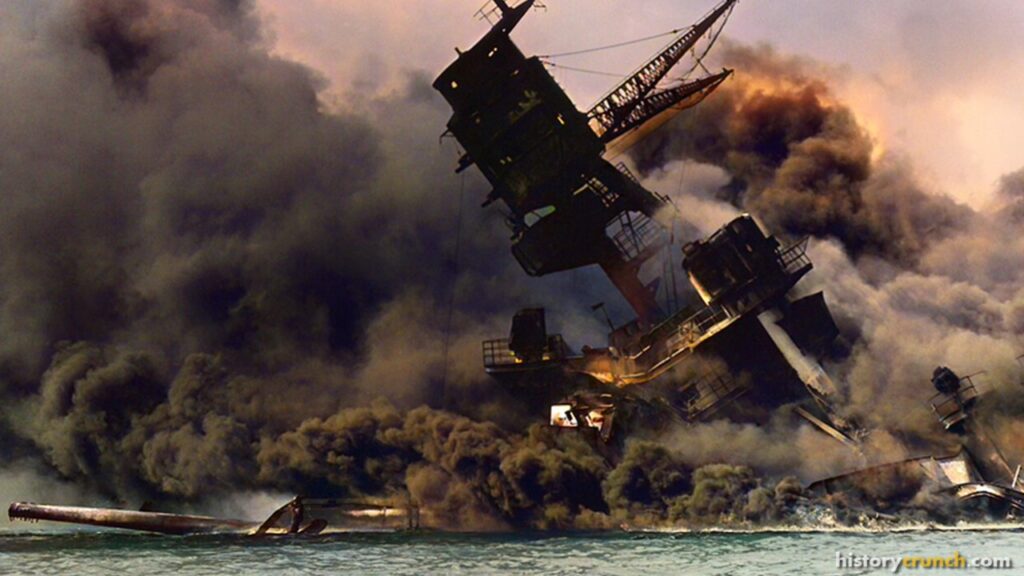 Black & whiteColour
Attack on Pearl Harbor – Significance
The attack on Pearl Harbor was a highly significant event in World War II. First and foremost, it brought the United States into the fighting of World War II. For instance, the attack unified the American public, which had previously been divided over entering the war. Furthermore, the attack essentially ended decades of American isolationist foreign policy and saw the United States participate in major battles in both the Pacific and European theaters.
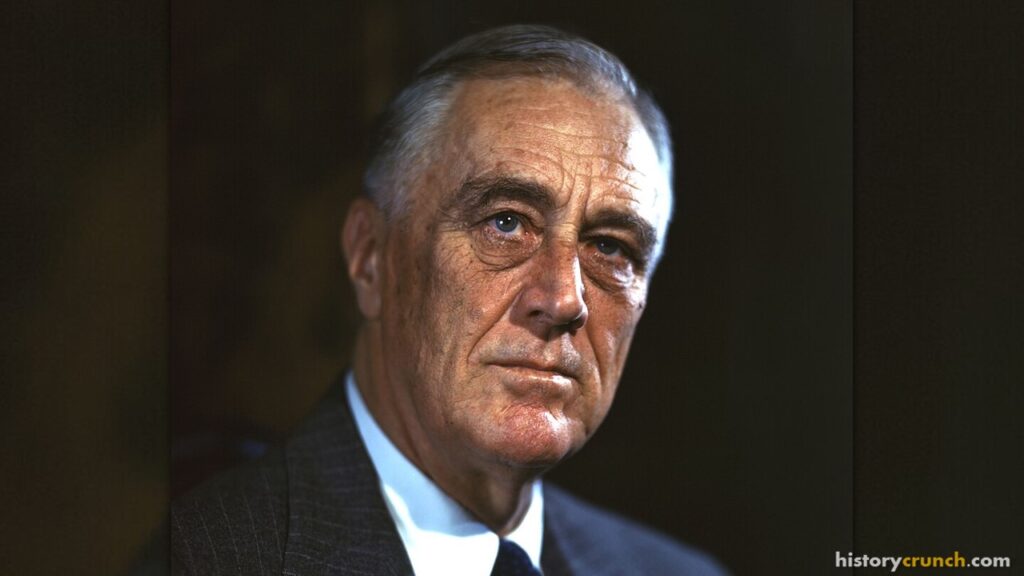
The arrival of American forces in World War II in 1941 played an important role in balance of power. The Japanese attack intended to knock the United States out of World War II. Instead, the attack created a resolve in the United States for victory as Congress declared war on December 8th, 1941, at the request of President Franklin D. Roosevelt. In fact, President Franklin D. Roosevelt addressed Congress and famously called the attack “a date which will live in infamyThe state of being remembered for something shockingly evil or terrible..” Regardless, this brought the Americans into the conflict against Japan and Nazi Germany. Shortly after, Nazi Germany and Italy, Japan’s Axis partners, declared war on the United States. The arrival of the Americans was significant because the United States brought industrial, military and economic power to the other Allied nations. As well, American involvement was crucial in turning the tide of the war, leading to victories in Europe and the Pacific.
A new kind of war was fought in the Pacific Theater as the age of the battleship ended, and modern naval power was embodied in the aircraft carrier. The American fleet of aircraft carriers was not destroyed in the December 7th attack because they were away from Pearl Harbor at the time. These included the USS Enterprise, Lexington, and Saratoga. Eventually, the American military operation led to Allied victory in 1945 after the atomic bombings of Hiroshima and Nagasaki, Japan, and the Soviet declaration of war on Japan in August.
Today, the attack on Pearl Harbor is remembered for being the event that brought the United States into the fighting of World War II. American soldiers would go on to play a major role in both the European Theater and the Pacific.
FactsthatCrunchYesterday, December 7th, 1941, a date which will live in infamy, the United States of America was suddenly and deliberately attacked by naval and air forces of the Empire of Japan.
Roosevelt spoke to Congress and to millions of radio listeners the day after Japan's surprise attack on Pearl Harbor, Hawaii, and he had sharpened his own draft by changing the phrase 'world history' to 'infamy'; Congress declared war on Japan within about an hour, bringing the United States into World War II.
Explore World War II · 1939 – 1945
Keep exploring World War II with these History Crunch resources.
Key Vocabulary
Isolationism
Expansionist
Economic sanctions
Tripartite Pact
Lend-Lease Act
Infamy
Neutralize
Frequently Asked Questions
When was the attack on Pearl Harbor?
The attack happened on the morning of December 7th, 1941. Japanese forces launched the surprise strike against the United States naval base at Pearl Harbor, Hawaii. The assault lasted about two hours and caught American forces off guard.
Why did Japan attack Pearl Harbor?
Japan attacked to cripple the American Pacific Fleet before it could stop Japanese expansion. The United States had cut off oil exports to Japan in 1941, which threatened the Japanese economy. Japanese leaders hoped one decisive blow would force America to accept peace and leave Japan free to control the Pacific.
How many people died at Pearl Harbor?
Almost 2,400 Americans died in the attack. The greatest single loss was the battleship USS Arizona, where over 1,100 sailors were killed. More than 20 ships were sunk or damaged and nearly 190 planes were destroyed.
Who planned the attack on Pearl Harbor?
Admiral Isoroku Yamamoto planned the attack, and Vice Admiral Chuichi Nagumo carried it out. The strike used six aircraft carriers and over 350 aircraft. These planes targeted American ships and defenses on Oahu.
How did the attack change World War II?
The attack brought the United States into World War II and ended its policy of isolationism. President Franklin D. Roosevelt asked Congress for a declaration of war on December 8th, 1941. American industrial and military power then helped the Allies win in both Europe and the Pacific.
Why did Japan fail to destroy the American aircraft carriers?
The American aircraft carriers were not at Pearl Harbor during the attack. The USS Enterprise, Lexington, and Saratoga were away on a training mission. These carriers later became key weapons as naval warfare shifted from battleships to aircraft carriers.
Cite This Article
To cite this article as a source, use one of the formats below.
MLA: Woida, K.L. “Attack on Pearl Harbor: A Detailed Summary.” HistoryCrunch, 4 October 2026, https://historycrunch.com/attack-on-pearl-harbor/.
APA: Woida, K. L. (2026). Attack on Pearl Harbor: A Detailed Summary. HistoryCrunch. https://historycrunch.com/attack-on-pearl-harbor/
Chicago: Woida, K.L. “Attack on Pearl Harbor: A Detailed Summary.” HistoryCrunch. October 4, 2026. https://historycrunch.com/attack-on-pearl-harbor/
Sources
- Max Hastings, Inferno / All Hell Let Loose.
- Gerhard L. Weinberg, A World at Arms.
- The National WWII Museum
- Antony Beevor, The Second World War.