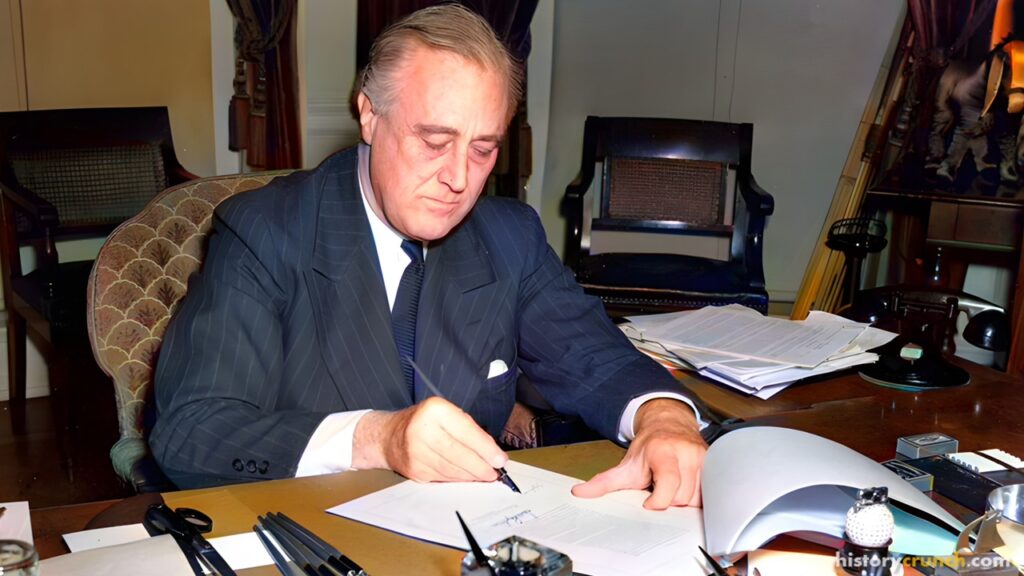
The Lend-Lease Act of 1941 was an important piece of American legislationA law or set of laws formally passed by a government body like Congress. during the events of World War II. In March of 1941 the Lend-Lease Act was passed and gave American President Franklin D. Roosevelt the ability to provide economic and military aid to the Allied nations during World War II. Furthermore, the act allowed the United States to support Allied military campaigns without becoming over-extended in a land campaign. Britain, the Soviet Union, China and others received aid under the Lend-Lease Act.
 FactsthatCrunch
One evening he suddenly came out with it – the whole program. He didn't seem to have any clear idea as to how it could be done legally. But there wasn't a doubt in his mind, he'd find a way to do it.
Hopkins watched Roosevelt work out the Lend-Lease plan aboard the cruiser USS Tuscaloosa after reading a long letter from Churchill, just days before the president explained the plan to reporters with his famous garden hose comparison on December 17th, 1940.
Lend-Lease Act – Background
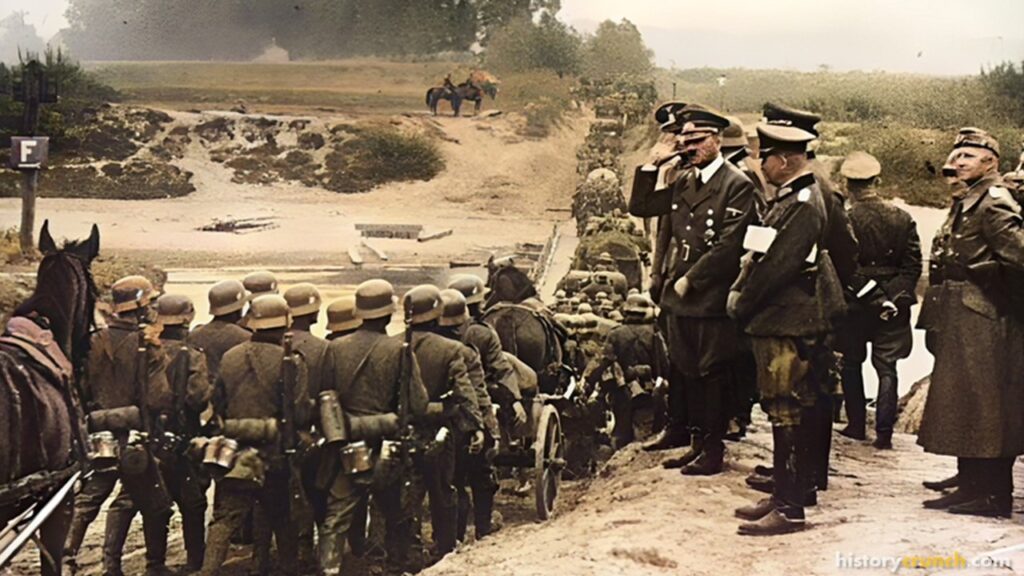
When war broke out in September of 1939, public opinion did not support American involvement in the conflict as many Americans viewed the conflict as a European one and could still recall the horrors of World War I. As a result, the United States remained officially neutral in the conflict and remained isolationistA country that stays out of other nations’ conflicts and avoids foreign alliances or wars..
However, the quick territorial expansion by Nazi Germany in the early years of World War II was a cause for concern for American leaders and President Franklin D. Roosevelt. For instance, France was defeated in a relatively short period of time during the Battle of France. This was followed by Britain’s desperate struggle for survival during the events of the Battle of Britain. More specifically, President Roosevelt was concerned that with the fall of France in 1940, Britain now stood alone against Adolf Hitler’s forces in Europe. As such, some in the United States felt that Britain and other Allied nations urgently needed military supplies to counter the military aggression of the Nazi regime. Roosevelt, recognized that a strong Britain was necessary to level the balance of power in Europe. As well, Roosevelt opposed fascismA system of government with extreme nationalism, a powerful dictator, and suppression of opposition. and sought a way to help the Allied nations without going against neutrality laws or creating anger among the American public. As a result, the Lend-Lease Act of 1941 was proposed as a way to assist the Allies.
 FactsthatCrunch
Why did the United States move away from neutrality between 1939 and 1941?
Lend-Lease Act – Summary
The Lend-Lease Act, which was formally titled ‘An Act to Promote the Defense of the United States’ was introduced into Congress in January of 1941. In short, the act proposed allowing the President of the United States the authority to “sell, transfer title to, exchange, lease, lend, or otherwise dispose of” military supplies to nations whose defense was deemed significant to American security interests. While the act was unpopular with some who valued American isolationist policies, it eventually gained the necessary political support to pass through Congress. In fact, the Lend-Lease Act was signed into law on March 11th, 1941 by President Roosevelt.
Under the Lend-Lease Act, the United States provided assistance to the Allied nations of World War II. For instance, they provided military support with shipments of tanks, airplanes, trucks, weapons and ships. Also, the United States shipped raw materials for the war effort, including: oil, steel, rubber and food supplies. Finally, they also supplied hospital equipment and supplies along with construction equipment.
While the Lend-Lease Act was originally aimed at helping Britain in its war effort against Nazi Germany, it was later expanded to offer assistance to other nations, including: China and the Soviet Union. Although it should be noted that eventually over 30 Allied nations received assistance through the Lend-Lease Act. In total, the United States delivered more than $50 billion worth of supplies, which is equal to about $700 billion in today’s value. Britain received the most at approximately $31 billion. The Soviet Union alone received nearly 14,000 aircraft, 7,000 tanks, and millions of tons of food and supplies from the United States.

Lend-Lease Act – Significance
The Lend-Lease Act was an important piece of legislation that had significant impacts on the events of World War II. For example, the Lend-Lease Act provided the Allies with critical resources to help their fight during the major battles of the war. In particular, Britain benefited under the act, as it received munitionsMilitary weapons, ammunition, and equipment used in war. and other materials of war when they were being horribly attacked and bombed by Nazi Germany. As a result, Britain was able to continue to withstand German air raids and naval blockadesWhen a navy uses ships to cut off a country’s access to sea supply routes.. The Soviet Union, a member of the Allied nations, received vehicles, food supplies, and raw materials that kept its war machine operational. If the Lend-Lease Act had not been used, it’s possible that the war effort in Europe could have gone drastically different. The American supplies were vital to the Allied nations during the early years of World War II.
Also, the Lend-Lease Act had a significant impact on the American economy, which was still recovering from the events of the Great Depression. For instance, the supplies and weapons needed for the European Allies caused the American factories to ramp up production. In turn, this caused unemployment to plummet, and sustained economic growth for the American industrial system. This economic revitalizationThe process of giving new strength or energy to something that had weakened, like an economy. was important in preparing the United States for when it eventually joined the direct fighting of World War II.
Isolationists, including figures like Senator Robert Taft, argued that it pushed the United States dangerously close to involvement in the war. Some also questioned providing assistance to the Soviet Union, since it was a communist state since the Russian Revolution in 1917. After the war, the repayment terms were a subject of negotiation. Britain, for example, made the final payment on the postwar loan that settled its Lend-Lease account in 2006.
 FactsthatCrunch
Tap each impact to read what it led to.
Explore World War II · 1939 – 1945
Keep exploring World War II with these History Crunch resources.
Key Vocabulary
Isolationist
Legislation
Fascism
Munitions
Naval blockades
Revitalization
Frequently Asked Questions
What was the Lend-Lease Act?
The Lend-Lease Act was a 1941 American law that let the United States send military and economic aid to the Allied nations during World War II. Its formal title was “An Act to Promote the Defense of the United States.” It gave President Franklin D. Roosevelt the power to lend, lease, or sell war supplies to countries whose defense mattered to American security.
When was the Lend-Lease Act signed into law?
President Roosevelt signed the Lend-Lease Act into law on March 11th, 1941. It had first been introduced into Congress in January of that year. The law passed even though some Americans still favored isolationist policies and wanted to stay out of the war.
Which countries received aid under the Lend-Lease Act?
More than 30 Allied nations received aid through the Lend-Lease Act. Britain received the most at about $31 billion, while the Soviet Union and China also received large amounts. The Soviet Union alone got nearly 14,000 aircraft, 7,000 tanks, and millions of tons of food and supplies.
Why did the United States create the Lend-Lease Act?
The United States created the Lend-Lease Act to help the Allies while still staying officially neutral. After France fell in 1940, Britain stood alone against Nazi Germany and badly needed supplies. Roosevelt opposed fascism and wanted a strong Britain to balance power in Europe without sending American troops into battle.
How much aid did the Lend-Lease Act provide in total?
The United States delivered more than $50 billion worth of supplies through the Lend-Lease Act. That amount equals about $700 billion in today’s value. The aid included tanks, airplanes, trucks, ships, weapons, oil, steel, rubber, food, and medical supplies.
Did any country ever repay its Lend-Lease aid?
Repayment terms were negotiated after the war, and some aid was repaid over many years. Britain, for example, made the final payment on the postwar loan that settled its Lend-Lease account in 2006. Much of the aid, however, was not meant to be paid back in full.
Cite This Article
To cite this article as a source, use one of the formats below.
MLA: Beck, Elias. “Lend-Lease Act: A Detailed Summary.” HistoryCrunch, 1 October 2026, https://historycrunch.com/lend-lease-act/.
APA: Beck, E. (2026). Lend-Lease Act: A Detailed Summary. HistoryCrunch. https://historycrunch.com/lend-lease-act/
Chicago: Beck, Elias. “Lend-Lease Act: A Detailed Summary.” HistoryCrunch. October 1, 2026. https://historycrunch.com/lend-lease-act/
Sources
- Antony Beevor, The Second World War.
- Imperial War Museum
- The National WWII Museum