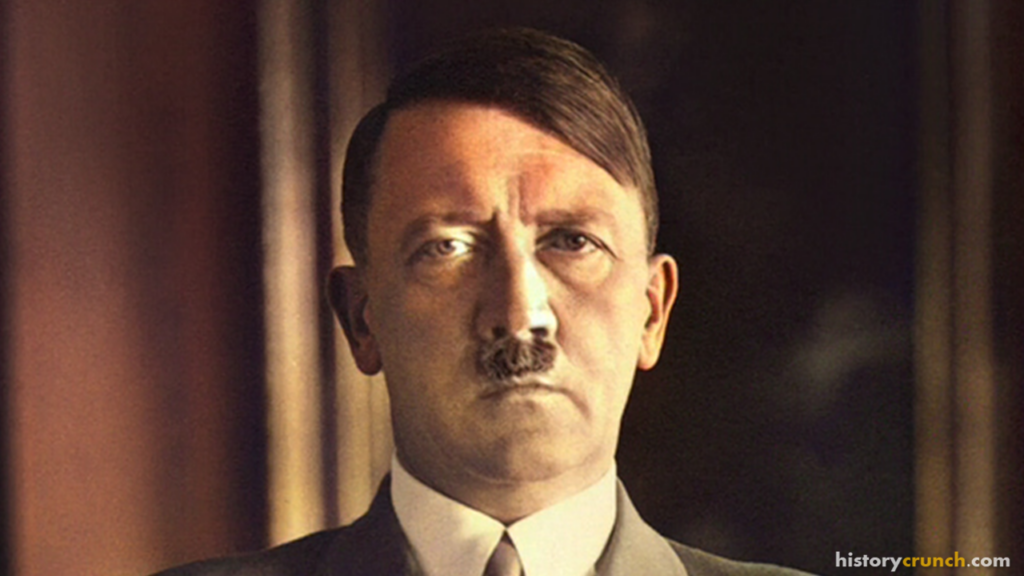
Adolf Hitler was the fascist dictator of Nazi Germany from 1934 until 1945. He rose to power as the leader of the Nazi Party and is infamous for participating in the major events of both World War II and the Holocaust. Today, he is remembered as a brutal dictator who caused the death of millions. For instance, he instigated World War II with the Nazi invasion of Poland in 1939 and carried out the Holocaust, which led to the death of over 11 million people. He died at the end of World War II, and changed the course of World history.
 FactsthatCrunch
Hitler rose from a failed art student and World War I corporal to become the dictator of Germany, leading the country into World War II and directing the Holocaust. His decisions as supreme military commander, including the invasion of the Soviet Union in June 1941 and the declaration of war on the United States in December 1941, shaped the course of the entire conflict.
Adolf Hitler – Early Life
Adolf Hitler was born on April 20th, 1889 in Braunau am Inn, Austria-Hungary. In 1892, when Hitler was just three years old his family moved to Germany, but would soon return to Austria in 1894. Hitler’s father, Alois, farmed and developed a career in the customs bureau. The return to Austria is also around the time that Adolf Hitler began to develop intense conflicts with his father and his school. As a child, Adolf was known for being very moody and grew hostile and resentful towards his father for his decision to move his family. As well, Adolf’s first intention in life was to become a painter and he wanted to attend classical art school, but was forced to pursue other efforts due to the wishes of his father. After the death of his father in 1903, Hitler soon left school and moved to Vienna, Austria in 1907.
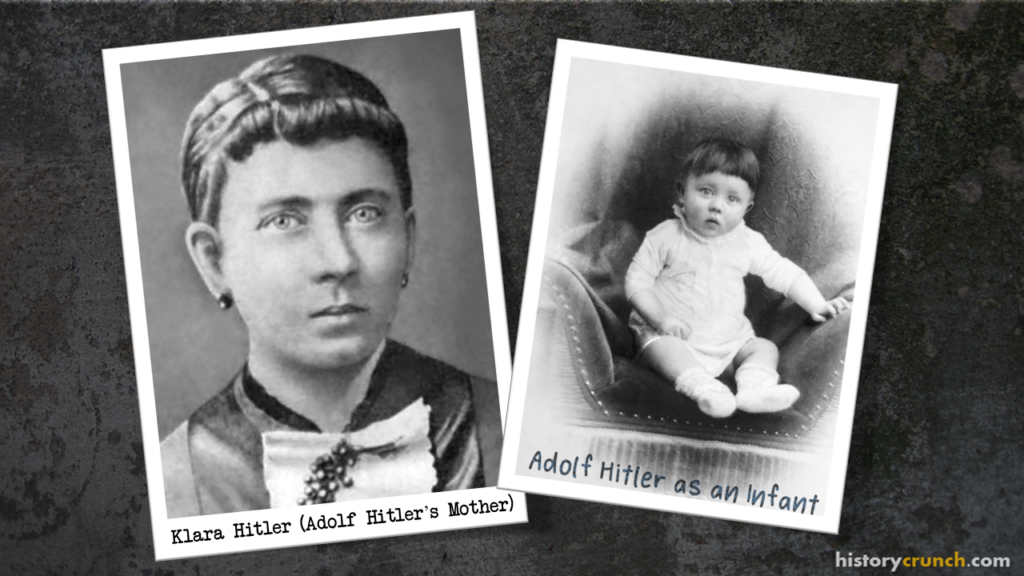
In Vienna, Hitler lived an impoverished lifestyle. He made very little money as a general laborer and by selling watercolor works of art on the streets of the city. Also, his mother Klara helped support him with what money she could. He applied to enter the Academy of Fine Arts in Vienna in 1907 and again in 1908 but was rejected both times. When his mother died in late 1907, Hitler was forced to live in hostels and homeless shelters.
Many events in his early life led to his hatred towards the Jewish people. It is believed that the beginnings of Hitler’s anti-SemitismHatred or prejudice directed at Jewish people. began during his time in Vienna. Anti-Semitism is a hatred or prejudice towards Jewish people. The Austro-Hungarian Empire was made up of many different races and in his book, Mein Kampf, Hitler stated that it was in the Austrian city of Vienna that he developed his anger and resentment towards the Jewish people. Regardless, Hitler’s anti-Semite views grew in intensity during his time in World War I.
FactsthatCrunchAdolf Hitler – Joins the Nazi Party
Hitler left Vienna in 1913 and moved to Munich, Germany. It is widely believed that he fled Austria-Hungary to avoid being conscriptedForced by law to join a country’s military service. into the Austrian army, due to his hatred of the mix of ethnicities that existed in the Austro-Hungarian Empire at the time. While in Munich, Hitler volunteered to serve in the German Army for World War I, which had just begun. Hitler was appointed to the Bavarian Reserve Infantry Regiment and served as a dispatch runner on the Western Front. While he was often far from the frontlines of battle, he did participate at several key World War I battles, including: First Battle of Ypres, Battle of the Somme, Battle of Arras and the Battle of Passchendaele (Third Battle of Ypres). He was wounded at the Battle of the Somme by an exploding shell and spent the next two months recovering in hospital. He was again wounded near the end of the war, when he was temporarily blinded by a mustard gas attack. It was during his time in the hospital after the mustard gas attack that he learned of Germany’s surrender to the Allied Powers. For his bravery and service in the war Hitler was awarded several honors, including: two Iron Crosses, Cross of Military Merit, and the Wound Badge.
After the end of World War I, Hitler remained with the army and worked as an intelligence agent. He was tasked with monitoring the activities of the German Worker’s Party (DAP), but was soon inspired by the party and its nationalistic and anti-Semitic message. In 1919, Hitler joined the party, which soon changed its name to the National Socialist German Worker’s Party (NSDAP) and began using the swastika as its official image.
In the summer of 1921, he assumed control of the National Socialist German Worker’s Party and began to work to increase its prominence in German politics. He did this by delivering his characteristic public speeches concerning his views on the state of Germany. Hitler was masterful at public speaking in that he was charismatic and impassioned when he spoke. He would rise to power of the Nazi Party in Germany in the 1930s and eventually rise to become Fuhrer of the country. Click the link above to read more about Hitler’s detailed rise to power within the Nazi Party. The information below is a brief summary of the major events.
Adolf Hitler – Rise to Power
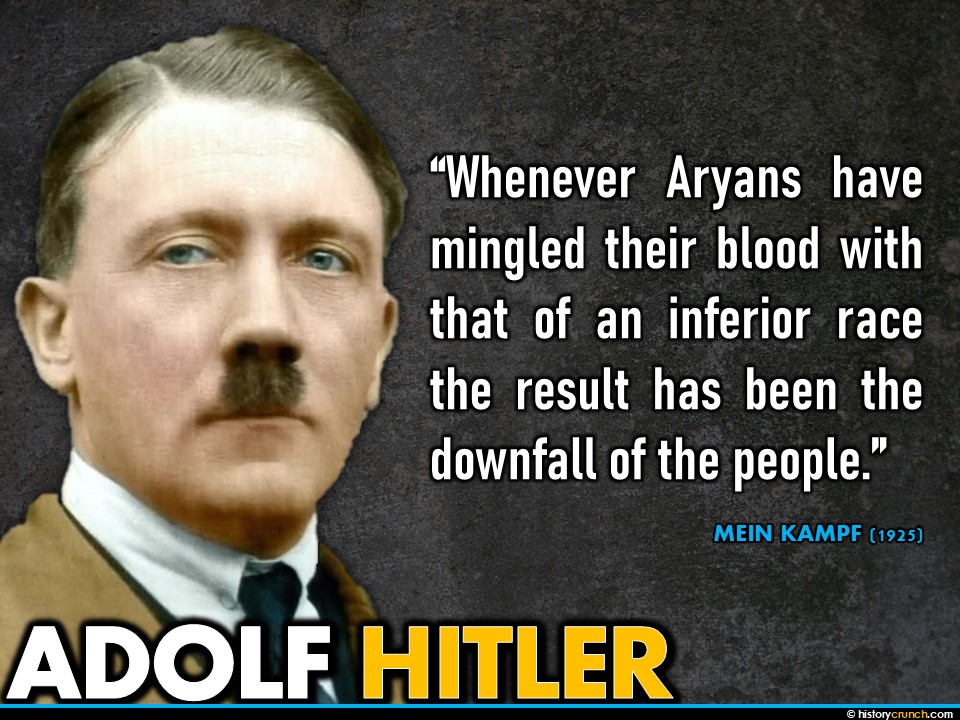
After joining and taking control of the Nazi Party, Hitler famously worked to grow the popularity of the party in the country. Inspired partially by Benito Mussolini in Italy, Hitler decided in 1923 that the Nazi Party would need to seize power in Germany through the use of force. In November of 1923 Hitler and the SA led the Beer Hall Putsch, which was the Nazi Party’s attempt to overrun the German government and assume control for itself. The Beer Hall Putsch was a failure and Hitler was put on trial for treason. Hitler used the time in prison to consider his political strategy and write the first volume of his book Mein Kampf (My Struggle), which was an autobiographical account of his movement and its underlying ideology. Hitler’s ideology at the time centered on extreme German nationalism, anti-Semitism, anti-communism and LebensraumA German word meaning ‘living space,’ used by Hitler to justify expanding Germany’s territory. (Living Space).
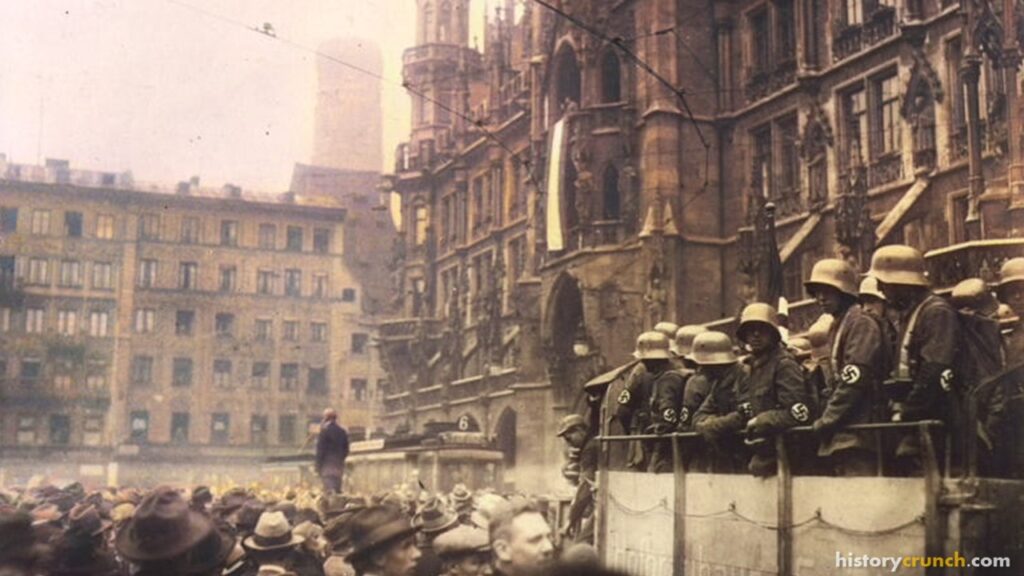
After serving his time in prison, Hitler promised to only use legal means to promote his politics and within two years, support for the Nazi Party had grown. By 1928 Nazi membership was at about 100,000 members, and they continued to gain popularity based on Hitler’s promised relief to the economic struggles that were plaguing Germany. In particular, Hitler expressed that Germany had been embarrassed by the conditions of the Treaty of Versailles, which was the treaty imposed on Germany at the end of the First World War. Through Hitler’s tireless effort, by 1932, the Nazi Party had 800,000 members and had become the largest party in the Reichstag, which was the German parliament.
Hitler became the Chancellor of Germany, leader of the democratically elected government on January 30th, 1933. Having become Chancellor, Hitler foiled all attempts by his opponents to gain a majority in parliament, and was presented with an opportunity in February of 1933 when the Reichstag building was set on fire. Hitler believed this was his chance to use the people’s fear of communism as a means of gaining complete control of Germany. The fire was blamed on communists to build on people’s fears that there was a communist plot underway to start a communist revolution in Germany. Due to public and political concerns, the day after the fire Hitler asked for and received from President Hindenburg the Reichstag Fire Decree. It suspended most civil liberties in Germany and was used by the Nazis to ban publications not considered “friendly” to the Nazi cause. This was a major step towards Hitler gaining control over Germany.
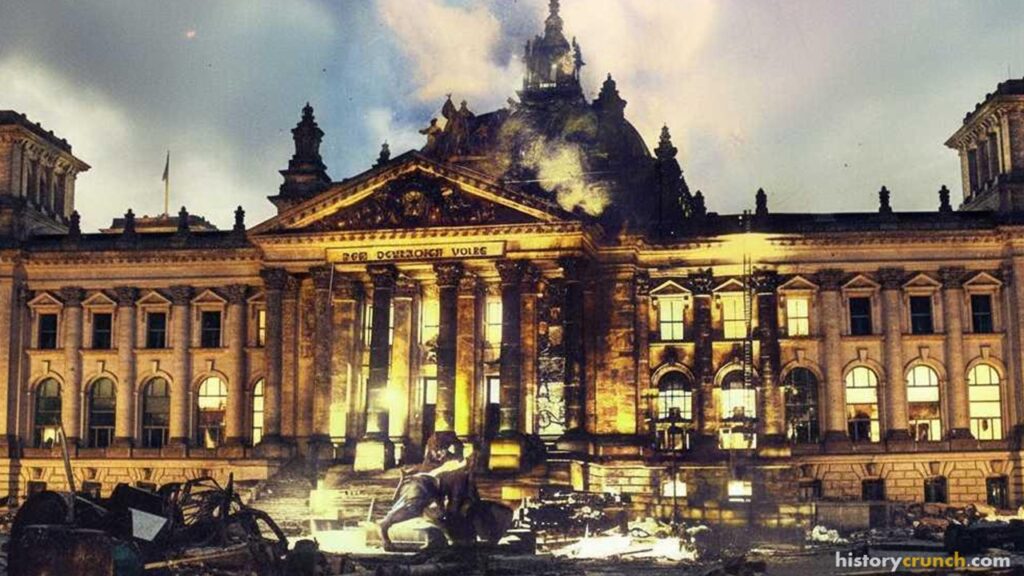
Next, on March 23rd, 1933, Germany’s Reichstag passed the ‘Enabling Act‘ which granted Hitler and the Cabinet the authority to enact laws without the participation of the Reichstag for four years. This allowed Hitler and the Nazi Party to ban all other political parties and Germany ceased to be a democratic country and became a dictatorship under Adolf Hitler. German President Paul von Hindenburg signed the Enabling ActA law passed in 1933 that let Hitler and his cabinet make laws without the German parliament’s approval. under public pressure of a communist takeover and based on the popularity of the Nazi Party and Hitler within Germany.
President Paul von Hindenburg died on August 2nd in 1934. Rather than holding new presidential elections, Hitler’s cabinet passed a law proclaiming the presidency dormant and transferred the role and powers of the head of state to Hitler as Führer und Reichskanzler (leader and chancellor). As head of state, Hitler now became supreme commander of the armed forces. Hitler’s rise to power of Germany was complete. He had turned Germany into a fascist state with himself as the dictator that controlled the country.
FactsthatCrunchAdolf Hitler – World War II
Hitler’s involvement in World War II was huge and he was one of the main causes of the war when he decided to invade Poland on September 1st, 1939 and both France and Britain declared war on Germany on September 3rd, 1939. However, his actions in the years right before the start of World War II are a major reason why Europe was again plunged into a major conflict. For example, Hitler carried out a series of aggressive actions in which he violated many of the terms of the Treaty of Versailles. For instance, under his leadership Nazi Germany carried out the following:
- Re-militarized the Rhineland in Germany
- Annexed Austria
- Gained Control over Czechoslovakia at the Munich Conference
- Nazi Germany’s Invasion of Poland
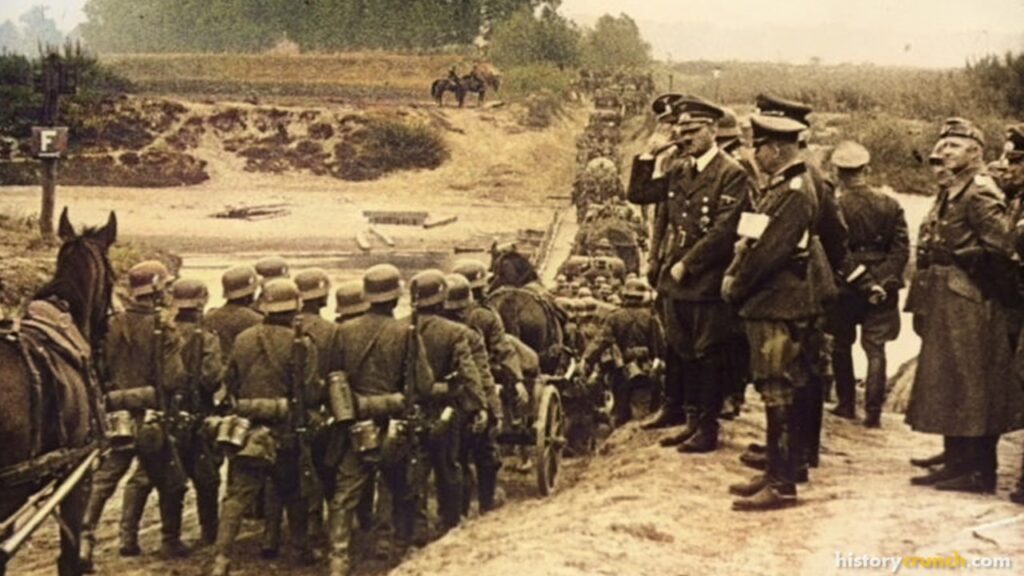
Collectively, these events pushed Europe towards war, as they escalated the tensions between Nazi Germany and the other European powers. In particular, it forced both France and Britain to finally declare war on Germany on September 3rd in 1939, following Germany’s invasion of Poland on September 1st. As such, most historians view the Nazi German invasion of Poland as the start of the war. At the time, France and Britain’s response to these aggressive acts was to ignore them and hope that both Hitler and Germany would eventually stop. This was a misguided strategy called ‘Appeasement‘, and was led by the British Prime Minister Neville Chamberlain. In the end, the policy of appeasementA strategy of giving in to an aggressive power’s demands to avoid conflict, hoping it will stop on its own. caused Europe to slip into another global conflict.
At the outset of World War II, Hitler directed the Nazi forces to invade France in 1940, which is considered to be one of the first major events of the war. This was called the Battle of France and was a major victory for Germany. Next, Hitler attempted to invade Britain soon after as part of the Battle of Britain but failed to gain a foothold on the island-nation. In 1941, Hitler declared war on the United States following Japan’s decision to surprise attack the United States at Pearl Harbor. Likely, Hitler’s greatest downfall was his decision to invade the Soviet Union and the resulting Battle of Stalingrad in 1942. The battle saw Germany lose its entire Sixth Army and began the Allied push towards Berlin. In 1944, the Allied invasion of Normandy caused the surrender of the German armies in less than a year after the invasion.
Can you put Nazi Germany's aggressive acts before World War II in the correct order?
Adolf Hitler – the Holocaust
World War II also allowed Hitler the opportunity to follow through on his nationalistic and anti-Semitic beliefs. During his time as the leader of Germany he oversaw the extermination of 11 million people in concentration camps, including 6 million Jewish as part of the Holocaust. The Holocaust was one of the most significant events in the 20th century and certainly one of the most important genocides of the time. During the Holocaust, the Nazi Party systematically killed millions of people. The vast majority were Jewish, but among the dead were also: Soviet Prisoners of War, Disabled People, Homosexuals, and Religious Groups.
The first stage of the Holocaust was the Nuremberg Laws. First passed in 1935, the Nuremberg Laws made German Jewish people second class citizens and banned sexual relations and marriage between Jewish people and persons of German blood. Officially, the Nuremberg Laws were two laws, the Reich Citizenship Law and the ’Law for the Protection of German Blood and Honor’. The goal of the laws for the Nazis was to limit the ability of Jewish genetic traits to spread and to legalize discrimination against Jewish people in Germany.
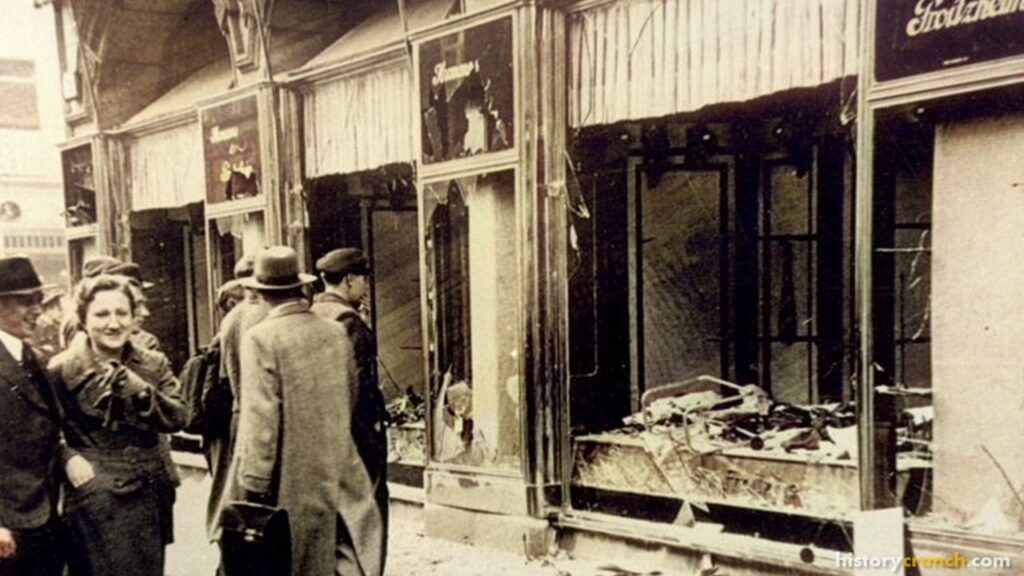
One of the most important events of the Holocaust is known as Kristallnacht, which translates to ‘Night of Broken Glass’. It was an organized attack carried out against Jewish people living in Germany on November 9th and 10th in 1938. The attack was carried out by Sturmabteilung forces (SA) which were the paramilitary part of the Nazi Party. Throughout the 1930s, Adolf Hitler and the Nazi Party had risen to power in German politics. By 1938, the Nazi Party was well established in Germany and was a popular political force in the Reichstag, which was the name for the German parliament. The SA was made up of members of the Nazi Party and acted as a protection force for the party while also carrying out aggressive attacks against those deemed to be enemies of Germany, including the Jewish. The events of KristallnachtAn organized Nazi attack on November 9th–10th, 1938, in which Jewish businesses, synagogues, and homes were destroyed across Germany. saw SA forces destroy Jewish owned businesses, synagogues and homes. It was called ‘Night of Broken Glass’ due to the large amount of broken glass that was on the streets the next morning from the storefronts and homes. In total, 91 Jewish people were murdered and another 30,000 Jewish men were arrested and imprisoned.
As the German army captured territory (and people) across Europe they deported millions of Jewish people to the ghettosWalled or fenced city districts where Jewish people were forcibly confined and isolated under Nazi rule.. Ghettos were city districts in which the Jewish were forced to live, and which were used to isolate them from the rest of the European populations. The ghettos were surrounded by walls or fences to prevent Jewish and non-Jewish people from interacting and to forcibly contain the Jewish. In total there were over 800 ghettos established across Nazi controlled Europe during the time period. The conditions of the ghettos were miserable. Jewish families, who were forced to live in them, faced: overcrowding, starvation, lack of medical supplies, lack of proper sanitation and running water, lack of proper clothing to deal with extreme cold, spread of infectious diseases and forced labor for the Nazis.
The next major event of the Holocaust was the construction and use of the concentration camps of the Holocaust. In general, concentration camps were labor camps in which generally healthy men were sent to labor for the Nazis. The most famous concentration camp, which also had a death camp, was Auschwitz. People in concentration camps often died from disease, starvation and poor treatment due to the horrible conditions in which they were forced to live, including: overcrowding, lack of running water, lack of heat, lack of food, tiring and difficult labor, and mistreatment by Nazi guards. For example, the barracks for the prisoners were sometimes, literally, old horse sheds that the Nazis converted for humans by building crude bunk beds in the horse stalls. The bunks were built four levels high and the prisoners were forced to sleep with 3 to 4 people per level. A barrack typically held over 400 people inside.
FactsthatCrunchWhat were the major stages of the Holocaust under Hitler's rule?
Adolf Hitler – Death
In the later years of World War II, Nazi Germany struggled to maintain its control over Europe. For instance, the Allied nations of Britain, the United States and the Soviet Union pushed into Europe from multiple sides and forced the Nazi Armies back into Germany and Berlin. Finally, in 1945, Adolf Hitler and his other leaders took refuge in bunkers under the city of Berlin. However, with the Soviet Army pushing into the city in April of 1945, Hitler decided to commit suicide and avoid facing punishment for his crimes.
Adolf Hitler committed suicide with his wife, Eva Braun, on April 30th of 1945. He knew that he faced a terrible fate at the hands of justice after the war crimes he planned and executed against humanity. There is no question that he will always be remembered as a tyrant and his legacy is one of caution for those who ever become powerful with any kind of desire to harm people because of their race or religion. As such, today Hitler is remembered as one of the most brutal dictators of the 20th century.
Explore World War II · 1939 – 1945
Keep exploring World War II with these History Crunch resources.
Key Vocabulary
Anti-Semitism
Conscripted
Lebensraum
Appeasement
Enabling Act
Ghettos
Kristallnacht
Frequently Asked Questions
How did Adolf Hitler become the leader of Germany?
Hitler became Chancellor of Germany on January 30th, 1933, through legal, democratic means. After the Reichstag Fire, he gained emergency powers and pushed through the Enabling Act, which let him rule without parliament. When President Hindenburg died in 1934, Hitler merged the top offices and became sole dictator.
Why did Hitler write Mein Kampf?
Hitler wrote Mein Kampf while serving time in Landsberg Prison after the failed Beer Hall Putsch of 1923. The book laid out his beliefs, including extreme German nationalism, anti-Semitism, and the idea of Lebensraum, or living space. It later became central propaganda for the Nazi Party as it gained power.
What role did Hitler play in starting World War II?
Hitler triggered World War II by ordering the invasion of Poland on September 1st, 1939. In response, France and Britain declared war on Germany two days later. Before this, he broke the Treaty of Versailles by remilitarizing the Rhineland, annexing Austria, and taking control of Czechoslovakia.
How many people died in the Holocaust under Hitler?
Hitler oversaw the murder of about 11 million people in the Holocaust, including 6 million Jewish victims. The dead also included Soviet prisoners of war, disabled people, homosexuals, and religious groups. The Nazis carried out these killings in ghettos, concentration camps, and death camps like Auschwitz.
How did Adolf Hitler die?
Hitler died by suicide on April 30th, 1945, inside the Fuhrerbunker beneath Berlin. Soviet troops were only blocks away, and he chose death over capture and punishment for his crimes. His wife, Eva Braun, died with him, and Germany surrendered within about eight days.
Cite This Article
To cite this article as a source, use one of the formats below.
MLA: Beck, Elias. “Adolf Hitler: A Detailed Biography.” HistoryCrunch, 16 September 2026, https://historycrunch.com/adolf-hitler/.
APA: Beck, E. (2026). Adolf Hitler: A Detailed Biography. HistoryCrunch. https://historycrunch.com/adolf-hitler/
Chicago: Beck, Elias. “Adolf Hitler: A Detailed Biography.” HistoryCrunch. September 16, 2026. https://historycrunch.com/adolf-hitler/
Sources
- Michael Burleigh, The Third Reich: A New History.
- Ian Kershaw, Hitler (biography).
- USHMM
- German History in Documents and Images (GHDI)