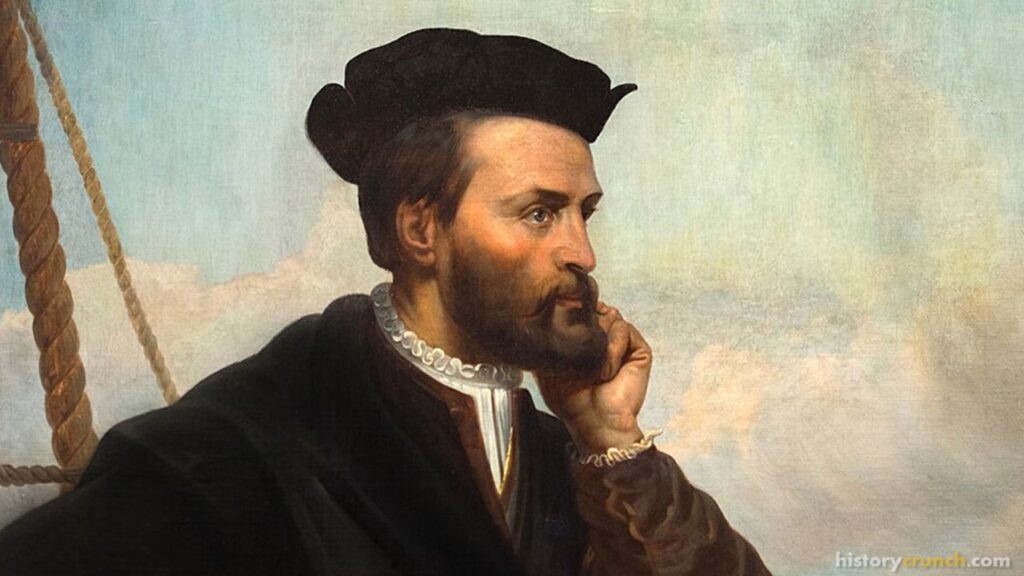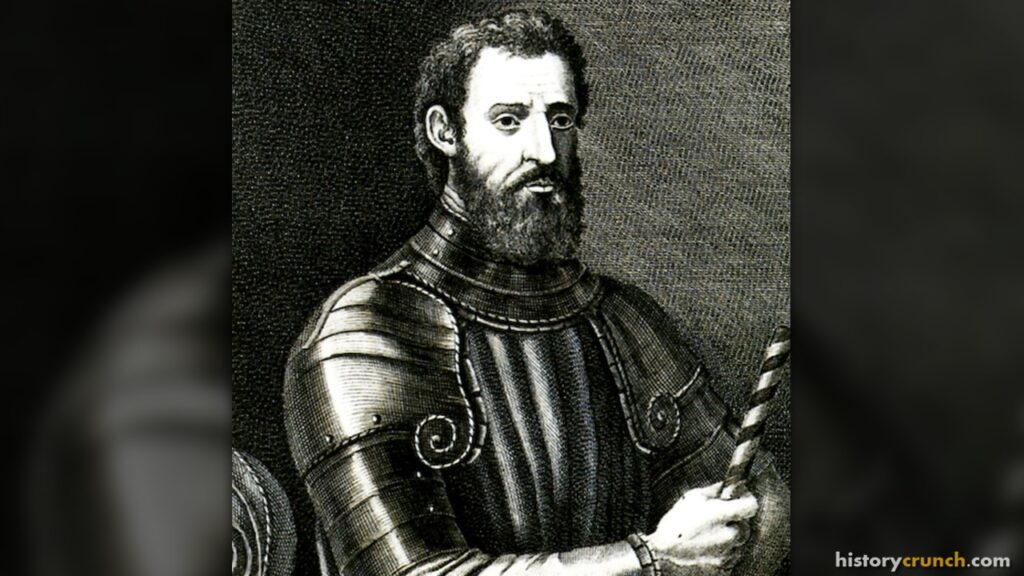
Giovanni da Verrazzano was an Italian-born explorer who sailed for France during the Age of Exploration. He is best known for his 1524 voyage along the eastern coast of North America, during which he became one of the first Europeans to explore the coastline between present-day Florida and Canada in a systematic way. He is also credited with being the first European to enter what is today New York Harbor. His voyages gave France an important early claim to territory in North America and significantly expanded European knowledge of the continent’s geography. As such, he is considered to be one of the most significant explorers of the Age of Exploration.
Giovanni da Verrazzano – Early Life
Giovanni da Verrazzano was born around 1485 in the Val di Greve region near Florence, in what is today the Tuscany area of Italy. He came from a well-established Florentine family and received a good education, which likely included studies in navigation, mathematics, and geography. Like many educated Italians of his generation, Verrazzano was drawn to the world of maritime trade and exploration that was rapidly expanding during the early 16th century. At some point in his early adult life he moved to the French port city of Dieppe, which was one of the most important centers of maritime activity in France at the time. Dieppe had a thriving community of sailors, navigators, and merchants, and it was there that Verrazzano developed his skills as a navigator and built the connections that would eventually lead to his most famous voyage.
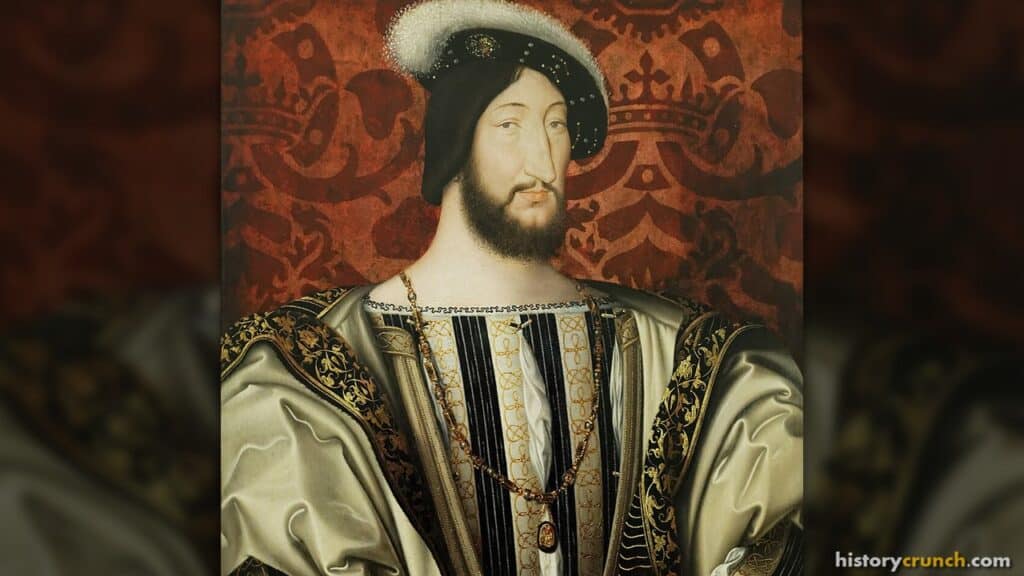
By the early 1520s, Verrazzano had established a strong reputation as a skilled and experienced sailor. He had already completed several voyages in the Mediterranean and possibly along the Atlantic coast of Europe and Africa, giving him the practical experience necessary for a major ocean expedition. His reputation was strong enough that he was able to secure the backing of the French king, Francis I, for an ambitious voyage to the New World.
Giovanni da Verrazzano – Voyages in the Age of Exploration
Verrazzano’s most famous and historically significant voyage of the Age of Exploration took place in 1524. He was commissioned by King Francis I of France to sail westward across the Atlantic in search of a sea route to Asia, with a particular focus on finding a passage through or around the North American continent. France had watched both Spain and Portugal grow enormously wealthy from their explorations and was eager to find its own route to the riches of the Far East and to establish its own presence in the New World.
Verrazzano departed from the Madeira Islands off the coast of Portugal in January of 1524 with a single ship called the Dauphine and a crew of approximately 50 men. After a difficult crossing that included a severe storm that nearly ended the voyage before it began, the expedition reached the coast of North America in late February or early March of 1524, making landfall somewhere near present-day Cape Fear in North Carolina. From there Verrazzano sailed southward briefly before turning north and beginning a careful and systematic exploration of the eastern coastline of North America, sailing northward along the coast for thousands of miles.
One of the most significant moments of the voyage came when Verrazzano sailed into a large protected body of water on the eastern coast that he described as a beautiful lake. This was what is today known as New York Harbor and the Upper New York Bay, and Verrazzano became the first European to enter and describe this location. The Verrazano-Narrows Bridge that today connects the boroughs of Brooklyn and Staten Island in New York City is named in his honor. Verrazzano was deeply impressed by the natural beauty of the area and by the indigenous peoples he encountered there, describing them in relatively positive terms in the report he later sent to King Francis I.
Continuing northward, Verrazzano explored and described the coasts of present-day New Jersey, Connecticut, Rhode Island, Massachusetts, and Maine, before eventually reaching the coast of present-day Nova Scotia in Canada. Throughout the voyage he made careful notes about the geography, the natural resources, and the indigenous peoples of the regions he passed through, creating one of the most detailed and systematic accounts of the North American eastern seaboard that had yet been produced by any European explorer. His descriptions of the coast and its peoples were widely read in Europe and helped shape European understanding of North America for decades. However, Verrazzano never found the passage to Asia he had been searching for, as the North American continent proved to be a continuous landmass with no obvious sea route through it.
Verrazzano returned to France in July of 1524 and reported his findings to King Francis I. He made at least two further voyages across the Atlantic in later years. In 1526 he led an expedition to Brazil, where he took on a cargo of brazilwood, a valuable timber used for making red dye. In 1528 he undertook another voyage to the Americas, this time exploring the Caribbean region and the coast of Florida.
Giovanni da Verrazzano – Later Life and Death
The circumstances of Verrazzano’s death are somewhat uncertain, but the most widely accepted account holds that he was killed during his 1528 voyage to the Americas. According to this account, Verrazzano anchored offshore of an island in the Caribbean region, possibly one of the Lesser Antilles islands such as Guadeloupe, and went ashore in a small boat to make contact with the indigenous people living there. The indigenous people of the island, unlike many of the peoples Verrazzano had encountered earlier in his explorations, were hostile to the Europeans. They attacked and killed Verrazzano, and according to some accounts cannibalized his body in view of his horrified crew, who were unable to intervene from their ships. He was approximately 43 years old at the time of his death. His brother Girolamo da Verrazzano, who had accompanied him on the 1524 voyage and helped produce maps of the coastline they had explored, survived and returned to France to report what had happened.
Giovanni da Verrazzano – Significance
Giovanni da Verrazzano was a highly significant explorer during the time of the Age of Exploration. His 1524 voyage along the eastern coast of North America was one of the most important geographical achievements of the era, providing Europeans with their first detailed and systematic account of the North American coastline from the Carolinas to Canada. The maps and descriptions produced by Verrazzano and his brother helped reshape European understanding of the geography of the Americas and contributed to the growing recognition that North America was a vast and separate continent rather than a part of Asia.
Verrazzano’s voyage also had important consequences for France’s involvement in the Age of Exploration. By sailing along the North American coast under the French flag and claiming the lands he encountered for King Francis I, Verrazzano gave France an early legal and symbolic claim to territory in North America that would eventually form the basis of the French colonial presence on the continent. His reports of the resources and potential of the eastern coast of North America encouraged France to invest further in exploration, eventually leading to the voyages of Jacques Cartier and Samuel de Champlain and the establishment of New France. His sighting and description of New York Harbor also established an early European awareness of one of the most strategically important natural harbors on the entire continent, a location that would centuries later become one of the most important cities in the world. For all of these reasons, Giovanni da Verrazzano remains one of the most significant explorers of the Age of Exploration, even though his contributions are sometimes less well known than those of his more famous contemporaries.