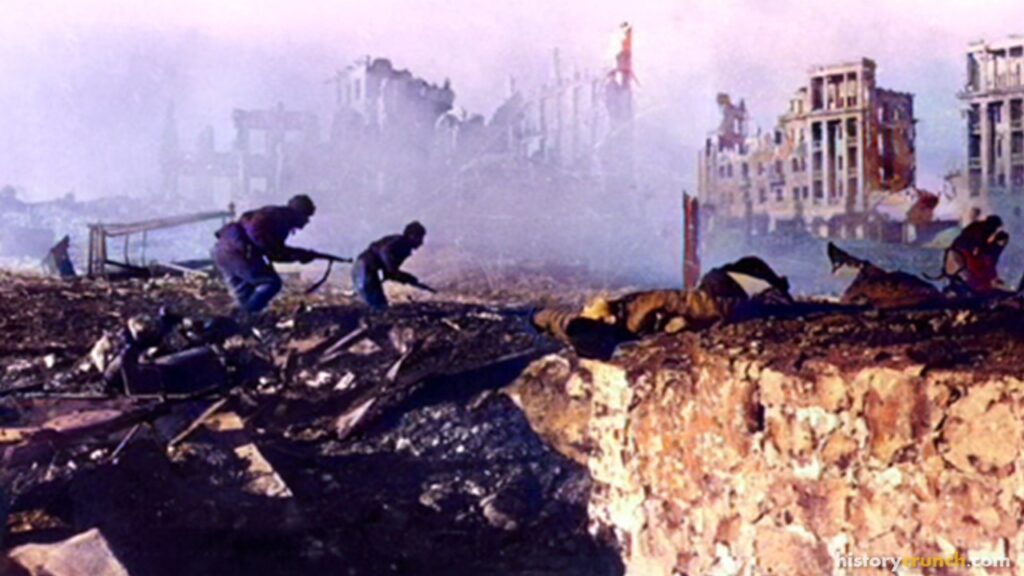
The Battle of Stalingrad is considered by many historians to be one of the most important battles of all of World War II and a major turning point in the European Theater of the war. It took place from July 17th, 1942 to February 2nd, 1943 and was fought between Nazi Germany and the Soviet Union. The Battle of Stalingrad was part of the Nazi German invasion of the Soviet Union during World War II, which had begun in 1941 with Operation Barbarossa. Operation BarbarossaThe large-scale Nazi German surprise invasion of the Soviet Union that began in June 1941. involved German forces carrying out blitzkriegA German war tactic using rapid, mobile attacks combining air power, infantry, and armor to surprise and overwhelm enemies before they could defend. tactics against the Soviet Union and pushing far into the borders of the Soviet Union. The outcome of the Battle of Stalingrad permanently shifted the momentum in favor of the Allies and signaled the beginning of the end for the Nazi German forces in eastern Europe.
Battle of Stalingrad in World War II – Background
The Battle of Stalingrad was a major conflict in the Second World War. World War II began on September 1st, 1939 when Nazi German forces invaded the country of Poland. Following its victory in Poland, Nazi forces next marched through France during the Battle of France. The Soviet Union, led by Joseph Stalin, was not part of the Allied powers with Britain and France at the start of the war. In fact, when World War II began in 1939, Germany avoided facing the Soviet Union in battle by agreeing to a nonaggression pact with the country, called the Molotov–Ribbentrop Pact. Yet, after Germany defeated France during the Battle of France and engaged Britain in the Battle of Britain, it turned its attention to the Soviet Union, and in June of 1941 began its invasion of the Soviet Union with a surprise attack.
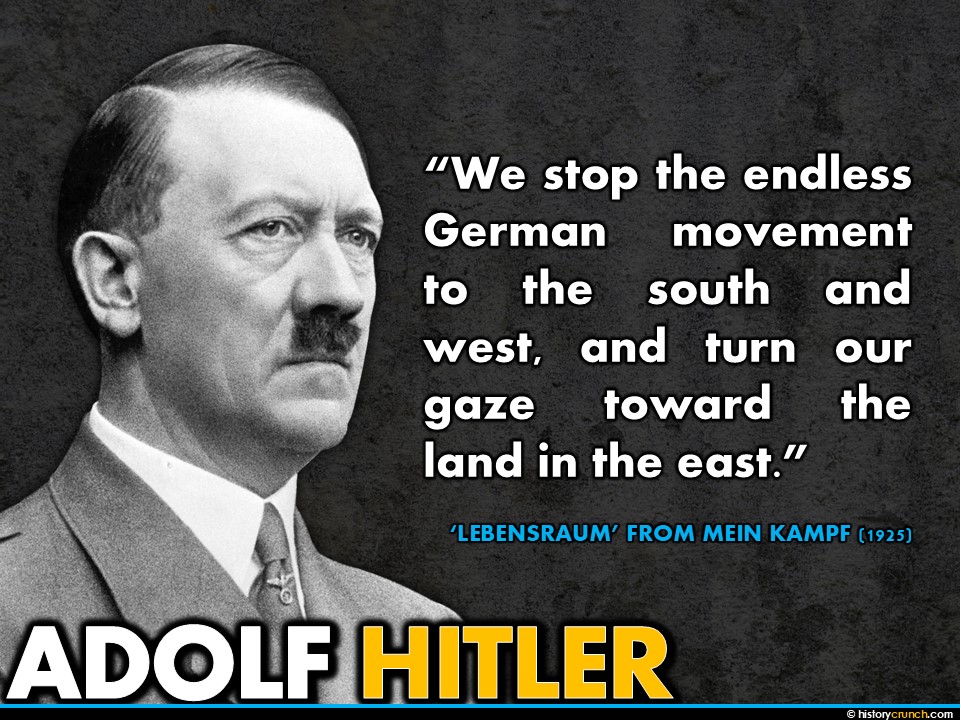
Operation Barbarossa had its beginnings in the ideas of Adolf Hitler, leader of Nazi Germany during World War II. During Hitler’s rise to power as the leader of Germany, he wrote an autobiographical book that detailed his worldview and ideological understanding of the world. In the book, titled ‘Mein Kampf’ (My Struggle), Hitler wrote about his view that Germany required LebensraumA German word meaning ‘living space,’ used by Hitler to justify seizing Soviet land for German farming and population growth. or “living space”. Hitler proposed the idea that Germany needed increased farmland and living space in order to promote a growing German population. Hitler saw the Soviet Union as the land he desired for his plan of “living space” and began to carry out Operation Barbarossa.
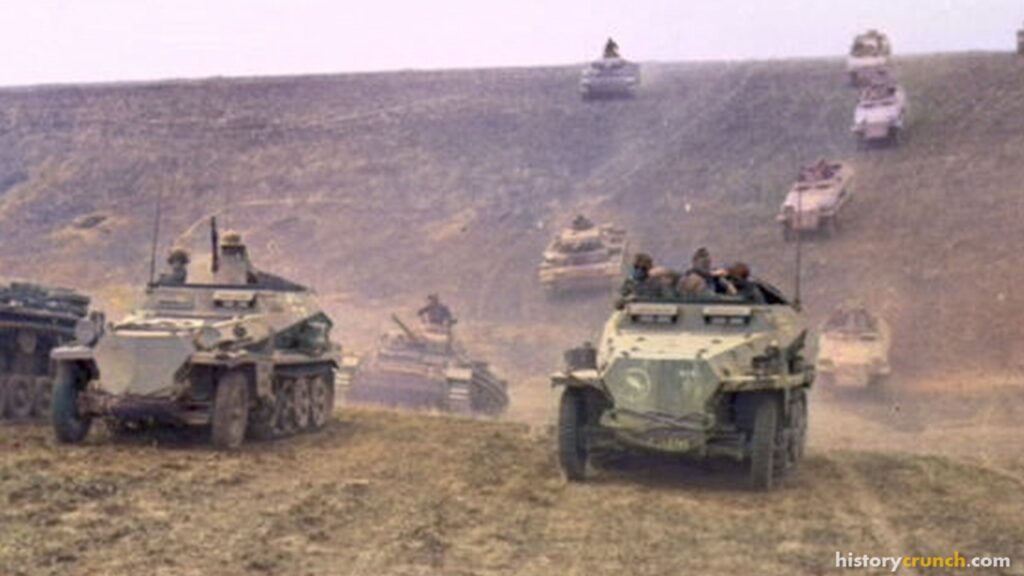
Operation Barbarossa was a major campaign of World War II and involved huge amounts of soldiers and military equipment. For instance, over 3 million Nazi German troops, 3,000 tanks, 7,000 artillery pieces, and 2,500 aircraft participated in the invasion of the Soviet Union. The Nazis divided their forces into three main army groups, and each had a different objective. The northern army group targeted the Soviet city of Leningrad, while the central army group advanced towards the Soviet capital of Moscow. Finally, the southern army group advanced towards Ukraine, with the goal of capturing valuable resources for the Nazi war effort.
There were several significant battles that occurred during the events of Operation Barbarossa. First, was the Battle of Smolensk, which took place during July and August of 1941. This battle slowed the Nazi German advance toward Moscow but resulted in huge Soviet losses. Finally, there was the Attack on Moscow, which took place from October to December in 1941. The success of blitzkrieg tactics allowed Nazi German troops to push forward until their advance was ultimately halted on the edge of Moscow. In fact, German forces came within 20 miles [32 km] of Moscow, and were stopped due to fierce Soviet resistance, supply problems, and the onset of brutal winter conditions.
At this time, Hitler’s forces were repelled by a Soviet counter assault and Germany never again threatened Moscow. In fact, the Soviet counteroffensive in December 1941 marked Germany’s first major defeat on the Eastern FrontThe theater of World War II fought between Nazi Germany and the Soviet Union in eastern Europe.. Hitler called for further assaults in the region, including the failed Battle of Stalingrad. More specifically, Hitler had hoped to capture the city of Stalingrad, which was a key industrial city on the Volga River. He also hoped to secure the oil fields of the Caucasus, which he viewed as vital for sustaining Nazi Germany’s war machine.
 FactsthatCrunch
Hitler wanted to capture Stalingrad, an industrial city on the Volga River, and to secure the oil fields of the Caucasus.
Battle of Stalingrad in World War II – Summary
The Battle of Stalingrad saw the German 6th Army enter the city of Stalingrad, which was named after the Soviet leader, Joseph Stalin, in the summer of 1942. The battle was different from other battles in that Nazi blitzkrieg tactics proved ineffective or impractical during the street-fighting of the battle.
Blitzkrieg in World War II refers to the speed and efficiency with which the Nazi German forces carried out their attacks. In short, blitzkrieg is a term for ‘lightning war’ which was a German war tactic during World War II that proved effective for the German advances in the early years of the war. It was characterized by rapid, highly mobile attacks that combined air power, infantry, and armored units. Blitzkrieg aimed to surprise and overwhelm the enemy before they could effectively mobilize a defense. Nazi Germany used blitzkrieg tactics with a great deal of success in battles such as the Nazi German invasion of Poland, the Battle of France, and the early stages of Operation Barbarossa. However, these blitzkrieg tactics failed to produce a Nazi victory in the Battle of Stalingrad.
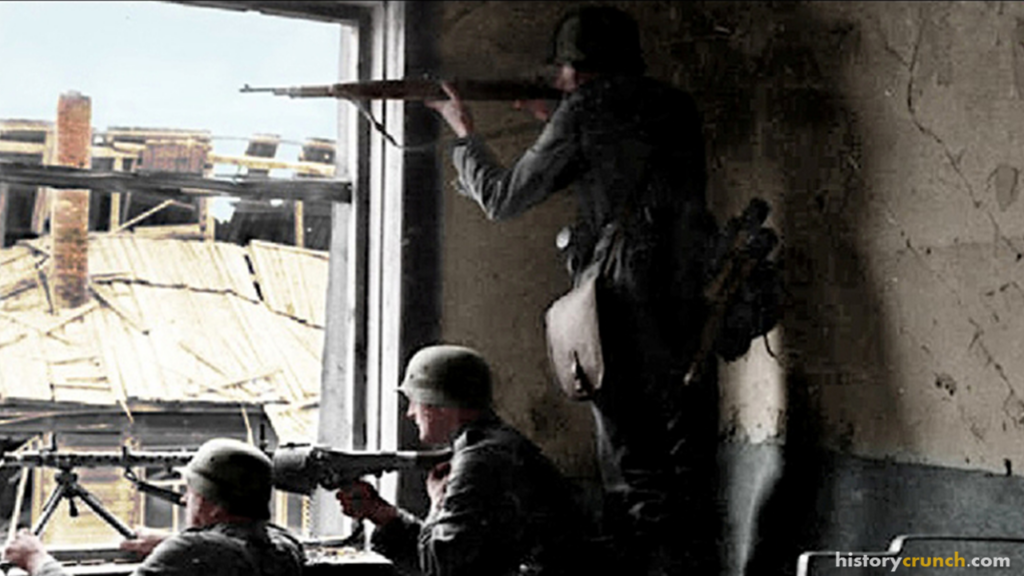
The German Air Force (Luftwaffe) had bombed the city and leveled much of it to rubble, but that did not stop Soviet citizens from defending their homeland. When the German 6th Army entered the city it found a determined defense from Soviet citizens and the German forces had to abandon their hopes of a quick capture of the Soviet city. The Nazi German 6th Army was led by General Friedrich Paulus and supported by the 4th Panzer Army.
Instead, the German 6th Army invaded the city and began to carry out a street-by-street battle against the Soviet defenders. This type of warfare caused the battle to slow considerably and led to the Battle of Stalingrad being considered one of the bloodiest battles in history with nearly 2 million soldiers wounded, killed or captured. At its height, the German 6th Army was able to command control over more than 90% of Stalingrad but struggled to overcome the remaining Soviet defenders. In fact, the Soviet forces, under General Vasily Chuikov, utilized the city’s terrain to their advantage, fighting building by building, often in hand-to-hand combat. While the German forces were still trying to fully capture the city, the Soviets launched their attack against the German 6th Army.
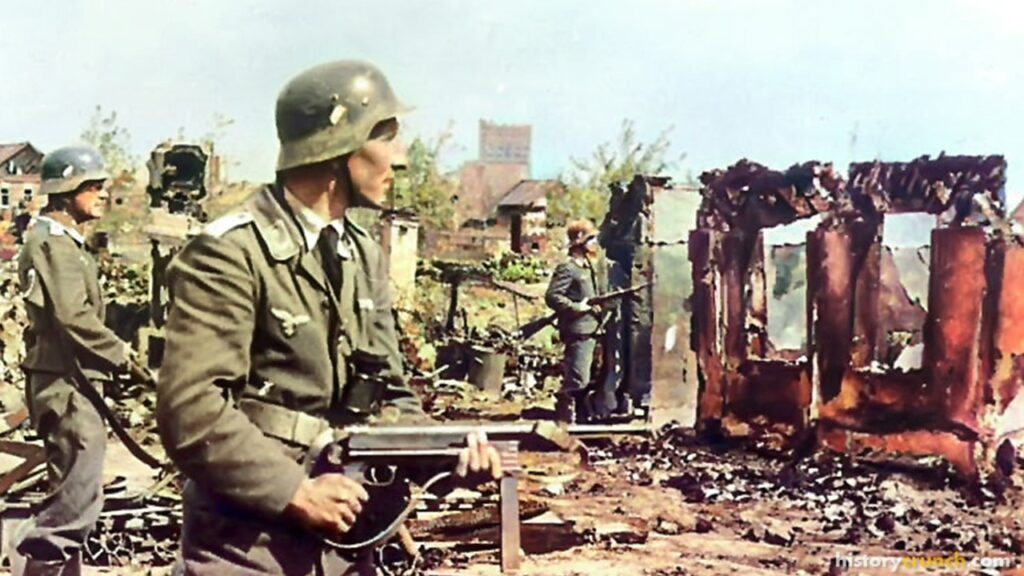
In November of 1942, the Soviet Union launched its attack against the German forces in Stalingrad. The Soviet attack was called Operation UranusThe Soviet counterattack in November 1942 that surrounded and cut off the German 6th Army inside Stalingrad. and saw the Soviet forces overrun the flanksThe sides of a military force, which are often weaker and more vulnerable to enemy attack than the front. of the German forces, causing the German 6th Army to be fully surrounded and cut-off from German supply lines or assistance. German troops suffered from starvation, frostbite, disease, and relentless Soviet attacks. Adolf Hitler refused to allow the German 6th Army to surrender and ordered them to continue to fight. The Soviet forces bombarded the German 6th Army with heavy artillery and caused devastating losses for the Germans. Finally, the German 6th Army surrendered in February of 1943, under the command of Friedrich Paulus, and the Battle of Stalingrad was over.
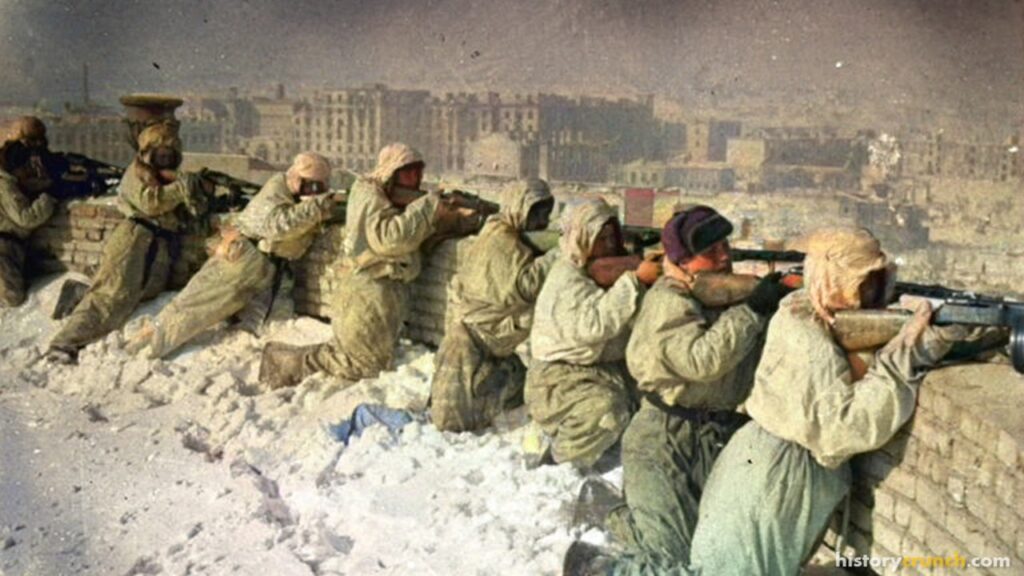 FactsthatCrunch
Time is blood.
Chuikov took charge of the city's defense on September 12th, 1942, when German troops were pushing toward the Volga River. His three words meant that every hour his soldiers held out cost lives, and that delays in sending help would be paid for in more deaths.
Battle of Stalingrad in World War II – Significance
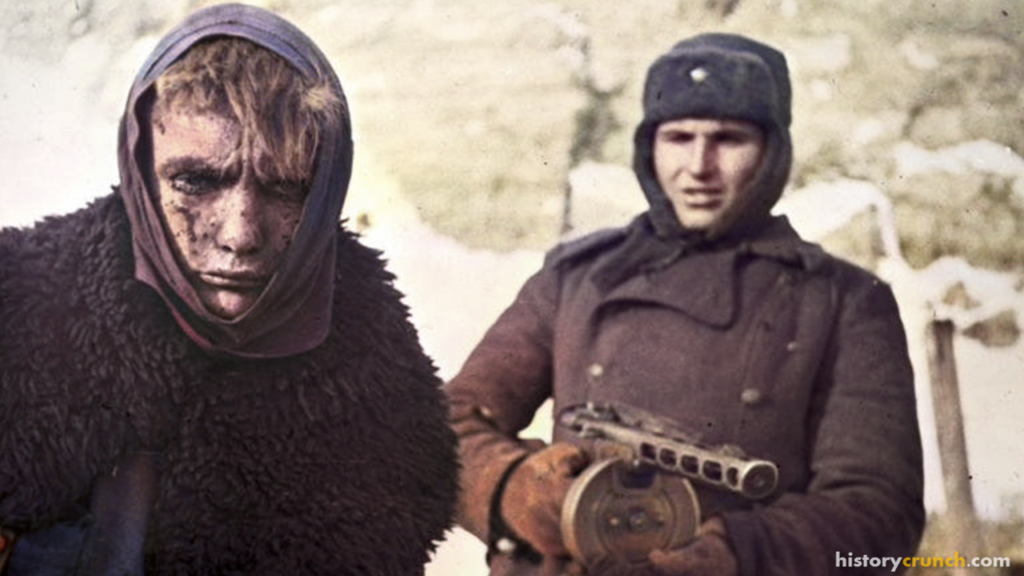
Today, the Battle of Stalingrad is viewed as one of Nazi Germany’s greatest losses of the war in Europe. The German 6th Army was lost and with it the Nazis lost their ability to control the war in the east against the Soviet Union. Many historians view the Battle of Stalingrad as a major turning point in World War II because it is considered the high point of Nazi expansionism. After the loss at Stalingrad, the German forces would be on a continual retreat to Germany as the Allied forces pushed the Germans back. The battle was one of the largest in history with over 2.2 million soldiers participating and also one of the bloodiest with over 2 million total casualties. For instance, Nazi Germany and other Axis nations are said to have suffered over 800,000 dead, wounded, or captured. For their part, the Soviet Union suffered around 1,300,000 dead, wounded or missing.
 FactsthatCrunch
Why do historians consider the Battle of Stalingrad a turning point on the Eastern Front?
Explore World War II · 1939 – 1945
Keep exploring World War II with these History Crunch resources.
Key Vocabulary
Blitzkrieg
Operation Barbarossa
Molotov-Ribbentrop Pact
Lebensraum
Operation Uranus
Flanks
Eastern Front
Frequently Asked Questions
When was the Battle of Stalingrad fought?
The Battle of Stalingrad was fought from July 17th, 1942 to February 2nd, 1943. It took place between Nazi Germany and the Soviet Union during World War II. The fighting lasted more than five months and became one of the bloodiest battles in history.
Why did Germany want to capture Stalingrad?
Germany wanted Stalingrad because it was a key industrial city on the Volga River. Adolf Hitler also hoped to seize the nearby oil fields of the Caucasus to fuel the Nazi war machine. Capturing the city named after Joseph Stalin also carried value as a propaganda prize.
Why did German blitzkrieg tactics fail at Stalingrad?
Blitzkrieg tactics failed because the battle turned into close street fighting among ruined buildings. These fast, mobile attacks needed open ground, which the wrecked city did not offer. Soviet defenders fought building by building, often in hand-to-hand combat, which slowed the German advance to a crawl.
What was Operation Uranus?
Operation Uranus was the Soviet counterattack launched in November of 1942. Soviet forces overran the weaker flanks around the city and surrounded the German 6th Army. The trapped troops were cut off from supplies and suffered from starvation, frostbite, and disease before surrendering.
Why is the Battle of Stalingrad considered a turning point?
The battle is seen as a turning point because it marked the high point of Nazi expansion in Europe. After losing the 6th Army, Germany could no longer control the war in the east. From that point on, German forces were pushed into a steady retreat back toward Germany.
How many people died in the Battle of Stalingrad?
The battle caused over 2 million total casualties, making it one of the bloodiest in history. Nazi Germany and other Axis nations suffered over 800,000 dead, wounded, or captured. The Soviet Union lost around 1,300,000 soldiers who were killed, wounded, or missing.
Cite This Article
To cite this article as a source, use one of the formats below.
MLA: Beck, Elias. “Battle of Stalingrad in World War II: A Detailed Summary.” HistoryCrunch, 2 October 2026, https://historycrunch.com/battle-of-stalingrad-in-world-war-ii/.
APA: Beck, E. (2026). Battle of Stalingrad in World War II: A Detailed Summary. HistoryCrunch. https://historycrunch.com/battle-of-stalingrad-in-world-war-ii/
Chicago: Beck, Elias. “Battle of Stalingrad in World War II: A Detailed Summary.” HistoryCrunch. October 2, 2026. https://historycrunch.com/battle-of-stalingrad-in-world-war-ii/
Sources
- The National WWII Museum
- Imperial War Museum
- Max Hastings, Inferno / All Hell Let Loose.