John F. Kennedy was one of the most important American leaders of the 20th century. He was the 35th president of the United States, and served from January 20th, 1961 to November 22nd, 1963, and is remembered most often for his role in the Cold War, the Cuban Missile Crisis, the Space Race, and the early Civil Rights Movement.
 FactsthatCrunch
Kennedy commanded PT-109 in the Pacific during World War II, and after a Japanese destroyer struck and destroyed the boat in August of 1943, he led surviving crew members to safety, an act that shaped his public image as a courageous leader. As president, he chose a naval blockade and negotiation during the Cuban Missile Crisis of October 1962, steering the United States and the Soviet Union back from the edge of nuclear war through diplomacy rather than force.
John F. Kennedy – Early Life
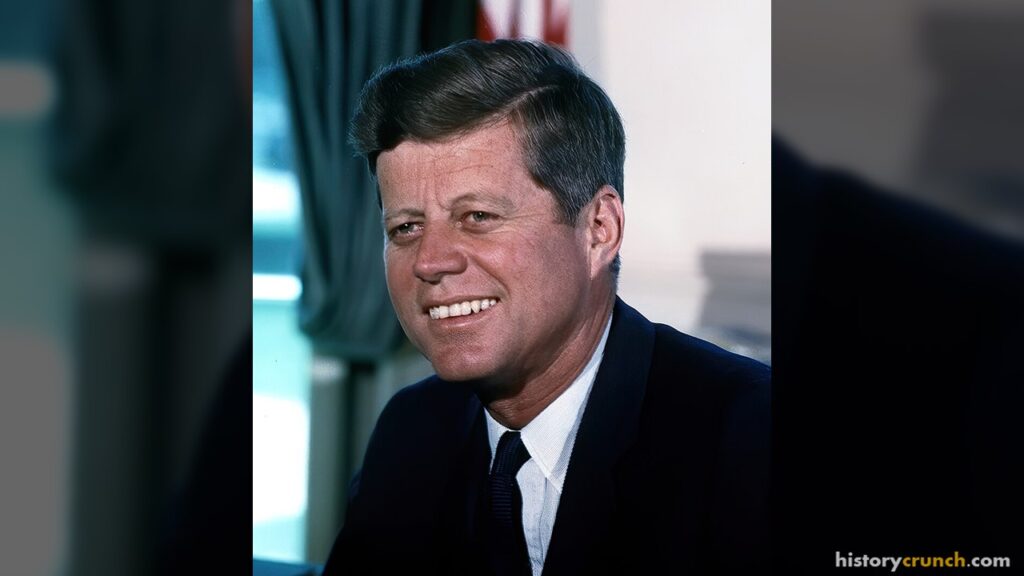
John F. Kennedy was born John Fitzgerald Kennedy on May 29th, 1917, in Brookline, Massachusetts. In fact, he was born into the well-known Kennedy family, and his father, Joseph P. Kennedy Sr., was an important businessman and political figure. He grew up in a wealthy and ambitious household, and this helped shape his path into public life. In fact, Kennedy attended Harvard University and graduated in 1940, which came just before the United States entered World War II.
During World War II, Kennedy served in the United States Naval ReserveA branch of the military where members train part-time but can be called into active service during wartime.. He became especially well known for his service in the Pacific, where he commanded PT-109A small, fast patrol boat commanded by Kennedy that was struck and destroyed by a Japanese destroyer in 1943. after earlier naval assignments. His wartime experience was important to his later public image because it helped present him as both youthful and heroic, which became a major part of his political appeal in the years that followed.
FactsthatCrunchWhen John F. Kennedy won the 1960 presidential election, he became the youngest person ever elected president of the United States, taking office at age 43.
Kennedy defeated Republican candidate Richard Nixon by a narrow margin in the 1960 election. Theodore Roosevelt had entered the White House at age 42, but he succeeded to the office after the assassination of President William McKinley in 1901 and was not elected at that age. Kennedy's youth was a central part of his public image, built in part on his record as a Navy officer in World War II.
John F. Kennedy – Rise in Politics
Kennedy’s military service became famous after the destruction of PT-109 in the Solomon Islands in August of 1943. After a Japanese destroyer struck the boat, Kennedy helped lead surviving crewmen to safety. This episode became one of the best known stories of his life and helped build his reputation as a man of courage and determination.
After the war, Kennedy entered politics as a Democrat. He served in the United States House of Representatives from January of 1947 to January of 1953, then in the United States Senate from January of 1953 until he became president in 1961. During these years, he built a national reputation, which ultimately resulted in his defeat of Richard Nixon in a close presidential election in 1960. This made Kennedy, at age 43, the youngest elected president in American history at that time.
FactsthatCrunchIn August of 1943, in the Solomon Islands, a Japanese destroyer struck and destroyed the patrol boat PT-109, commanded by John F. Kennedy. Several crew members survived the collision, and Kennedy faced an immediate decision about what to do with the men who were still alive. He had to choose whether to stay with the wreckage, attempt to reach land, or wait for rescue while his crew depended on him in open Pacific waters.
John F. Kennedy – President of the United States
John F. Kennedy’s presidency was dominated by Cold War tensions. In fact, one of the first major crises of his time in office was the Bay of Pigs Invasion in April of 1961, when a United States-backed force of Cuban exilesPeople who had fled Cuba and opposed Fidel Castro’s government, some of whom were backed by the United States to invade Cuba. tried and failed to overthrow Fidel Castro’s government in Cuba. The failure embarrassed Kennedy and showed that his presidency would face immediate international pressure.
Kennedy is also well known for his role in the Cuban Missile Crisis of October of 1962. After American intelligence discovered Soviet nuclear missiles being placed in Cuba, Kennedy chose a naval blockadeA military action that uses ships to block supplies or weapons from reaching a country by sea. and intense negotiations instead of an immediate attack. The crisis lasted from October 16th to October 28th, 1962, and eventually ended with the removal of Soviet missiles from Cuba. This was a defining moment of Kennedy’s presidency because it brought the United States and the Soviet Union to the edge of nuclear war and then back from it through negotiation. In fact, historians consider the Cuban Missile Crisis to be a clear example of ‘brinkmanship‘, which was a Cold War strategy practiced by both the United States and the Soviet Union. In short, it saw the two superpowers push a tense situation to its highest level of tension as a strategy to force the other side to back down.
Kennedy’s presidency was also tied to the events of the Space Race, which was another key aspect of the overall Cold War. After the Soviet Union sent Yuri Gagarin into space in April of 1961, Kennedy challenged the United States to land a man on the moon before the end of the 1960s. Therefore, Kennedy became closely linked to the American push to surpass the Soviet Union in space exploration, even though he did not live to see the moon landing in July of 1969.
As well, Kennedy played an important role in the early Civil Rights Movement. At first, he moved cautiously on civil rights, but events such as the growing national protest movement and the March on Washington on August 28th, 1963 increased pressure on his administration. For instance, Kennedy eventually cooperated with the organizers of the March on Washington, and his administration proposed major civil rights legislation that later became the Civil Rights Act of 1964 under Lyndon B. Johnson.
Finally, Kennedy was also connected to the early years of the Vietnam War. During his presidency, the number of American military advisors in South Vietnam rose sharply, reaching about 16,000 by 1963. This did not yet make the war what it later became under Lyndon Johnson, but it did tie Kennedy to the growing American commitment in Vietnam, as part of a policy of containment in the Cold War.
John F. Kennedy – Assassination
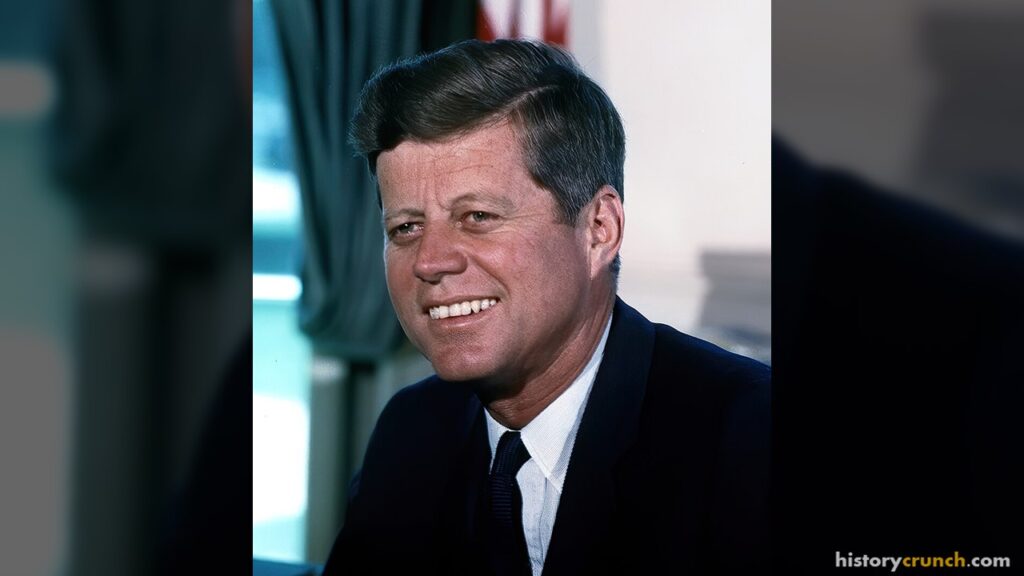
John F. Kennedy was assassinated on November 22nd, 1963, while riding in a presidential motorcadeA procession of cars carrying an important official, often used for public appearances or travel through a city. through Dealey Plaza in Dallas, Texas. He was shot at about 12:30 p.m. and later pronounced dead at Parkland Hospital. His assassination shocked the United States and much of the world, and it immediately turned his presidency into one of the most remembered and debated in American history.
After Kennedy’s death, Vice President Lyndon B. Johnson became president. Lee Harvey Oswald was arrested and accused of the killing, and the Warren Commission later concluded that Oswald acted alone, although many Americans continued to believe that a larger conspiracy had taken place. Regardless of those debates, Kennedy’s assassination became one of the most important moments in modern American memory.
John F. Kennedy – Significance
John F. Kennedy was significant because he became the leading American face of the early 1960s and of one of the most dangerous stages of the Cold War. More specifically, his handling of the Cuban Missile Crisis made him central to one of the closest moments the world has ever come to nuclear war, while his moon challenge linked his presidency to the larger American effort in the Space Race.
Kennedy is also important because his presidency stood at the meeting point of several major historical developments, including Cold War rivalry, the growth of civil rights activism, and the early deepening of American involvement in Vietnam. His time in office was short, but it left a lasting mark on American politics and memory. For that reason, John F. Kennedy remains one of the most recognizable and influential presidents in modern United States history.
FactsthatCrunchOn May 25th, 1961, Kennedy addressed a joint session of Congress and set a clear national goal: land an American on the moon before the end of the 1960s. He made this challenge just weeks after the Soviet Union sent Yuri Gagarin into space in April of 1961, directly responding to Soviet progress in the Space Race.
The Soviet Union held the lead in space exploration, leaving the United States on the defensive in a high-profile part of the Cold War.
The United States committed massive funding and scientific effort to the Apollo program, which succeeded when astronauts landed on the moon in July of 1969.
Explore Cold War · 1947 – 1991
Keep exploring Cold War with these History Crunch resources.
Key Vocabulary
Naval Reserve
PT-109
Cuban exiles
Naval blockade
Brinkmanship
Containment
Motorcade
Frequently Asked Questions
When was John F. Kennedy president?
John F. Kennedy served as the 35th president from January 20th, 1961, until his death on November 22nd, 1963. He won the 1960 election by narrowly defeating Richard Nixon. At age 43, he became the youngest person ever elected president at that time.
What was the Cuban Missile Crisis?
The Cuban Missile Crisis was a tense standoff in October of 1962 over Soviet nuclear missiles in Cuba. Kennedy chose a naval blockade and negotiation instead of an immediate attack. The crisis lasted from October 16th to October 28th, 1962, and ended with the removal of the missiles.
How was John F. Kennedy connected to the Space Race?
Kennedy challenged the United States to land a man on the moon before the end of the 1960s. He made this goal after the Soviet Union sent Yuri Gagarin into space in April of 1961. He did not live to see the moon landing, which happened in July of 1969.
How did John F. Kennedy die?
Kennedy was assassinated on November 22nd, 1963, while riding in a motorcade through Dealey Plaza in Dallas, Texas. He was shot around 12:30 p.m. and pronounced dead at Parkland Hospital. Lee Harvey Oswald was arrested for the killing, and Vice President Lyndon B. Johnson became president.
What did Kennedy do during World War II?
Kennedy served in the United States Naval Reserve and commanded the patrol boat PT-109 in the Pacific. After a Japanese destroyer struck the boat in August of 1943, he helped lead surviving crewmen to safety. This act of courage later helped build his public image as a young and heroic leader.
Cite This Article
To cite this article as a source, use one of the formats below.
MLA: Millar, B. “John F. Kennedy: A Detailed Biography.” HistoryCrunch, 10 October 2026, https://historycrunch.com/john-f-kennedy/.
APA: Millar, B. (2026). John F. Kennedy: A Detailed Biography. HistoryCrunch. https://historycrunch.com/john-f-kennedy/
Chicago: Millar, B. “John F. Kennedy: A Detailed Biography.” HistoryCrunch. October 10, 2026. https://historycrunch.com/john-f-kennedy/
Sources
- State Department — Office of the Historian
- Vladislav Zubok, A Failed Empire.
- Wilson Center Digital Archive