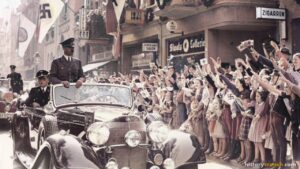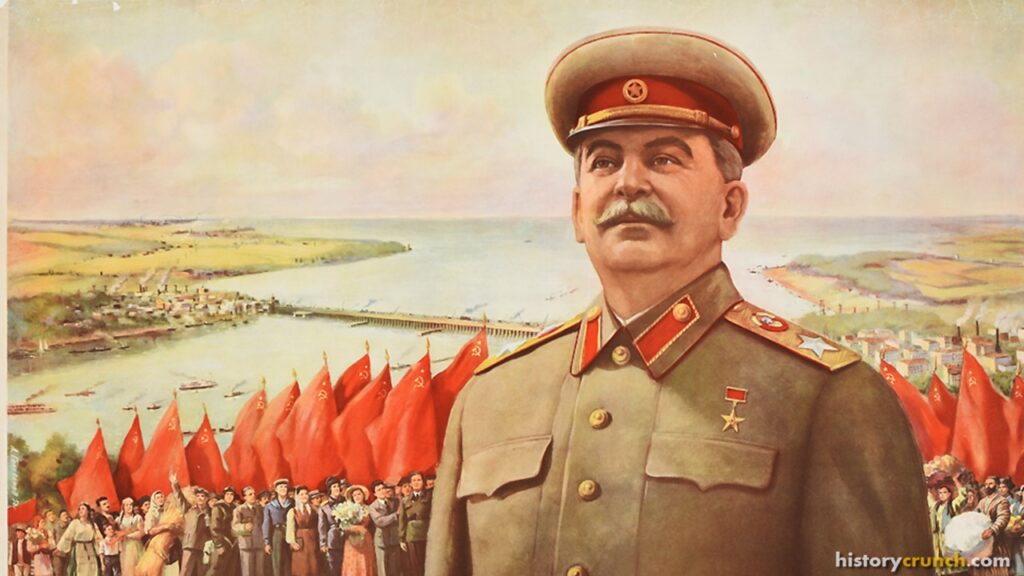
A dictatorship is a form of government in which most or all authority of the country is in the hands of a single individual leader. While the term has been used several times throughout history, most common usage of the term is in relation to different types of dictatorships that existed in the 20th and 21st centuries. For example, famous dictators include: Adolf Hitler in Nazi Germany, Joseph Stalin in the Soviet Union, Benito Mussolini in Italy, Kim Jong-un in North Korea and Fidel Castro in Cuba. In general, a dictatorship is the opposite of democracy, which is a system of government in which the people hold the power and the ability to choose who represents their government. Essentially, in a democracy the people have the power over the major aspects of government and have the responsibility to elect their leaders. In contrast, a dictatorship is ruled by a single person who generally acts to protect his own position and power over the welfare of the citizens.
 FactsthatCrunch
Dictatorship and democracy organize government power in opposite ways. In a democracy the people hold power and elect their leaders. In a dictatorship nearly all authority belongs to one person or a small elite.
Dictatorship – History
Dictatorships have been a relatively common form of government throughout the course of the 20th century. In fact, dictatorships flourished in the early part of the 20th century, especially during times of crisis, such as: World War I, World War II, and the Cold War. More specifically, historians consider dictatorships to emerge due to social, economic and political struggles within a nation. For instance, economic hardship, political instability, and national tragedies often allowed dictators to rise by promising stability and strength.
Some of the most infamous dictators in history include Adolf Hitler of Nazi Germany, Benito Mussolini of Italy, Joseph Stalin of the Soviet Union, and Francisco Franco of Spain. These leaders established totalitarian regimes that controlled every aspect of life and used violence, censorship, and propaganda to maintain power. All of them were present during the tumult of the mid-20th century, during events such as: Great Depression and World War II.
Today, most countries in the world are democratic in some form. With that said, there are still several examples of dictatorships in the world today, including: North Korea, China, Cuba and Myanmar.
FactsthatCrunchWhen economies collapsed and governments seemed helpless, ambitious leaders used national crisis as a ladder to seize power and dismantle democratic institutions.
Dictatorship – Principles
To understand the power that a dictator holds, it’s important to first understand how the authority of the government is generally handled in a democracy. For example, in most western democracies, such as the United States, the federal government is divided into three branches, including: Executive Branch, Legislative Branch and Judicial Branch. The purpose of the three branches is that one can always act as a ‘check’ on the power of the others. For example, in the United States, the president is part of the Executive Branch but his or her power is limited because the Legislative Branch and Judicial Branch could potentially stop any unconstitutional policies. Whereas, in a dictatorship there are not three branches and generally, there are little or no checks on the authority of the dictator. In fact, in a dictatorship the leader essentially controls all three branches, and wields total control.
Historians generally refer to dictatorship as a form of authoritarianism or totalitarianism. In general, both authoritarian and totalitarian regimes seek to control their populations and attempt to maintain control for the leader or small group of elite. However, what type of control and what they control differs between the two systems. For example, in authoritarian regimes the leadership primarily seeks to force its authority on the citizens through its political control over the government. The leader obtains their position through means that are not democratic and rules over the people with their control of the government. Government systems that are based on authoritarianismA system where a leader forces control over citizens primarily through political power, without winning it democratically. include: oligarchies, monarchies, and military dictatorships (JuntaA military dictatorship in which a military leader seizes control of the government and fills key positions with military figures.).
On the other hand, a totalitarian regime seeks to control all aspects of society and not just the political realm. A totalitarian regime seeks total control over the society including the political, social and economic life of the citizens. For example, Benito Mussolini, the totalitarian leader of Italy during World War II explained his form of government as “Everything within the state, nothing outside the state and nothing against the state.” Here he is expressing a major difference between totalitarianismA system where the government seeks complete control over every part of citizens’ lives, including political, social, and economic life. and authoritarianism in that while totalitarianism seeks total control over political, social and economic life, authoritarianism focuses on the political control of the leadership in the government.
FactsthatCrunchDictatorship – Types
Beyond authoritarianism and totalitarianism, historians have also identified several different types of dictatorships, and differentiate them based upon their path to power. For example, some dictatorships have emerged by the leader being democratically elected and then using specific means in order to undermine the democratic institutions of the country. For example, this is the path to power that Adolf Hitler followed when he rose to become dictator of Germany in the years before World War II. Hitler was appointed Chancellor in January of 1933 after the Nazi Party became the largest party in the Reichstag, but he then used the crisis of the Reichstag Fire in order to limit the democratic process in Germany and consolidate all of the power in himself.
Alternatively, some dictators gain power through organized coup d’états. A coup d’état is a violent overthrow of the government in order to bring about change of leadership. This is how Benito Mussolini rose to power in Italy in the 1920s. He, along with his paramilitary forces, carried out the March on Rome in October of 1922, and the threat of his Blackshirts entering the capital led King Victor Emmanuel III to appoint him prime minister. Over the following years he turned that office into a dictatorship.
Finally, some dictatorships are classified as military dictatorships or a ‘Junta’. This is a form of dictatorship that arises when a military leader assumes control over the government. Under this system, the military controls all key positions in society and uses the military to maintain control over the citizens. An example of a military dictatorship was Chile under General Augusto Pinochet.
FactsthatCrunchIn what order did these dictators' paths to power unfold?
Dictatorship – Techniques of Control
However, just because a dictator controls the mechanisms of government does not mean they have the support of the people, and often dictators need to use different techniques in order to control the will of the people. The following is a list of the techniques used by dictators in their attempt to maintain control over the populations of their countries:
- Censorship
- IndoctrinationThe formal process a dictator uses to teach citizens to accept and believe the leader’s ideology.
- Propaganda
- State Terror and Secret Police
- ScapegoatingBlaming a specific group of people for a country’s problems to redirect citizens’ anger away from the government.
Dictatorships utilize censorship in order to control the information that their citizens have access to. This allows the leadership to eliminate ideas or information that opposes their own view of the world. For example, in North Korea today, the citizens are not allowed unlimited access to the internet or to cell phones that can make phone calls outside of North Korea. This allows the leader, Kim Jong-un, to have control over the information that his citizens have and better allows him to keep out ideas that oppose his form of government and ideology.
Indoctrination involves the dictator using formal means to “educate” the citizens in the ideology and importance of the leader or leaders. It is important because it allows the dictator and his leadership to more easily spread their ideology to the citizens and to help control the ideas and information that the citizenry consumes. For example, beginning in 1926, the Nazi Party developed the Hitler Youth, a youth organization in Germany dedicated to educating young Germans in the ideology and leadership of the Nazi Party.
Propaganda is important as a tool to spread the government’s message and ideology to its citizens in a totalitarian state. For example, the Nazi Party of Germany in the 1930s held a campaign wherein they provided low cost radios to German families so that Adolf Hitler’s speeches and radio addresses could be heard by as many people as possible. As well, dictators often develop a personality cult. In general, a personality cultA propaganda strategy that portrays a dictator as an almost god-like, all-powerful figure to build loyalty. is a form of propaganda that attempts to display the dictator in a god-like manner. This helps to develop the dictator as an all-powerful figure in the minds of the citizens.
Scapegoating refers to the concept of blaming specific groups of people for the issues facing a country. Historians often refer to this as ‘redirecting popular discontent’ since the dictator or the government in charge use it as a means of controlling the anger of the citizens. For example, in Nazi Germany, Adolf Hitler placed a great deal of the country’s economic hardship on Jewish people. Following World War I, Germany was made to agree to the terms of the Treaty of Versailles, and as a result suffered through a period of intense hyperinflation. In turn, Adolf Hitler and other prominent Nazi officials blamed the economic hardship on Jewish people, claiming they had cost Germany the war. For example, in the lead up to the Holocaust, the Nazi regime produced propaganda images that portrayed Jewish people as the reason for Germany’s issues.
Finally, State Terror is often seen in societies with dictators in the form of secret police and state controlled prison camps. This allows the leadership to remove dissident citizens and control the population through fear and repression. For example, Joseph Stalin in the Soviet Union famously sent millions of Soviet citizens to Gulags, or prison labor camps, in Siberia. Stalin removed any citizens that challenged his authority or whom he believed had the ability to challenge his authority, including many high ranking officials within the Soviet Union. The use of violence is sometimes deemed necessary by dictatorships in their pursuit to maintain their leadership.
FactsthatCrunchHow do dictators use control techniques to hold power over their own people?
Key Vocabulary
Authoritarianism
Totalitarianism
Coup d’état
Junta
Indoctrination
Personality cult
Scapegoating
Frequently Asked Questions
What is the difference between authoritarianism and totalitarianism?
Authoritarianism seeks political control over the government, while totalitarianism seeks control over all of society. A totalitarian regime tries to rule the political, social, and economic lives of its citizens. Benito Mussolini summed up this idea when he said, “Everything within the state, nothing outside the state.” Both systems keep power in the hands of a leader or small elite.
How do dictators usually come to power?
Dictators rise to power in a few common ways, often during times of crisis. Some are elected and then undermine democratic institutions, as Adolf Hitler did in Germany. Others seize control through a violent coup d’état, like Benito Mussolini in Italy. Military leaders can also take over the government, creating a military dictatorship known as a junta.
How is a dictatorship different from a democracy?
In a democracy the people hold power and elect their own leaders, while a dictatorship gives nearly all power to one person. Many democracies, such as the United States, split power among three branches so each can check the others. A dictatorship has few or no checks, and the leader controls all branches. This lets the dictator act to protect his own power.
What techniques do dictators use to control people?
Dictators rely on censorship, indoctrination, propaganda, scapegoating, and state terror to keep control. Censorship blocks unwanted ideas, while propaganda and indoctrination spread the leader’s message. Scapegoating blames one group for a country’s problems, as the Nazis did to Jewish people. State terror uses secret police and prison camps to remove and frighten opponents.
Which countries are dictatorships today?
Most countries today are democratic in some form, but several dictatorships still exist. Examples include North Korea, China, Cuba, and Myanmar. In North Korea, leader Kim Jong-un limits access to the internet and outside phone calls. This control helps him keep out ideas that oppose his government.
What is a personality cult?
A personality cult is a form of propaganda that presents a dictator in a god-like way. It aims to make the leader appear all-powerful in the minds of the citizens. This image builds loyalty and discourages people from questioning the leader. Many 20th century dictators used this method to strengthen their rule.
Cite This Article
To cite this article as a source, use one of the formats below.
MLA: Beck, Elias. “Dictatorship: A Detailed Summary.” HistoryCrunch, 16 September 2026, https://historycrunch.com/dictatorship/.
APA: Beck, E. (2026). Dictatorship: A Detailed Summary. HistoryCrunch. https://historycrunch.com/dictatorship/
Chicago: Beck, Elias. “Dictatorship: A Detailed Summary.” HistoryCrunch. September 16, 2026. https://historycrunch.com/dictatorship/
Sources
- Jerry Bentley & Herbert Ziegler, Traditions & Encounters: A Global Perspective on the Past.
- J.M. Roberts & Odd Arne Westad, The Penguin History of the World.