The Molotov-Ribbentrop Pact, which was officially known as the ‘Treaty of Non-Aggression between Germany and the Union of Soviet Socialist Republics’, was an agreement between Nazi Germany and the Soviet Union. In general, the agreement was a non-aggression pactA formal agreement between two countries promising not to attack each other. between the two nations that was signed in 1939. Historians consider it to be a significant step towards the outbreak of World War II, since it was the precursor to the Nazi Germany invasion of Poland on September 1st, 1939.
 FactsthatCrunch
A secret protocol attached to the Molotov-Ribbentrop Pact divided Eastern Europe between Nazi Germany and the Soviet Union.
The protocol split Poland in two and placed Estonia, Latvia, Finland and part of Romania in the Soviet sphere. The Soviet government denied that the secret protocol existed until 1989.
Molotov-Ribbentrop Pact – Background
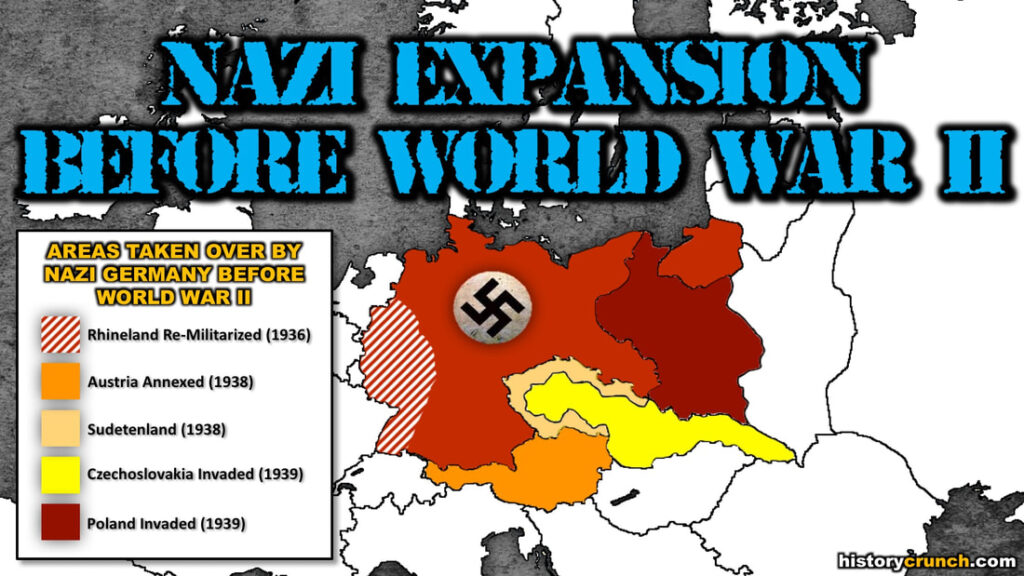
Europe was undergoing a great deal of tension and conflict in the years and months leading up to the outbreak of World War II. For example, Germany had already annexedTook control of another country’s territory and made it part of your own nation. Austria in 1938 and taken Czechoslovakia in 1939. At the time, Britain and France were practicing a strategy referred to as ‘appeasement’, which saw the British and French essentially give in to Adolf Hitler’s demands. The hope was that if given what he wanted, then Hitler would stop his aggressive expansionistDescribes a country’s policy of growing its territory by taking over other lands. actions. However, this strategy proved to be a failure, as it allowed Nazi Germany to rebuild its territory and military capabilities throughout the 1930s.
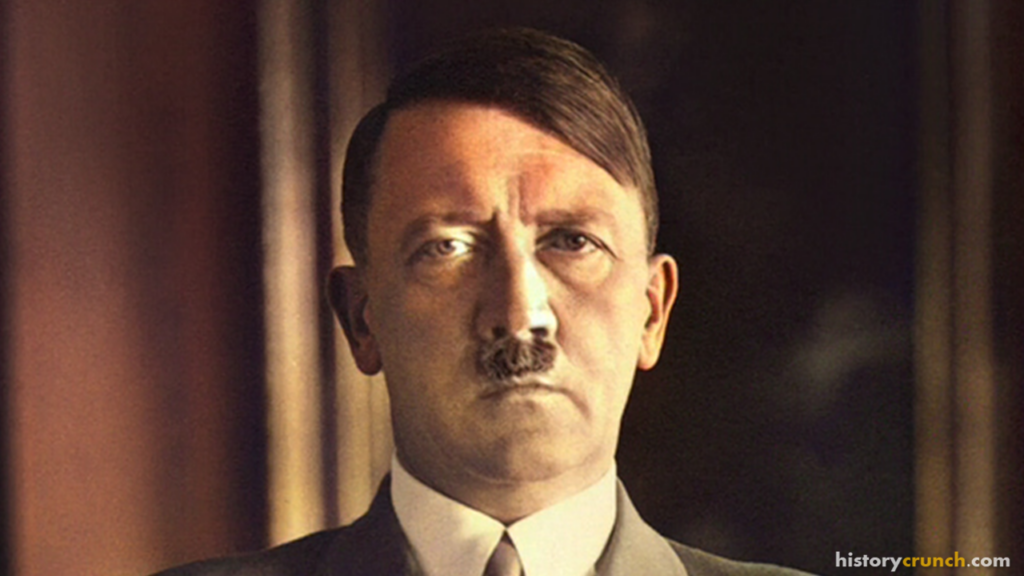
Poland was created at the end of World War I out of territory that had traditionally been part of the German Empire, the Austro-Hungarian Empire and the Russian Empire. Hitler sought to reclaim this territory for Germany and to unite all German-speaking people. As such, he was motivated to conquer Poland as a means of his continued expansion and reunification for Germany. However, Hitler had another motivation for agreeing to the Molotov–Ribbentrop Pact. More specifically, Hitler was anticipating a major conflict in Europe and sought to avoid having to fight a two-front war against the Soviet Union to the east and France to the west. As such, Hitler wanted to sign a nonaggression pact with the Soviet Union as a means of securing one of his fronts before the eventual outbreak of World War II.
 FactsthatCrunch
Why Did Hitler and Stalin Sign the Molotov-Ribbentrop Pact?
Hitler wanted to invade Poland without having to fight the Soviet Union at the same time. Stalin did not trust Britain and France after the Munich Conference of 1938, and he wanted time to build up the Soviet military and gain territory in Eastern Europe. Even though Nazism and communism were bitter enemies, both leaders believed the deal served their own goals in 1939.
Molotov-Ribbentrop Pact – Summary
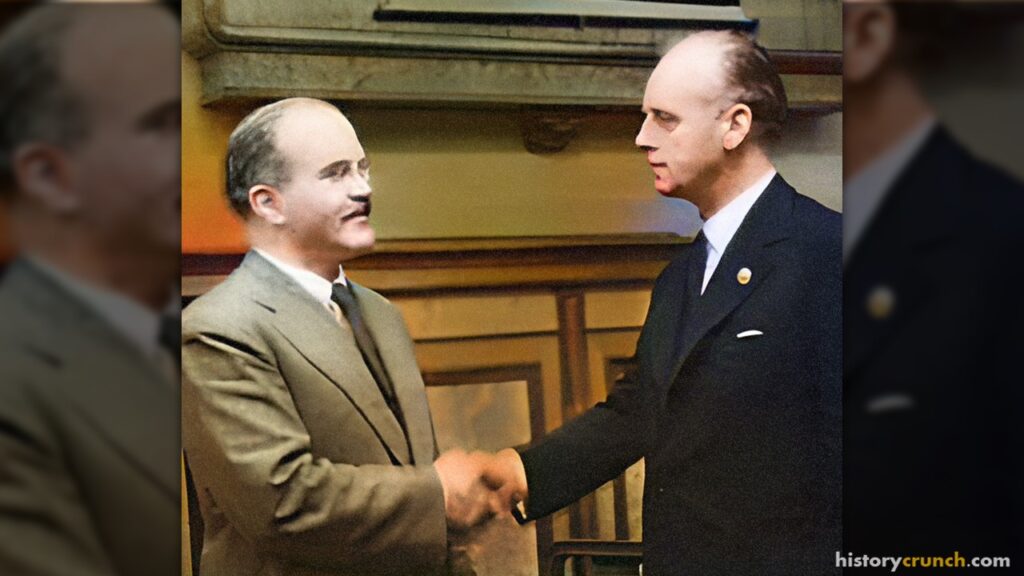
The Molotov–Ribbentrop Pact of World War II is an important event in the outbreak of fighting in the war. It was signed in Moscow, Soviet Union, on August 23rd, 1939 by the foreign ministers of both countries: Vyacheslav Molotov for the Soviet Union and Joachim von Ribbentrop for Nazi Germany. At its heart, the pact called for neither country to attack or fight against the other. As well, it set out expectations that neither country would ally against the other and help other countries wage war against the other. Finally, it divided parts of eastern and northern Europe into spheres of influenceRegions where a powerful nation has dominant control or authority over political affairs. for both Nazi Germany and the Soviet Union. This was a controversial and secret aspect of the agreement, which was not fully understood by historians until many years after.
Molotov-Ribbentrop Pact – Significance
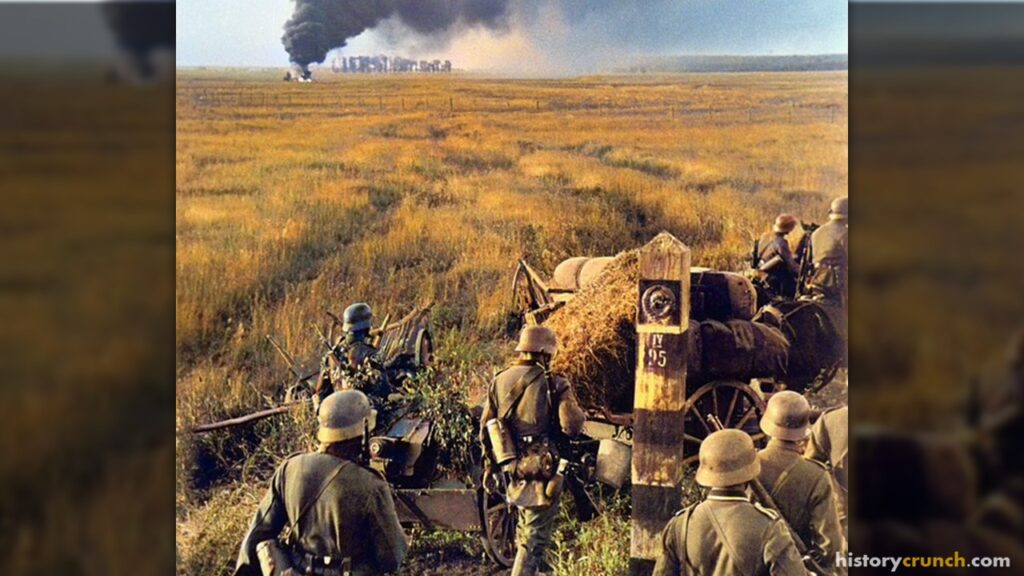
The Molotov–Ribbentrop Pact is significant because it was signed just over a week before the start of World War II. Germany invaded Poland on September 1st, 1939, and began to divide the country in half. The other half of Poland would later be taken by the Soviet Union. The September 1st invasion by Nazi Germany is viewed today as the starting point of World War II because both Britain and France declared war on Germany soon after.
The benefit of the non-aggression pact to Germany is obvious: it allowed Adolf Hitler to wage war in Europe without risking a two-front war, as the Soviet Union had traditionally aligned itself with Britain and France. Hitler wanted to avoid the potential of a two-front war, which Germany had to face in World War I, and hoped that a non-aggression pact would keep the Soviet Union out of the conflict. For its part, the Soviet Union, led by Joseph Stalin, agreed to the terms of the pact because it allowed the Soviet Union to expand its sphere of influence in Europe and to avoid being pulled into a major conflict against the powerful armies of Nazi Germany.
The Molotov–Ribbentrop Pact lasted until June 22nd, 1941, when Adolf Hitler violated the pact by launching Operation Barbarossa. This was the massive and brutal invasion of the Soviet Union, in the middle of World War II.
In all, the Molotov–Ribbentrop Pact was an unlikely alliance between two totalitarianDescribes a government that demands complete control over every aspect of public and private life. enemies (communism vs. fascism). The outcome of the pact was devastating for millions as it allowed the Nazi and Soviet regimes to divide and dominate much of Eastern Europe in the early stages of World War II.
 FactsthatCrunch
When Vyacheslav Molotov addressed the Soviet people on June 22nd, 1941, he said "Our cause is just. The enemy will be beaten. Victory will be ours." What event had just happened that prompted those words?
Explore World War II · 1939 – 1945
Keep exploring World War II with these History Crunch resources.
Key Vocabulary
Non-aggression pact
Annexed
Appeasement
Expansionist
Spheres of influence
Totalitarian
Operation Barbarossa
Frequently Asked Questions
What was the Molotov-Ribbentrop Pact?
The Molotov-Ribbentrop Pact was a non-aggression agreement between Nazi Germany and the Soviet Union. Its official name was the Treaty of Non-Aggression between Germany and the Union of Soviet Socialist Republics. Both sides promised not to attack each other, which helped clear the way for war in Europe.
When and where was the pact signed?
The pact was signed in Moscow, Soviet Union, on August 23rd, 1939. The foreign ministers of both countries signed it, with Vyacheslav Molotov for the Soviet Union and Joachim von Ribbentrop for Nazi Germany. This was just over a week before World War II began.
Why did Hitler want the pact with the Soviet Union?
Hitler wanted to avoid fighting a two-front war against France in the west and the Soviet Union in the east. Germany had faced this problem during World War I and hoped to avoid it again. The pact let Hitler plan his invasion of Poland while keeping the Soviet Union out of the fight.
What was the secret part of the agreement?
The secret part divided parts of eastern and northern Europe into spheres of influence for both nations. This controversial detail was not fully understood by historians until many years later. It allowed Germany and the Soviet Union to carve up Poland and nearby lands between them.
When and how did the pact end?
The pact ended on June 22nd, 1941, when Hitler launched Operation Barbarossa. This was a massive and brutal invasion of the Soviet Union during World War II. Germany broke its own promise, turning the two former partners into bitter enemies.
Cite This Article
To cite this article as a source, use one of the formats below.
MLA: Beck, Elias. “Molotov–Ribbentrop Pact: A Detailed Summary.” HistoryCrunch, 1 October 2026, https://historycrunch.com/molotov-ribbentrop-pact/.
APA: Beck, E. (2026). Molotov–Ribbentrop Pact: A Detailed Summary. HistoryCrunch. https://historycrunch.com/molotov-ribbentrop-pact/
Chicago: Beck, Elias. “Molotov–Ribbentrop Pact: A Detailed Summary.” HistoryCrunch. October 1, 2026. https://historycrunch.com/molotov-ribbentrop-pact/
Sources
- Antony Beevor, The Second World War.
- Imperial War Museum