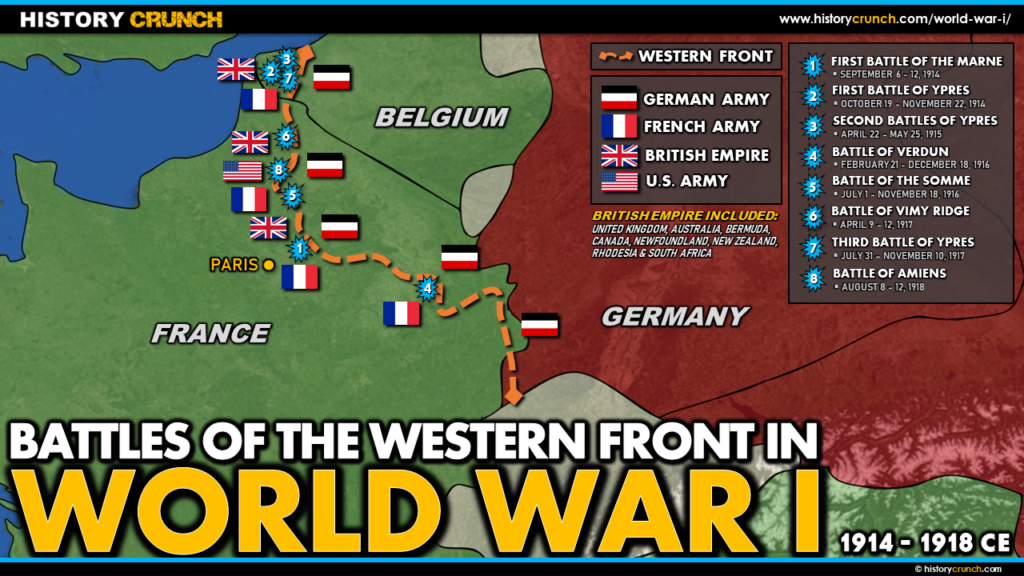
The First Battle of Ypres was one of the first significant battles in World War I. It took place from October 19th to November 22nd in 1914 and was part of the Western Front of the First World War, which was a long line of trenches across Belgium and northern France. In fact, the Western FrontA long line of trenches stretching across northern France and Belgium where major World War I battles were fought. was the site of some of the largest battles in all of World War I.
 FactsthatCrunch
A salient is a section of a military front line that bulges outward toward enemy territory, leaving the troops inside it exposed to attack from three sides. Salients formed naturally when one side advanced farther than the units on either flank. This shape made the position both harder to defend and a frequent target for enemy offensives.
The Ypres Salient in western Belgium was surrounded by German forces on three sides, making it one of the most heavily fought-over areas on the Western Front in World War I.
What Led to the First Battle of Ypres in World War I?
The First Battle of Ypres resulted from the end of the Race to the Sea and saw the British, Belgian and French forces engage in battle with the German forces. The Race to the SeaA rush by both sides to push north and outflank each other after Germany’s failure at the First Battle of the Marne. was a scramble by both the Allied Powers and the Central Powers to push north following the German failure at the First Battle of the Marne. Because of the Race to the Sea, the trenches of the Western Front stretched throughout much of northern France and Belgium. In fact, the First Battle of Ypres occurred near the town of Ypres, which is located in western Belgium. The region became known as the Ypres SalientThe region around the town of Ypres in western Belgium that was the site of several major World War I conflicts. and was the site of several major conflicts throughout World War I, including: the First Battle of Ypres, Second Battle of Ypres and the Third Battle of Ypres (Battle of Passchendaele). It should be noted that the region is also referred to as Flanders.
What Happened During the First Battle of Ypres in World War I?
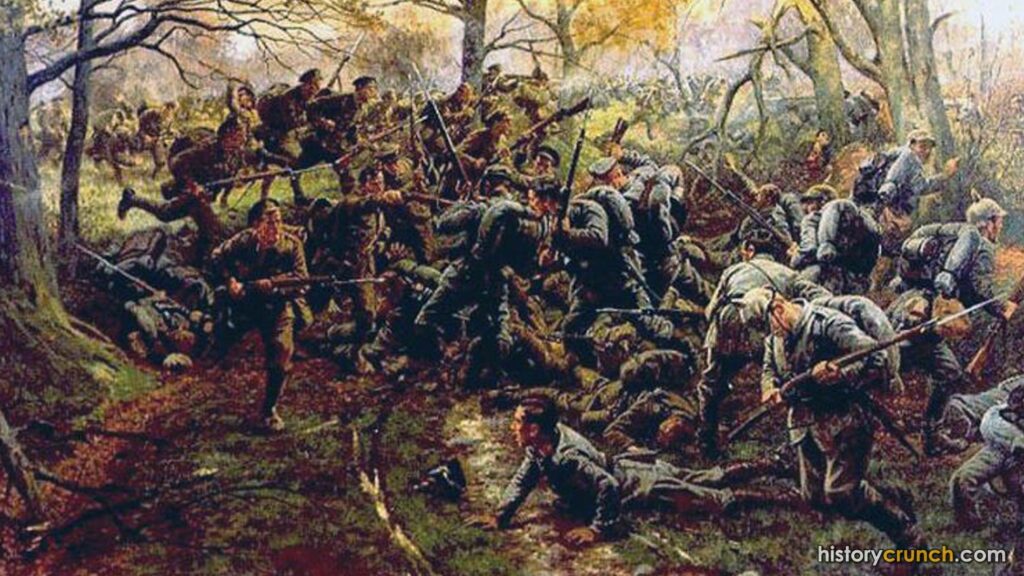
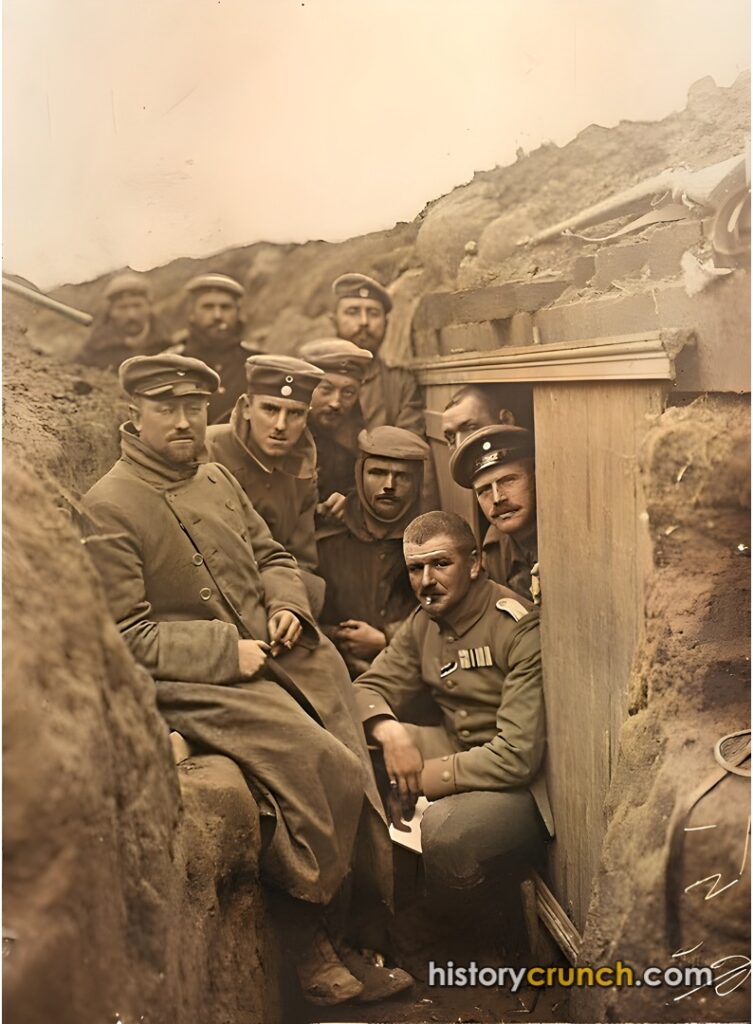
As stated above, the First Battle of Ypres was fought between the Allied Powers of France, Britain and Belgium against the Central Power of Germany. The battle occurred in a series of five stages, which did not produce any decisive results. In fact, during the First Battle of Ypres both the Allied nations and Germany carried out offensivesLarge-scale attacks launched by an army in an attempt to gain ground from the enemy., but neither side was able to capture any meaningful gains. In the end, the fighting was devastating for all of the nations involved and resulted in no clear victory. As such, historians consider the First Battle of Ypres to be an indecisiveA result in which neither side achieves a clear victory or meaningful gain. result because it did not lead to a positive outcome for either side. In fact, by mid to late November the armies of both sides were exhausted from the continuous assaults and deadly results. The soldiers were tired and suffering from poor morale.
What Was the Outcome of the First Battle of Ypres in World War I?
In all, the First Battle of Ypres was deadly on all sides and led to numerous casualtiesThe total number of soldiers killed, wounded, or otherwise lost during a battle.. For instance, it is estimated that Britain suffered around 58,000 casualties in the battle, with nearly 8,000 deaths. Furthermore, historians estimate that France experienced approximately 50,000 casualties, while Belgium endured over 21,000. For its part, it is believed that Germany suffered about 130,000. In the end, the battle was characteristic of the conditions at the time, in that defensive fortificationsStructures such as trenches built to protect soldiers and hold a position against enemy attack. ensured numerous dead and injured with little or no results. This became a recurring theme throughout the rest of World War I, and the numerous significant battles on the Western Front.
At the First Battle of Ypres, which nation suffered approximately 50,000 casualties?
World War I timeline · 1914 – 1918
Key Vocabulary
Race to the Sea
Western Front
Ypres Salient
Offensives
Indecisive
Casualties
Defensive fortifications
Frequently Asked Questions
When was the First Battle of Ypres fought?
The First Battle of Ypres was fought from October 19th to November 22nd in 1914. It came near the start of World War I on the Western Front. By late November, the armies on both sides were worn out from constant attacks.
Where did the First Battle of Ypres take place?
The battle happened near the town of Ypres in western Belgium. This region became known as the Ypres Salient and is also called Flanders. It later saw two more major fights, the Second and Third Battles of Ypres.
Who fought in the First Battle of Ypres?
The Allied Powers of France, Britain, and Belgium fought against Germany, a Central Power. Both sides sent large armies into the fighting around Ypres, which lasted more than a month.
What caused the First Battle of Ypres?
The battle grew out of the end of the Race to the Sea in 1914. During this race, both sides tried to push north after Germany failed at the First Battle of the Marne. The rush left a long line of trenches across northern France and Belgium.
Who won the First Battle of Ypres?
Neither side won, so historians call the result indecisive. Both armies attacked but could not gain any meaningful ground. The fighting caused heavy losses, with Germany suffering about 130,000 casualties and Britain around 58,000.
Cite This Article
To cite this article as a source, use one of the formats below.
MLA: Beck, Elias. “First Battle of Ypres in World War I: A Detailed Summary.” HistoryCrunch, 29 September 2026, https://historycrunch.com/first-battle-of-ypres-in-world-war-i/.
APA: Beck, E. (2026). First Battle of Ypres in World War I: A Detailed Summary. HistoryCrunch. https://historycrunch.com/first-battle-of-ypres-in-world-war-i/
Chicago: Beck, Elias. “First Battle of Ypres in World War I: A Detailed Summary.” HistoryCrunch. September 29, 2026. https://historycrunch.com/first-battle-of-ypres-in-world-war-i/
Sources
- Hew Strachan, The First World War.
- Imperial War Museum
- Fordham Modern History Sourcebook