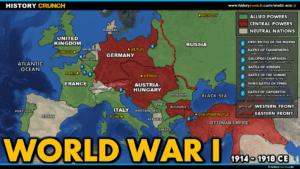
The ‘Race to the Sea’ was one of the major events in the early period of World War I and occurred throughout September and October of 1914. World War I began in the summer of 1914, and saw major conflicts between the German Army and the Allied Powers of Britain and France along the Western Front. The Western FrontThe line of fighting in Belgium and northeastern France where British, French, and German forces clashed throughout World War I. was the name given to the line of fighting that occurred in Belgium and along the northeastern regions of France throughout the war.
 FactsthatCrunch
What Led to the ‘Race to the Sea’ in World War I?
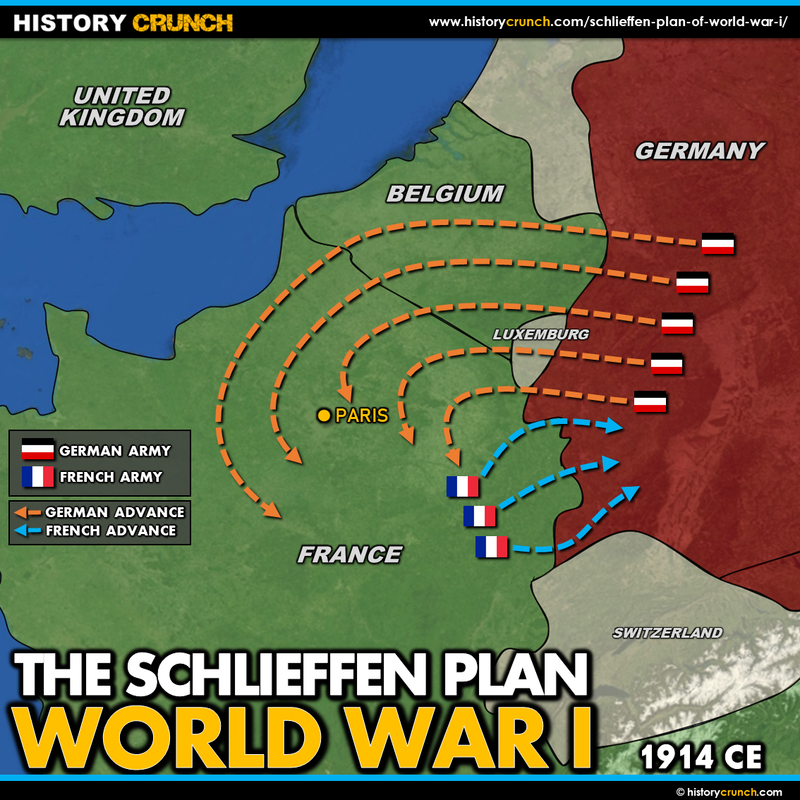
When World War I began, Germany attempted to carry out its plan of attack, which was referred to as the Schlieffen PlanGermany’s military strategy to quickly invade France through Belgium to avoid fighting two enemies at once.. In short, the Schlieffen Plan was Germany’s response to being surrounded by the Allied Powers. For example, on its western border, Germany had to contend with France and Britain, while on the eastern border they had to face the Russian Army. In response, Germany developed the Schlieffen Plan, which aimed at advancing quickly through Belgium and attacking France. The goal of the Schlieffen Plan was to capture Paris, the French capital, and knock France out of the war, thus eliminating a two-front war.
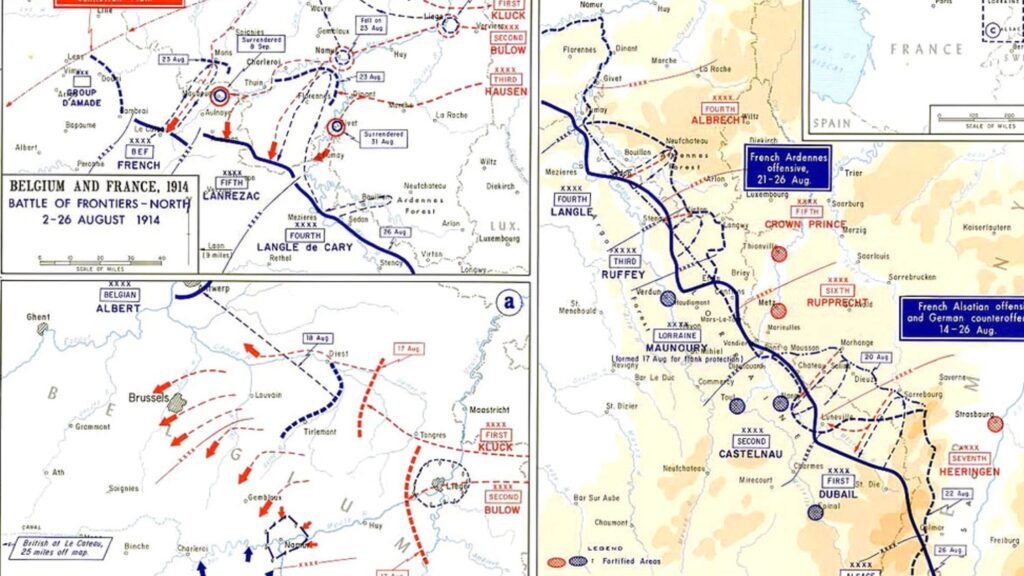
While the Schlieffen Plan was initially successful with the German victory in the Battle of the Frontiers, it was ultimately stopped in the First Battle of the Marne, which occurred from September 6th to the 12th in 1914. Following the German loss at the First Battle of the Marne, the British and French forces counterattackedStruck back against an enemy after being attacked first. the Germans in the First Battle of the Aisne, which took place from September 13th to the 28th. This attack saw the Allied forces advance against the retreating Germans.
 FactsthatCrunch
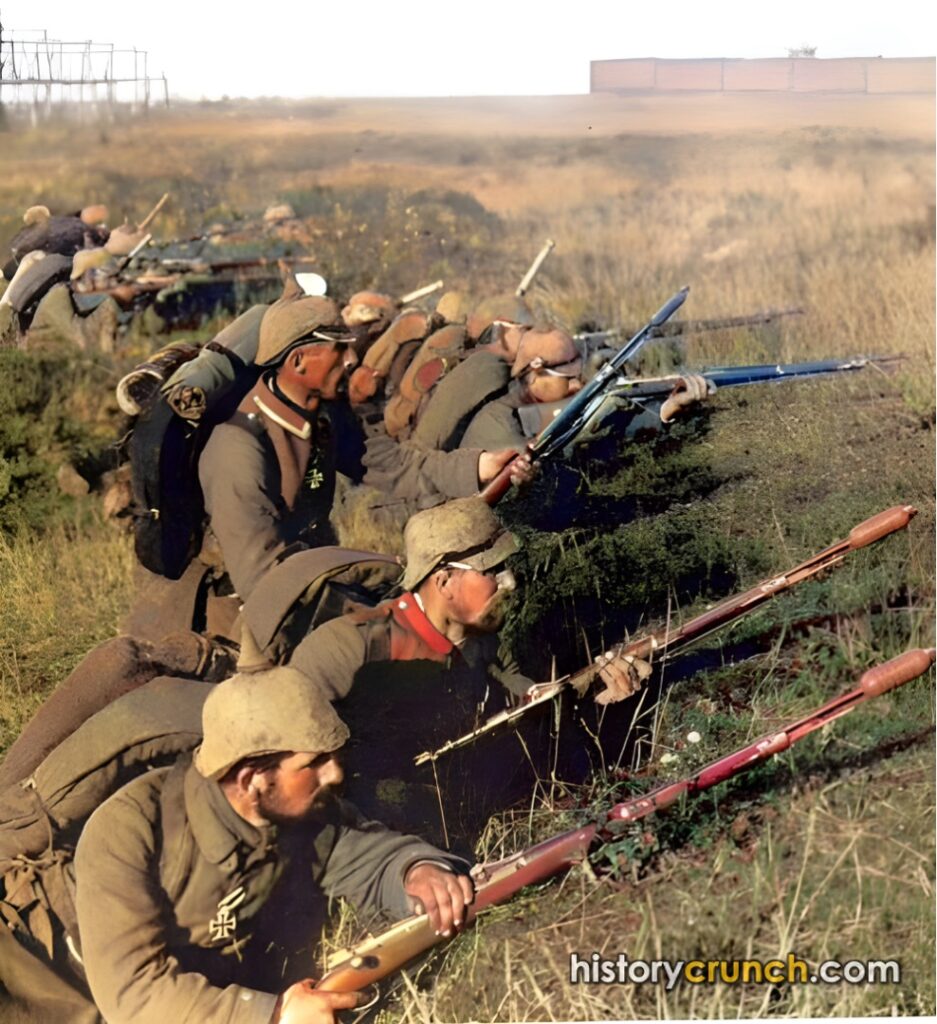
In September 1914, French and British troops counterattacked along the Marne River, east of Paris, and forced the German armies to retreat to the Aisne River, where both sides began to dig trenches.
German armies sweeping toward Paris
Trench stalemate across the Western Front
What Happened in the ‘Race to the Sea’ in World War I?
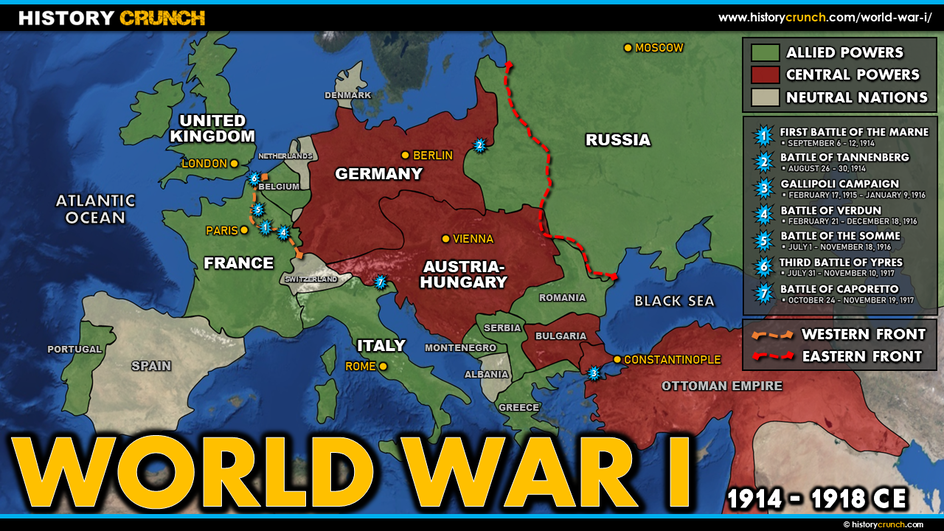
The Race to the Sea immediately followed the events of the First Battle of the Marne and the First Battle of the Aisne. Essentially Germany had been stopped from capturing Paris, and both the Germans and the Allied nations of France and Britain ‘raced’ north as they tried to gain a flankThe exposed side of an enemy’s military line, which an army tries to get around to gain an advantage. on each other. British and French forces countered the German push north throughout September and October until the two sides reached the North Sea in Belgium on October 19th.
The Race to the Sea involved several smaller conflicts between the German Army and the Allied forces, but neither side gained a decisiveClear and definite enough to settle the outcome of a battle or conflict. advantage. What resulted was a line of trenches that extended throughout much of Belgium and northern France. It was along this line of trenches that some of the most significant battles of World War I took place. Furthermore, this became known as the Western Front. The fighting of World War I on the Western Front was characterized by trench warfare and continuous stalemateA deadlock in which neither side can gain a decisive advantage over the other..
 FactsthatCrunch
How did Belgian soldiers stop the German advance near the North Sea in October 1914?
In late October 1914, Belgian troops opened the sluice gates at Nieuwpoort and let seawater flood the low land along the Yser River. The flooding created a wide barrier of water that the German army could not cross, and this stretch of the front stayed flooded for the rest of the war.
What Was the Significance of the ‘Race to the Sea’ in World War I?
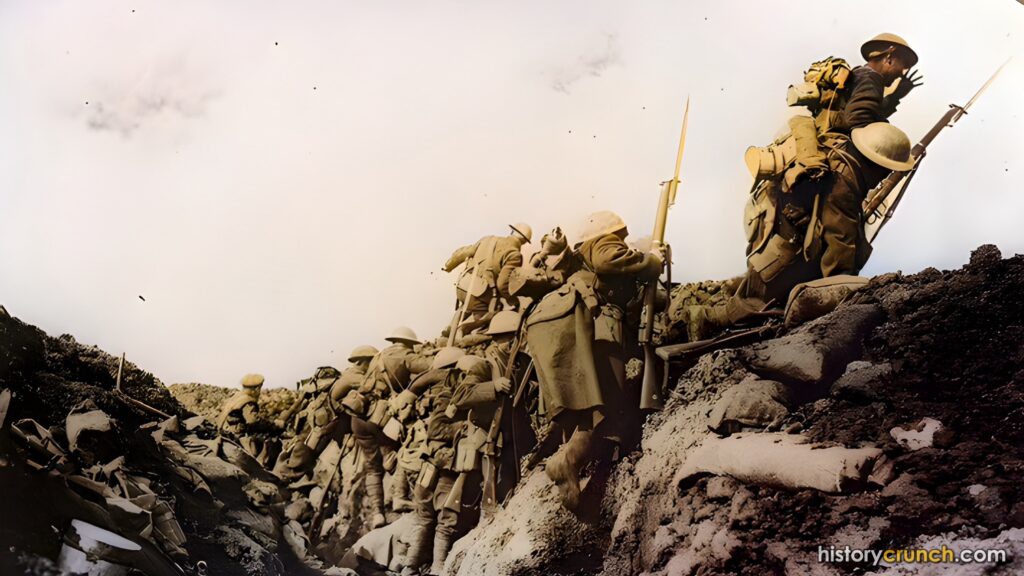
In the end, the Race to the Sea was a significant event in the early stages of World War I because it helped set the stage for the rest of the war. As stated above, the Race to the Sea was the result of the German failure to capture Paris as part of the Schlieffen Plan. As well, it led to the stalemate on the Western Front, which resulted in years of trench warfareA style of fighting where opposing armies dig long ditches and fight from fixed defensive positions. and bloody conflict.
 FactsthatCrunch
Tap each impact to read what it led to.
World War I timeline · 1914 – 1918
Key Vocabulary
Western Front
Schlieffen Plan
Flank
Counterattacked
Stalemate
Trench warfare
Decisive
Frequently Asked Questions
When did the Race to the Sea take place?
The Race to the Sea happened during September and October of 1914, in the early months of World War I. It followed the First Battle of the Marne and the First Battle of the Aisne. The two sides reached the North Sea in Belgium on October 19th, 1914.
Why was it called the Race to the Sea?
It was called the Race to the Sea because both sides raced north to outflank each other. German and Allied forces each tried to get around the open end of the enemy’s line. Neither side won a clear advantage before they reached the North Sea coast.
What caused the Race to the Sea?
The Race to the Sea was caused by the failure of Germany’s Schlieffen Plan to capture Paris. The German advance was stopped at the First Battle of the Marne in September 1914. After that, both sides moved north and tried to gain an edge on each other’s flank.
What was the result of the Race to the Sea?
The result was a long line of trenches that stretched across Belgium and northern France. This line became known as the Western Front. Neither side could break through, which led to years of trench warfare and stalemate.
Why was the Race to the Sea important in World War I?
The Race to the Sea was important because it set the stage for the rest of the war on the Western Front. It ended the fast-moving battles of 1914 and locked both sides into fixed positions. Many of the deadliest battles of the war later took place along this same trench line.
Cite This Article
To cite this article as a source, use one of the formats below.
MLA: Beck, Elias. “Race to the Sea in World War I: A Detailed Summary.” HistoryCrunch, 29 September 2026, https://historycrunch.com/race-to-the-sea-in-world-war-i/.
APA: Beck, E. (2026). Race to the Sea in World War I: A Detailed Summary. HistoryCrunch. https://historycrunch.com/race-to-the-sea-in-world-war-i/
Chicago: Beck, Elias. “Race to the Sea in World War I: A Detailed Summary.” HistoryCrunch. September 29, 2026. https://historycrunch.com/race-to-the-sea-in-world-war-i/
Sources
- John Keegan, The First World War.
- Imperial War Museum
- Fordham Modern History Sourcebook
- Margaret MacMillan, The War That Ended Peace.