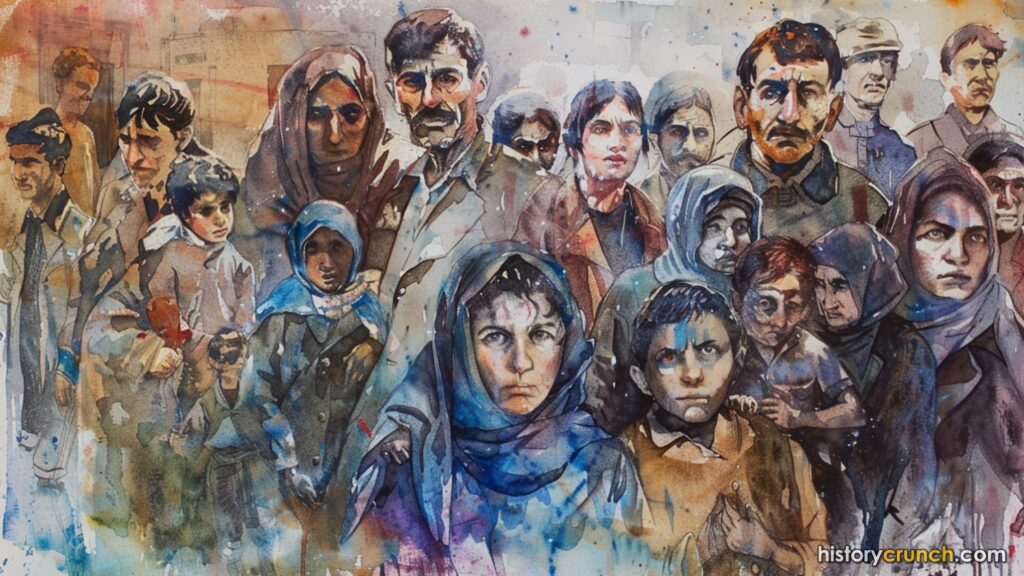
The Armenian GenocideMass killing of a group of people because of their religion, ethnicity, or cultural background. is considered to be a significant example of genocide and crimes against humanity in the 20th century, alongside others, such as: Holodomor, Nanking Massacre, Holocaust, Cambodian Genocide, Rwanda Genocide and the Bosnian Genocide. A genocide is defined as a mass killing of a certain group of people based on their religion, ethnicity or cultural background. A crime against humanity is considered to be when a group of people are subjected to humiliation, suffering and death on a mass scale by another group.
The Armenian Genocide occurred in the modern country Turkey (although at that time it was part of the larger Ottoman Empire) from 1914 to 1923 with most of the killings occurring in 1915. This makes it the first major genocide of the 20th century. The country of Turkey is located in the Middle East on the eastern edge of Europe near other nations, including Greece, Syria and Armenia. The genocide and crimes against humanityActs in which one group subjects another to humiliation, suffering, and death on a massive scale. that occurred in the country are considered to be the actions and result of the Ottoman Empire against Armenian citizens. Historians generally agree that as many as 1.5 million Armenians were killed as a result of the genocide.
 FactsthatCrunch
How did persecution of Armenians build toward genocide in World War I?
Causes of the Armenian Genocide
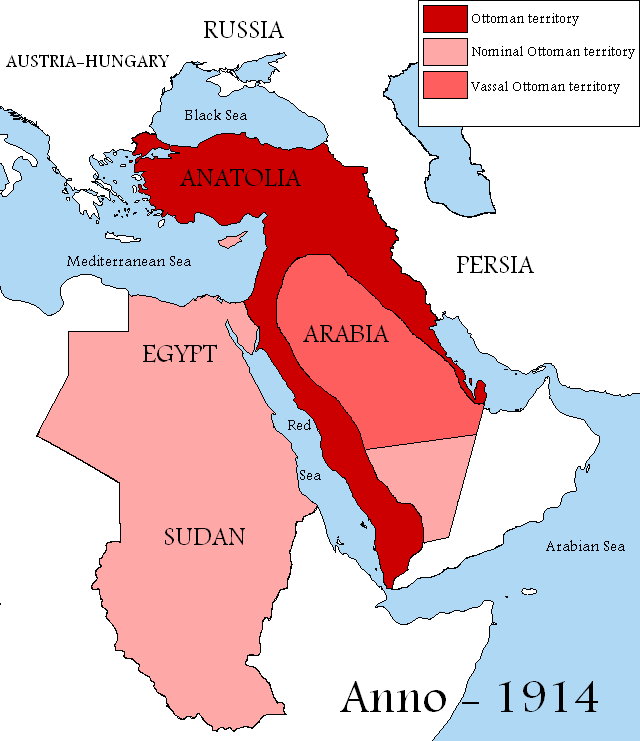
The Ottoman Empire was a large state that existed from the 14th century until the early 20th century. By the early 20th century, when the Armenian Genocide occurred, the Ottoman Empire was nearing the end of its influence in the region amidst the tumult of World War I. At its height the Ottoman Empire stretched across much of the Middle East, Northern Africa and Eastern Europe. As such, it was made of many different nationalities, ethnicities and religions. One of these groups was the Armenian population that had lived within the borders of the Ottoman Empire since the mid-16th century. Most Armenians lived in the eastern portion of modern-day Turkey, with some living in the western city of Constantinople (modern Istanbul). There was continual conflict between the Armenian populations and the ruling Ottomans (or Turks). One major reason for this conflict was a difference in religious faith. The Ottoman Empire was primarily made up of people of the Islamic faith, whereas Armenians were primarily Christian. As such, Christian minorities in the Ottoman Empire often suffered from persecutionOngoing cruel or unfair treatment of a group of people because of who they are. and prejudice. Out of this conflict emerged an Armenian nationalistic movement aimed at freeing the Armenian people from Ottoman rule.
Other European powers who were sympathetic to the Armenians such as Russia, Britain and France pressured the Ottoman Empire to allow the Armenians some measure of freedom and to stop the persecution. However, as a result it led to the Hamidian Massacres between 1894-1896. In general, this event saw between 100,000 and 300,000 Armenians slaughtered in an attempt to end reforms aimed at aiding the Armenian communities in the Ottoman Empire.
When World War I broke out in 1914, the Ottoman Empire joined the war on the side of the Central Powers which was made up of Germany, the Austro-Hungarian Empire, later joined by Bulgaria. As such, it meant that the Ottoman Empire would face off against British, French and Russian forces during the war. There was already lingering tensions in the Ottoman Empire over the earlier support for the Armenians by the British, French and Russians, but it intensified when the war began. For example, when Ottoman forces lost an early battle against Russia in 1914, it was blamed on Christians (notably Armenians) who lived in the Ottoman Empire. Since Russia was primarily a Christian state, it was argued that the Christian people in the Ottoman Empire supported Russia instead. This resulted in growing anger and distrust against Christians living in the Ottoman Empire.
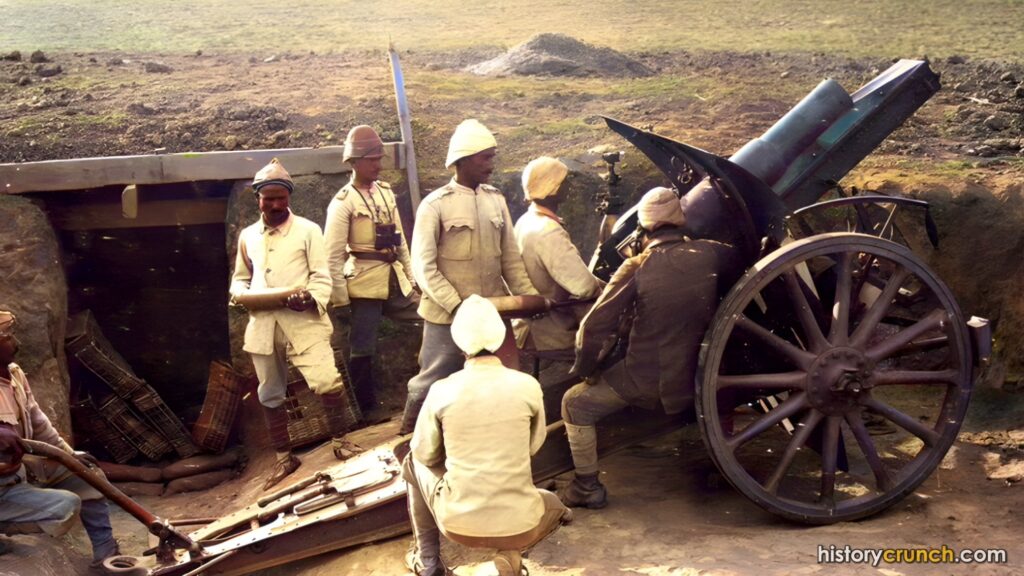
The next major event in the lead up to the events of the Armenian Genocide was the Labour BattalionsUnarmed work units that Armenian soldiers were forced into after being removed from Ottoman military forces in 1915.. In February of 1915, the Ottoman Empire ordered the removal of Armenian people from the Ottoman forces. Instead, the Armenian soldiers were ordered to form ‘labour battalions’ in which they were unarmed. The Ottomans did this out of fear that the Armenian soldiers would side with the Russians in the war and not fight effectively for the Ottoman Empire. This is viewed as an event that led to the Armenian Genocide because it involved ethnic Armenians being disarmed and persecuted. As well, many of the Armenian members of ‘labour battalions’ were executed soon after by Turkish gangs.
Another important event was the Siege of Van which occurred in April of 1915. Essentially, this event involved another conflict between Armenians and the Ottoman Empire. For example, on April 19th, 1915, an Ottoman official demanded that the city of Van provide him with 4000 Armenian men to serve in the military. The city of Van is in modern-day eastern Turkey but at the time was in the center of territory populated by Armenians in the Ottoman Empire. The Armenians in the city refused out of fear that they would be slaughtered, which led to a crisis in the city. The crisis was only stopped when Russian forces intervened and stopped the Ottomans from entering the city. The Russians’ support of the Armenians in the city further supported the fear by the Ottoman Empire that the Armenians could not be trusted.
As such, these events combined to set the stage for the Armenian Genocide as a growing sense of fear and mistrust emerged in the Ottoman Empire towards the Armenian people living in their territory.
Major Events of the Armenian Genocide
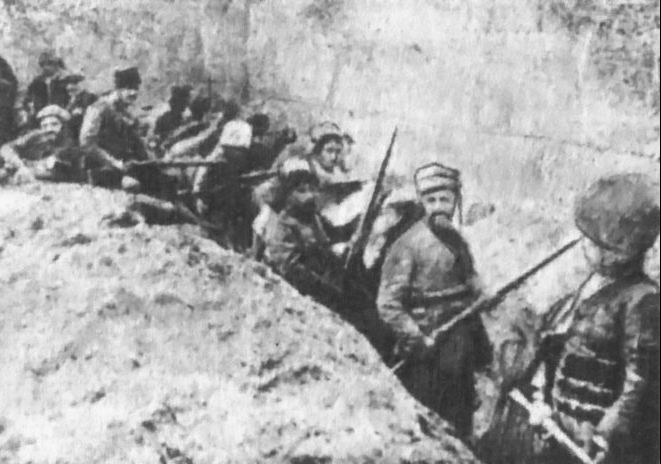
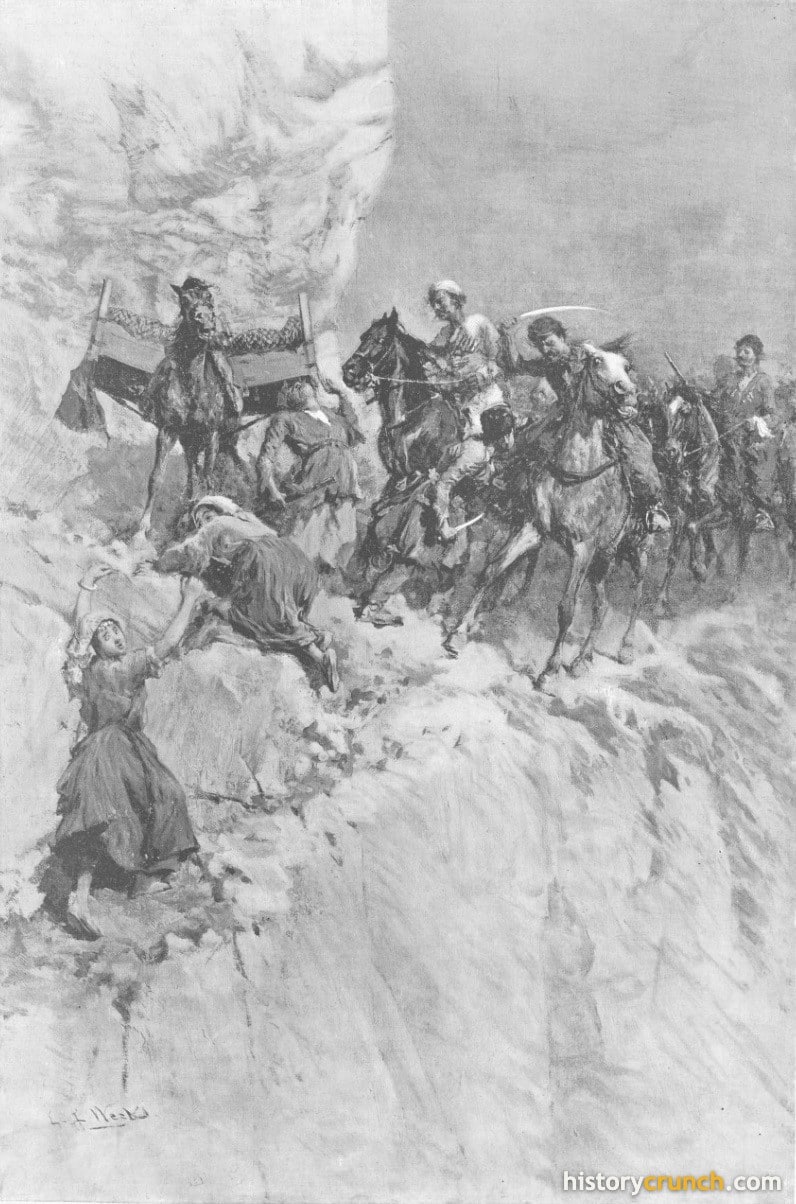
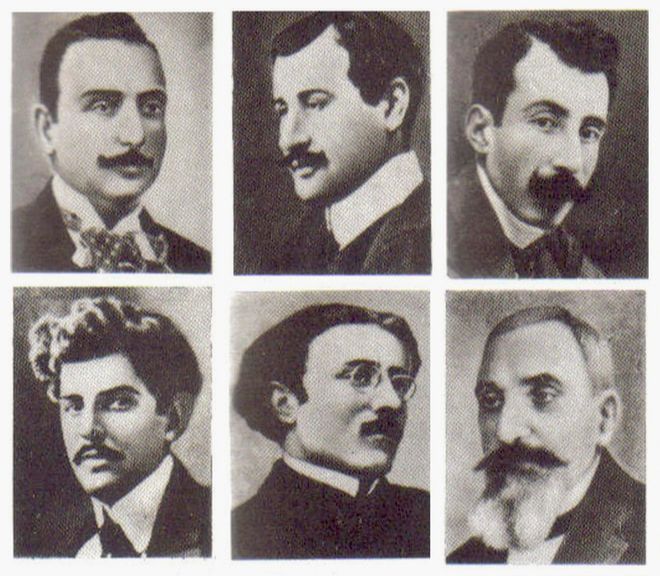
The first major event of the Armenian Genocide, and the event that historians view as the starting point, was the arrest and deportationThe forced removal of a group of people from the place where they live. of Armenian intellectuals on April 24th, 1915. The event is referred to as ‘Red Sunday’ and saw nearly 250 Armenian intellectuals and community leaders arrested, deported and executed. Today, Armenian people recognize April 24th as Genocide Remembrance Day in recognition of the start of the Armenian Genocide.
Soon after the Ottoman Empire carried out mass deportations of the Armenian population. For example, in late May of 1915, the Ottoman government passed the ‘Tehcir LawAn Ottoman law passed in May 1915 that legally authorized the deportation of Armenians and seizure of their property.’ which allowed for the deportation of the Armenian population living in the Ottoman Empire. This paved the way for the major atrocities of the genocide including: death marches, massacres, stolen property and systems of concentration campsEnclosed sites set up by the Ottoman government along the Syrian and Iraqi border to hold surviving Armenians after the death marches..
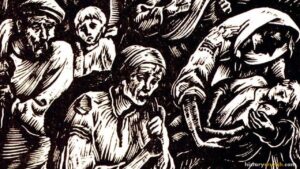
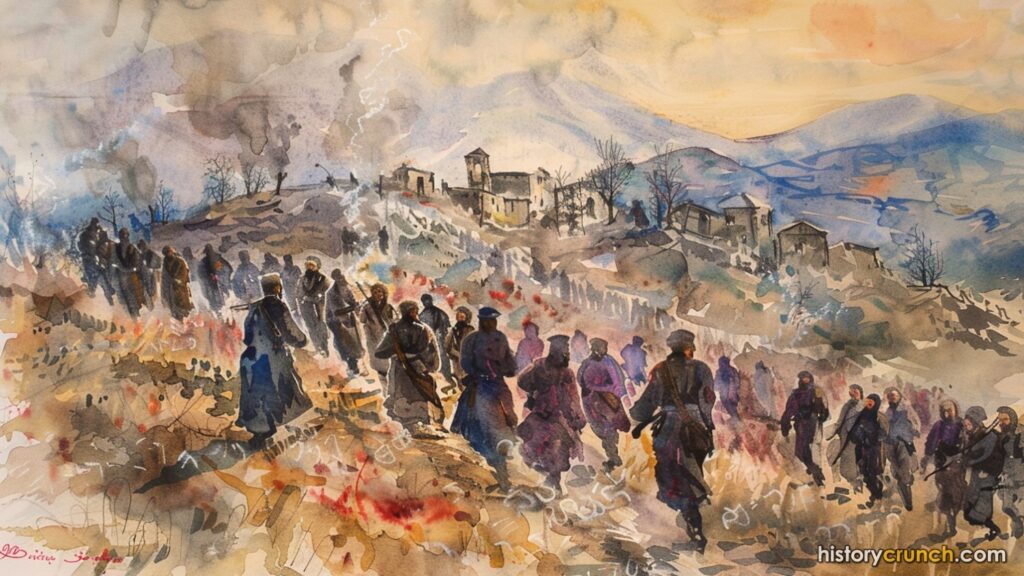
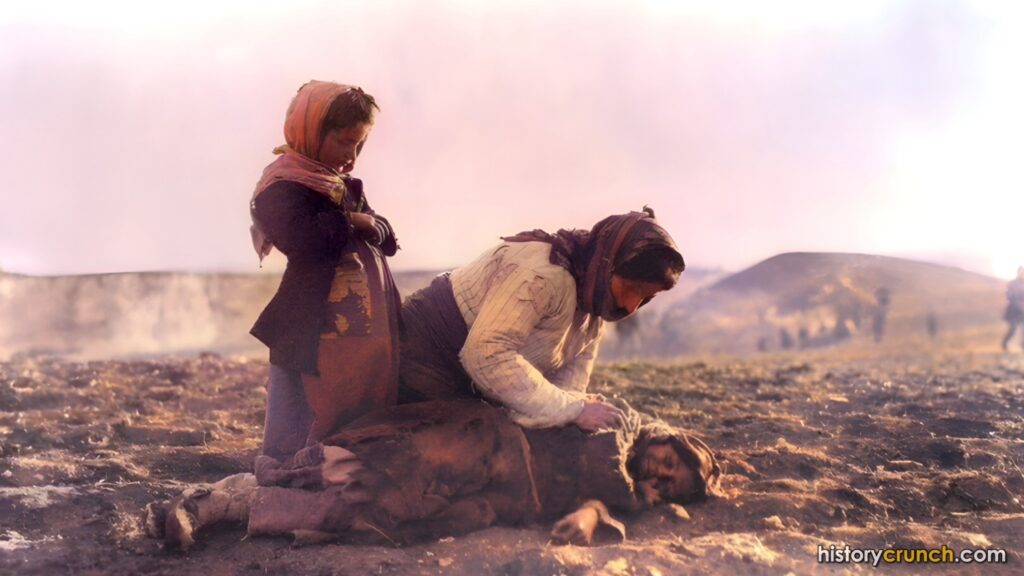
After the passage of the ‘Tehcir Law’ the Armenian people including all men, women and children were forced to march south from modern-day Turkey and towards the country of Syria. The route they were forced to take crossed through the Syrian Desert and contained brutal conditions. Furthermore, historians have suggested that the Ottoman government purposefully denied these Armenian people the supplies necessary to survive such a journey. In fact, reports soon emerged in relation to the number of dead that began to appear on the route south. The marches led to exhaustion and starvation for many of the Armenians.
For example, a report from the New York Times in 1916 states: “The witnesses have seen thousands of deported Armenians under tents in the open, in caravans on the march, descending the river in boats and in all phases of their miserable life. Only in a few places does the Government issue any rations, and those are quite insufficient. The people, therefore, themselves are forced to satisfy their hunger with food begged in that scanty land or found in the parched fields.”
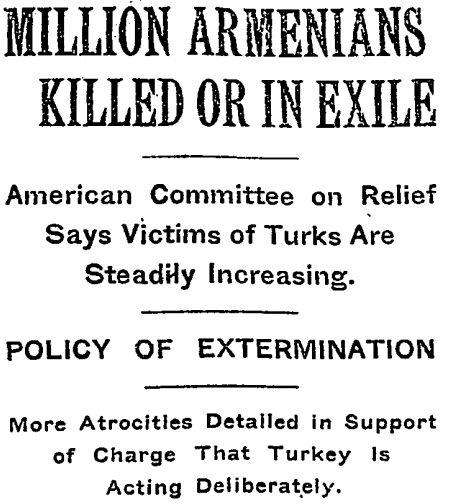
“Naturally, the death rate from starvation and sickness was very high and is increased by the brutal treatment of the authorities, whose bearing toward the exiles as they are being driven back and forth over the desert is not unlike that of slave drivers. With few exceptions no shelter of any kind is provided and the people coming from a cold climate are left under the scorching desert sun without food and water. Temporary relief can only be obtained by the few able to pay officials.”
Meanwhile, many of the Armenian women were raped or abused during the march. Ottoman soldiers were known to treat the women horribly and even sold some of the women as sex slaves.
The Ottoman government also established a series of camps, which historians refer to as concentration camps, along the border with Syria and Iraq. These were designed as destinations for the fleeing Armenian people who had not died along the march. The life expectancy in these camps was quite low with some being only a few days. This was a result of the Ottoman government refusing to supply the people with food or water. In fact, some reports from the time talk of mass graves that began to emerge at the time with as many as 60,000 dead inside. Other Armenians died in horrible ways, including: mass burnings, mass drownings, and the use of poison gas. In all, it is estimated that as many as 1.5 million Armenians died during the forced marches and massacres. However, historians are unsure and the estimates range from as low as 500,000.
Another central component of the ‘Tehcir Law’ was the confiscation of Armenian property. Under the law, all property including land and livestock became the property of the Ottoman government. As a result, whole communities of Armenian people lost their livelihoods.
 FactsthatCrunch
The witnesses have seen thousands of deported Armenians under tents in the open, in caravans on the march, descending the river in boats and in all phases of their miserable life. Only in a few places does the Government issue any rations, and those are quite insufficient. The people, therefore, themselves are forced to satisfy their hunger with food begged in that scanty land or found in the parched fields.
What does this passage reveal about the Ottoman government's role in the suffering of the Armenian deportees?
Outcomes of the Armenian Genocide
After the end of World War I, the Allied nations put pressure on the Turkish government to hold those responsible for the acts carried out during the Armenian Genocide responsible. This included the ‘Three Pashas’ which was the name given to the three leaders of the Ottoman Empire at the time. They oversaw the country’s entry into World War I and the major events of the genocide. At the end of the war, they fled amid accusations of war crimes and crimes against humanity. They were ultimately found guilty of carrying out the murders but avoided official punishment as they had fled to Germany. Regardless, two of the three were later assassinated by Armenian nationalists.
FactsthatCrunchAfter World War I, Ottoman military courts, under pressure from the Allied powers, tried the Three Pashas in absentia, found them guilty, but could never carry out the sentences because the men had already fled to Germany.
Explore World War I · 1914 – 1918
Keep exploring World War I with these History Crunch resources.
Key Vocabulary
Genocide
Crimes against humanity
Persecution
Labour battalions
Tehcir Law
Deportation
Concentration camps
Frequently Asked Questions
When did the Armenian Genocide happen?
The Armenian Genocide took place from 1914 to 1923, with most of the killings happening in 1915. It occurred in the Ottoman Empire, which covered much of modern-day Turkey. Historians often call it the first major genocide of the 20th century.
How many Armenians died in the genocide?
Historians generally agree that as many as 1.5 million Armenians were killed. Exact numbers are hard to prove because records were poor and estimates vary widely. Deaths came from forced marches, massacres, starvation, and disease.
What caused the Armenian Genocide?
Long-running conflict between the Muslim Ottoman rulers and the Christian Armenian minority helped cause the genocide. Tensions grew during World War I, when Ottoman leaders accused Armenians of siding with Russia. This fear and distrust led to disarmament, deportation, and mass killing.
What was the Tehcir Law?
The Tehcir Law was passed in late May of 1915 and allowed the deportation of Armenians living in the Ottoman Empire. It opened the door to death marches, massacres, and concentration camps. The law also let the government seize Armenian land and livestock.
Why is April 24th important to Armenians?
April 24th marks the day in 1915 when nearly 250 Armenian intellectuals and community leaders were arrested. This event, known as Red Sunday, is seen as the starting point of the genocide. Today Armenians honor April 24th as Genocide Remembrance Day.
Were the people responsible ever punished?
The Three Pashas, the Ottoman leaders during the genocide, were found guilty but avoided official punishment. They had fled to Germany after World War I to escape trial. Two of the three were later assassinated by Armenian nationalists.
Cite This Article
To cite this article as a source, use one of the formats below.
MLA: Beck, Elias. “Armenian Genocide: A Detailed Summary.” HistoryCrunch, 30 September 2026, https://historycrunch.com/armenian-genocide/.
APA: Beck, E. (2026). Armenian Genocide: A Detailed Summary. HistoryCrunch. https://historycrunch.com/armenian-genocide/
Chicago: Beck, Elias. “Armenian Genocide: A Detailed Summary.” HistoryCrunch. September 30, 2026. https://historycrunch.com/armenian-genocide/
Sources
- John Keegan, The First World War.
- Imperial War Museum