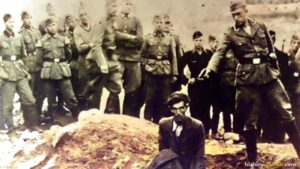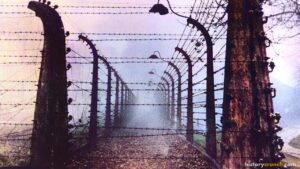
The Nanking Massacre is one of a series of important crimes against humanity during the timeframe of and lead up to World War II. Other important crimes against humanityActs of extreme violence against large groups of civilians, considered so severe they are condemned by the entire world. during this time include the Ukraine Famine (Holodomor) and the Holocaust. The Nanking Massacre occurred from December 13th, 1937 until January of 1938 over a period of approximately six weeks. It is sometimes also called the Rape of Nanking in reference to the brutal events that took place.
 FactsthatCrunch
Both events are recognized as crimes against humanity committed during World War II, but they differed in scale, geography, and structure. The Holocaust was a systematic government policy carried out across multiple countries over many years, while the Nanking Massacre was a concentrated military assault on a single city lasting approximately six weeks.
Nanking Massacre – Background
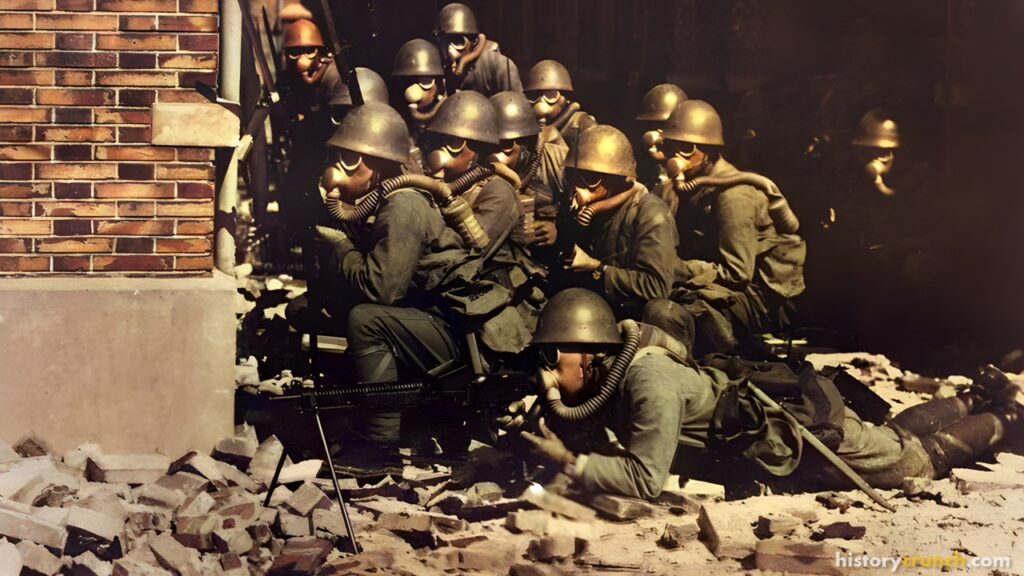
The events of the Nanking Massacre are linked with the larger Second Sino-Japanese WarA military conflict between China and Japan that began in July 1937 and ended with Japan’s surrender in August 1945. and World War II. The Second Sino-Japanese War was a conflict between China and Imperial JapanJapan during a period when it was ruled by an emperor and aggressively expanding its military power across Asia. that began in July of 1937, before the events of World War II, and continued until Japan’s formal surrender in August of 1945 with the end of the Second World War. In general, Japan was in a period of military expansion in the decade before World War II and had expanded its empire throughout much of East Asia, including parts of China. More specifically, in August of 1937, the Japanese Imperial Army carried out an attack against Chinese forces in the Chinese city of Shanghai. The resulting battle was called the Battle of Shanghai and saw the Japanese Army overwhelm the Chinese forces and capture the city in November of 1937.
In response, Chiang Kai-shek, who was the leader of the Republic of China, ordered his forces to retreat to the interior of China in an attempt to slow the push of the Japanese through the country. This strategy was similar to that used by the Soviet Union in Europe during World War II when Nazi Germany invaded the Soviet Union as part of Operation Barbarossa. The retreat of Chinese forces left the city of Nanking (or Nanjing), which was the capital of the Republic of China, relatively undefended. While many people in the city fled for fear of a Japanese attack, many others stayed in an attempt to defend it. This proved to be disastrous, because in December of 1937, the Japanese Imperial Army invaded the city and began carrying out widespread destruction and brutality.
 FactsthatCrunch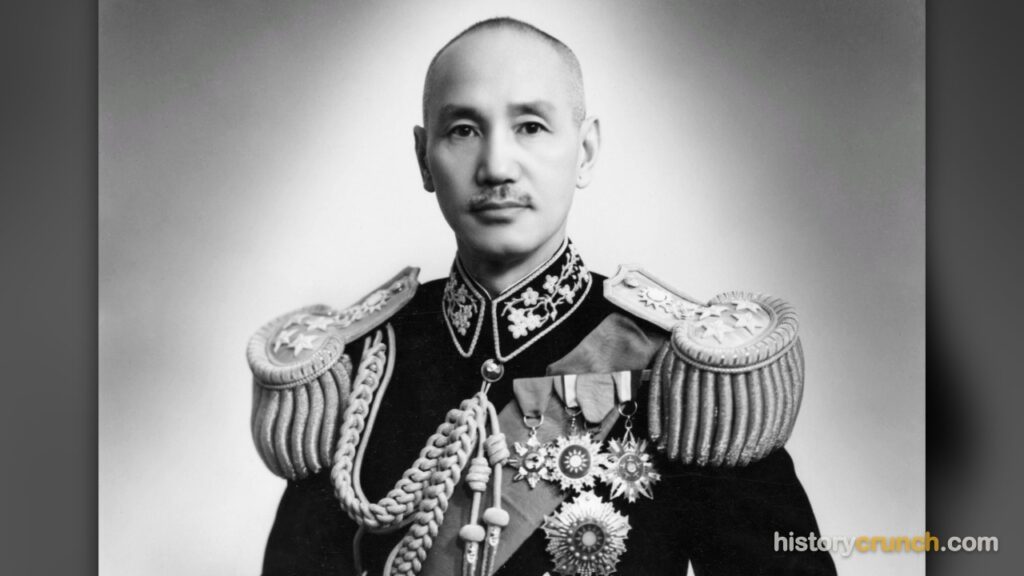
Nanking Massacre – Major Events
While most people focus on the six-week period from December 1937 to January 1938 when discussing the atrocitiesExtremely cruel and violent acts, especially those committed against helpless people during war. of the Nanking Massacre, it’s important to also understand the brutality that occurred in the weeks before. Historians have noted that while the Japanese Army moved through China, from Shanghai to Nanking, they undertook a series of mass murders and rapes against the Chinese Army and civilian population. Regardless, once the Japanese army entered Nanking it carried out horrible atrocities against the people of the city.
There were many westerners living in the city of Nanking at the time of the massacre. While most of them left in the days and weeks before the Japanese assault on the city, several of them decided to stay and established the ‘Nanking Safety ZoneAn area established by foreign residents in Nanking to shelter Chinese civilians from Japanese attack.’. Led by German businessman John Rabe, the westerners formed the International Committee for the Nanking Safety Zone and worked to establish an area in the city where Japanese forces would not attack. It was hoped that Nanking civilians could seek refuge in the zone, along with the westerners who had also remained in the city. Many of the westerners in this zone played an important role in the history of the Nanking Massacre because they provided a firsthand account of the atrocities.
The Japanese forces entered the city of Nanking on December 13th, 1937 led by General Iwane Matsui. They quickly overwhelmed what Chinese forces remained in the city and soon began to carry out the massacre. For example, the Japanese Army carried out raids inside and outside of the Nanking Safety Zone in hopes of finding any remaining Chinese soldiers. Many Chinese soldiers had changed into plain clothes and hid among the civilians in the zone, and the Japanese Army wanted to find and remove them as part of their attack on the city. It’s estimated that the Imperial Japanese Army found and removed nearly 4000 Chinese soldiers hiding among the civilians. Regardless, the Japanese soldiers began their attack against the helpless Chinese civilians soon after.
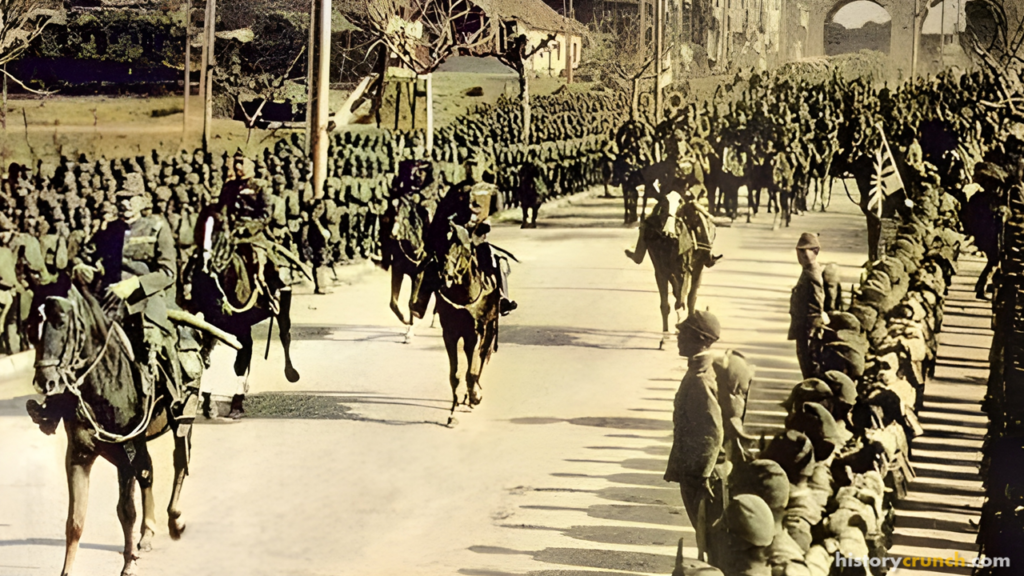
Firsthand accounts of the massacre describe how the Japanese soldiers went from home to home searching for civilians. During this time, they carried out mass rapes and murders of Chinese women and girls. For example, on December 19th in 1937, Reverend James M. McCallum wrote:
“I know not where to end. Never I have heard or read such brutality. Rape! Rape! Rape! We estimate at least 1,000 cases a night and many by day. In case of resistance or anything that seems like disapproval, there is a bayonet stab or a bullet … People are hysterical … Women are being carried off every morning, afternoon and evening. The whole Japanese army seems to be free to go and come as it pleases, and to do whatever it pleases.”
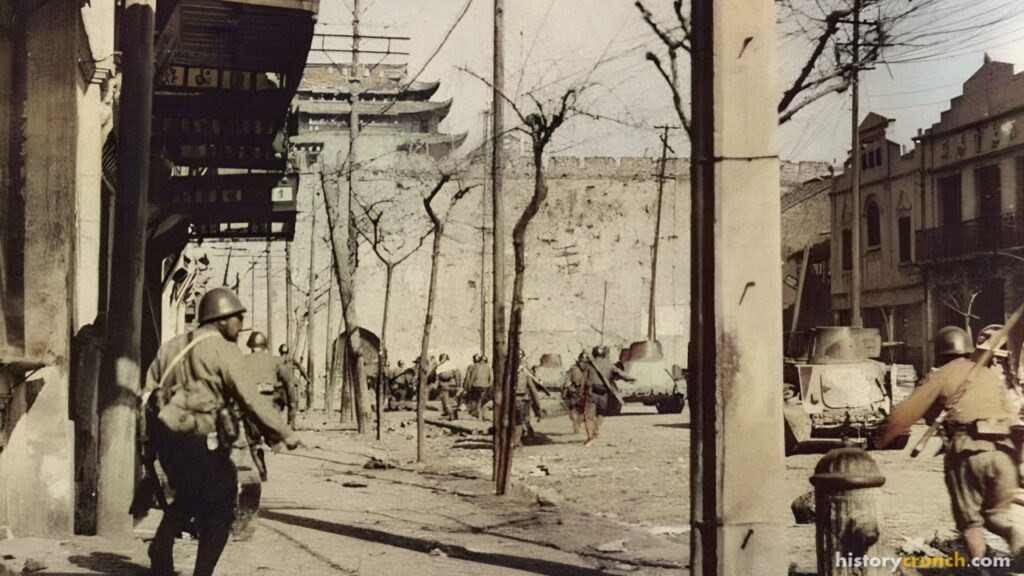
It was not uncommon for the women and girls to be killed following the rape, although many did survive the attacks. It has been estimated that as many as 20,000 women and girls were raped during the assault. At the same time, the Japanese Army was also carrying out a systematic attack against the city in the form of theft, arsonThe deliberate act of setting fire to buildings or property. and mass murder. There is evidence and firsthand accounts of Japanese soldiers breaking into shops and hotels in the city and stealing any of the goods that they could carry. They also destroyed huge sections of the city by lighting homes and offices on fire. Some historians have reported that over one third of the city was destroyed by fire.
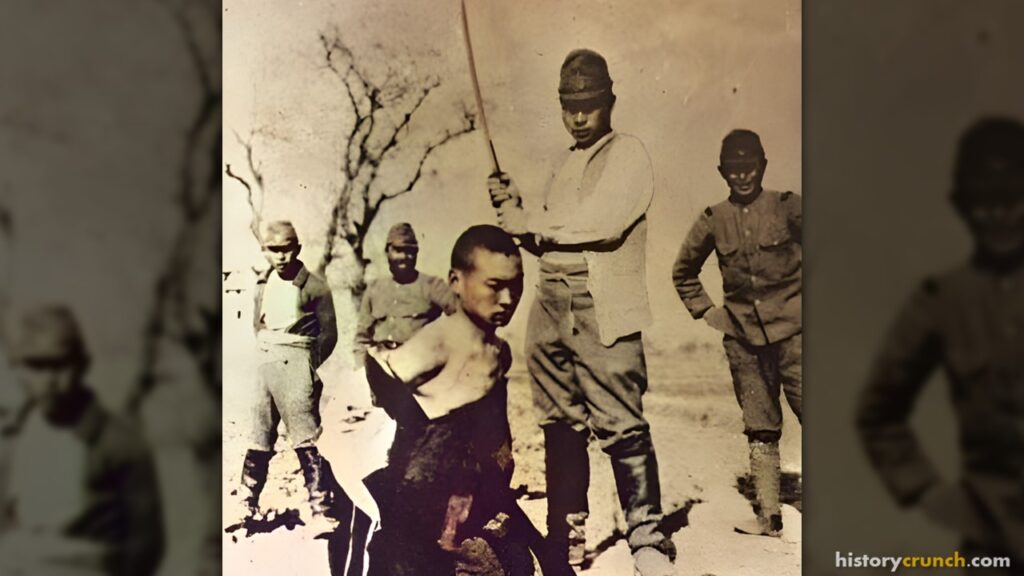
Finally, the Japanese Army carried out a widespread massacre of the citizens, which resulted in the death of as many as 300,000 Chinese citizens. In general, it’s difficult to determine the exact number of people that died, and it is a controversial historical topic. The difficulty in determining the number that died is a result of the lack of record keeping of the time, but contemporary historians generally accept that anywhere from 40,000 to 300,000 were killed as part of the massacre. Many of the victims were found to be shot to death. Some were shot by firing squad, while others were shot in the back as they tried to flee. Whereas, other victims were beheaded by Japanese officers with the use of a samurai sword. In the end, it was a brutal massacre that led to horrible actions carried out against a helpless civilian population. The massacre ended in January of 1938, when the Japanese gained complete control over the city and the Chinese population in the region. Once gaining control, the mass murder and rapes stopped and the safety zone was ended.
Nanking Massacre – Outcome and Significance
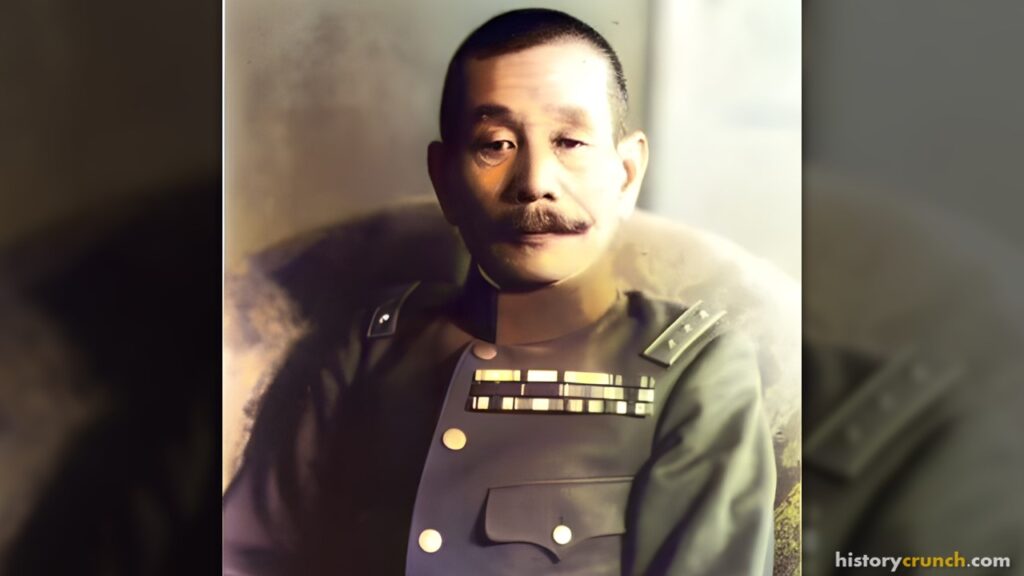
In August of 1945, following the atomic bombing of Hiroshima and Nagasaki, Japan formally surrendered and World War II came to an end. With the end of the war, there was a series of criminal trials carried out to hold war criminals responsible for their actions. Possibly the most famous of these trials was the Nuremberg Trials which involved several high-ranking Nazi officials and the war crimes of Nazi Germany during the Holocaust. In relation to the Nanking Massacre, Japanese officials were brought before the International Military Tribunal of the Far EastThe court set up after World War II to put Japanese officials on trial for war crimes.. For example, General Iwane Matsui who led the attack against Nanking was arrested and put on trial for his role in the massacre. In general, he denied knowing about the murders and rapes and blamed it on the actions of lower level commanders. Regardless, he was convicted and sentenced to death by hanging, along with other Japanese officials. He was executed on December 23rd, 1948 at the age of 70.
The history and significance of the Nanking Massacre has stirred controversy since it first occurred. For example, in Japan today it is a complex topic that creates heated debate. Some argue that it was a horrible crime against humanity which saw nearly 300,000 Chinese people slaughtered. Others argue that the atrocities did in fact occur but not to the degree that Chinese officials stated. Instead, they argue that the raping and killing was on a much smaller and more isolated scale. Still others hold the opinion that the Nanking Massacre did not occur at all and was a creation of Chinese propaganda. Today, most historians agree that the massacre occurred but disagree on the exact details of its history.
 FactsthatCrunch
What was General Iwane Matsui's defense when he stood trial before the International Military Tribunal of the Far East?
Explore World War II · 1939 – 1945
Keep exploring World War II with these History Crunch resources.
Key Vocabulary
Crimes against humanity
Imperial Japan
Second Sino-Japanese War
Atrocities
Nanking Safety Zone
Arson
International Military Tribunal of the Far East
Frequently Asked Questions
When did the Nanking Massacre take place?
The Nanking Massacre began on December 13th, 1937 and lasted about six weeks until January of 1938. It started when the Imperial Japanese Army captured the city of Nanking, the capital of the Republic of China. The violence stopped once Japanese forces gained full control of the city and its people.
How many people died in the Nanking Massacre?
Estimates of the death toll range from 40,000 to 300,000 Chinese civilians and soldiers. The exact number is hard to confirm because records from the time were poor or destroyed. The death toll remains a debated and sensitive topic among historians today.
Why is it called the Rape of Nanking?
It is called the Rape of Nanking because of the widespread sexual violence against women and girls. As many as 20,000 women and girls were raped during the roughly six weeks of attacks. Many victims were killed afterward, though some survived the assaults.
What was the Nanking Safety Zone?
The Nanking Safety Zone was an area of the city set up by foreign residents who stayed behind. German businessman John Rabe led the International Committee that created it to shelter Chinese civilians. The westerners in the zone also recorded firsthand accounts of the atrocities.
Was anyone punished for the Nanking Massacre?
Yes, Japanese officials were tried before the International Military Tribunal of the Far East after World War II. General Iwane Matsui, who led the attack on Nanking, was convicted and sentenced to death. He was hanged on December 23rd, 1948 at the age of 70.
What led to the Nanking Massacre?
The massacre grew out of the Second Sino-Japanese War, which began in July of 1937. After Japan captured Shanghai, Chiang Kai-shek ordered Chinese forces to retreat inland. This left Nanking lightly defended when the Japanese Army invaded in December of 1937.
Cite This Article
To cite this article as a source, use one of the formats below.
MLA: Beck, Elias. “Nanking Massacre: A Detailed Summary.” HistoryCrunch, 2 October 2026, https://historycrunch.com/nanking-massacre/.
APA: Beck, E. (2026). Nanking Massacre: A Detailed Summary. HistoryCrunch. https://historycrunch.com/nanking-massacre/
Chicago: Beck, Elias. “Nanking Massacre: A Detailed Summary.” HistoryCrunch. October 2, 2026. https://historycrunch.com/nanking-massacre/
Sources
- Imperial War Museum
- Gerhard L. Weinberg, A World at Arms.
- Max Hastings, Inferno / All Hell Let Loose.
- The National WWII Museum