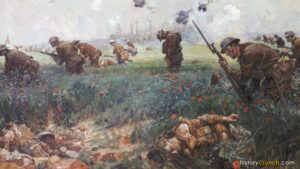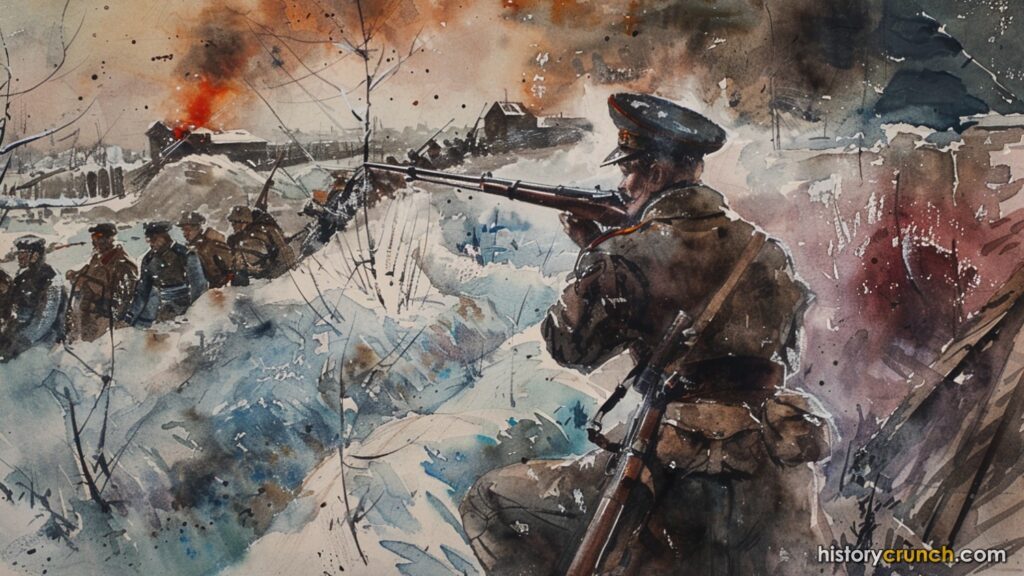
Russia was one of the main nations involved in the events of World War I. In fact, Russia was one of the main contributing nations to the causes of World War I following the assassination of Austrian Archduke Franz Ferdinand in 1914. As well, Russia participated in several significant battles of the war. For example, Russian soldiers fought along the Eastern Front against others such as Austria-Hungary and Germany. During World War I, Russia was one of the Allied Powers alongside Britain and France. The war also proved impactful for Russia in that it helped lead to the events of the Russian Revolution.
 FactsthatCrunch
Austria-Hungary declared war on Serbia on July 28th, 1914, after blaming Serbia for the assassination of Archduke Franz Ferdinand on June 28th, 1914.
Pan-Slavism tied Russia to Serbia's defense, because both nations shared Slavic heritage and Russia saw itself as Serbia's protector. The Franco-Russian Alliance turned that regional conflict into a Europe-wide war within days.
Russia Enters World War I
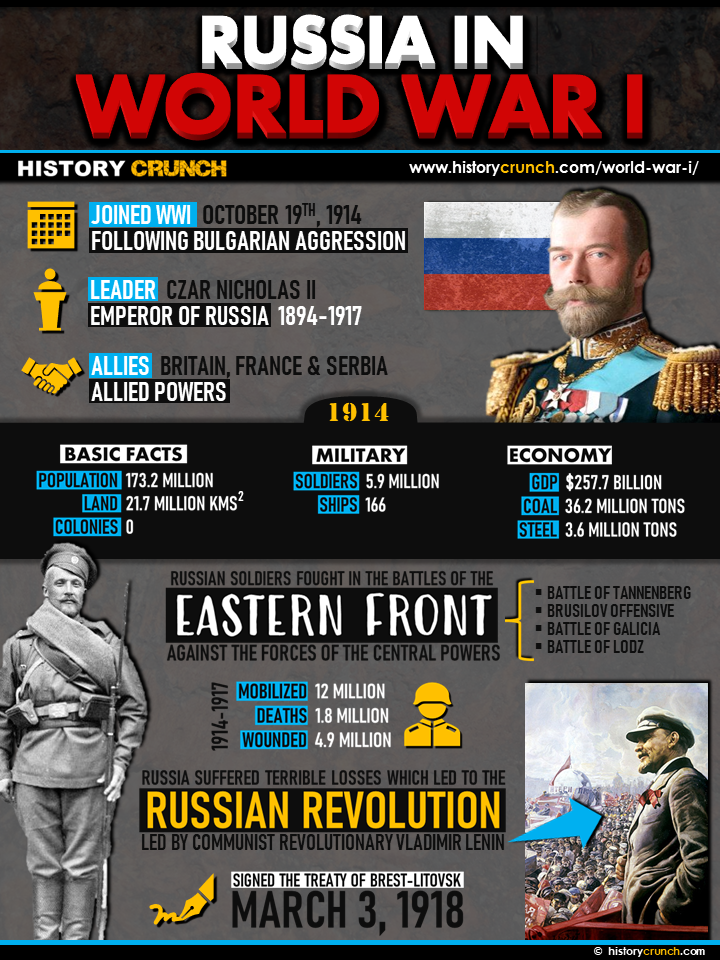
World War I erupted during the summer of 1914 in an event that historians refer to as the July Crisis. In short, this crisis was caused by the assassination of Austrian Archduke Franz Ferdinand, which led to the major European powers engaging in a conflict. Prior to the start of World War I, Russia was a member nation of the Triple Entente, alongside Britain and France. At the start of the war in 1914, Russia joined Britain and France to form the Allied Powers.
The July Crisis of 1914 unfolded as a series of events following the assassination of Franz Ferdinand. For instance, in the days immediately after the June 28th assassination, several prominent ministers in the Austrian government called for war to be declared against Serbia, due to its perceived role in the assassination of Franz Ferdinand.

Seeing that the tensions in the Balkans were rising, France and Russia reaffirmed the alliance between the two nations. They were linked by the Franco-Russian Alliance, which was an economic and military alliance. Furthermore, this was one of the foundational agreements that made up the larger Triple Entente. This alliance between France and Russia was important because it was one of the key things that caused the assassination of Franz Ferdinand to escalate into a conflict that involved most of Europe.
Russia was Serbia’s biggest ally at the time due to both nations sharing Slavic heritage. This comes from the idea of ‘Pan-Slavism’ in which the Slavic people of Eastern Europe all united nationalistically. As such, Russia sought to protect Serbia from Austria-Hungary.
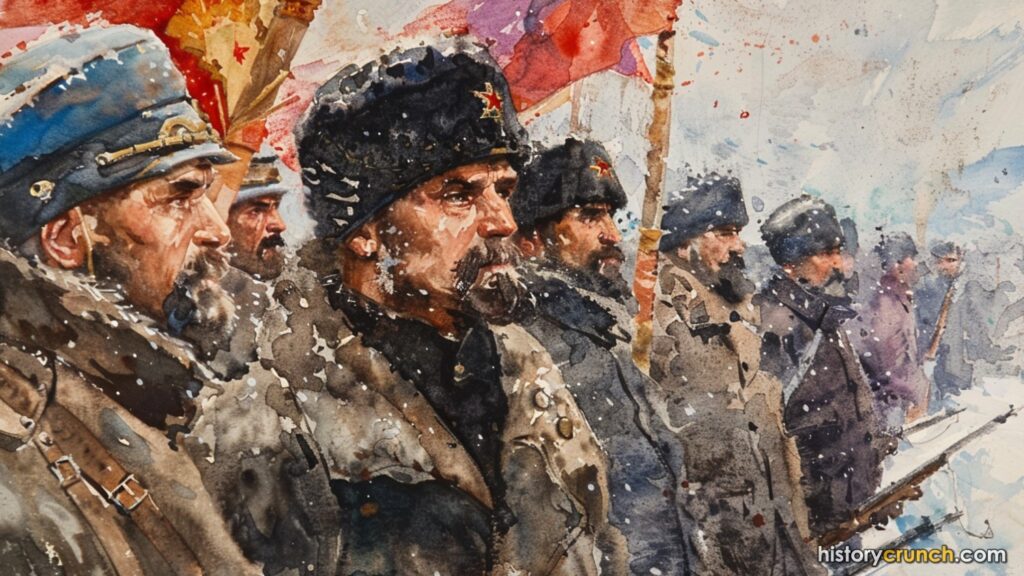
Officially World War I started on July 28th when Austria-Hungary declared war on Serbia. In response, Russia mobilizedWhen a country organizes and moves its military forces to prepare for war. its forces further on July 30th and began to prepare for war with Austria-Hungary. Having heard of the Russian mobilization against Austria-Hungary, Wilhelm II of Germany ordered German mobilization on August 1st, 1914.
 FactsthatCrunch
Russia in World War I – Army
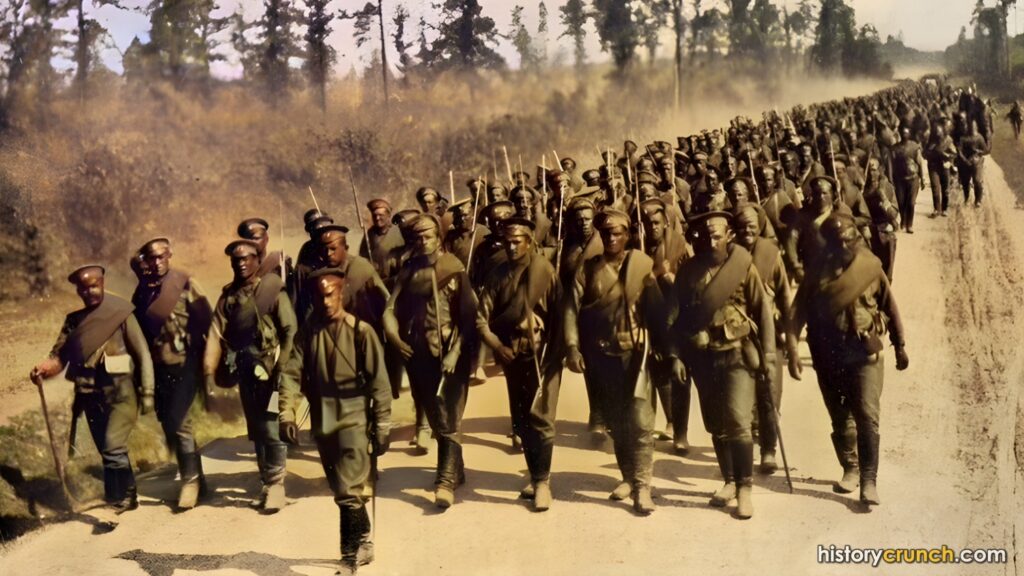
At the outbreak of World War I, in 1914, Russia had approximately 5.9 million soldiers and by the end of the war 12 million Russians had served in uniform. These numbers meant that Russia had the largest fighting forces in all of World War I.
When World War I began, Russian Emperor Nicholas II made his cousin, Grand Duke Nicholas, the Commander-in-Chief of the Russian Army. As well, the Russian army was divided between 115 infantry divisions as well as 38 cavalry divisions. Also, it is estimated that the Russian Army had nearly 7,900 heavy guns, which included artillery and smaller field guns. There were only 2 army ambulances and 679 cars.
In general, the Russian Army was not prepared for the fighting of World War I. While Russia had a large population and could raise a large army with which to fight, it struggled to supply its forces. For instance, most of the European powers had undergone industrialization in the 1800s and developed the necessary factories and industrial processes to build up military equipment. However, in 1914, Russia was not industrialized in a similar fashion. In fact, Russia was primarily a rural country, that relied on subsistence agricultureFarming in which people grow only enough food to feed themselves, with little left over to sell or trade.. As such, Russia suffered from major supply issues during the course of World War I. For example, in some conflicts, it was reported that nearly two-thirds of Russian forces were not supplied with a rifle. Instead, unarmed Russian soldiers were instructed to run into battle behind one of their own that had a rifle. Then, when the soldier with the rifle was injured or killed, they were to pick up the rifle.
Another issue facing the Russian Army and its ability to wage war at the start of World War I, was the lack of necessary transportation routes to the front. For example, Russia was a large country, and soldiers came from across the vast regions of the country. However, Russia did not have a large enough rail network to effectively get the soldiers to the front. Essentially, this slowed the ability of the Russian Army to mobilize and made it difficult for the country to properly get soldiers and materials to battle locations.
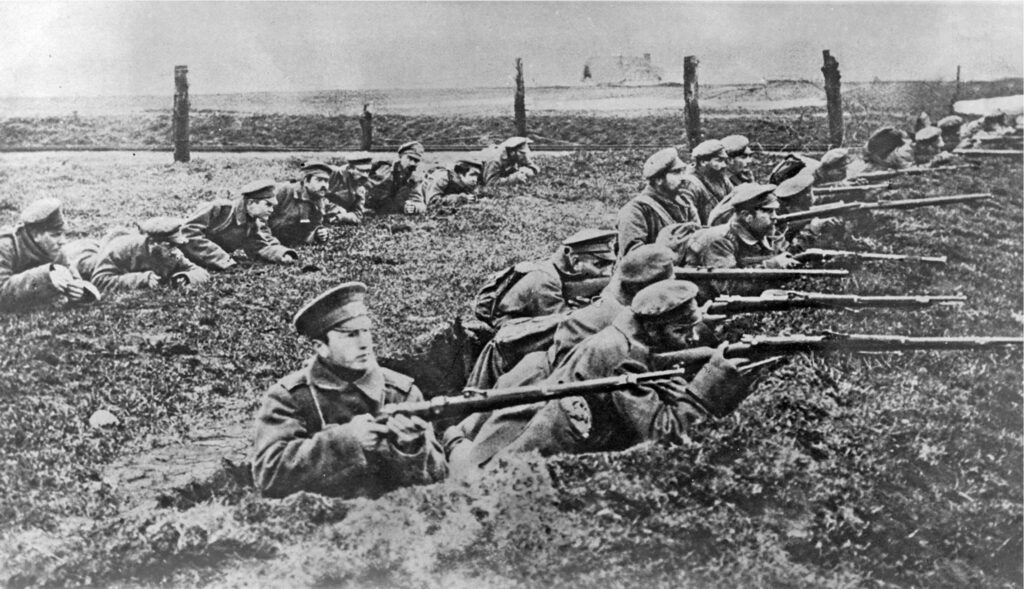
The struggles of the Russian military in World War I were especially highlighted by their conflicts against Germany. In contrast to Russia, the German Army was highly trained and equipped throughout the war. For example, Germany had one of the most capable armies in all of Europe during World War I. As such, Russia suffered terrible losses in the conflicts that it fought against Germany. This was most evident in the Battle of Tannenberg, which saw Russia lose heavily against Germany in East Prussia.
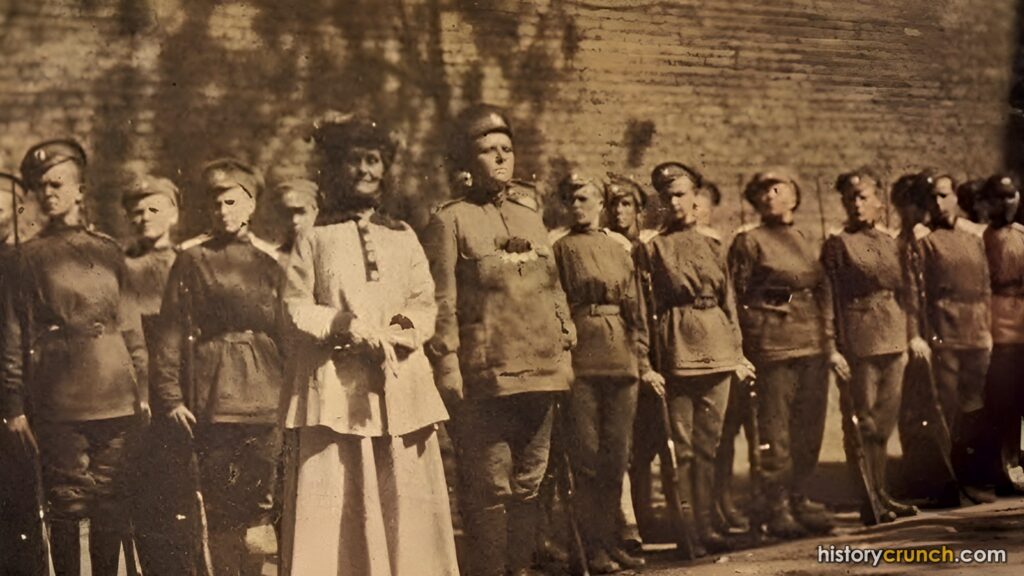
The losses for the Russian Army became so terrible during the course of the war, that Russian soldiers lacked morale to keep fighting. In fact, this became such a problem that many soldiers began fleeing the front-lines and returning home. In response, the Russian government established several women’s battalions in hope of boosting the war effort. Women participating in the fighting of World War I was unique to Russia, but failed to boost morale. Eventually, the Russian war effort failed with the events of the Russian Revolution.
Russia in World War I – Major Battles
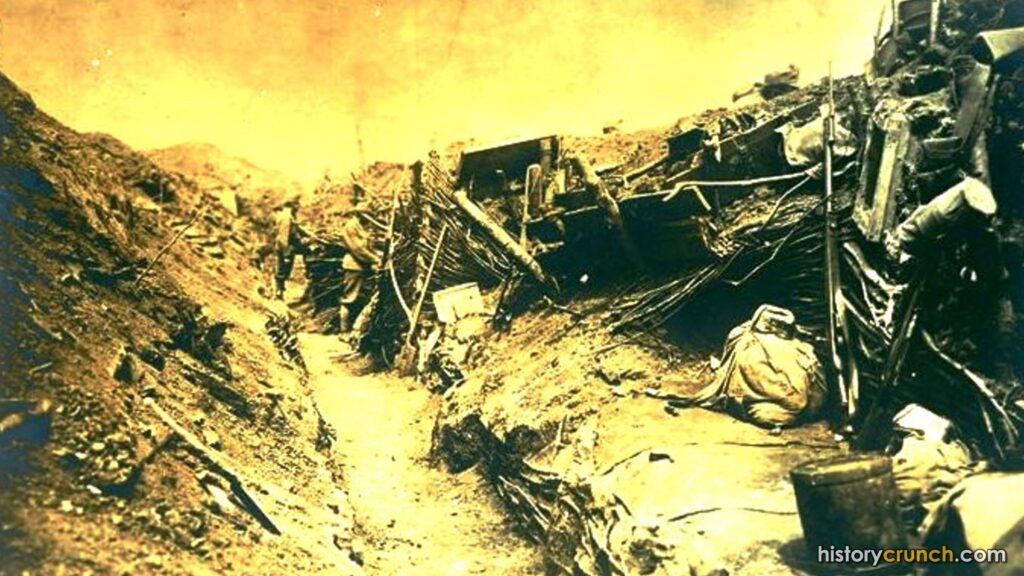
Russia was one of the main forces that participated in the battles of World War I, but they were primarily active on the Eastern Front. In general, the landscape of Europe in World War I was divided into a few different ‘fronts’. For instance, the Western Front was located on the western-half of Europe and included a line of trenches that stretched throughout much of northern France and Belgium. Whereas the Eastern Front was along the border between Russia and Germany. At the time, Germany planned to defeat France in a quick assault, and then turn its armies to the east to attack Russia. This plan of attack was referred to as the Schlieffen Plan. It did not result in a quick German victory, and instead Europe became bogged down in trench warfare across its many fronts.
As stated above, Russian forces participated in many battles of World War I. Some of the most significant battles of World War I that Russia participated in included:
From the outset of World War I, conflict between Austria-Hungary and Russia was guaranteed. This was due to several factors, but mostly because of the relationship between Russia and Serbia. For example, after Austria-Hungary threatened Serbia with an ultimatum, Russia was the European nation that came to Serbia’s defense. As a result, when World War I began in 1914, the Eastern Front, which was along Austria-Hungary’s eastern border with Russia, was a site of several significant conflicts including the Battle of Galicia.
Russia in the Battle of Galicia
The Battle of Galicia, which is also known as the Battle of Lemberg, was a conflict that occurred between Austria-Hungary and Russia. It took place during the early weeks and months of World War I, from August 23rd until September 11th, 1914. Historians consider the Battle of Galicia to be one of the most significant battles of World War I along the Eastern Front. During the battle, the Austro-Hungarian First, Third and Fourth Armies faced off against the Russian Third, Fourth, Fifth and Eighth Armies. During the overall Battle of Galicia, these armies assaulted and defended against one another in a series of smaller conflicts, which included: Battle of Kraśnik, Battle of Komarów, Battle of Gnila Lipa, and the Battle of Rawa. In all, the Battle of Galicia was a failure for the Austro-Hungarians and was an important Russian victory on the Eastern Front. For example, in the Battle of Rawa, which took place from September 3rd to the 11th in 1914, the Austro-Hungarian forces on the Eastern Front were forced into a retreat and pushed back. Meanwhile, Russia was able to advance its forces forward and captured significant amounts of territory around the city of Lemberg. The Battle of Galicia also saw heavy losses for both sides. For instance, historians estimate that Austria-Hungary suffered as many as 450,000 casualties in the Battle of Galicia. This includes as many as 100,000 deaths for Austria-Hungary as well. For their part, it is estimated that Russia suffered upwards of 300,000 casualties in the battle.
 FactsthatCrunch
Austria-Hungary suffered as many as 450,000 total casualties at the Battle of Galicia, and historians estimate that approximately 100,000 of those casualties were deaths.
The Battle of Galicia lasted from August 23rd to September 11th, 1914, making it one of the largest clashes of the war's opening weeks on the Eastern Front. The remaining casualties beyond the 100,000 deaths included soldiers who were wounded or captured during the fighting. Russia also paid a heavy price, suffering upwards of 300,000 casualties, but the battle ended as a clear Russian victory with Austro-Hungarian forces pushed into retreat.
Russia in the Battle of Tannenberg
The next major conflict on the Eastern Front was the Battle of Tannenberg. The Battle of Tannenberg took place from August 26th to August 30th in 1914 and was fought between Germany and Russia. The battle took place in East Prussia in the eastern part of the German Empire. In general, the Battle of Tannenberg was one of the most significant battles of World War I, and an important victory for the German Army. At the same time it was a devastating loss for Russia. More specifically, the German Eighth Army, which was commanded by Paul von Hindenburg and Erich Ludendorff, was able to surprise attack and overwhelm the Russian forces that had attempted to invade East Prussia. The Russian forces were divided into two armies – the First Army commanded by Paul von Rennenkampf and the Second Army, which was commanded by Alexander Samsonov. During the Russian attack into East Prussia, Rennenkampf’s army advanced into East Prussia from the east while Samsonov’s army advanced from the south. This was problematic, as the two were unable to communicate effectively. As such, the German command used this to its advantage and on the 26th of August the German Eighth Army began its surprise attack against Samsonov’s forces. During the battle, Samsonov and the Russian Second Army were effectively surrounded and bombarded with German artillery fire. Although Samsonov tried to order a retreat, the German attack proved to be too much for the Russian forces and led to the Battle of Tannenberg being a major defeat for Russia. In fact, of Samsonov’s Second Army, 92,000 were captured, 78,000 were killed or wounded and only about 10,000 escaped. Furthermore, Samsonov killed himself after realizing that his army was destroyed. As well, Rennenkampf’s army failed to assist Samsonov’s due to a failure in communication, and was eventually forced out of East Prussia. The Russian failure at the Battle of Tannenberg was so devastating to the Russian Army that it never again seriously threatened German territory for the rest of World War I.
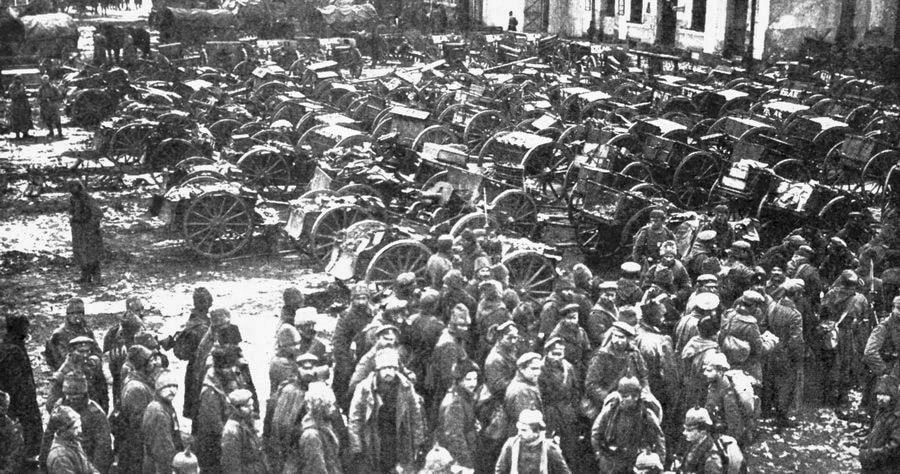
Why was Rennenkampf's First Army unable to help Samsonov's Second Army during the Battle of Tannenberg?
Russia in the Gorlice-Tarnow Offensive
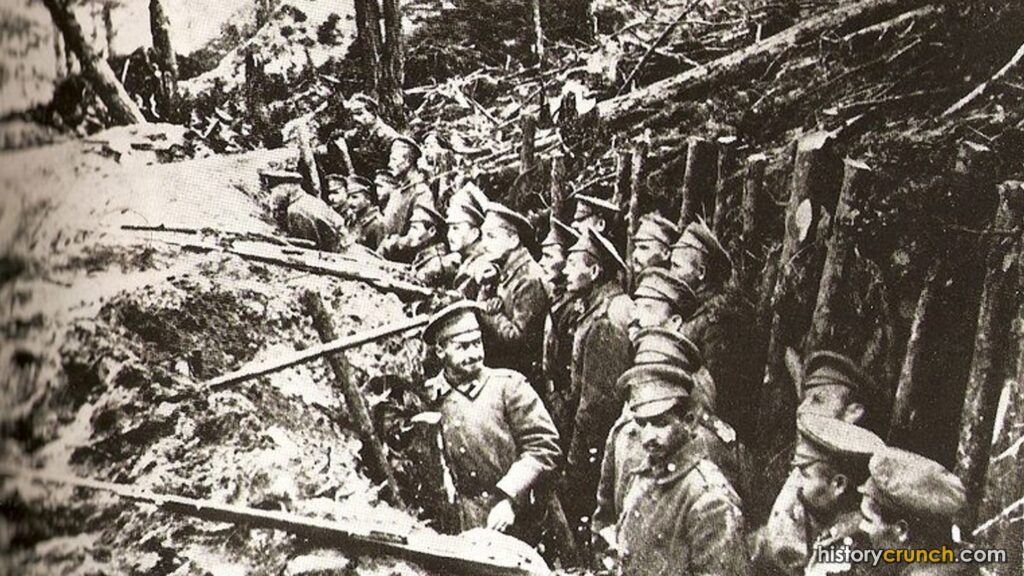
Another important conflict involving Austria-Hungary on the Eastern Front was the Gorlice–Tarnów Offensive. This was a major military offensive carried out by the Central Powers of Germany and Austria-Hungary against Russia. The Gorlice–Tarnów Offensive took place from May 2nd to June 22nd in 1915 and occurred along the eastern border of Austria-Hungary. In general, the offensive was a major victory for Germany and Austria-Hungary. In fact, Germany was the major contributor to the success of the offensive for the Central Powers. At the time, Germany held a large superiority to Russia in the form of artillery technology, and was able to use its artillery to overwhelm the Russian forces on the Eastern Front. The Austro-Hungarian forces, under the command of General Franz Conrad von Hötzendorf, were able to push through the Russian defenses and caused the Russians to fall back in retreat. In fact, the Gorlice–Tarnów Offensive led to an event that historians refer to as the ‘Great RetreatThe Russian Army’s withdrawal out of territory it had previously captured after being overwhelmed in the Gorlice-Tarnów Offensive.’. This saw the Russian Army retreat out of the territory that they had previously captured in the Battle of Galicia. Regardless, the Gorlice–Tarnów Offensive was a major victory for the Central Powers.
 FactsthatCrunch
Russia in World War I – Home Front
World War I was a devastating event not only for the soldiers on the front lines but also for the people on the home front. This was especially true in Russia, which suffered terribly during the course of World War I. However, Russians were already suffering before the start of the war, and only struggled further due to the economic and societal losses of the conflict. For example, at the outbreak of World War I in 1914, the Russian economy was largely based on subsistence agriculture. This means that most people in Russian society were working on a daily basis in harvesting food for their own consumption. This was a massive issue for a country such as Russia, which had a population of over 173 million people in 1914.
As such, Russians had little extra food production to help develop other industries. As well, Russia was struggling with widespread poverty and the lingering class divisions between the peasants and the land-owning nobility. This was due to Russia’s reliance on feudalistic systems, which other parts of Europe had abandoned much earlier. For example, France underwent the French Revolution in the late 18th century. Regardless, all of this combined to create a Russian society that was rural, based on agriculture, and overwhelmingly poor.
The events of World War I only made the situation worse for Russian citizens on the home front. For example, millions of Russian men (and sometimes Russian women) were transported to the major battles of the Eastern Front. This impacted Russian families who counted upon their family members to assist with harvest and farming. In fact, support for the war was quite low among Russian farmers, who resented the idea of their young people being sent off to fight. The support for the war decreased even more as Russia suffered heavy losses in battles such as the Battle of Tannenberg.
Morale for the overall war became so bad that it led to mutinies by Russian soldiers, with many of them returning home from the front lines of the Eastern Front. All of this combined to set the stage for the most significant event on the home front of Russia during World War I – the Russian Revolution. At the outbreak of World War I, Russia was ruled by a monarch, referred to as ‘Tsar’. In fact, the ruler of Russia was Tsar Nicholas II. He was related to other European monarchs of the time, including: George V in England and Wilhelm II in Germany. However, Nicholas II was widely unpopular at the time due to the poverty and issues with Russia’s participation in World War I. As well, other parts of the world had revolted against their monarchs (French Revolution and American Revolution), which created a climate open to the idea of change in Russia.
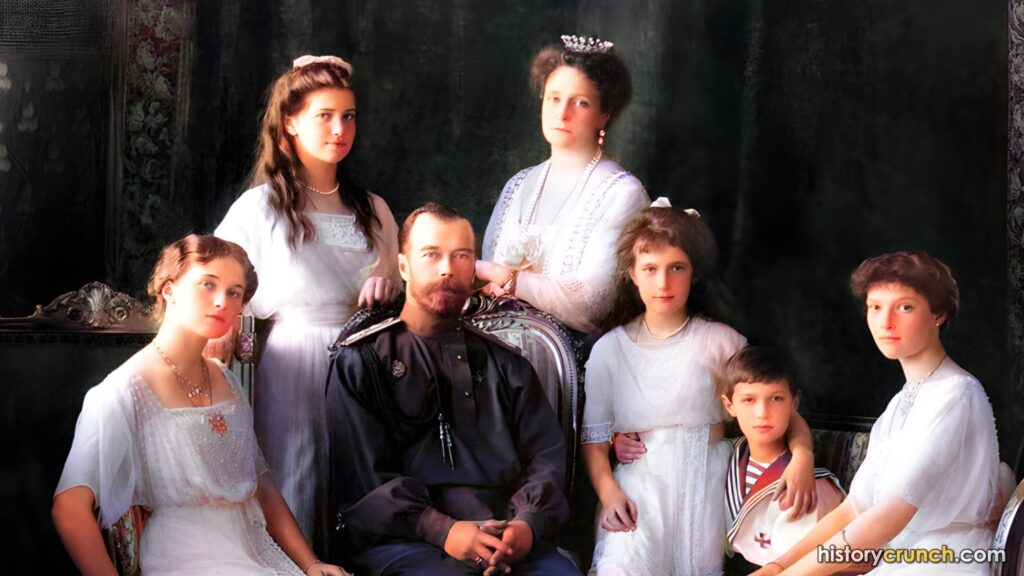
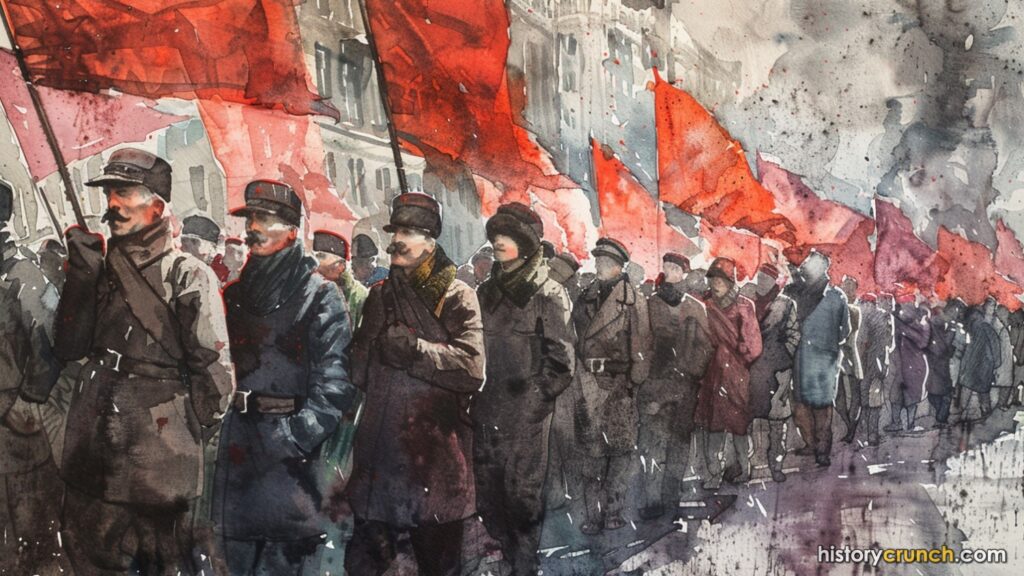
The Russian Revolution was a widespread series of protests and political uprisings that resulted in the end of the Russian monarchy and the transformation of Russia into a communist state. In March of 1917, protests and revolts forced Tsar Nicholas II to give up his throne, and he and his family were imprisoned. Then, in November of 1917, the Marxist revolutionary Vladimir Lenin along with his Marxist followers (Bolsheviks) assumed power over Russia. The Russian Revolution was a major historical event, and saw much bloodshed throughout Russia during the timeframe of World War I. With that said, the revolution continued in the years after the end of the war, and eventually resulted in the establishment of the Soviet Union.
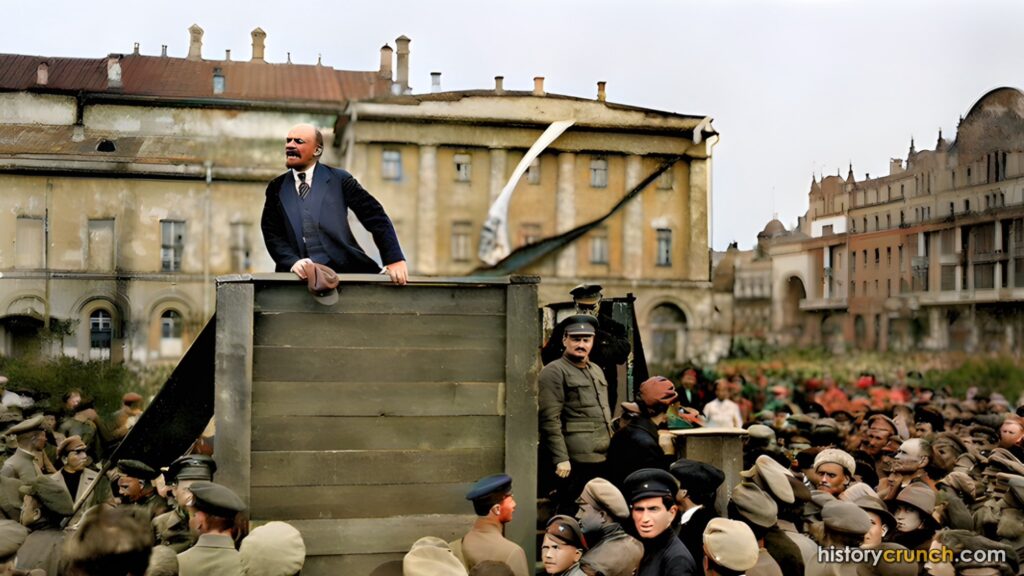
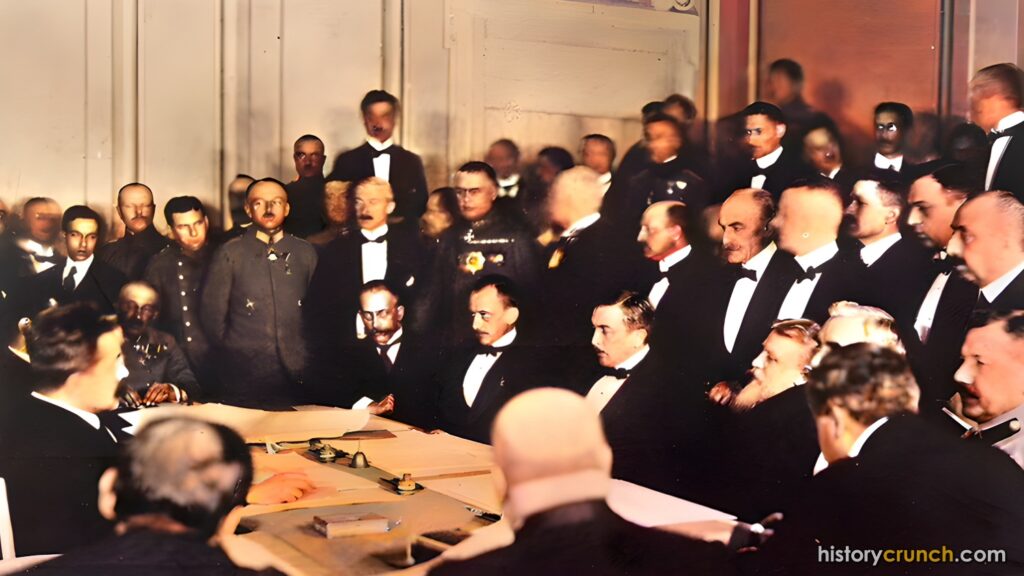
However, the Russian Revolution was a vitally important event in the history of Russia during World War I, because it ultimately led to Russia’s removal from fighting. For instance, after rising to power, Vladimir Lenin worked quickly to sign a peace treaty with Germany and the other Central Powers. A central promise that Lenin made was that he would end the war with Germany. As such, on March 3rd in 1918, the Bolshevik-led government signed the Treaty of Brest-Litovsk with the Central Powers (Germany, Austria-Hungary, Bulgaria and the Ottoman Empire). This effectively ended Russia’s participation in World War I. However, it also had other impacts on the home front for Russian citizens. For example, as part of the Treaty of Brest-LitovskThe 1918 peace agreement signed between Russia’s Bolshevik government and the Central Powers that ended Russia’s role in World War I., Russia was made to give up large sections of its own territory to Germany. As such, many Russians came under the control of Germany as a result.
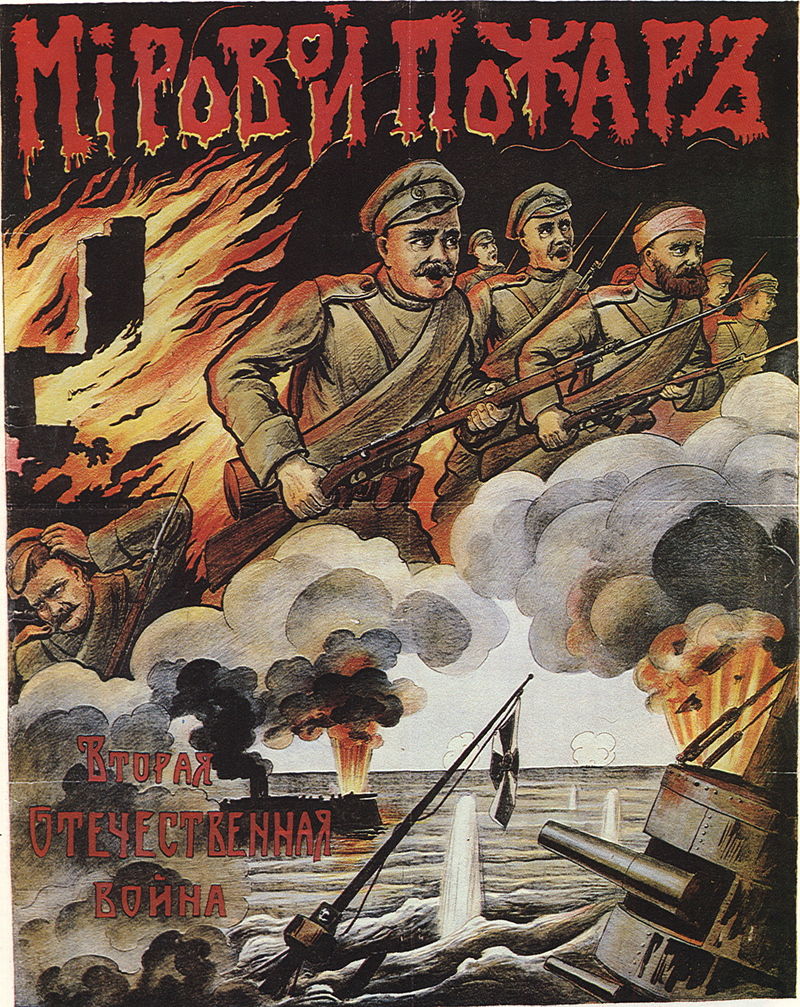
The final significant aspect of the home front for Russia, was the role of propaganda. All of the nations in World War I used propaganda to some degree, and this was no different for Russia. While he was still in power, Tsar Nicholas II and his government issued different kinds of propaganda posters to increase support for the Russian war effort. They did this by creating patriotic or nationalistic slogans and images, and distributing them across the nation. For example, the Tsarist government issued propaganda that worked to recruit soldiers for the war, ration certain items and to demonize the enemy. Russian citizens on the home front were subjected to constant messaging to ensure they supported the war effort and to maintain the push towards victory.
Russia in World War I – Significance
World War I was a highly important event in the history of Russia. First, and foremost, over 12 million Russian soldiers served during World War I. As well, approximately 1.8 million Russian soldiers died as a result of military action during the war. In fact, Russia suffered some of the worst losses of any nation in World War I.
Second, the terrible losses suffered by Russia were characteristic of the overall nature of the fighting in World War I. As well, Russian armies fought in some of the largest and most significant battles of the Eastern Front.
Beyond this, World War I was highly significant for the country of Russia due to the outcome of the war and the result for the country and government. As stated above, Russia underwent the Russian Revolution during the timeframe of World War I. This was a major historical event, not only for Russia but also for the rest of the world. For instance, the Russian Revolution ended the Tsarist government in Russia and resulted in the country accepting defeat in World War I. This had a major impact on the war effort for the other Allied Powers and changed the nature of the war throughout 1917 and 1918.
However, the Russian Revolution was also significant as an event in world history due to it being the first rise of communism in the world. For example, after communism first emerged in Russia, it went on to have a significant impact on the rest of the world throughout the 20th century. For example, communism spread to other countries and led to the events of the Cold War. Today, communism remains relevant due to communist governments in North Korea and Cuba.
 FactsthatCrunch
World War I timeline · 1914 – 1918
Key Vocabulary
Triple Entente
Pan-Slavism
Mobilized
Subsistence agriculture
Schlieffen Plan
Great Retreat
Treaty of Brest-Litovsk
Frequently Asked Questions
Why did Russia enter World War I?
Russia entered World War I to protect Serbia after Austria-Hungary declared war on it on July 28th, 1914. Russia and Serbia shared Slavic heritage through the idea of Pan-Slavism. Russia was also tied to France by the Franco-Russian Alliance, part of the Triple Entente. When Russia mobilized its forces on July 30th, Germany responded with its own mobilization.
Why was the Russian army poorly prepared for the war?
The Russian army struggled because Russia was not industrialized like the other major European powers in 1914. It was mostly a rural country that relied on subsistence farming, so it could not supply its soldiers well. In some battles nearly two-thirds of Russian troops had no rifle. A weak rail network also made it hard to move men and supplies to the front.
What happened at the Battle of Tannenberg?
The Battle of Tannenberg was a crushing German victory over Russia from August 26th to August 30th, 1914. The German Eighth Army surrounded and destroyed Alexander Samsonov’s Second Army in East Prussia. About 92,000 Russians were captured and 78,000 were killed or wounded, and Samsonov took his own life. Russia never again seriously threatened German territory during the war.
Did Russia win any major battles on the Eastern Front?
Yes, Russia won an important victory at the Battle of Galicia in the early months of the war. Fought against Austria-Hungary from August 23rd to September 11th, 1914, it forced Austro-Hungarian armies into retreat. Russia captured a large amount of territory around the city of Lemberg. Both sides suffered heavy losses, with Austria-Hungary taking as many as 450,000 casualties.
How did Russia leave World War I?
Russia left the war after the Russian Revolution of 1917 brought Vladimir Lenin and the Bolsheviks to power. Lenin had promised to end the fighting with Germany. On March 3rd, 1918, the new government signed the Treaty of Brest-Litovsk with the Central Powers. In exchange for peace, Russia was forced to give up large amounts of its territory.
How many Russian soldiers died in World War I?
About 1.8 million Russian soldiers died from military action during World War I. More than 12 million Russians served in uniform over the course of the war. Russia suffered some of the worst losses of any nation in the conflict. These heavy losses helped weaken support for the war and set the stage for revolution.
Cite This Article
To cite this article as a source, use one of the formats below.
MLA: Beck, Elias. “Russia in World War I: A Detailed Summary.” HistoryCrunch, 29 September 2026, https://historycrunch.com/russia-in-world-war-i/.
APA: Beck, E. (2026). Russia in World War I: A Detailed Summary. HistoryCrunch. https://historycrunch.com/russia-in-world-war-i/
Chicago: Beck, Elias. “Russia in World War I: A Detailed Summary.” HistoryCrunch. September 29, 2026. https://historycrunch.com/russia-in-world-war-i/
Sources
- Imperial War Museum
- John Keegan, The First World War.