The home front was a major aspect of World War I and played a key role in the history and significance of the war. The home front involved the societies for the different nations involved and the issues faced by the citizens who did not fight in the front lines of World War I. For instance, all of the countries involved in World War I were impacted on the home front in different ways. With that said, there were some similar issues faced by all of the nations involved. This article focuses on the similar issues faced by most countries on the home front during World War I. Click on the list of links below to read more specific details about individual countries and their home fronts during the war.
 FactsthatCrunch
Home Front of World War I – Civilian Deaths
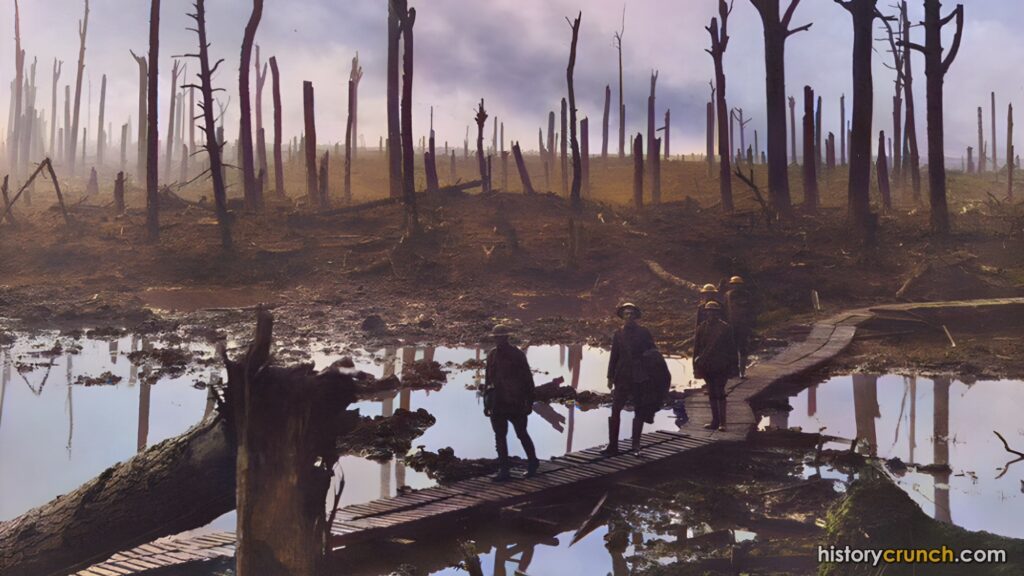
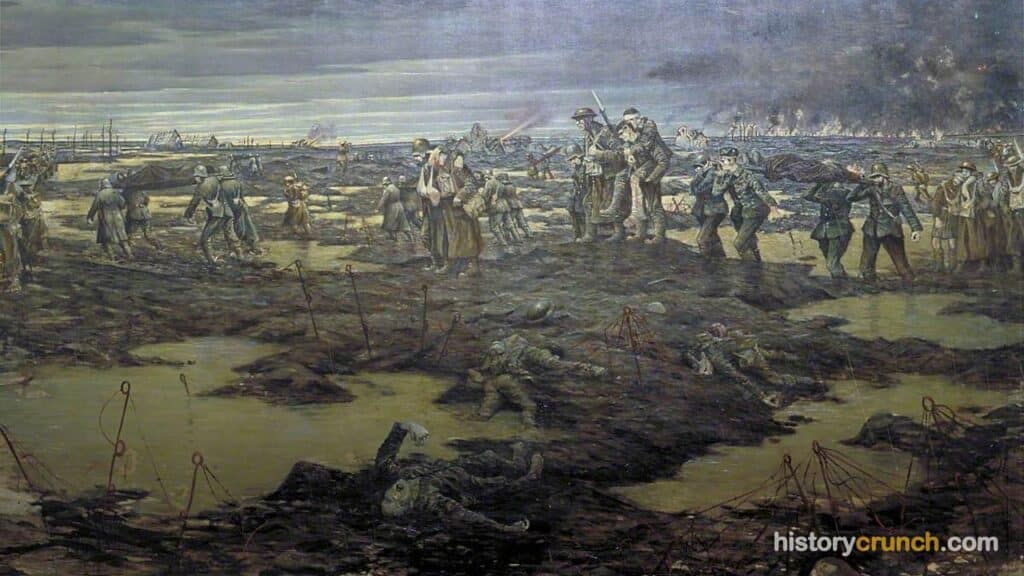
First and foremost, despite World War I being devastating for the soldiers on the front lines, it was also terrible for the civilians on the home front. For instance, historians estimate that as many as 7 million civilians died as a result of the events of World War I. This large death toll was the result of a few different factors. First, civilians suffered due to battles that affected cities and towns across the battlefields of Europe. For example, the trenches of the Western Front stretched through areas across Belgium and northeastern France, including through farms, towns and cities. This displacedForced out of one’s home or community by nearby fighting or destruction. numerous people in the region and led to casualties among the civilian populations of Europe.
Home Front of World War I – Role of Women
Another common impact of the home fronts of World War I was the impacts for women. World War I is considered to be an example of a total warA conflict that pulls every part of society—farms, factories, and civilians—into supporting the fighting effort., which involves all aspects of society being used towards the war effort. For example, during World War I many men volunteered for war while agriculture and factories on the home front were all producing to further the cause of war.
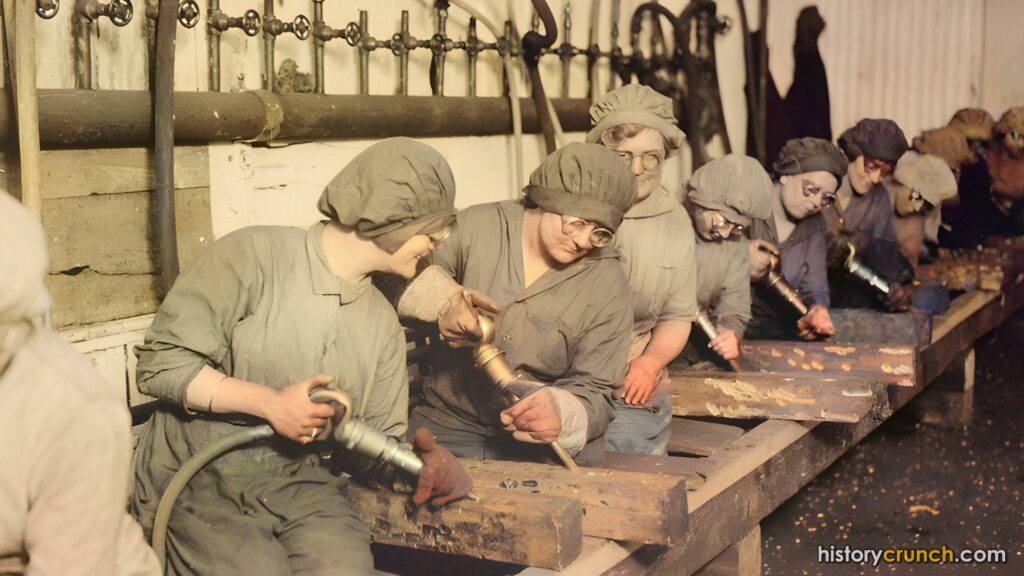
Since many of the men in these societies were gone to the front lines, World War I saw women enter the workforce in large numbers for the first time. These women took jobs in factories that produced the weapons of war. As well, they worked in office buildings and other positions. This new role for women occurred at the same time as popular feminist and suffrageThe legal right to vote in public elections, which women fought for and won during this period. movements across North America and Europe wherein women fought for and won the right to vote in general elections. This was a transformative event in the history of these countries and seriously affected the home fronts of many countries involved in World War I.
 FactsthatCrunch
By 1918, nearly one million British women worked making weapons and shells. They were nicknamed “munitionettes.”
The work was dangerous. Handling explosives could turn workers’ skin yellow, earning some the nickname “canaries,” and accidental explosions at munitions factories killed hundreds of workers during the war.
Home Front of World War I – Resources
Another issue for civilian populations was the lack of resources. For instance, the German home front went through a period of hardship during the course of the war. The period from 1916 until 1917 is referred to as the ‘Turnip WinterA period of severe food shortage in Germany from 1916 to 1917 when citizens were reduced to eating animal feed.’ in Germany due to the lack of food choices for the German citizens. Instead, citizens were left to eat turnips, which were most often used to feed livestock. Furthermore, historians estimate that as many as 474,000 German citizens died as a result of malnutritionA dangerous lack of proper food that weakens the body and can cause death.. Finally, the home front was impacted by the events of the Flu Pandemic of 1918 (Spanish Flu). This pandemic hit the home fronts of World War I near the end of the war, but devastated the lives for both soldiers and civilians. As such, these factors combined to create a terrible situation for civilians on the home front.
Related to total war, governments across North America and Europe controlled the production and use of resources to ensure that as many resources were being put towards the war effort as possible. For example, citizens on the home front were required to ration food items and other resources in order to save them for use on the frontlines. It was the belief of military generals that well-fed soldiers would help overcome the enemy and bring about an end to the war. The rationing of food included items such as: sugar, butter, meat and bread. For Britain, an island nation, the rationing was even more important because German submarines in the North Atlantic sank merchant ships and slowed the supply of trade to and from the country.
 FactsthatCrunch
Britain Begins Rationing Sugar Across the Country
German submarines had sunk so many merchant ships that food was running short in Britain. Sugar rationing began across the country on January 1st, 1918, and meat, butter and margarine followed later that year, when every family was given a ration book.
Home Front of World War I – Propaganda
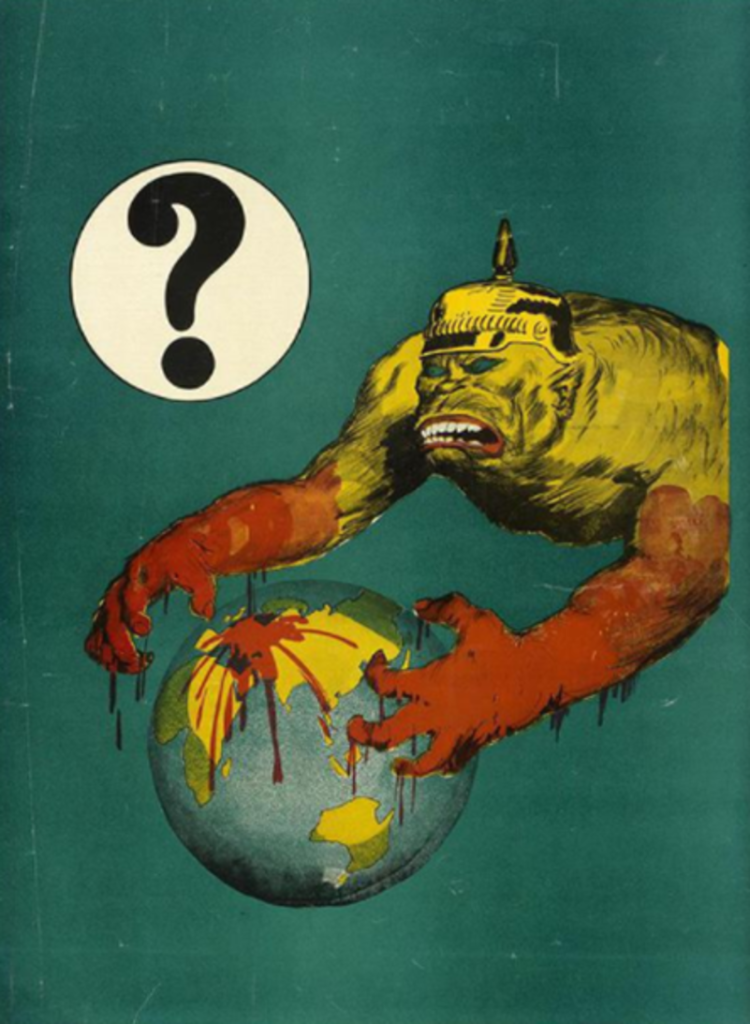
In order to promote rationing and other initiatives, the governments of the time used propaganda to convince citizens of certain messages. PropagandaPolitical messaging used by governments to promote specific goals, such as recruiting soldiers or encouraging rationing. is a form of political messaging that promotes certain initiatives and other government sponsored goals. For example, governments issued propaganda that worked to recruit soldiers for the war, ration certain items and to demonize the enemy. Citizens on the home front were subjected to constant messaging to ensure they supported the war effort and to maintain the push towards victory.
 FactsthatCrunch
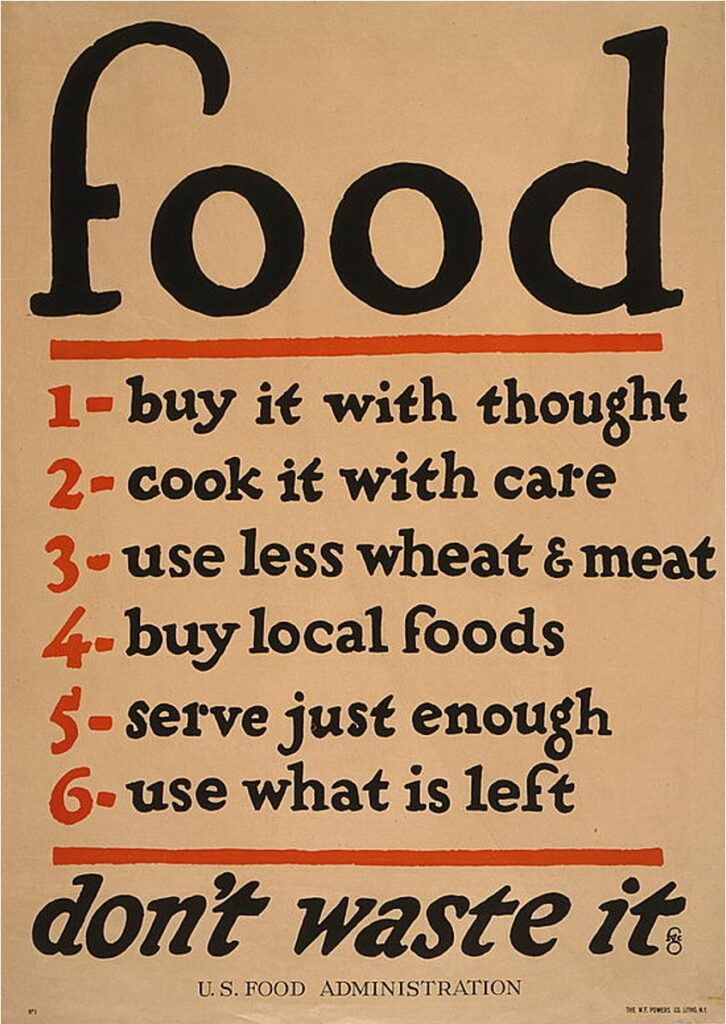
Food–don't waste it. 1. Buy it with thought 2. Cook it with care 3. Use less wheat and meat 4. Buy local foods 5. Serve just enough 6. Use what is left.
What does the list of six rules in this World War I home-front propaganda source tell us about how the U.S. government tried to keep civilians involved in the war effort?
Home Front of World War I – Conscription
Finally, citizens on the home front were impacted when their governments decided to draft or conscriptTo legally require citizens to serve in the military through a government-passed law. soldiers for war. This means that the government had passed laws making military service mandatory. Countries did this in order to increase numbers in the armed service in the hopes of making the final advance towards victory and to bring an end to the fighting in World War I.
 FactsthatCrunch
Significance of the Home Front of World War I
In all, life on the home front changed dramatically during the course of World War I, and the civilians on the home front faced many different challenges. While all of the nations of World War I experienced similar challenges on the home front, there were also many differences, which were unique to each individual country. As such, in order to understand the impact of World War I on the home front of each nation, it is important to learn about the history of each country during the war.
Click on the links below to read more detailed information about the home front of the different major nations of World War I:
- Australia in World War I
- Austria-Hungary in World War I
- Britain in World War I
- Bulgaria in World War I
- Canada in World War I
- France in World War I
- Germany in World War I
- Italy in World War I
- Ottoman Empire in World War I
- Russia in World War I
- United States in World War I
FactsthatCrunchHow did World War I reshape daily life for civilians far from the trenches?
Explore World War I
Keep exploring World War I with these History Crunch resources.
Key Vocabulary
Total war
Displaced
Suffrage
Turnip Winter
Malnutrition
Propaganda
Conscript
Frequently Asked Questions
What was the home front in World War I?
The home front was the part of each nation away from the fighting where civilians lived and worked. These people did not fight in the trenches, but they still faced hardship and danger. They kept factories and farms running to support the war effort. Nearly every country in the war dealt with these same struggles in some form.
How many civilians died during World War I?
Historians estimate that as many as 7 million civilians died because of World War I. Many were killed when battles swept through towns and farms across Europe. The trenches of the Western Front ran through Belgium and northeastern France and displaced many people. Disease and starvation also raised the civilian death toll during the war.
How did World War I change the role of women?
Women entered the workforce in large numbers for the first time during World War I. With many men away at the front, women took jobs in factories that made weapons. They also worked in offices and filled other roles once held by men. This shift happened alongside movements in which women fought for and won the right to vote.
What was the Turnip Winter?
The Turnip Winter was a period of severe food shortage in Germany from 1916 to 1917. Citizens had few food choices and were left to eat turnips, which were normally fed to livestock. Historians estimate that as many as 474,000 German citizens died from malnutrition during the war. The blockade of Germany made these shortages far worse.
Why did governments use propaganda and rationing?
Governments used propaganda to convince citizens to support the war and follow rules like rationing. This political messaging recruited soldiers, promoted saving food, and painted the enemy as evil. Rationing limited items such as sugar, butter, meat, and bread so more could go to soldiers. For Britain, an island nation, rationing was vital because German submarines sank supply ships.
What was conscription during World War I?
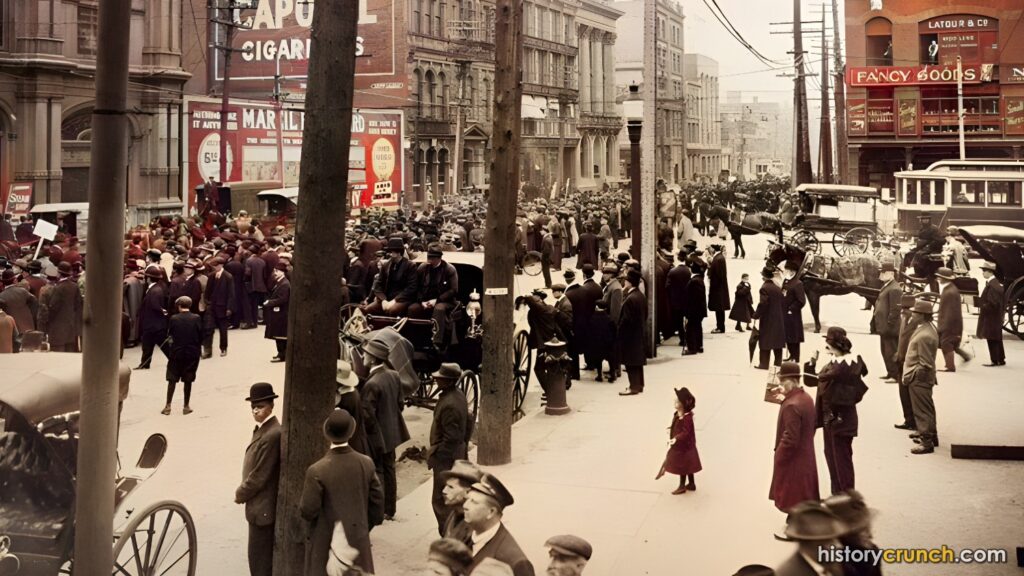
Conscription was a law that made military service mandatory for eligible men. Governments used the draft to raise the number of soldiers and push toward victory. This policy affected families on the home front and was not always popular. In Canada, for example, people protested conscription in Montreal in 1917.
Cite This Article
To cite this article as a source, use one of the formats below.
MLA: Beck, Elias. “Home Front of World War I: A Detailed Summary.” HistoryCrunch, 30 September 2026, https://historycrunch.com/home-front-of-world-war-i/.
APA: Beck, E. (2026). Home Front of World War I: A Detailed Summary. HistoryCrunch. https://historycrunch.com/home-front-of-world-war-i/
Chicago: Beck, Elias. “Home Front of World War I: A Detailed Summary.” HistoryCrunch. September 30, 2026. https://historycrunch.com/home-front-of-world-war-i/
Sources
- Fordham Modern History Sourcebook
- Margaret MacMillan, The War That Ended Peace.
- John Keegan, The First World War.
- Hew Strachan, The First World War.