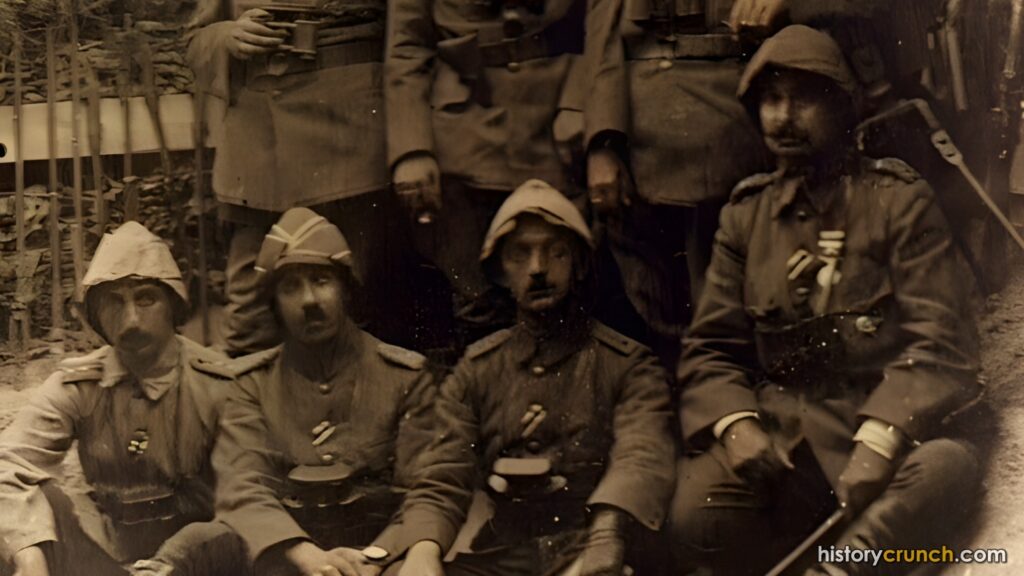
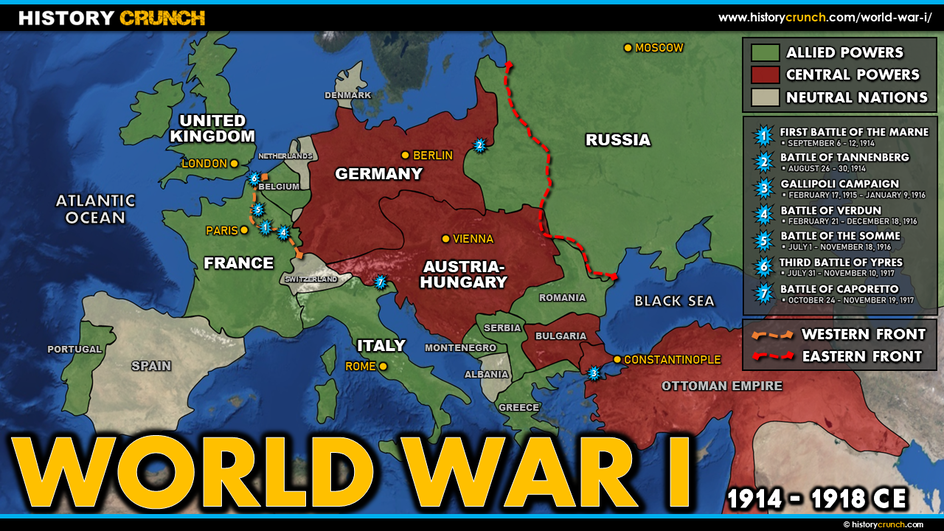
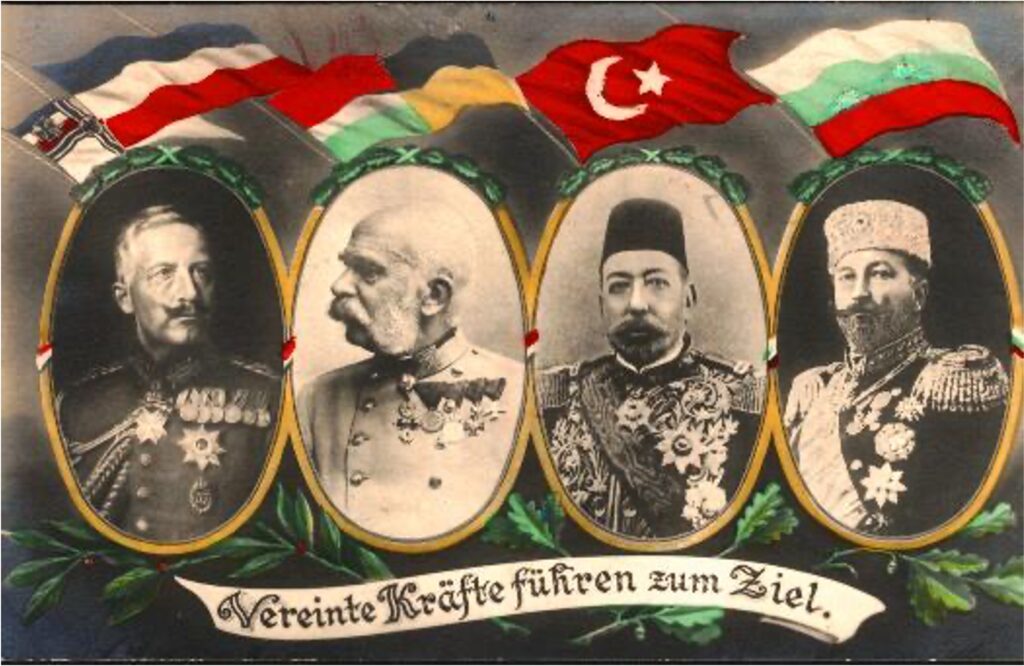
The Ottoman Empire was a major contributor to the events and battles of World War I. For example, during World War I, the Ottoman Empire was one of the Central Powers alongside Germany, Austria-Hungary and Bulgaria. Ottoman Empire soldiers fought in both the Balkans and in the Middle East. As well, World War I had a large impact on the Ottoman Empire, since the empire broke apart just four years after the end of World War I in 1918.
 FactsthatCrunch
Ottoman Empire Enters World War I
World War I erupted during the summer of 1914 in an event that historians refer to as the July Crisis. In short, this crisis was caused by the assassination of Austrian Archduke Franz Ferdinand, which led to the major European powers engaging in a conflict. Prior to the start of World War I, the Ottoman Empire was on the ‘outside looking in’ of Europe. This means that the Ottoman Empire was not one of the main nations of Europe and was often viewed as an ‘outsider’ nation by the other European nations. As such, it did not play an active role in the unfolding of events that led to the start of World War I in 1914.

However, once war seemed imminent between the major European nations, the Ottoman Empire leadership began seeking a way to gain advantages for itself. At first, the Ottoman Empire declared neutralityA choice by a country to not take sides or join the fighting in a war. and began negotiating with both the Allied Powers and the Central Powers.
This ultimately led them to agree to a secret Ottoman-German Alliance against Russia on August 2nd, 1914. Soon after, two German warships (SMS Goeben and SMS Breslau) escaped to Constantinople and were handed over to the Ottoman Navy. These naval ships proved significant in the Ottoman Empire’s eventual entry into the fighting of World War I.
The event that led to the Ottoman entry of World War I was the Black Sea Raid, which took place on October 29th, 1914. The raid was a plan between both Ottoman and German naval commanders to trick Russia into attacking the Ottoman Navy and making it look like Russia had instigatedStarted or provoked a conflict, making it appear someone else began the aggression. war against the Ottoman Empire. Essentially, the Ottoman Navy, along with the two German warships, were going to carry out naval maneuvers near the Russian Navy and provoke them into attacking. However, what occurred was, the German commander of the two German warships, German Admiral Wilhelm Souchon, attacked the Russian coast. This sparked Russian outrage against the Germans and the Ottomans and forced the Ottoman Empire into World War I.
While the leadership of the Ottoman Empire denounced the attack and blamed it on Wilhelm Souchon, the Russians still declared war on the Ottoman Empire on November 2nd, 1914. The British and the French followed suit, just three days later, and also declared war against the Ottoman Empire. For their part the Ottoman Empire officially declared war on November 11th against Britain, France and Russia. The Ottoman Sultan, Mehmed V, made the official declaration of war.
 FactsthatCrunch
Neutrality is a country's choice to stay out of a war and not support either side. A neutral country does not send troops, sign military alliances, or join the fighting. It may still trade with other nations, but it tries to avoid actions that would pull it into the conflict.
When World War I began in the summer of 1914, the Ottoman Empire declared neutrality at first, negotiating with both the Allied Powers and the Central Powers before secretly siding with Germany.
Ottoman Empire in World War I – Army
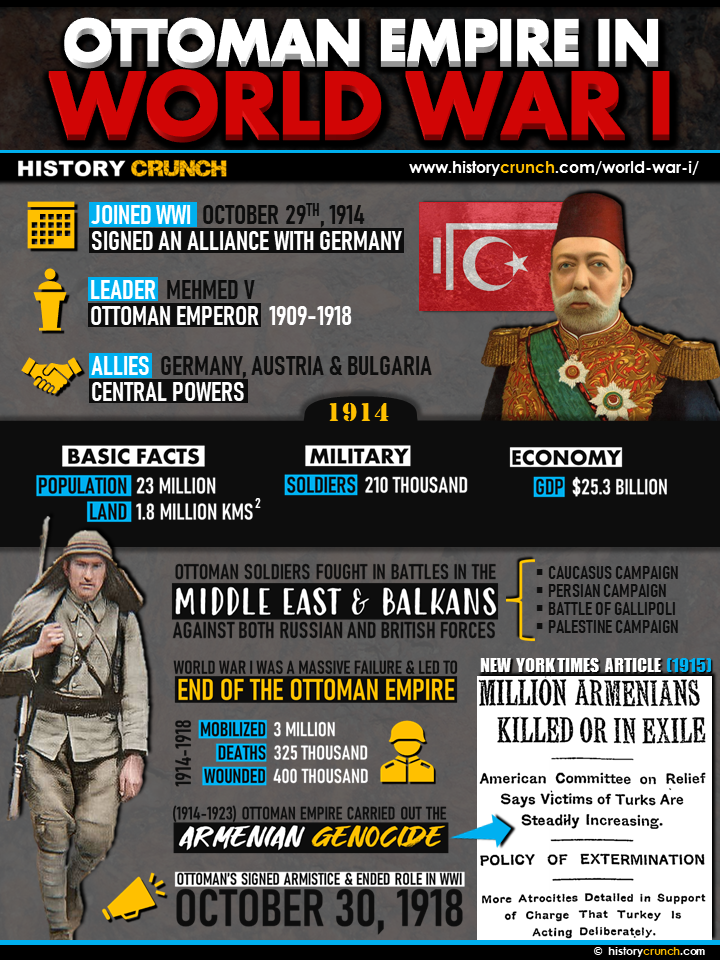
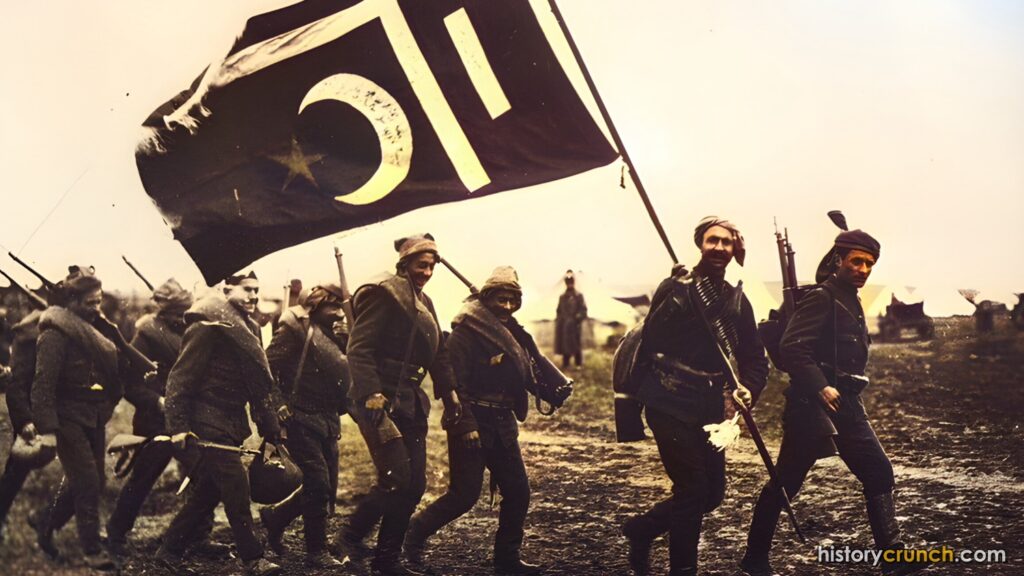
At the outbreak of World War I, in 1914, the Ottoman Empire had approximately 210,000 soldiers and by the end of the war 3 million had served in uniform. In 1914, the Ottoman Empire had four main armies, which they divided into divisions. Each of the four Ottoman Armies were tasked with different roles and carried out missions in the Balkans and the Middle East. Furthermore, in 1915, the Ottoman Empire established two new armies – the Fifth and Sixth Army.
When the Ottoman Empire entered the fighting of World War I in 1914, it struggled to mobilizeTo organize and prepare a country’s military forces to fight in a war. and properly supply and prepare its armies. In fact, the empire struggled to adequately supply and prepare its military forces before and during World War I. For example, at the start of the war, the country had primarily equipped its soldiers with German-made weaponry and equipment. However, the weapons were generally outdated and of a lesser quality than more recently designed ones used by other nations. As such, the Ottoman Empire army struggled in many of its most important conflicts.
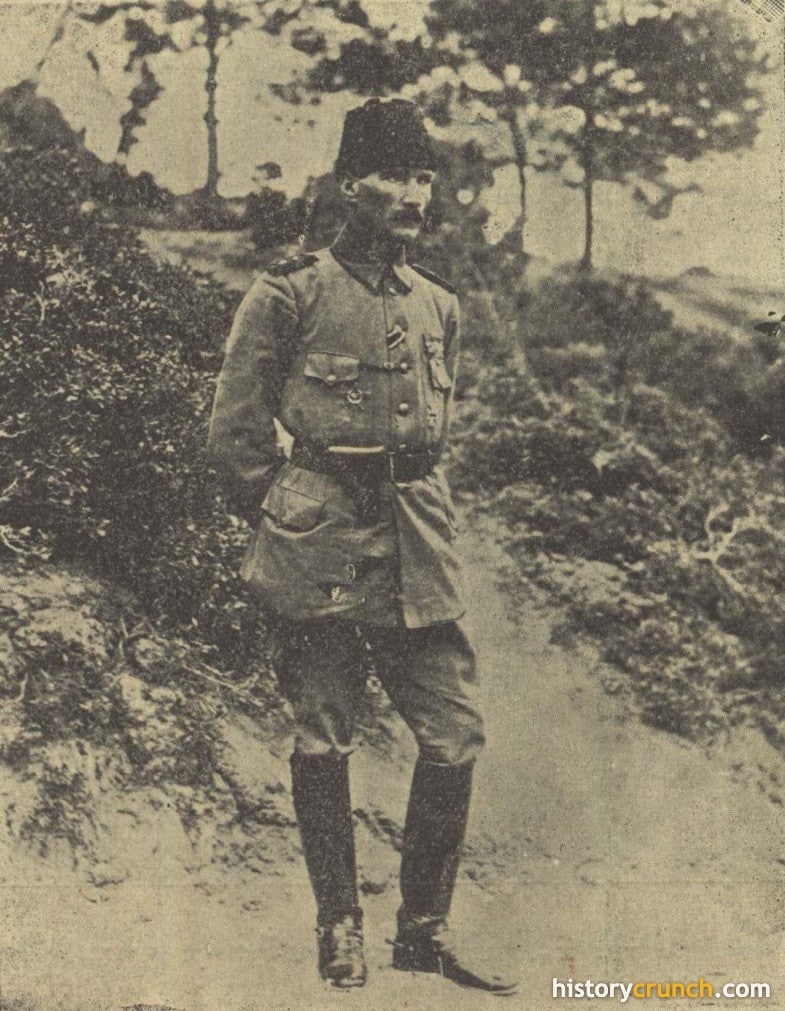
In all, the Ottoman Empire struggled to field a capable fighting force in World War I. Regardless, the Ottoman forces were led by several different commanders, including: Enver Pasha, Fakhri Pasha, and Mustafa Kemal Atatürk.
Ottoman Empire in World War I – Major Battles
The Ottoman Empire was a significant nation in the events of World War I and fought along several fronts in the war. For instance, Ottoman forces primarily fought in the Balkans and the Middle East. The Balkans Front occurred in Eastern Europe, while Ottoman forces also fought the famous Gallipoli Campaign in southeastern Europe and several campaigns across the Middle East. Also, the Ottomans fought in the Caucasus Campaign, which was fought in the Armenian Highlands, east of the Black Sea. In all, these conflicts meant that the Ottoman Empire primarily fought against Russia and the British during World War I.
As stated above, Ottoman Empire forces participated in many battles of World War I. Some of the most significant battles of World War I that the Ottoman Empire participated in included:
FactsthatCrunchMustafa Kemal Ataturk commanded Ottoman troops during the Gallipoli Campaign of 1915, where his division helped stop the Allied landings and he became a national hero. After World War I and the breakup of the Ottoman Empire, he led a nationalist movement, founded the Republic of Turkey in 1923, and served as its first president, reshaping the country’s government, laws, and alphabet.
Ottoman Empire in the Caucasus Campaign
One of the first main events that the Ottoman Empire participated in during World War I was the Caucasus Campaign, which took place from October of 1914 until October of 1918. As stated above, the Caucasus Campaign was fought between Russia and the Ottoman Empire, and occurred in territory on the southern border of Russia near the eastside of the Black Sea. At the time, the Ottoman Empire was interested in regaining territory in the Caucasus region, which it had lost to Russia in the earlier Russo-Turkish War of 1877. As well, the Central Powers of Germany and Austria-Hungary welcomed the Caucasus Campaign as a means of dividing the Russian forces from the Eastern Front.
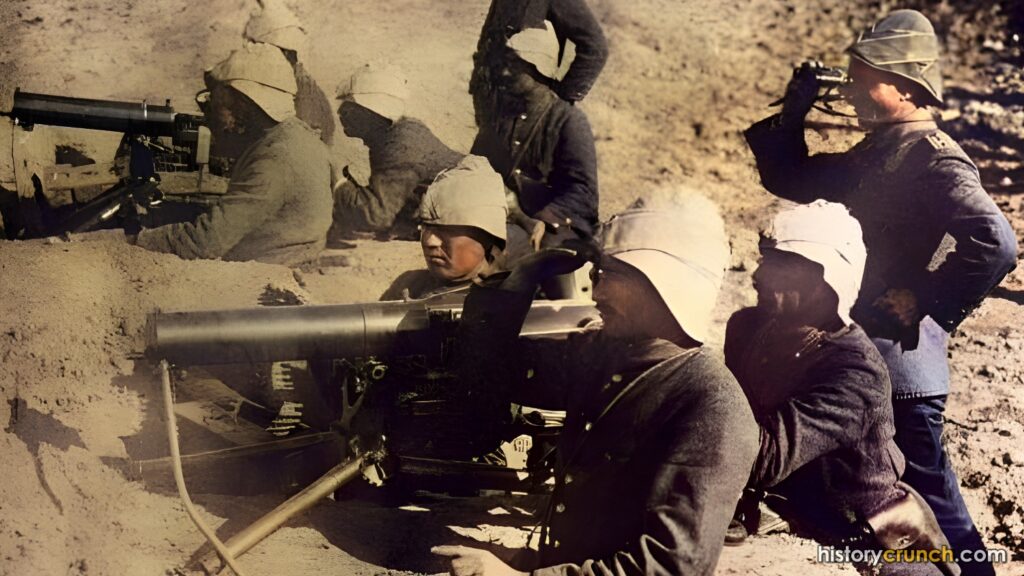
The Ottoman Empire used its Third Army in the Caucasus Campaign and later reinforced their attack with elements of the Second Army. Historians estimate that the Ottomans initially attacked with upwards of 190,000 soldiers, with over 300,000 soldiers fighting in the conflict by the end. Ultimately, the fighting of the campaign ended when Russia withdrew from the war due to the events of the Russian Revolution. For instance, Russia signed the Treaty of Brest-Litovsk in March of 1918, which effectively ended the war for Russia. Historians estimate that the Ottoman Empire suffered as many as 300,000 casualtiesSoldiers lost in war through death, wounds, capture, or disease. in the Caucasus Campaign. In contrast, it is believed that Russia only suffered roughly 140,000 casualties.
FactsthatCrunchOttoman Empire in the Gallipoli Campaign
The next major conflict of World War I that the Ottoman Empire participated in was the Gallipoli Campaign. Also known as the ‘Dardanelles Campaign’, the Gallipoli Campaign took place from February 17th, 1915 until January 9th, 1916. It was a major conflict of World War I and occurred on the Gallipoli Peninsula in southeastern Europe, in modern-day Turkey. The Gallipoli Campaign was fought between the Allied Powers (Britain and France, with troops from across the British Empire) and the Central Powers (Austria-Hungary, Germany and the Ottoman Empire). The Ottoman Empire played a significant role due to its geographic location and close proximity to the Gallipoli Peninsula.
The goal of the Gallipoli Campaign, from the perspective of the Allied Powers, was to weaken the Ottoman Empire, which exerted a great deal of influence in the southeastern areas of Europe. For instance, the Allied nations wanted to secure waterways in the area in order to ensure that the Ottoman Empire did not prevent necessary shipping routes, especially to Russia. This is because the Black Sea was an important trading route for Russia along its southern border, and the Ottoman Empire had the ability to control the waterways in and out of the Black Sea.
The Allied nations (Britain, France, India, Australia and New Zealand) began their attack against the Ottomans in February of 1915 at the Dardanelles, which was a key entrance to the Ottoman capital of Constantinople (modern-day Istanbul). This Allied attack failed and led to another Allied advance at the Gallipoli Peninsula in April of 1915. The Gallipoli Peninsula is located near the Dardanelles. The goal of the attack was to gain control over Constantinople. The entire campaign was a massive failure for the British and their allies as their troops struggled against the Fifth Army of the Ottoman Empire. The Allied forces had fully withdrawn from the region by January of 1916.
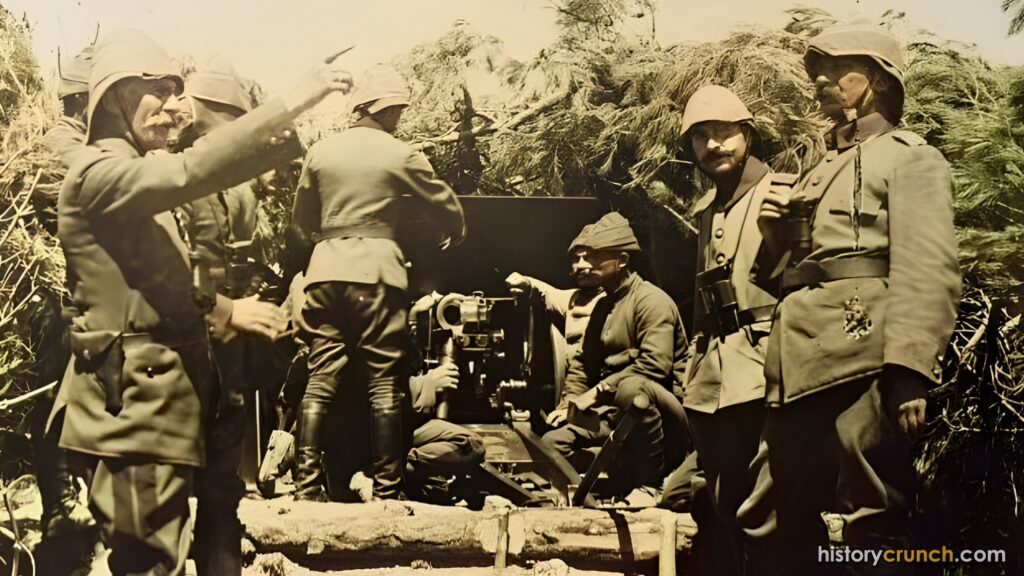
Today the Gallipoli Campaign is viewed as a major loss for the Allies. In fact, most historians view the Ottoman victory at Gallipoli as incredible due to the perceived inferiority of the Ottoman Army and soldiers. More specifically, the Allied nations were much more industrialized and educated than the Ottomans, thus it seemed natural that the Ottoman Army would struggle against a superior force. As well, the Allied nations attacked with superior numbers. It is believed that the Allied nations had as many as 489,000 soldiers in the Gallipoli Campaign, whereas the Ottomans are thought to have had only 315,000. However, the Ottomans were able to withstand the Allied attacks and ultimately proved victorious at Gallipoli. In total, the Allied forces suffered over 300,000 casualties in the battle, including 46,000 deaths. In comparison, historians estimate that the Ottoman Empire suffered approximately 250,000, including over 56,000 deaths. The casualty figures for the Gallipoli Campaign are controversial though, due to dispute among historians and the role of sickness. For instance, many Allied and Ottoman soldiers suffered from diseases that spread easily throughout the duration of the Gallipoli Campaign. These diseases included typhoid, dysentery and diarrhea. Regardless, the Gallipoli Campaign was a major victory for the Ottoman Empire, and is remembered today as a dramatic loss for the Allies (especially Australia).
 FactsthatCrunch
Why did the Allied Powers attack the Dardanelles during the Gallipoli Campaign?
Ottoman Empire in the Sinai and Palestinian Campaign
Another major campaign from World War I that the Ottoman Empire participated in was the Sinai and Palestinian Campaign. This was a major event in the Middle Eastern Front of World War I, and saw the Allied Powers face off against the Central Powers for control in Egypt and Palestine.
The Allied Powers related to the Sinai and Palestinian Campaign included Britain and the British Empire (including Australia, India, New Zealand, South Africa, etc.), France, Italy and support from some local Arab nations and groups. The Central Powers that participated in the conflict included the Ottoman Empire, Germany and Austria-Hungary.
At the time, the Suez Canal in British-controlled Egypt was a strategic point of interest for the Central Powers. In fact, they hoped to capture it and prevent the Allied Powers from using it to transport soldiers and supplies for the war effort. As such, the British hoped to reinforce the region with forces from its empire. However, the Ottoman Empire hoped to raid and capture the Suez Canal in order to gain control over transportation routes in the region. For example, the Ottoman Empire raided the Suez Canal between January 26th and February 4th in 1915. The Ottoman forces, which were led by Germany, failed to capture the Suez Canal, and the raid was a victory for the British. Furthermore, the British used Australian and New Zealand forces (ANZAC) to protect the Suez Canal and the Sinai Peninsula during the conflict. For example, the ANZAC Mounted Division was involved in all of the major battles of the Sinai and Palestinian Campaign, against the Ottoman Empire. More specifically, they were important in helping prevent the Ottomans from gaining control over the Suez Canal and British-controlled Egypt.
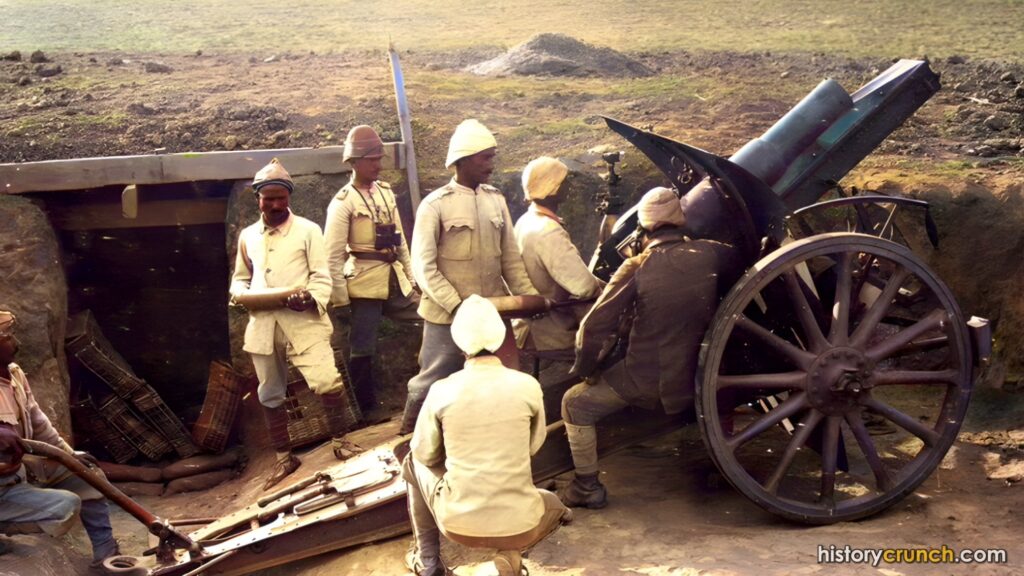
The major battles of the Sinai Campaign included: Senussi Campaign, Battle of Romani, Battle of Rafa, Three Battles of Gaza, Battle of Beersheba, Battle of Mughar Ridge, Battle of Jerusalem and Battle of Megiddo. These battles occurred from 1915 until 1918 and were important in helping ensure Allied control over important trade routes and economic centers of the Middle East. The Sinai and Palestinian Campaign ended on October 30th, 1918 when the Ottoman government surrendered. In total, the Ottoman Empire suffered nearly 190,000 casualties and nearly 30,000 deaths in the conflict.
In the end, the Ottoman Empire suffered 975,000 casualties in all of World War I, including 325,000 deaths.
 FactsthatCrunch
Ottoman Empire in World War I – Home Front
An important aspect of the First World War for all of the countries involved was the impact it had on the home front. This was also evident in the Ottoman Empire, which experienced impacts on daily life for its citizens.
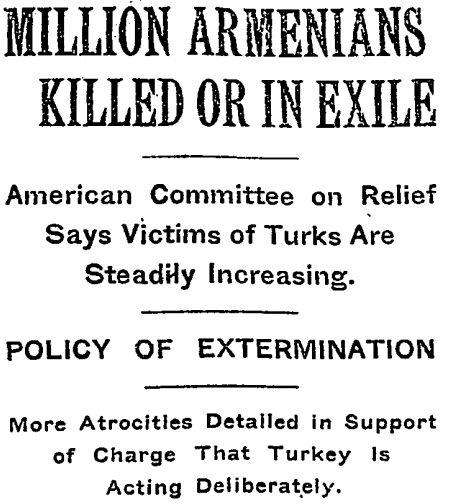
Likely the most significant event on the home front of the Ottoman Empire was the events of the Armenian Genocide, which occurred during the timeframe of World War I. At its height, the Ottoman Empire stretched across much of the Middle East, Northern Africa and Eastern Europe. As such, it was made of many different nationalities, ethnicities and religions. One of these groups was the Armenian population that had lived under Ottoman rule since the mid-16th century. Most Armenians lived in the eastern portion of modern-day Turkey, with some living in the western city of Constantinople (modern Istanbul). There was continual conflict between the Armenian populations and the ruling Ottomans (or Turks). One major reason for this conflict was a difference in religious faith. The Ottoman Empire was primarily made up of people of the Islamic faith, whereas Armenians were primarily Christian. As such, Christian minorities in the Ottoman Empire often suffered from persecutionCruel and unfair treatment of a group of people because of their identity or beliefs. and prejudice. Out of this conflict emerged an Armenian nationalistic movement aimed at freeing the Armenian people from Ottoman rule.
Throughout the events of the Armenian GenocideThe deliberate mass killing of a large group of people because of their ethnicity or religion., the Ottoman government persecuted and killed hundreds of thousands of Armenian people. As well, they forced hundreds of thousands of Armenians from their homes in the eastern regions of the Ottoman Empire, which led to the deaths of many. Furthermore, the Ottoman government established a series of camps, which historians refer to as concentration camps, along the border with Syria and Iraq. These were designed as destinations for the fleeing Armenian people who had not died along the march. The life expectancy in these camps was quite low with some being only a few days. This was a result of the Ottoman government refusing to supply the people with food or water. In fact, some reports from the time talk of mass graves that began to emerge at the time with as many as 60,000 dead inside. Other Armenians died in horrible ways, including: mass burnings, mass drownings, and the use of poison gas. In all, it is estimated that as many as 1.5 million Armenians died during the forced marches and massacres. However, historians are unsure and the estimates range from as low as 500,000.
Another major aspect of the home front for the Ottoman Empire in World War I was the economic impact of the war. Before the war began, the Ottoman Empire was primarily a rural country, and easily one of the least industrialized nations among the major combatants of World War I. As such, many of the people on the home front experienced economic hardship. This was especially true in the far reaches of the Ottoman Empire. In fact, a major economic hardship for the empire during World War I was the loss of laborers due to people being needed for soldiers in the war. This became such an issue for the Ottoman Empire, that it actually threatened their ability to harvest enough food for all of its citizens. As such, the citizens on the home front experienced food shortages throughout the course of the war.
The next main impact of life on the home front for the Ottoman Empire was the role of government propaganda. In order to promote support for the war and other initiatives, the government of the time used propaganda to convince citizens of certain messages. Ottoman Empire citizens on the home front were subjected to constant messaging to ensure they supported the war effort and to maintain the push towards victory.
The final impact for the citizens of the Ottoman Empire was the rise of nationalismStrong pride in and loyalty to one’s own nation or ethnic group, often demanding political independence. in the empire during the course of World War I. Nationalism swept across Europe and other parts of the world throughout the 19th century and early 20th century, including the Ottoman Empire. More specifically, the Ottoman Empire saw the rise of Turkish nationalism during the years of World War I. This Turkish nationalism (Young Turk Movement) rose to prominence in the early 20th century, and its leaders controlled the Ottoman government during the war, leaving the sultan with little real power. This put immense pressure on the country and its political systems throughout the course of the First World War. As such, people on the home front experienced a great deal of upheaval politically during the time. This is best evidenced in the events of the Armenian Genocide, which occurred partly due to the rise of Turkish nationalism.
FactsthatCrunchOttoman Empire in World War I – Significance
World War I was a highly important event in the history of the Ottoman Empire. First, and foremost, over 3 million Ottoman soldiers served during World War I. As well, approximately 325,000 Ottoman soldiers died as a result of military action during the war.
Second, the terrible losses suffered by the Ottoman Empire were characteristic of the overall nature of the fighting in World War I. As well, Ottoman armies fought on three distinct fronts: the Caucasus, Gallipoli, and Sinai and Palestine.
Beyond this, World War I was highly significant for the Ottoman Empire due to the outcome of the war and the result for the empire. As stated above, the Ottoman Empire accepted its defeat in World War I and agreed to an armistice at the end of October in 1918. However, the war and the resulting events of the war, such as the Armenian Genocide, put an immense amount of pressure on the country. As such, it led to the downfall of the Ottoman Empire, which collapsed just a few years after the end of World War I. In fact, the Ottoman Empire formally ended in November of 1922 following the abolition of the Ottoman Sultanate by the Grand National Assembly of Turkey. The Ottoman Empire, which had existed since 1299 was no more.
Finally, World War I was significant for the Ottoman Empire due to the events of the Armenian Genocide. It was one of the first genocides of the 20th century and is still studied today due to the impact it had on the Armenian people.
World War I timeline · 1914 – 1918
Key Vocabulary
Neutrality
Instigated
Mobilize
Casualties
Persecution
Genocide
Nationalism
Frequently Asked Questions
Why did the Ottoman Empire join World War I?
The Ottoman Empire entered the war after signing a secret alliance with Germany on August 2nd, 1914. The final push came from the Black Sea Raid on October 29th, 1914, when German-led warships attacked the Russian coast. Russia declared war on November 2nd, 1914, and Britain and France soon followed. The Ottoman Empire then officially declared war on November 11th, 1914.
Which side was the Ottoman Empire on in World War I?
The Ottoman Empire fought as one of the Central Powers in World War I. Its main partners were Germany, Austria-Hungary, and Bulgaria. Ottoman soldiers fought mostly against Russia and Britain. The main battle fronts were in the Balkans and the Middle East.
Why was the Gallipoli Campaign important for the Ottoman Empire?
The Gallipoli Campaign was a major victory for the Ottoman Empire against a larger Allied force. The Allies wanted to seize control of Constantinople and open shipping routes to Russia. Ottoman forces held their ground and forced the Allies to leave by January of 1916. The win surprised many people who expected the Ottoman army to lose.
What was the Armenian Genocide?
The Armenian Genocide was the mass killing and forced removal of Armenian people by the Ottoman government during World War I. As many as 1.5 million Armenians are believed to have died, though estimates range as low as 500,000. Many died on forced marches or in camps where food and water were denied. It is considered one of the first genocides of the 20th century.
What happened to the Ottoman Empire after World War I?
The Ottoman Empire collapsed just a few years after losing World War I. It accepted an armistice at the end of October in 1918. The empire formally ended in November of 1922 when the Grand National Assembly of Turkey abolished the Sultanate. An empire that had lasted since 1299 was gone.
How many soldiers did the Ottoman Empire lose in World War I?
The Ottoman Empire suffered about 975,000 casualties in World War I, including 325,000 deaths. Over 3 million men served in uniform by the end of the war. The army often struggled with old weapons and poor supplies. Disease also killed many soldiers, especially during the long fighting at Gallipoli.
Cite This Article
To cite this article as a source, use one of the formats below.
MLA: Beck, Elias. “Ottoman Empire in World War I: A Detailed Summary.” HistoryCrunch, 30 September 2026, https://historycrunch.com/ottoman-empire-in-world-war-i/.
APA: Beck, E. (2026). Ottoman Empire in World War I: A Detailed Summary. HistoryCrunch. https://historycrunch.com/ottoman-empire-in-world-war-i/
Chicago: Beck, Elias. “Ottoman Empire in World War I: A Detailed Summary.” HistoryCrunch. September 30, 2026. https://historycrunch.com/ottoman-empire-in-world-war-i/
Sources
- Hew Strachan, The First World War.
- Margaret MacMillan, The War That Ended Peace.
- Imperial War Museum
- John Keegan, The First World War.