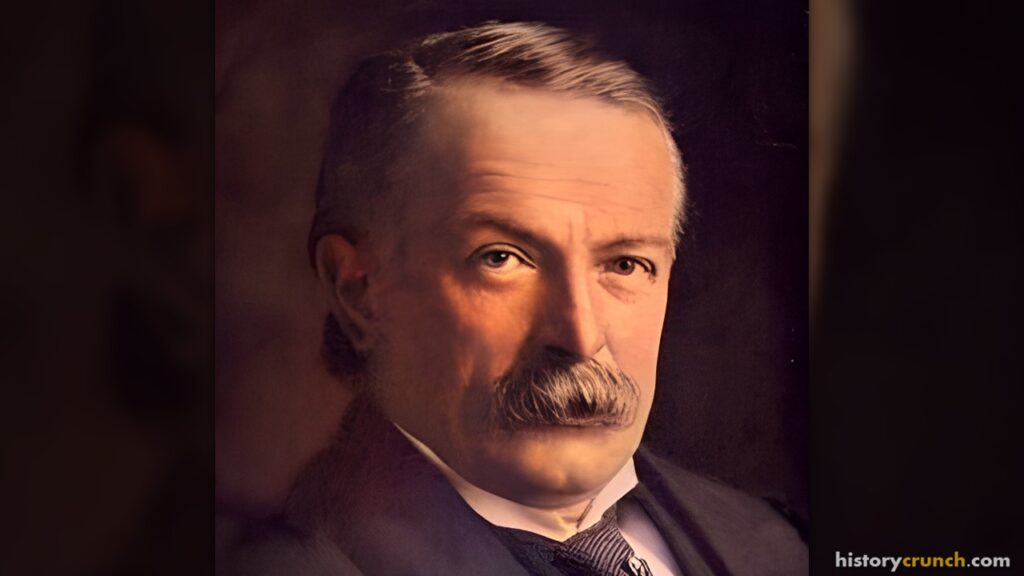
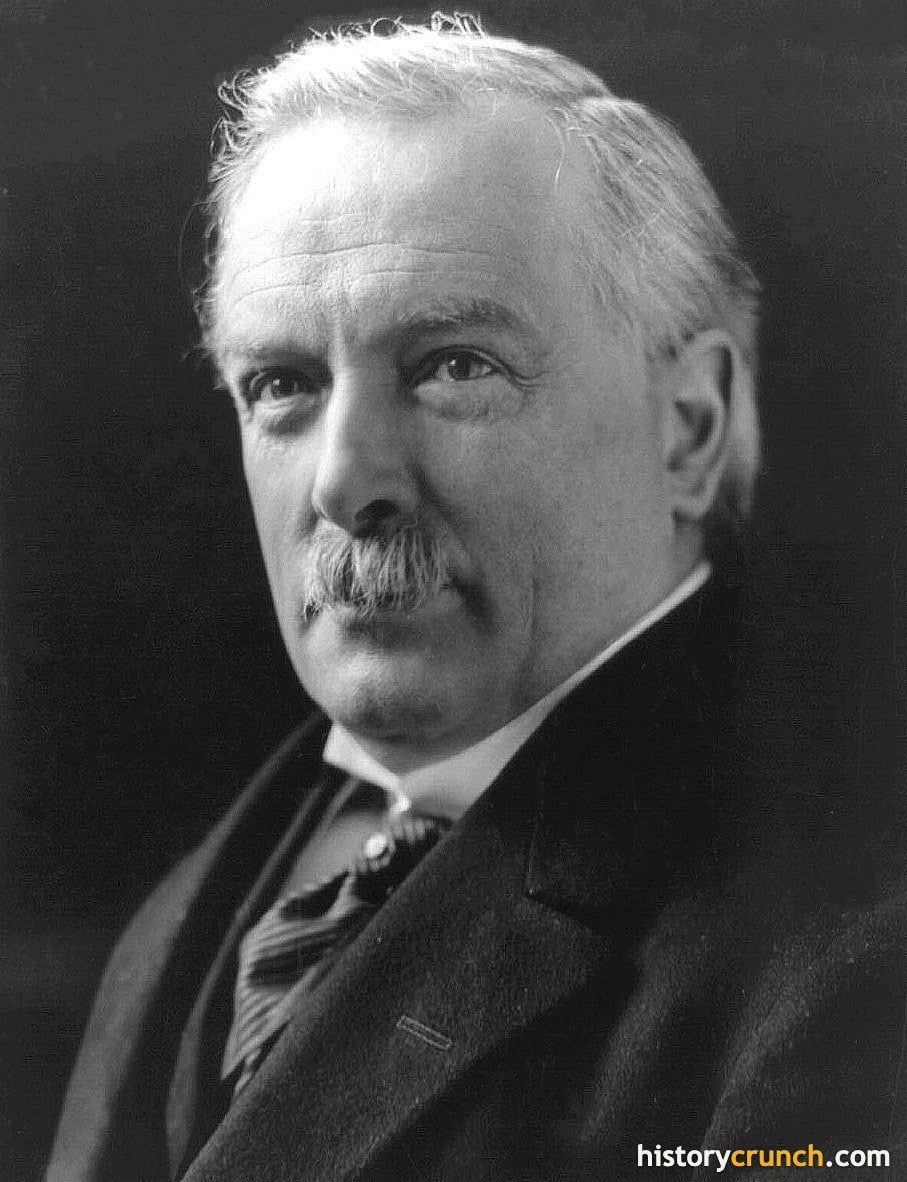
David Lloyd George was the Prime Minister of Great Britain during the final years of World War I and one of the three most powerful figures at the Paris Peace Conference that produced the Treaty of Versailles in 1919. He is remembered as one of the most gifted and energetic politicians in British history, a brilliant speaker and skilled negotiator who guided Britain through the darkest years of the war and played a central role in shaping the postwar world. He was also the first and only Welsh person ever to serve as Prime Minister of Great Britain.
 FactsthatCrunch
Lloyd George was the only Welsh person ever to serve as British Prime Minister, raised in the village of Llanystumdwy by his uncle Richard Lloyd after his father died when he was one year old. Before World War I he introduced the Old Age Pension Act and the National Insurance Act of 1911, laying the foundations of the modern British welfare state, and during the war he forced the Royal Navy to adopt a convoy system that sharply cut shipping losses to German submarines.
David Lloyd George’s Early Life
David Lloyd George was born on January 17th, 1863 CE in Manchester, England, to Welsh parents. His father, William George, was a schoolteacher of Welsh descent who died in June of 1864 CE, leaving the family in poverty when David was just one year old. His mother returned with her children to Wales, where they were taken in by her brother, Richard Lloyd, a Baptist minister and master shoemaker who lived in the village of Llanystumdwy in Caernarvonshire, north Wales. David was so grateful for his uncle’s support and care that he later incorporated his uncle’s surname into his own, becoming David Lloyd George.
Richard Lloyd had a profound influence on his nephew’s character and values. For instance, he instilled in David a passionate commitment to the rights of ordinary working people, a deep suspicion of the power of wealthy landowners and the established Church of England, and a talent for public speaking rooted in the Welsh chapel tradition of powerful, emotionally charged preaching. David excelled in his studies at the village school, teaching himself Latin and French in order to qualify for legal training. He qualified as a solicitorA type of lawyer who handles legal cases and gives advice to clients. in 1884 CE and set up his own law practice, frequently taking on cases defending poor Welsh farmers against the powerful landowners who dominated the region. As such, his upbringing in rural Wales gave him a fierce sense of justice and a gift for oratory that would define his entire political career.
FactsthatCrunchWhy did David Lloyd George adopt his uncle's surname?
David Lloyd George’s Rise in Politics
Lloyd George entered Parliament in 1890 CE at the age of twenty-seven, winning a by-electionA vote held to fill a single empty seat in parliament between general elections. for the Liberal Party in the Caernarvon Boroughs constituency, a seat he would hold for the next fifty-five years. He quickly made a name for himself in the House of Commons as a bold and brilliant debater with a sharp wit and an ability to connect with ordinary people that few politicians of his generation could match. He was a vocal critic of the Conservative government’s handling of the South African War of 1899 to 1902 CE, in which Britain fought against the Boer settlers of South Africa, and his willingness to speak out against the war despite enormous public pressure showed real political courage.
When the Liberal Party returned to power in 1905 CE, Lloyd George was appointed President of the Board of Trade and proved himself a highly effective administrator. He was promoted to Chancellor of the ExchequerThe senior government minister in charge of Britain’s national finances and budget. in 1908 CE and used the position to launch a series of bold social reforms that transformed British society. For instance, he introduced the Old Age Pension Act, which gave state pensions to elderly people for the first time in British history, and the National Insurance Act of 1911 CE, which created a system of health and unemployment insurance for workers. These reforms laid the foundations of what would eventually become the modern British welfare state and established Lloyd George as one of the most significant domestic reformers in British political history.
FactsthatCrunchDavid Lloyd George and World War I
When World War I broke out in August of 1914 CE, Lloyd George had long been regarded as a man with pacifist leanings. However, once Germany invaded neutral Belgium, he threw his full support behind the war effort. He was appointed Minister of Munitions in 1915 CE, a newly created position that gave him responsibility for dramatically increasing the production of weapons, shells and military equipment for British forces on the Western Front. He attacked the problem with characteristic energy and achieved a remarkable increase in munitions output in a short period of time.
By 1916 CE, frustration with the slow progress of the war under Prime Minister Herbert Henry Asquith was growing across Britain. Lloyd George became increasingly convinced that Asquith’s leadership was too cautious and that the war effort needed a more dynamic and determined hand. In December of 1916 CE he forced Asquith’s resignation and replaced him as Prime Minister, forming a new coalitionA government formed by two or more political parties working together to share power. government with the support of the Conservative Party. Lloyd George immediately restructured the government’s war machinery, replacing the unwieldy cabinet of twenty-three ministers with a small War Cabinet of just five people who could make decisions quickly and effectively.
As Prime Minister, Lloyd George threw himself into solving some of the most pressing problems facing Britain in the war. For instance, German submarines in the North Atlantic were sinking British supply ships at an alarming rate in early 1917 CE, threatening to cut off the food and materials Britain needed to keep fighting. Lloyd George forced the Royal Navy to adopt a convoy systemA method of moving merchant ships in large, protected groups to reduce the risk of enemy attack., in which merchant ships travelled in large protected groups rather than alone, which dramatically reduced losses to submarine attacks. He also pushed for a unified Allied command structure, supporting the appointment of French General Ferdinand Foch as Supreme Allied Commander in 1918 CE to better coordinate the efforts of British, French and American forces. As such, several of Lloyd George’s key decisions as Prime Minister contributed directly to the eventual Allied victory in November of 1918 CE.
 FactsthatCrunch
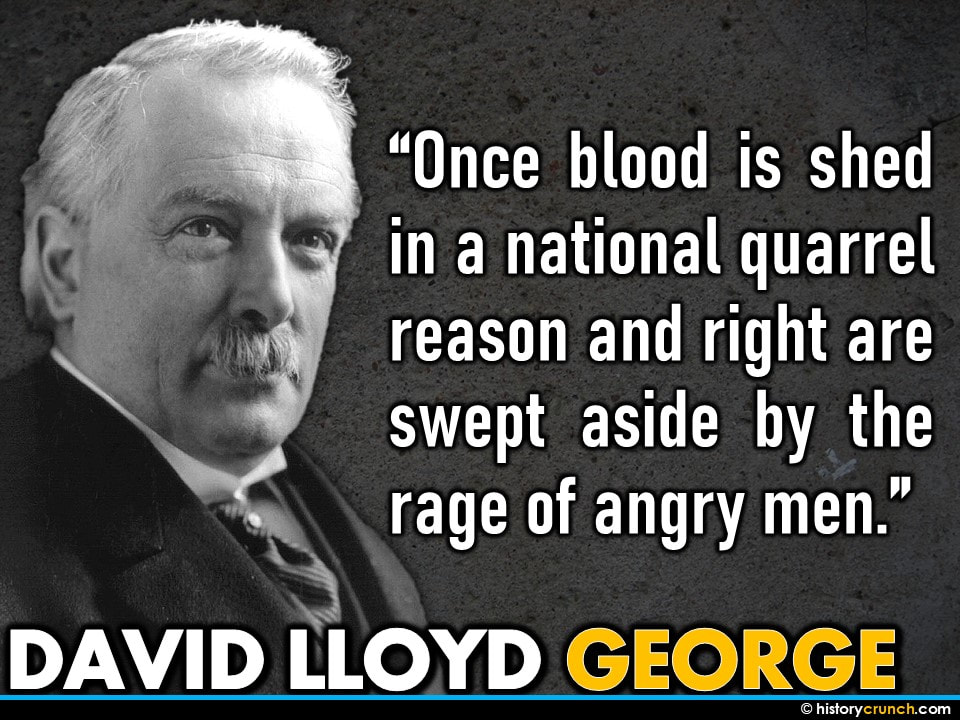
In early 1917, Lloyd George forced the Royal Navy to adopt the convoy system, grouping merchant ships into large protected formations to cross the North Atlantic together rather than sailing alone.
David Lloyd George and the Treaty of Versailles
Following the armistice in November of 1918 CE, Lloyd George was one of the three dominant figures at the Paris Peace Conference, alongside French Prime Minister Georges Clemenceau and American President Woodrow Wilson. Together these three men were known as the Big Three, and the decisions they made at Paris shaped the political map of Europe for a generation. The resulting Treaty of Versailles, signed on June 28th, 1919 CE, imposed a series of harsh conditions on Germany, including the requirement to pay reparationsPayments a defeated country is forced to make to cover the costs and damages of a war., accept responsibility for the war and give up significant territories and military capabilities.
Lloyd George occupied a middle position at the conference between the two extremes of Clemenceau, who wanted to crush Germany permanently, and Wilson, who favored a more lenient and idealistic peace based on the rights of nations. Lloyd George was himself under enormous pressure from the British public and parliament to impose harsh terms on Germany, and he did push for significant reparations and limitations on German military power. With that said, he was also aware that a peace that completely destroyed Germany could create dangerous instability in Europe. David Lloyd George famously remarked during the negotiations that he felt as though he were sitting between Jesus Christ, referring to the idealistic Wilson, and Napoleon Bonaparte, referring to the aggressive Clemenceau. As such, Lloyd George’s role at Versailles was to try to find a workable middle ground, though the final treaty satisfied few people fully.
 FactsthatCrunch
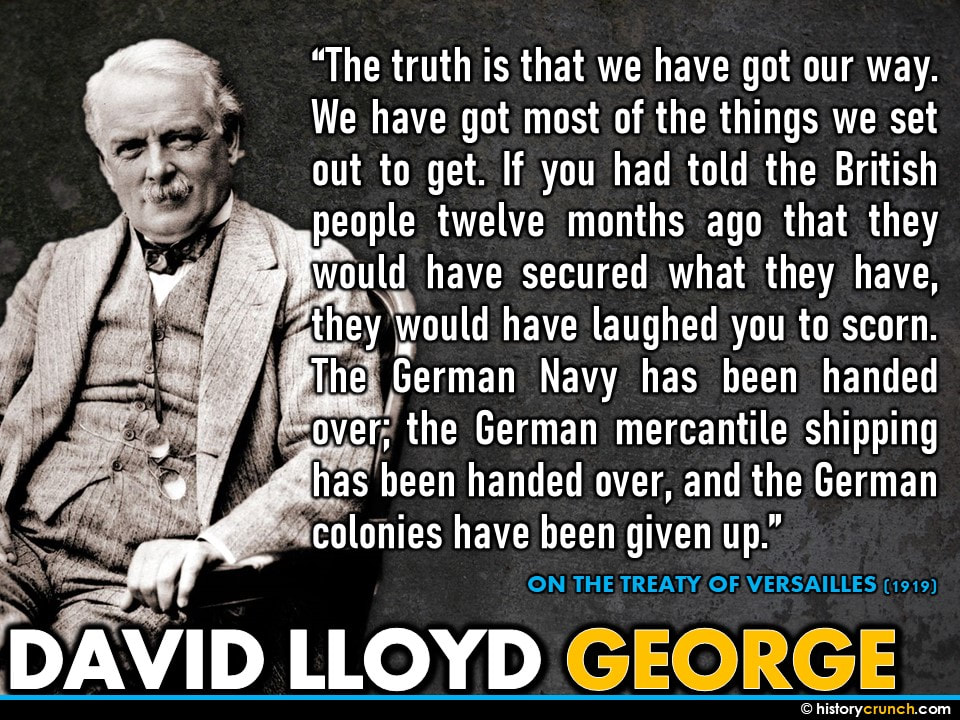
Not badly, considering I was seated between Jesus Christ and Napoleon.
Asked how he had done at the Paris Peace Conference, Lloyd George was describing his middle position between the idealistic American President Woodrow Wilson and the aggressive French Prime Minister Georges Clemenceau, at a moment when the British public and parliament were pressing him toward much harsher terms on Germany.
David Lloyd George’s Later Life and Legacy
After the peace conference, Lloyd George continued as Prime Minister until October of 1922 CE, when the Conservative members of his coalition withdrew their support over disagreements about British policy in a crisis involving Greece and Turkey. He resigned immediately and never held government office again, though he remained a member of parliament for many more years. The Liberal Party, badly divided by his rise to power and his dealings with the Conservatives, never recovered its former strength, and power in British politics shifted to the Labour Party as the main alternative to the Conservatives.
David Lloyd George died on March 26th, 1945 CE in Wales at the age of eighty-two, just two months after being elevated to the peerageA system of noble titles in Britain, such as Earl, granted by the monarch. as Earl Lloyd-George of Dwyfor. He left behind one of the most remarkable careers in the history of British politics. He had helped create the foundations of the welfare state, guided Britain to victory in World War I through his energy and determination and played a central role in reshaping Europe at the Paris Peace Conference. For instance, his War Memoirs, published in the 1930s, remain an invaluable firsthand account of British decision-making during the war. As such, David Lloyd George is remembered as one of the most gifted and influential British political leaders of the twentieth century.
 FactsthatCrunch
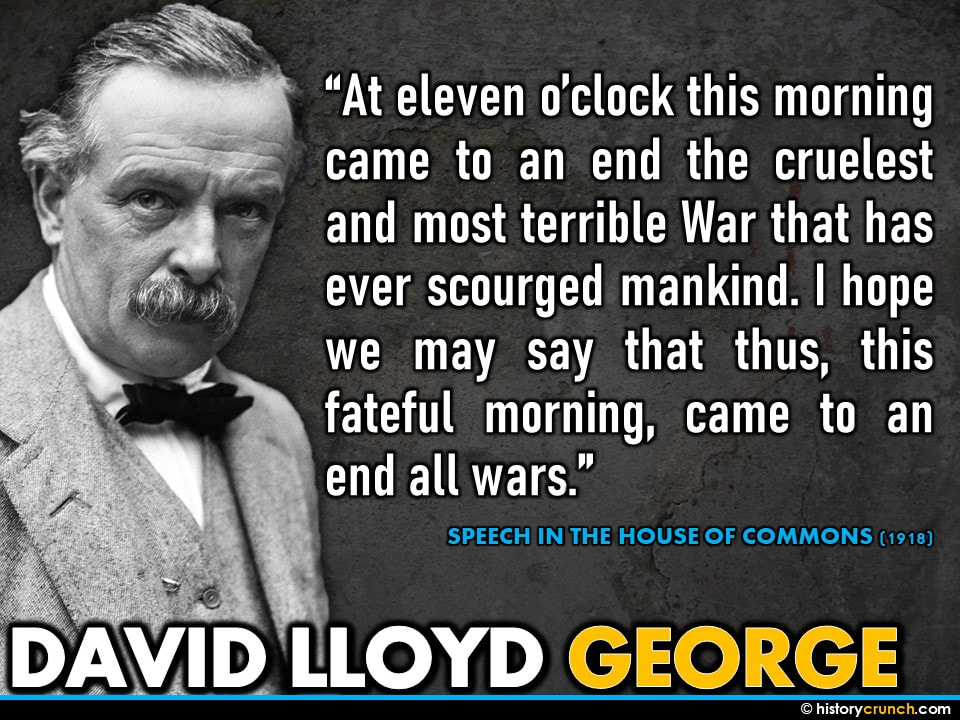
Why did Lloyd George stop being Prime Minister in 1922?
On October 19th, 1922, Conservative members of his coalition voted at the Carlton Club in London to stop supporting him, angry at how he had handled a crisis between Greece and Turkey at Chanak. Without their votes he could not govern, so he resigned that afternoon and never held government office again.
Explore World War I · 1914 – 1918
Keep exploring World War I with these History Crunch resources.
Key Vocabulary
Solicitor
By-election
Chancellor of the Exchequer
Reparations
Convoy system
Coalition
Peerage
Frequently Asked Questions
Who was David Lloyd George?
David Lloyd George was the Prime Minister of Great Britain during the final years of World War I. He led the country from December of 1916 until October of 1922. He also helped shape the Treaty of Versailles as one of the Big Three leaders at the Paris Peace Conference.
Was David Lloyd George Welsh?
Lloyd George was raised in Wales and remains the only Welsh person to serve as British Prime Minister. He was actually born in Manchester, England, in 1863, but his family moved to north Wales after his father died. His uncle, a Baptist minister in the village of Llanystumdwy, raised him and shaped his values.
What reforms did Lloyd George introduce before World War I?
As Chancellor of the Exchequer, Lloyd George launched social reforms that helped the poor and elderly. He created the Old Age Pension Act, which gave state pensions to older people for the first time. He also passed the National Insurance Act of 1911, which added health and unemployment coverage for workers.
How did Lloyd George help Britain win World War I?
Lloyd George made quick, bold decisions that boosted the British war effort. He forced the Royal Navy to adopt a convoy system, which greatly reduced ship losses to German submarines. He also supported a unified Allied command under French General Ferdinand Foch in 1918, which improved teamwork among the Allies.
What was Lloyd George’s role at the Treaty of Versailles?
Lloyd George took a middle position between harsh punishment and a gentle peace at the Paris Peace Conference. France’s Georges Clemenceau wanted to crush Germany, while America’s Woodrow Wilson favored a more forgiving peace. Lloyd George once said he felt caught between Jesus Christ and Napoleon Bonaparte while trying to find a workable balance.
Why did Lloyd George stop being Prime Minister?
Lloyd George resigned in October of 1922 after the Conservatives withdrew their support from his coalition government. They disagreed over British policy during a crisis involving Greece and Turkey. He never held government office again, though he stayed a member of parliament for many years.
Cite This Article
To cite this article as a source, use one of the formats below.
MLA: Millar, B. “David Lloyd George: A Detailed Biography.” HistoryCrunch, 30 September 2026, https://historycrunch.com/david-lloyd-george/.
APA: Millar, B. (2026). David Lloyd George: A Detailed Biography. HistoryCrunch. https://historycrunch.com/david-lloyd-george/
Chicago: Millar, B. “David Lloyd George: A Detailed Biography.” HistoryCrunch. September 30, 2026. https://historycrunch.com/david-lloyd-george/
Sources
- Fordham Modern History Sourcebook
- Margaret MacMillan, The War That Ended Peace.