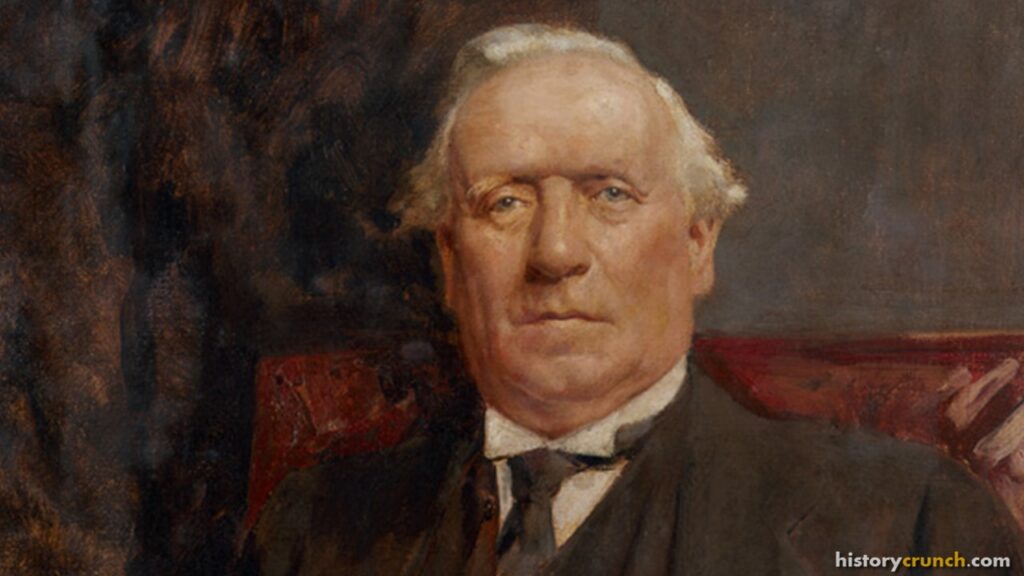
H. H. Asquith was the Prime Minister of Great Britain from 1908 to 1916 and the man who led Britain into World War I. He is remembered as a highly capable peacetime politician whose government introduced landmark social reforms, but whose cautious and deliberate style of leadership proved ill-suited to the demands of a modern industrial war. He was replaced as Prime Minister by David Lloyd George in December of 1916 and never held government office again.
 FactsthatCrunch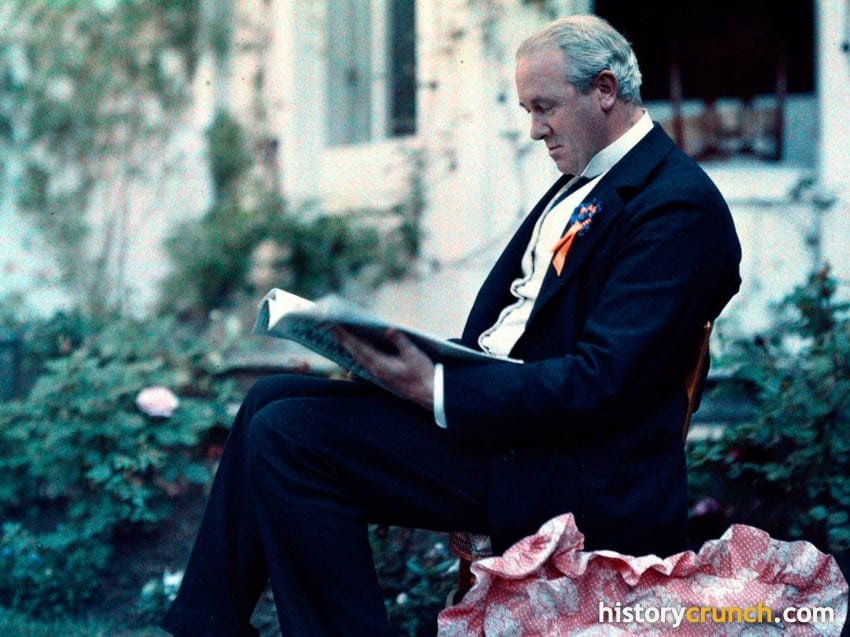
H. H. Asquith’s Early Life
Herbert Henry Asquith was born on September 12th, 1852 CE in Morley, Yorkshire, England, the son of a small businessman in the wool trade. His father died when Herbert was just eight years old, leaving the family in difficult circumstances. He was educated first at local schools in Yorkshire and later at the City of London School, where he excelled academically. In 1870 CE he won a classical scholarshipA competitive award of money given to a student to study ancient Greek and Latin subjects at a university. to Balliol College at the University of Oxford, one of the most prestigious colleges in Britain, where he achieved the highest academic honors and became president of the Oxford Union debating society. He was called to the bar as a barristerA lawyer in Britain who argues cases in court. in 1876 CE and built a highly successful legal career over the following decade. As such, Asquith came to politics with a formidable intellectual reputation and a talent for clear, precise argument that made him one of the most respected debaters of his generation.
FactsthatCrunchAsquith grew up without his father, who died when Herbert was eight, yet he won a scholarship to Balliol College, Oxford, and became president of the Oxford Union debating society.
He went on to become a barrister in 1876, and his skill at clear, precise argument made him one of the best debaters in Parliament by the time he became Prime Minister in 1908.
H. H. Asquith’s Political Career
Asquith was elected to parliament as a Liberal member for East Fife in Scotland in 1886 CE and quickly made a strong impression in the House of Commons. He became Home Secretary under Prime Minister William Gladstone in 1892 CE and established himself as a capable and efficient administrator. After the Liberals returned to power in 1905 CE he was appointed Chancellor of the ExchequerThe British government minister responsible for managing the country’s finances., the minister responsible for managing the country’s finances, and proved again to be one of the most effective members of the government. When Prime Minister Henry Campbell-Bannerman resigned due to ill health in 1908 CE, Asquith succeeded him as Prime Minister. His succession was regarded as entirely natural given his ability and experience.
As Prime Minister, Asquith presided over one of the most reforming governments in British history. Working closely with his Chancellor of the Exchequer David Lloyd George, his government introduced the Old Age Pension, introduced the National Insurance system and worked to curb the power of the unelected House of Lords to block legislation passed by the elected House of Commons. For instance, the Parliament Act of 1911 CE permanently limited the ability of the House of Lords to veto bills passed by the Commons, a major constitutional change that shifted power firmly toward elected government. These reforms laid the foundations of the British welfare stateA system where the government provides basic social support such as pensions and health insurance to its citizens. and represent Asquith’s most lasting and positive contribution to British life. As such, his prewar record as Prime Minister was one of genuine achievement and progressive reform.
FactsthatCrunchThe Chancellor of the Exchequer is the senior government minister in Britain responsible for managing the country's finances and national budget. The Chancellor sets tax rates, controls government spending, and presents an annual budget to Parliament. The role is roughly equal to a finance minister in other countries.
When H. H. Asquith served as Chancellor of the Exchequer from 1905 to 1908, he was responsible for preparing the government's budget and deciding how public money was raised and spent.
H. H. Asquith and World War I
When World War I broke out in August of 1914 CE, Asquith led Britain into the conflict following Germany’s invasion of neutral Belgium. He had delayed the decision, waiting until public opinion was clearly behind entering the war before committing Britain. In the early months of the war he oversaw the mobilization of the British Expeditionary Force and the expansion of the British army from a small professional force into a mass army of millions of men. With that said, the enormous scale and intensity of modern industrial warfare quickly exposed the limitations of his approach to leadership.
Asquith was by nature a committee man who preferred careful deliberation and consensus over bold, decisive action. This style had served him well in peacetime but proved a serious weakness during the war. For instance, by mid-1915 CE serious problems had emerged. The British campaign at Gallipoli in the Ottoman Empire, which had been intended to open a new front and knock the Ottomans out of the war, was turning into a costly failure with enormous casualties. At the same time, a scandal erupted over a critical shortage of artillery shells for British troops on the Western Front, with reports that soldiers were dying because they did not have enough ammunition. The press launched fierce attacks on Asquith’s government, blaming him for the shortages and the lack of strategic direction. In response, Asquith formed a coalition governmentA government formed by two or more political parties joining together, usually because no single party has enough support to govern alone. with the Conservative and Labour parties in May of 1915 CE, bringing in David Lloyd George as Minister of MunitionsMilitary weapons and ammunition, especially artillery shells used in war. to address the shell shortage.
The coalition did not rescue Asquith’s position. The year 1916 CE brought further disasters. The Battle of the Somme, launched in July of 1916 CE to relieve pressure on the French at Verdun, resulted in catastrophic British casualties, with approximately 57,000 men killed, wounded or missing on the first day alone. The Easter Rising in Dublin in April of 1916 CE created a serious crisis in Ireland. Criticism of Asquith’s leadership grew louder throughout the year, with the press increasingly portraying him as indecisive and ineffective. In December of 1916 CE, David Lloyd George maneuvered to replace him as Prime Minister, proposing a small war committee to run the day-to-day direction of the war from which Asquith would be excluded. When Asquith refused to accept this arrangement, Lloyd George resigned, the coalition collapsed and Asquith was left with no choice but to resign. He stepped down as Prime Minister on December 5th, 1916 CE and was succeeded by Lloyd George.
FactsthatCrunchIn what order did these crises weaken Asquith's wartime leadership from 1915 to 1916?
H. H. Asquith’s Later Life and Legacy
Asquith remained leader of the Liberal Party after his resignation and led the opposition in parliament, but his relationship with Lloyd George had become bitterly hostile and the Liberal Party split between those who supported Asquith and those who backed Lloyd George. In the general election of 1918 CE, Asquith lost his own parliamentary seat and the Asquith Liberals were reduced to just thirty-six seats in parliament. He returned to parliament in 1920 CE by winning a by-election, continued as Liberal leader until 1926 CE and was elevated to the peerageA hereditary title of British nobility, such as an earl, granted by the monarch. as Earl of Oxford and Asquith in 1925 CE. He died on February 15th, 1928 CE at the age of seventy-five.
H. H. Asquith left a complicated legacy. On one hand, his prewar government introduced social reforms of lasting importance that helped transform British society and paved the way for the modern welfare state. On the other hand, his wartime leadership is widely regarded as having been inadequate to the enormous challenges of the First World War. For instance, his deliberate, cautious approach and reluctance to override his military commanders left Britain without the strong central direction that the war demanded. As such, Asquith is remembered as a talented politician who rose to greatness in peacetime but was overtaken by events when confronted with the unprecedented demands of modern industrial warfare.
FactsthatCrunchAsquith's record splits clearly between his achievements as a peacetime reformer and his troubled performance as a wartime prime minister.
Explore World War I · 1914 – 1918
Keep exploring World War I with these History Crunch resources.
Key Vocabulary
Classical scholarship
Barrister
Chancellor of the Exchequer
Welfare state
Coalition government
Munitions
Peerage
Frequently Asked Questions
Who was H. H. Asquith?
H. H. Asquith was the Liberal Prime Minister of Great Britain from 1908 to 1916. He led the country into World War I after Germany invaded neutral Belgium. He is remembered as a skilled peacetime leader whose careful style struggled during the war.
What social reforms did Asquith’s government introduce?
Asquith’s government introduced the Old Age Pension and introduced the National Insurance system. Working with Chancellor David Lloyd George, it laid the foundations of the modern British welfare state. The Parliament Act of 1911 also limited the power of the House of Lords to block laws.
Why did Asquith lose his position during World War I?
Asquith’s cautious, committee-based style was seen as too slow for a modern industrial war. The failure at Gallipoli, a scandal over a shell shortage, and heavy losses at the Somme damaged his standing. The press attacked him as indecisive, and support for his leadership collapsed by late 1916.
Who replaced Asquith as Prime Minister?
David Lloyd George replaced Asquith as Prime Minister in December of 1916. Lloyd George proposed a small war committee that would run the war without Asquith. When Asquith refused, Lloyd George resigned, the coalition fell apart, and Asquith stepped down on December 5th, 1916.
What happened to Asquith after he left office?
Asquith stayed on as Liberal Party leader, but his feud with Lloyd George split the party badly. He lost his own seat in the 1918 election before returning to parliament in 1920. He was made Earl of Oxford and Asquith in 1925 and died on February 15th, 1928.
Cite This Article
To cite this article as a source, use one of the formats below.
MLA: Millar, B. “H. H. Asquith: A Detailed Biography.” HistoryCrunch, 30 September 2026, https://historycrunch.com/h-h-asquith/.
APA: Millar, B. (2026). H. H. Asquith: A Detailed Biography. HistoryCrunch. https://historycrunch.com/h-h-asquith/
Chicago: Millar, B. “H. H. Asquith: A Detailed Biography.” HistoryCrunch. September 30, 2026. https://historycrunch.com/h-h-asquith/
Sources
- John Keegan, The First World War.
- Fordham Modern History Sourcebook