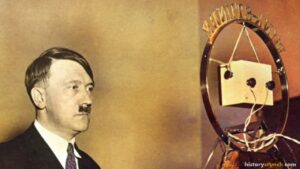
Hermann Goering was a prominent Nazi leader, military officer, and one of Adolf Hitler’s closest allies. As such, he played an important role in the rise to power of the Nazi Party in Germany. For instance, Goering was involved in organizing the Nazi economy, persecuting the Jews, and overseeing the early stages of the Holocaust. He was famously captured after World War II, and convicted at the Nuremberg Trials. However, he committed suicide before his execution.
 FactsthatCrunch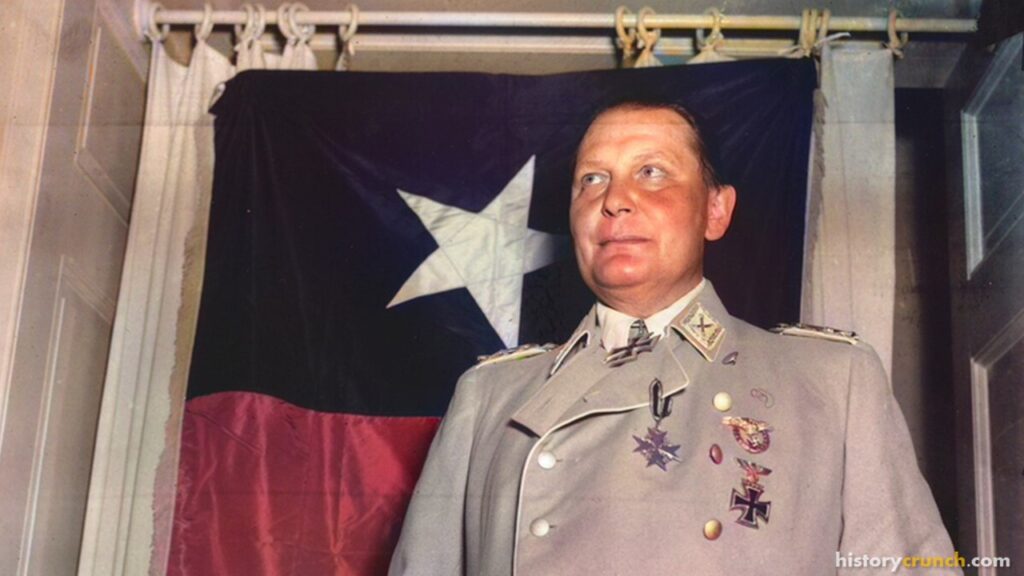
Hermann Goering – Early Life
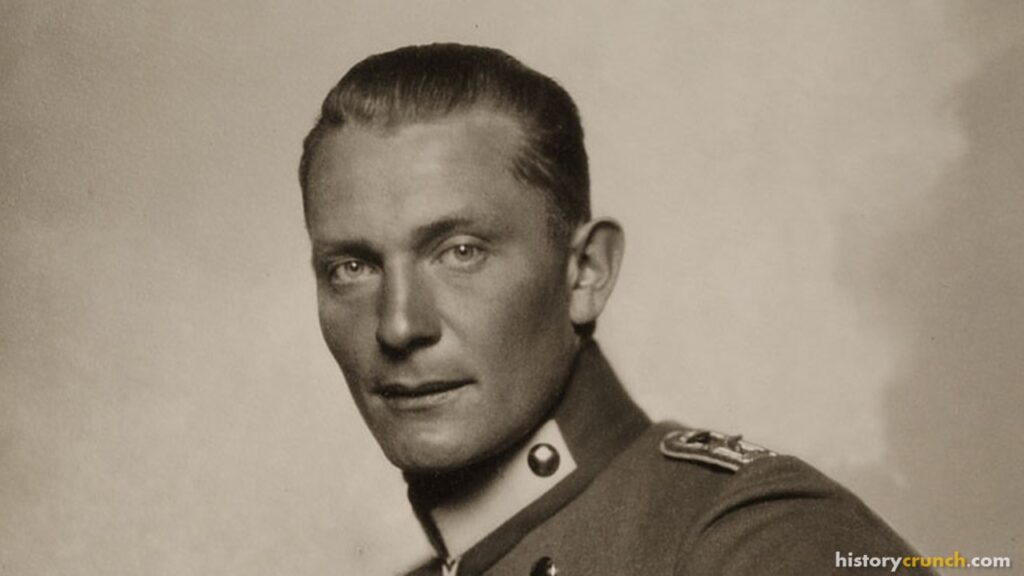
Hermann Goering was born in Rosenheim, Upper Bavaria, on January 12th, 1893. His father was a cavalry officer who had a significant diplomatic career. As a young man Goering attended the cadet college at Karlsruhe and as soon as the First World War started, he served as an infantry lieutenant in Alsace-Lorraine, but was soon transferred to the Air Force as a fighter pilot. As a pilot Goering gained great fame, received numerous awards, and was a member of the combat group of pilots led by Baron Manfred von Richthofen, better known by the nickname ‘Red Baron‘. The name of this combat group was Jagdgeschwader but it was often called the Richthofen’s Flying Circus. After the deaths of the Red Baron and his successor, Goering took over leadership of the group in July of 1918 and remained in that position until the end of World War I.
Hermann Goering – Nazi Party
Like many German officers, Goering felt betrayed and disappointed by the outcome of World War I, especially in relation to the terms of the Treaty of Versailles. In short, many Germans were angry with the Treaty of Versailles because they believed it unfairly punished them for the events of the First World War. This was important because it was a common view held by many in Germany, including the Nazi Party and Adolf Hitler. In fact, Goering met Adolf Hitler in the fall of 1922 and decided to join him and the Nazi Party. Hitler was particularly pleased with this since Goering was considered to be a military hero from his actions in World War I. As such, Hitler appointed him as a commander of the Nazi Stormtroopers (SA), which made Goering a member of the Nazi leadership.
Goering participated in the failed Beer Hall Putsch in 1923 and was wounded during the coup attempt. This was when Hitler and the members of the SA attempted to overthrow the government, similar to Benito Mussolini’s March on Rome in 1922. However, it failed and Hitler was arrested and imprisoned. Goering fled to Sweden but later returned to rejoin the Nazi movement.
After his return to Germany he renewed his contacts with Hitler, who was now free from his imprisonment for treason. Goering was one of the first Nazis who was elected in 1928 as a member of the ReichstagThe national parliament of Germany during the Weimar Republic and Nazi eras. (German parliament). Further to this, after the victory of the Nazis in the elections of 1932 he became the president of the Reichstag and had a significant role in the rise to power of Hitler in 1933.
After Hitler became Chancellor, Goering held various high level government positions. While he was Prussian Minister of the Interior, he founded the political police of Prussia that would later become part of the Gestapo and founded some of the earliest concentration camps in Prussia, including Oranienburg. In March of 1935, he became commander in chief of the Air Force (LuftwaffeThe German air force during World War II, commanded by Goering.) and quickly organized a large production of aircraft and pilot training. In October of 1936, Hitler also put him in charge of the Four Year Plan, which was meant to make the German army and economy ready for war within four years. At that time he was, next to Hitler, the most important figure in Nazi Germany.
Hermann Goering – World War II and the Holocaust
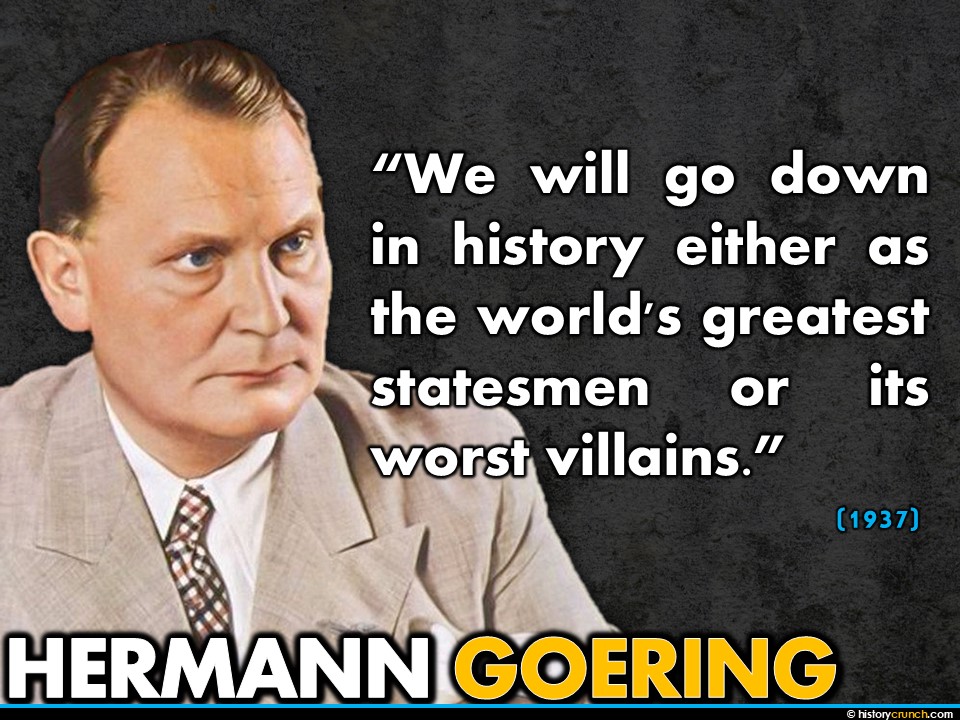
In the Second World War, Goering was tasked with organizing the Nazi war efforts and Air Force operations. As well, he had a significant role in the annexation of Austria by Nazi Germany. Furthermore, two days before the start of the Second World War, on August 30th, 1939, Hitler declared Goering as the Chairman of the Reich Council for National Defense, and on September 1st, he named Goering as his successor in the event that he died. Goering was commander of the Luftwaffe, the German air force during the Blitzkrieg (lightning war) when Germany conquered Poland and France in the early years of the Second World War.
He also played a leading role in enforcing Nazi ideology, including the early stages of the Holocaust. For instance, he was directly responsible for issuing the 1941 order to implement the ‘Final SolutionThe Nazi plan to murder all Jewish people living in German-occupied territories.‘, leading to the mass extermination of Jewish people in German-occupied territories.
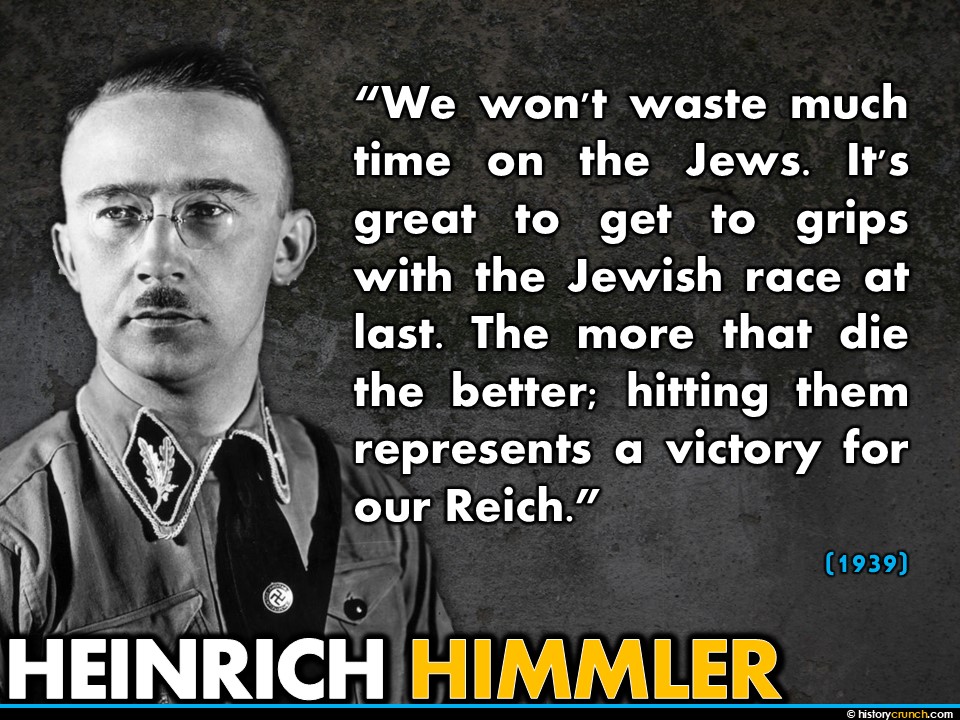
However, Goering faced a challenge in the Battle of Britain, which took place in 1940. This was a battle of air superiority over Britain, which saw the German Air Force try to bomb Britain into surrender. The British were able to withstand the unrelenting German attacks, which led to a terrible failure for the Nazis. In fact, the failure to establish complete air dominance over Britain influenced Hitler to abandon the land conquest of Britain. Also, as the Allied aviation forces grew stronger, Goering’s relationship with Hitler weakened and he began to lose influence in the Nazi Party. In his place, other prominent Nazi officials began to gain the trust of Hitler, including: Martin Bormann, Joseph Goebbels, and Heinrich Himmler. After it became clear that the war was lost, on April 23rd, 1945 Goering asked Hitler to hand him power. Hitler declared him as a traitor and placed him under house arrest in Obersalzberg. Bormann, because of Goering’s huge popularity, on the radio issued a statement that Goering was pulled from all his positions due to health reasons.
 FactsthatCrunch
What were the key steps in Goering's role in ordering the Final Solution?
Hermann Goering – Death and Significance
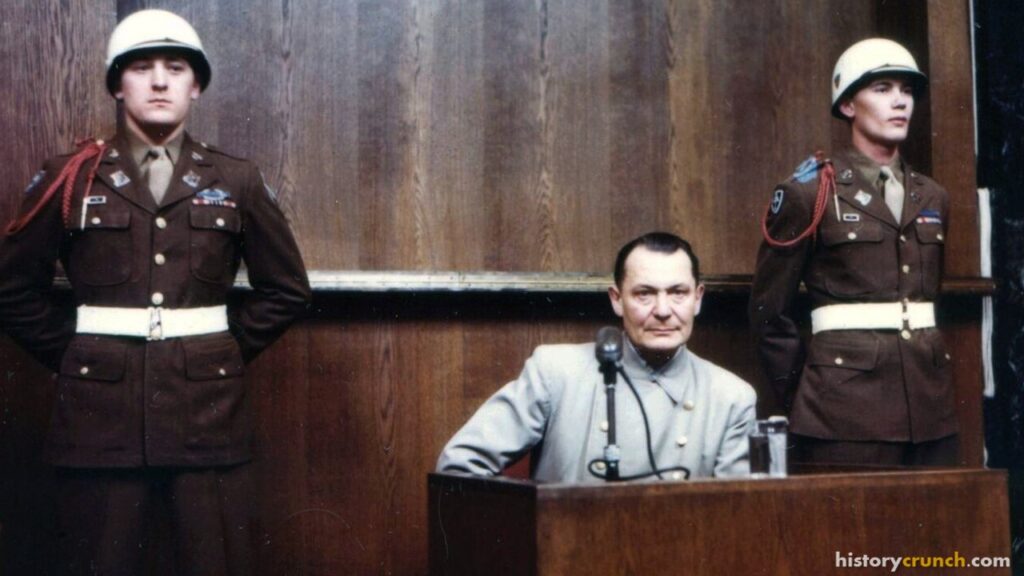
After World War II, Goering was captured by Allied forces. In fact, he was caught by American troops on May 9th, 1945. Because of his crimes he was brought before the International Military Tribunal at Nuremberg, which was also known as the Nuremberg Trials. He was the highest-ranking Nazi official tried at the Nuremberg Trials and was ultimately found guilty of crimes against peace, war crimes, and crimes against humanity, and sentenced to death by hanging.
However, two hours before the sentence was to be carried out, he swallowed a cyanide pill that he had managed to conceal from prison guards. He was found dead in his cell on October 15th, 1946. After his death, his body was cremated in Munich and his ashes were secretly scattered so that no grave could become a shrine for Nazi supporters. At the time, it was rumored that the bodies had been burned at Dachau, an infamous concentration camp that was part of the Holocaust.
Hermann Goering was one of the most influential and powerful figures in Nazi Germany. He played a significant role in the creation of the Nazi police state, the economic and military buildup, and the implementation of policies related to the events of the Holocaust.
 FactsthatCrunch
The victor will always be the judge, and the vanquished the accused.
Gustave Gilbert, the American prison psychologist at Nuremberg, asked each defendant to sign his copy of the indictment, and Goering wrote these words to argue the trial was only the revenge of the winners rather than real justice.
Key Vocabulary
Putsch
Reichstag
Gestapo
Luftwaffe
Blitzkrieg
Final Solution
Frequently Asked Questions
What was Hermann Goering’s role in the Nazi Party?
Hermann Goering was one of the highest-ranking leaders in Nazi Germany and a close ally of Adolf Hitler. He built the German Air Force, helped run the economy, and shaped early Nazi policies. For a time he was the second most powerful figure in the country after Hitler.
What did Goering do before he joined the Nazis?
Goering was a famous fighter pilot during World War I who won many awards for his skill. He flew with Baron Manfred von Richthofen, better known as the Red Baron. After the Red Baron died, Goering took command of the squadron until the war ended.
Why did Goering lose Hitler’s trust during World War II?
Goering lost Hitler’s favor mainly because the Air Force failed to defeat Britain in 1940. The Battle of Britain was a bombing campaign meant to force a British surrender, but it failed. As Allied air power grew, rivals like Bormann, Goebbels, and Himmler gained more influence.
How was Goering connected to the Holocaust?
Goering issued the 1941 order to carry out the “Final Solution,” the Nazi plan to murder Jewish people. This helped begin the mass killing of Jews in German-occupied lands. He also founded early concentration camps in Prussia, including Oranienburg.
How did Hermann Goering die?
Goering died by suicide on October 15th, 1946, hours before he was to be hanged. He swallowed a hidden cyanide pill in his prison cell. He had been convicted at the Nuremberg Trials of war crimes and crimes against humanity.
Why was Goering important at the Nuremberg Trials?
Goering was the highest-ranking Nazi official put on trial at Nuremberg. He was found guilty of crimes against peace, war crimes, and crimes against humanity. His trial showed the world how top Nazi leaders would be held responsible for their actions.
Cite This Article
To cite this article as a source, use one of the formats below.
MLA: Beck, Elias. “Hermann Goering: A Detailed Biography.” HistoryCrunch, 16 September 2026, https://historycrunch.com/hermann-goering/.
APA: Beck, E. (2026). Hermann Goering: A Detailed Biography. HistoryCrunch. https://historycrunch.com/hermann-goering/
Chicago: Beck, Elias. “Hermann Goering: A Detailed Biography.” HistoryCrunch. September 16, 2026. https://historycrunch.com/hermann-goering/
Sources
- J.M. Roberts & Odd Arne Westad, The Penguin History of the World.
- Jerry Bentley & Herbert Ziegler, Traditions & Encounters: A Global Perspective on the Past.