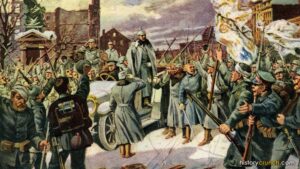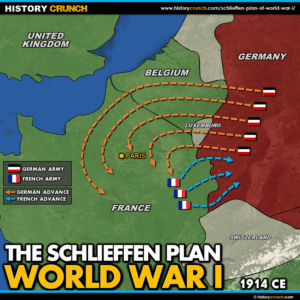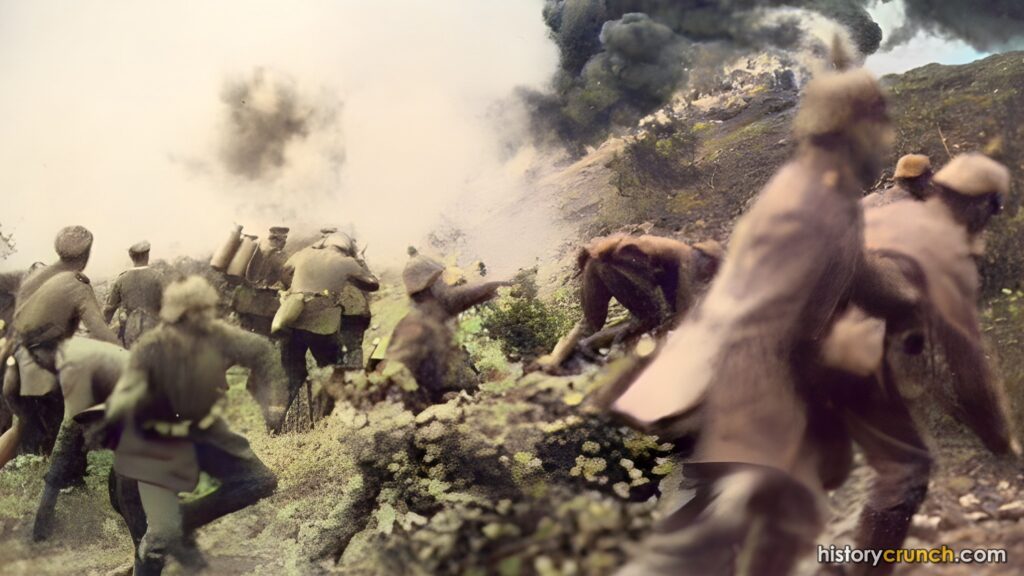
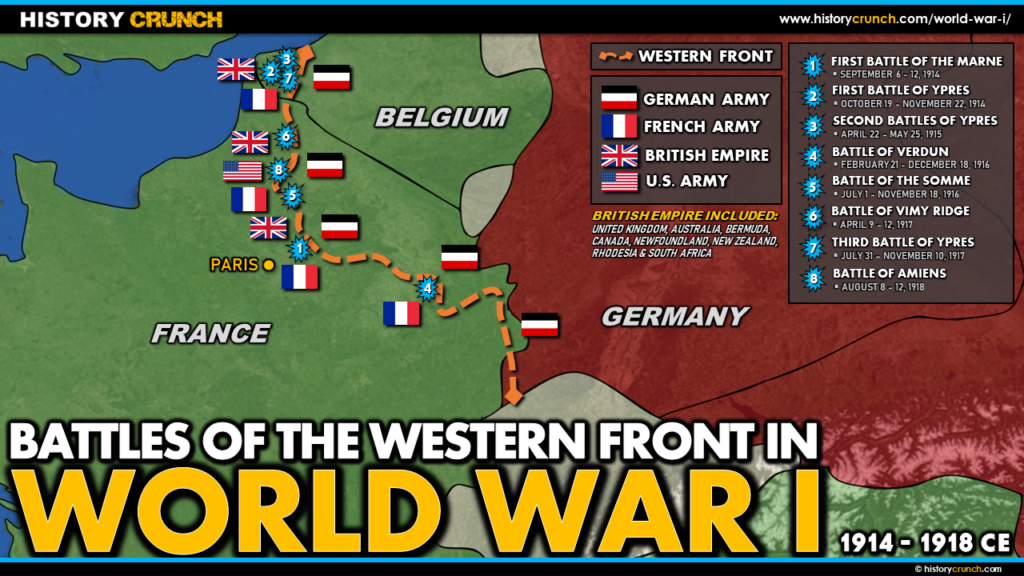
The Battle of Verdun in World War I was one of the most important battles of the entire war along the Western FrontThe line of trench fighting that stretched through Belgium and northern France during World War I.. The Western Front was the line of fighting that occurred along the trenches that stretched throughout Belgium and northern France. The Battle of Verdun was one of the largest battles of the entire war, and was the longest at 9 months, 3 weeks and 6 days. It involved intense and brutal fighting between the French Army and the German Army throughout most of 1916. Today it is remembered as the longest battle of World War I, and one of the deadliest.
 FactsthatCrunch
How did attrition shape the fighting at the Battle of Verdun in World War I?
When and Where Did the Battle of Verdun in World War I Occur?
Likely, the most significant French battle from World War I was the Battle of Verdun. It was fought from the 21st of February to the 18th of December in 1916 and is remembered as one of the largest battles of World War I on the Western Front. It was fought between France and Germany in a hilly region of northeastern France near the city of Verdun. The Germans had hoped to capture the region and use the hills of the area as a staging groundA position used to gather and launch military forces or weapons for an attack. for their artilleryLarge, heavy guns that fire shells over long distances, used to bombard enemy positions. guns. From the top of the hills, Germany hoped to use their artillery fire to control the entire region, including the city of Verdun.
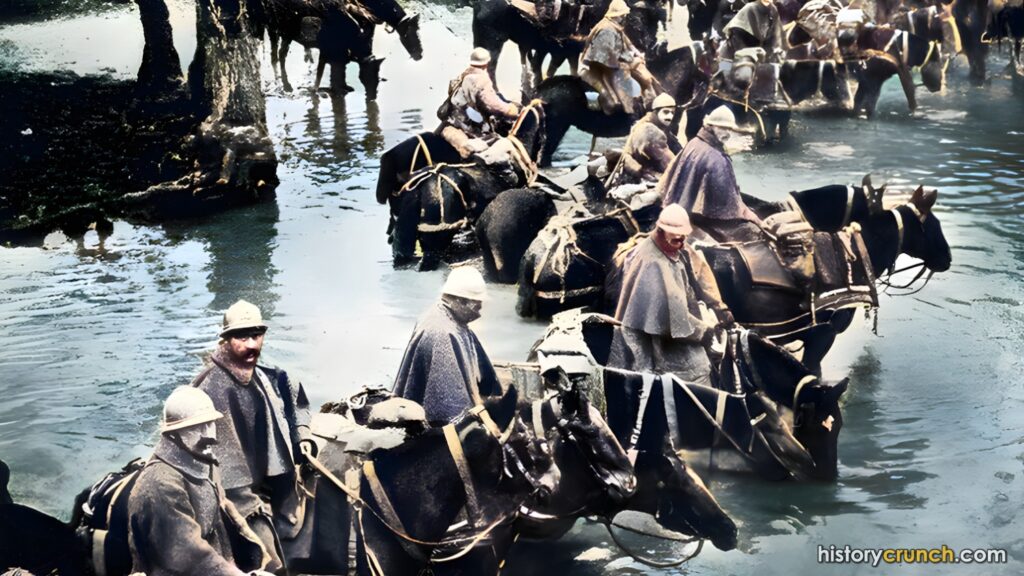
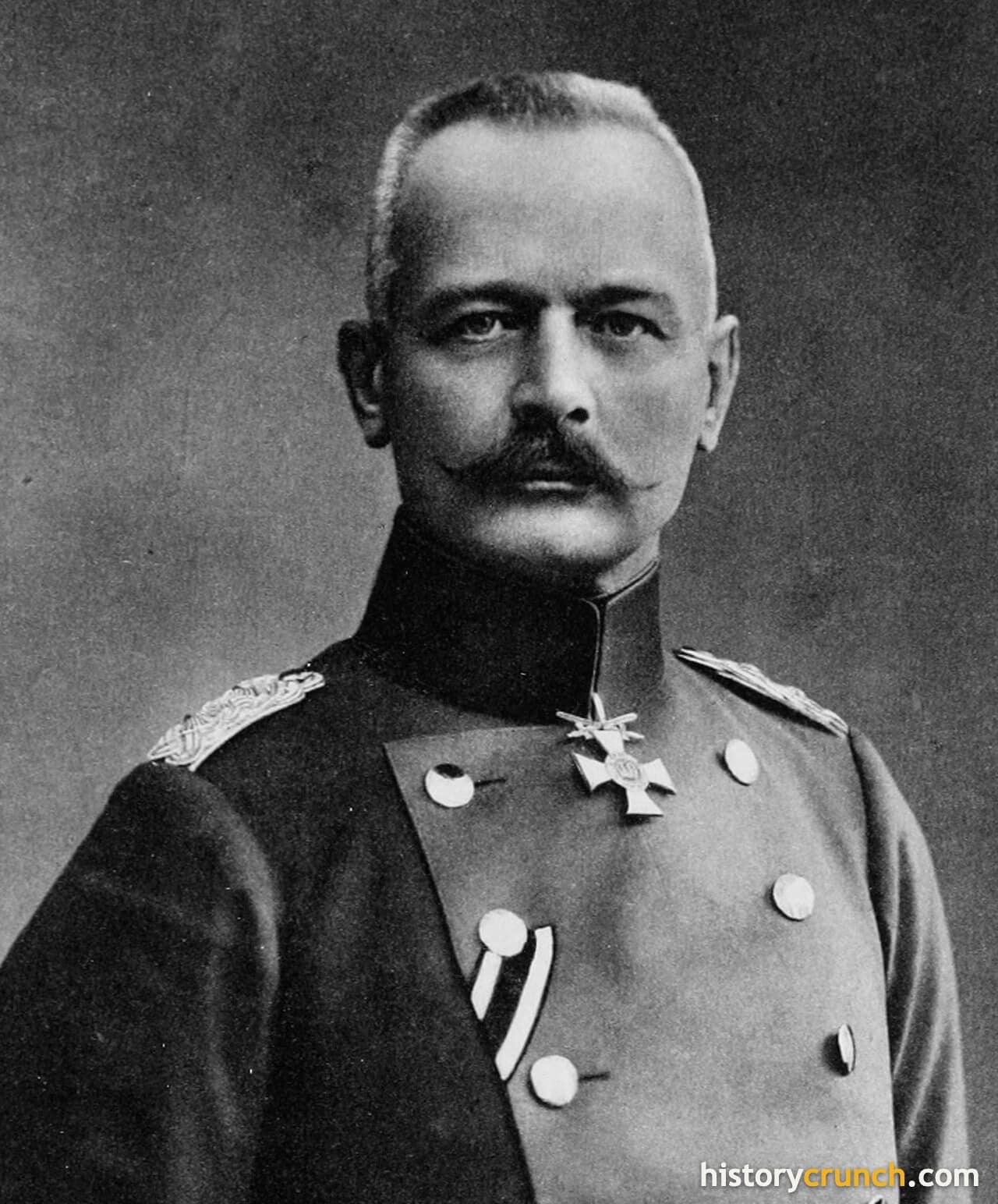
The region around Verdun had many different forts that France had defended to different degrees. The German plan, which was created by German Chief of Staff Erich von Falkenhayn, was to invade the region and begin to capture some of these French forts. This, Germany believed, would draw France into a major battle in the area and bog down the French forces in trying to defend their forts. Next, the German plan called for them to use their artillery power to bombard the French forces and overwhelm the French defenses in the region so that German soldiers could push through and capture the region and the city of Verdun. The French defense in the region was overseen by French General Philippe Pétain, who was seen as a war hero for his role in the Battle of Verdun.
 FactsthatCrunch
Erich von Falkenhayn created the German plan for the Battle of Verdun in 1916, aiming to draw French forces into a costly fight around the forts near Verdun and destroy them with German artillery. The plan failed to capture Verdun or break French resistance, and Falkenhayn was relieved of his position as Chief of Staff on August 29th, 1916, before the battle ended.
What Happened During the Battle of Verdun in World War I?
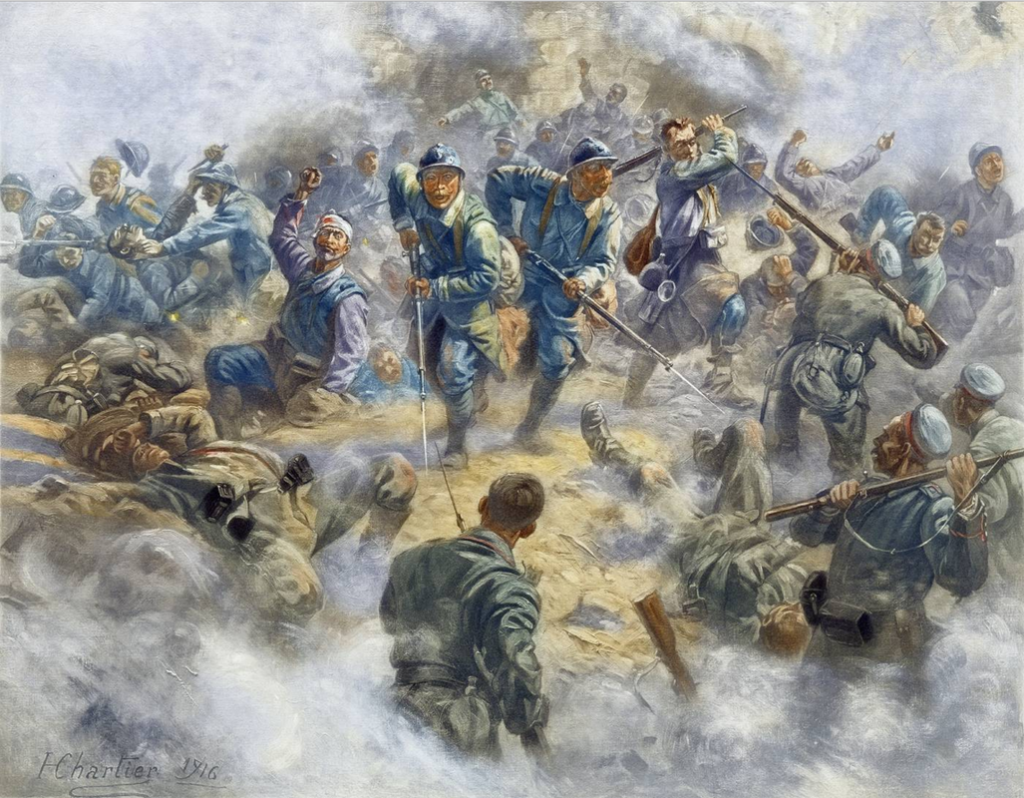
The German assault began on February 21st and involved the German artillery launching artillery shells into the region followed by a German offensiveA military attack in which forces advance aggressively against the enemy. of infantry soldiers. The German soldiers were able to capture several of the forts around Verdun, as the French defenses were weak and unable to stop the German assault. However, French troops began strengthening the French defenses in and around Verdun and soon the French brought reinforcementsAdditional troops sent to strengthen a force that is already fighting. into the region to help defend. Despite coming within 2 miles of the city of Verdun, the German forces were never able to capture the city during the World War I battle. In July of 1916, the Battle of the Somme also began, which caused Germany to divertTo redirect troops or resources away from one place to another. troops from Verdun to the Somme. This weakened the German offensive at Verdun to primarily an artillery attack and better allowed the French the ability to defend and even recapture many of the forts that they had earlier lost. By the end of the battle, France was able to push the Germans back and Germany had failed to achieve its goal in the region. As such, historians consider the Battle of Verdun to be a French victory.
 FactsthatCrunch
True or False: When the Battle of the Somme began in July 1916, Germany was forced to move troops away from Verdun, and this weakened the German offensive at Verdun to primarily an artillery attack.
Why Was the Battle of Verdun in World War I Significant?
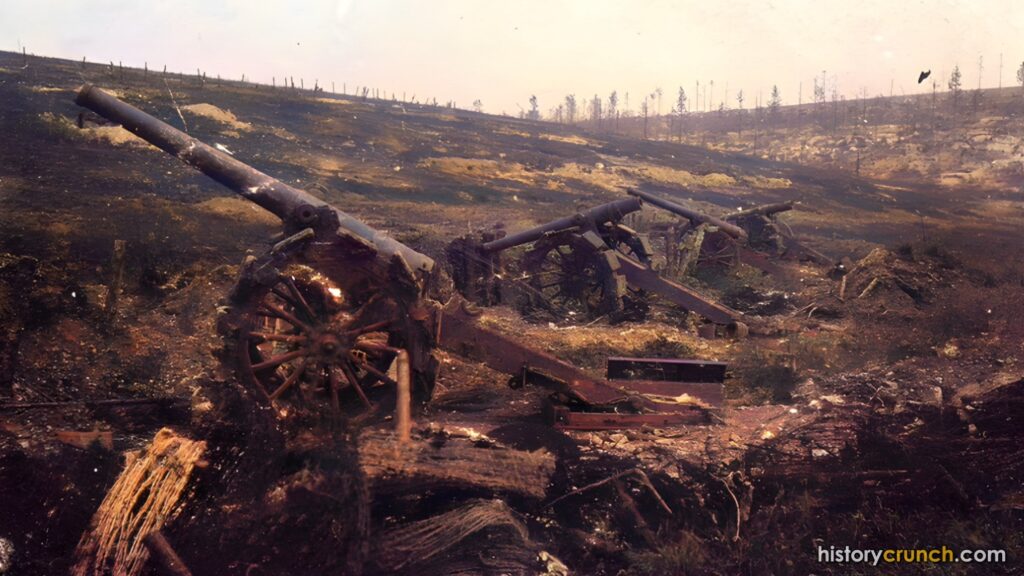
The Battle of Verdun is remembered today as the longest single battle of World War I. The battle lasted 302 days and caused devastating casualtiesThe total number of soldiers killed, wounded, captured, or missing in a battle. for both the French and the Germans. The total casualties in the Battle of Verdun were terrible. For instance, historians estimate that France suffered as many as 400,000 casualties and 163,000 deaths. As well, it is estimated that Germany suffered as many as 350,000 casualties and 143,000 deaths.
 FactsthatCrunch
France and Germany both fought through all 302 days of the Battle of Verdun in 1916, but their strategies, commanders, and casualty figures differed.
World War I timeline · 1914 – 1918
Key Vocabulary
Western Front
Staging ground
Artillery
Offensive
Reinforcements
Divert
Casualties
Frequently Asked Questions
When and where did the Battle of Verdun take place?
The Battle of Verdun was fought from February 21st to December 18th, 1916. It took place in a hilly region of northeastern France near the city of Verdun. The fighting pitted the French Army against the German Army along the Western Front.
Why did Germany attack Verdun?
Germany attacked Verdun to draw French forces into a costly battle around the region’s many forts. German Chief of Staff Erich von Falkenhayn planned the assault. The goal was to capture the hills, use them for artillery, and control the area near Verdun.
Who won the Battle of Verdun?
Historians consider the Battle of Verdun a French victory. French troops pushed the Germans back, and Germany failed to capture the city. German forces came within 2 miles (3 km) of Verdun but never took it.
How did the Battle of the Somme affect Verdun?
The Battle of the Somme began in July of 1916 and forced Germany to move troops away from Verdun. This weakened the German offensive to mostly an artillery attack. As a result, French forces were able to defend better and recapture many lost forts.
How many casualties did the Battle of Verdun cause?
The Battle of Verdun caused devastating losses on both sides. France suffered as many as 400,000 casualties and 163,000 deaths. Germany suffered as many as 350,000 casualties and 143,000 deaths, making the battle one of the deadliest of the war.
Cite This Article
To cite this article as a source, use one of the formats below.
MLA: Beck, Elias. “Battle of Verdun in World War I: A Detailed Summary.” HistoryCrunch, 29 September 2026, https://historycrunch.com/battle-of-verdun-in-world-war-i/.
APA: Beck, E. (2026). Battle of Verdun in World War I: A Detailed Summary. HistoryCrunch. https://historycrunch.com/battle-of-verdun-in-world-war-i/
Chicago: Beck, Elias. “Battle of Verdun in World War I: A Detailed Summary.” HistoryCrunch. September 29, 2026. https://historycrunch.com/battle-of-verdun-in-world-war-i/
Sources
- John Keegan, The First World War.
- Margaret MacMillan, The War That Ended Peace.