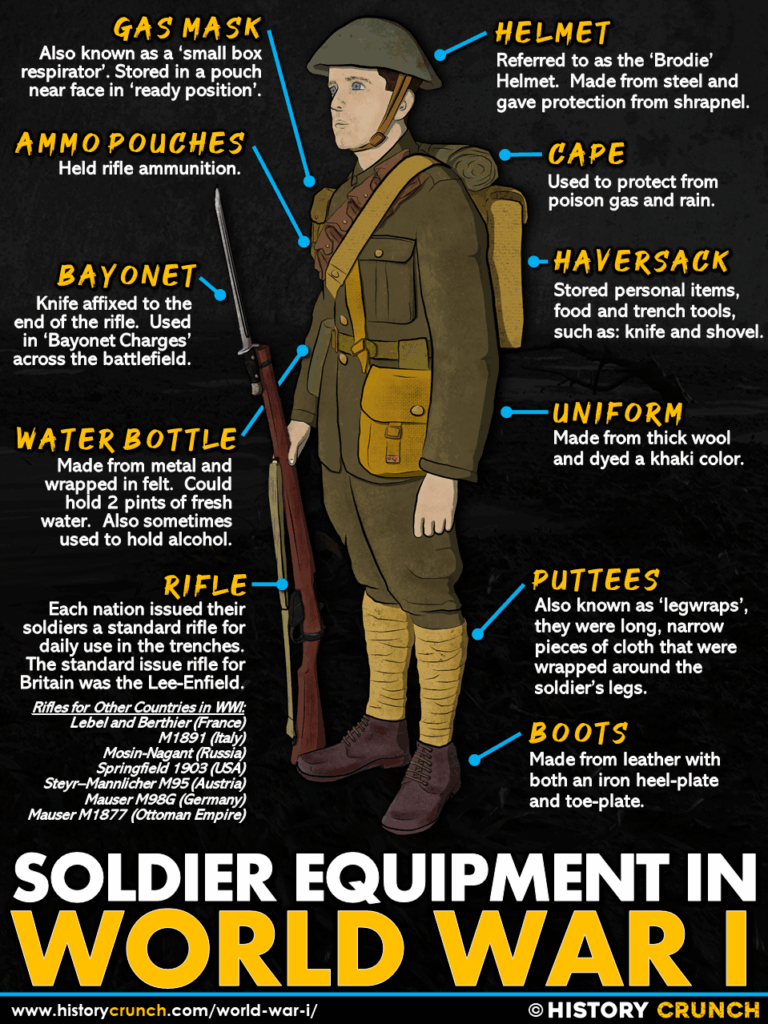
A World War I soldier carried a remarkable amount of equipment into battle. Each item served a specific purpose, from the standard-issue rifle used for daily combat and sniper duty, to the gas mask that became essential after Germany introduced poison gas on the Western Front in 1915, to the entrenching tool used to dig and maintain the trench systems that defined the war. Understanding the equipment of a WWI soldier gives students a personal and human connection to the broader history of the conflict. This infographic was designed for students to visually identify and understand the key items of soldier equipment in World War I and is based on the History Crunch articles on the weapons and daily life of World War I soldiers. The infographic focuses primarily on the equipment of a British soldier.
Soldier Equipment in World War I – Infographic
About This Infographic
This Soldier Equipment in World War I infographic was created by the History Crunch team to help students and teachers quickly understand what a typical frontline soldier in the First World War wore and carried. It is designed as a visual learning and study tool to complement our full articles on the weapons, trenches and daily life of World War I. Teachers may use it as a classroom display, an identification activity or a discussion starter about what the equipment tells us about the nature of fighting in the war.
What This Infographic Covers
The infographic shows a British soldier equipped for frontline duty on the Western Front, with labels identifying the key items of equipment.
The steel helmet was introduced during the war, first by the French in 1915 and then by Britain with the famous Brodie helmet design, also adopted in 1915. Before the war, soldiers had gone into battle without any metal head protection. The trenches of the Western Front produced a high number of head injuries from shrapnel, shell fragments and debris, and the steel helmet significantly reduced these casualties. Germany introduced its own helmet design in 1916. The distinctive shapes of each nation’s helmet became national symbols and remain instantly recognizable today.
The gas mask became essential equipment for all frontline soldiers after Germany first used poison gas at the Second Battle of Ypres in April 1915. Early improvised protections included cloths soaked in water or urine held over the mouth. More effective gas hoods and masks were developed over the following year, with the British Small Box Respirator becoming standard issue from 1916. The gas mask was typically carried in a bag slung over the shoulder on the march and worn on the chest in a ready position when in the trenches, where soldiers needed to be able to put it on quickly.
The rifle and bayonet were the primary weapons of every infantry soldier in World War I. British soldiers were issued the Lee-Enfield bolt-action rifle, which was capable of firing up to 15 to 30 aimed rounds per minute in the hands of a trained soldier. German forces also used bolt-action rifles that fired at high rates. Bayonets were long blades fixed to the end of the rifle and used in close hand-to-hand combat. Each soldier’s daily rifle inspection ensured weapons were clean and functional, as the muddy conditions of the trenches could cause bolt-action rifles to jam.
Ammunition pouches were worn on the belt or webbing harness and allowed soldiers to carry their rifle cartridges. British soldiers used the 1908 Pattern Webbing system, a load-bearing harness made from woven cotton that included left and right ammunition pouches holding 75 rounds each, braces, a bayonet holder and attachments for other equipment. The full webbing kit, when loaded, could weigh over 70 pounds.
The water canteen allowed soldiers to carry drinking water, which was vital in the trenches. Clean water was not always easily available on the frontlines and soldiers depended on water being brought forward to them from rear supply areas.
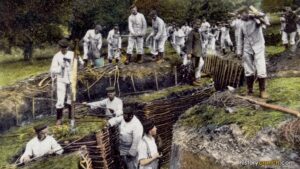
The entrenching tool was a short folding spade carried by every soldier. On the Western Front, the ability to dig quickly was often the difference between survival and death. Soldiers used entrenching tools to dig new sections of trench, deepen existing ones, create shell scrapes for cover during advances and carry out repairs to trench walls damaged by enemy artillery.
The pack or haversack carried a soldier’s personal items and daily ration, including food such as a meat ration alongside bread or crackers. As the war continued and supply difficulties grew, rations were sometimes reduced.
How to Use This Infographic in the Classroom
This infographic works well as a visual introduction or review activity for units on World War I and life in the trenches. Teachers can use it as a labeling exercise, asking students to match each item to its name and function. It also works as a discussion prompt asking students to consider what the equipment tells us about the nature of the war, for example why the gas mask was added mid-war, or why the steel helmet replaced earlier cloth and leather caps. It pairs naturally with the Life in the Trenches of World War I infographic and the Weapons of World War I infographic.
Related Articles
To learn more about the topics covered in this infographic, visit the following History Crunch articles: