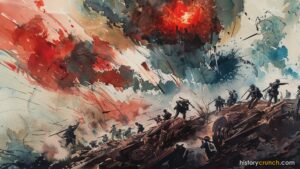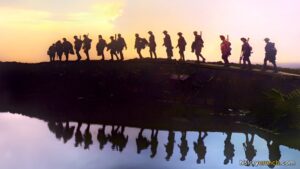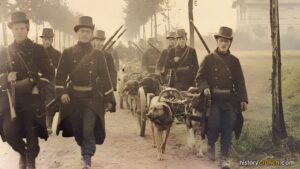
Weapons and technology played a key role in the events of World War I. For instance, World War I is often characterized by the stalemateA situation in war where neither side can gain an advantage or make progress against the other. conditions created due to trench warfare. This was especially evident along the trenches of the Western Front. As such, the major powers of World War I introduced and made use of weapons in an effort to end the stalemate conditions. For example, some of the most important weapons of World War I include: airplanes, airships, machine guns, poison gas, rifles, submarines and tanks. World War I was a deadly conflict as shown by the millions of military and civil casualties it caused. The large number of casualties was the result, in part, of the development and use of weaponry that took place during the war.
 FactsthatCrunch
Main Weapons of World War I
Some of the most important weapons of World War I include rifles, machine guns, poison gas, tanks, airplanes, airships, and submarines. Together these weapons made World War I one of the deadliest conflicts in human history.
Rifles
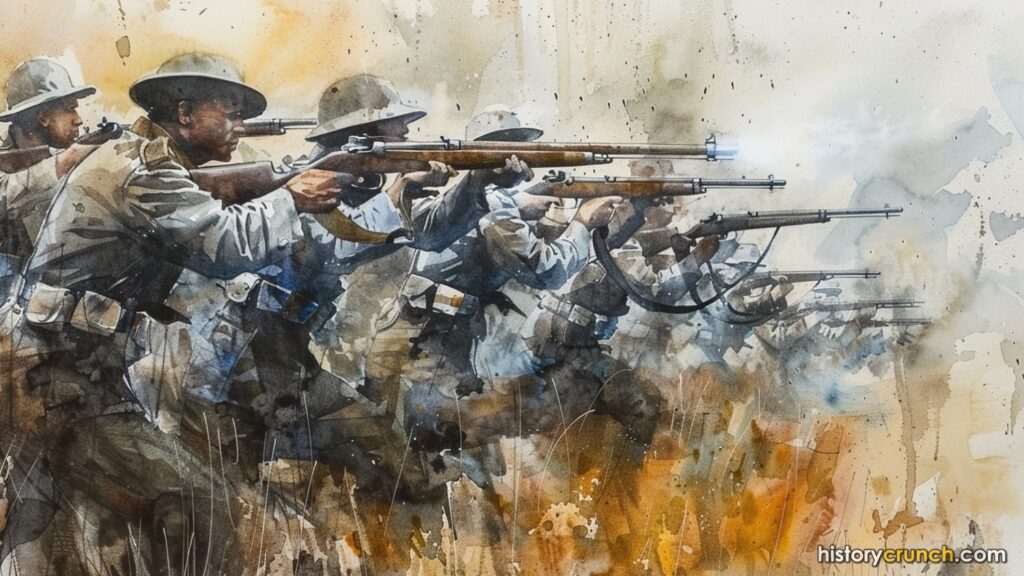
The rifle was arguably the most important and widely used weapon of World War I. Every soldier who fought in the war was issued a rifle, and it was the weapon they carried and relied upon on a daily basis. Rifles were used in trench raids, defensive operations, and any situation where soldiers came into close contact with the enemy. Each of the major nations involved in the war issued their soldiers a different style of rifle. For example, British soldiers used the Lee-Enfield rifle, while German soldiers were equipped with the Mauser Gewehr 98. All of these rifles functioned as bolt-actionA rifle design where the shooter must manually cycle a handle to eject a shell and load the next round after each shot. weapons, meaning the soldier had to manually reload each round by working the bolt of the rifle after each shot. While the rifle lacked the firepower of newer weapons like the machine gun, it remained the backbone of every army throughout the war and accounted for a significant portion of the casualties on all sides.
Machine Guns
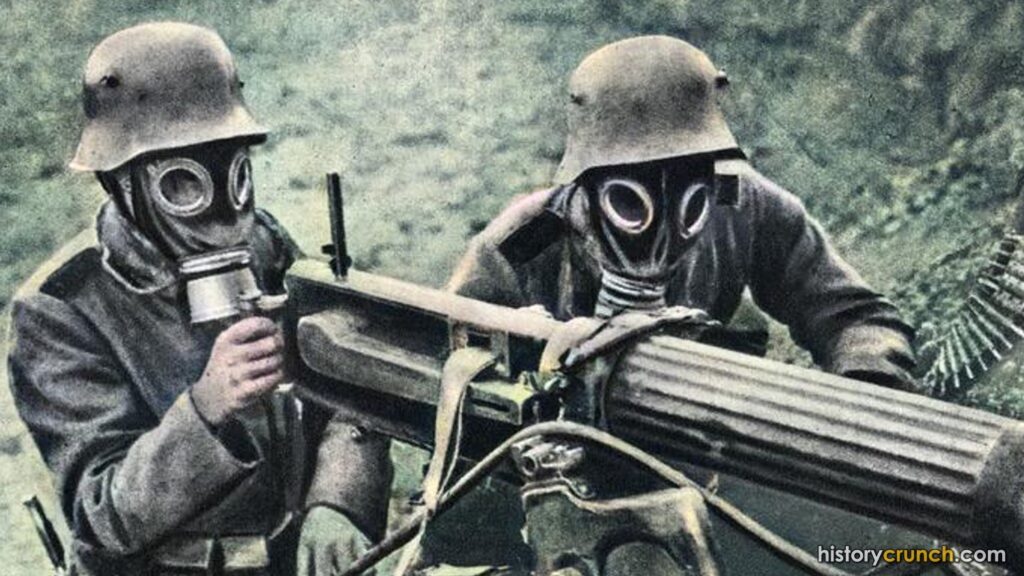
The machine gun was one of the most significant and deadly weapons of World War I and played a central role in creating and maintaining the stalemate of trench warfare. Unlike the rifle, which fired one round at a time, the machine gun could fire hundreds of rounds per minute in a sustained burst, making it an extraordinarily powerful defensive weapon. A single machine gun crew could hold off large numbers of advancing soldiers, which is one of the main reasons why frontal attacks across No Man’s Land were so catastrophic during the war.
The most important machine gun of the era was the Maxim gun, which had been invented by American-born inventor Hiram Maxim in 1884. The Maxim gun used the recoil force of each fired round to automatically load and fire the next, making it the first practical automatic machine gun produced on a wide scale. It was capable of firing as many as 600 rounds per minute. Each of the major nations developed their own version of the Maxim gun for use in the war. Britain used the Vickers machine gun, Germany used the Maschinengewehr 08, and Russia used the PM M1910. Versions of the Vickers machine gun were also fitted to airplanes, extending the machine gun’s role beyond the trenches and into the air. The machine gun transformed warfare in World War I by making defensive positions almost impossible to overrun without enormous casualties, which directly contributed to the years of stalemate that defined the Western Front.
 FactsthatCrunch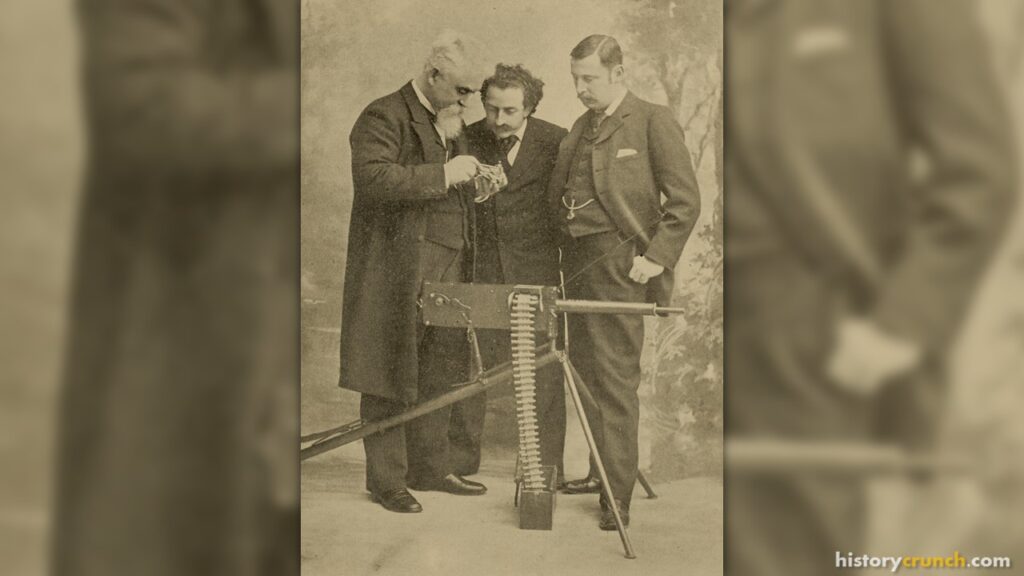
Poison Gas
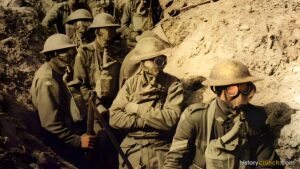
Poison gas was one of the most feared and controversial weapons of World War I. Its development was directly connected to the stalemate of trench warfare, as military commanders on both sides searched for ways to break through enemy defenses. Although the use of poison weapons had been deemed a violation of the laws of war under the Hague Conventions of 1899 and 1907, countries on both sides expanded their use of poison gases as the war progressed.
Several different types of poison gas were used during the war. Tear gas was the most commonly used type overall, designed to irritate the eyes and force soldiers out of their positions. Chlorine gas was the first lethal poison gas used on the battlefield, introduced by Germany during the Second Battle of Ypres in April of 1915. It appeared as a greenish cloud and caused soldiers’ airways and lungs to become inflamed, leading to death by suffocation. PhosgeneA colorless, nearly odorless poison gas responsible for approximately 85 percent of all gas deaths in World War I. gas followed and proved even more deadly than chlorine, as it was colorless and largely odorless, meaning soldiers often did not realize they were inhaling it before it was too late. Approximately 85 percent of all poison gas deaths in World War I were caused by phosgene. Mustard gas, introduced later in the war by Germany, was different from the others in that it also burned the skin, meaning gas masks alone could not protect soldiers from its effects. While mustard gas rarely killed outright, it caused terrible blistering of the skin and eyes and put enormous numbers of soldiers out of action. Historians estimate that as many as 90,000 soldiers died from poison gas in the war, with approximately 1.3 million total casualties resulting from its use.
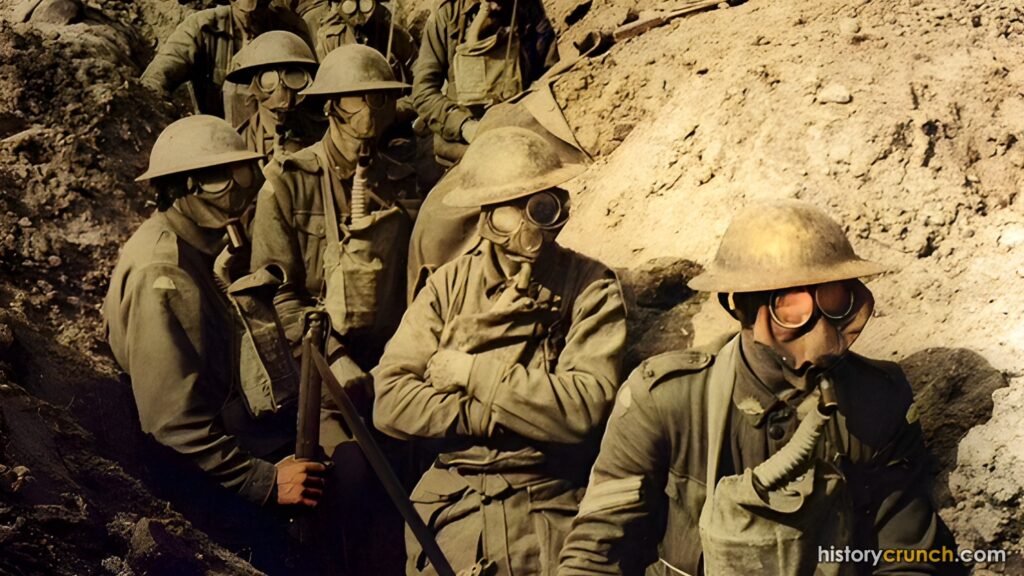
Poison gas was so effective in World War I that it won battles outright for whichever side used it first.
Tanks
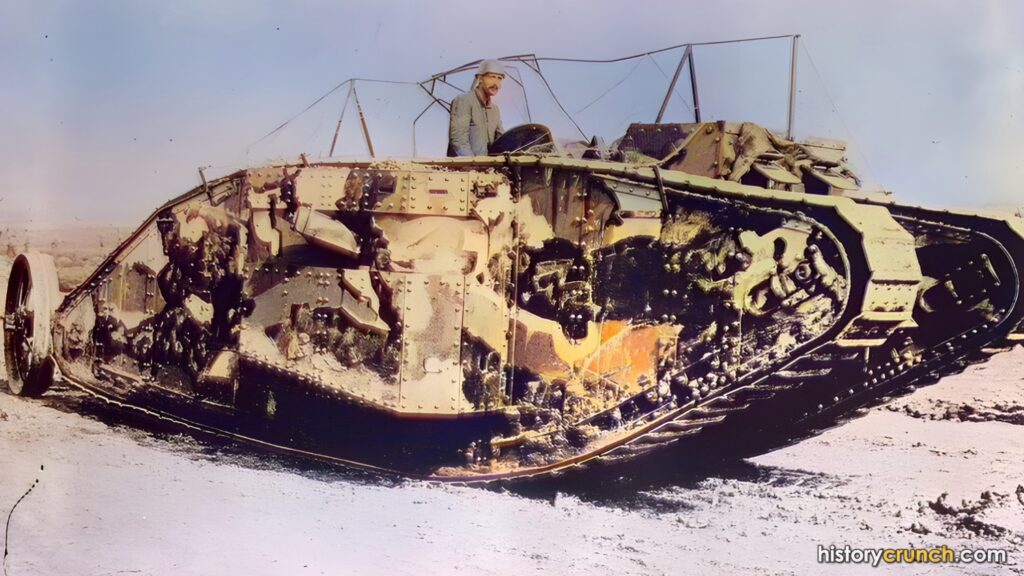
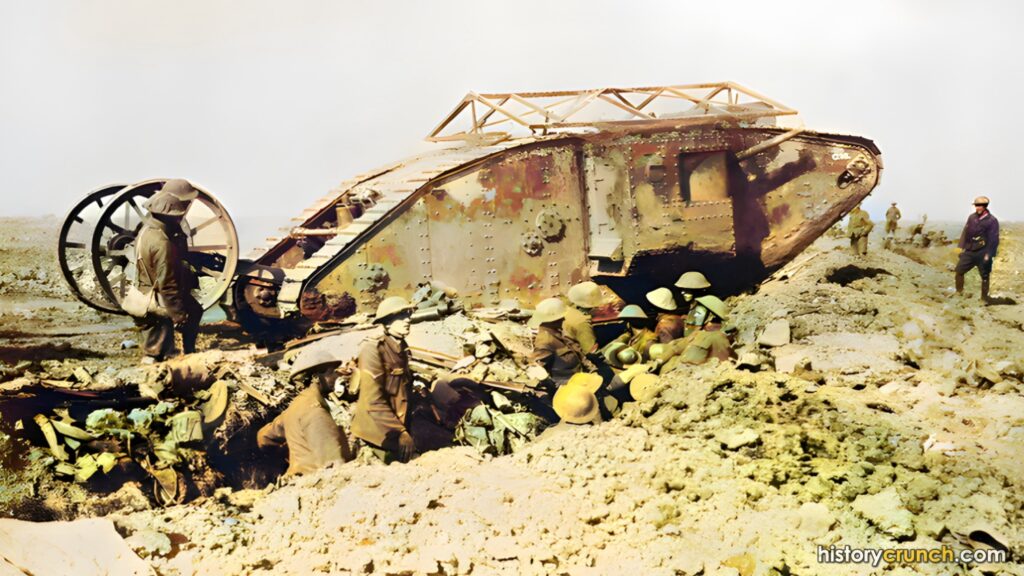
The tank was one of the most significant new weapons introduced during World War I and represented a major development in the history of warfare. Like poison gas, the tank was developed specifically in response to the stalemate of trench warfare. Britain was the first country to develop and use the tank in battle, hoping it would allow their forces to advance across No Man’s Land and break through German defensive lines.
The development of the first practical tank began in 1915. The earliest prototype, known as Little Willie, was a 14-ton armored vehicle with caterpillar tracks and a 105 hp engine. The design was refined and the improved version, nicknamed Mother, became the model for the Mark I tank, which was first used in battle at the Battle of the Somme on September 15th, 1916. The first use of tanks had mixed results. Many broke down due to mechanical failure or became stuck in the thick mud of the Western Front. However, they also caused considerable shock and fear among German soldiers who had never seen such machines before. As the war continued, Britain developed improved versions of the tank including the Mark IV and Mark V, and both France and Germany began producing their own tanks. By the end of the war France had produced more tanks than any other nation, with thousands of the Renault FT in service. The Renault FT was particularly significant because it featured the first fully rotatable turret, a design feature that became standard on tanks throughout the rest of the 20th century. Although the tank did not end the stalemate as quickly as had been hoped, it proved an important psychological weapon and laid the foundation for the central role that tanks would play in future conflicts.
Airplanes
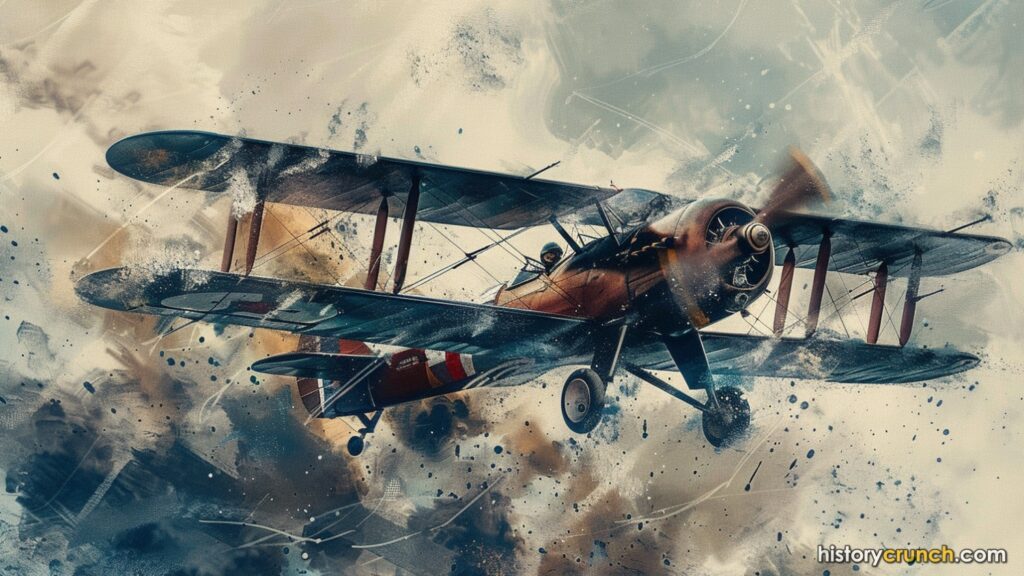
Airplanes were another new and rapidly evolving weapon of World War I. The airplane had only been invented just over a decade before the war began, with the Wright Brothers completing their first flight in 1903. As a result, when the war broke out in 1914 aircraft technology was still primitive and most early planes were used purely for reconnaissance, with pilots tasked with photographing enemy trenches and reporting on the positions of artillery and troops. Most of these early planes were made from wood and fabric, which made them relatively fragile.
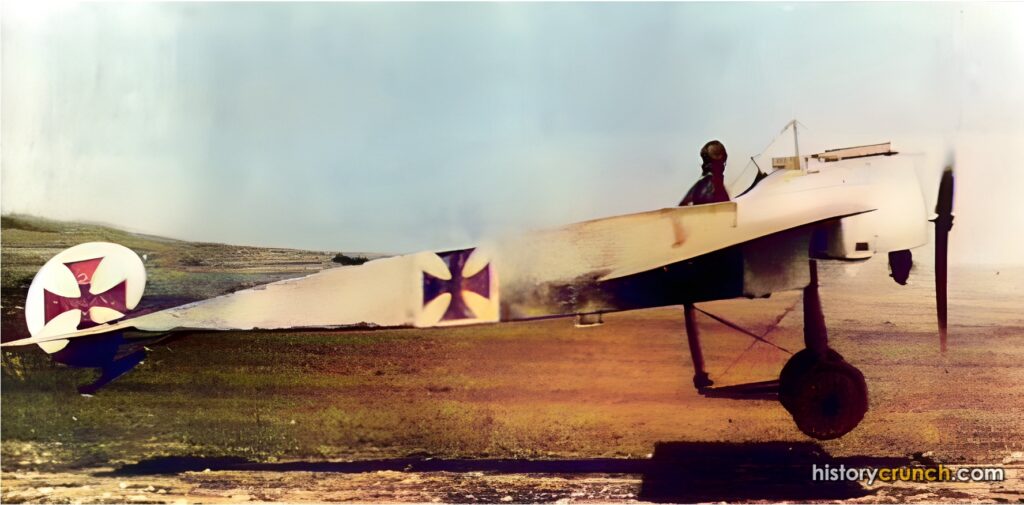
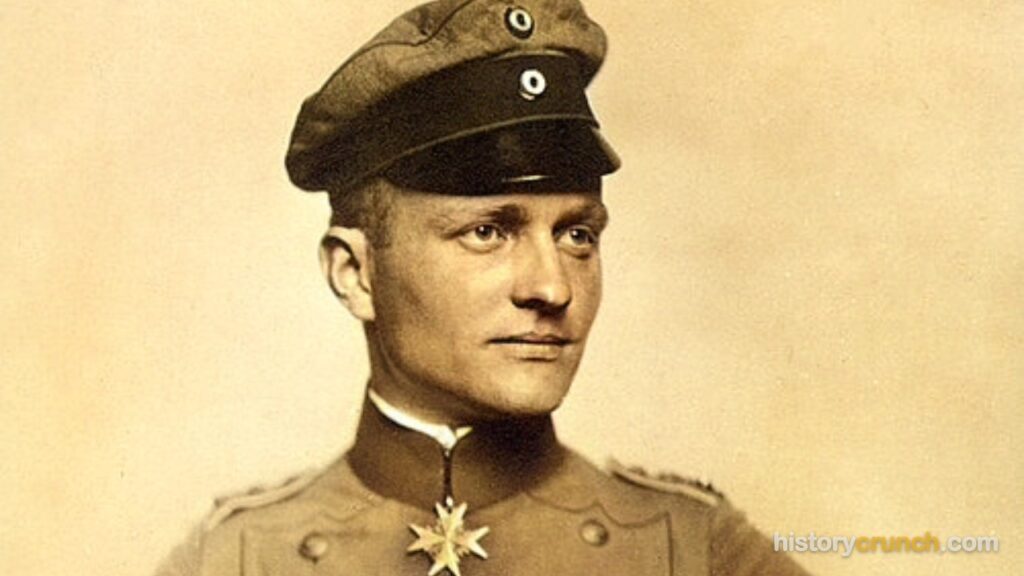
As the war progressed, aircraft technology improved dramatically and planes were developed for two main purposes: bombing and fighting. Bomber aircraft grew larger and more capable of carrying heavy payloads of bombs to targets on the ground. An example of a notable bomber from the war was the German Gotha G.V., a long-range bomber first used in 1917 that could carry a payload of 14 bombs. Fighter aircraft were smaller and faster, designed to engage enemy planes in the air. Pilots who shot down a significant number of enemy aircraft became known as aces and were celebrated as heroes. Perhaps the most famous ace of the war was the German pilot Manfred von Richthofen, known as the Red Baron. As fighter technology developed, machine guns were mounted directly on aircraft, leading to the famous aerial dogfights that became characteristic of the war. One of the key challenges of mounting machine guns on fighter planes was preventing the bullets from hitting the plane’s own propeller. The German Fokker Eindecker, introduced in 1915, was the first aircraft to solve this problem with a synchronization gearA mechanical device on fighter planes that timed machine-gun fire so bullets passed between the spinning propeller blades without hitting them. that timed the firing of the machine gun to match the spinning of the propeller. This gave Germany an important advantage in air superiority during the period known as the Fokker Scourge in late 1915 and early 1916, before Britain and France developed their own advanced fighters to counter it.
 FactsthatCrunch
Can you name this mystery person before the photo develops? Click through the hints and lock in your guess.
Airships
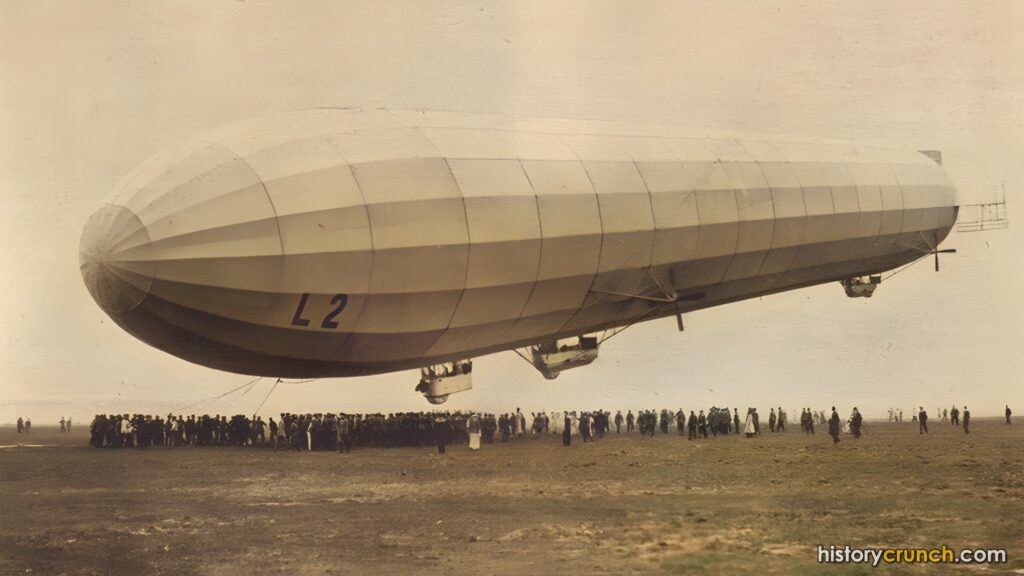
Airships were another form of aircraft used during World War I, though they were ultimately less important than airplanes. An airship is a lighter-than-air aircraft that can move under its own power. By the time of World War I airship technology had been developing for decades and several European nations used airships for reconnaissance missions and bombing runs during the war. However, airships had significant limitations that prevented them from becoming truly effective weapons. They were filled with highly flammable hydrogen gas, which made them extremely vulnerable to enemy fire. They were also slow and difficult to maneuver, which made accurate bombing difficult and left them easy targets for enemy aircraft.
Despite these limitations, Germany famously used its Zeppelin airships in bombing raids against Britain between 1915 and 1917. The Zeppelins were large rigid airships developed by German inventor Ferdinand von Zeppelin and became so well known during the war that the word Zeppelin became almost synonymous with airship. Germany carried out an estimated 51 airship bombing raids against Britain during the war, killing 557 people and injuring approximately 1,358 more. While the raids had little significant impact on the military outcome of the war, they caused widespread fear and panic among the British civilian population. By 1917, improved British air defenses and the growing effectiveness of fighter aircraft made the Zeppelin raids increasingly costly for Germany, and airplanes took over the bombing role for the rest of the war.
Submarines
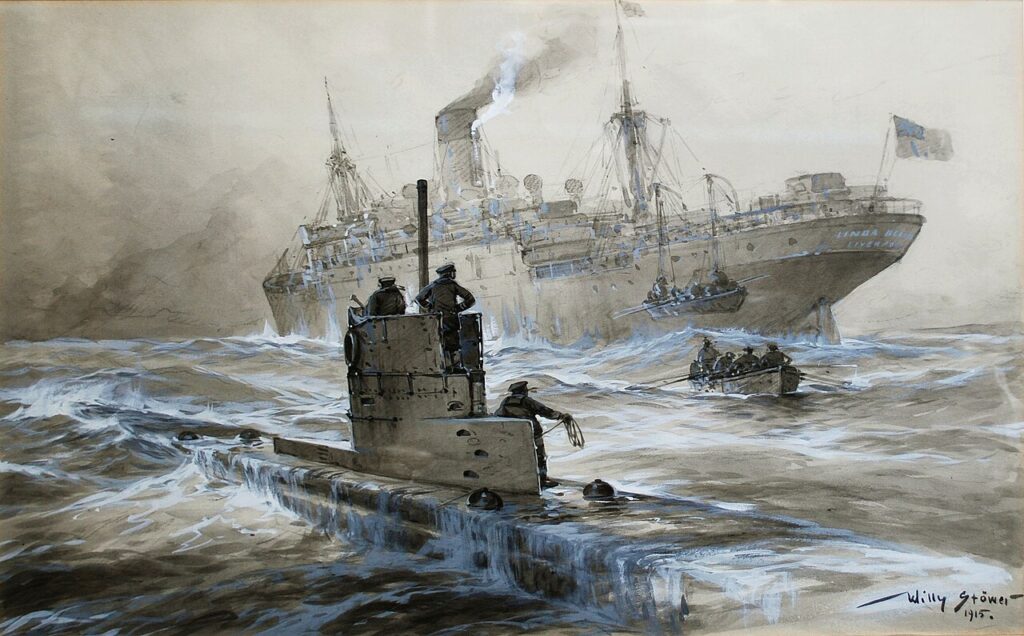
Submarines were a critically important weapon of World War I, particularly for Germany, which used them extensively to wage naval war against Britain and France in the North Atlantic Ocean. In German the submarines were called UnterseebootThe German word for submarine, usually shortened to U-Boat, used to attack Allied ships in the North Atlantic., a term usually shortened to U-Boats. Germany produced several different classes of U-Boats during the war, some designed for attack purposes and others for laying naval mines. The German U-Boat campaign was primarily aimed at attacking the merchant shipping routes of the Allied nations, particularly Britain, which as an island nation depended heavily on a steady flow of imported goods and supplies.
The most dramatic and notable example of German submarine warfare was the sinking of the passenger liner Lusitania in May of 1915. The ship was traveling from New York to Liverpool when it was struck by a German torpedo off the coast of Ireland on May 7th, 1915. The ship sank in just 18 minutes, killing 1,198 people, including 128 Americans. The sinking of the Lusitania caused enormous international outrage and contributed to growing American hostility toward Germany. Over the course of the war Germany built 373 U-Boats and lost 178 of them to enemy action. Historians estimate that German U-Boats sank over 5,000 Allied merchant ships and killed as many as 15,000 Allied sailors. The German U-Boat campaign is considered by historians to be one of the main reasons that the United States eventually entered the war on the side of the Allied Powers in 1917, as the attacks on shipping in the North Atlantic directly threatened American lives and trade.
 FactsthatCrunch
Germany started World War I with just 20 ready submarines and built hundreds more, but the cost was enormous.
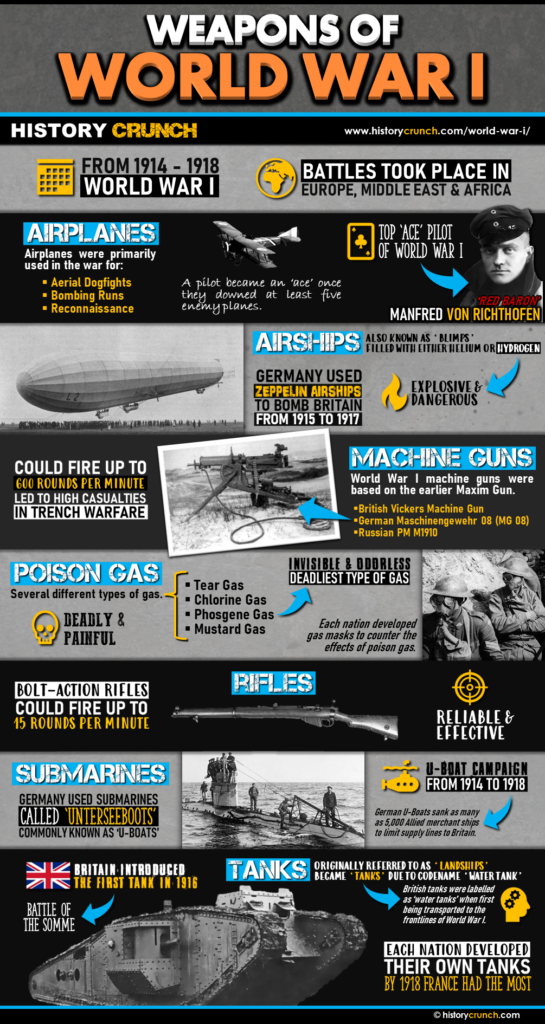
Weapons of World War I – Infographic
Key Vocabulary
Stalemate
Bolt-action
No Man’s Land
Hague Conventions
Phosgene
Synchronization gear
Unterseeboot
Frequently Asked Questions
What were the main weapons used in World War I?
The main weapons of World War I were rifles, machine guns, poison gas, tanks, airplanes, airships, and submarines. Many of these weapons were developed to break the stalemate caused by trench warfare. Together they made the war one of the deadliest conflicts in human history.
Why was the machine gun so deadly in World War I?
The machine gun was deadly because it could fire hundreds of rounds per minute in a sustained burst. A single crew could hold off large numbers of advancing soldiers, making frontal attacks across No Man’s Land catastrophic. The Maxim gun, invented by Hiram Maxim in 1884, could fire as many as 600 rounds per minute.
What types of poison gas were used in World War I?
The main types of poison gas were tear gas, chlorine gas, phosgene gas, and mustard gas. Chlorine was the first lethal gas, used by Germany at the Second Battle of Ypres in April of 1915. Phosgene caused about 85 percent of all gas deaths, while mustard gas burned the skin as well as the lungs.
Which country first used tanks in World War I?
Britain was the first country to develop and use the tank in battle. Tanks were first used at the Battle of the Somme on September 15th, 1916, with mixed results. Many broke down or got stuck in mud, but they still shocked and frightened German soldiers who had never seen such machines.
How were airplanes used during World War I?
Early airplanes were used mainly for reconnaissance, photographing enemy trenches and reporting troop positions. As technology improved, planes were built for bombing and fighting, leading to famous aerial dogfights. The German Fokker Eindecker of 1915 used a synchronization gear to fire a machine gun through its spinning propeller.
Why were German U-Boats important in World War I?
German U-Boats were important because they attacked Allied merchant shipping, especially supplies bound for Britain. The sinking of the passenger liner Lusitania on May 7th, 1915 caused huge international outrage. The U-Boat campaign is seen as one of the main reasons the United States entered the war in 1917.
Cite This Article
To cite this article as a source, use one of the formats below.
MLA: Beck, Elias. “Weapons of World War I: A Detailed Summary.” HistoryCrunch, 29 September 2026, https://historycrunch.com/weapons-of-world-war-i/.
APA: Beck, E. (2026). Weapons of World War I: A Detailed Summary. HistoryCrunch. https://historycrunch.com/weapons-of-world-war-i/
Chicago: Beck, Elias. “Weapons of World War I: A Detailed Summary.” HistoryCrunch. September 29, 2026. https://historycrunch.com/weapons-of-world-war-i/
Sources
- Imperial War Museum
- Hew Strachan, The First World War.
- John Keegan, The First World War.