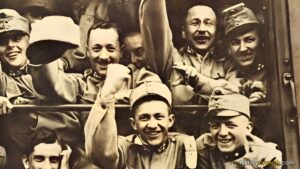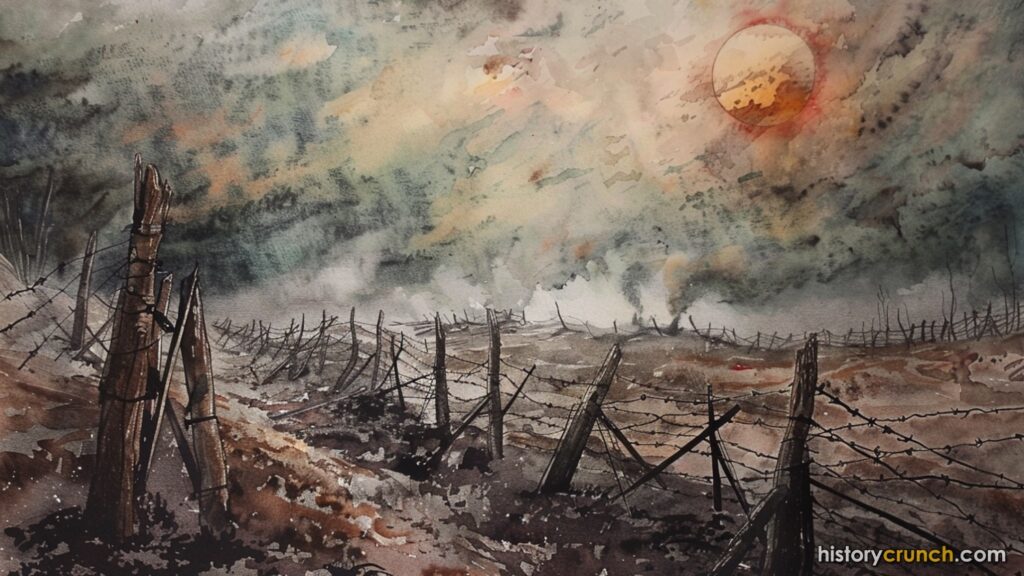
‘No Man’s Land’ in World War I was the stretch of land between the two opposing frontline trenchesLong ditches dug by each side where soldiers lived and fought closest to the enemy.. ‘No Man’s Land’ was named because it symbolized the likelihood of advancing soldiers dying in this region. This is because it was likely the most dangerous place for the soldiers of World War I. Furthermore, the destroyed landscape of ‘No Man’s Land’ has become characteristic of World War I as a whole. For instance, the mud of World War I has become a key component of World War I and its historical significance.

Why Was No Man’s Land So Dangerous?
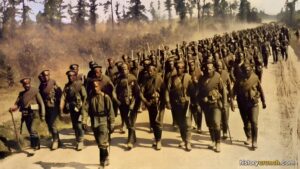
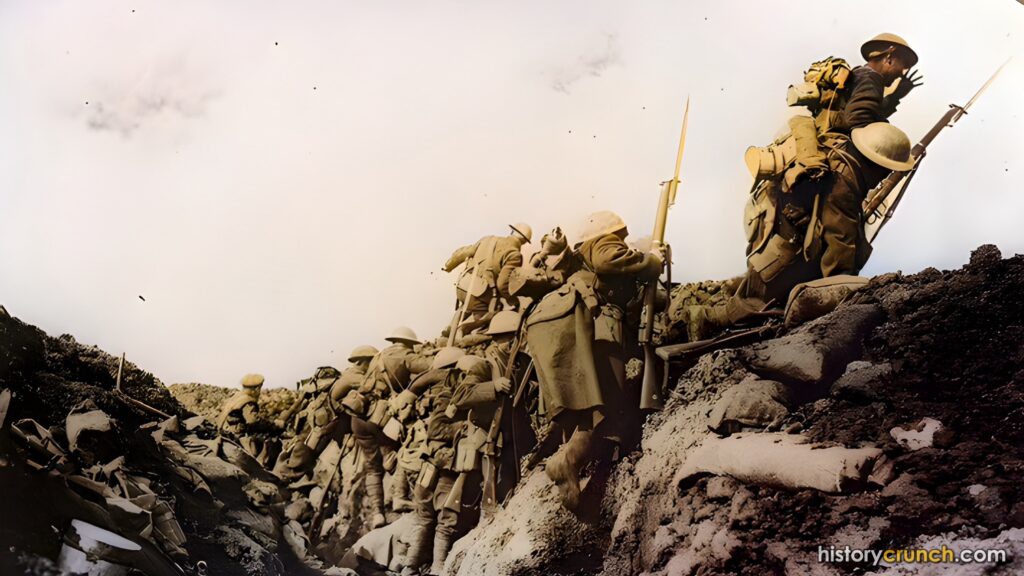
Trench warfare was a strategy that heavily favored the defenders and helped lead to the massive death tolls caused during World War I. ‘No Man’s Land’ was a major contributor to the death tolls of World War I since it created conditions that made it difficult and dangerous for soldiers to cross. For instance, ‘No Man’s Land’ was the stretch of land that World War I soldiers were tasked with crossing when they were ordered ‘over the topA military order telling soldiers to climb out of their trench and charge across open ground toward the enemy.’. When soldiers were ordered ‘over the top’ they climbed out of their own frontline trench and crossed ‘No Man’s Land’ towards the enemy’s frontline trench. Along the way, the soldiers faced heavy opposition and numerous different types of dangers. For instance, soldiers attempting to cross ‘No Man’s Land’ were met with barbed wire, mines, artillery fire, enemy machine gun fire and the mud of Northern France.
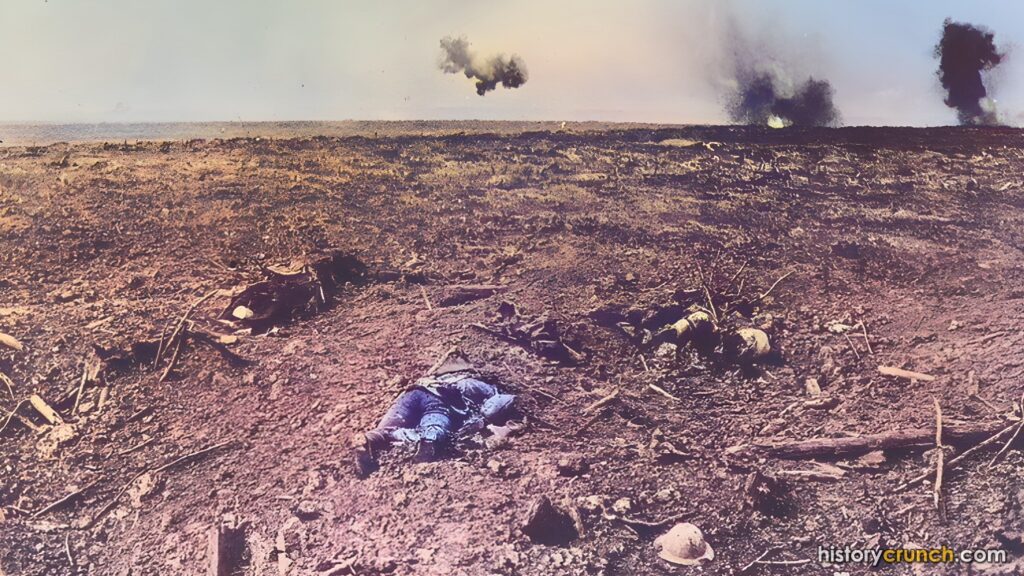
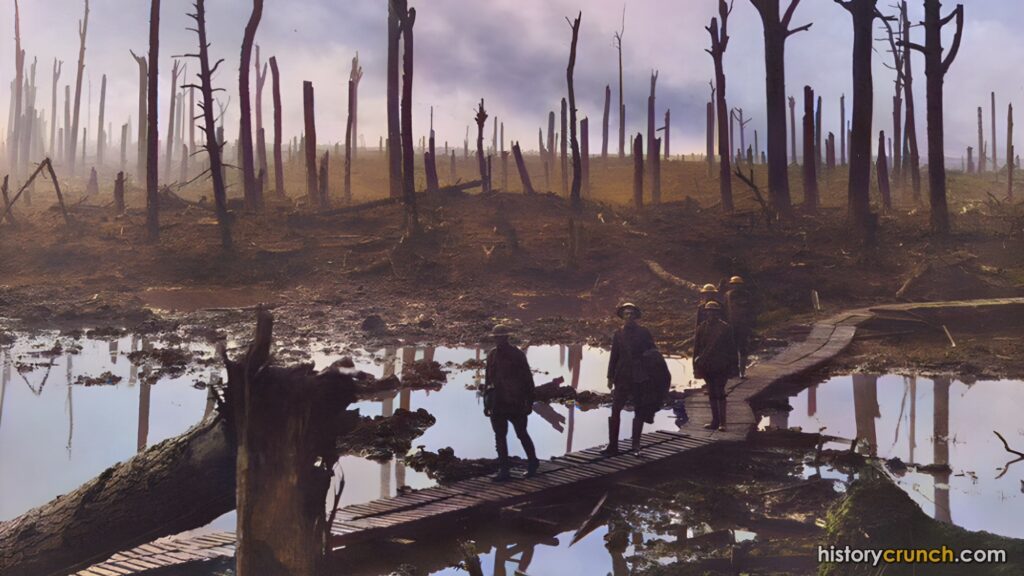
The mud of ‘No Man’s Land’ made crossing the stretch of land almost impossible at times. Artillery bombardmentsHeavy, repeated attacks using large cannons that destroy land, buildings, and vegetation over a wide area. had torn up the land and destroyed all trees, grass and vegetation. Rain turned the dead landscape into a thick layer of mud that was sometimes up to the knees of the soldiers and sometimes deep enough that soldiers could become stuck and drown. Soldiers trying to cross ‘No Man’s Land’ struggled to avoid enemy fire, machine guns and other weapons while dealing with the deep mud. The muddy conditions were not just present in ‘No Man’s Land’ and made life in the trenches difficult as well. As such, ‘No Man’s Land’ was a key feature of soldier life in World War I and is especially related to life in the trenches.
 FactsthatCrunch
Why did the deep mud of No Man's Land make attacking soldiers especially easy to kill?
What Did No Man’s Land in World War I Look Like?
As stated above, No Man’s Land in World War I was a dangerous and devastating place for soldiers to experience. For example, it was a barren and devastated landscape characterized by shell craters, barbed wire entanglementsTwisted wire with sharp points stretched across ground to slow down or trap enemy soldiers trying to advance., and the remnants of destroyed buildings and trees. The terrain was often muddy and waterlogged due to the constant shelling and trench warfareA style of fighting where both armies dig long ditches and defend them, making it very hard for either side to advance., making movement difficult and treacherous.
No Man’s Land was also characterized by other hazards such as unexploded munitionsShells or bombs fired during battle that landed but never went off, leaving hidden deadly hazards in the ground. and enemy traps, and it was subjected to constant sniper fire from both sides. Soldiers who ventured into No Man’s Land risked being caught in the crossfire or falling victim to hidden dangers.
The conditions in No Man’s Land were grim and contributed to the psychological tollThe lasting mental and emotional damage caused by experiencing extreme danger, fear, and suffering over a long period. of the war on soldiers who had to endure the constant threat of death and the harsh realities of trench warfare.
 FactsthatCrunch
Which hazards of No Man's Land in World War I were soldiers facing all the time, and which struck only now and then?
Tap a point to read its detail.
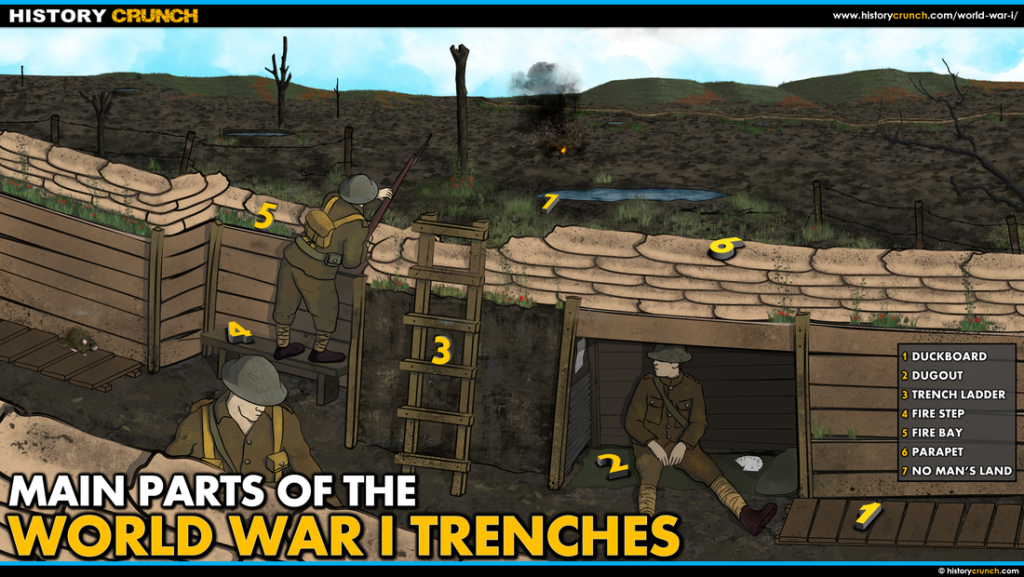
Main Parts of the World War I Trenches – Infographic
Key Vocabulary
Frontline trenches
Over the top
Trench warfare
Artillery bombardments
Barbed wire entanglements
Unexploded munitions
Psychological toll
Frequently Asked Questions
What was No Man’s Land in World War I?
No Man’s Land was the open ground between the two opposing frontline trenches. It got its name because soldiers who crossed it were very likely to die. The land was often destroyed and muddy from heavy shelling. It became one of the best known images of the war.
Why was No Man’s Land so dangerous?
No Man’s Land was dangerous because soldiers crossing it faced many deadly threats at once. These included barbed wire, mines, artillery fire, and enemy machine gun fire. Trench warfare favored defenders, so attackers often died in large numbers. The thick mud also slowed soldiers and made them easy targets.
What did it mean to go “over the top”?
Going “over the top” meant soldiers climbed out of their own trench to attack the enemy. They then had to cross No Man’s Land toward the opposing frontline trench. Along the way they met heavy fire and other hidden dangers. This order often led to huge losses of life.
Why was No Man’s Land so muddy?
The mud came from constant artillery bombardments that tore up the land. Shelling destroyed all the trees, grass, and other vegetation. Rain then turned the bare ground into deep, thick mud. In some places the mud was deep enough for soldiers to become stuck and drown.
What did No Man’s Land look like?
No Man’s Land was a barren and ruined landscape shaped by war. It was covered with shell craters, barbed wire, and the remains of destroyed buildings and trees. The ground was often muddy and waterlogged from shelling and rain. Unexploded munitions and enemy traps added even more danger.
How did No Man’s Land affect soldiers mentally?
The grim conditions of No Man’s Land added to the psychological toll of the war. Soldiers faced the constant threat of death from sniper fire and hidden hazards. Living near such danger for long periods wore down their minds. The harsh realities of trench warfare left lasting effects on many men.
Cite This Article
To cite this article as a source, use one of the formats below.
MLA: Beck, Elias. “No Man's Land in World War I: A Detailed Summary.” HistoryCrunch, 29 September 2026, https://historycrunch.com/no-mans-land-in-world-war-i/.
APA: Beck, E. (2026). No Man's Land in World War I: A Detailed Summary. HistoryCrunch. https://historycrunch.com/no-mans-land-in-world-war-i/
Chicago: Beck, Elias. “No Man's Land in World War I: A Detailed Summary.” HistoryCrunch. September 29, 2026. https://historycrunch.com/no-mans-land-in-world-war-i/
Sources
- John Keegan, The First World War.
- Imperial War Museum