Life in the trenches of World War I was an important aspect of the First World War. The soldiers of World War I lived through terrible conditions in the war, including several key elements present in the trenches. For instance, life in the trenches of World War I was characterized by: the daily routine of the soldiers, the dangers of ‘No Man’s Land’, Trench Foot, Shell Shock and more. The soldiers on the frontlines struggled with the dangers of the war and faced constant hardships.
Trench Warfare in World War I
World War I was characterized most dramatically by the nature of trench warfareA style of fighting where opposing armies dig facing ditches in the ground to shelter from enemy fire and wait for orders to attack.. In general, trench warfare involved two opposing armies digging trenches in the Earth that faced each other. The armies of World War I did this in order to avoid gunfire from the enemy forces and to await their own orders to attack ‘over the top’ of the trench. Trench warfare was most famously used on the Western Front between the Allied Powers of Britain and France against the Central Power of Germany.
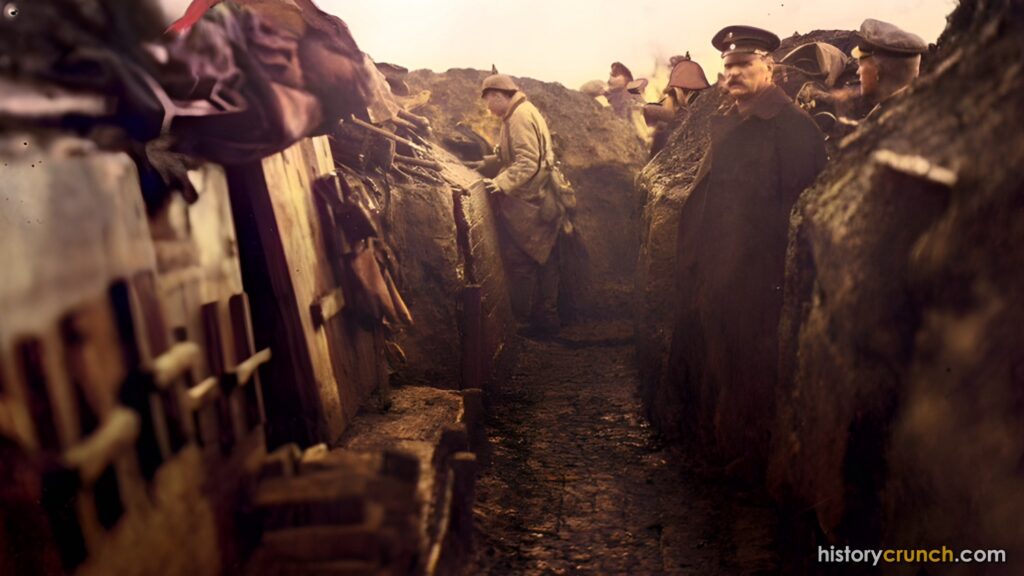
The trenches of World War I were highly structured and included several main features. For instance, there were generally three lines of trenches. The first line of trenches was the frontline, which was used for the immediate fighting against the enemy. For example, soldiers in the frontline trench were sometimes ordered ‘over the top’, which saw them cross ‘No Man’s Land’ towards the enemy trenches. As well, soldiers in the frontline trenches were also at the ready for a possible enemy attack from across ‘No Man’s Land’.
The second trench, which was positioned behind the frontline trench, was referred to as the support trench. The purpose of the support trench was to act as a new frontline trench if the first trench was taken over by enemy soldiers. As such, the support line was important to the defensive operations of trench warfare.
Finally, the third trench, which was behind the support trench, was referred to as the reserve line. This trench was generally placed further back on the battlefield and was used as a place for soldiers to rest and recover from action in the first two lines of trenches. The soldiers of World War I regularly rotated through the three different sets of trenches.
 FactsthatCrunch
Both the Allied and German sides used the same three-line trench system on the Western Front. Germany invested more in reinforcing its reserve positions because it aimed to hold the territory it had taken in northern France and Belgium rather than retreat.
Daily Routine in the Trenches of World War I
The soldiers of World War I, especially on the Western Front, experienced a regular daily routine. For instance, trench life was dominated by repetition with the soldiers following orders, prepping for the day, and experiencing periods of rest. The information below details the usual daily routine for the soldiers in the frontline trenches.
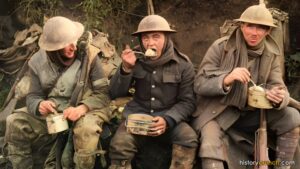
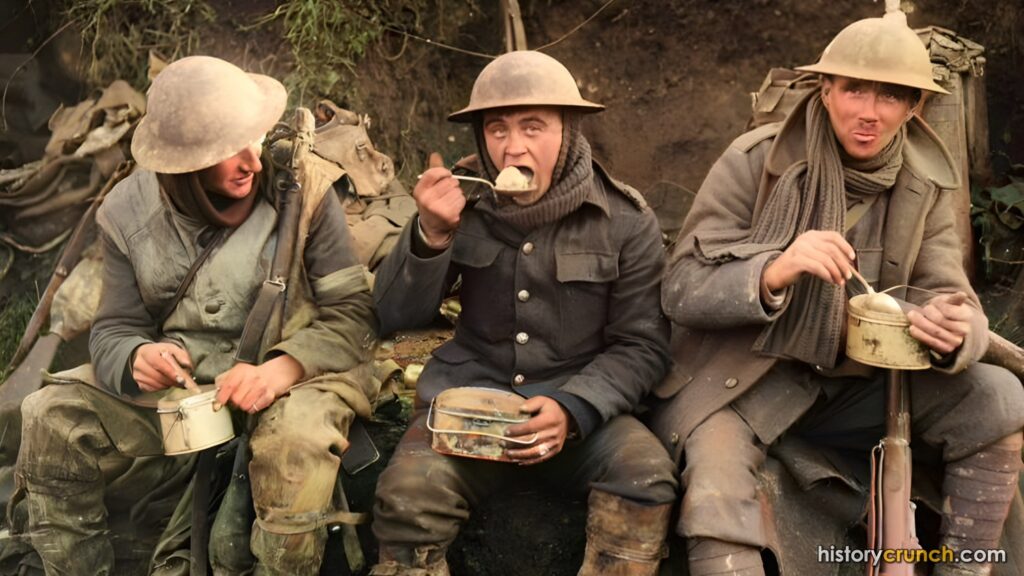
Morning – The first thing that soldiers did in the morning was the daily ‘stand-to’, which involved the frontline soldiers preparing themselves for a possible enemy attack from across ‘No Man’s Land’. ‘Stand-to’ occurred at dawn, since it was the most common time for an enemy attack. If there was no enemy attack and the soldiers were not ordered ‘over the top’ to carry out their own attack, then they would begin their jobs for the day. For instance, during the morning routine, soldiers were subject to rifle and personal inspections from officers. The inspections were to ensure that the soldiers kept their rifles and themselves clean in the dirty and muddy conditions of the trenches. More specifically, military officers often kept a lookout on the soldiers for signs of ‘Trench Foot’, which was an infection of the foot caused by wet and muddy conditions. Following inspections, the soldiers were provided with breakfast and their daily alcohol ration. Soldiers from all of the major powers were provided with alcohol while on the frontlines. For example, Britain gave their soldiers a rum ration, while France gave their soldiers a wine ration. For food, the soldiers in the trenches were provided with whatever was available, but it usually included a meat ration alongside bread or crackers. As the war progressed, the armies struggled to maintain food supplies, so sometimes the rations were lessened.
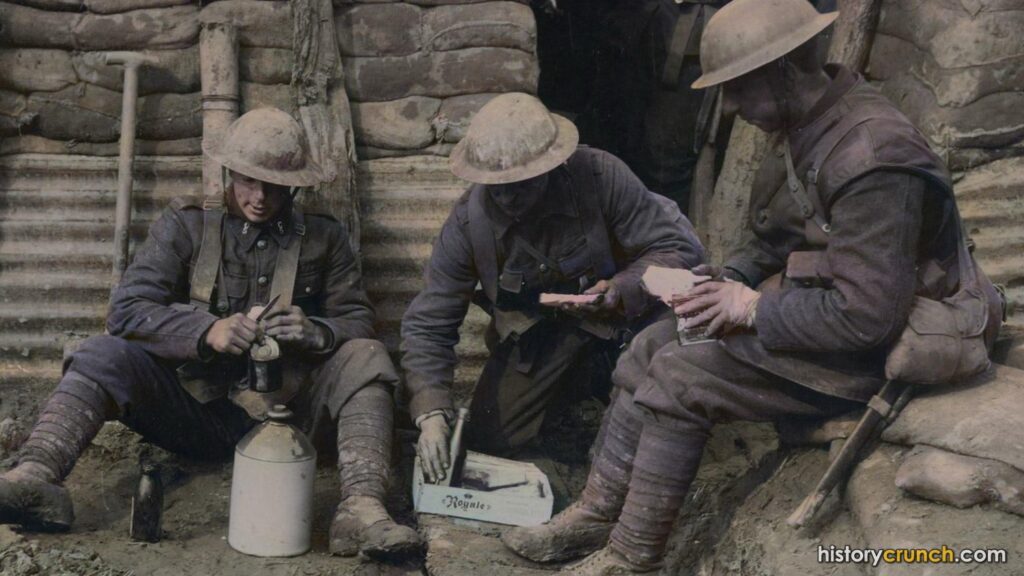
Mid-Day – Throughout the day, the soldiers were required to complete different sets of chores. The main set of these chores focused on repairing and maintaining the trenches. For example, several common afternoon chores included: digging new trenches, filling sandbags for the front wall of the trench (parapet), repairing or laying down duckboards on the bottom of the trench, etc.
When all of the chores were complete, the soldiers also had time for rest and relaxation. For example, soldiers often spent their downtime by: sleeping, writing letters, reading, playing cards, etc. Some of the soldiers also created numerous pieces of art out of bullet cartridges, which were a common material found in the frontline trenches of World War I. However, a constant experience for the soldiers at this time was boredom. The trenches of World War I offered the soldiers little in the way of entertainment and when there were no active attacks, the soldiers experienced unrelenting boredom. Further to this idea, soldiers kept their heads down in the trenches due to the threat of snipers during daylight hours. As such, this limited the ability of the soldiers to move around within the trenches.
Night – The cover of darkness allowed the soldiers of the frontline trenches to carry out the more dangerous work. For instance, at night was when the soldiers would sometimes venture into ‘No Man’s Land’, which was the region between the two frontline trenches. They would go into ‘No Man’s Land’ in order to repair barbed wire defenses, along with other features of the trench system. The soldiers also did nighttime patrols in no man’s land, in order to spy on enemy nighttime operations and listen for enemy troop movements. Finally, nighttime was also when some soldiers were tasked with keeping watch, while others slept. They took rotating shifts on watch, during which they kept an eye out for enemy advances, although this was rare, since almost all attacks took place at dawn, in the morning.
Can you put a frontline soldier’s day in the trenches of World War I in the right order?
No Man’s Land in World War I
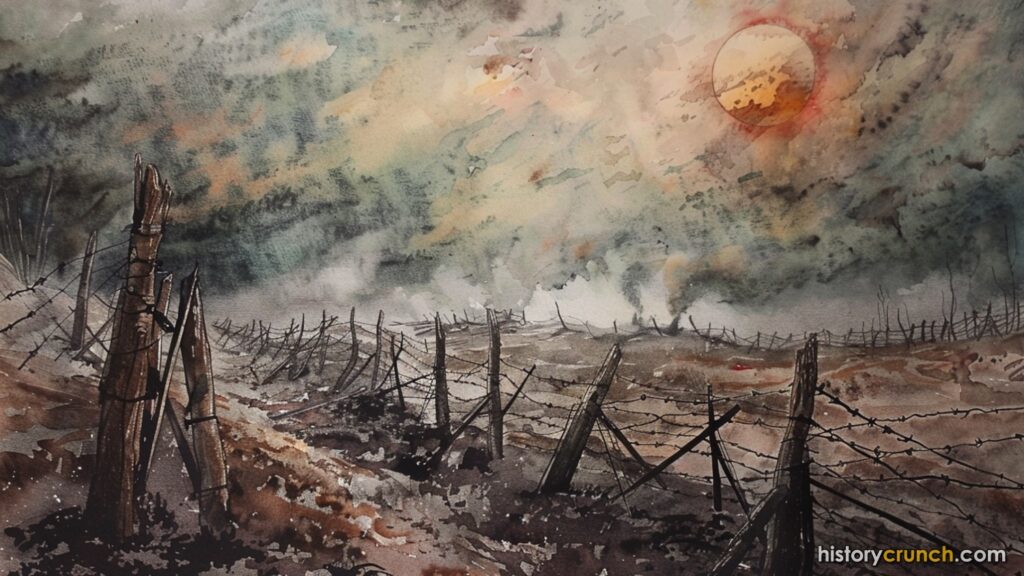
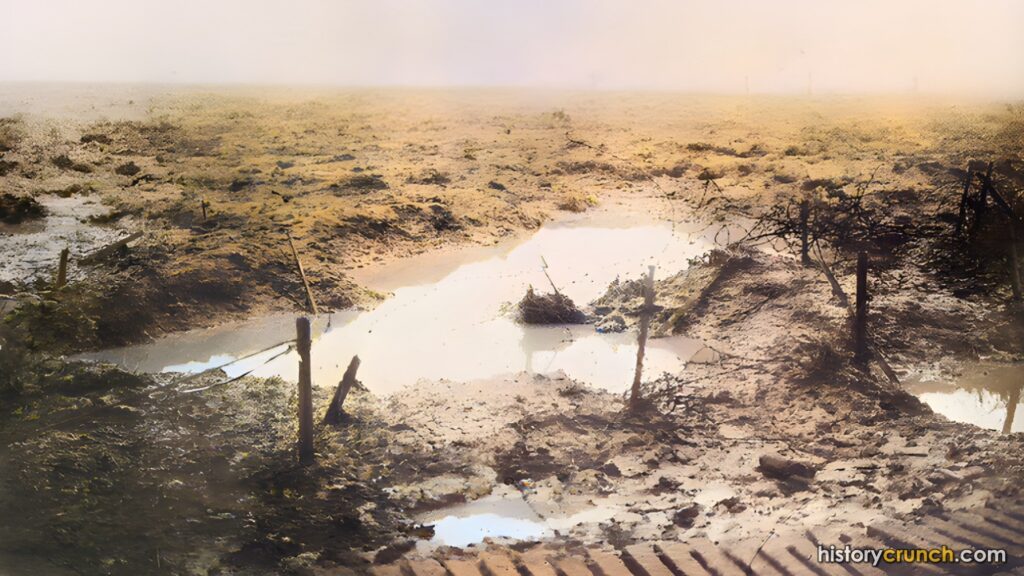
Trench warfare was a strategy that heavily favored the defenders and helped lead to the massive death tolls caused during World War I. In fact, the land between the frontline trenches was known as ‘No Man’s Land’ symbolizing the likelihood of advancing soldiers dying in this region. Soldiers attempting to cross ‘No Man’s Land’ were met with barbed wire, mines, artillery fire, enemy machine gun fire and the mud of Northern France.
The mud of ‘No Man’s Land’ made crossing the stretch of land almost impossible at times. Artillery bombardments had torn up the land and destroyed all trees, grass and vegetation. Rain turned the dead landscape into a thick layer of mud that was sometimes up to the knees of the soldiers and sometimes deep enough that soldiers could become stuck and drown. Soldiers trying to cross ‘No Man’s LandThe open, deadly strip of ground lying between two enemy frontline trenches, extremely dangerous to cross.’ struggled to avoid enemy fire, machine guns and other weapons while dealing with the deep mud. The muddy conditions were not just present in ‘No Man’s Land’ and made life in the trenches difficult as well.
 FactsthatCrunch
What made crossing No Man's Land in World War I so deadly for soldiers?
Conditions of the Trenches in World War I
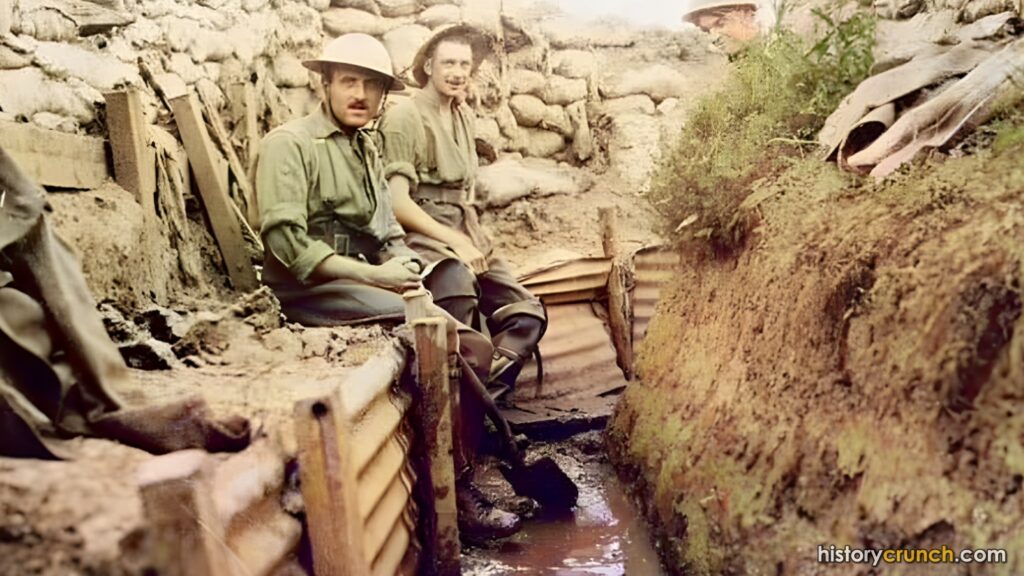
One of the characteristic features of the trenches of World War I was the conditions that the soldiers faced on a daily basis. In general, the trenches of World War I were dirty and dangerous places, which created a great deal of hardship for the soldiers. This was true of the trenches in all of the main areas of World War I, but it was especially true in the trenches of the Western Front. The trenches of the Western Front stretched through Belgium and northern France, which was prone to heavy rain. As such, the trenches along the Western Front often filled with rainwater, which made the trenches muddy and dirty. For instance, the muddy conditions of the Western Front trenches were famously present in the Battle of the Somme and the Battle of Passchendaele.
Trenches were also miserable places for the conditions they created for soldiers. Just as ‘No Man’s Land’ was made treacherous by the rain in Northern France, so too were the trenches of World War I. Soldiers could find themselves in the trenches for weeks at a time and with the trenches full of water, soldiers struggled to stay dry. Many soldiers in World War I suffered from a condition known as ‘Trench FootA painful foot infection caused by keeping feet wet and muddy for long periods of time.’, which resulted from soldiers having their feet wet for long periods of time. The skin of the foot would break down and soldier’s feet would become infected. The condition would make it such that soldiers were unable to fight in the war and some lost their toes and/or feet as a result.
Along with being muddy and wet, trenches were also full of other things that made the situation awful for soldiers. Since soldiers could not always leave the trenches, the trenches became filthy with human waste and garbage. As well, soldiers who had died were not always removed from the trenches and their bodies remained in the water and mud. The dirty situation attracted rats in large numbers and many soldiers were affected by lice. In all, the trenches were dirty and had an overwhelming smell of death and human waste.
 FactsthatCrunch
Dangers of the World War I Trenches
Life in the trenches of World War I was dangerous for many reasons. The more obvious dangers included enemy fire, poisonous gas attacks and artillery shelling. For instance, soldiers in World War I had to be on the watch for enemy sniper fire from across No Man’s Land. As well, they faced the constant threat of an enemy attack from across no man’s land.
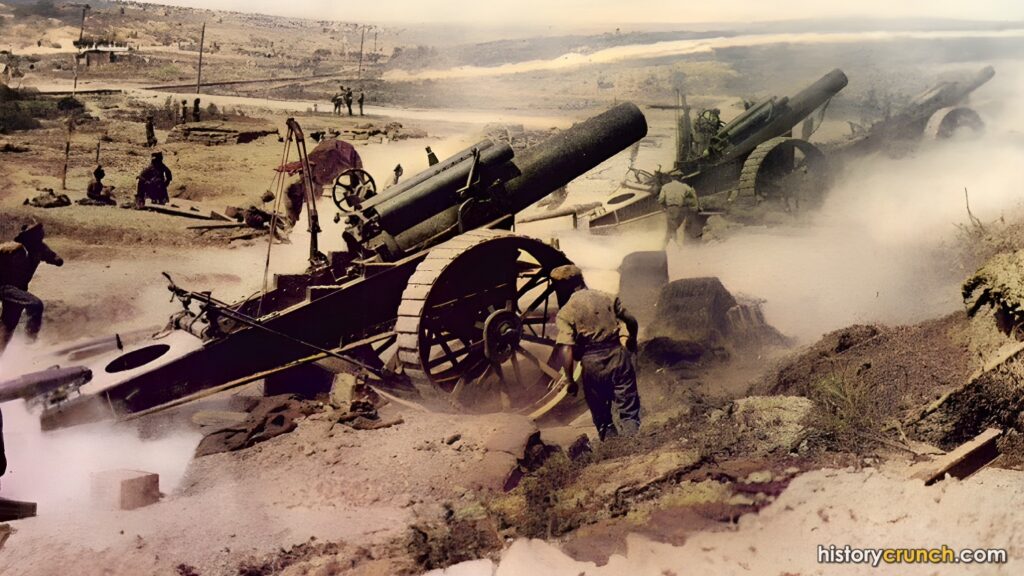
Poison gas was especially dangerous for the soldiers since it was generally heavier than air and often settled into the deep trenches. This made the trenches terribly dangerous, as the soldiers would suffer the horrible effects from the poison gas. As well, while the trenches offered general protection from enemy fire and artillery shelling, they could also be extremely dangerous places. For example, the trenches offered no protection from artillery shelling when the shell made a direct impact. As well, some soldiers were known to be buried alive when an artillery shell exploded beside them and covered them in large amounts of mud and dirt that the explosion lifted into the air. Finally, the trenches and the continual artillery firing led to ‘Shell ShockA medical condition brought on by constant fear and endless artillery fire, causing tremors, confusion, nightmares, and impaired senses.’.
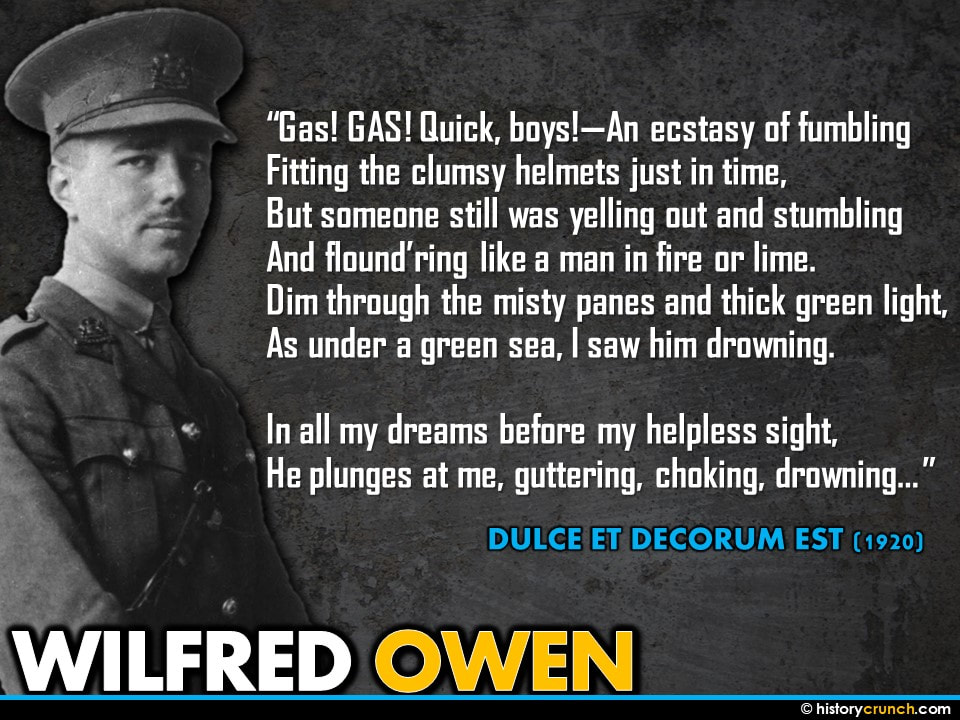
The continual shelling and the ever-present sense of fear and dread that the soldiers experienced led to a medical condition called ‘Shell Shock’. Soldiers themselves came up with the term to describe those who were overcome by fear and seemed to act in an ‘insane’ manner. Soldiers who were diagnosed with ‘Shell Shock’ displayed symptoms such as: fatigue, tremors, confusion, nightmares and impaired sight and hearing. In general, medical doctors of the time did not understand the condition and assumed it was caused by prolonged exposure to the explosions of artillery shells.
Life in the Trenches of World War I – Infographic

Key Vocabulary
Trench warfare
No Man’s Land
Parapet
Duckboards
Trench Foot
Shell Shock
Stand-to
Frequently Asked Questions
What was trench foot in World War I?
Trench foot was a painful infection caused by having wet feet for long periods. The muddy, rain-soaked trenches kept soldiers’ feet damp for days at a time. The skin would break down and become infected, and some soldiers lost their toes or feet. Officers checked feet daily to catch the condition early.
What was No Man’s Land?
No Man’s Land was the open, deadly strip of ground between the two enemy frontline trenches. Soldiers who tried to cross it faced barbed wire, mines, machine gun fire, and artillery. Artillery had also destroyed all the trees and grass, leaving deep mud. The name reflected how few soldiers survived crossing it.
What were the three types of trenches used in World War I?
Trench systems usually had three lines: the frontline, the support trench, and the reserve line. The frontline was where the direct fighting took place against the enemy. The support trench served as a backup if the enemy captured the frontline. The reserve line sat farther back and let soldiers rest and recover.
What was shell shock?
Shell shock was a medical condition caused by constant fear and the stress of endless artillery fire. Symptoms included fatigue, tremors, confusion, nightmares, and trouble seeing or hearing. Doctors of the time did not understand it and thought explosions alone caused it. Soldiers themselves invented the term to describe the effects.
What did soldiers do during a normal day in the trenches?
Soldiers followed a set daily routine that began with the dawn “stand-to” against a possible attack. After inspections and breakfast, they did chores like digging, filling sandbags, and repairing duckboards. Downtime was spent sleeping, writing letters, reading, or playing cards, though boredom was common. The most dangerous work, such as patrols, happened at night under cover of darkness.
Why were the trenches so dirty and unhealthy?
The trenches were filthy because soldiers often stayed in them for weeks with no way to leave. Rain filled the trenches with water and mud, especially along the Western Front in Belgium and northern France. Human waste, garbage, and even the bodies of dead soldiers built up over time. These conditions attracted rats and lice and created an overwhelming smell.
Cite This Article
To cite this article as a source, use one of the formats below.
MLA: Beck, Elias. “Life in the Trenches of World War I: A Detailed Summary.” HistoryCrunch, 29 September 2026, https://historycrunch.com/life-in-the-trenches-of-world-war-i/.
APA: Beck, E. (2026). Life in the Trenches of World War I: A Detailed Summary. HistoryCrunch. https://historycrunch.com/life-in-the-trenches-of-world-war-i/
Chicago: Beck, Elias. “Life in the Trenches of World War I: A Detailed Summary.” HistoryCrunch. September 29, 2026. https://historycrunch.com/life-in-the-trenches-of-world-war-i/
Sources
- Margaret MacMillan, The War That Ended Peace.
- John Keegan, The First World War.
- Imperial War Museum