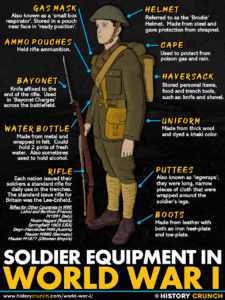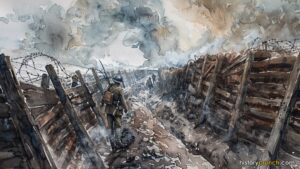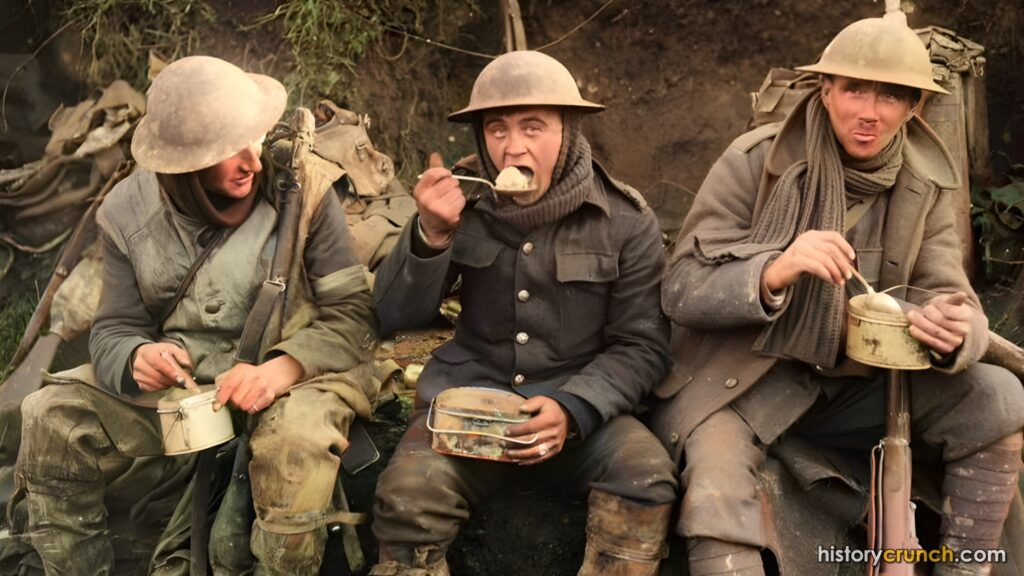
The soldiers of World War I, especially on the Western Front, experienced a regular daily routine. For instance, trench life was dominated by repetition with the soldiers following orders, prepping for the day, and experiencing periods of rest. The information below details the usual daily routine for the soldiers in the frontline trenches.
 FactsthatCrunch
Daily Routine in the Trenches of World War I – Morning
The first thing that soldiers did in the morning was the daily ‘stand-toA dawn ritual where frontline soldiers prepared themselves for a possible enemy attack.’, which involved the frontline soldiers preparing themselves for a possible enemy attack from across ‘No Man’s Land’. ‘Stand-to’ occurred at dawn, since it was the most common time for an enemy attack. If there was no enemy attack and the soldiers were not ordered ‘over the top’ to carry out their own attack, then they would begin their jobs for the day. For instance, during the morning routine, soldiers were subject to rifle and personal inspections from officers. The inspections were to ensure that the soldiers kept their rifles and themselves clean in the dirty and muddy conditions of the trenches. More specifically, military officers often kept a lookout on the soldiers for signs of ‘Trench Foot’, which was an infection of the foot caused by wet and muddy conditions.
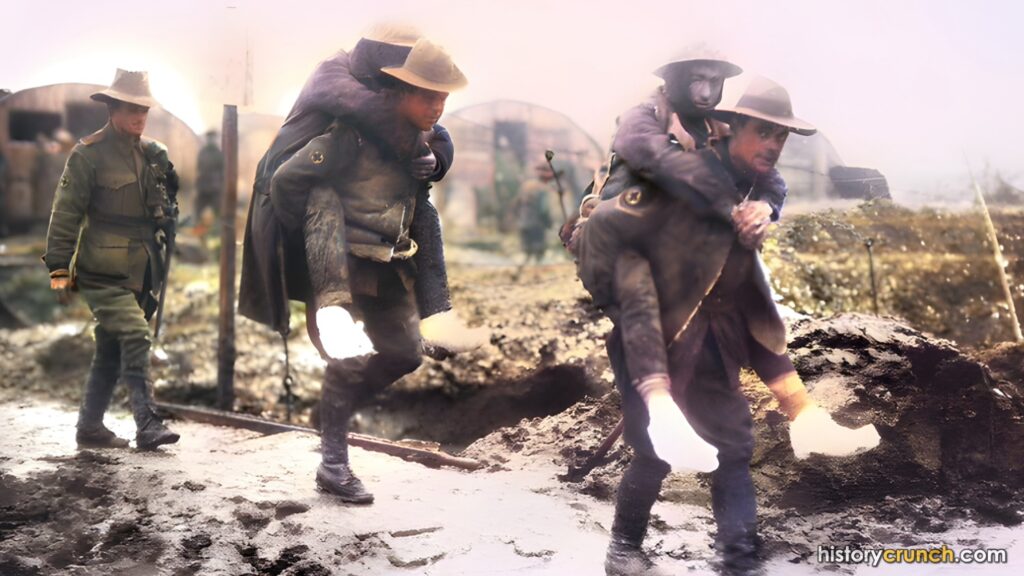
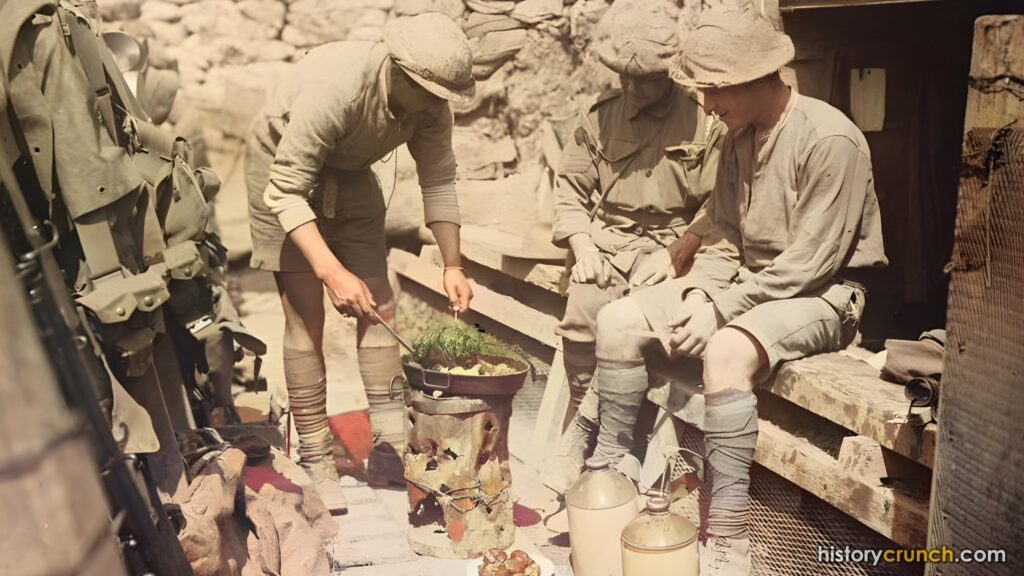
Following inspections, the soldiers were provided with breakfast and their daily alcohol rationA fixed daily allowance of food or drink issued to each soldier by the army.. Soldiers from all of the major powers were provided with alcohol while on the frontlines. For example, Britain gave their soldiers a rum ration, while France gave their soldiers a wine ration. For food, the soldiers in the trenches were provided with whatever was available, but it usually included a meat ration alongside bread or crackers. As the war progressed, the armies struggled to maintain food supplies, so sometimes the rations were lessened.
 FactsthatCrunch
Had it not been for the rum ration I do not think we should have won the war.
He said this while giving evidence to the 1922 War Office committee studying shell shock, arguing that the small daily rum ration, handed out with breakfast in the trenches, helped British soldiers endure the cold, wet, and strain of frontline life.
Daily Routine in the Trenches of World War I – Mid-Day
Throughout the day, the soldiers were required to complete different sets of chores. The main set of these chores focused on repairing and maintaining the trenches. For example, several common afternoon chores included: digging new trenches, filling sandbags for the front wall of the trench (parapetThe front wall of a trench, reinforced with sandbags to protect soldiers inside.), repairing or laying down duckboardsWooden boards laid on the muddy bottom of a trench to give soldiers a surface to walk on. on the bottom of the trench, etc.
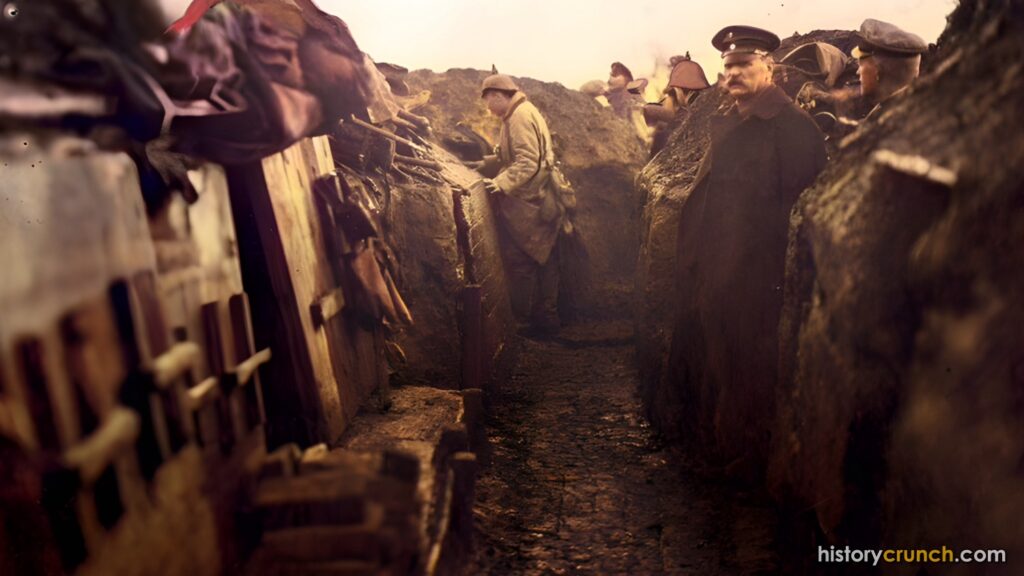
When all of the chores were complete, the soldiers also had time for rest and relaxation. For example, soldiers often spent their downtime by: sleeping, writing letters, reading, playing cards, etc. Some of the soldiers also created numerous pieces of art out of bullet cartridges, which were a common material found in the frontline trenches of World War I. However, a constant experience for the soldiers at this time was boredom. The trenches of World War I offered the soldiers little in the way of entertainment and when there were no active attacks, the soldiers experienced unrelenting boredom. Further to this idea, soldiers kept their heads down in the trenches due to the threat of snipersEnemy sharpshooters who targeted soldiers, making movement above the trench extremely dangerous during daylight. during daylight hours. As such, this limited the ability of the soldiers to move around within the trenches.
Why did soldiers in World War I keep their heads down in the trenches during daylight hours?
Daily Routine in the Trenches of World War I – Night
The cover of darkness allowed the soldiers of the frontline trenches to carry out the more dangerous work. For instance, at night was when the soldiers would sometimes venture into ‘No Man’s Land’, which was the region between the two frontline trenches. They would go into ‘No Man’s Land’ in order to repair barbed wire defenses, along with other features of the trench system. The soldiers also did nighttime patrols in no man’s land, in order to spy on enemy nighttime operations and listen for enemy troop movements.
Finally, nighttime was also when some soldiers were tasked with keeping watch, while others slept. They took rotating shifts on watch, during which they kept an eye out for enemy advances. This was rare, since almost all attacks took place at dawn, in the morning.
 FactsthatCrunch
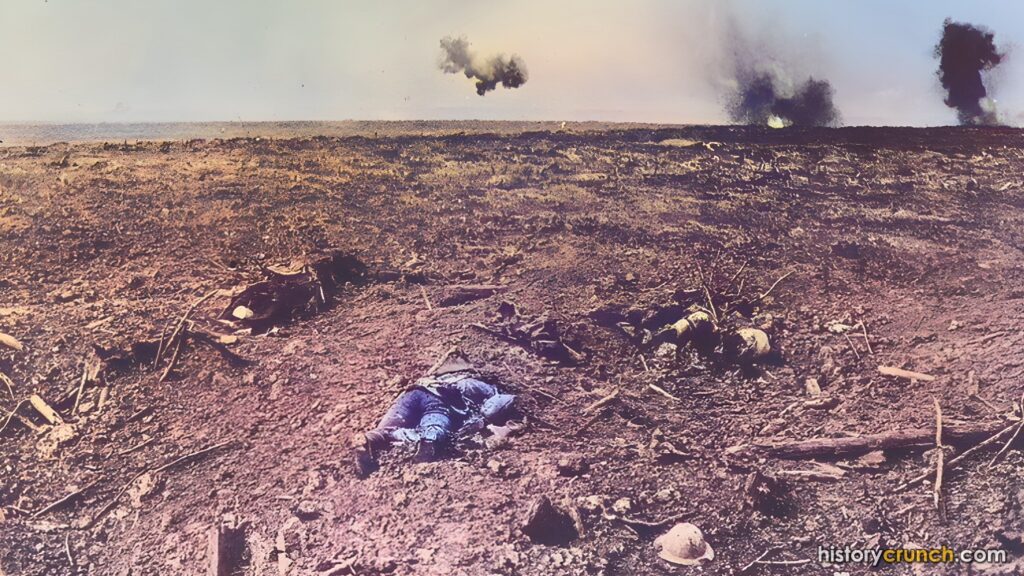
Enemy snipers controlled open ground during daylight hours on the Western Front, making it too deadly for soldiers to move above the trench or enter No Man's Land while it was light.
Snipers on both sides of the Western Front made daylight movement in the open extremely dangerous throughout the war. Darkness gave soldiers the only practical cover for carrying out repairs and gathering information beyond the trench line.
Key Vocabulary
Stand-to
No Man’s Land
Trench Foot
Parapet
Duckboards
Ration
Snipers
Frequently Asked Questions
What was the daily ‘stand-to’ in the trenches?
The ‘stand-to’ was a morning ritual where frontline soldiers got ready for a possible enemy attack. It happened at dawn because that was the most common time for attacks. If no attack came, the soldiers began their daily jobs and chores.
What did soldiers eat in the trenches of World War I?
Soldiers usually ate a meat ration with bread or crackers, based on whatever food was available. They also received a daily alcohol ration, such as rum in the British army and wine in the French army. As the war went on, supplies grew short, so rations were sometimes cut.
What is Trench Foot?
Trench Foot was an infection of the foot caused by wet and muddy conditions in the trenches. Officers watched for it during morning inspections to keep soldiers healthy. Keeping feet clean and dry was difficult in the flooded and filthy trench system.
What chores did soldiers do during the day?
Daytime chores focused on repairing and maintaining the trenches. Soldiers dug new trenches, filled sandbags for the parapet, and repaired the wooden duckboards on the trench floor. When the work was done, they rested by sleeping, writing letters, reading, or playing cards.
Why was dangerous work done at night?
The cover of darkness let soldiers do risky tasks that were too deadly by day. At night they entered No Man’s Land to repair barbed wire and to spy on enemy movements. Snipers made daylight movement in the open extremely dangerous.
Cite This Article
To cite this article as a source, use one of the formats below.
MLA: Beck, Elias. “Daily Routine in the Trenches of World War I: A Detailed Summary.” HistoryCrunch, 29 September 2026, https://historycrunch.com/daily-routine-in-the-trenches-of-world-war-i/.
APA: Beck, E. (2026). Daily Routine in the Trenches of World War I: A Detailed Summary. HistoryCrunch. https://historycrunch.com/daily-routine-in-the-trenches-of-world-war-i/
Chicago: Beck, Elias. “Daily Routine in the Trenches of World War I: A Detailed Summary.” HistoryCrunch. September 29, 2026. https://historycrunch.com/daily-routine-in-the-trenches-of-world-war-i/
Sources
- Fordham Modern History Sourcebook
- Imperial War Museum
- Margaret MacMillan, The War That Ended Peace.