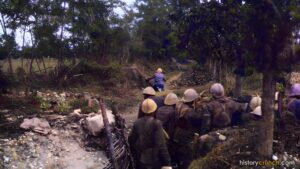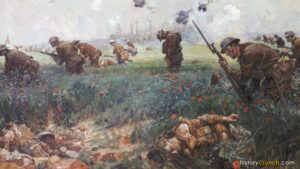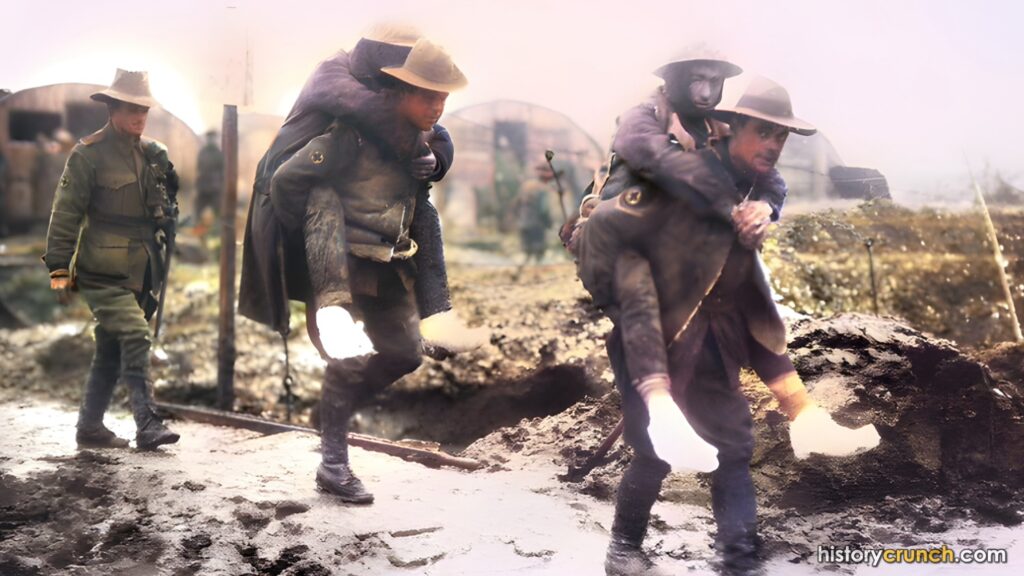
Trench Foot was a significant aspect of World War I and played a role in the history of the war. Trench Foot was a medical condition that soldiers on the frontlinesThe areas closest to the enemy where soldiers actively fight during a war. of World War I suffered from, due to life in the trenches. It was especially related to the wet and muddy conditions that soldiers on the Western FrontThe main battle zone stretching through Belgium and northern France during World War I. were forced to endure.
 FactsthatCrunch
Causes of Trench Foot in World War I
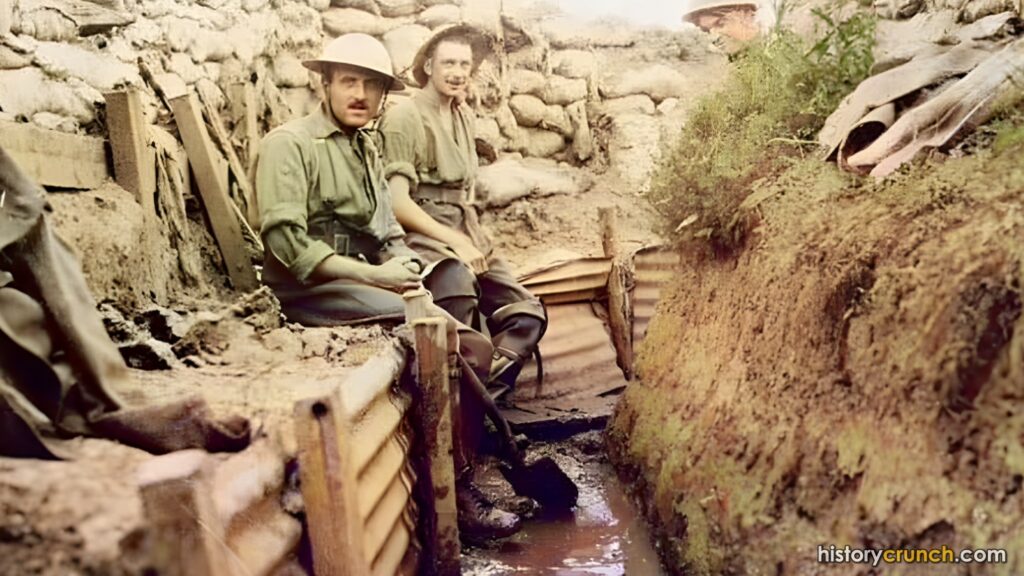
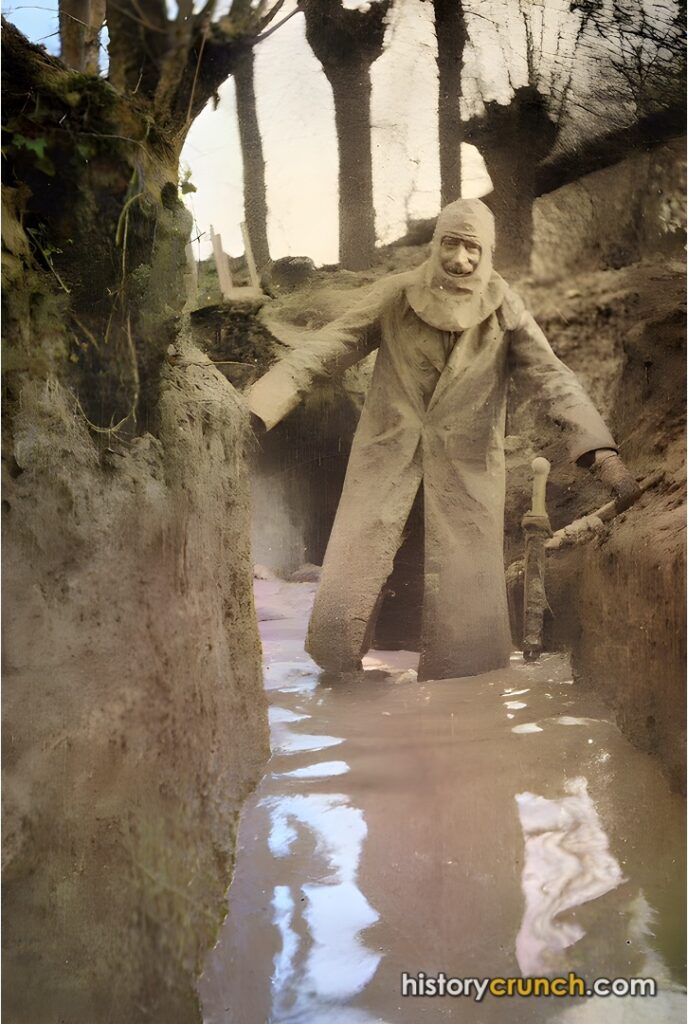
One of the characteristic features of the trenches of World War I was the conditions that the soldiers faced on a daily basis. In general, the trenches of World War I were dirty and dangerous places, which created a great deal of hardship for the soldiers. This was true of the trenches in all of the main areas of World War I, but it was especially true in the trenches of the Western Front. The trenches of the Western Front stretched through Belgium and northern France, which was prone to heavy rain. As such, the trenches along the Western Front often filled with rainwater, which made the trenches muddy and dirty. For instance, the muddy conditions of the Western Front trenches were famously present in the Battle of the Somme and the Third Battle of Ypres.
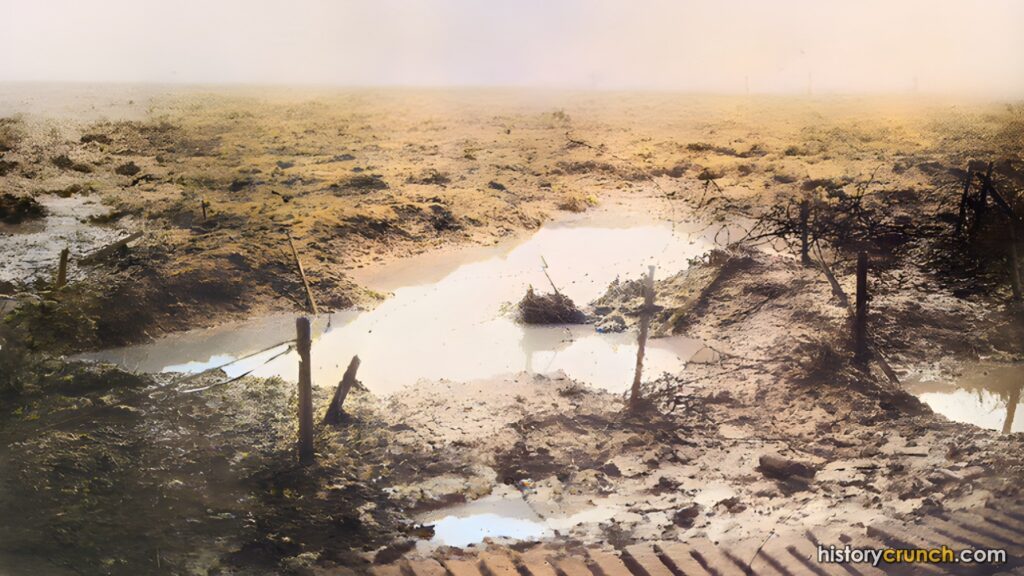
Trenches were also miserable places for the conditions they created for soldiers. Just as ‘No Man’s Land’ was made treacherous by the rain in northern France, so too were the trenches of World War I. Soldiers could find themselves in the trenches for weeks at a time and with the trenches full of water, soldiers struggled to stay dry. Many soldiers in World War I suffered from a condition known as ‘Trench Foot’, which resulted from soldiers having their feet wet for long periods of time. The skin of the foot would break down and soldier’s feet would become infected. In fact, infection was common due to the terrible and dirty conditions of the trenches in World War I. The condition would make it such that soldiers were unable to fight in the war and some lost their toes and/or feet as a result. As a result, prolonged exposure to wet and dirty conditions led to Trench Foot.
 FactsthatCrunch
Tap each impact to read what it led to.
Symptoms of Trench Foot
As stated above, Trench Foot was a major issue facing the soldiers of World War I who had to live and fight in the trenches. The wet conditions of the trenches, especially on the Western Front, led to the terrible effects of Trench Foot. For example, soldiers undergoing the effects of Trench Foot were known to experience: tingling, pain and numbness in their feet. When the condition worsened, the feet became swollen, and the skin would begin to break down. Finally, advanced forms of Trench Foot saw the foot of the soldier become badly infected as the muscle and tissue of the foot decayed. This led to soldiers complaining of severe pain. In all, Trench Foot was a terrible condition that was extremely painful.
FactsthatCrunchIn what order did trench foot progress as the condition worsened in a soldier's foot?
Prevention & Treatment of Trench Foot in World War I
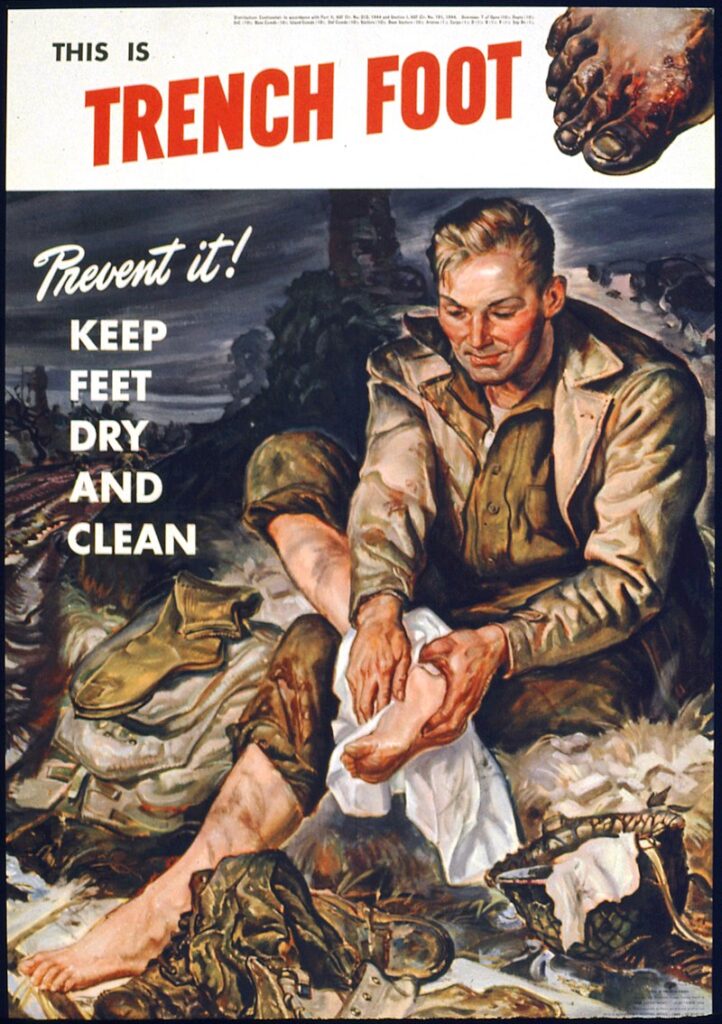
To combat the spread of Trench Foot among the soldiers on the Western Front, the armies of World War I attempted to educate the soldiers on prevention methods. For instance, the main method of preventing the spread of Trench Foot was for the soldiers to keep their feet dry and clean. For instance, soldiers were provided with multiple pairs of socks and told to change their socks and boots as often as possible. The issue for many soldiers was that they found it hard to find time and space to change their socks. This was especially difficult in water-soaked trenches. As such, the soldiers were also sometimes given other forms of prevention. For example, in some cases, the soldiers were provided with a form of whale oil, which they could use in their boots. The whale oil, when placed inside of the soldier’s boot, acted as a natural water repellentA substance that stops water from soaking through a surface, keeping it dry., and kept the soldier’s foot relatively dry. However, this method did not always work and whale oil wasn’t always readily available, which meant that Trench Foot was still a prevalentVery common and widespread, occurring frequently across a large group. problem in the war.
Finally, the main treatment for advanced forms of Trench Foot mostly included amputationThe surgical removal of a limb or body part, such as a foot or toes.. Since Trench Foot in its more severe forms generally resulted in the soldier’s foot breaking down and experiencing terrible infection, there was not much that could be done. As such, when the condition advanced to a certain point, the only option left was for the soldier to lose their foot.
 FactsthatCrunch
Keeping feet dry with fresh socks and whale oil was the main way armies tried to stop trench foot on the Western Front in World War I.
Impacts of Trench Foot in World War I
Trench Foot had a profound impact on the events of World War I. First, it had terrible outcomes for the individual soldiers who experienced Trench Foot. For instance, many soldiers went through periods of intense pain and some lost their feet altogether.
However, Trench Foot also had a wider impact on the war in that it sidelined many soldiers. For instance, the British Army reported that as many as 20,000 soldiers suffered from Trench Foot in the winter of 1914 and 1915. As well, despite efforts to properly prevent and treat Trench Foot, it is estimated that as many as 74,000 British soldiers suffered from Trench Foot in all of World War I. It should be noted that Trench Foot affected all of the armies of World War I, but was particularly dangerous for the armies on the Western Front, which included: Britain, France, United States, Germany, etc. As such, Trench Foot had a terrible impact on the ability of a soldier to continue to fight in the war and led the armies of World War I to divertTo redirect resources or attention away from one purpose toward another. much needed resources to caring for and replacing soldiers who suffered from Trench Foot.
 FactsthatCrunch
Trench Foot in World War I: Approximately 74,000 British Soldiers Were Affected
Trench Foot was caused by soldiers standing in cold, wet, and dirty trench water for long periods, and the condition could lead to infection and amputation. The 74,000 total British cases across the whole war shows how widespread the problem was. About 20,000 of those cases came in just the first winter of fighting alone, before armies had organized prevention methods, which shows how quickly the condition spread before steps were taken to address it.
Key Vocabulary
Frontlines
Western Front
No Man’s Land
Water repellent
Prevalent
Amputation
Divert
Frequently Asked Questions
What caused trench foot in World War I?
Trench foot was caused by soldiers keeping their feet wet, cold, and dirty for long periods. The trenches of the Western Front often filled with rainwater, which left them muddy and hard to escape. Soldiers could stay in these trenches for weeks at a time, so their feet rarely stayed dry.
What were the symptoms of trench foot?
Trench foot began with tingling, pain, and numbness in the feet. As it worsened, the feet became swollen and the skin started to break down. In advanced cases, the foot became badly infected as the muscle and tissue decayed, which caused severe pain.
How did soldiers try to prevent trench foot?
The main way to prevent trench foot was to keep the feet dry and clean. Soldiers were given several pairs of socks and told to change them and their boots as often as they could. Some also received whale oil to rub inside their boots, which worked as a natural water repellent.
How was severe trench foot treated?
Advanced trench foot was mostly treated by amputation of the affected foot. Once the foot broke down and became badly infected, there was little else doctors could do. As a result, some soldiers lost their toes or feet entirely.
How many soldiers suffered from trench foot?
An estimated 74,000 British soldiers suffered from trench foot across all of World War I. In the winter of 1914 and 1915 alone, the British Army reported about 20,000 cases. Trench foot affected every army in the war, but it was worst on the Western Front.
Why was trench foot such a problem on the Western Front?
The Western Front ran through Belgium and northern France, which saw heavy rain. That rain filled the trenches with water and turned them muddy and dirty. These wet conditions were famous during the Battle of the Somme and the Third Battle of Ypres.
Cite This Article
To cite this article as a source, use one of the formats below.
MLA: Beck, Elias. “Trench Foot in World War I: A Detailed Summary.” HistoryCrunch, 29 September 2026, https://historycrunch.com/trench-foot-in-world-war-i/.
APA: Beck, E. (2026). Trench Foot in World War I: A Detailed Summary. HistoryCrunch. https://historycrunch.com/trench-foot-in-world-war-i/
Chicago: Beck, Elias. “Trench Foot in World War I: A Detailed Summary.” HistoryCrunch. September 29, 2026. https://historycrunch.com/trench-foot-in-world-war-i/
Sources
- Imperial War Museum
- John Keegan, The First World War.
- Hew Strachan, The First World War.