The Battle of Belleau Wood was a significant battle in World War I along the Western Front. This was the line of fighting that occurred along the trenches that stretched through Belgium and northern France. It was fought between the Allied nations of the United States and France against the German Army. Today, the Battle of Belleau Wood is remembered as a significant American battle and is of particular importance in the history of the United States Marine Corps (USMC). For this reason, the Battle of Belleau Wood is important in the history of the United States in World War I.
 FactsthatCrunch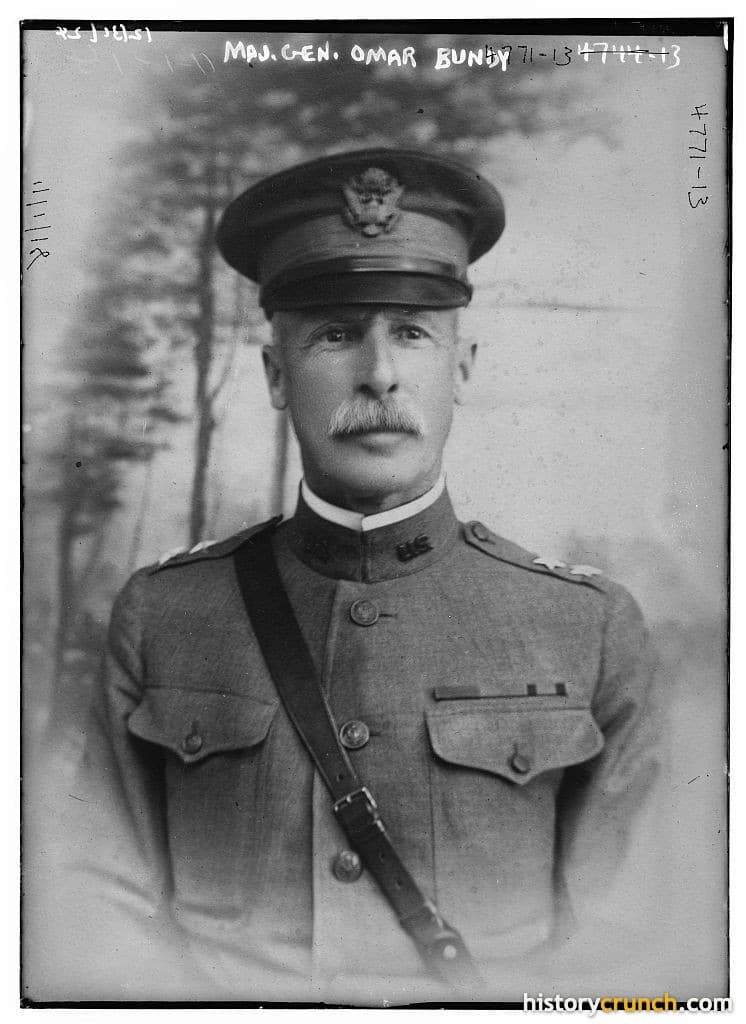
When and Where Did the Battle of Belleau Wood Occur?
The Battle of Belleau Wood occurred in June of 1918. More specifically, the Battle of Belleau Wood was fought from June 1st, 1918 to the 26th. The battle occurred in Northern France near the Marne River, which was important in relation to the earlier First Battle of the Marne. During the Battle of Belleau Wood, American forces (the 2nd Division, which included a brigade of Marines and was led by Major General Omar Bundy) fought alongside French soldiers against five divisions of the German Army.
FactsthatCrunchHistorians describe the German Spring Offensives of 1918 as which of the following?
What Happened During the Battle of Belleau Wood in World War I?
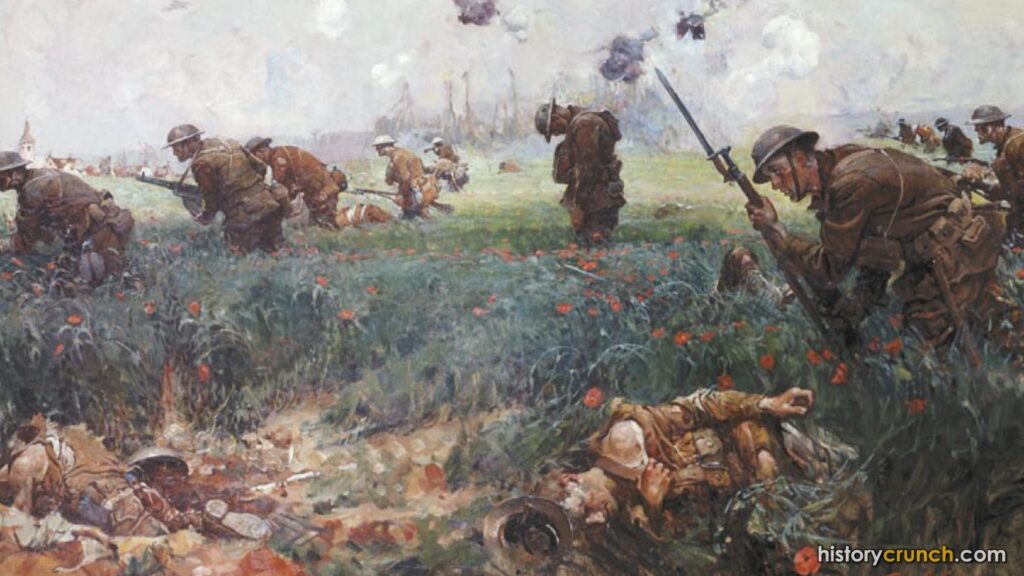
The Battle of Belleau Wood was part of the German Spring OffensivesA series of major German attacks in 1918, considered the final large advance of German forces in World War I. in 1918, which historians consider to be the final advance of the German troops in World War I. As such, the attack at Belleau Wood began on the evening of June 1st with a German assaultA sudden, forceful military attack on an enemy position. on the Allied defenses. At first, the Germans were able to advance through the French line, but the American divisions quickly regrouped and set up defensive positions from which they waited for the Germans. For example, American soldiers dug small foxholesSmall holes dug into the ground by soldiers to protect themselves while waiting for the enemy. and sat in wait until the Germans were close. Then they opened fire, which forced the German soldiers to pull back into the woods and set up their own trenches. The ability of the American Marines to stop the German advance became legendary, since French forces in the region were expressing the need for the Allies to retreat. Instead, the Americans held their ground and stopped the German assault. In fact, it was at this time that Marine Captain Lloyd W. Williams of the 2nd Battalion, 5th Marines famously argued “Retreat? Hell, we just got here”.
Following this, the American Marines, along with French soldiers, attacked the German defenses on June 6th. Referred to as the ‘Attack on Hill 142’, the Allied forces assaulted the German line but the German soldiers were able to use machine gun fire to hold back the attack. However, during the attack, American Gunnery Sergeant Ernest A. Janson bravely stopped an advance of 12 German soldiers and protected other soldiers with him. For his actions, he received the Medal of HonorThe highest military award given to American soldiers for extraordinary bravery in combat., and was the first U.S. Marine of World War I to receive the prestigious honor.
Regardless, the American Marines were able to attack the Germans at Belleau Wood and gain a footholdA secure starting position gained in enemy territory that allows further advances. in the region. As well, the American attack at Belleau Wood became an important symbol for the United States Marine Corps. For example, when the Americans began their attack, First Sergeant Dan Daly announced the following to his men: “Come on, you sons of bitches. Do you want to live forever?”

What Was the Outcome of the Battle of Belleau Wood in World War I?
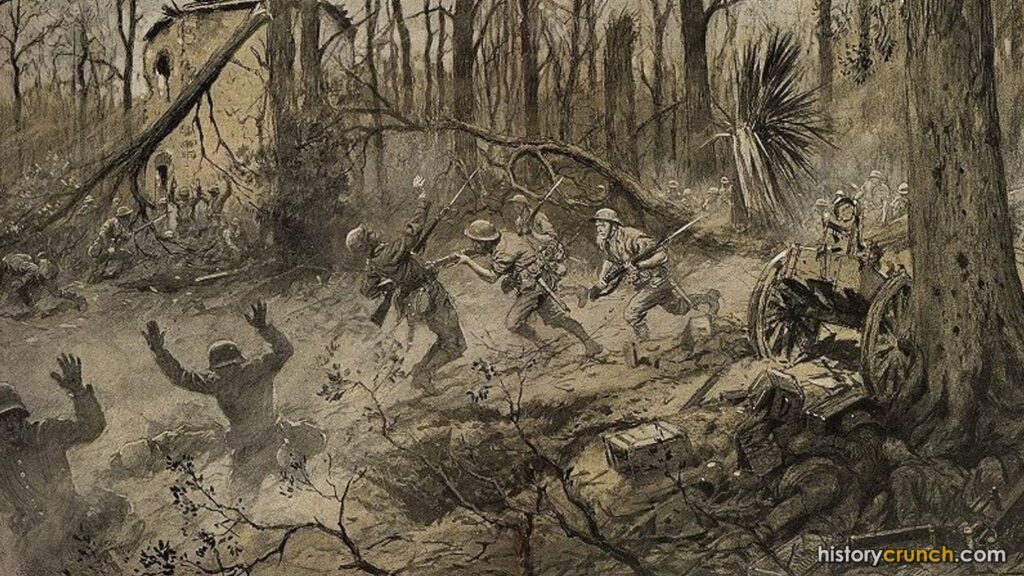
The two sides went back and forth several times and each suffered heavy losses. However, the Americans and the other Allies proved successful as they overwhelmed the German defenders with several waves of attack. For example, on June 26th, the 3rd Battalion, 5th Marines and supporting forces, finally pushed the Germans out of Belleau Wood. The Battle of Belleau Wood was over, and is remembered today as one of the bloodiest battles for the United States in all of World War I. In all, it is estimated that the Americans suffered nearly 10,000 casualtiesThe total number of soldiers killed, wounded, or missing during a battle. including over 1,800 deaths. Whereas, the Germans suffered over 10,000 casualties.
World War I timeline · 1914 – 1918
Key Vocabulary
Western Front
Foxholes
Assault
Foothold
Casualties
Medal of Honor
Spring Offensives
Frequently Asked Questions
When and where was the Battle of Belleau Wood fought?
The Battle of Belleau Wood was fought from June 1st to June 26th, 1918. It took place in northern France near the Marne River. The fighting was part of the Western Front, the main line of trench warfare in World War I.
Who fought in the Battle of Belleau Wood?
American and French forces fought against five divisions of the German Army. The American 2nd Division, which included a brigade of Marines, was led by Major General Omar Bundy. United States Marines played a leading role in the fighting.
Why is Belleau Wood important to the Marine Corps?
Belleau Wood became a defining moment in the history of the United States Marine Corps. The Marines refused to retreat and held their ground against a strong German advance. Their bravery in the battle turned into a lasting symbol of Marine pride and toughness.
Who said “Retreat? Hell, we just got here”?
Marine Captain Lloyd W. Williams of the 2nd Battalion, 5th Marines said the famous line. French forces had suggested that the Allies pull back from the area. Williams and the Marines chose to stay and stop the German assault instead.
What was the outcome of the Battle of Belleau Wood?
The Allies won the battle when the Marines pushed the Germans out of the woods on June 26th, 1918. The fighting was some of the bloodiest for the United States in the whole war. American forces suffered nearly 10,000 casualties, while German losses topped 10,000.
Cite This Article
To cite this article as a source, use one of the formats below.
MLA: Beck, Elias. “Battle of Belleau Wood in World War I: A Detailed Summary.” HistoryCrunch, 29 September 2026, https://historycrunch.com/battle-of-belleau-wood-in-world-war-i/.
APA: Beck, E. (2026). Battle of Belleau Wood in World War I: A Detailed Summary. HistoryCrunch. https://historycrunch.com/battle-of-belleau-wood-in-world-war-i/
Chicago: Beck, Elias. “Battle of Belleau Wood in World War I: A Detailed Summary.” HistoryCrunch. September 29, 2026. https://historycrunch.com/battle-of-belleau-wood-in-world-war-i/
Sources
- Imperial War Museum
- Hew Strachan, The First World War.