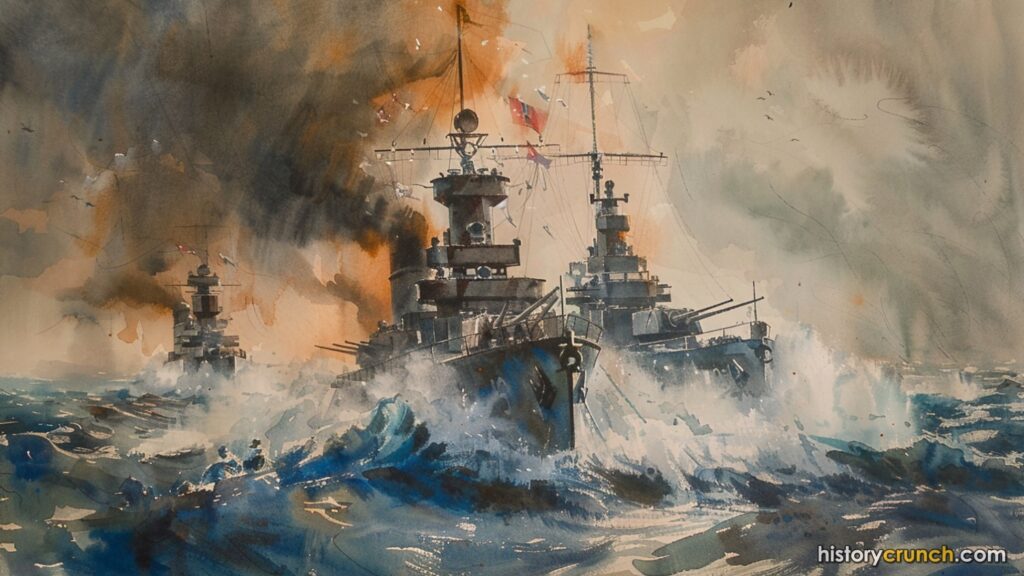
The naval race of World War I was an important competition between Britain and Germany for naval supremacyComplete dominance over other nations’ fleets and control of the seas.. Each nation raced to build more ships and capabilities, which led to an extreme increase in tensions between them. As such, historians consider the naval race between these two major European nations to be a main cause of World War I. In fact, along with the arms race between France and Germany, the naval race of World War I was part of a major build up in the military across Europe.
 FactsthatCrunch
In 1889, Britain adopted the Two-Power Standard, a rule that its navy must be at least as strong as the next two largest navies combined.
Britain passed the Naval Defence Act that year to pay for dozens of new warships. When Germany began building a large fleet of its own around 1900, Britain saw it as a direct challenge to this rule, and the naval race between the two nations sped up.
What was Militarism in World War I?
Historians have identified four main long-term causes of World War I: Militarism, Alliances, Imperialism and Nationalism. MilitarismThe buildup or expansion of a country’s military ability to wage war. can best be understood as the buildup or expansion of the ability of a country’s military to wage war. In the decades before World War I many European countries began to practice militarism and worked to expand and strengthen their military forces. For example, there was an intense arms race and naval race between several European nations in the buildup to World War I. Specifically, France and Germany were heavily involved in an arms race in which each country steadily expanded its army between 1870 and 1914. As well, there was a competitive naval race between Britain and Germany that centered around the construction of new naval ships.
 FactsthatCrunch
Militarism is the belief that a country should build up strong armed forces and be ready to use them to protect or expand its interests. Governments that follow militarism spend heavily on soldiers, weapons and warships, and military leaders gain great influence over national decisions.
"In 1913, France stretched required military service from two years to three to keep pace with Germany's growing army, an example of the militarism that helped push Europe toward war."
Which Countries Participated in the Naval Race Before World War I?
At the time, Britain had the largest navy in the world. This was due in part to the Age of Imperialism and Britain’s vast colonial empireA collection of territories controlled by a single powerful nation, often across different continents.. For example, at the outbreak of World War I, Britain had the largest colonial empire in the world with a particular focus in Africa and Asia. As such, Britain required a powerful navy in order to maintain supply lines to its colonies. As well, since Britain was an island nation it needed a strong naval force to ensure it had the ability to carry out trade by sea. As stated above, Britain’s naval power was threatening to other European nations and caused many to build up their own naval forces.
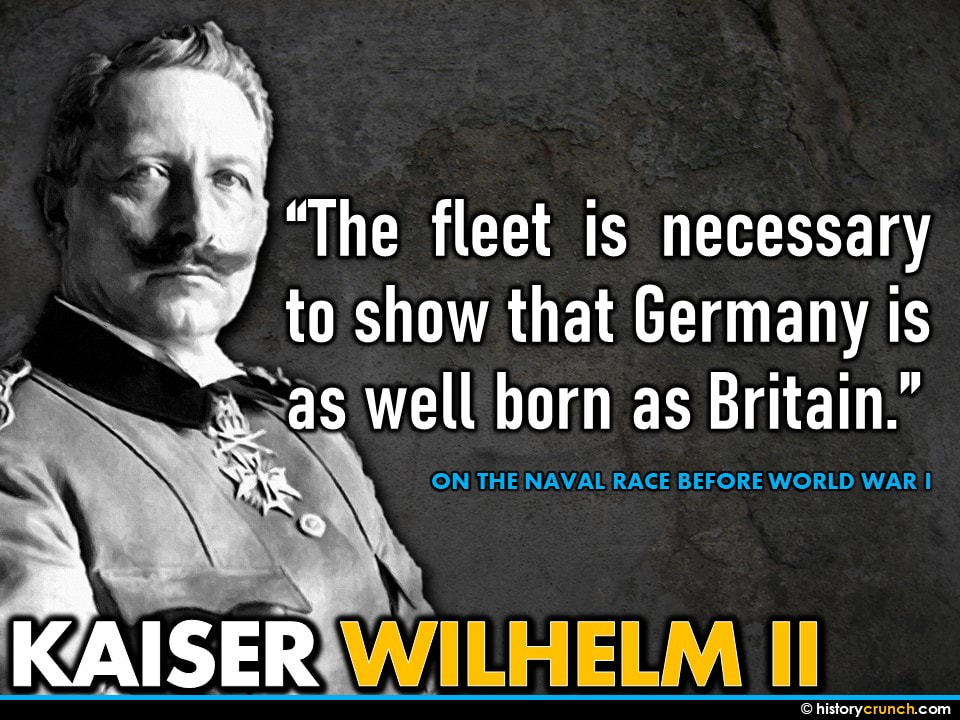
Germany viewed the British navy as a threat and sought to develop its own navy to match. Mostly Germany needed a strong navy to challenge British ships in the North Sea, which was located to the north of Germany and to the east of Britain. The North Sea was Germany’s main route to the open ocean but was difficult for Germany since the North Sea was connected to Britain and the British navy dominated the area.
 FactsthatCrunch
What was the Dreadnought?
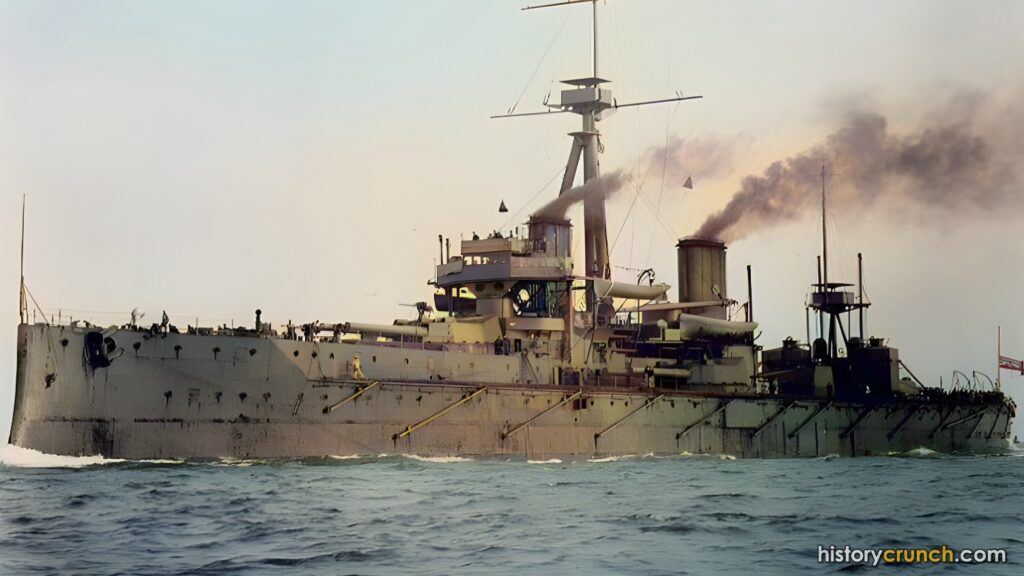
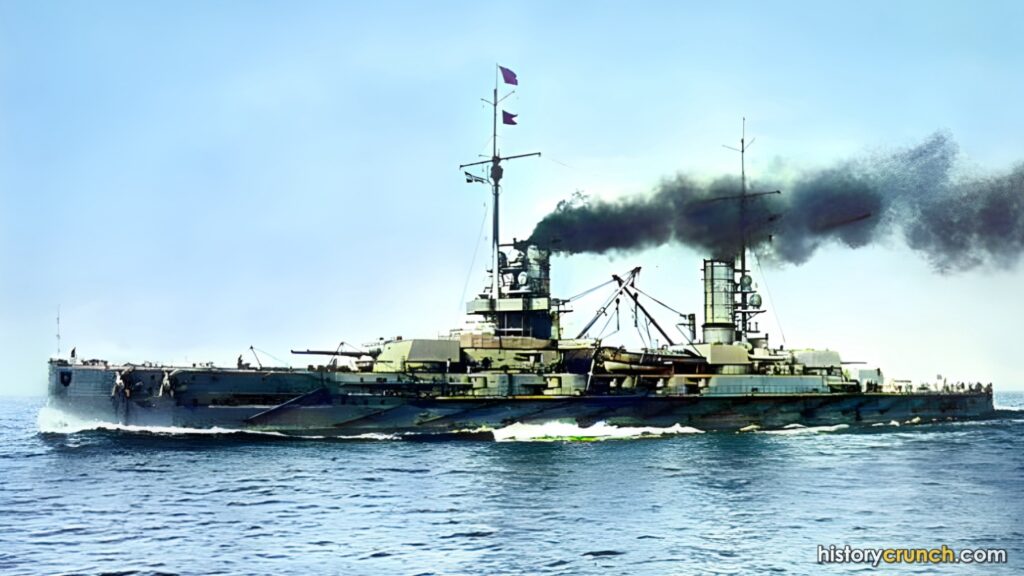
One of the key areas that this naval race between Britain and Germany can best be seen is in the construction of new battleships referred to as ‘dreadnoughts’. The dreadnought was a class of battleship that existed in the timeframe of World War I. However, the first dreadnought was the HMS Dreadnought from the British Royal Navy. The name is meant to refer to a sense of ‘fearlessness’. It was first launched in 1906, and completely changed the history of naval warfare at the time.
Naval ships before the HMS Dreadnought were generally smaller, slower and had a smaller array of main guns. The HMS Dreadnought was such a leap forward in naval technology that it caused other nations to copy the British. In response, Germany developed its own version of the dreadnought and worked to challenge the power of the British. By the outbreak of World War I in 1914, Britain had 29 dreadnoughtsA powerful class of battleship, faster and armed with more big guns than earlier warships. and Germany had 17.
How did the Naval Race Impact World War I?
The naval race between Germany and Britain was a major cause of World War I due to its role in increasing tensions between the two nations. Britain and Germany were in opposing alliance systems and were competitive in nature in terms of their colonies in Africa. For instance, Britain was a member nation of the Triple Entente, while Germany was a member nation of the Triple Alliance. As such, the two nations did not always get along, and the naval race before World War I highlighted their sense of competition and lingering tensions. This helped cause World War I because it pushed the two nations (and other nations such as France) to participate in the war.
 FactsthatCrunch
True or False: Britain and Germany were in opposing alliance systems before World War I, and the naval race between them increased tensions that helped push them apart.
World War I timeline · 1914 – 1918
Key Vocabulary
Militarism
Naval supremacy
Dreadnoughts
Triple Entente
Triple Alliance
Colonial empire
Frequently Asked Questions
What was the naval race before World War I?
The naval race was a competition between Britain and Germany to build the strongest navy. Both nations raced to construct more warships and better naval technology. This buildup raised tensions and is seen as a main cause of World War I.
Why did Britain have the largest navy in the world?
Britain had the largest navy because it ruled the biggest colonial empire in the world. A strong navy protected supply lines to its colonies in Africa and Asia. As an island nation, Britain also relied on the sea for trade and defense.
What was the HMS Dreadnought?
The HMS Dreadnought was a British battleship launched in 1906 that changed naval warfare. It was faster, larger, and carried more big guns than earlier warships. Its name means “fearlessness,” and it forced other nations to copy the design.
How many dreadnoughts did Britain and Germany have in 1914?
By the start of World War I in 1914, Britain had 29 dreadnoughts and Germany had 17. Britain kept its lead, but Germany closed the gap quickly. This close race kept both sides feeling threatened and eager to build more.
Why did Germany want a stronger navy?
Germany wanted a stronger navy to challenge Britain’s power in the North Sea. The North Sea was Germany’s main route to the open ocean, but the British navy dominated the area. Kaiser Wilhelm II pushed to build ships that could match the British fleet.
How did the naval race help cause World War I?
The naval race raised tensions between Britain and Germany, which helped lead to World War I. The two nations belonged to rival alliance systems and competed over colonies in Africa. This growing rivalry made war more likely across Europe.
Cite This Article
To cite this article as a source, use one of the formats below.
MLA: Beck, Elias. “Naval Race Before World War I: A Detailed Summary.” HistoryCrunch, 28 September 2026, https://historycrunch.com/naval-race-before-world-war-i/.
APA: Beck, E. (2026). Naval Race Before World War I: A Detailed Summary. HistoryCrunch. https://historycrunch.com/naval-race-before-world-war-i/
Chicago: Beck, Elias. “Naval Race Before World War I: A Detailed Summary.” HistoryCrunch. September 28, 2026. https://historycrunch.com/naval-race-before-world-war-i/
Sources
- Imperial War Museum
- Margaret MacMillan, The War That Ended Peace.
- John Keegan, The First World War.