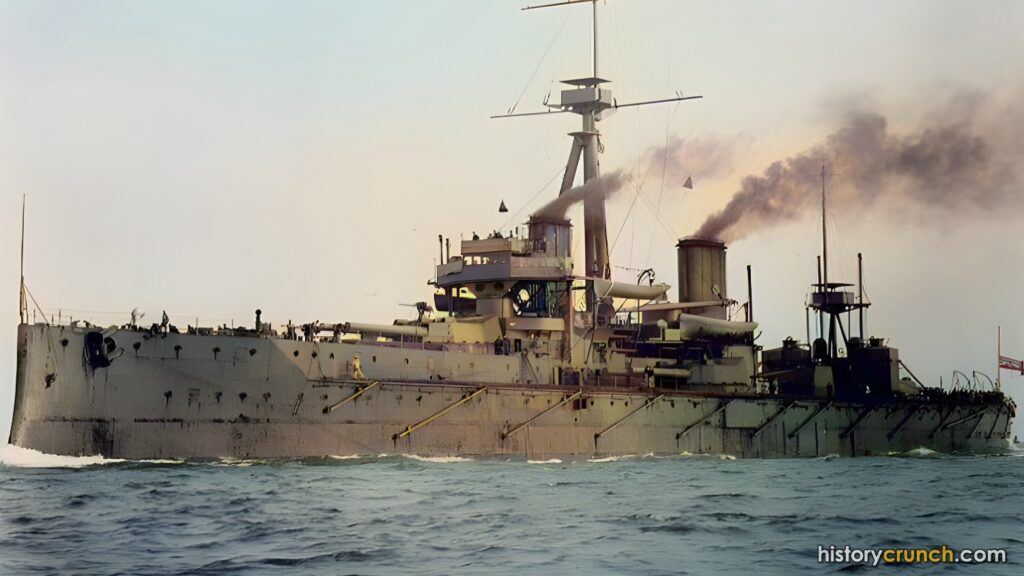
The dreadnoughtA class of large, powerful battleship launched by Britain in 1906 that changed naval warfare with many big guns and high speed. of World War I was an important battleship from the early 20th century. Britain was the first country to develop the dreadnought, but it was soon copied by other nations. In fact, the dreadnought led to a naval race in Europe, especially between Britain and Germany. As such, historians usually discuss the dreadnought as an important factor in the causes of World War I, which began in 1914.

HMS Dreadnought
As stated above, the dreadnought was a class of battleship that existed in the timeframe of World War I. However, the first dreadnought was the HMS Dreadnought from the British Royal Navy. The name is meant to refer to a sense of ‘fearlessness’. It was first launched in 1906, and completely changed the history of naval warfare at the time.
Naval ships before the HMS Dreadnought were generally smaller, slower and had a smaller array of main guns. In fact, one of the main features of the HMS Dreadnought was that it had a large caliberThe size or diameter of a gun’s barrel, used to describe how large and powerful the gun is. main battery of guns. Naval ships before the HMS Dreadnought usually carried only four large guns, which were combined with a set of smaller caliber guns. As such, the HMS Dreadnought was the first naval ship that was constructed in the form of a modern battleship. For instance, the HMS Dreadnought had ten 12-inch guns as its main form of armamentThe weapons carried by a warship or military vehicle., which was substantially more than earlier battleships. Furthermore, the HMS Dreadnought was 527 feet (160 meters) long and powered by a steam turbineAn engine powered by steam pressure that spins to drive a ship through the water. engine, which allowed it to travel up to 21 knotsA unit used to measure a ship’s speed at sea, equal to about 1.15 miles per hour. through the water. The new features of the HMS Dreadnought were so significant that the class of naval ships that came before the HMS Dreadnought are now referred to as ‘pre-dreadnoughtsThe class of naval ships built before the HMS Dreadnought, which were smaller, slower, and had fewer large guns.’.
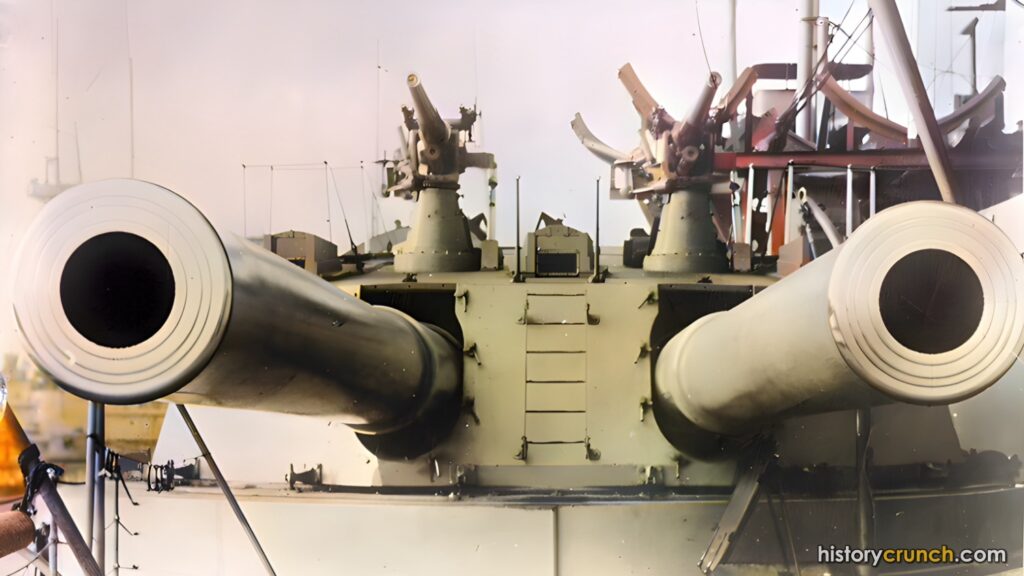
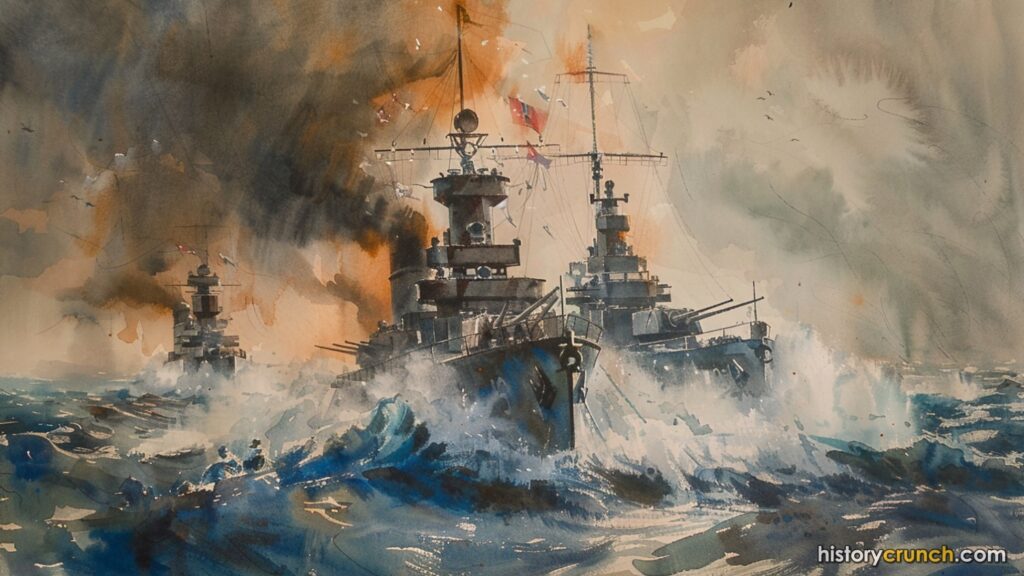
The launch of the HMS Dreadnought by Britain in 1906 was so significant that it brought in a new age of battleships. For example, it was immediately copied and used by the other main European powers for their own naval forces. This was especially evident with Germany, which immediately started construction on its own ‘dreadnoughts’. As such, the term ‘dreadnought’ became the name for the entire class of battleships that were being built in that era. Furthermore, Britain and Germany competed against each other in a major naval race in the years before World War I. Historians consider this naval race and the construction of the dreadnought battleships to be an important factor in the cause of World War I.
As for the HMS Dreadnought, it actually performed very little in the way of service for Britain in World War I. It sank a German submarine by ramming it, but other than that it generally served in the form of coastal defense during the war. It was eventually decommissionedOfficially taken out of active military service. from service and sold for scrap in 1921.
 FactsthatCrunch
A single ship reshaped naval warfare with revolutionary design numbers that made every other battleship in the world obsolete overnight.
Naval Race Before World War I
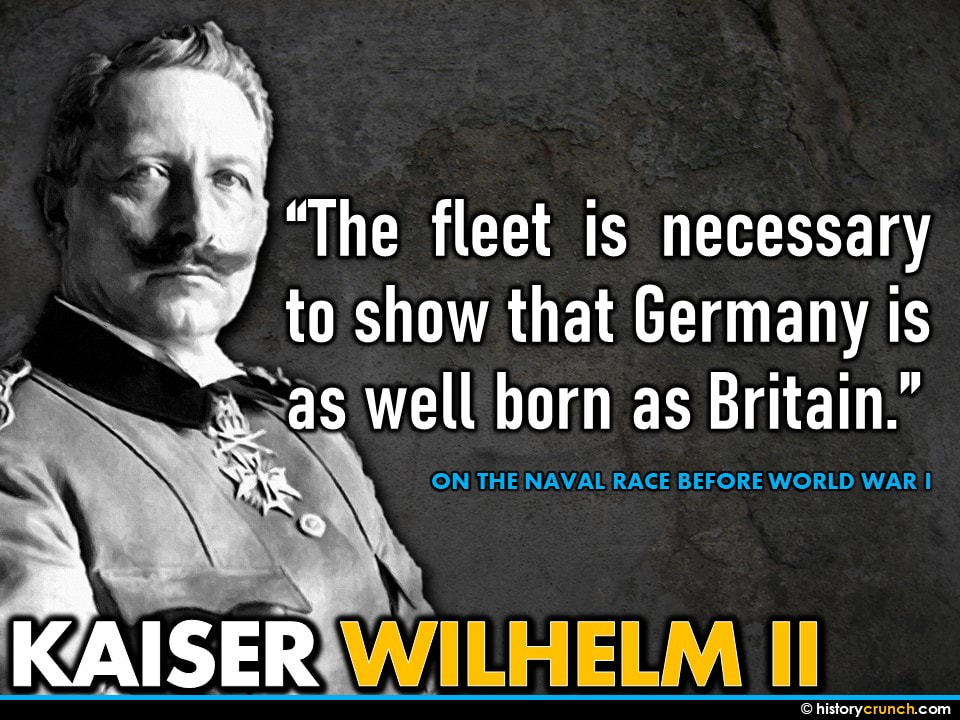
The construction of the HMS Dreadnought was an important aspect of the naval race that occurred before World War I. As stated above, the HMS Dreadnought was such a leap forward in naval technology that it caused other nations to copy the British. As well, other nations felt challenged by Britain’s naval capabilities and responded by building up their own naval forces. In fact, Germany and Britain participated in a major naval race in the years before the start of World War I.
At the time, Britain had the largest navy in the world. This was due in part to the Age of Imperialism and Britain’s vast colonial empire. For example, at the outbreak of World War I, Britain had the largest colonial empire in the world with a particular focus in Africa and Asia. As such, Britain required a powerful navy in order to maintain supply lines to its colonies. As well, since Britain was an island nation it needed a strong naval force to ensure it had the ability to carry out trade by sea. As stated above, Britain’s naval power was threatening to other European nations and caused many to build up their own naval forces.
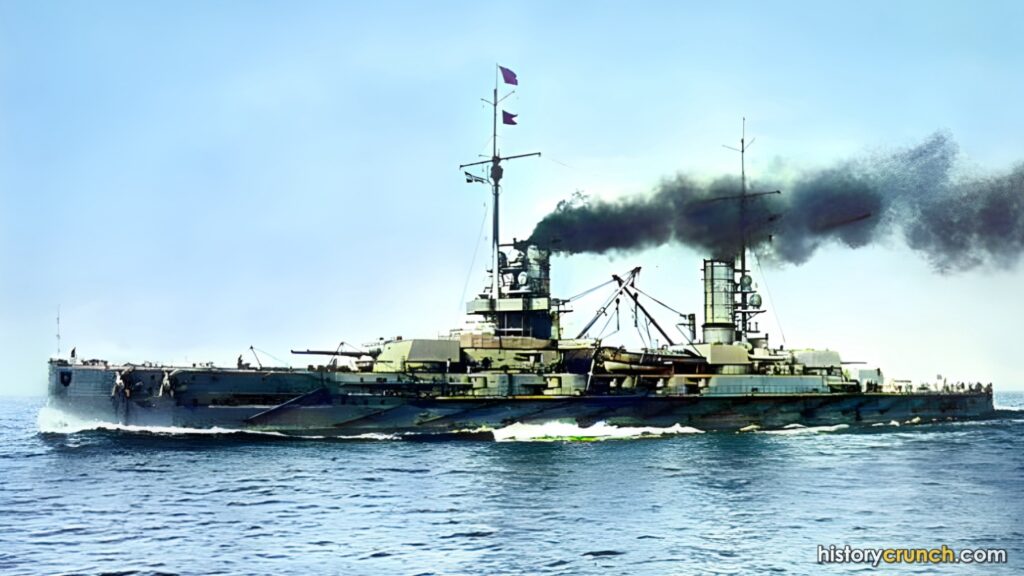
Germany viewed the British navy as a threat and sought to develop its own navy to match. Mostly Germany needed a strong navy to challenge British ships in the North Sea, which was located to the north of Germany and to the east of Britain. The North Sea was Germany’s main route to the open ocean but was difficult for Germany since the North Sea was connected to Britain and the British navy dominated the area. In response, Germany developed its own version of the dreadnought and worked to challenge the power of the British. By the outbreak of World War I in 1914, Britain had 29 dreadnoughts and Germany had 17.
 FactsthatCrunch
It is early 1906, and you are Admiral Alfred von Tirpitz, head of the German Imperial Naval Office. Britain has just launched HMS Dreadnought, a battleship so powerful it makes every other warship in the world look outdated, and the arms race in Europe is already heating up. Germany must decide how to respond before Britain pulls even further ahead in the North Sea, Germany's main route to the open ocean.
World War I timeline · 1914 – 1918
Key Vocabulary
Dreadnought
Caliber
Armament
Steam turbine
Knots
Decommissioned
Pre-dreadnoughts
Frequently Asked Questions
What was a dreadnought in World War I?
A dreadnought was a large, fast battleship built in the early 20th century. It carried many large caliber guns and was powered by a steam turbine engine. The design changed naval warfare and set the standard for modern battleships of the era.
When was the HMS Dreadnought launched?
The HMS Dreadnought was launched by the British Royal Navy in 1906. It was the first ship of its kind and gave the whole class of battleships its name. The word “dreadnought” means “fear nothing.”
What made the HMS Dreadnought different from earlier battleships?
The HMS Dreadnought carried ten 12-inch guns as its main armament, far more large guns than older ships. It was also faster, reaching 21 knots, and measured 527 feet (160 meters) long. Older ships that came before it are now called “pre-dreadnoughts.”
How did the dreadnought lead to World War I?
The dreadnought sparked a naval race between Britain and Germany before the war. Each nation raced to build more of these powerful battleships. Historians view this competition as an important factor in the causes of World War I.
How many dreadnoughts did Britain and Germany have in 1914?
By the outbreak of World War I in 1914, Britain had 29 dreadnoughts and Germany had 17. Britain kept a larger navy partly to protect its colonial empire and sea trade. Germany built up its fleet to challenge Britain in the North Sea.
What happened to the HMS Dreadnought during the war?
The HMS Dreadnought saw little combat during World War I. It sank a German submarine by ramming it, but mostly served in coastal defense. The ship was decommissioned and sold for scrap in 1921.
Cite This Article
To cite this article as a source, use one of the formats below.
MLA: Beck, Elias. “Dreadnought of World War I: A Detailed Summary.” HistoryCrunch, 28 September 2026, https://historycrunch.com/dreadnought-of-world-war-i/.
APA: Beck, E. (2026). Dreadnought of World War I: A Detailed Summary. HistoryCrunch. https://historycrunch.com/dreadnought-of-world-war-i/
Chicago: Beck, Elias. “Dreadnought of World War I: A Detailed Summary.” HistoryCrunch. September 28, 2026. https://historycrunch.com/dreadnought-of-world-war-i/
Sources
- Fordham Modern History Sourcebook
- John Keegan, The First World War.