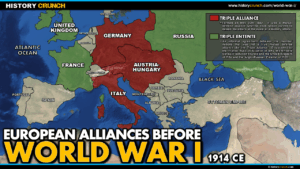
The United States played an important role in the later years of World War I and participated in several significant battles. The American Expeditionary Force (AEF) participated in several of the main battles of the Western Front. As well, a small section of the American Expeditionary Force also participated on the Italian Front (Alpine Front). In general, the landscape of Europe in World War I was divided into a few different ‘fronts’. For instance, the Western Front was located on the western-half of Europe and included a line of trenches that stretched throughout much of northern France and Belgium. The Western Front was the primary location of America’s involvement in World War I. The Eastern Front of World War I was on the eastern-half of Europe and between Germany and Russia.
The major American battles in World War I included: the Battle of Château-Thierry, the Battle of Belleau Wood, the Battle of Saint-Mihiel and the Meuse–Argonne Offensive. Read more about these battles in the information below.
 FactsthatCrunch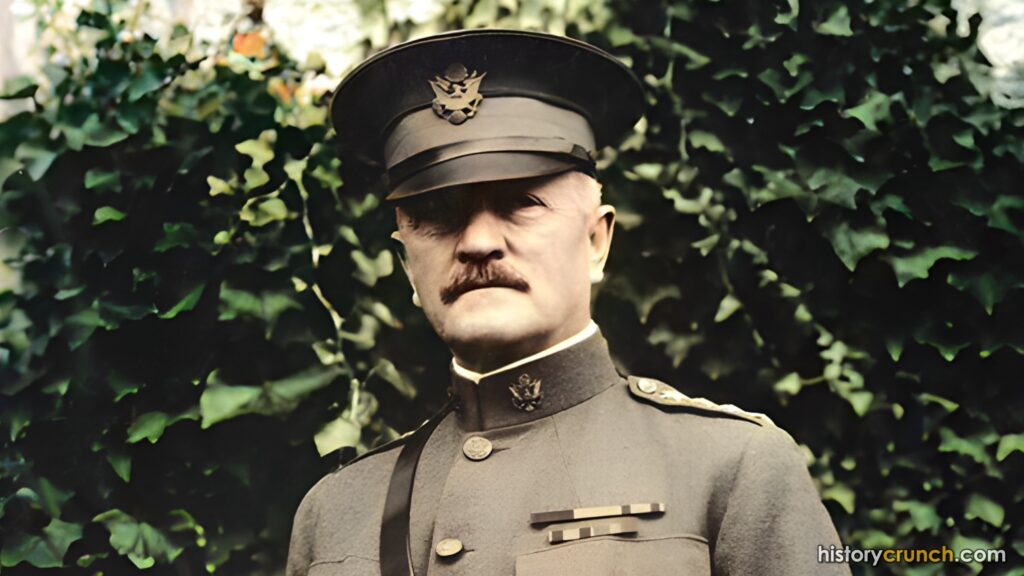
American Battles in World War I – Battle of Chateau-Thierry
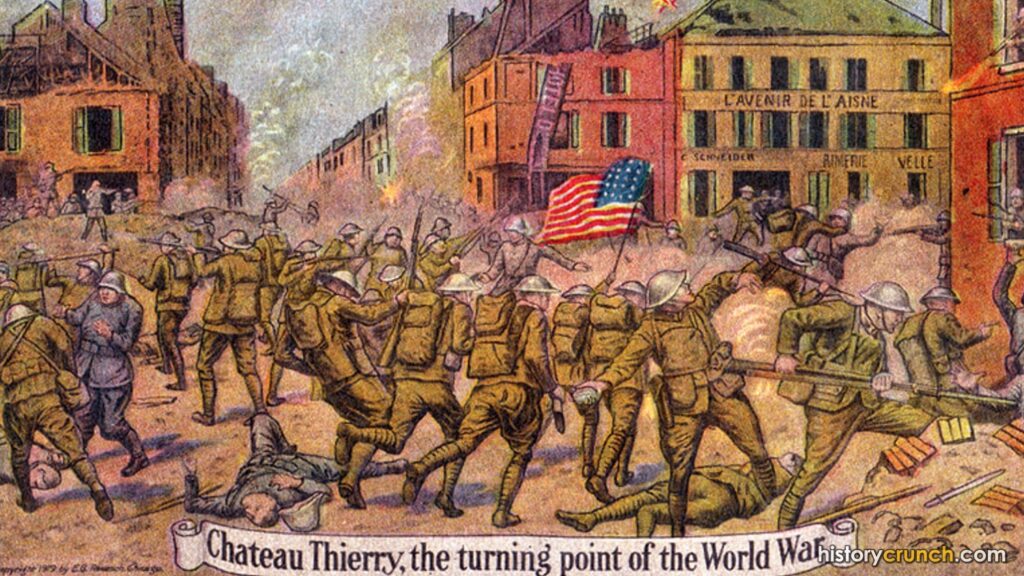
One of the first major conflicts in World War I for the American forces was the Battle of Château-Thierry, which took place on May 31st, 1918. The battle was part of the larger Second Battle of the Marne, which was related to the German Spring Offensives of 1918. As such, a major component of the Battle of Château-Thierry was Allied forces (French and American soldiers) defending their positions against German attacks. In fact, German General Erich Ludendorff planned the German attack as an attempt to overwhelm the French defenders in Northern France, and open a path for the German soldiers. For example, the Germans began their assault on the French line and overran the French 6th Army. As a result, the American Expeditionary Force (AEF) under the command of John J. Pershing circled around to assist the French and stop the German advance. More specifically, the Germans were able to push through the French defenses and made it to the Marne River, which was only about 50 miles [80 km] from the French capital of Paris. As such, the American 3rd Division was mobilized to an important bridge on the Marne River near the town of Château-Thierry on May 31st in 1918 in aid of the French.
The Germans attacked the bridge, as the American and French defenders replied with heavy machinegun fire. The fighting continued with artillery and sniper fire, which led to numerous casualtiesSoldiers lost in battle through death, wounds, capture, or disappearance. on both sides. The Allies were successful in preventing a German advance and were even able to carry out their own counter-attack. For example on July 18th, 1918, French and American forces attacked German positions near Château-Thierry, which caused the Germans to retreat from the area. In all, the Battle of Château-Thierry was an important Allied victory and one of the first engagements for the newly formed American Expeditionary Force in World War I. During the battle, the Americans and French suffered a combined 1,900 casualties, while the Germans suffered over 5,300.
 FactsthatCrunch
American Machine Gunners Help Hold the Marne at Château-Thierry
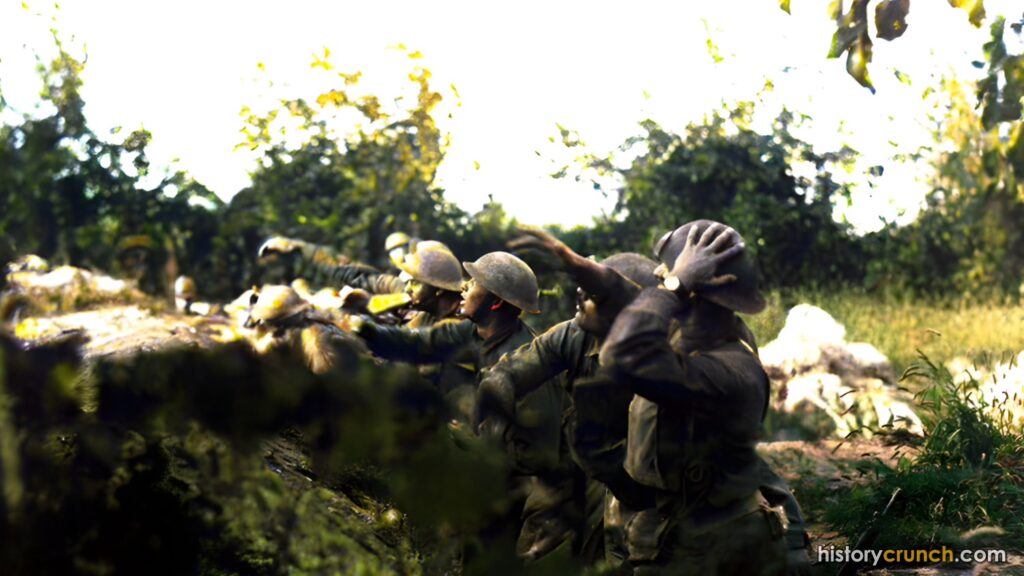
On May 31st, 1918, soldiers of the American 3rd Division’s 7th Machine Gun Battalion rushed to the town of Château-Thierry. Fighting beside French troops, they helped hold the bridges over the Marne River and stop the German advance about 50 miles from Paris.
American Battles in World War I – Battle of Belleau Wood
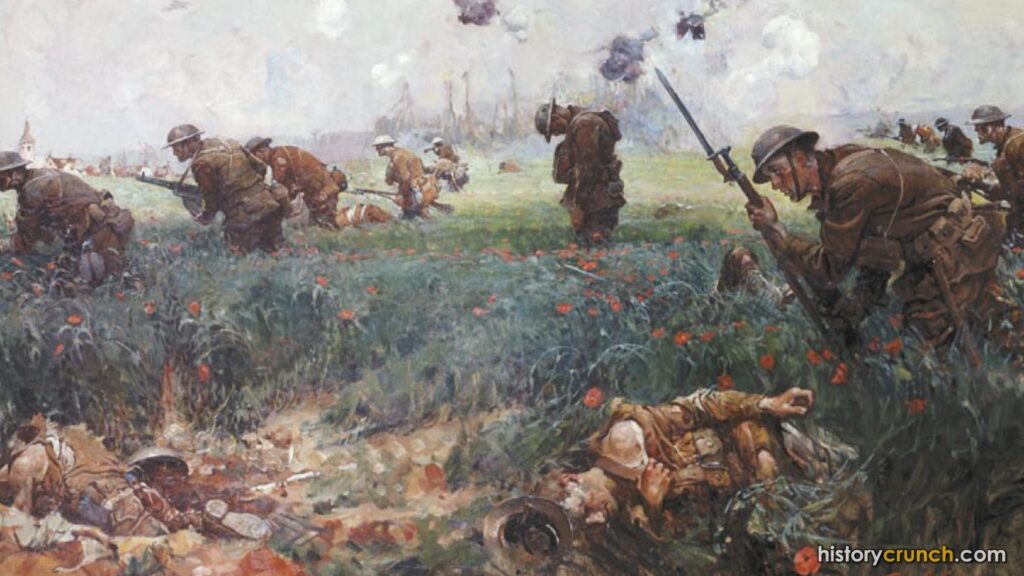
The second major conflict that the American forces participated in was the Battle of Belleau Wood, which occurred in June of 1918. More specifically, the Battle of Belleau Wood was fought from June 1st to the 26th in 1918. The battle occurred in Northern France near the Marne River, which was important in relation to the earlier First Battle of the Marne. During the Battle of Belleau Wood, American forces (the 2nd Division, which included a brigade of Marines and was led by Major General Omar Bundy) fought alongside French soldiers against five divisions of the German Army.
The Battle of Belleau Wood was part of the German Spring Offensives in 1918, which historians consider to be the final advance of the German troops in World War I. As such, the attack at Belleau Wood began on the evening of June 1st with a German assault on the Allied defenses. At first, the Germans were able to advance through the French line, but the American divisions quickly regrouped and set up defensive positions from which they waited for the Germans. For example, American soldiers dug small foxholesSmall holes dug into the ground by soldiers to provide shelter and a defensive fighting position. and sat in wait until the Germans were close. Then they opened fire, which forced the German soldiers to pull back into the woods and set up their own trenches. The ability of the American Marines to stop the German advance became legendary, since French forces in the region were expressing the need for the Allies to retreat. Instead, the Americans held their ground and stopped the German assault. In fact, it was at this time that Marine Captain Lloyd W. Williams of the 2nd Battalion, 5th Marines famously argued “Retreat? Hell, we just got here”.
Following this, the American Marines, along with French soldiers, attacked the German defenses on June 6th. Referred to as the ‘Attack on Hill 142’, the Allied forces assaulted the German line but the German soldiers were able to use machine gun fire to hold back the attack. However, during the attack, American Gunnery Sergeant Ernest A. Janson, bravely stopped an advance of 12 German soldiers and protected other soldiers with him. For his actions, he received the Medal of Honor, and was the first U.S. Marine of World War I to receive the prestigious honor.
Regardless, the American Marines were able to attack the Germans at Belleau Wood and gain a footholdA secure starting position gained in enemy territory from which further advances can be made. in the region. As well, the American attack at Belleau Wood became an important symbol for the United States Marine Corps. For example, when the Americans began their attack, First Sergeant Dan Daly announced the following to his men: “Come on, you sons of bitches. Do you want to live forever?”
The two sides went back and forth several times and each suffered heavy losses. However, the Americans and the other Allies proved successful as they overwhelmed the German defenders with several waves of attack. For example, on June 26th, the 3rd Battalion, 5th Marines and supporting forces, finally pushed the Germans out of Belleau Wood. The Battle of Belleau Wood was over, and is remembered today as one of the bloodiest battles for the United States in all of World War I. In all, it is estimated that the Americans suffered over 7,900 casualties including over 1,800 deaths. Whereas, the Germans suffered over 10,000 casualties.
American Battles in World War I – Battle of Saint-Mihiel
The next major American battle of World War I was the Battle of Saint-Mihiel, which occurred from September 12th to the 15th in 1918. The Battle of Saint-Mihiel took place in Northern France and was fought between the Allied Nations (United States and France) and the Central Powers (Germany and Austria-Hungary). During the course of World War I, the region of Saint-Mihiel had been controlled by Germany as a salientA bulge-like formation where one side’s front line pushes into enemy territory. (bulge-like formation that protruded into French territory), which allowed Germany a reasonable amount of control over the area.
However, in 1918, American General John J. Pershing proposed an Allied attack against the Germans in Saint-Mihiel, as he believed it would create an opening for Allied troops to advance into Germany. The American First Army began the attack on September 12th, when several American divisions advanced into the southern portion of the German-controlled Saint-Mihiel salient. French forces supported the assault by advancing on the western section of the salient. Pershing also hoped the attack would open a path toward the city of Metz, which Germany had controlled since 1871 and which was an important railroad center that Germany used to control transportation and communications in the region. As such, the French and American forces pushed into the Saint-Mihiel salient, towards the city of Metz.
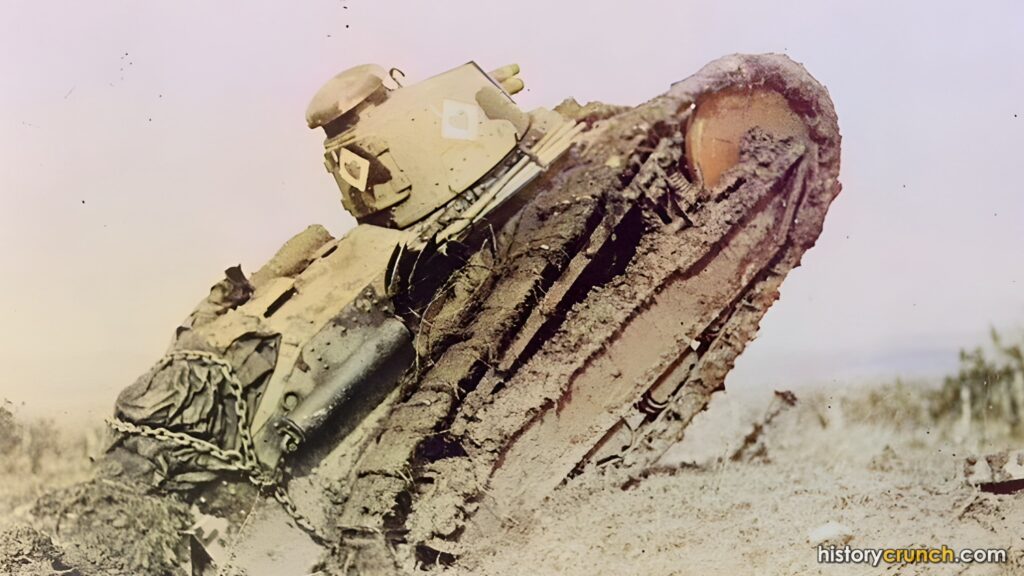
Another important aspect of the Battle of Saint-Mihiel was the use of Allied aircraft and tanks. For instance, during the battle, the Allies mobilized over 1,400 aircraft that provided air support to the troops on the ground. As well, the aircraft ensured Allied control of the air during the battle. Also, American General John J. Pershing mobilized tank units that advanced alongside the infantry divisions. The combination of soldiers, aircraft and tanks allowed the Allies to advance into the Saint-Mihiel salient with little opposition from the German defenders. The battle was over just days later on September 15th, with the American forces capturing all of the objectives that they had set out to accomplish. General Pershing began preparing for the final major American engagement of World War I: the Meuse–Argonne Offensive.
 FactsthatCrunch
American Battles in World War I – Meuse-Argonne Offensive
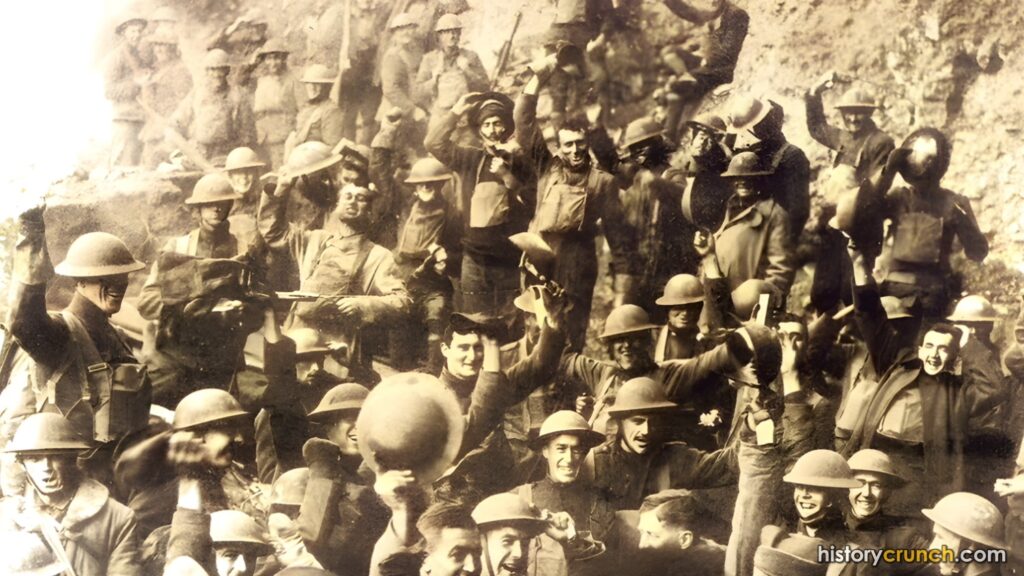
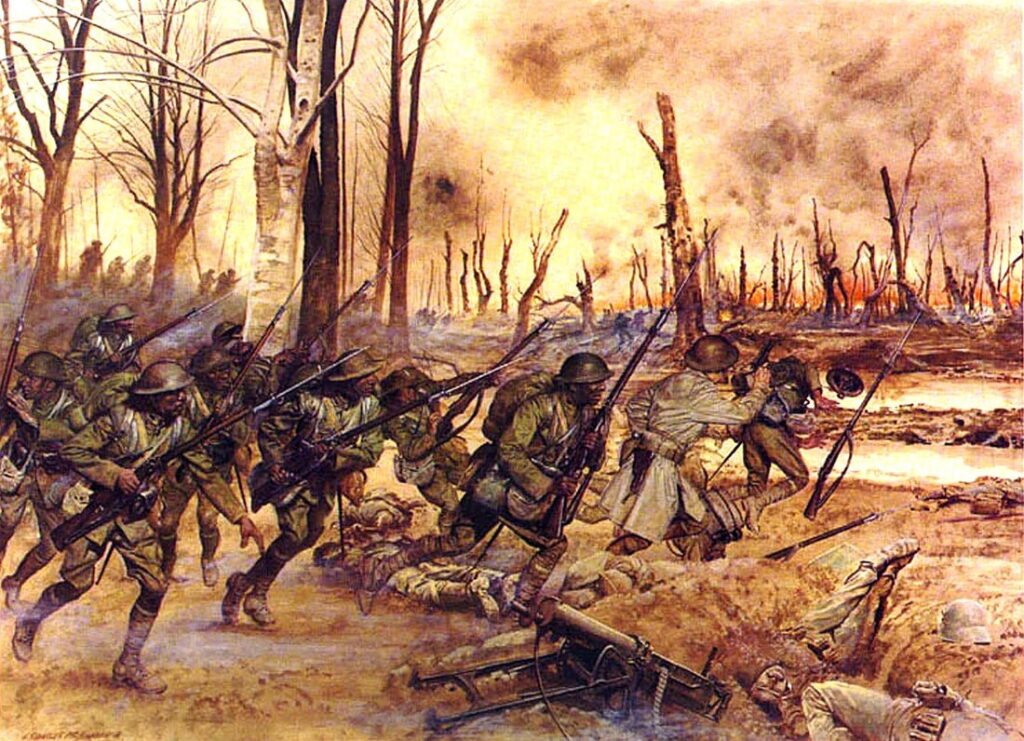
The Meuse–Argonne Offensive was a major conflict on the Western Front in the final stage of World War I. It took place from September 26th to November 11th in 1918 and was carried out in northeastern France near Verdun. The Meuse–Argonne Offensive was a major assault carried out by the Allied Nations (United States and France) against Germany, and is considered to be part of the larger ‘Hundred Days Offensive’. This was the major Allied advance against the Germans, which led to the end of the war. More specifically, historians consider the Meuse–Argonne Offensive to be the most significant American battle from World War I. This is due to the Meuse–Argonne Offensive being the largest and deadliest American battle in World War I. As well, it was the main action carried out by the American Expeditionary Force (AEF) during the war.
The Meuse–Argonne Offensive unfolded in a series of three phases. The first phase of the battle occurred from September 26th until October 4th, 1918. This first phase was a failure for the American forces, as they failed to capture their objectives and suffered heavy losses. While the Americans experienced some successes, the overall result was a disorganized failure. In reality, the fighting in the Argonne Forest was difficult and arduousExtremely difficult and demanding, requiring great effort to get through. for all sides. Historians consider the terrible losses suffered by the United States to be the result of poorly trained American soldiers who were new to the fighting of World War I. Regardless, the second phase of the Meuse–Argonne Offensive took place from October 4th to the 24th in 1918. The second phase of the offensive resulted in a better outcome for the United States. For example, during this phase, the American forces attacked the German defenders in the Argonne Forest in a series of waves. Eventually, the American divisions were able to push the Germans back and finally on October 24th, the United States had gained full control over the region. The third, and final phase, took place from October 28th until the end of the war on November 11th in 1918. During this phase, the American forces, along with French forces advanced deep into German-held territory. The advance only ended with news of the armisticeA formal agreement between enemies to stop fighting and end a war. of November 11th and the end of World War I. In all, the United States suffered over 122,000 casualties during the Meuse–Argonne Offensive, including over 26,000 deaths. It is often called the deadliest battle in United States military history, with far more American soldiers killed than on D-Day during the Normandy Invasion of World War II.
 FactsthatCrunch
The Meuse-Argonne Offensive of 1918 left behind casualty numbers that still define it as the largest and deadliest American battle of World War I.
World War I timeline · 1914 – 1918
Key Vocabulary
Salient
Foxholes
Foothold
Arduous
Armistice
Casualties
Frequently Asked Questions
What were the main American battles in World War I?
The main American battles were Château-Thierry, Belleau Wood, Saint-Mihiel, and the Meuse-Argonne Offensive. All four were fought in 1918 on the Western Front in northern France. American troops served under the American Expeditionary Force, known as the AEF.
When did the United States start fighting in World War I?
American forces entered major combat in 1918, during the final years of the war. One of their first big fights was the Battle of Château-Thierry on May 31st, 1918. The AEF then joined several other key battles before the war ended that November.
Why was the Battle of Belleau Wood important for the Marines?
Belleau Wood became a lasting symbol of courage for the United States Marine Corps. American Marines refused to retreat and stopped a German advance in June of 1918. The fight was one of the bloodiest for the United States in the whole war, with over 7,900 American casualties.
What was the Meuse-Argonne Offensive?
The Meuse-Argonne Offensive was the largest and deadliest American battle of World War I. It lasted from September 26th to November 11th, 1918, near Verdun in northeastern France. The United States suffered over 122,000 casualties, making it one of the deadliest battles in American history.
Who commanded American forces in World War I?
General John J. Pershing commanded the American Expeditionary Force during World War I. He planned the attack on the Saint-Mihiel salient and led the Meuse-Argonne Offensive. His forces used soldiers, aircraft, and tanks together to break German lines.
What was the Saint-Mihiel salient?
The Saint-Mihiel salient was a bulge in the front line where German troops pushed into French territory. American and French forces attacked it from September 12th to 15th, 1918. The Allies captured all their goals in just a few days with little German resistance.
Cite This Article
To cite this article as a source, use one of the formats below.
MLA: Beck, Elias. “American Battles in World War I: A Detailed Summary.” HistoryCrunch, 29 September 2026, https://historycrunch.com/american-battles-in-world-war-i/.
APA: Beck, E. (2026). American Battles in World War I: A Detailed Summary. HistoryCrunch. https://historycrunch.com/american-battles-in-world-war-i/
Chicago: Beck, Elias. “American Battles in World War I: A Detailed Summary.” HistoryCrunch. September 29, 2026. https://historycrunch.com/american-battles-in-world-war-i/
Sources
- Margaret MacMillan, The War That Ended Peace.
- Fordham Modern History Sourcebook
- Imperial War Museum
- John Keegan, The First World War.