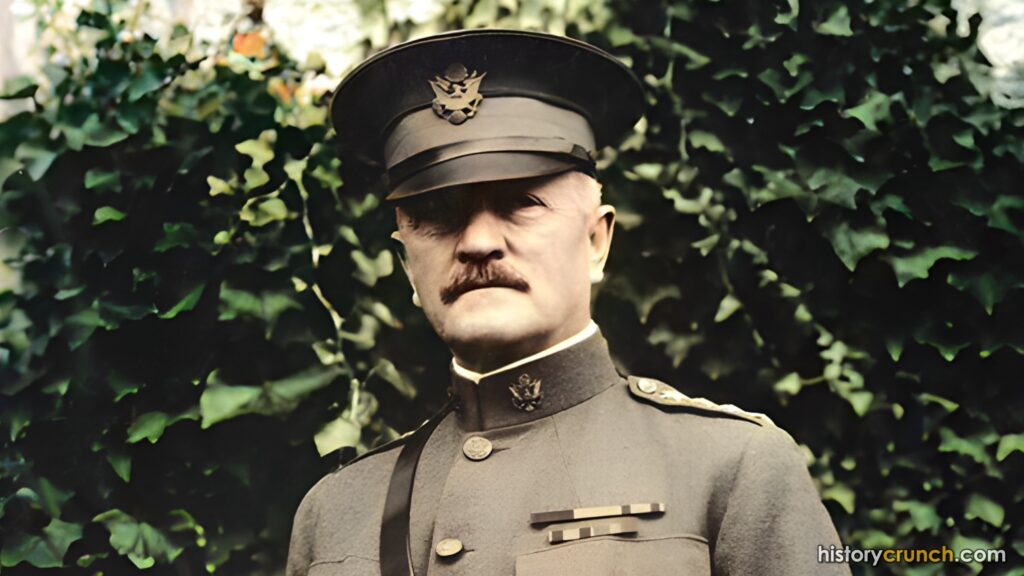
John J. Pershing was the commander of the American Expeditionary ForceThe United States army sent to fight in Europe during World War I, commanded by Pershing. during World War I and one of the most important military figures in American history. He built the United States army in Europe from a small force of around 130,000 men into a fighting force of nearly two million in just eighteen months. His leadership in the final year of the war helped turn the tide in favor of the Allied nations and contributed to Germany’s defeat.
 FactsthatCrunch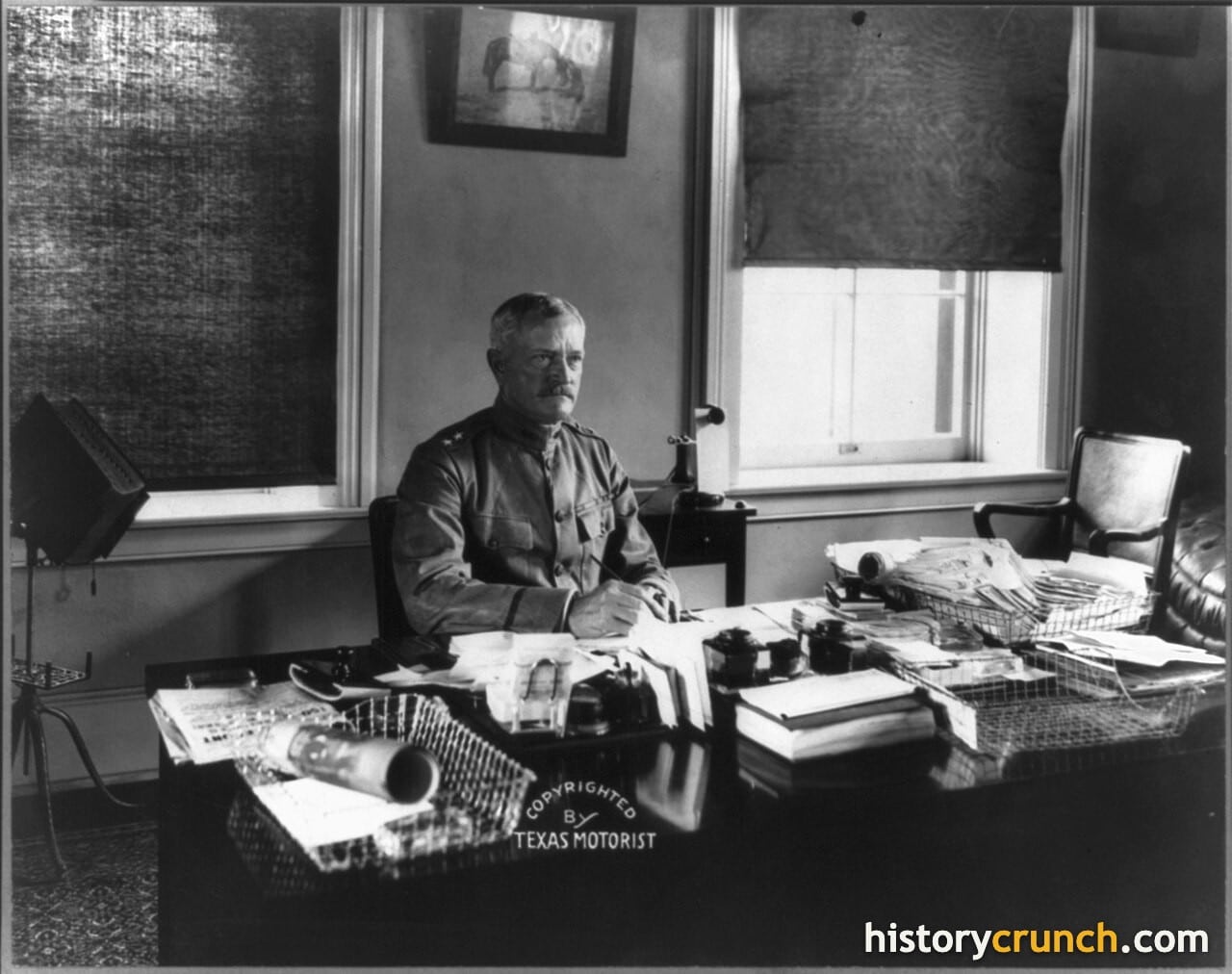
John J. Pershing’s Early Life
John Joseph Pershing was born on September 13th, 1860 CE near the small town of Laclede in Missouri. His father was a merchant and local businessman. The family lost most of their money during an economic depression in 1873, which forced Pershing to work on the family farm as a teenager. For a time he worked as a teacher at a school for African American students in his local community. While studying at a school in Kirksville, Missouri, he saw a notice for a competitive exam to enter the United States Military Academy at West Point. He applied, passed the exam and won a place at the academy. He graduated from West Point in 1886 and began his career as a professional soldier. As such, Pershing came from a humble background and owed his military career to his own hard work and ambition.
FactsthatCrunchBefore Pershing ever wore a military uniform, he worked as a teacher at a school for African American students in his local Missouri community.
Pershing grew up in Laclede, Missouri, and his family lost most of their money during an economic depression in 1873. He took the teaching job to support himself, then spotted a notice for the West Point entrance exam and decided to try for it. He passed, won a place at the academy, and graduated in 1886, launching a military career that would eventually put him in command of nearly two million soldiers in Europe.
John J. Pershing’s Military Career Before World War I
After graduating from West Point, Pershing served in a series of military campaigns that gave him broad experience across very different types of conflict. For instance, he fought in campaigns against the Apache and Sioux peoples in the American West in the late 1880s. He then taught military tactics at the University of Nebraska, where he also earned a law degree. He later returned to West Point as an instructor before heading to Cuba to fight in the Spanish-American War of 1898, where he served with the 10th Cavalry Regiment at the battles of Santiago and San Juan Hill and earned the Silver Star for bravery.
It was during this period of his career that Pershing earned his famous nickname, Black Jack. He had served as a white officer in an all-Black regiment, the 10th Cavalry, and the nickname referred to his time with that regiment. It also came to reflect his stern personality and strict approach to military discipline. After the Spanish-American War, Pershing served twice in the Philippines, where he led American forces in campaigns against local resistance movements. In 1905 he was sent to Japan as a military observerA soldier sent to watch another country’s war without fighting in it, to gather information. during the Russo-Japanese War. In 1906 President Theodore Roosevelt promoted him directly to brigadier generalA rank in the United States Army just above colonel and below major general., jumping him over more than 800 other officers in recognition of his outstanding record.
In 1916 CE, Pershing led a punitive expeditionA military mission sent into another country to punish a group or leader for an attack. of nearly 12,000 soldiers into Mexico in pursuit of the Mexican revolutionary leader Pancho Villa. Villa’s forces had raided the town of Columbus, New Mexico, killing American civilians, and President Woodrow Wilson ordered Pershing to track him down. The expedition lasted nearly a year. Pershing’s forces drove deep into Mexico and fought several engagements but failed to capture Villa. Regardless, the campaign gave Pershing valuable experience in commanding a large force in the field and brought him to the attention of Wilson as a capable and reliable general. As such, his long career of varied military service made him one of the most experienced soldiers in the United States Army by the time World War I broke out.
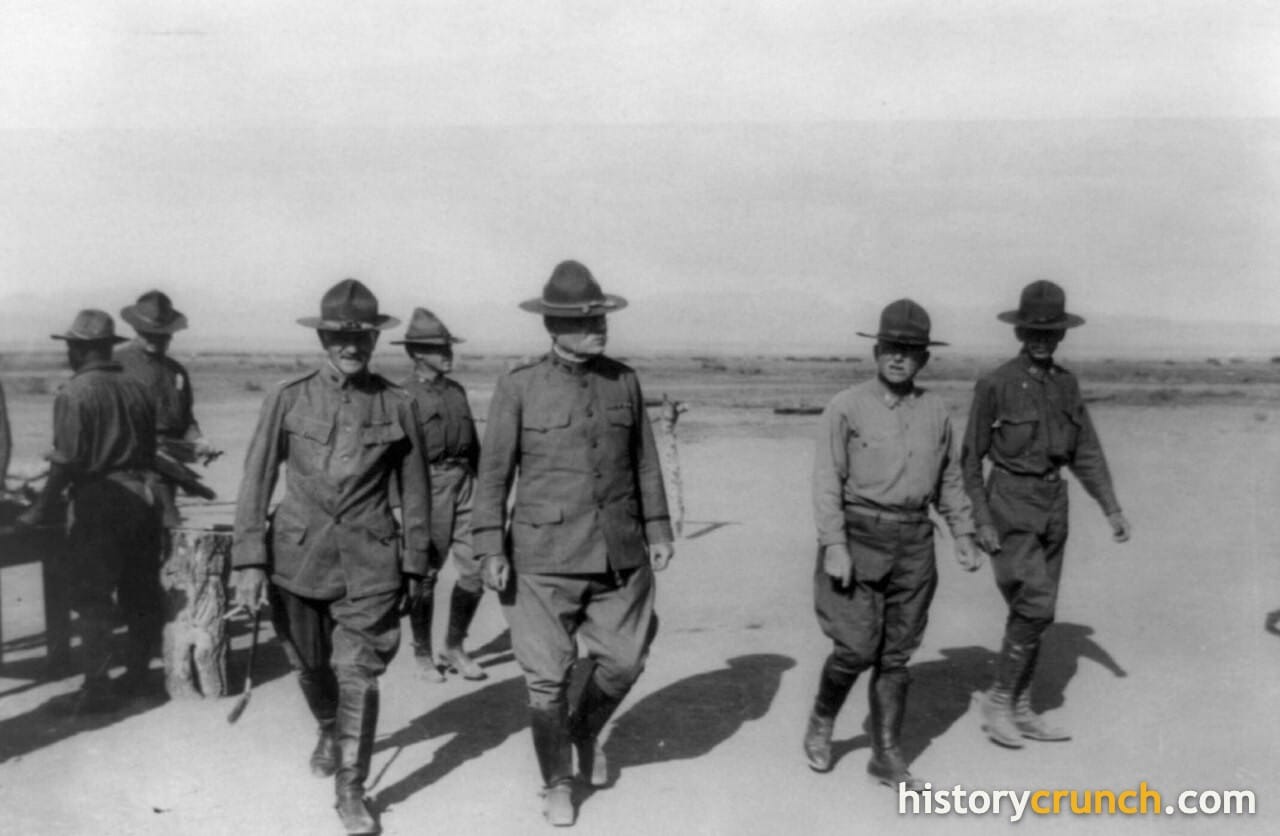
John J. Pershing and World War I
The United States entered World War I on April 6th, 1917 CE after years of trying to stay out of the conflict. World War I had been raging in Europe since 1914. It was fought primarily between the Allied nations, including Britain, France and Russia, against the Central Powers of Germany and Austria-Hungary. By 1917 the Allied nations were exhausted and desperate for help. President Woodrow Wilson selected Pershing to command the American forces being sent to Europe, bypassing five more senior generals in making the choice. Pershing was given the task of building the American Expeditionary Force, which became known as the AEF.
When Pershing and the first American troops arrived in France in June of 1917 CE, the Allied commanders expected the Americans to be split up and used as replacement soldiers in French and British units. Pershing refused to allow this. He argued strongly that American soldiers should fight together as an independent American army under American command. He believed this would be more effective and would also protect American interests. This caused tension with the British and French commanders, who desperately needed fresh troops and did not want to wait for the Americans to be fully trained and organized. Pershing held firm on this point throughout most of the war and it became one of the most significant and debated decisions of his command.
FactsthatCrunchIt is June 1917, and you are General John J. Pershing, commander of the American Expeditionary Force in World War I. You have just arrived in France with the first American troops, and the British and French commanders are pressing hard to split your soldiers into small groups and send them into their own existing units as replacements. Three years of brutal fighting have left the Allied armies exhausted and short of men. If you agree, American soldiers go into battle sooner, but the United States loses all independent military standing in the war. If you refuse, you risk a bitter falling-out with allies who are desperate, and your men may not reach the front for months.
John J. Pershing and the AEF in Battle
American troops began fighting in earnest in the spring of 1918 CE. The Germans had launched a massive offensive in March of 1918 CE that pushed the Allied lines back significantly and threatened Paris. At this critical moment, Pershing placed all available American forces at the disposal of the Allied Supreme Commander, French General Ferdinand Foch. American soldiers helped stop the German advance at battles including Chateau-Thierry and Belleau Wood in the summer of 1918 CE. For instance, the fighting at Belleau Wood in June of 1918 CE showed that American soldiers could hold their own against experienced German troops and gave the AEF its first real taste of intense combat.
As the tide turned in the Allies’ favor, Pershing’s forces played a major role in two of the most important operations of the final months of the war. In September of 1918 CE, the AEF successfully attacked and reduced the Saint-Mihiel salientA bulge in a military front line that sticks out into enemy-held territory., a bulge in the Allied lines that the Germans had held since 1914. It was the first large independent American military operation of the war and it succeeded. Then, in late September of 1918 CE, Pershing regrouped his forces quickly for the Meuse-Argonne Offensive, one of the largest military operations in American history. More than one million American soldiers took part in the fighting, which lasted until the armisticeA formal agreement by both sides in a war to stop fighting. on November 11th, 1918 CE. The Meuse-Argonne Offensive pushed deep into German-held territory and played a significant role in forcing Germany to seek peace. As such, the performance of the AEF in the final months of the war was an important factor in the Allied victory.
John J. Pershing’s Death and Legacy
After the war, Pershing was promoted to General of the Armies of the United States, the highest rank in the American military. He was the first person to hold this rank in his lifetime. George Washington was given it much later, in 1976, long after his death. He served as Army Chief of Staff from 1921 to 1924 and wrote his memoirsA book in which a person writes about their own experiences and life events., titled My Experiences in the World War, which won the Pulitzer Prize for history in 1932. He lived long enough to see the United States enter World War II and served as an adviser to the government during that conflict. John J. Pershing died on July 15th, 1948 CE in Washington DC at the age of eighty-seven. He was buried with full military honors at Arlington National Cemetery.
Pershing is remembered as one of the greatest military commanders in American history. He built an army from almost nothing in a remarkably short time and led it to play a decisive role in winning World War I. His insistence that American soldiers fight as an independent force rather than being absorbed into Allied armies helped establish the United States as a major military power on the world stage. As such, his leadership in World War I left a lasting impact on the history of the United States and its role in international affairs.
Pershing's memoir of the war, My Experiences in the World War, won the Pulitzer Prize for history.
Explore World War I
Keep exploring World War I with these History Crunch resources.
Key Vocabulary
Punitive expedition
Salient
Armistice
American Expeditionary Force
Brigadier general
Military observer
Memoirs
Frequently Asked Questions
Why was John J. Pershing called Black Jack?
Pershing earned the nickname Black Jack because he served as a white officer in an all-Black regiment, the 10th Cavalry. The name later reflected his stern personality and strict approach to military discipline. He first served with that regiment during the Spanish-American War of 1898.
What was the American Expeditionary Force?
The American Expeditionary Force, known as the AEF, was the United States army sent to fight in Europe during World War I. Pershing built it from around 130,000 men into a force of nearly two million in just eighteen months. He commanded the AEF from 1917 until the war ended.
Why did Pershing refuse to split up American troops?
Pershing insisted that American soldiers fight together as an independent army under American command. He believed this would be more effective and would protect American interests. His stand caused tension with British and French commanders, who badly needed fresh troops right away.
What battles did the AEF fight in World War I?
American troops under Pershing fought at Chateau-Thierry and Belleau Wood in the summer of 1918. They also reduced the Saint-Mihiel salient in September of 1918 and launched the huge Meuse-Argonne Offensive. More than one million American soldiers took part in the Meuse-Argonne fighting.
Did Pershing capture Pancho Villa in Mexico?
No, Pershing failed to capture Pancho Villa during the 1916 expedition into Mexico. His force of nearly 12,000 soldiers drove deep into the country but never caught the revolutionary leader. The campaign still gave him valuable experience in commanding a large force in the field.
What rank did Pershing hold, and how is he remembered?
Pershing was promoted to General of the Armies of the United States, the highest rank in the American military. He was the first person to hold this rank in his lifetime. George Washington was given it much later, in 1976, long after his death. He is remembered for building an army from almost nothing and leading it to a decisive role in winning World War I.
Cite This Article
To cite this article as a source, use one of the formats below.
MLA: Millar, B. “John J. Pershing: A Detailed Biography.” HistoryCrunch, 30 September 2026, https://historycrunch.com/john-j-pershing/.
APA: Millar, B. (2026). John J. Pershing: A Detailed Biography. HistoryCrunch. https://historycrunch.com/john-j-pershing/
Chicago: Millar, B. “John J. Pershing: A Detailed Biography.” HistoryCrunch. September 30, 2026. https://historycrunch.com/john-j-pershing/
Sources
- Hew Strachan, The First World War.
- Imperial War Museum