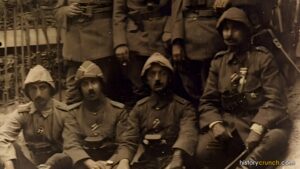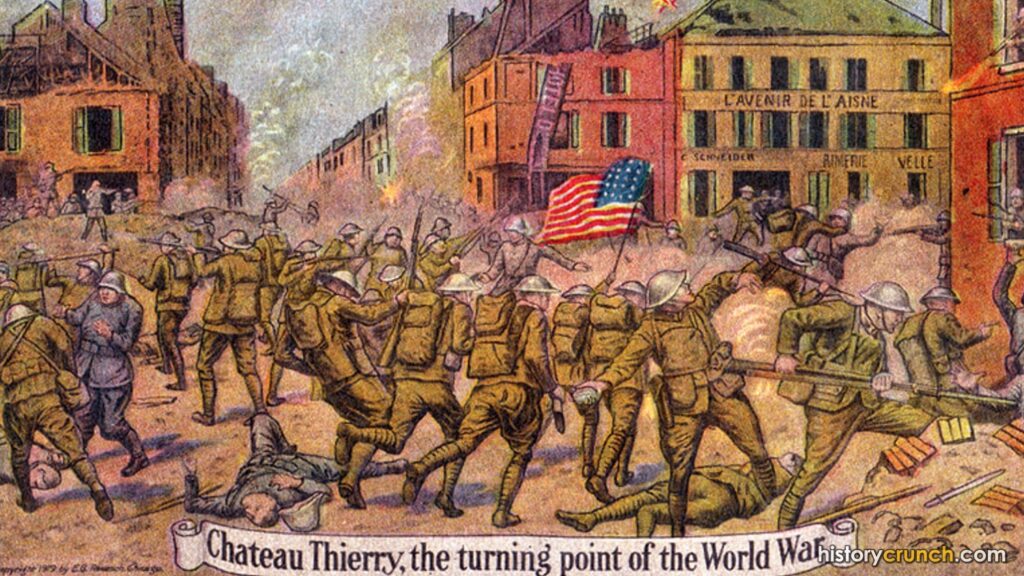
The Battle of Château-Thierry was a significant battle of World War I along the Western Front, which was the line of trenches that stretched through Belgium and northern France on the western edge of Germany. The Western FrontThe line of trenches stretching through Belgium and northern France on the western edge of Germany during World War I. involved some of the largest battles of World War I and involved the Allied Nations facing off against the German Army. One of the main reasons that the Battle of Château-Thierry was so significant was because it was one of the first major conflicts that involved American forces in World War I.

What Happened During the Battle of Chateau-Thierry in World War I?
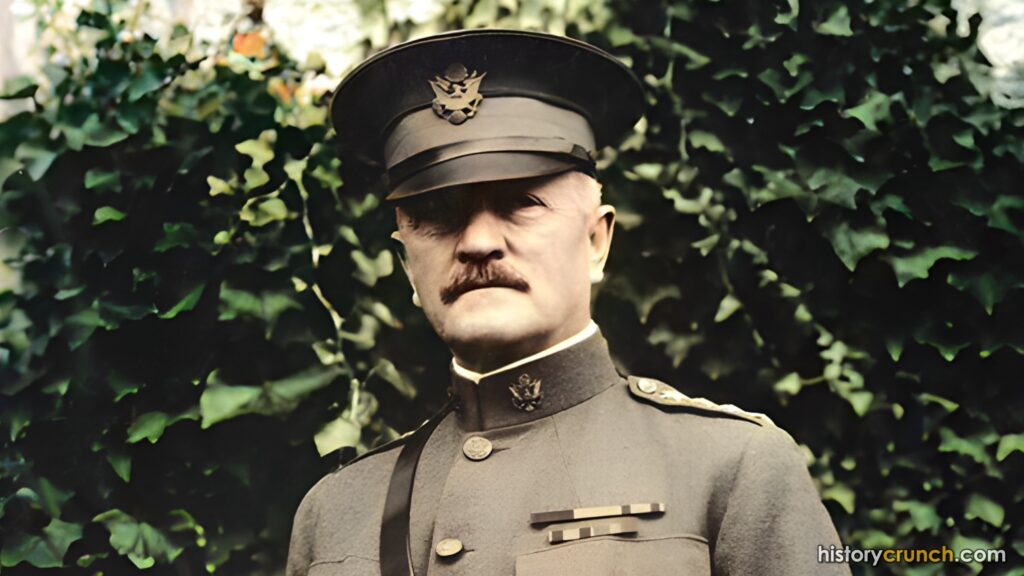
The Battle of Château-Thierry took place on May 31st, 1918, and was part of the larger Second Battle of the Marne, which was related to the German Spring OffensivesA series of major German attacks in 1918 designed to break Allied defenses before American forces could fully arrive. of 1918. As such, a major component of the Battle of Château-Thierry was Allied forces (French and American soldiers) defending their positions against German attacks. In fact, German General Erich Ludendorff planned the German attack as an attempt to overwhelm the French defenders in Northern France, and open a path for the German soldiers. For example, the Germans began their assault on the French line and overranDefeated and pushed past enemy defenses by force, leaving the defenders unable to hold their position. the French 6th Army. As a result, the American Expeditionary Force (AEF) under the command of John J. Pershing circled around to assist the French and stop the German advance. More specifically, the Germans were able to push through the French defenses and made it to the Marne River, which was only about 50 miles (80 km) from the French capital of Paris. As such, the American 3rd Division was mobilizedMoved troops quickly to a specific location in response to a military threat. to an important bridge on the Marne River near the town of Château-Thierry on May 31st in 1918 in aid of the French.
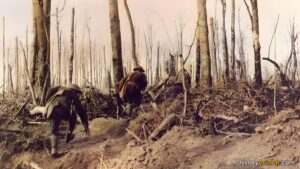
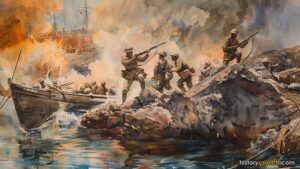
The Germans attacked the bridge, as the American and French defenders replied with heavy machinegun fire. The fighting continued with artillery and sniper fire, which led to numerous casualtiesSoldiers killed, wounded, or otherwise lost during a battle or military operation. on both sides. The Allies were successful in preventing a German advance and were even able to carry out their own counter-attackAn offensive move launched by a defending force against an enemy that has just attacked them.. For example, on July 18th, 1918, French and American forces attacked German positions near Château-Thierry, which caused the Germans to retreat from the area.
 FactsthatCrunch
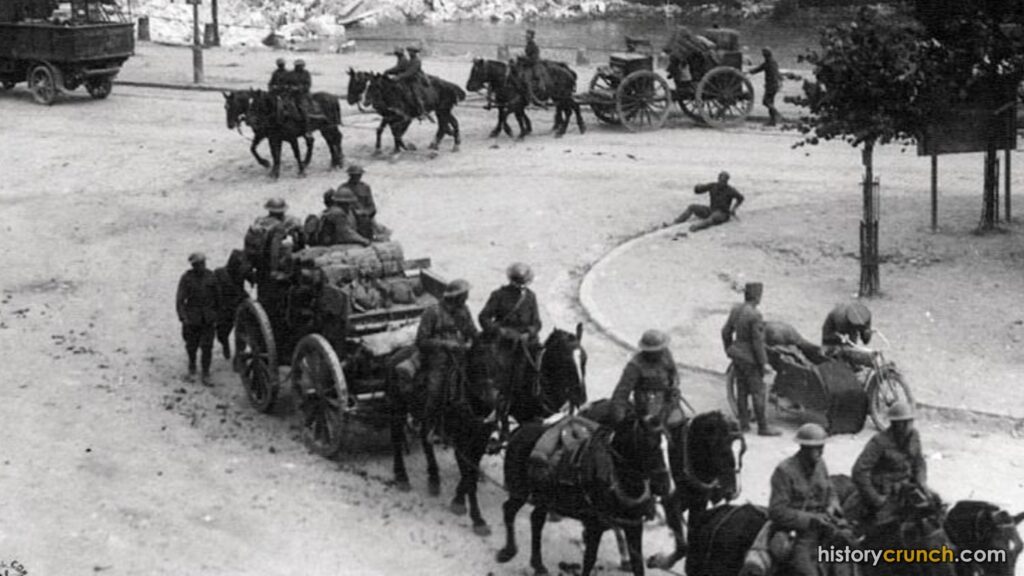
American Machine Gunners Help Hold the Marne at Château-Thierry
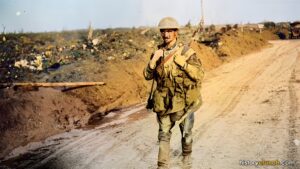
On May 31st, 1918, soldiers of the American 3rd Division’s 7th Machine Gun Battalion rushed to the town of Château-Thierry. Fighting beside French troops, they helped hold the bridges over the Marne River and stop the German advance about 50 miles from Paris.
Why Was the Battle of Chateau-Thierry Significant?
In all, the Battle of Château-Thierry was an important Allied victory and one of the first engagements for the newly formed American Expeditionary Force in World War I. During the battle, the Americans and French suffered a combined 1,900 casualties, while the Germans endured over 5,300.
At the Battle of Chateau-Thierry, how many casualties did the Germans suffer compared to the combined Allied total?
World War I timeline · 1914 – 1918
Key Vocabulary
Western Front
Spring Offensives
Overran
Mobilized
Casualties
Counter-attack
Frequently Asked Questions
When did the Battle of Château-Thierry take place?
The Battle of Château-Thierry began on May 31st, 1918, during World War I. It was part of the larger Second Battle of the Marne in northern France. The fighting was tied to the German Spring Offensives of that year.
Why was the Battle of Château-Thierry important?
The battle was one of the first major fights for American forces in World War I. It marked an early combat test for the newly formed American Expeditionary Force. The Allied victory also helped stop the German advance toward Paris.
Who led the American forces at Château-Thierry?
General John J. Pershing commanded the American Expeditionary Force during World War I. His troops moved in to help the French defenders along the Marne River. The American 3rd Division was sent to guard a key bridge near the town of Château-Thierry.
How close did the Germans get to Paris?
The German advance reached the Marne River, only about 50 miles (80 km) from Paris. German General Erich Ludendorff hoped to break the French line and open a path for his soldiers. Allied defenders at Château-Thierry helped block this push toward the French capital.
How many casualties happened during the battle?
The American and French forces suffered a combined 1,900 casualties during the battle. The Germans endured more than 5,300 casualties. The heavy losses came from machine gun, artillery, and sniper fire on both sides.
How did the battle end?
The Allies stopped the German attack and then launched a counter-attack of their own. On July 18th, 1918, French and American forces struck German positions near Château-Thierry. This attack forced the Germans to retreat from the area.
Cite This Article
To cite this article as a source, use one of the formats below.
MLA: Beck, Elias. “Battle of Chateau-Thierry in World War I: A Detailed Summary.” HistoryCrunch, 29 September 2026, https://historycrunch.com/battle-of-chateau-thierry-in-world-war-i/.
APA: Beck, E. (2026). Battle of Chateau-Thierry in World War I: A Detailed Summary. HistoryCrunch. https://historycrunch.com/battle-of-chateau-thierry-in-world-war-i/
Chicago: Beck, Elias. “Battle of Chateau-Thierry in World War I: A Detailed Summary.” HistoryCrunch. September 29, 2026. https://historycrunch.com/battle-of-chateau-thierry-in-world-war-i/
Sources
- Fordham Modern History Sourcebook
- John Keegan, The First World War.
- Hew Strachan, The First World War.