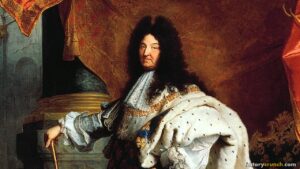
The French Revolution was a major event in the history of Western societies, and had a profound effect on the world today. Beginning in 1789, the French Revolution saw the French people overthrow their absolute monarchy and bring about a republic that was based on the principles of equality, liberty and fraternity.
 FactsthatCrunch
Where did the phrase 'Liberté, Egalité, Fraternité' first appear in official French documents during the French Revolution?
The phrase began appearing in official use during the revolutionary period, and the Declaration of the Rights of Man, adopted on August 26th, 1789, put liberty and equality into French law; fraternity joined them as the republic's motto in the 1790s. The phrase was notably promoted by Maximilien Robespierre in a speech to the Jacobin Club in December 1790, which helped push it toward wider official use. It was not confirmed as France's permanent national motto until the constitution of 1958.
France Before the French Revolution
Before the French Revolution, French society was structured in the relics of feudalism, in a system known as the Estates System. The estate to which a person belonged was very important because it determined that person’s rights and status in society. Usually a person remained in one estate for his or her lifetime, and any movement upwards in the estate system could take many generations. The first estate was the clergy, the second estate was the nobility and the third estate was the peasants. While the peasants made up the vast majority of the people in French society, over 96%, they lacked any political or economic power.
By 1789, this began to cause anger amongst the peasant class, as many of them began to question the authority of their monarch, Louis XVI. Additionally, several other elements combined to cause the French Revolution to begin. For example, in the decades before the French Revolution, Europe was being transformed by the Age of EnlightenmentAn intellectual movement in which thinkers and philosophers challenged basic foundations of society, including government and liberty.. The Enlightenment involved an intellectual movement, in which famous thinkers and philosophers challenged some of the basic foundations of society, including: role of the government, basic human nature, sources of authority and ideas centered on liberty. These new ideas caused people in France to begin questioning the role and authority of Louis XVI and inspired French commoners to work to overthrow their absolute monarch.
FactsthatCrunchUnder France's Estates System before the Revolution, which groups held the most power, and which had almost none?
Tap a point to read its detail.
Louis XVI Called the Estates-General of 1789
The revolution itself unfolded as a series of significant events that displayed the growth of the peasant class and the fall of the French monarchy. The first step of the revolution began in 1789 when Louis XVI called the Estates-General of 1789, a meeting of representatives of each of the three estates. Louis XVI called the meeting in order to try to solve the economic crisis facing the country at the time. Unfortunately, the three estates could not decide how to vote during the Estates-General and the meeting failed.
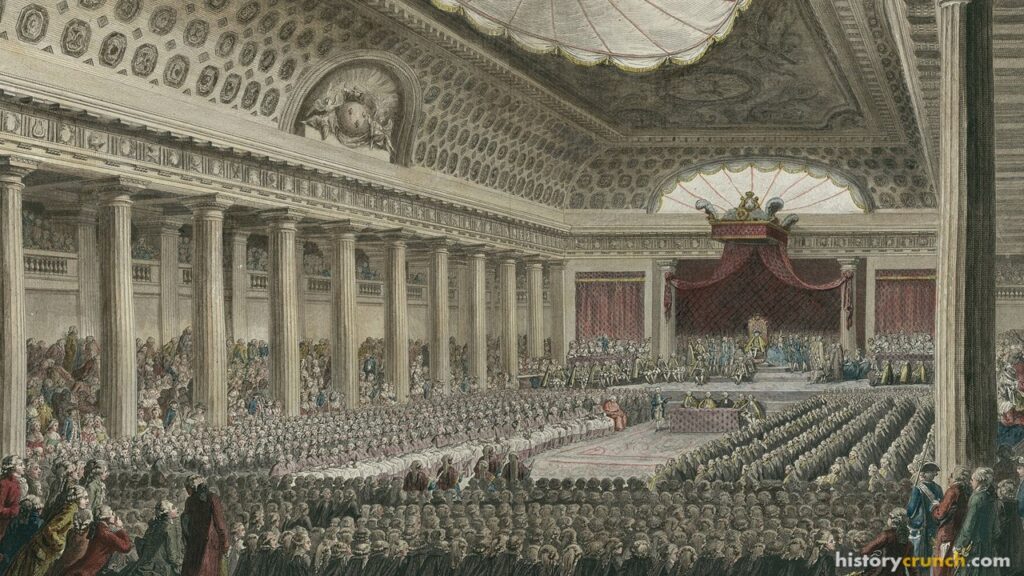 FactsthatCrunch
Why did the Estates-General of 1789 meet, who was in the room, and why did it fall apart?
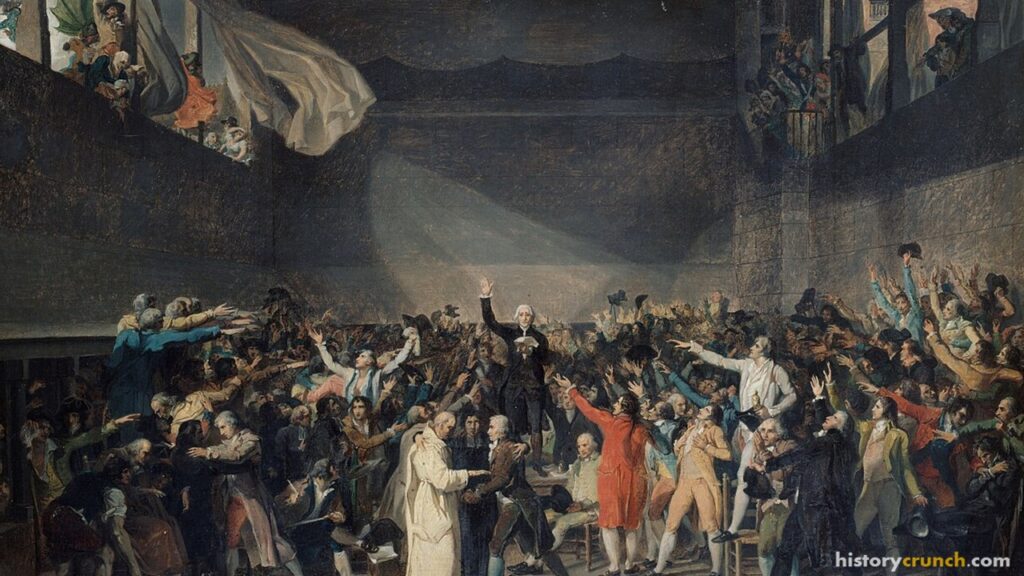
Tennis Court Oath
Angered with the inaction of the Estates-General and upset with their position in French society, many of the third estate representatives left and met to take the Tennis Court Oath. It was here that the third estate established the National Assembly, the new revolutionary government, and pledged “not to separate, and to reassemble wherever circumstances require, until the constitution of the kingdom is established.”
Storming of the Bastille
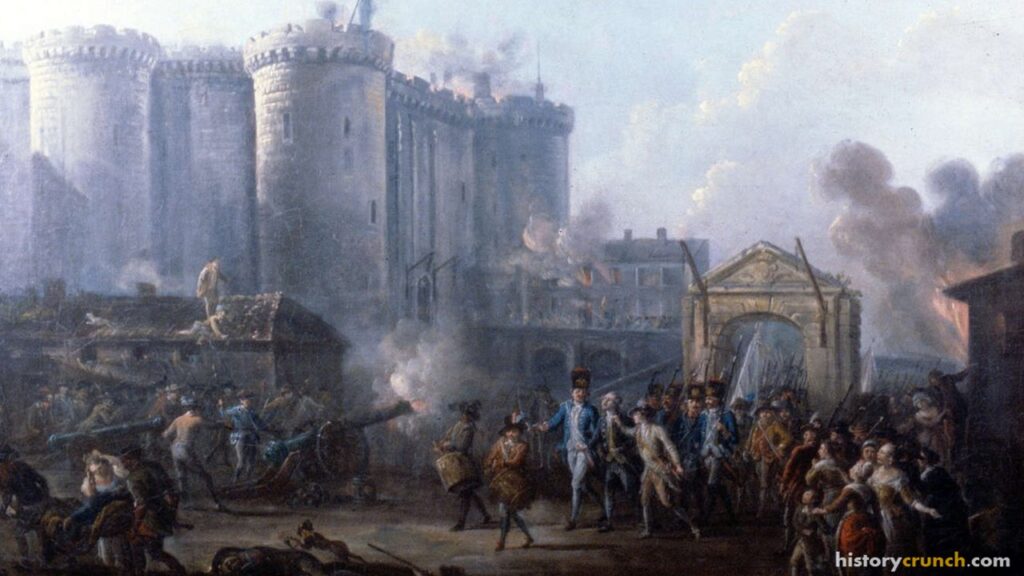
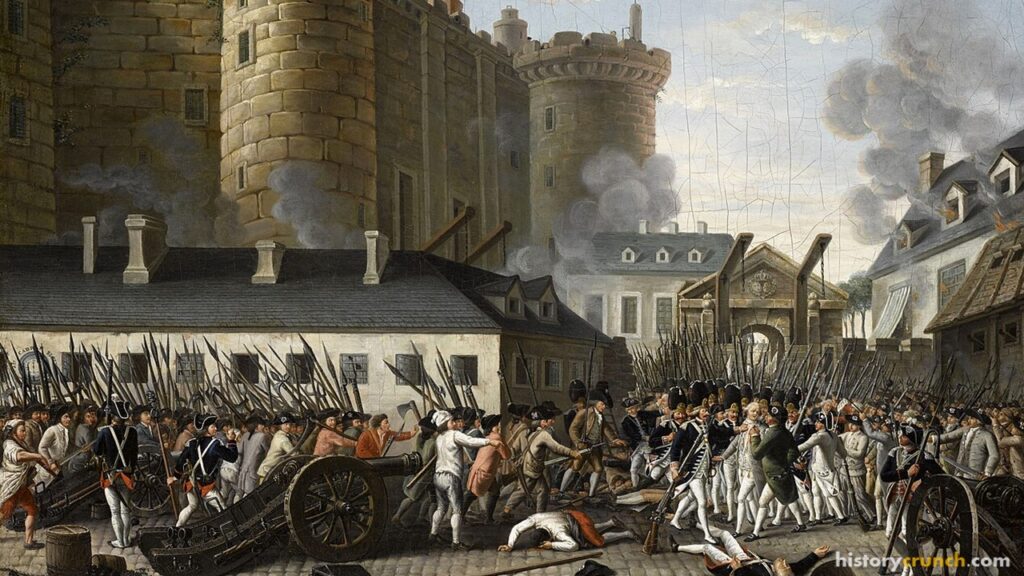
Next, the French Revolution took a violent turn when the Parisian citizens carried out the storming of the Bastille. The Bastille was a prison fortress in Paris that the French monarchy used to store weapons and imprison enemies of the state. For many the Bastille symbolized the king’s absolute authority. On July 14th, 1789 a Paris mob stormed the Bastille and demolished it brick by brick with their hands. Considered by many historians to be the “spark” of the French Revolution, the storming of the Bastille was a significant event because it saw the third estate citizens successfully challenge the authority of Louis XVI.
FactsthatCrunchJust as we were about to fire, the small drawbridge was lowered; it was promptly filled by a crowd of people…
Jean-Baptiste Humbert, Paris watchmaker · the Bastille, Paris · July 14th, 1789
Humbert was a Paris watchmaker who joined the attack on the Bastille and helped bring two cannons through the first gate and aim them at the drawbridges. His words describe the moment the fortress actually fell: the garrison lowered the small drawbridge, a veteran soldier opened the gate, and the crowd walked in, so the Bastille was taken by surrender, not by knocking down its walls. Jean-Pierre Houel's 1789 watercolor of the capture, kept at the Bibliotheque nationale de France, shows the same story, with the arrest of governor de Launay at the center of the scene.
Declaration of the Rights of Man
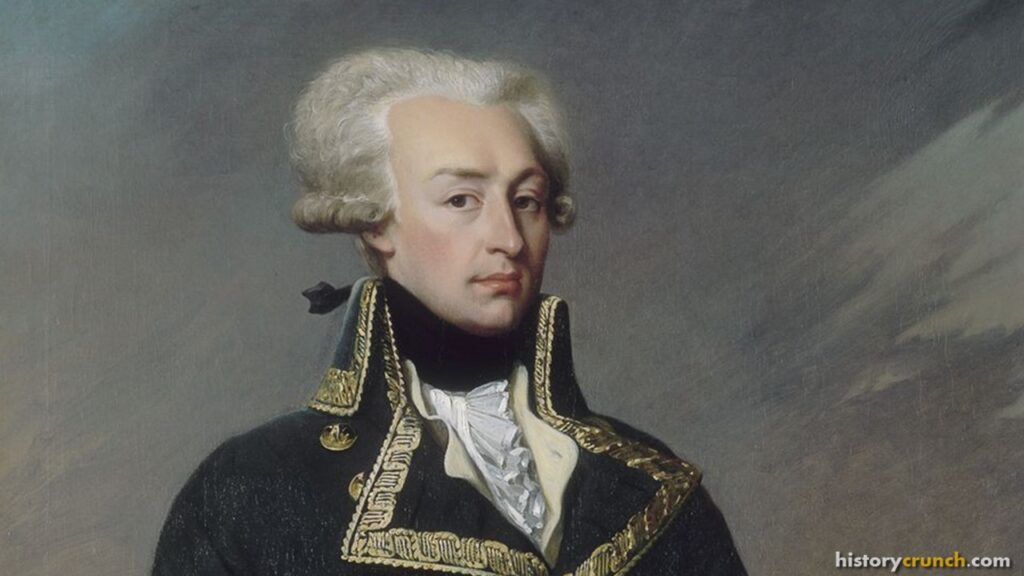
Then, on August 26th, 1789, the National AssemblyThe new revolutionary government established by third estate representatives after they took the Tennis Court Oath. adopted the Declaration of the Rights of Man and of the Citizen. The Declaration was written by Marquis de Lafayette, a French military officer who fought in the American Revolution and was inspired by the ideals of liberty expressed by Thomas Jefferson in the Declaration of Independence. The Declaration of the Rights of Man and of the Citizen was vitally important to the French Revolution because it directly challenged the authority of Louis XVI. For example, the Declaration of the Rights of Man and of the Citizen set out a series of individual rights protected by law. Today, many historians view the Declaration of the Rights of Man and of the Citizen as an important document in both the history of the French Revolution and the history of democracy and individual rights in the world.
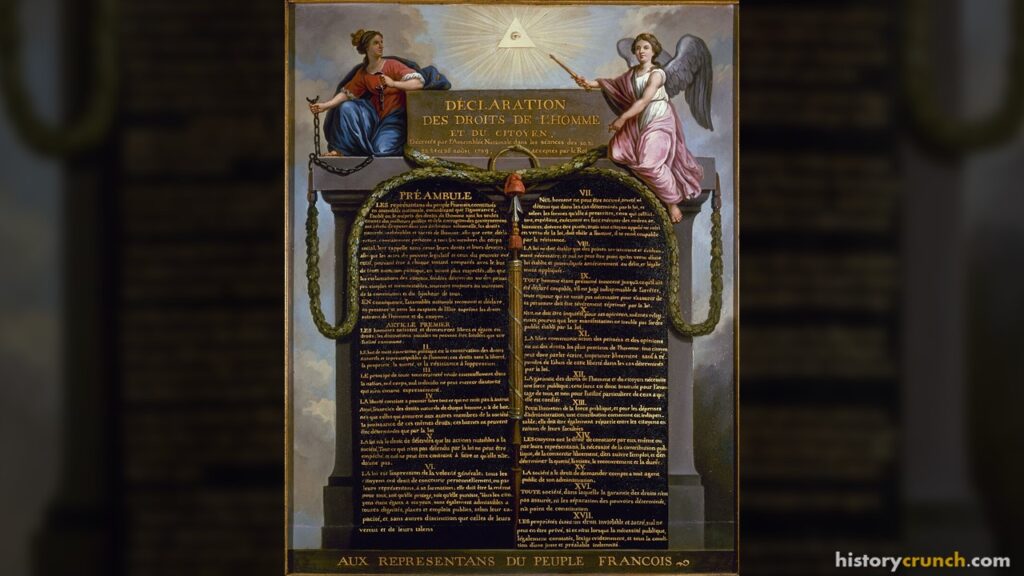 FactsthatCrunch
Lafayette worked closely with Thomas Jefferson in 1789 to write the Declaration of the Rights of Man and of the Citizen, a document that set out natural rights and limits on government power for France. His writing drew directly on American republican ideas and shaped French political thought for generations.
Parisian Women March to Versailles
The next major event of the French Revolution saw a mob of Parisian women march to the Palace of Versailles in order to force the royal family to return to Paris. Louis XVI and his family had left Paris for Versailles earlier on in the revolution. On the 5th of October 1789, the group of working class women were protesting the price of bread and on the 6th of October they marched from Paris to Versailles to confront the king. Upon arriving, the women killed several of the king’s guards and forced the royal family to return to Paris with them. From this point on, Louis XVI and his family were effectively held prisoners by the revolutionaries and citizens of France.
Returned to Paris, Louis XVI and his wife Marie Antoinette were held prisoners in the Tuileries Palace, while the revolutionaries transformed the country. The National Assembly had passed the Declaration of the Rights of Man and of the Citizen which had limited the authority of Louis XVI. Seeing his power dwindle, and fearing the continued growth of the revolutionaries, Louis XVI and his family attempted to flee the country.
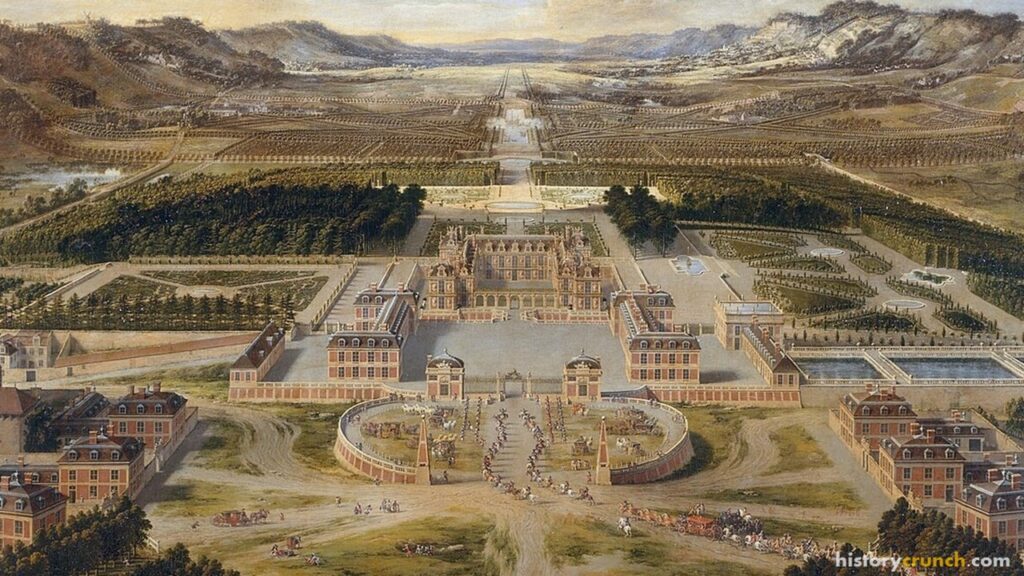 FactsthatCrunch
It is the morning of October 6th, 1789, and you are Louis XVI, king of France. A large crowd of Parisian women and National Guard soldiers has marched overnight from Paris to your palace at Versailles, angry about bread shortages and demanding that you move to Paris where they can watch you. You are the monarch at the center of the French Revolution, and the choice you make in the next few minutes will decide whether the royal family survives the day and what power you will have going forward.
Louis XVI and Family Try to Flee
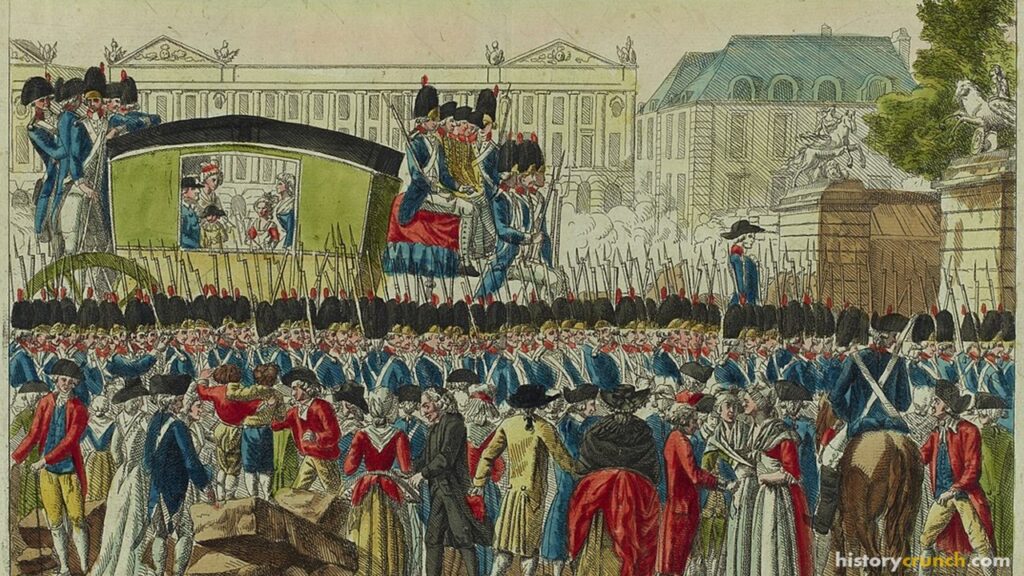
On the night of June 20th, 1791, Louis XVI, Marie Antoinette and their children fled the Tuileries Palace to try to make it to Austria, in order to gather support from Marie Antoinette’s country of birth. The family snuck out of the palace in Paris disguised as servants and took a carriage throughout the French countryside towards France’s border with Austria. When the carriage arrived in the small French town of Varennes, it was stopped by a town official and the royal family was recognized. The revolutionaries forced Louis XVI and his family to return to Paris and removed the little remaining authority he still had. Louis XVI was, from that point on, viewed as a traitor to the revolution.
 FactsthatCrunch
On the night of June 20th, 1791, Louis XVI and his family secretly left the Tuileries Palace in Paris, disguised as servants, and tried to reach Austria to gather foreign support against the revolution.
By mid-1791, Louis XVI had already lost most of his power as the revolution reshaped France. His attempt to flee to Austria convinced the French public that he could not be trusted to accept the new order, and it turned opinion sharply against him.
Execution of Louis XVI
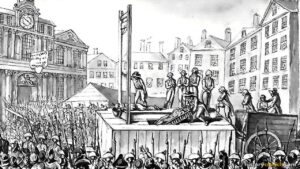
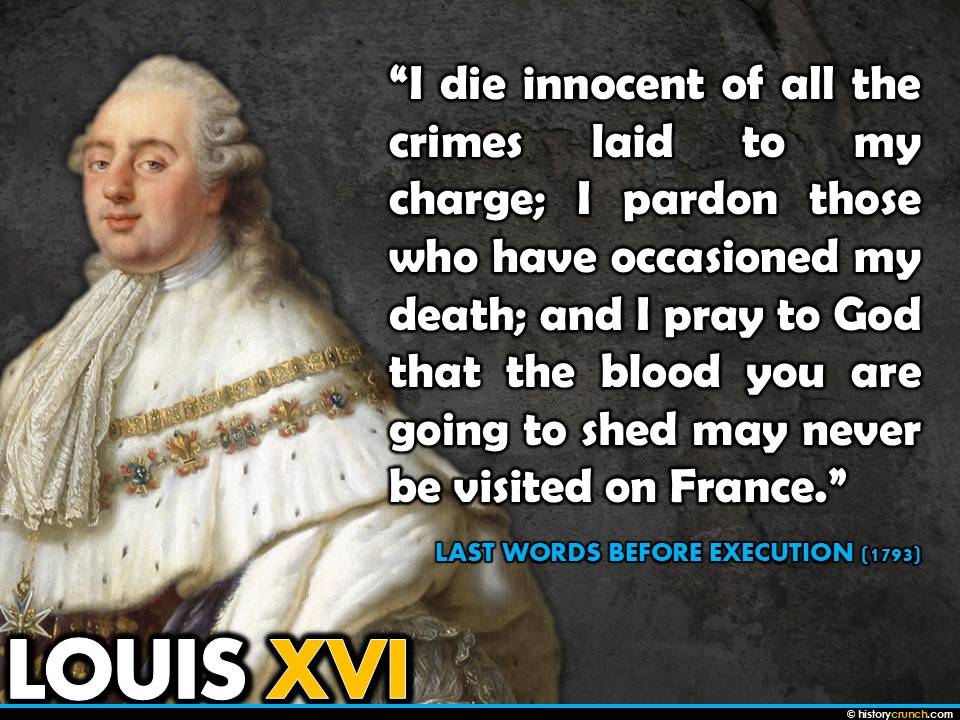
The National Convention took over power from the Legislative Assembly and was much more radical in nature. As such, the National Convention moved quickly to put Louis XVI on trial. Louis XVI was charged with treason due to his attempt to flee the country and was convicted by the National Convention. The famous revolutionary, Maximilien Robespierre, commented that “Louis must die so the nation may live.” Louis’ punishment was death and on, January 21st, 1793, Louis XVI was beheaded by guillotine.
 FactsthatCrunch
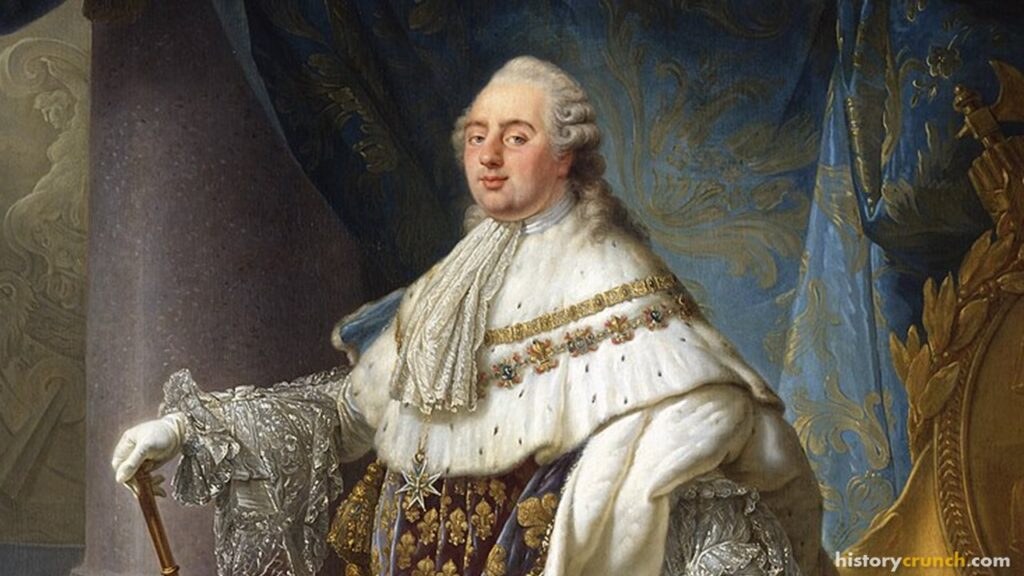
Louis XVI ruled France during a period of deep financial crisis and growing public anger, and his decisions, including funding the American War of Independence and failing to reform the tax system, helped push France toward revolution. His attempt to flee to Austria on June 20th, 1791 was cut short when his carriage was stopped at Varennes, and that failure cost him his remaining authority and ultimately his life.
Reign of Terror
In the months that followed, the National Convention declared war against several European nations, including: Britain, the Dutch Republic and Spain. As well, the National Convention created the Committee of Public Safety in April of 1793, which was tasked with protecting the new French republic against foreign attack and internal revolts. However, the Committee of Public Safety would be best known for its role in the Reign of Terror.
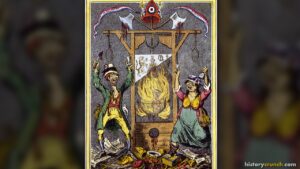
The Reign of Terror occurred from September of 1793 until July of 1794, and was a time period of extreme violence and paranoia. The more radical revolutionaries, the JacobinsThe more radical revolutionaries who used their power during the Reign of Terror to stop any perceived threat to the revolution., were concerned that foreign and internal groups would threaten the revolution and used their power to stop any perceived threat. The paranoia would cause the deaths of tens of thousands with most being beheaded by guillotineA device used to behead people, used frequently during the French Revolution to execute those convicted of crimes.. It was during this time that the queen, Marie Antoinette, was tried and executed.
Execution of Marie Antoinette
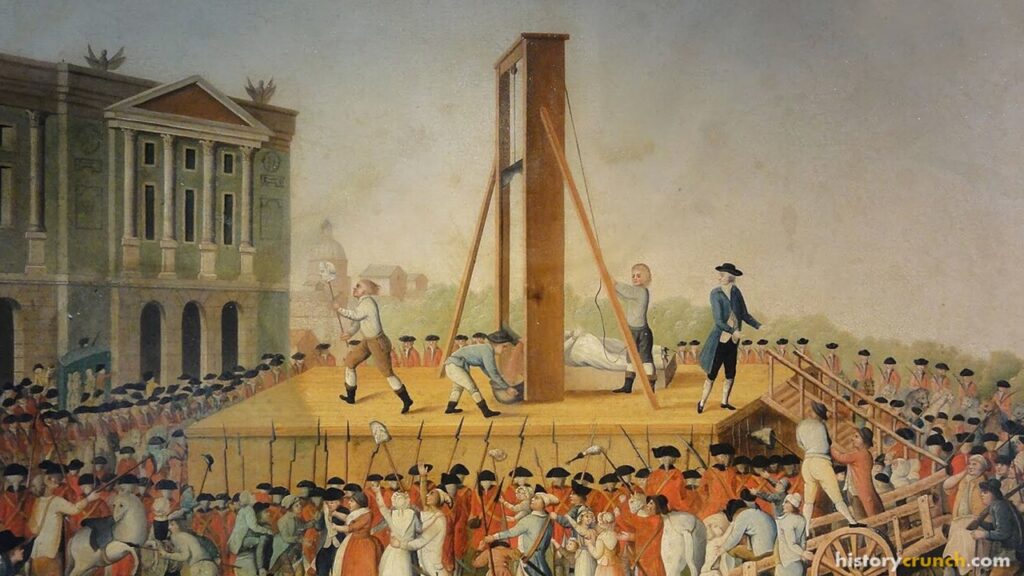
Marie Antoinette was originally from Austria and married to Louis XVI at a young age. During her time as the queen of France, the people would often blame her specifically for France’s financial woes. This reputation earned her the name “Madame Deficit”. By the time her execution approached in October of 1793, she was imprisoned by the revolutionaries and without her husband as he had been executed earlier that year. She was officially charged with treason on October 14th of 1793 and beheaded by guillotine on the 16th of October.
 FactsthatCrunch
Key takeaways
The phrase comes from Rousseau's 'Confessions,' written years before Marie Antoinette had any role at the French court, and Rousseau never named her as the speaker.
The story stuck because it fit the public image of Marie Antoinette as out of touch with the hunger and poverty that drove the Revolution.
Historians who have studied her private letters and court records have found no evidence she said anything like it.
The Rise and Fall of Maximilien Robespierre
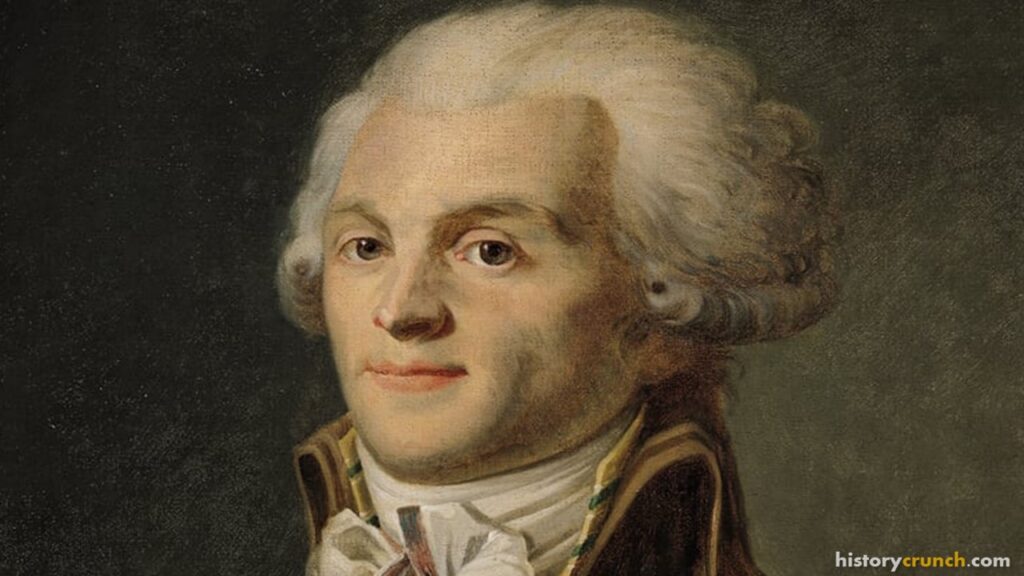
After the execution of Marie Antoinette, the French Revolution continued down a violent path as the Reign of Terror grew and became even more extreme. It was at this time that Maximilien Robespierre began his own rise to power within the revolution. For many months throughout 1794, Robespierre battled against other revolutionaries in the National Convention in relation to each of their loyalties towards the revolution itself. It is during this time that many prominent revolutionaries within the National Convention were guillotined for their perceived betrayal to the revolution and Robespierre maneuvered his way to the head of the convention. Finally, on June 4th, 1794, Robespierre was elected the president of the National Convention.
Robespierre then declared a new religion called the Supreme Being and carried out a series of celebrations based around the new faith. On June 8th, 1794, Robespierre oversaw the Supreme Being Festival in Paris that would be celebrated based on a new calendar. Some members of the National Convention and Committee of Public Safety were visibly upset with the celebration and the actions of Maximilien Robespierre. In fact, Robespierre had begun to make many enemies within the revolution after he claimed to have a list of people that were enemies of the revolution. By threatening to release the names, Robespierre angered others who began to work against him and accuse him of acting like a dictator.
Based on the actions of Robespierre the National Convention voted to arrest him. On July 28th, 1794, soldiers stormed into where Robespierre was staying. As the soldiers arrived, Robespierre attempted to commit suicide by gunshot to the head, but was instead only injured in the jaw, shattering it. For the rest of the day, Robespierre was held captive until he was guillotined without a trial that afternoon.
End of the French Revolution
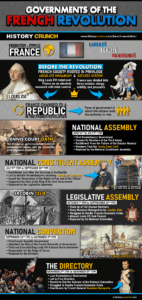
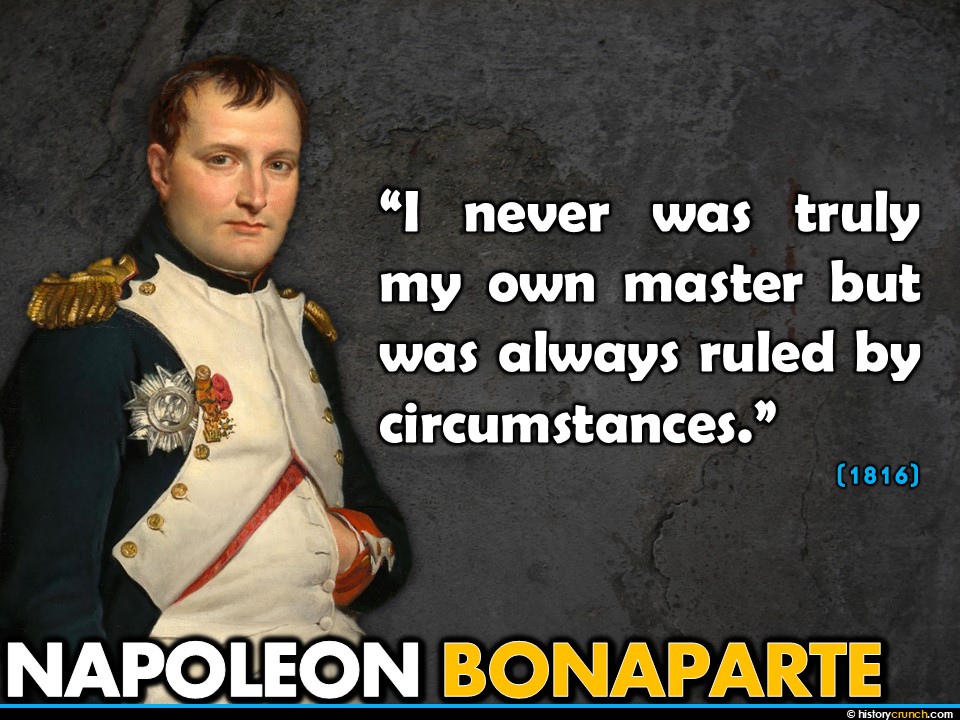
After the execution of Robespierre and the excess of the Reign of Terror, the National Convention was replaced by the Directory in 1795. The DirectoryThe government of five members called directors that replaced the National Convention in France in 1795. was made up of five members called directors who held great power. For the four years that the Directory was in power, Napoleon Bonaparte was a French military general that played a vital role in stopping uprisings in Paris and in foreign battles. In 1799, Napoleon Bonaparte carried out an overthrow of the Directory. In November of 1799, soldiers loyal to Bonaparte took control over key points in Paris and began the process of ending the reign of the Directory. By the end of the first day, Bonaparte had complete control over the country and appointed himself First Consul. The French Revolution was over.
 FactsthatCrunch
French Revolution – Infographic
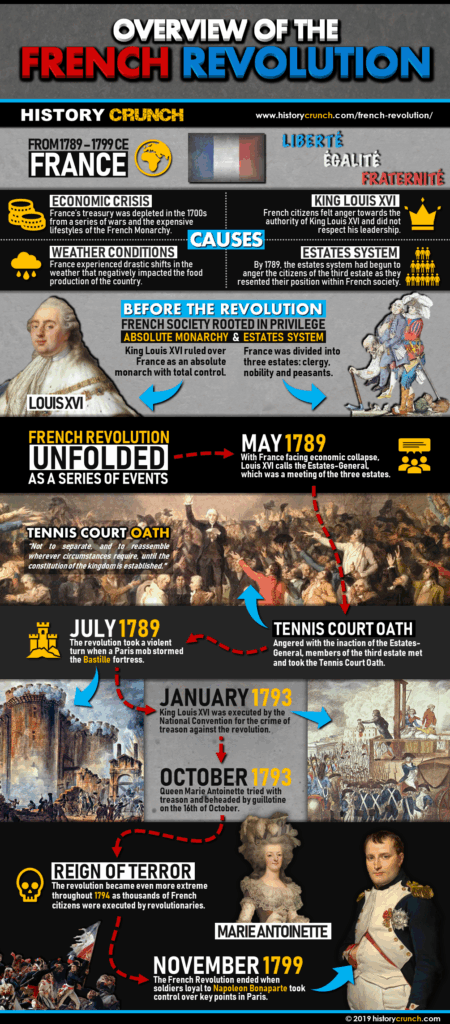
French Revolution timeline · 1789 – 1799
Key Vocabulary
Estates System
Absolute monarchy
Age of Enlightenment
National Assembly
Guillotine
Jacobins
Directory
Frequently Asked Questions
When did the French Revolution start and end?
The French Revolution began in 1789 and ended in 1799. It started when Louis XVI called the Estates-General to fix a money crisis. It ended when Napoleon Bonaparte overthrew the Directory and named himself First Consul.
What were the main causes of the French Revolution?
The French Revolution was caused by an unfair Estates System, a money crisis, and new ideas from the Enlightenment. Peasants made up most of society but held no political or economic power. Enlightenment thinkers made people question the authority of King Louis XVI.
What was the storming of the Bastille?
The storming of the Bastille happened on July 14th, 1789, when a Paris mob attacked the prison fortress. The Bastille held weapons and stood as a symbol of the king’s absolute power. Many historians call this event the “spark” of the French Revolution.
Why was Louis XVI executed?
Louis XVI was executed for treason after he tried to flee France in 1791. His escape was stopped in the town of Varennes, and he was seen as a traitor. The National Convention convicted him, and he was beheaded by guillotine on January 21st, 1793.
What was the Reign of Terror?
The Reign of Terror was a violent period from September 1793 to July 1794. The radical Jacobins feared threats to the revolution and killed tens of thousands, mostly by guillotine. Queen Marie Antoinette and later Maximilien Robespierre were both executed during this time.
Cite This Article
To cite this article as a source, use one of the formats below.
MLA: Beck, Elias. “French Revolution: A Detailed Overview.” HistoryCrunch, 22 September 2026, https://historycrunch.com/french-revolution-overview/.
APA: Beck, E. (2026). French Revolution: A Detailed Overview. HistoryCrunch. https://historycrunch.com/french-revolution-overview/
Chicago: Beck, Elias. “French Revolution: A Detailed Overview.” HistoryCrunch. September 22, 2026. https://historycrunch.com/french-revolution-overview/
Sources
- Liberty, Equality, Fraternity (revolution.chnm.org), George Mason
- Fordham Modern History Sourcebook