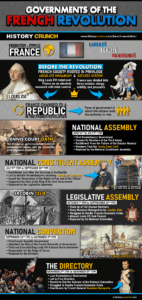
France before the French Revolution was an absolute monarchyA government where a king or queen holds complete control over all aspects of society with no limits on power. ruled by King Louis XVI. French society was based on the Estates System, with power concentrated in the hands of the king and the privileged First and Second Estates. The country faced a severe financial crisis due to years of war, lavish royal spending, and an unfair tax system that placed the burden mostly on the members of the Third Estate. Together, these issues combined to create the perfect conditions for revolutionary uprisings, which ultimately led to the events of the French Revolution.
 FactsthatCrunch
What Was the French Revolution?
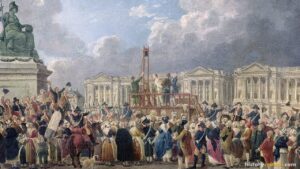
The French Revolution was a major event in the history of Western societies, and had a profound effect on the world today. Beginning in 1789, the revolution saw the French people overthrow their absolute monarchy and bring about a republic that was based on the principles of equality, liberty and fraternity. As the revolution unfolded, the country went through a dramatic transformation, and changed completely from its earlier form.
France Before the French Revolution – Estates System
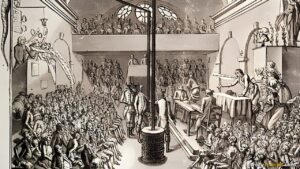
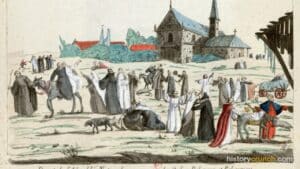
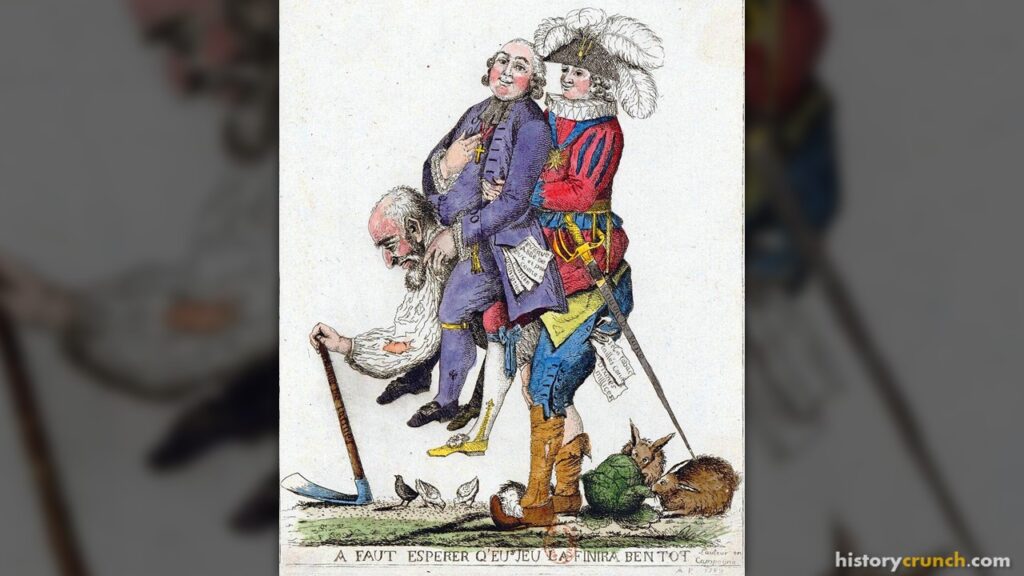
Before the French Revolution, French society was structured on the relics of feudalism, in a system known as the Estates System. The estate to which a person belonged was very important because it determined that person’s rights and status in society. Usually a person remained in one estate for his or her lifetime, and any movement upwards in the estate system could take many generations. The first estate was the clergy, the second estate was the nobility and the third estate was the peasants. While the peasants made up the vast majority of the people in French society, over 96%, they lacked any political or economic power. In contrast, the clergy and the nobility controlled the majority of the land in France and held all of the important positions in the government, military and church. This is the period before the French Revolution and is a time known as the Ancien RegimeThe period before the French Revolution when France was ruled by absolute monarchy and the estates system..
France Before the French Revolution – Absolute Monarchy
Besides being based on feudalismA medieval system where society was organized around land ownership and a rigid hierarchy of power., French society was also centered on the political structure of absolute monarchy. An Absolute Monarchy is a form of government that was popular in early modern Europe and up until the end of the 18th century. It involved society being ruled over by an all-powerful king or queen. The monarch had complete control over all aspects of the society, including: political power, economics, and all forms of authority. Absolute monarchies often contained two key features: hereditary rulesA system where a monarch receives their position by birth as part of a long family line of rulers. and divine right of kingsThe belief that a monarch’s power comes directly from God, removing the people’s ability to challenge their rule.. Hereditary rule meant that the monarch received their position due to their birth and as one in a long family line of monarchs. As well, early modern European absolute monarchs included the practice of divine right of kings, meaning that the monarch derived his or her power from God. This furthered the power of a monarch because it ensured that the king or queen did not get their power from the people, and therefore the people had no control or say over the monarch’s rule.
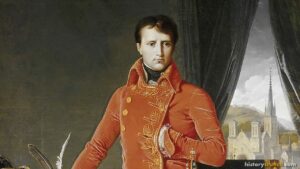
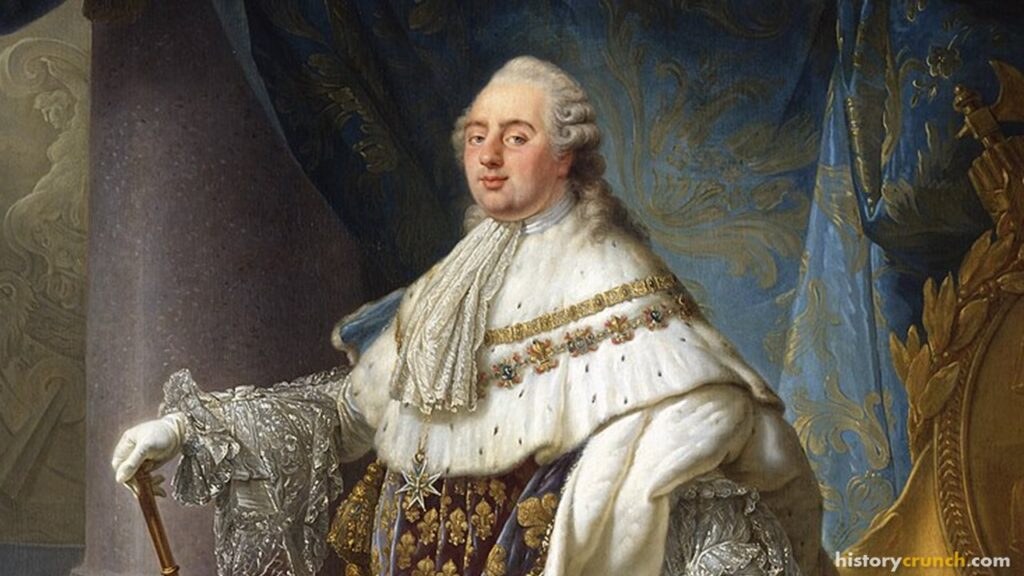
Louis XVI was the absolute monarch of France in the years leading up to the French Revolution. At the beginning of Louis XVI’s reign, France was under the Ancien Regime which was a system based on absolute monarchy and the feudal traditions of the estates systemA social structure dividing French society into three groups that determined a person’s rights and status.. The Age of Enlightenment, which had been occurring throughout the 1700s began to introduce ideas to people in Europe that opposed these principles and were instead based on liberty and equality. The spreading ideas of the EnlightenmentAn intellectual movement throughout the 1700s that spread ideas of liberty and equality opposing absolute rule. would eventually lead to the outbreak of the French Revolution, which would ultimately result in the end of the French monarchy and the death of Louis XVI.
 FactsthatCrunch
What did the divine right of kings mean for an absolute monarch's power?
Key Vocabulary
Estates System
Feudalism
Ancien Regime
Absolute monarchy
Hereditary rule
Divine right of kings
Enlightenment
Frequently Asked Questions
What was the Estates System in France?
The Estates System divided French society into three groups based on rank and status. The First Estate was the clergy, the Second Estate was the nobility, and the Third Estate was the common people. A person’s estate decided their rights, and most people stayed in the same estate for life.
Who ruled France before the French Revolution?
King Louis XVI ruled France as an absolute monarch before the French Revolution. This meant he held complete control over politics, the economy, and every form of authority. His reign ended with the fall of the monarchy and his own death during the revolution.
What was the Ancien Regime?
The Ancien Regime was the name for the political and social system in France before the revolution. It was built on absolute monarchy and the feudal traditions of the Estates System. This order gave power to the king and the privileged First and Second Estates.
Why was the tax system unfair before the French Revolution?
The tax system was unfair because it placed most of the burden on the Third Estate. The clergy and nobility controlled the majority of the land yet paid little in taxes. This unequal treatment added to the anger that helped spark the revolution.
What was the divine right of kings?
The divine right of kings was the belief that a monarch got their power directly from God. This idea meant the ruler did not answer to the people for their decisions. It strengthened the monarch’s control and left the people with no say over the crown.
How did the Enlightenment affect France before the revolution?
The Enlightenment spread new ideas about liberty and equality across Europe during the 1700s. These ideas challenged the beliefs behind absolute monarchy and the Estates System. Over time they helped push the French people toward revolution.
Cite This Article
To cite this article as a source, use one of the formats below.
MLA: Beck, Elias. “France Before the French Revolution: A Detailed Summary.” HistoryCrunch, 22 September 2026, https://historycrunch.com/france-before-the-french-revolution/.
APA: Beck, E. (2026). France Before the French Revolution: A Detailed Summary. HistoryCrunch. https://historycrunch.com/france-before-the-french-revolution/
Chicago: Beck, Elias. “France Before the French Revolution: A Detailed Summary.” HistoryCrunch. September 22, 2026. https://historycrunch.com/france-before-the-french-revolution/
Sources
- William Doyle, The Oxford History of the French Revolution.
- Liberty, Equality, Fraternity (revolution.chnm.org), George Mason