Louis XVI was the absolute monarch of France from 1774 until his death in 1793. In fact, his downfall is linked with the events of the French Revolution, which saw France turn from an absolute monarchy to a republic. Louis XVI’s life remains a reminder of the excesses of government and the dangers of social inequality.
 FactsthatCrunch
Louis XVI ruled France during a period of deep financial crisis and growing public anger, and his decisions, including funding the American War of Independence and failing to reform the tax system, helped push France toward revolution. His attempt to flee to Austria on June 20th, 1791 was cut short when his carriage was stopped at Varennes, and that failure cost him his remaining authority and ultimately his life.
Louis XVI – Early Life
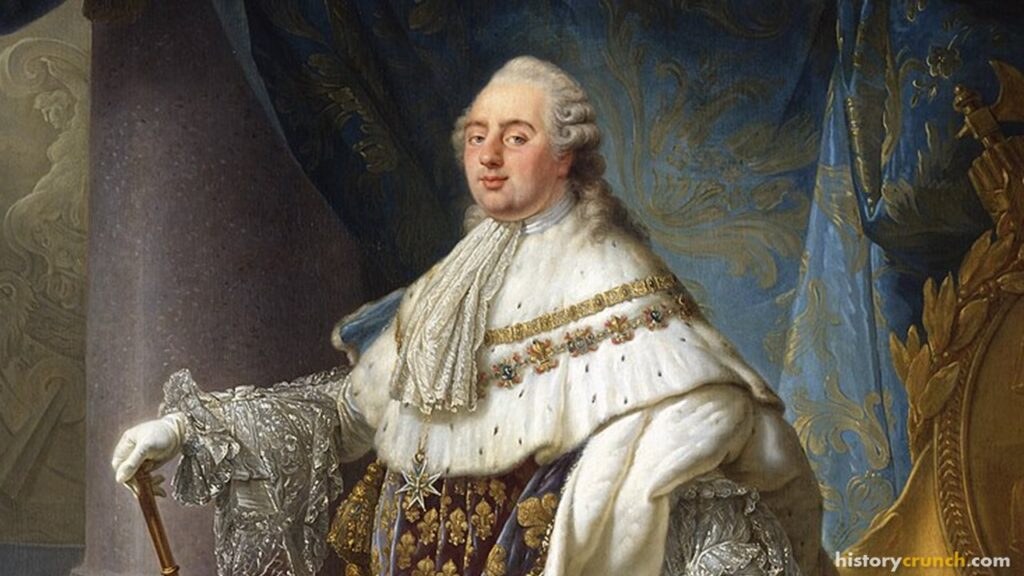
One of the most important figures of the French Revolution was Louis XVI. He was born on August 23rd, 1754 as Louis-Auguste at the Palace of Versailles in France. His father was Louis, Dauphin of France and the heir to the French throne. Louis XVI, who belonged to the Royal House of Bourbon, became King of France in 1774 when his grandfather Louis XV died. Louis XVI’s father was the next in line to the French throne but he died in 1765.
Louis received a strict education focused on history, languages, and religion but was shy, indecisive, and more interested in hobbies like locksmithing and hunting than politics.
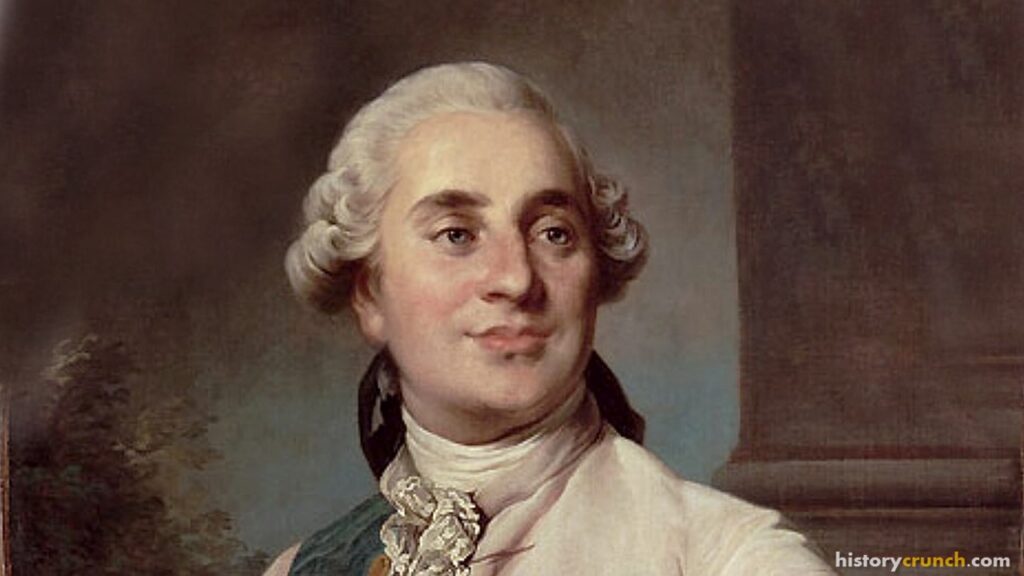
In 1770, at the age of fifteen, Louis XVI married Marie Antoinette, the fourteen year old daughter of the Emperor and Empress of Austria. The marriage was arranged to strengthen the alliance between France and Austria. Upon her marriage to Louis she became the DauphineThe title given to the wife of the heir to the French throne. of France. The personalities of Louis XVI and Marie Antoinette differed tremendously. Louis XVI was introverted, shy and indecisive. As well, he enjoyed solitary activities, such as reading and metalwork. Whereas, she was outgoing and craved social encounters such as parties.
 FactsthatCrunch
Key takeaways
Louis XVI married Marie Antoinette in 1770 when both were teenagers, and the match was arranged by their families for political reasons, not personal ones.
The marriage was meant to tie France and Austria together as allies, a goal set by the royal courts rather than by the couple themselves.
Marie Antoinette's title after the wedding was Dauphine of France, meaning she was the wife of the heir to the French throne, not yet a queen.
Louis XVI – King of France
At the beginning of Louis XVI’s reign, France was under the Ancien Regime which was a system based on absolute monarchy and the feudal traditions of the estates system. The Age of Enlightenment, which had been occurring throughout the 1700’s began to introduce ideas to people in Europe that opposed these principles and were instead based on liberty and equality. The spreading ideas of the EnlightenmentAn intellectual movement across 1700s Europe that promoted ideas of liberty and equality against traditional authority. would eventually lead to the outbreak of the French Revolution, which would ultimately result in the end of the French monarchy and the death of Louis XVI.
Louis XVI’s downfall was also caused by the economic crisis that faced France throughout the late 1700’s. For example, during the American War of Independence against Britain, France allied itself with the United States and helped support the American war efforts. Louis XVI’s support of the war was expensive and caused the country to push itself into bankruptcy. This action by Louis XVI proved costly, as his decision to assist in the war would eventually cause him to face a financial crisis in his own country as the treasury of France was drained. As France slipped into crisis, Louis XVI tried to solve the country’s financial woes by forcing increased tax rates on the citizens, including new taxes for the nobility. However, he did not anticipate the consequences of this decision as the French nobility worked to block his plans and the third estate’s anger with the absolute monarchy of the king grew more intense.
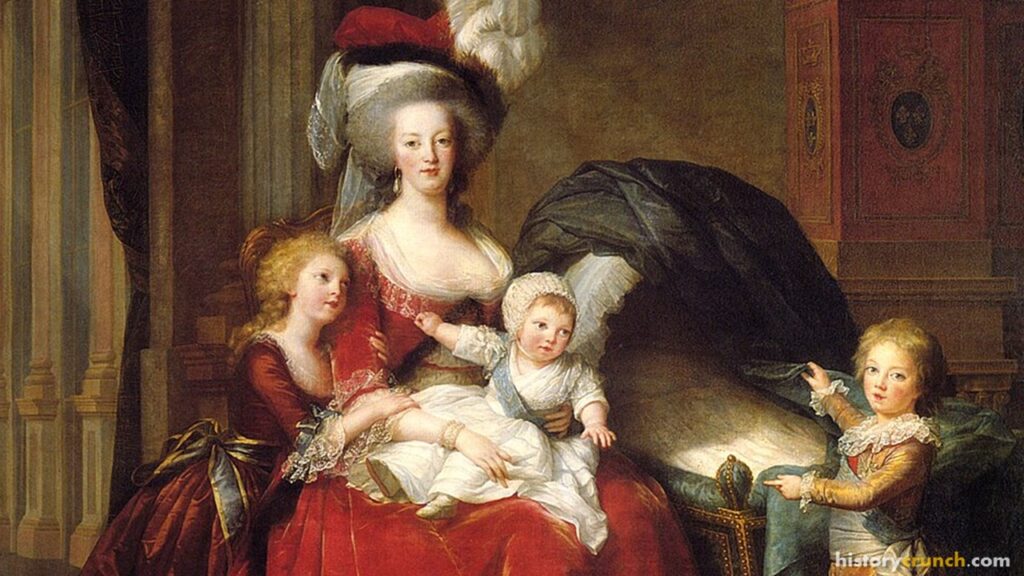
The peasants of the third estate resented the wealth and privilege of the king and queen and viewed the cost of the monarchy as expensive and wasteful, while they suffered under the estates system. As well, rumors of the expenses of the royal family, especially Marie Antoinette, created anger among the working class and helped spark the violence of the revolution.
 FactsthatCrunch
Louis XVI chose to support the American War of Independence against Britain, spending large sums of money that France could not afford and draining the royal treasury.
When Louis XVI came to power in 1774, France was already under financial pressure. His decision to fund American forces against Britain made that pressure much worse and set off a chain of political events that ended the French monarchy.
Louis XVI – French Revolution
In order to try to solve the crisis, Louis XVI called the Estates-General in May of 1789. The Estates-GeneralA formal meeting of representatives from France’s three social classes—clergy, nobility, and peasants—called to address a crisis. was a meeting of the three estates within French society which included the clergy, nobility and the peasant classes. Louis XVI’s ministers, including the popular Jacques Necker, spoke about the financial situation facing the country but the meeting was doomed as the representatives of the three estates could not decide how to carry out the vote. Eventually, the members of the third estate left the Estates-General and took the Tennis Court Oath. Next, angry Parisians stormed the Bastille, a prison fortress that, for the working class, represented the authority of the king. Louis did not recognize the significance of the storming of the Bastille and failed to respond to the early stages of the French Revolution. In fact, he and his family left Paris at this time and went to the Palace of Versailles, which led to the next major event of the French Revolution.
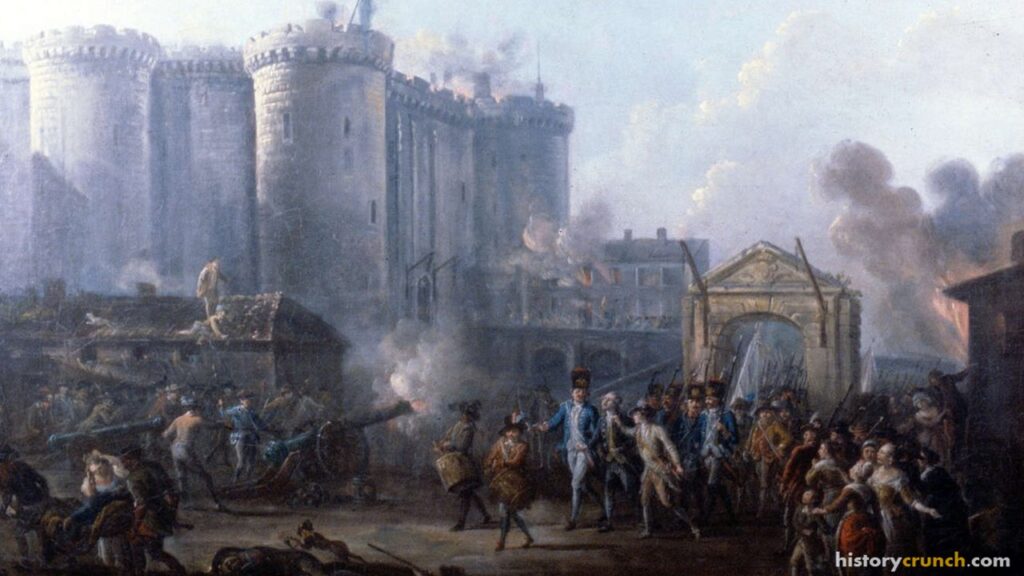
On the 5th of October 1789, a group of working class women were protesting the price of bread and on October 6th they marched from Paris to Versailles to confront the king. Upon arriving, the women killed several of the king’s guards, putting their severed heads on pikes, and forced the royal family to return to Paris with them. In particular, the women were angered with the king’s failure to respond to the financial hardships facing the citizens of the third estate.
Returned to Paris, Louis XVI and his wife Marie Antoinette were held prisoner in the Tuileries Palace, while the revolutionaries transformed the country. The National Assembly had passed the Declaration of the Rights of Man and of the Citizen which had limited the authority of the king. Seeing his power dwindled, and fearing the continued growth of the revolutionaries, Louis XVI and his family attempted to flee the country.
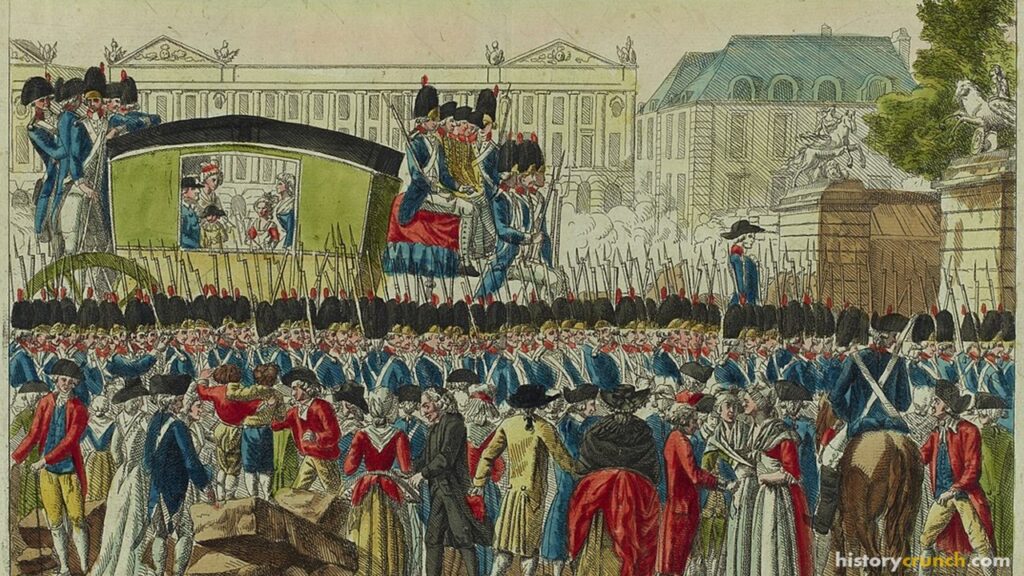
On the night of June 20th, 1791, Louis XVI, Marie Antoinette and their children fled the Tuileries Palace to try to make it to Austria, in order to gather support from Marie Antoinette’s country of birth. The royal family had been held prisoners in the palace after a mob of Parisian working class women forced the royals to return to Paris from the Palace of Versailles. Louis XVI, Marie Antoinette and their children snuck out of the palace in Paris disguised as servants and took a carriage throughout the French countryside towards France’s border with Austria. Louis XVI had hoped to arrive in Austria and spark a counter-revolutionary movement among France’s neighboring countries in order to retake control over the country. When the carriage arrived in the small French town of Varennes, it was stopped by a town official and the royal family was recognized. Louis XVI had hoped the peasants outside of Paris would still support him and the monarchy that he represented but he was mistaken. Peasants all across France were struggling under his rule and sided with the revolution more than with Louis XVI. The revolutionaries forced Louis XVI and his family to return to Paris and removed the little remaining authority he still had. Louis XVI was, from that point on, viewed as a traitor to the revolution. In fact, the attempt to flee by the royal family removed any remaining respect that the citizens of France had for the king, and the French people now felt betrayed. The failed attempt to flee would also be important in the eventual execution of Louis XVI.
 FactsthatCrunch
It is late on the night of June 21st, 1791, during the French Revolution, and you are Louis XVI, King of France. Your carriage has just been stopped by a town official in the small town of Varennes, near the border with Austria, and your family has been recognized despite your disguise as servants. You had hoped to reach Austria, gather support from neighboring countries, and lead a counter-revolutionary movement to take back control of France. If you are forced to return to Paris, the little authority you still hold will likely be gone for good.
Louis XVI – Execution
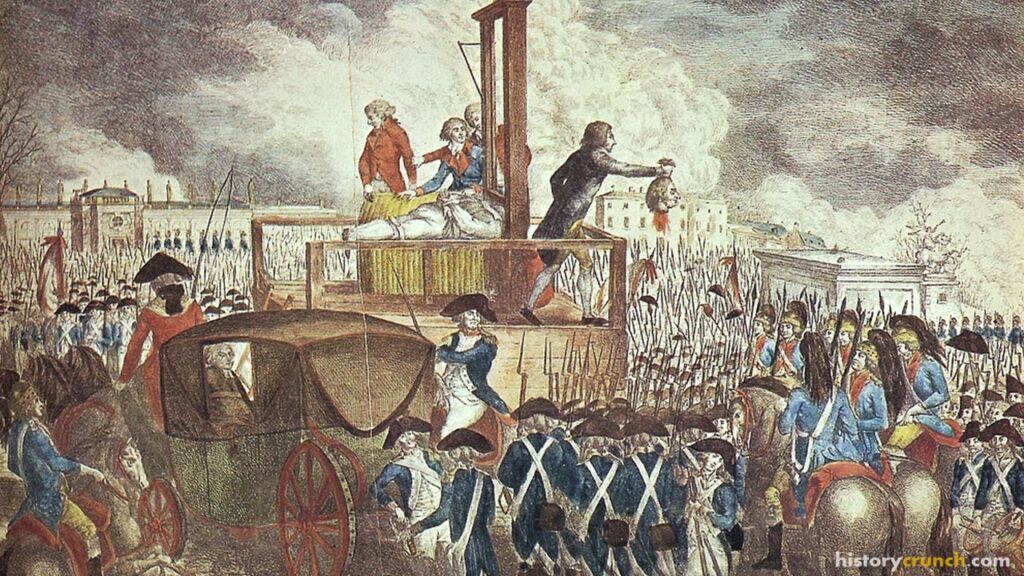
On December 11th, 1792, the king was brought before the convention to hear the charges against him. He was charged with treasonThe crime of betraying one’s country or ruler, the charge used against Louis XVI for attempting to flee France. due to his attempt to flee the country, which was viewed as him abandoning his country. Next, on January 15th, 1793, the representatives voted and passed their verdict of guilty. The famous revolutionary, Maximilien Robespierre, commented that “Louis must die so the nation may live.” Louis’ punishment was death and on, January 21st, 1793, he was beheaded by guillotineA machine with a falling blade used during the French Revolution to behead condemned people.. His final words were said to be: “I pardon those who are the cause of my death and declare myself innocent of all of the charges brought against me.” The French monarchy, which had lasted for over 1000 years, was over.
 FactsthatCrunch
What charge did the National Convention bring against Louis XVI at his trial in 1792?
The National Convention charged Louis XVI with treason, because his attempt to flee France in June 1791 was seen as abandoning and betraying his country. The representatives voted on January 15th, 1793 and returned a verdict of guilty. Maximilien Robespierre argued during the proceedings that Louis had to die for the French nation to survive.
Louis XVI – Significance
The life of Louis XVI is significant because it marked the end of absolute monarchy in France and the beginning of a revolutionary shift towards a republic. His reign highlighted the deep inequalities (economic, social and political) and financial troubles that plagued the country. Furthermore, his indecisiveness and resistance to reform contributed to the growing unrest that led to the French Revolution. His trial and execution by guillotine symbolized the power of the people to hold their ruler accountable and the changing political order of France. Louis XVI’s downfall became a turning point in world history, inspiring democratic movements across the world. As such, historians consider the French Revolution (the execution of Louis XVI) to be one of the most significant events in the history of Western ideals and values.
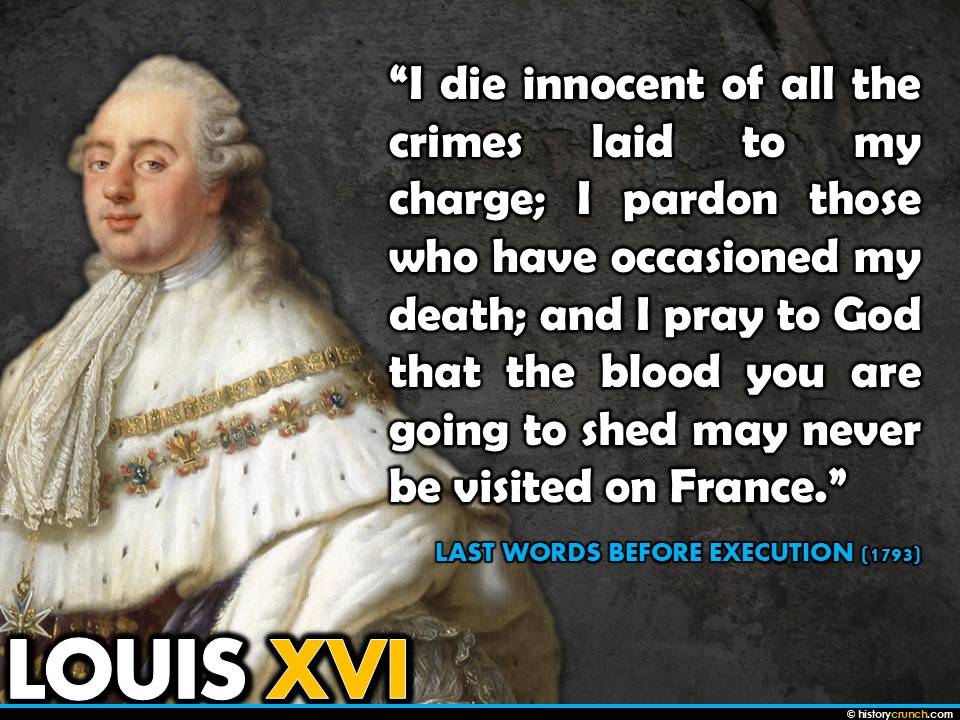 FactsthatCrunch
The trial and execution of Louis XVI in 1793 proved that a monarch could be held accountable by the people, ending the idea that French kings ruled by unchallenged divine right.
Before the trial, French kings ruled as absolute monarchs with no legal body able to judge or remove them. The National Convention charged Louis XVI with treason, held a formal vote on January 15th, 1793, and found him guilty, showing that an elected body of citizens could put a king on trial under the law.
His execution by guillotine on January 21st, 1793 ended a French monarchy that had lasted over 1,000 years and replaced it with a republic where political power came from the people, not from a royal bloodline.
The verdict set a clear example for other countries: a ruler who abandoned or betrayed the people could lose power and face punishment, helping inspire democratic movements beyond France.
Louis XVI – Infographic
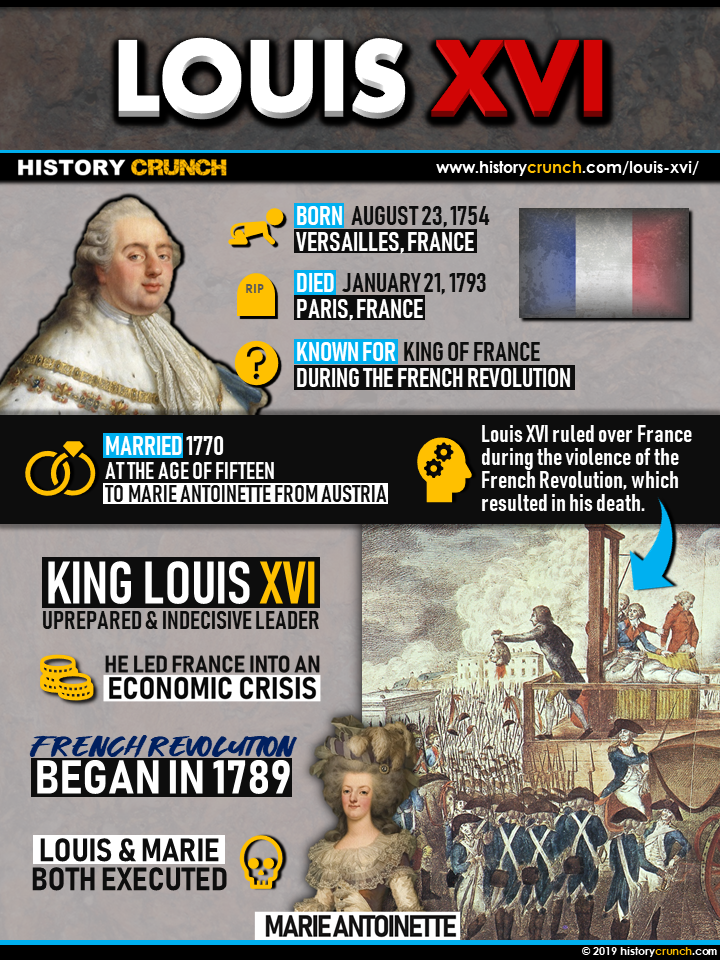
French Revolution timeline · 1789 – 1799
Key Vocabulary
Absolute monarch
Ancien Regime
Dauphine
Estates-General
Tennis Court Oath
Guillotine
Treason
Frequently Asked Questions
Why was Louis XVI executed?
Louis XVI was executed for treason after he tried to flee France in 1791. Revolutionaries saw the escape attempt as proof that he had abandoned his country. He was found guilty by the National Convention and beheaded by guillotine on January 21st, 1793.
How did Louis XVI become king of France?
Louis XVI became king in 1774 when his grandfather, Louis XV, died. His own father had been next in line but died in 1765, which moved Louis up in the order. He belonged to the Royal House of Bourbon and was born at the Palace of Versailles in 1754.
Who was Louis XVI married to?
Louis XVI married Marie Antoinette in 1770, when he was fifteen and she was fourteen. She was the daughter of the Emperor and Empress of Austria, and the marriage was arranged to link France and Austria. Their personalities clashed, since he was shy and quiet while she enjoyed parties and social life.
What caused France’s financial crisis under Louis XVI?
France fell into debt partly because Louis XVI helped fund the American War of Independence against Britain. This support drained the royal treasury and pushed the country toward bankruptcy. His efforts to raise taxes then angered both the nobility and the poor third estate.
What was the Flight to Varennes?
The Flight to Varennes was the royal family’s failed escape attempt on the night of June 20th, 1791. Disguised as servants, they tried to reach Austria to gather support against the revolution. They were recognized and stopped in the town of Varennes, then forced back to Paris as traitors.
Cite This Article
To cite this article as a source, use one of the formats below.
MLA: Beck, Elias. “Louis XVI: A Detailed Biography.” HistoryCrunch, 22 September 2026, https://historycrunch.com/louis-xvi/.
APA: Beck, E. (2026). Louis XVI: A Detailed Biography. HistoryCrunch. https://historycrunch.com/louis-xvi/
Chicago: Beck, Elias. “Louis XVI: A Detailed Biography.” HistoryCrunch. September 22, 2026. https://historycrunch.com/louis-xvi/
Sources
- William Doyle, The Oxford History of the French Revolution.
- Fordham Modern History Sourcebook