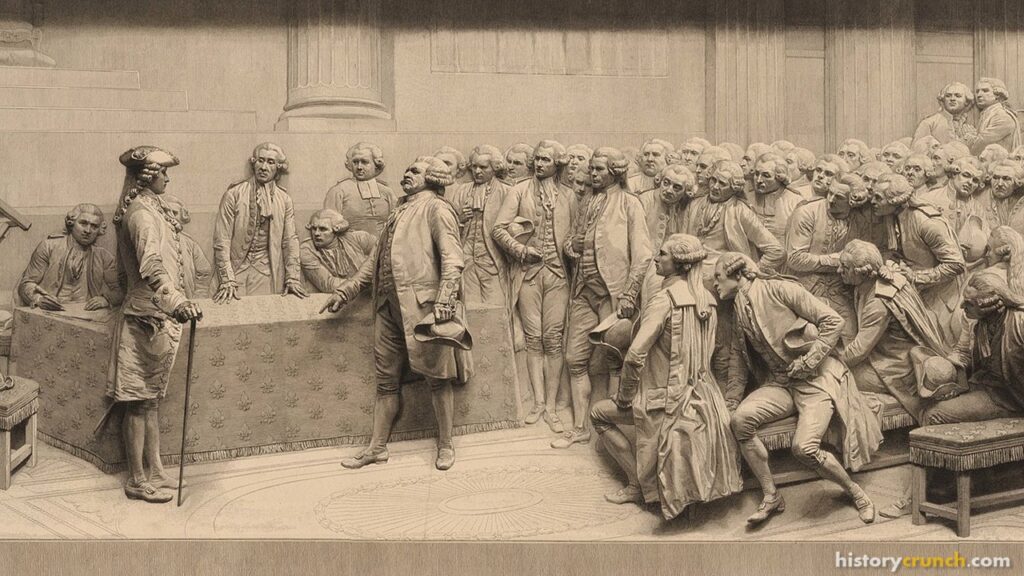
The National Assembly was formed in June of 1789 at the outbreak of the French Revolution. It was established by representatives of the Third EstateThe largest social class in France, made up of common people like peasants, workers, and the middle class., who broke away from the Estates-General of 1789 in protest of unequal representation. Declaring themselves the ‘true voice’ of the French people, they vowed to draft a new constitution for France. The Assembly played a key role in ending feudalRelating to a medieval system where nobles held land and power over common people in exchange for loyalty to the king. privileges of the Ancien RegimeThe old political and social system in France before the Revolution, built on feudal privileges and absolute royal power. in France and passing the Declaration of the Rights of Man and of the Citizen.
 FactsthatCrunch
Feudal privileges of the Ancien Regime were the special legal rights and exemptions that nobles and clergy held under France's old social system, which divided society into three estates. The First Estate (clergy) and Second Estate (nobility) paid little or no taxes and held economic and legal powers over common people, including the right to collect dues from peasants who worked the land. These privileges set the nobility and clergy apart from ordinary people by law, and removing them became a central goal of the French Revolution.
"On the 4th of August, 1789, the National Constituent Assembly voted to abolish feudal privileges of the Ancien Regime, ending noble rights such as collecting dues from peasants and exemption from taxes."
Governments of the French Revolution
The French Revolution was a major event in the history of Western societies, and has had a profound effect on the world today. Beginning in 1789, the French Revolution saw the French people overthrow their absolute monarchy and bring about a republic that was based on the principles of equality, liberty and fraternity. Throughout the years of the revolution, there were four different revolutionary governments, including: National Assembly, Legislative Assembly, National Convention and the Directory.
 FactsthatCrunch
The French Revolution moved through four distinct governments between 1789 and 1799, each with a different structure and set of powers.
National Assembly (French Revolution) – Summary
The National Assembly was the first revolutionary government of the French Revolution and existed from June 17th to July 9th in 1789. The National Assembly was created amidst the turmoil of the Estates-General that Louis XVI called in 1789 to deal with the looming economic crisis in France. Unfortunately, the three estates could not decide how to vote during the Estates-GeneralA meeting of representatives from France’s three social classes, called by the king to address major problems facing the country. and the meeting failed.
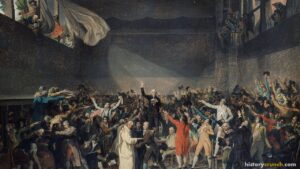
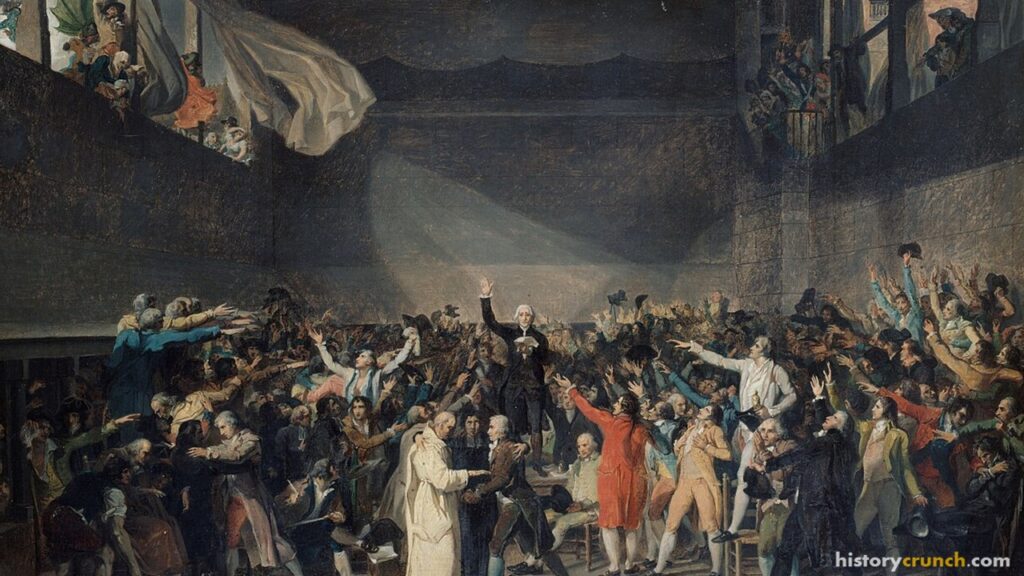
Angered with the inaction of the Estates-General and upset with their position in French society, many of the third estate representatives left the meeting and gathered in a nearby tennis court to take the Tennis Court Oath. It was here that the third estate established the National Assembly, the new revolutionary government, and pledged “not to separate, and to reassemble wherever circumstances require, until the constitution of the kingdom is established.”
Although the National Assembly was originally made up of mostly members of the third estate, many clergy and nobility representatives soon joined as anger for the monarchy of Louis XVI spread. After July 9th, the National Assembly formed into the National Constituent AssemblyThe form the National Assembly took after July 9th, 1789, which lasted until September 30th, 1791., which would last until September 30th, 1791.
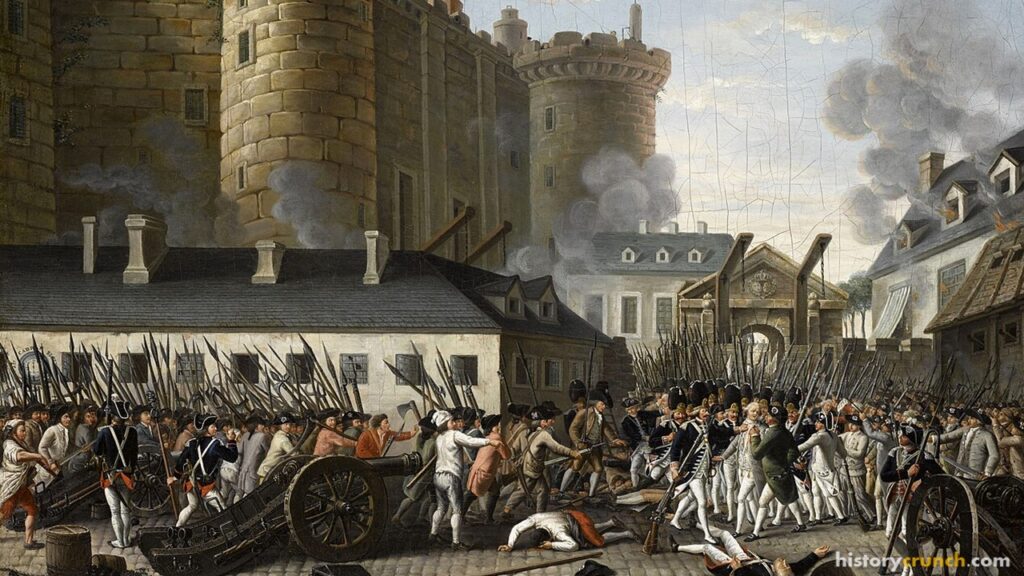
The National Constituent Assembly is best remembered for passing the Declaration of the Rights of Man and of the Citizen in August of 1789. The declaration was written by Marquis de Lafayette, a French military officer who fought in the American Revolution and was inspired by the ideals of liberty expressed by Thomas Jefferson in the Declaration of Independence. The Declaration of the Rights of Man and of the CitizenA document passed in 1789 that established individual rights protected by law and directly challenged the king’s authority. was vitally important to the French Revolution because it directly challenged the authority of Louis XVI. For example, the declaration set out a series of individual rights protected by law. Today, many historians view it as an important document in both the history of the French Revolution and the history of democracy and individual rights in the world. As well, the issuing of the Declaration of the Rights of Man and of the Citizen by the National Constituent Assembly helped spark the first major violent act of the French Revolution, which was the storming of the Bastille.
The National Constituent Assembly dissolved itself in 1791, passing government to the newly created Legislative Assembly.
 FactsthatCrunch
The National Assembly, considering that it has been called to establish the constitution of the realm, to bring about the regeneration of public order, and to maintain the true principles of monarchy; nothing may prevent it from continuing its deliberations in any place it is forced to establish itself; and, finally, the National Assembly exists wherever its members are gathered. Decrees that all members of this assembly immediately take a solemn oath never to separate, and to reassemble wherever circumstances require, until the constitution of the realm is established and fixed upon solid foundations; and that said oath having been sworn, all members and each one individually confirm this unwavering resolution with his signature.
According to the passage, what does the Tennis Court Oath decree most clearly show about how the Third Estate representatives viewed their own authority?
French Revolution timeline · 1789 – 1799
Key Vocabulary
Estates-General
Third Estate
Tennis Court Oath
Ancien Regime
Declaration of the Rights of Man and of the Citizen
National Constituent Assembly
Feudal
Frequently Asked Questions
When was the National Assembly formed?
The National Assembly was formed on June 17th, 1789, during the early days of the French Revolution. It grew out of the failed Estates-General that King Louis XVI had called to fix France’s money problems. The Assembly existed until July 9th, when it became the National Constituent Assembly.
Who created the National Assembly?
Representatives of the Third Estate created the National Assembly after breaking away from the Estates-General. They were angry about unequal voting and their weak position in French society. Declaring themselves the true voice of the people, they promised to write a new constitution for France.
What was the Tennis Court Oath?
The Tennis Court Oath was a pledge taken by Third Estate members on a nearby tennis court in 1789. They swore not to separate until France had a new constitution. This act marked the founding of the National Assembly and a direct challenge to the king’s power.
What did the National Assembly accomplish?
The National Assembly helped end feudal privileges of the Ancien Regime and set France on a new path. After becoming the National Constituent Assembly, it passed the Declaration of the Rights of Man and of the Citizen in August of 1789. That document listed individual rights protected by law.
What came after the National Assembly?
The National Assembly became the National Constituent Assembly, which lasted until September 30th, 1791. It then dissolved itself and passed power to the new Legislative Assembly. In all, the French Revolution had four revolutionary governments over its course.
Cite This Article
To cite this article as a source, use one of the formats below.
MLA: Beck, Elias. “National Assembly (French Revolution): A Detailed Summary.” HistoryCrunch, 22 September 2026, https://historycrunch.com/national-assembly-french-revolution/.
APA: Beck, E. (2026). National Assembly (French Revolution): A Detailed Summary. HistoryCrunch. https://historycrunch.com/national-assembly-french-revolution/
Chicago: Beck, Elias. “National Assembly (French Revolution): A Detailed Summary.” HistoryCrunch. September 22, 2026. https://historycrunch.com/national-assembly-french-revolution/
Sources
- Liberty, Equality, Fraternity (revolution.chnm.org), George Mason
- Peter McPhee, Liberty or Death: The French Revolution.
- Fordham Modern History Sourcebook
- Jeremy D. Popkin, A New World Begins: The History of the French Revolution.