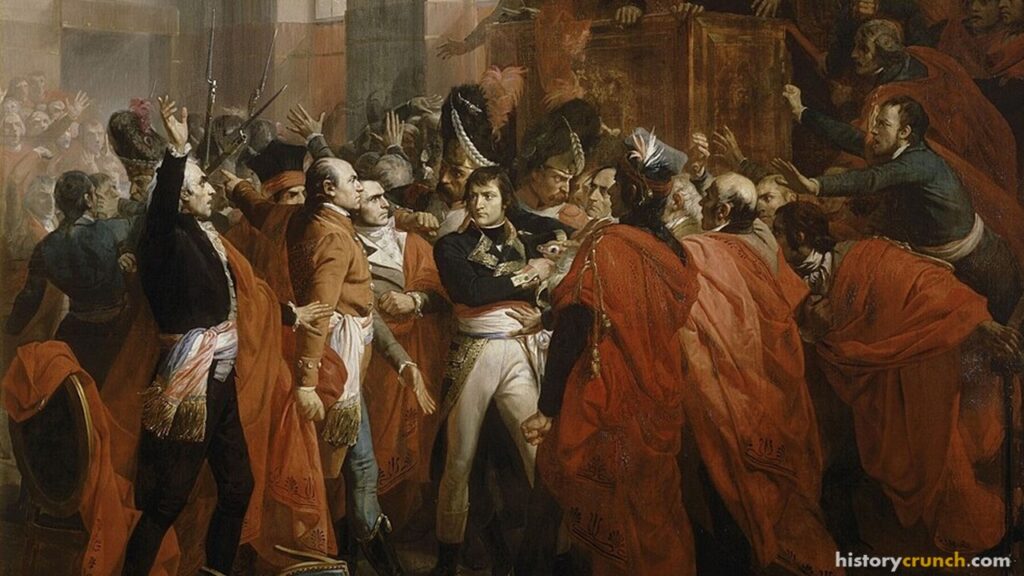
The Directory in the French Revolution was a five-member governing body that ruled France from 1795 to 1799, following the fall of the Committee of Public Safety. It aimed to bring stability after the chaos and violence of the events of the Reign of Terror. However, the Directory struggled with corruption, economic problems, and political unrest. The Directory’s weaknesses eventually led to its overthrow by Napoleon Bonaparte, which marked the end of the French Revolution.
 FactsthatCrunch
Governments of the French Revolution
Beginning in 1789, the French Revolution saw the French people overthrow their absolute monarchy and bring about a republic that was based on the principles of equality, liberty and fraternityA sense of brotherhood and unity among people in a society.. Throughout the years of the revolution, there were four different revolutionary governments, including: National Assembly, Legislative Assembly, National Convention and the Directory.
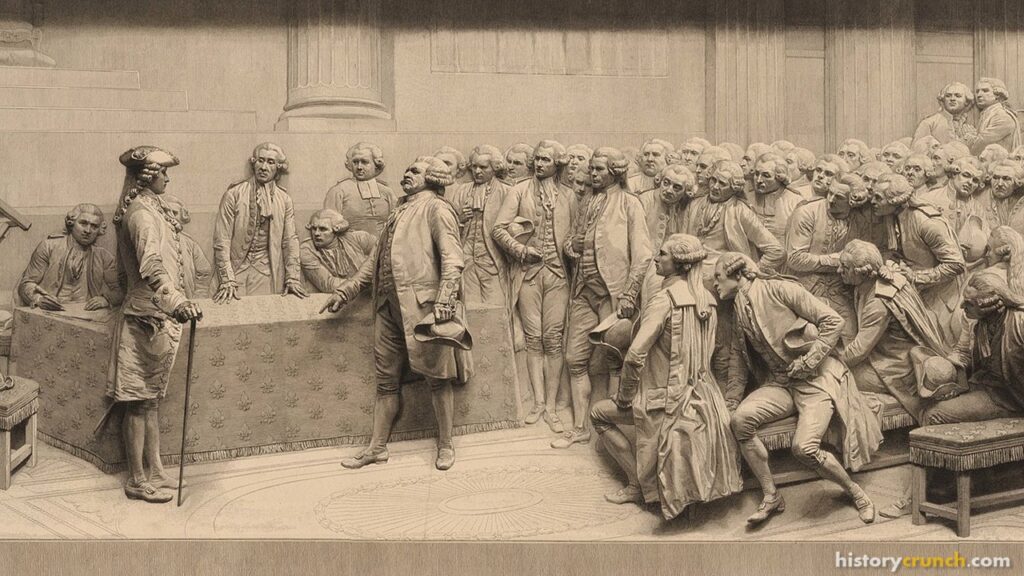
Can you put the four revolutionary governments of the French Revolution in the order they came to power?
Directory (French Revolution) – Summary
The Directory formed in 1795 following the end of the National Convention and the excessesExtreme and harmful actions that go far beyond what is reasonable or necessary. of the Reign of Terror and the Committee of Public Safety. It lasted until November of 1799 when it was overthrown by Napoleon Bonaparte. The Directory was controlled by five ‘directors’ who oversaw the economic and political aspects of French society. In general, it was an important time in the French Revolution for several reasons.
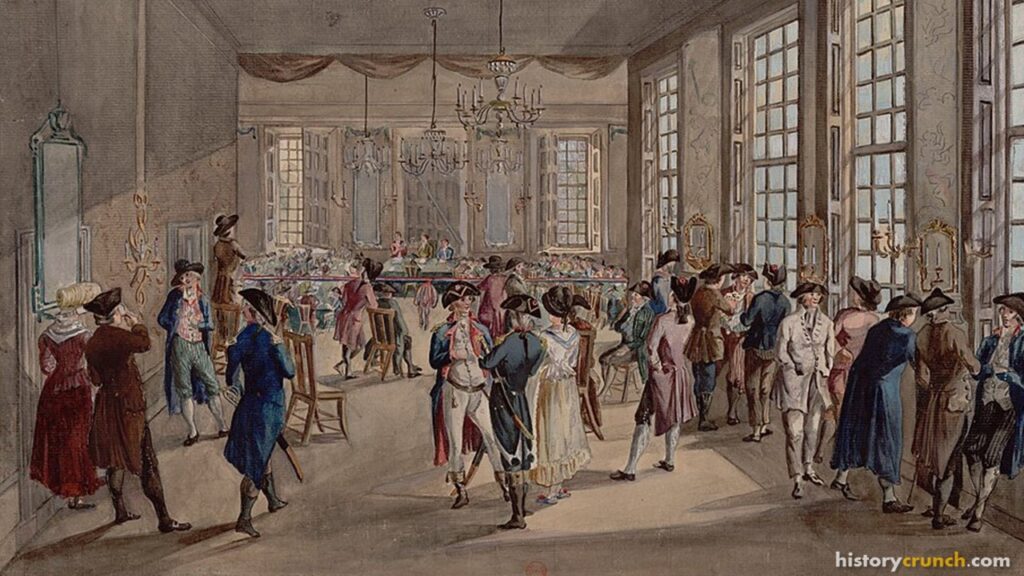
First, the economy of France was in a constant state of crisis during the four years of the Directory. In 1795, France’s treasury was nearly empty and money had lost nearly all of its value. The directors tried to respond but, in general, the country’s economy slowed and became stagnantWhen an economy stops growing and stays stuck in a poor condition..
Second, the Directory was responsible for ending the excesses of the Reign of Terror. The Reign of Terror had been the most violent time of the French Revolution and saw tens of thousands of people killed by guillotine. Many of these people were executed due to the fear and paranoiaAn extreme, irrational fear that others are plotting against you. of the time because radical revolutionaries wanted to prevent any and all threats to the revolution. The Directory stopped the mass executions of the Reign of Terror and took measures to relax some of the more radical views of the time.
Third, the Directory was overthrown by Napoleon Bonaparte following his return from a successful battle in Egypt. Napoleon returned to France in November of 1799 to find that the Directory had lost the support of many in the country. Along with others, Napoleon carried out a coup d’état against the Directory and replaced the government with the French Consulate, with himself as the First Consul. The French Revolution was over.

Jacques-Louis David. (1812)
FactsthatCrunchFrench Revolution timeline · 1789 – 1799
Key Vocabulary
Fraternity
Stagnant
Excesses
Guillotine
Paranoia
Coup d’état
Frequently Asked Questions
What was the Directory in the French Revolution?
The Directory was a five-member governing body that ruled France from 1795 to 1799. It took power after the fall of the Committee of Public Safety and the end of the National Convention. Its main goal was to bring stability after the violence of the Reign of Terror.
Why did the Directory fail?
The Directory failed because of corruption, money problems, and constant political unrest. France’s treasury was nearly empty in 1795, and the economy stayed weak and stagnant. Over time the government lost the support of many people across the country.
Who overthrew the Directory?
Napoleon Bonaparte overthrew the Directory in November of 1799. He returned to France after a military campaign in Egypt and found the government weak and unpopular. Along with others, he led a coup d’état and set up the French Consulate as First Consul.
How did the Directory end the Reign of Terror?
The Directory stopped the mass executions that marked the Reign of Terror. That earlier period had been the most violent time of the revolution, with tens of thousands killed by guillotine. The Directory also relaxed some of the more radical policies of that time.
What were the four governments of the French Revolution?
The four revolutionary governments were the National Assembly, the Legislative Assembly, the National Convention, and the Directory. The National Assembly came first in 1789, and the Directory came last. Each replaced the one before it as the revolution moved through different stages.
Cite This Article
To cite this article as a source, use one of the formats below.
MLA: Beck, Elias. “Directory (French Revolution): A Detailed Summary.” HistoryCrunch, 22 September 2026, https://historycrunch.com/directory-french-revolution/.
APA: Beck, E. (2026). Directory (French Revolution): A Detailed Summary. HistoryCrunch. https://historycrunch.com/directory-french-revolution/
Chicago: Beck, Elias. “Directory (French Revolution): A Detailed Summary.” HistoryCrunch. September 22, 2026. https://historycrunch.com/directory-french-revolution/
Sources
- Peter McPhee, Liberty or Death: The French Revolution.
- Liberty, Equality, Fraternity (revolution.chnm.org), George Mason
- Jeremy D. Popkin, A New World Begins: The History of the French Revolution.
- William Doyle, The Oxford History of the French Revolution.