Committee of Public Safety in the French Revolution: A Detailed Summary

Committee of Public Safety in the French Revolution
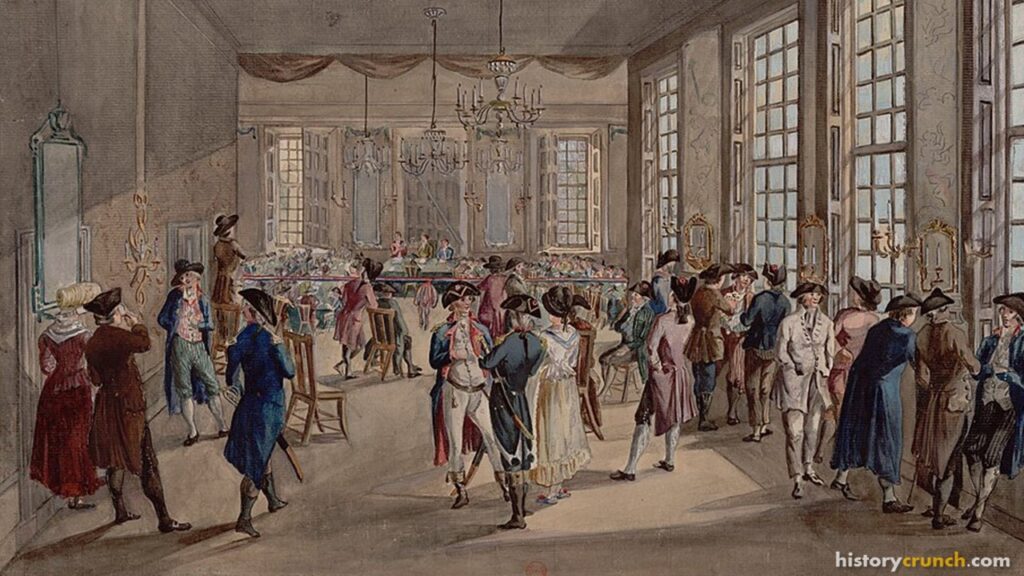
Committee of Public Safety in the French Revolution (Unknown Artist)

Table of Contents

The Committee of Public Safety was an important aspect of the French Revolution. It was responsible for devastating events such as the Reign of Terror. This article details the history and significance of the Committee of Public Safety in the French Revolution.

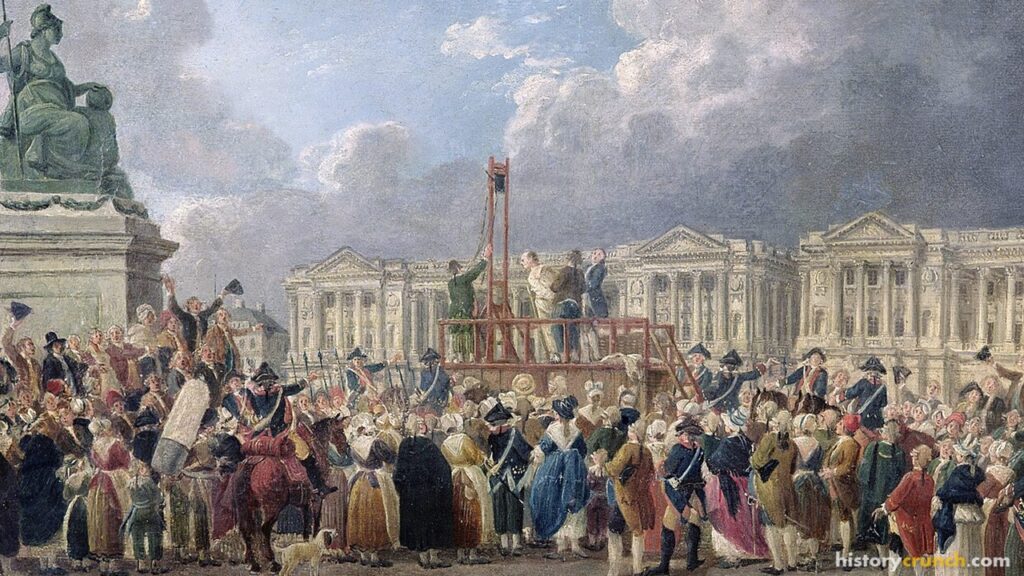
The Committee of Public Safety in the French Revolution was a powerful political body formed during the height of the revolution. More specifically, it was established to protect the newly formed republicA government where citizens hold power and elect leaders, rather than being ruled by a king or queen. from internal and external threats. Led by figures like Maximilien Robespierre, it held almost absolute power and oversaw some of the more violent aspects of the French Revolution. For instance, the Committee of Public Safety carried out the Reign of Terror, during which thousands were executed as enemies of the revolution.

French RevolutionRedacted FileInteractive
Facts that CrunchFactsthatCrunch
DECLASSIFIED
Committee of Public Safety: Arrest and Trial Powers
The Committee of Public Safety, formed by the National Convention in 1793, held the authority to order the arrest of any person suspected of disloyalty to the republic. A key tool of this power was the Law of Suspects, passed on September 17th, 1793, which defined enemies of the revolution so broadly that nearly anyone could be detained. Suspects were handed to the Revolutionary Tribunal, a special court in Paris that could sentence the accused to death with limited right of defense. The law stripped away standard legal protections, meaning that testimony from witnesses was no longer required for a conviction once the jury felt it had enough moral certainty. Georges Danton, one of the revolution's most prominent figures, was himself arrested under these same powers and guillotined in April 1794 after calling for the Terror to stop.
Tap the black bars to declassify.
Committee of Public Safety in the French Revolution (Unknown Artist)Evidence Photo
Emergency arrest powers outlasted the crisis they were created for, consuming even the men who built them.
Evidence Tag
SubjectCommittee of Public Safety: Arrest and Trial Powers
File No.FTC-8939
Class.DECLASSIFIED
SourceArchives nationales de France
Source: Archives nationales de France© factsthatcrunch.comMore French Revolution Facts →

Committee of Public Safety – Creation

The Committee of Public Safety was a significant organization of the French Revolution that involved several key people and events.  Formed in April of 1793, it was established by the National Convention, the revolutionary government of France at the time.  In the months before its creation, French revolutionaries were facing intense pressure from foreign threats and invasion by surrounding nations loyal to Louis XVI.  As a result, many members of the National Convention became increasingly paranoidFeeling extreme, often unreasonable fear or suspicion that others are plotting against you. from the perceived threat of external and internal challenges to the revolution.  To combat these threats, the National Convention established the Committee of Public Safety, and provided it with sweeping powersVery broad authority that allows a government body to act with few limits or restrictions..
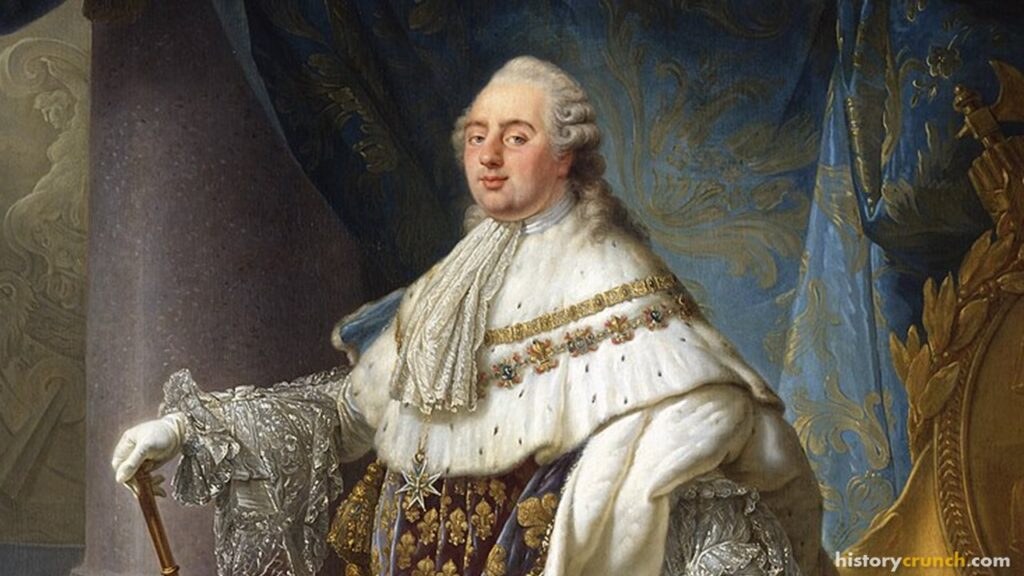
Painted portrait of King Louis XVI in elaborate royal robes and regalia, 1779
‘Louis XVI, King of France and Navarre, wearing his grand royal costume in 1779’ by Antoine-François Callet. (1779)
French RevolutionDefinition
Facts that CrunchFactsthatCrunch
Levee en Masse
French: 'lev-AY on MASS', means 'rising of the mass' or 'mass levy'

A levee en masse is a government order that calls the entire able-bodied population into military service during a national emergency. The French National Convention issued this order on August 23rd, 1793, requiring all unmarried men between 18 and 25 to report for military duty, while other citizens contributed supplies, labor, or support. This made military service a duty of the whole nation, not just professional soldiers or hired troops.

"Because of the levee en masse, France was able to build an army of hundreds of thousands of men in a short time to push back invading foreign armies in 1793."

Source: Palace of Versailles© factsthatcrunch.comMore French Revolution Facts →

Committee of Public Safety – Maximilien Robespierre

The Committee of Public Safety was led by Maximilien Robespierre, the leading revolutionary within France at that time.  As the head of the Committee of Public Safety, which was the executive committee of the National Convention, he and the committee would become well known for carrying out the Reign of Terror.  For many months throughout 1794, Robespierre battled against other revolutionaries in the National Convention by questioning each of their loyalties towards the revolution.  For example, he accused many people of being domestic threatsDangers or enemies that come from inside a country rather than from foreign nations. to the continuation of the revolution.  It is during this time that many prominent revolutionaries within the National Convention were guillotinedExecuted by a machine with a heavy blade that drops to behead a person, commonly used during the French Revolution. for their perceived betrayal to the revolution and Robespierre maneuvered his way to the head of the convention.  For example, when Georges Danton, a leading revolutionary, called for an end to the Reign of Terror he was the next to face the guillotine.  Finally, on June 4th, 1794, Robespierre was elected the president of the National Convention.

Maximilien Robespierre quote printed in bold text on a plain background

As well, the Committee of Public Safety prepared France to deal with foreign invasions by establishing new armies for the country.  Men across France were draftedForced by the government to join the military, rather than volunteering. into these new forces as the Committee sought to stop neighboring countries from stopping the progress of the revolution.

Based on his actions and threats the National Convention voted to arrest Robespierre.  On July 28th, 1794, soldiers stormed into where he was staying.  As the soldiers arrived, he attempted to commit suicide by gunshot to the head, but was instead only injured in the jaw, shattering it.  For the rest of the day, Robespierre was held captive until he was guillotined without a trial that same afternoon.  With his death, the fear and paranoia of the revolutionaries ended and the Reign of Terror was over.  After the execution of Robespierre and the excess of the Reign of Terror, the National Convention was replaced by the Directory in 1795.
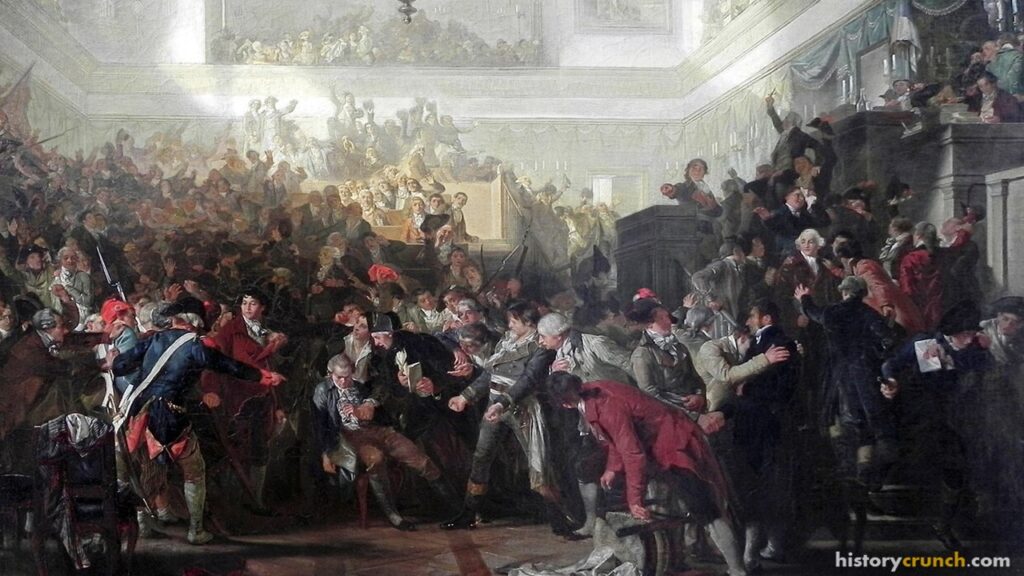
The Fall of Robespierre in the Convention painting by Max Adamo, 1870
‘The Fall of Robespierre in the Convention’ by Max Adamo. (1870)
'Execution on the future Place de la Concorde' by Pierre-Antoine Demachy. (1793) The Reign of Terror in the French Revolution saw the execution of thousands.
COMMITTEE OF PUBLIC SAFETY MAXIMILIEN ROBESPIERRE
What it was
The Committee of Public Safety was a 12-member executive body formed on April 6th, 1793, that held near-total power over France during the Reign of Terror.
Why it started
France faced foreign invasion and internal revolt, so the National Convention gave the Committee sweeping powers to defend the republic.
Turning points
Robespierre joined the Committee on July 27th, 1793, then on June 4th, 1794, he was elected president of the National Convention with 216 of 220 votes.
How it ended
The Convention voted to arrest Robespierre, and on July 28th, 1794, he was guillotined without trial, ending the Terror and the Committee's dominance.
Why it matters
The Committee showed how emergency powers can lead to mass executions, political purges, and the collapse of the very leaders who built them.
Source: Archives nationales de France© factsthatcrunch.comFacts that Crunch

Committee of Public Safety – Significance

The Committee of Public Safety was significant because it centralized power during a critical period of the French Revolution. For instance, the creation of the committee helped to defend France and the French Revolution from foreign invasions and internal revolt. With that said, it played a key role in shaping revolutionary policies and enforcing radical changes through the Reign of Terror. As such, the Committee of Public Safety is significant as a historical reminder of the violence capable through government control. For example, although it maintained order for a short period of time, its extreme actions also led to violence, death and political revolt. For example, the events of the Reign of Terror, led to the end of the Committee of Public Safety and the eventual fall of its leaders.
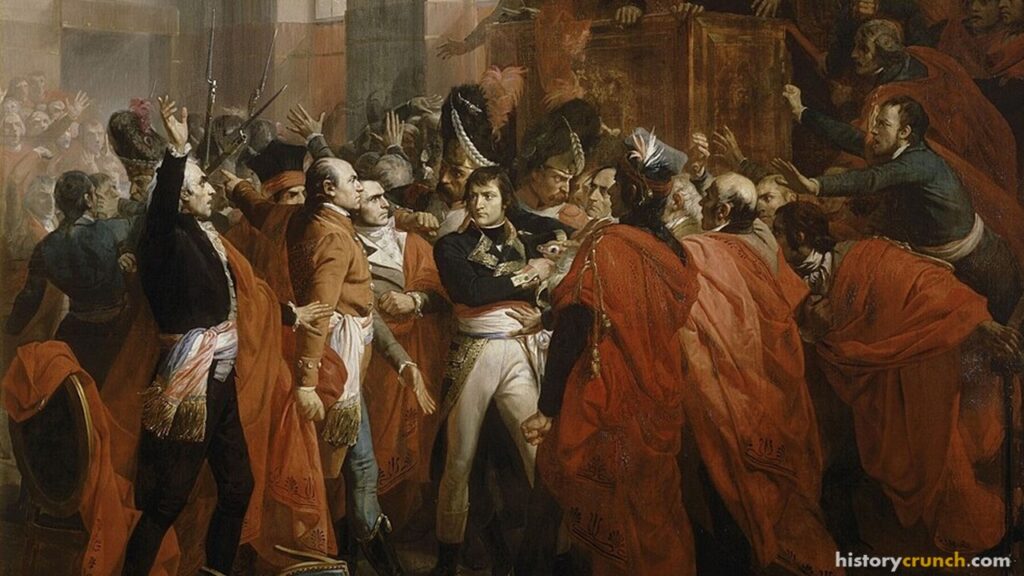
Napoleon Bonaparte confronting the Council of Five Hundred, painted by François Bouchot, 1799
Napoleon Bonaparte confronts the members of the Council of Five Hundred in November of 1799. Painted by François Bouchot. (1799)
French RevolutionPros & Cons
Facts that CrunchFactsthatCrunch

The Committee of Public Safety held nearly absolute power in France from 1793 to 1794, and historians still debate whether it helped or harmed the country.

✓Pros
✓It defended France against foreign armies by organizing and drafting new forces across the country.
✓It kept the revolution from collapsing during a period when neighboring monarchies were actively invading France.
✓It centralized government decisions at a time when the National Convention was divided and slow to act.
✓It enforced radical policy changes that pushed revolutionary ideals into law faster than earlier governments had managed.
✗Cons
✗It carried out the Reign of Terror, during which thousands of people were executed as supposed enemies of the revolution.
✗Robespierre used the committee to eliminate political rivals inside the National Convention, including fellow revolutionaries like Georges Danton.
✗It concentrated so much power in so few hands that it functioned more like a dictatorship than a representative body.
✗Its extreme violence turned other leaders against it, leading to Robespierre's arrest and execution without trial in late July 1794.
✗The chaos it caused contributed to the end of the National Convention itself, replaced by the Directory in 1795.
Source: Palace of Versailles© factsthatcrunch.comMore French Revolution Facts →

French Revolution timeline · 1789 – 1799

Ten years in which France destroyed its monarchy, tried to build a republic, and ended under Napoleon. The timeline runs from the Estates General to the coup that closed the revolution.
View Timeline →

Key Vocabulary

Paranoid
Feeling extreme, often unreasonable fear or suspicion that others are plotting against you.
Sweeping powers
Very wide authority that allows a government body to act with few limits or restrictions.
Guillotined
Executed by a machine with a heavy blade that drops to behead a person, commonly used during the French Revolution.
Domestic threats
Dangers or enemies that come from inside a country rather than from foreign nations.
Drafted
Forced by the government to join the military, rather than volunteering.
Directory
The French government that replaced the National Convention in 1795 after the Reign of Terror ended.

Frequently Asked Questions

What was the Committee of Public Safety?

The Committee of Public Safety was a powerful political body created during the French Revolution. It was set up to protect the new French republic from threats at home and abroad. The National Convention gave it sweeping powers, which made it act almost like the government itself.

When was the Committee of Public Safety created?

The Committee of Public Safety was formed in April of 1793 by the National Convention. At that time, France faced invasion from nearby nations still loyal to Louis XVI. Fear of these outside threats, along with worries about internal enemies, pushed leaders to create the committee.

Who led the Committee of Public Safety?

Maximilien Robespierre was the leading figure of the Committee of Public Safety. He became the most powerful revolutionary in France during this period. He was elected president of the National Convention on June 4th, 1794, near the peak of his control.

What was the Reign of Terror?

The Reign of Terror was a violent period run by the Committee of Public Safety in which thousands were executed. People accused of betraying the revolution were often sent to the guillotine. Even leading revolutionaries like Georges Danton were killed after calling for the killings to stop.

How did the Committee of Public Safety end?

The committee’s power collapsed after the National Convention voted to arrest Robespierre in July of 1794. Soldiers seized him, and he was guillotined without a trial on July 28th, 1794. His death ended the Reign of Terror, and the Directory replaced the National Convention in 1795.

Cite This Article

To cite this article as a source, use one of the formats below.

MLA: Beck, Elias. “Committee of Public Safety in the French Revolution: A Detailed Summary.” HistoryCrunch, 22 September 2026, https://historycrunch.com/committee-of-public-safety-in-the-french-revolution/.

APA: Beck, E. (2026). Committee of Public Safety in the French Revolution: A Detailed Summary. HistoryCrunch. https://historycrunch.com/committee-of-public-safety-in-the-french-revolution/

Chicago: Beck, Elias. “Committee of Public Safety in the French Revolution: A Detailed Summary.” HistoryCrunch. September 22, 2026. https://historycrunch.com/committee-of-public-safety-in-the-french-revolution/

Sources

  • William Doyle, The Oxford History of the French Revolution.
  • Fordham Modern History Sourcebook
  • Liberty, Equality, Fraternity (revolution.chnm.org), George Mason

Facebook
X
Reddit
Pinterest
LinkedIn

We strive to produce educational content that is accurate, engaging and appropriate for all learners. If you notice any issues with our content, please contact us and let us know!

AUTHOR INFORMATION
Picture of Elias Beck

Elias Beck

I'm a passionate history and geography teacher with over 15 years of experience working with students in the middle and high school years. I have an Education Degree with a focus in World History. I have been writing articles for History Crunch since 2015 and love the challenge of creating historical content for young learners!
Nationalism in France.
Age of Nationalism

Nationalism in France: A Detailed Summary

Nationalism in France helped invent the modern idea of the nation and spread it across the world. Beginning with the French Revolution of 1789, French people came to see themselves as citizens of a nation rather than subjects of a king, and this powerful idea later shaped the whole of Europe.

Storming of the Bastille painting showing crowds attacking the fortress prison in 1789
French Revolution

Storming of the Bastille: A Detailed Summary

The Storming of the Bastille was one of the most important events in the history of the French Revolution. This article details the history and significance of the Storming of the Bastille.

Marquis de Lafayette
American Revolution

Marquis de Lafayette: A Detailed Biography

The Marquis de Lafayette was a French aristocrat who crossed the Atlantic at nineteen to fight for American independence, becoming one of George Washington’s most trusted generals and a key figure in the Revolutionary War’s final campaign at Yorktown. This article details the life and significance of Marquis de Lafayette.

Artistic representation of French Revolution and Democracy.
French Revolution

French Revolution and Democracy: A Detailed Summary

The French Revolution helped shape modern democracy by overthrowing an absolute monarchy and declaring that power belongs to the people. It spread Enlightenment ideas about rights and equality across the world. Yet violence and limited voting showed how hard democracy is to achieve.

National Convention
French Revolution

National Convention (French Revolution): A Detailed Summary

The National Convention was the revolutionary government of the French revolution from September 1792 until October 1795. This article details the history and significance of the National Convention in relation to the French Revolution.

Jean-Paul Marat
French Revolution

Jean-Paul Marat: A Detailed Biography

Jean-Paul Marat was significant because he became one of the most radical and influential voices of the French Revolution. This article details the life and significance of Jean-Paul Marat,