
The French Revolution was the ten years in which France destroyed a thousand-year-old monarchy, declared that men are born free and equal in rights, executed its king and queen, killed tens of thousands of its own people in the name of virtue, and ended by handing itself to a general. It began with a government that could not pay its bills and ended with the Napoleonic Code, and almost every idea in modern politics, left and right, comes out of it.
The French Revolution ran from 1789 to 1799. This timeline covers 1715 to 1804, from the king who inherited the debt to the coup that ended the republic.
The French Revolution took ten years to go from a bankrupt king asking his subjects for a tax to a general taking the government at bayonet point, and it changed what politics was on the way. The events below run from the reign that built the debt to the coup that ended the republic. Most of them are the result of something earlier on the list: a tax the rich would not pay, a hall found locked one rainy morning, a king caught at a border town, a war nobody could win and nobody could stop.
Revolutions do not come from nowhere and this one came from a balance sheet. This view follows the France the revolution destroyed: the absolute monarchy built by Louis XIV, the two wars that bankrupted it, the law that divided the country into orders and taxed only one of them, the harvests that failed after a volcano erupted in Iceland, and the winter in which bread took nine tenths of a working wage.
France tried five forms of government in ten years and wrote three constitutions, one of which was never used. This view is the spine of the revolution as an exam question: which body governed, when, who could vote for it, and what destroyed it. It runs from the Estates-General of 1789, which had not met for 175 years, to the morning in 1799 when grenadiers cleared the last of them out of the hall.
Every time the French Revolution changed direction, the people of Paris were in the street. This view follows them: the crowd that took the Bastille for its gunpowder, the market women who walked to Versailles for bread and came back with a king, the petitioners shot on the Champ de Mars, the sections that stormed the palace and ended the monarchy, and the same sections broken by regular troops in 1795.
Louis XVI was nineteen when he inherited a bankrupt throne and thirty-eight when he was beheaded. Marie Antoinette was fourteen when she arrived from Vienna and thirty-seven when she followed him. This view follows the two of them through the revolution: the affair that ruined her name before it began, the night they tried to run, the letters found in an iron chest, and the two carts to the same square.
The French Revolution was an argument about what a human being is entitled to, and it wrote its answers down. This view follows the ideas: the Enlightenment that made authority arguable, the pamphlet that told the Third Estate it was everything, the Declaration of 1789, the answer a playwright wrote for women in 1791, the attack on the Church, the calendar that started time again, the decree that freed the colonies, and the code that kept what survived.
For ten months the government of France used arrest and execution as a method of rule, and did it legally, by vote. This view follows the Terror from the machine proposed as a humane reform in 1789 to the morning its most famous defender was carried to it on a plank. It includes the parts usually left out: that most of the dead were poor, that most of the killing was outside Paris, and that it stopped only when the men who had voted for it became frightened of it.
France went to war in April 1792 and stayed at war for twenty-three years. This view follows the fighting that shaped everything else: the invasion that ended the monarchy, the ridge at Valmy where volunteers stood and the republic lived, the civil war in the west that killed 170,000 people, the decree that put a whole nation into uniform, and the campaigns that made a Corsican artillery officer the most famous man in France.
The French Revolution ate its leaders faster than any event in modern history. This view follows them in order: the banker the crowd loved, the aristocrat who wanted an American ending, the journalist who told Paris its enemies were everywhere and was killed in his bath, the orator who went to the scaffold telling the executioner his head was worth seeing, the lawyer who could not be bought and signed the warrants anyway, and the soldier who was still alive at the end.
France in 1789 was the richest country in Europe, with the largest army and the most admired culture. Why did it collapse?
The causes of the revolution run from the wars of the eighteenth century to the winter of 1788, and they meet in a single fact: a government that could not tax the people who had the money.
The revolution began because the state was bankrupt. Ten years later it was still bankrupt. What happened to the money?
The financial story runs from the American war to the Directory, through the seizure of Church land, the paper money issued against it, and the inflation that helped destroy every government that printed it.
In May 1789 France was an absolute monarchy. By Christmas it had a national assembly, no feudalism and a declaration of rights. How did one year do that?
The year runs from the opening of the Estates-General in May to the seizure of Church property in November, and every step of it was taken in response to the step before.
France was governed by five different bodies between 1789 and 1799 and wrote three constitutions. Why did none of them last?
This is the constitutional spine of the revolution, from the Estates-General that had not met since 1614 to the coup that ended the republic.
The Bastille held seven prisoners and was about to be demolished anyway. Why is the day France's national holiday?
The four days from the dismissal of Necker to the burning of the manor records are the days the revolution stopped being a debate and became a fact.
Six times between 1789 and 1795 the people of Paris came into the street and changed who governed France. The seventh time they were shot. What changed?
The risings run from the Bastille in July 1789 to the disarming of the sections in May 1795, and each one pushed the revolution further left until the day one did not.
Louis XVI accepted a constitution, kept his throne for two years after the Bastille and was personally popular in 1790. How did he end on a scaffold?
The king's road runs from his accession in 1774 to his execution in January 1793, and it turns on one night in June 1791 when he tried to leave.
Marie Antoinette was blamed for the bankruptcy of France, for its defeats and for its famine. How much of what the revolution believed about her was true?
The queen's road runs from the necklace affair of 1785, which she had nothing to do with, to her execution in October 1793, for things she had done and things she had not.
The Declaration of 1789 says men are born free and equal in rights. Which men, and what about everybody else?
This path follows the promise of 1789 through the people it did not cover, from the pamphlet that framed it to the law that suspended it.
In 1789 France was the eldest daughter of the Church. By 1794 its cathedral was a Temple of Reason and priests were in hiding. How did that happen, and what did it cost?
The religious story runs from the seizure of Church land in 1789 to Robespierre's Festival of the Supreme Being in 1794, and it produced the revolution's largest and angriest enemy.
The revolution ended with a dictator, and by 1815 a Bourbon king was back in Paris. So what, if anything, did it actually change?
This path runs from the night feudalism was abolished to the Civil Code of 1804, and it separates the politics the revolution lost from the society it made.
The men who abolished torture in 1789 were arresting people for their opinions by 1793. How does that happen in four years?
The road to the Terror runs from the declaration of war on Britain in February 1793 to the Law of 22 Prairial in June 1794, and every step of it was voted by an assembly in an emergency.
The Terror was at its worst in June 1794 and over by the end of July. What ended it?
The fall of Robespierre runs from the execution of Danton in April 1794 to Robespierre's own on July 28th, and it was made by the men who had run the Terror with him.
France declared war on Austria in April 1792 and was still fighting in 1815. How did that war shape the revolution at home?
The war runs from the declaration against Austria to the victory at Fleurus in June 1794, and it explains the fall of the monarchy, the Terror and Napoleon.
The largest killing of the French Revolution did not happen in Paris and had almost nothing to do with the guillotine. What happened in the west?
The war in the Vendee runs from the religious split of 1790 to the columns sent to pacify the region in 1794, and it killed about 170,000 people.
In 1791 Robespierre asked the Assembly to abolish capital punishment. Three years later he was the most powerful man in a government that executed 1,400 people in seven weeks. What changed?
Robespierre's path runs from the divisions of the new Convention in September 1792 to the scaffold in July 1794, and it is the revolution's hardest question in one biography.
In 1793 Napoleon Bonaparte was an unknown captain. Six years later he was the government of France. How?
Bonaparte's rise runs from the siege of Toulon in 1793 to the Civil Code of 1804, and it is a story about what a republic that depends on its generals eventually gets.
Two of the revolution's most powerful men held no office for most of their careers. What made a journalist and a club orator more dangerous than a minister?
This path follows Marat and Danton from the first revolutionary newspapers of 1789 to the scaffold in 1794, through the years when what was printed in Paris decided what happened there.
France in the 1780s was the richest country in Europe and its government was bankrupt. The law divided 24,700,000 people into three orders, and the two smallest paid almost no tax; the crown had borrowed through two great wars, the last of them to help the Americans beat Britain, and could no longer meet the interest. A volcano in Iceland ruined the harvests, bread took nine tenths of a worker's wage, and the Enlightenment had spent fifty years teaching that authority must justify itself. When the nobles refused to be taxed, the king had to call a body that had not met since 1614.
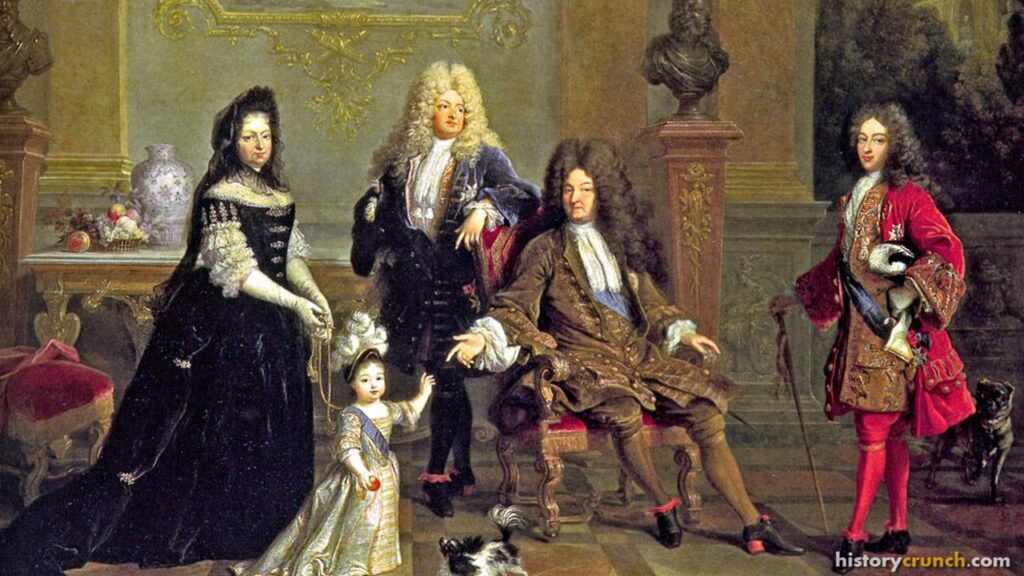
Louis XIV was king of France from 1643 to 1715, the longest reign in recorded history, and from 1661 he governed alone without a chief minister, the model of absolute monarchy. He moved the court to a palace at Versailles where the nobles lived under his eye, made Protestantism illegal in 1685, and fought four great wars, the last of which left France exhausted and deeply in debt. He died at Versailles on September 1st, 1715.
LEARN MORESHOW LESSwhy it matters · key numbers · 1 key figurePOLITICALEverything the revolution destroyed was built by Louis XIV: one man deciding everything, a nobility paid to be decorative, and a state that borrowed to fight. His great-grandson inherited the system and his great-great-grandson lost his head for it.
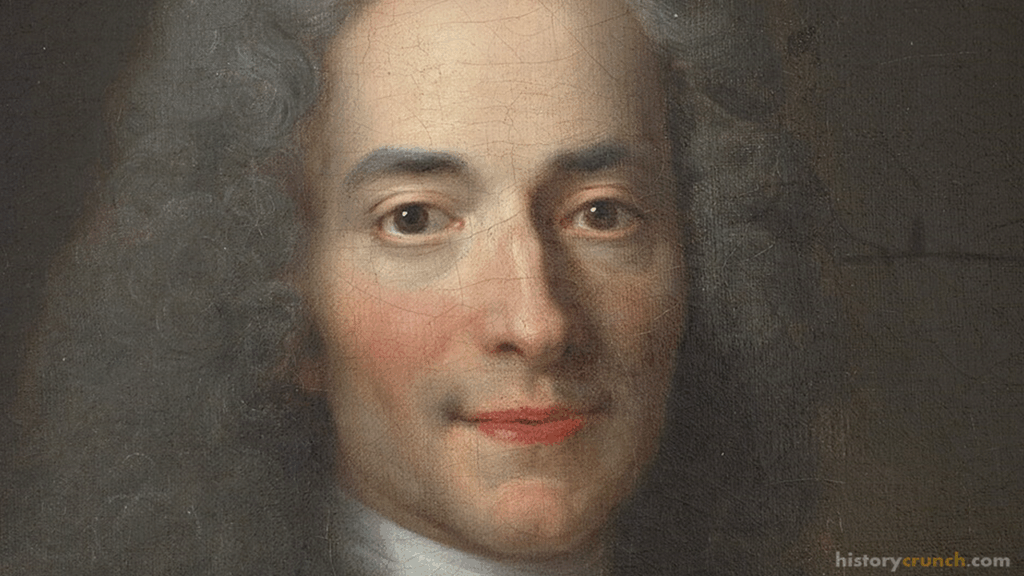
Through the 1700s French writers argued in books, pamphlets and the salons of Paris that government exists for the governed, that reason should decide questions the Church had settled, and that laws must be the same for everybody. Voltaire attacked intolerance and was jailed in the Bastille for it; Montesquieu proposed dividing power so no one could hold all of it; Rousseau wrote that sovereignty belongs to the people.
LEARN MORESHOW LESSwhy it matters · key numbers · elsewhereIDEASNone of these men lived to see 1789 and none of them planned a revolution. What they did was make the old arrangement arguable, and once a thing can be argued about it can be voted on, and once it can be voted on it can be abolished.
The Age of Enlightenment hub covers the thinkers themselves; this card is what their ideas did to France.
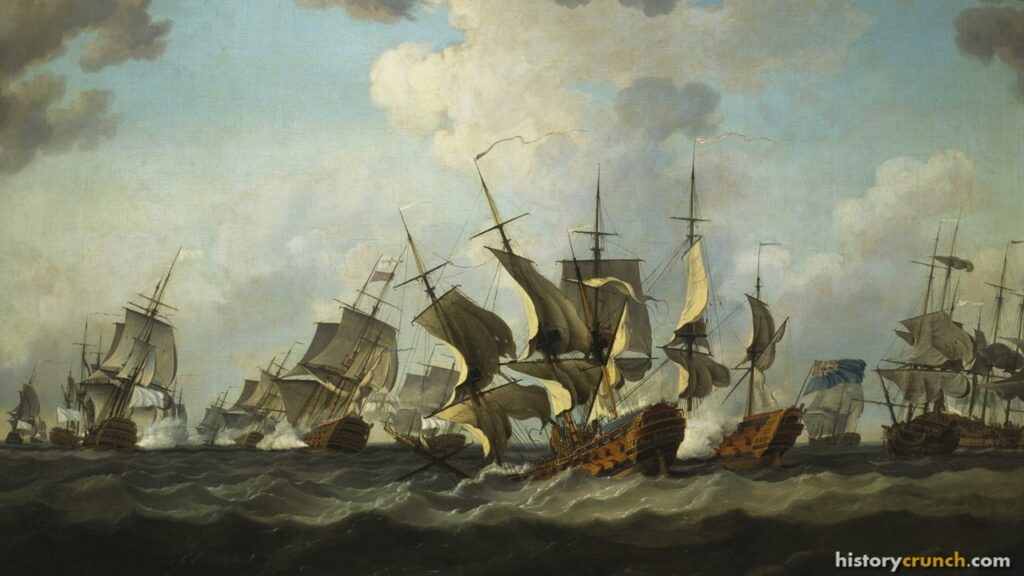
The Seven Years War ran from 1756 to 1763 and was fought in Europe, North America, the Caribbean, Africa and India. France lost. By the Treaty of Paris of February 10th, 1763 it gave up Canada and most of its North American territory to Britain. The war had been paid for with loans, and France had no system of taxation that could pay them back, because its richest subjects did not pay tax.
LEARN MORESHOW LESSwhy it matters · key numbersECONOMICThis is where the money runs out. Every finance minister from 1763 to 1789, from Turgot to Necker to Calonne, was trying to solve the same problem, how to tax the people who had the money, and every one of them failed until the failure produced a revolution.
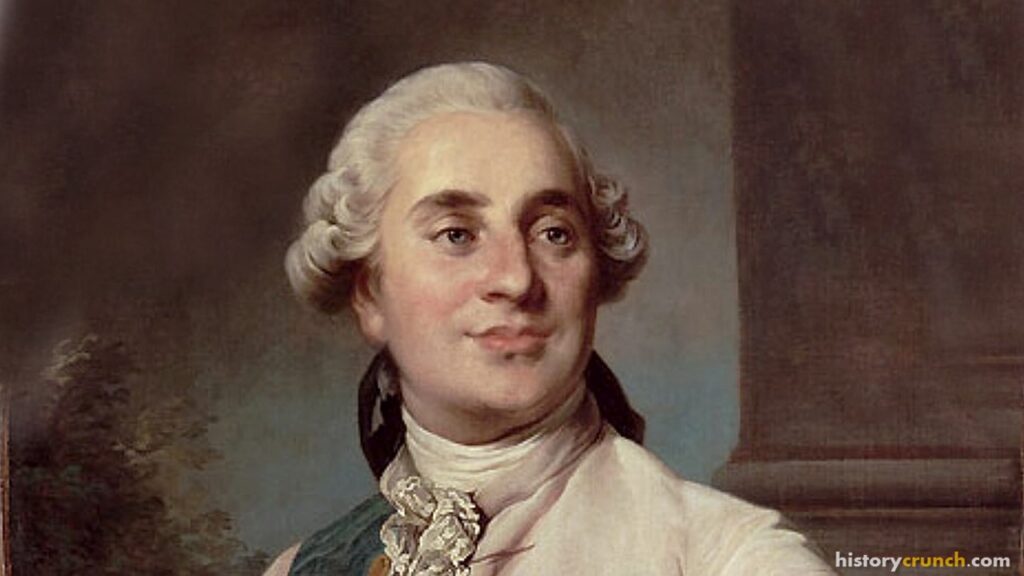
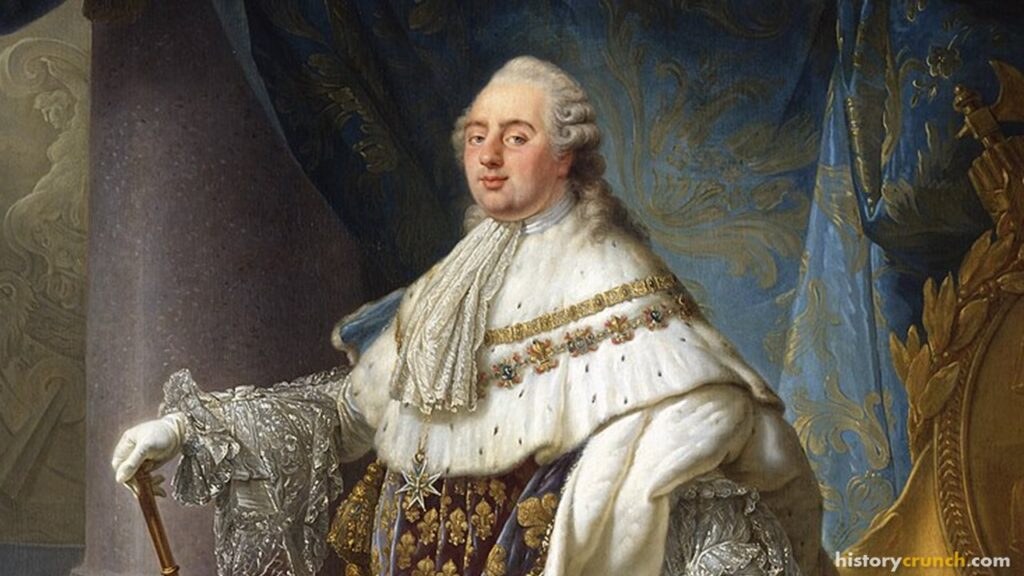
Louis-Auguste was born at Versailles on August 23rd, 1754, and became king on May 10th, 1774 when his grandfather Louis XV died, because his own father had died in 1765. He had married Marie Antoinette, daughter of the Emperor and Empress of Austria, in 1770, when he was fifteen and she was fourteen. He was shy, hard-working and famously indecisive; she was foreign, young and disliked from the day she arrived.
LEARN MORESHOW LESSwhy it matters · key numbers · 2 key figuresPOLITICALLouis XVI was not a tyrant and that is part of the problem: he wanted to be a good king and could not decide how, and when the crisis came he agreed to things and then took them back. The marriage tied France to Austria, which is why the queen was called the Austrian woman when the war began.
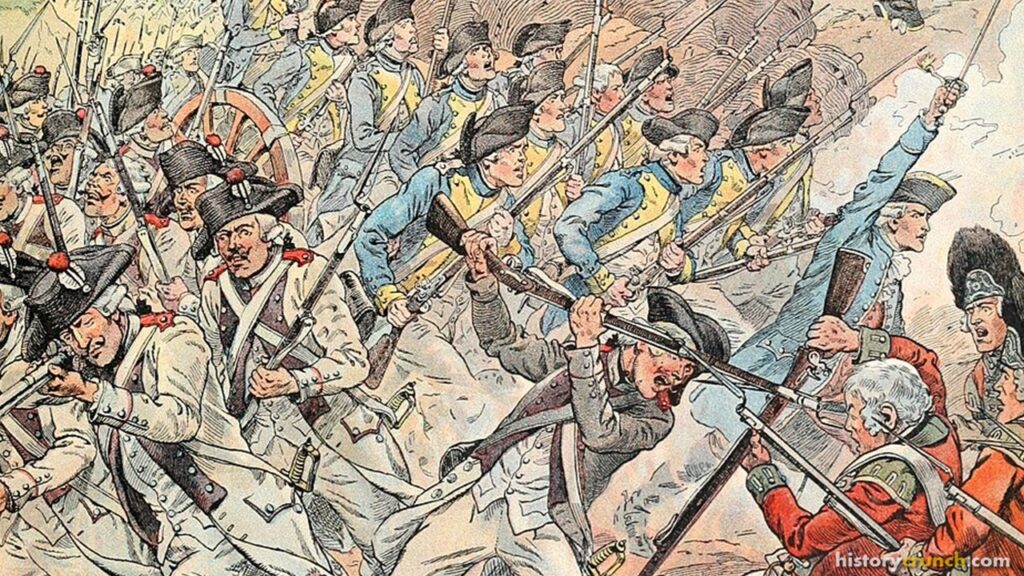
France had been shipping weapons to the American rebels in secret since 1776, and after the American victory at Saratoga it signed two treaties of alliance on February 6th, 1778. French money, a French fleet and 5,500 French soldiers under Rochambeau helped trap the British at Yorktown in 1781. Between 1776 and 1783 France gave the Americans millions of livres in cash and credit, all of it borrowed.
LEARN MORESHOW LESSwhy it matters · key numbers · a debateECONOMICFrance won its revenge on Britain and ruined itself doing it. The site's own article says the debt is considered a significant cause of the French Revolution: within six years of Yorktown the crown could not pay the interest, and men who had fought for liberty in America came home to a country that had none.
The American Revolution hub tells the war itself; this card is what it cost France.
Did the American war cause the French Revolution?
It doubled a debt France could not service, and by 1788 half of all government spending went on interest. Without it there is no bankruptcy and no Estates-General.
France was already borrowing badly before 1778, and the deeper problem was a tax system the nobility refused to reform. The American war brought the reckoning forward; it did not create it.
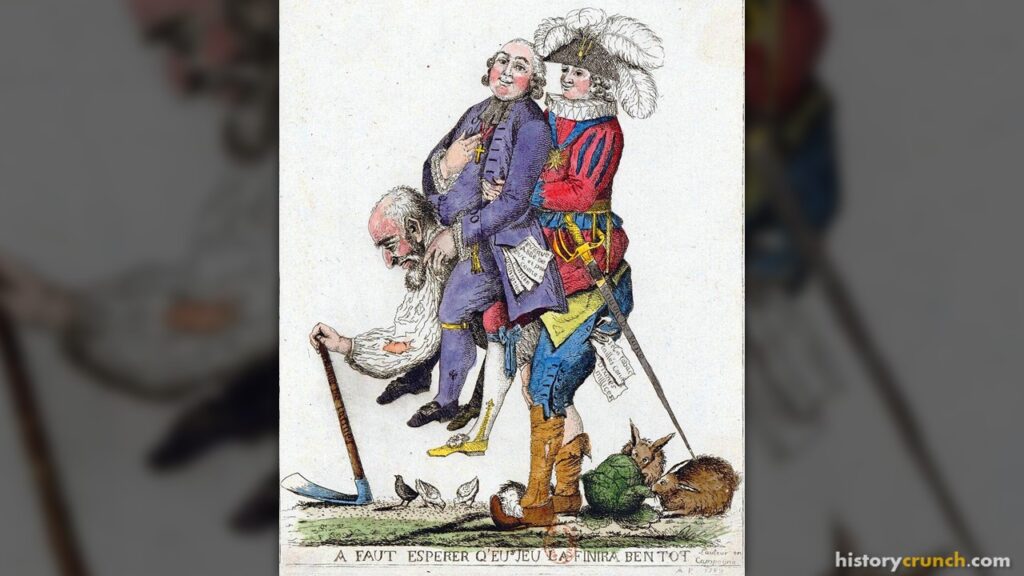
France in the 1780s, the society later called the ancien regime, held about 24,700,000 people, divided by law into three estates. The First Estate was the Roman Catholic clergy, about 100,000 people, who paid no direct tax and collected a tithe from everyone else. The Second Estate was the nobility, about 400,000, who were exempt from the main land tax and held the senior posts in the army and the church. The Third Estate was everybody else, about 98 percent of the country, and it paid.
LEARN MORESHOW LESSwhy it matters · key numbersSOCIALThis is the arrangement the revolution destroyed in a single night in August 1789, and the reason a financial crisis became a political one. The crown could not tax the rich without their consent, and asking for their consent meant calling a body that had not met since 1614.
On June 8th, 1783 the Laki volcano in Iceland began an eruption that lasted eight months and threw ash and sulphur high into the atmosphere, where it drifted across Europe. The summer was hazy and hot, the winter of 1784 was severe, and the seasons that followed brought droughts and failed harvests across France.
LEARN MORESHOW LESSwhy it matters · key numbersSCIENCEBread was the food of the French poor and its price followed the harvest. A country whose government was already bankrupt now had a population that could not eat, and the two crises met in 1789.
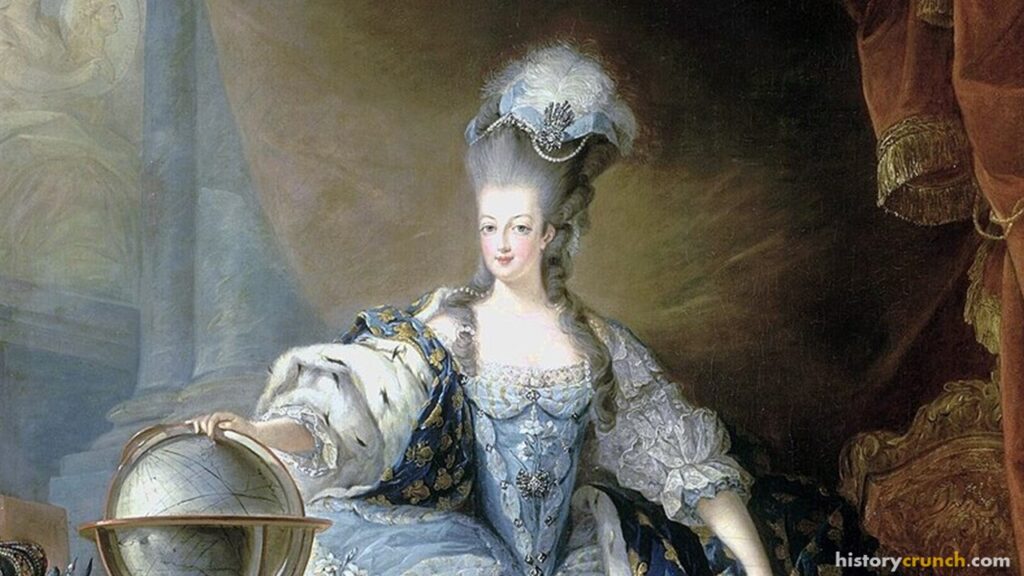
In 1785 a con artist persuaded a cardinal that Marie Antoinette wanted him to buy her a diamond necklace worth 1,600,000 livres in secret. He bought it, the thieves broke it up and sold the stones in London, and when the fraud came out the cardinal was arrested at Versailles on August 15th, 1785 and tried in public. The queen had never asked for the necklace and never saw it. Most of France decided she had.
LEARN MORESHOW LESSwhy it matters · key numbers · 1 key figureSOCIALThe affair did not cost the crown money; it cost the queen the benefit of the doubt. From here on every pamphlet about her extravagance was believed, and the woman the crowd would come for in October 1789 was already an invented one.
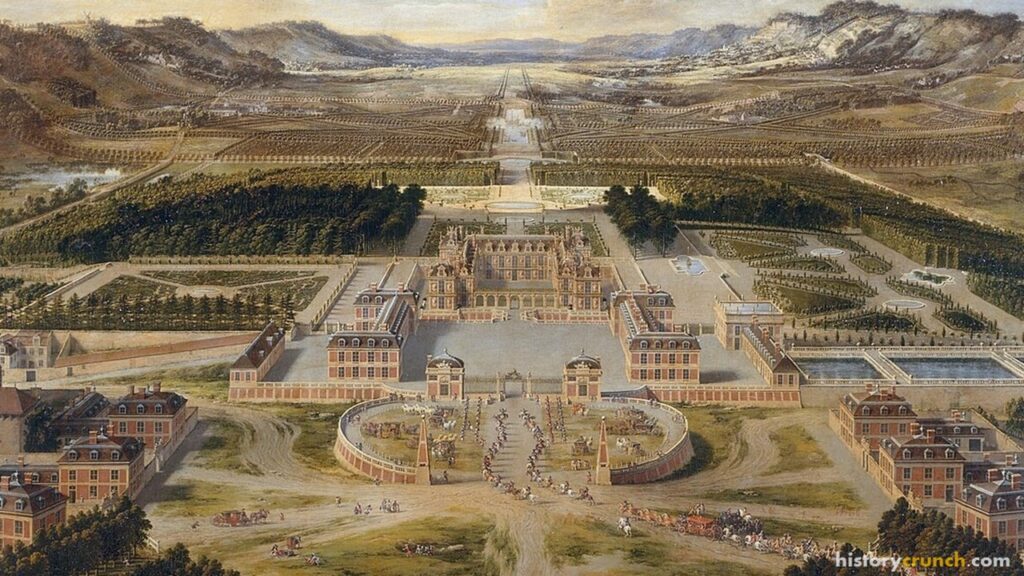
By 1786 the crown's finance minister, Calonne, had told Louis XVI the truth: the deficit could not be covered and the only answer was a land tax that everybody paid, nobles included. Rather than fight the courts, the king summoned 144 hand-picked bishops, nobles and officials to Versailles on February 22nd, 1787 to approve it. They refused, and said only the Estates-General could consent to a new tax.
LEARN MORESHOW LESSwhy it matters · key numbersPOLITICALThe revolution begins with a tax revolt by the rich. By refusing, the privileged forced the king to call the one body that could tax them, and by calling it he gave the other 98 percent of France a national meeting for the first time in 175 years.
Through 1787 and 1788 the crown tried everything else: new ministers, forced registration of taxes, the exile of the Paris court that refused them. On August 8th, 1788 Louis XVI gave in and announced that the Estates-General would meet on May 1st, 1789. Within days the treasury suspended payments. Across France that winter, villages and guilds wrote out lists of grievances, the cahiers de doleances, to send with their deputies.
LEARN MORESHOW LESSwhy it matters · key numbers · 1 key figurePOLITICALThe king called the Estates-General to get money. The country treated it as an invitation to say what was wrong with everything, and tens of thousands of grievance lists arrived saying so. The gap between those two expectations is the first act of the revolution.
A hailstorm in July 1788 flattened crops across northern France, and the winter that followed was the coldest in decades: the Seine froze, mills stopped, and stores of grain were ruined. By the spring of 1789 a Paris worker was spending upwards of 90 percent of a day's wage on bread alone, and there were riots in the markets.
LEARN MORESHOW LESSwhy it matters · key numbersECONOMICHunger is what turned a constitutional argument at Versailles into a crowd in the street. Every great day of 1789, July 14th and October 5th, began with people looking for bread or for the weapons to demand it.
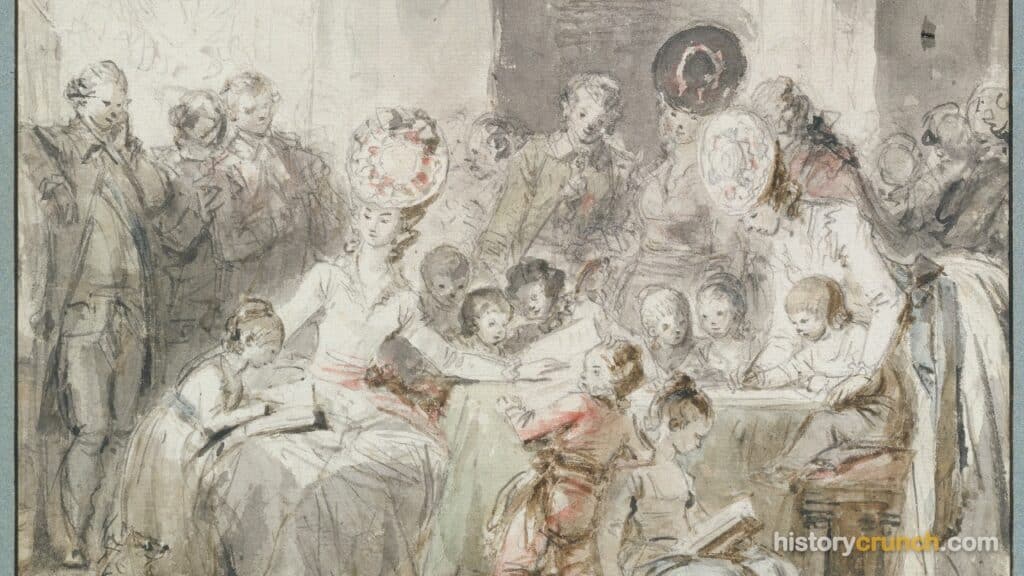
In January 1789, as France argued about how the Estates-General should vote, a clergyman named Emmanuel Sieyes published a pamphlet of about a hundred pages. It opened with three questions and three answers: what is the Third Estate? Everything. What has it been until now in the political order? Nothing. What does it ask? To become something. It sold in the tens of thousands.
LEARN MORESHOW LESSwhy it matters · key numbers · a sourceIDEASSieyes gave the Third Estate an argument for doing what it did in June: if the nation is the people, then the deputies of the people are the nation and may govern without the other two orders. Every step from the National Assembly to the republic follows from that sentence.
IN THEIR OWN WORDS“What is the Third Estate? Everything. What has it been until now in the political order? Nothing. What does it ask? To become something.”
Emmanuel Sieyes, What Is the Third Estate?, January 1789
In one year France stopped being a kingdom of subjects and became a nation of citizens. The Estates-General met in May and deadlocked over how to vote; in June the Third Estate declared itself the National Assembly and swore not to disband until France had a constitution; in July a Paris crowd took the Bastille and the countryside burned the records of what it owed; in August the Assembly abolished feudalism in a single night and adopted the Declaration of the Rights of Man; in October the women of Paris walked to Versailles and brought the king home to live among them.
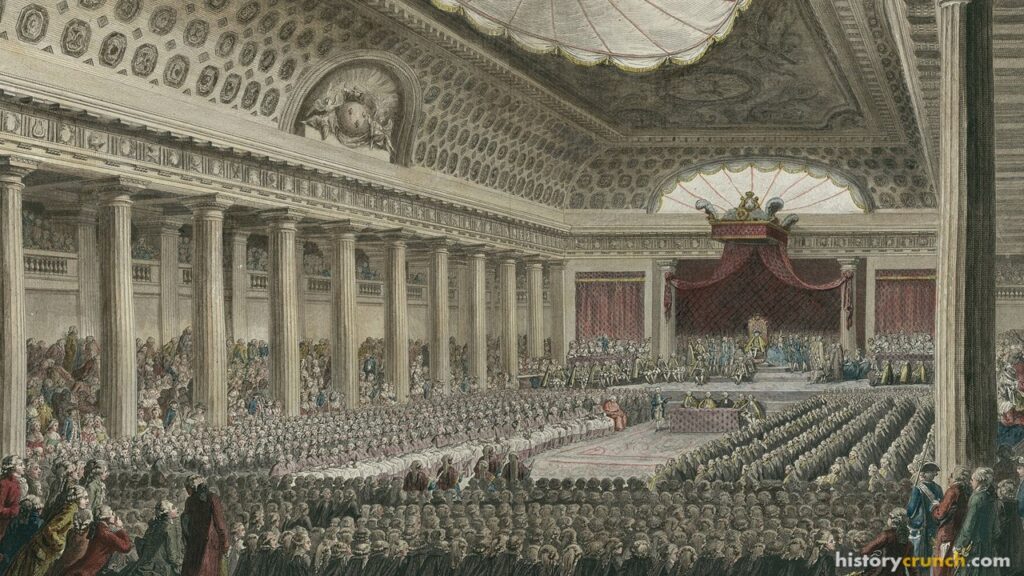
On May 5th, 1789 about 1,200 deputies met at Versailles in the first Estates-General since 1614. The Third Estate had been given twice as many deputies as each of the others, which meant nothing unless the three orders sat together and voted by head; if they sat apart and voted by order, the clergy and nobility could outvote them two to one every time. For six weeks nothing else was discussed.
LEARN MORESHOW LESSwhy it matters · key numbers · 2 key figuresPOLITICALThe question of how to count the votes was the whole revolution in miniature: was France a kingdom of three orders or a nation of citizens? The king would not decide, so in June the Third Estate decided for him.
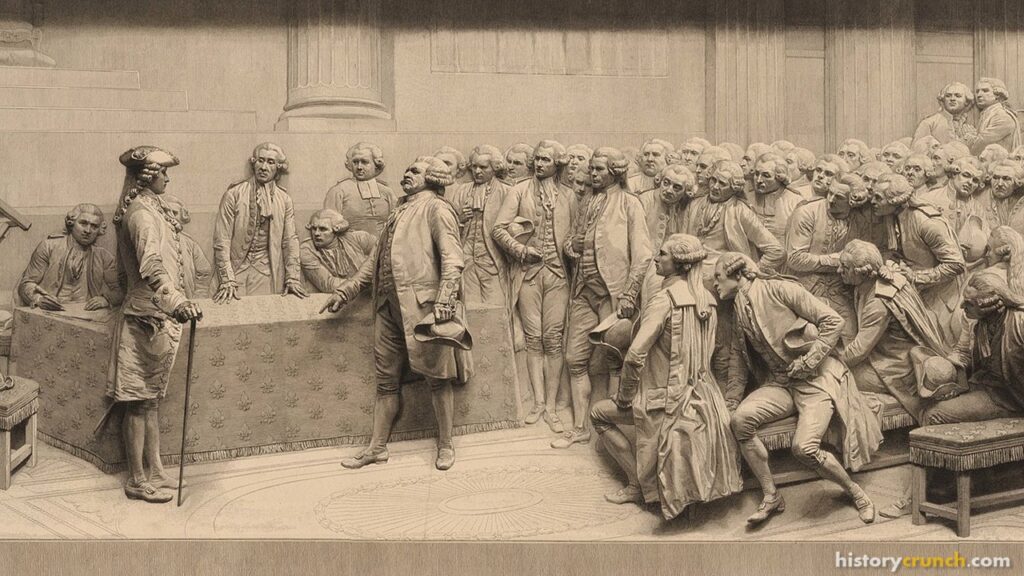
On June 17th, 1789, after six weeks of being ignored, the deputies of the Third Estate voted to stop calling themselves an estate. They declared that they represented 96 percent of the nation and were therefore the National Assembly of France, and invited the other two orders to join them. Some parish priests already had. On June 23rd the king ordered them to disperse and they refused; four days later he gave way and ordered the other orders to join them.
LEARN MORESHOW LESSwhy it matters · key numbers · 1 key figurePOLITICALThis is the moment sovereignty changes hands. A body called to advise the king declared that it spoke for the nation, and the king, having no army he trusted in Paris, accepted it. Everything after this is an argument about what the nation may do.
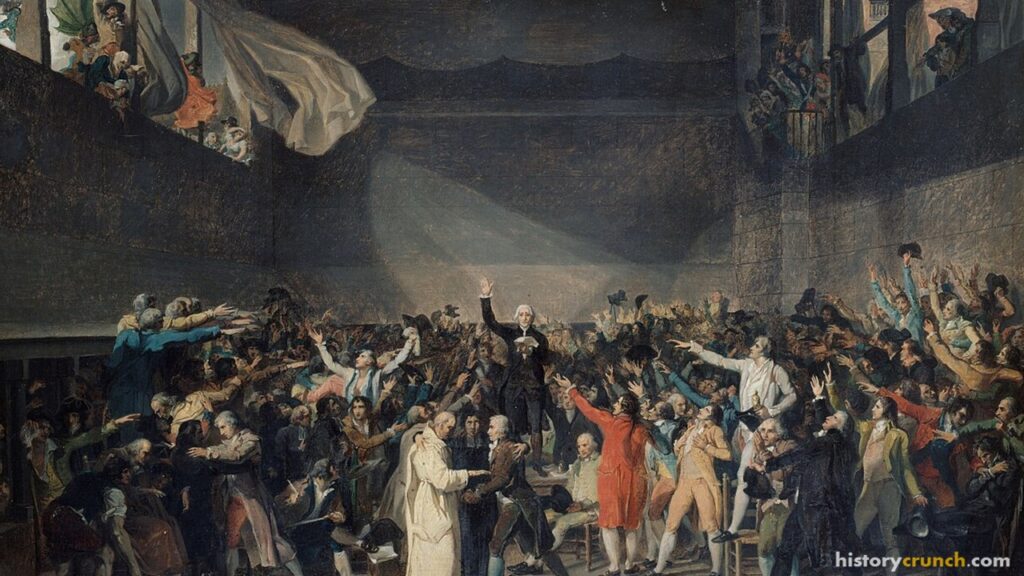
On the morning of June 20th, 1789 the deputies of the new National Assembly found their hall locked and guarded, officially for repairs before a royal session. They walked through the rain to a nearby indoor tennis court and swore, standing, not to separate and to reassemble wherever circumstances require, until the constitution of the kingdom is established. One deputy voted against.
LEARN MORESHOW LESSwhy it matters · key numbers · a sourcePOLITICALThe oath turned 577 deputies into a government that could not be dismissed, and it is why the revolution has a written constitution at its center rather than only a crowd. Jacques-Louis David's drawing of the scene, thirty feet wide and never finished, made it the founding image of the French republic.
IN THEIR OWN WORDS“Not to separate, and to reassemble wherever circumstances require, until the constitution of the kingdom is established.”
The Tennis Court Oath, June 20th, 1789
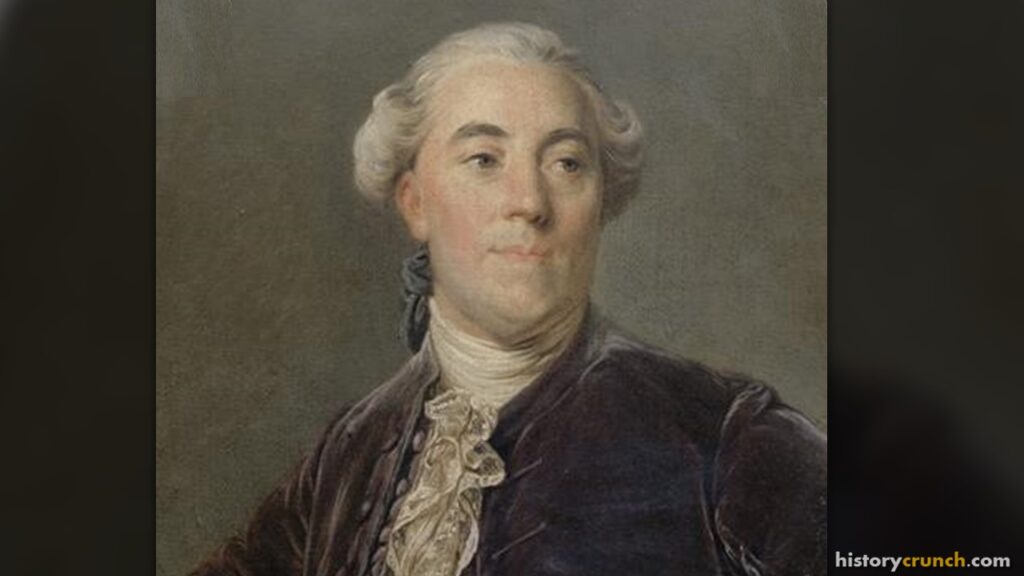
Jacques Necker was a Swiss banker, twice finance minister, and the only man in the government the public trusted. He had published the royal accounts in 1781, which no minister had ever done. On July 11th, 1789 Louis XVI dismissed him and ordered him out of France, while regiments of foreign troops moved toward Paris. The news reached the city on the 12th, and the orator Camille Desmoulins jumped onto a table in the Palais-Royal and called the crowd to arms.
LEARN MORESHOW LESSwhy it matters · key numbers · 2 key figuresPOLITICALNecker's dismissal was read, correctly, as the king preparing to break the Assembly by force. Three days later the crowd took the Bastille; five days later Necker was recalled. He resigned for good in September 1790 and died forgotten in 1804.
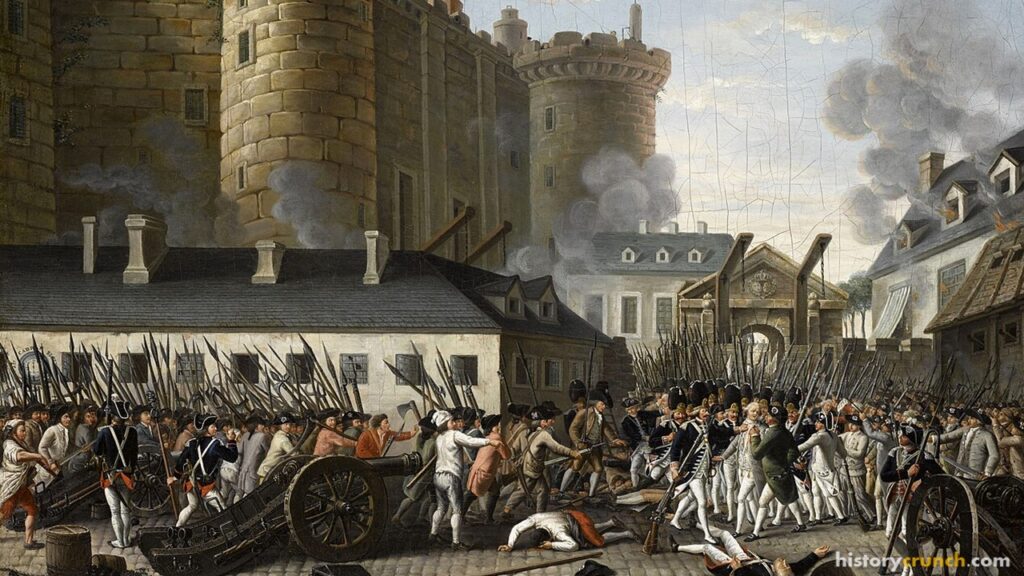
On July 14th, 1789 a Paris crowd that had already emptied an armoury of 30,000 muskets went to the Bastille, a medieval fortress and prison on the eastern edge of the city, for the gunpowder stored there. After a morning of negotiation and four hours of fighting the governor surrendered; about a hundred attackers had been killed. He was killed in the street and his head carried on a pike. Inside the prison were seven prisoners, none of them political.
LEARN MORESHOW LESSwhy it matters · key numbers · a debateMILITARYThe Bastille held almost nobody, which is the point: it was taken as a symbol and became one. It proved the king could not control his own capital, it saved the Assembly, and it is the day France still keeps as its national holiday. In his diary for July 14th the king wrote one word, nothing, meaning he had caught nothing hunting.
Why does the Bastille matter if it was nearly empty?
Because it was the king's power made of stone in the middle of his capital, and ordinary people took it in an afternoon.
Because it armed the revolution: what the crowd came for was gunpowder, and from July 14th the Paris crowd could fight.
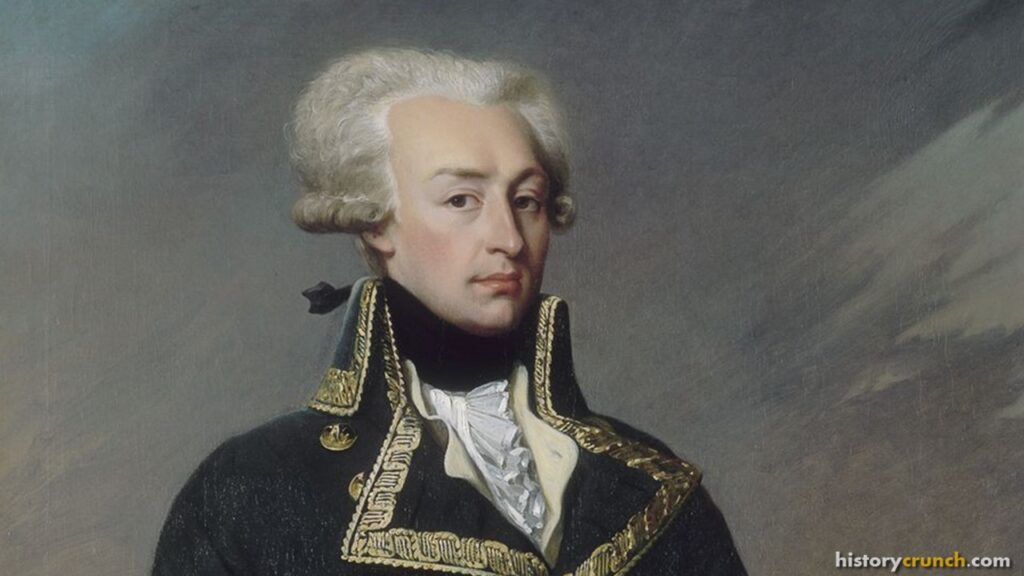
The day after the Bastille fell, Paris gave command of its new militia, the National Guard, to the Marquis de Lafayette, a nobleman of thirty-one who had fought for George Washington at Brandywine and Yorktown. He gave the Guard a badge combining the red and blue of Paris with the white of the king, which became the tricolor. He sent the key of the Bastille to Washington, where it still hangs at Mount Vernon.
LEARN MORESHOW LESSwhy it matters · key numbers · elsewhereMILITARYLafayette is the revolution's great might-have-been: an aristocrat who wanted a French version of the American settlement, a king under a constitution. He commanded the troops who fired on the crowd at the Champ de Mars in 1791, lost both sides, and fled in 1792.
The American Revolution hub tells his war; this card is what he tried to do with it at home.
From about July 20th, 1789 a rumour ran through the French countryside that the nobles had hired brigands to destroy the harvest. Villages armed themselves, found no brigands, and went to the manor houses instead, where they burned the charters that recorded their feudal dues. The panic spread across most of France in three weeks. Very few people were killed; a great many documents were not.
LEARN MORESHOW LESSwhy it matters · key numbersSOCIALThe Great Fear is what made the abolition of feudalism urgent rather than theoretical. The Assembly at Versailles could either legalize what the peasants had already done or try to reverse it, and on August 4th it chose to legalize it.
On the night of August 4th, 1789, with the countryside in flames, a liberal nobleman rose in the Assembly and proposed giving up his own feudal rights. What followed was a competition: nobles surrendered hunting rights and manorial courts, bishops gave up the tithe, provinces gave up their privileges, towns gave up their charters. By two in the morning the legal structure of the old France was gone.
LEARN MORESHOW LESSwhy it matters · key numbersSOCIALIt was the most generous night in French history and the most calculated: the privileged gave up what the peasants had already taken. The decrees written up over the following week quietly required peasants to buy out some dues, which is why the countryside was still angry in 1793.
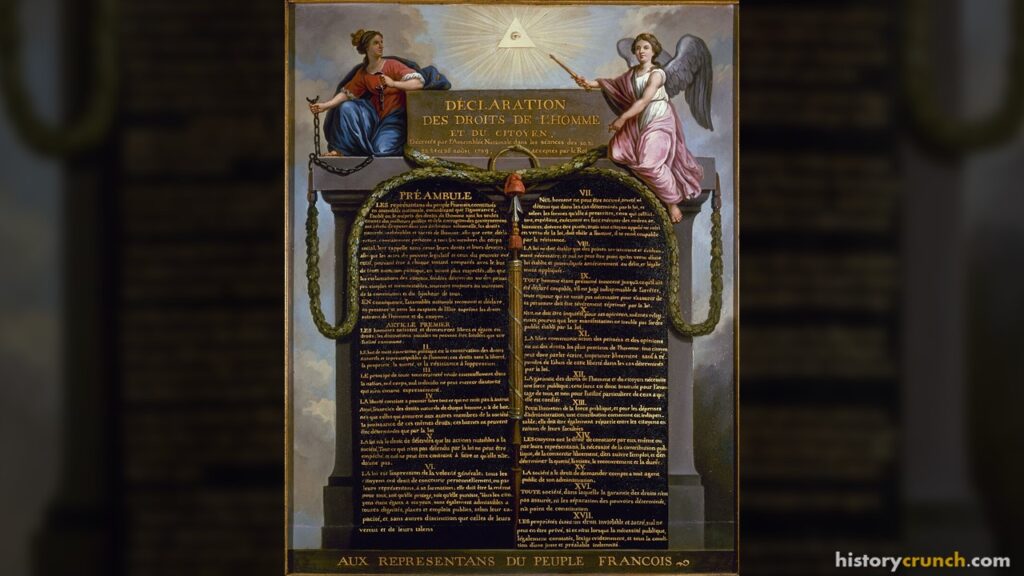
On August 26th, 1789 the National Assembly adopted seventeen articles drafted with the help of Lafayette and Thomas Jefferson, then the American ambassador in Paris. Men are born and remain free and equal in rights. Sovereignty rests in the nation. Law is the expression of the general will. No one may be accused, arrested or detained except as the law provides. Every citizen may speak, write and print freely, and answer for the abuse of that freedom.
LEARN MORESHOW LESSwhy it matters · key numbers · a sourceIDEASThis is the document the revolution is judged by, including by itself. Within four years the same assembly's successors were arresting people for what they might do, and the gap between the Declaration and the Terror is the argument the French Revolution has never stopped having.
IN THEIR OWN WORDS“Men are born and remain free and equal in rights.”
Declaration of the Rights of Man and of the Citizen, Article 1, August 26th, 1789
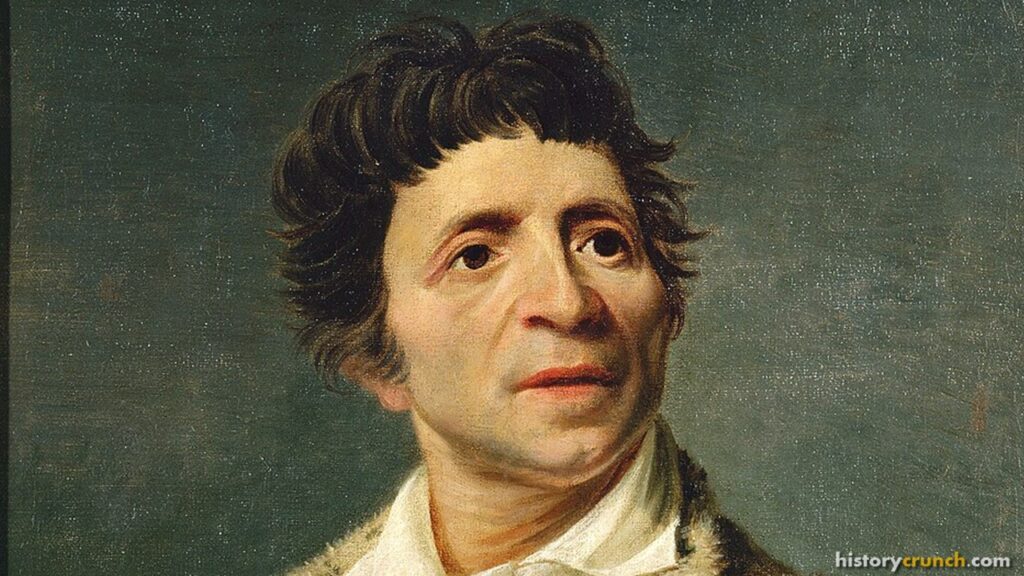
Jean-Paul Marat was born near Neuchatel in 1743 and spent twenty years as a doctor and a scientist whose work the academies would not take seriously. In September 1789 he began printing a newspaper he called L'Ami du Peuple, the Friend of the People. It named officials, generals and moderate deputies as traitors, demanded their arrest, and was believed. He wrote it from cellars and attics, hiding from arrest, with a skin disease that kept him in a medicinal bath.
LEARN MORESHOW LESSwhy it matters · key numbers · 1 key figureCULTUREMarat invented the revolutionary press: cheap, daily, personal and violent. He was the first to say in print that the revolution would have to kill to survive, and by 1793 the government agreed with him.
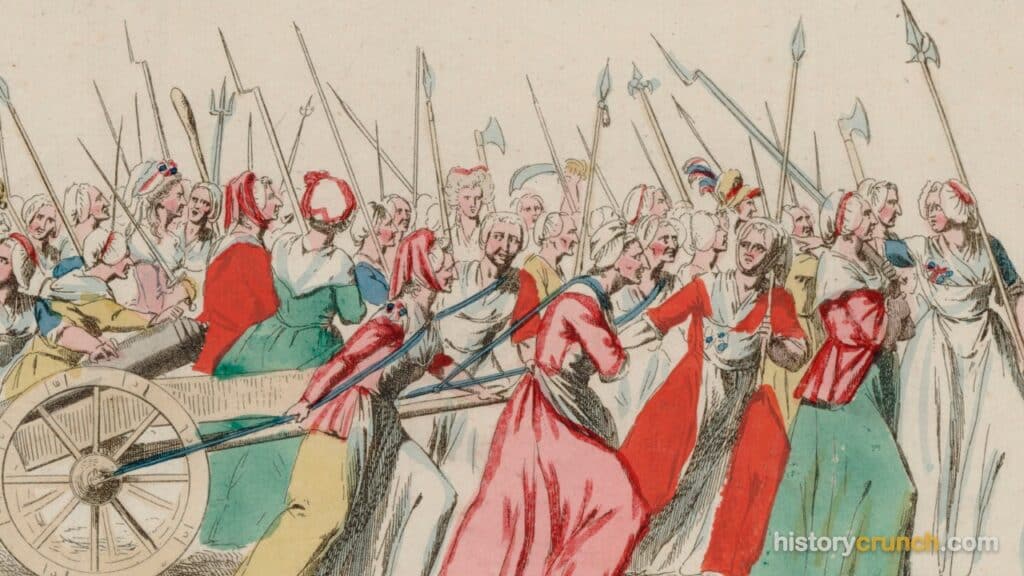
On the morning of October 5th, 1789 women in the Paris markets found the bakeries empty. Several thousand of them set out to walk the twelve miles to Versailles, in the rain, with the National Guard following behind. They filled the Assembly, met the king, and camped overnight; in the early morning some got into the palace and killed two guards. By afternoon on the 6th the royal family was in a carriage to Paris, escorted by a crowd carrying loaves on pikes.
LEARN MORESHOW LESSwhy it matters · key numbers · 2 key figuresSOCIALThe king had been the master of Versailles for a century; now he lived in Paris under the eye of the people who had fetched him. Every later crisis, the flight in 1791, the storming of the palace in 1792, happens because the crowd knows it can reach him. The Assembly followed him to Paris and never left.
In October 1789 a physician and deputy, Joseph-Ignace Guillotin, told the Assembly that capital punishment should be the same for everyone, whatever their rank, and should be done by a machine, in a single stroke and without pain. Until then nobles had been beheaded with a sword and commoners hanged, broken on the wheel or burned. The machine was designed by a surgeon, built by a harpsichord maker, and named after the doctor, who spent the rest of his life objecting.
LEARN MORESHOW LESSwhy it matters · key numbersSCIENCEThe guillotine was proposed as a reform, and it was one: it made execution equal and quick. It also made it industrial, and in 1794 a single machine in Paris could kill fifty people in an afternoon. The most humane instrument of the revolution became its emblem.
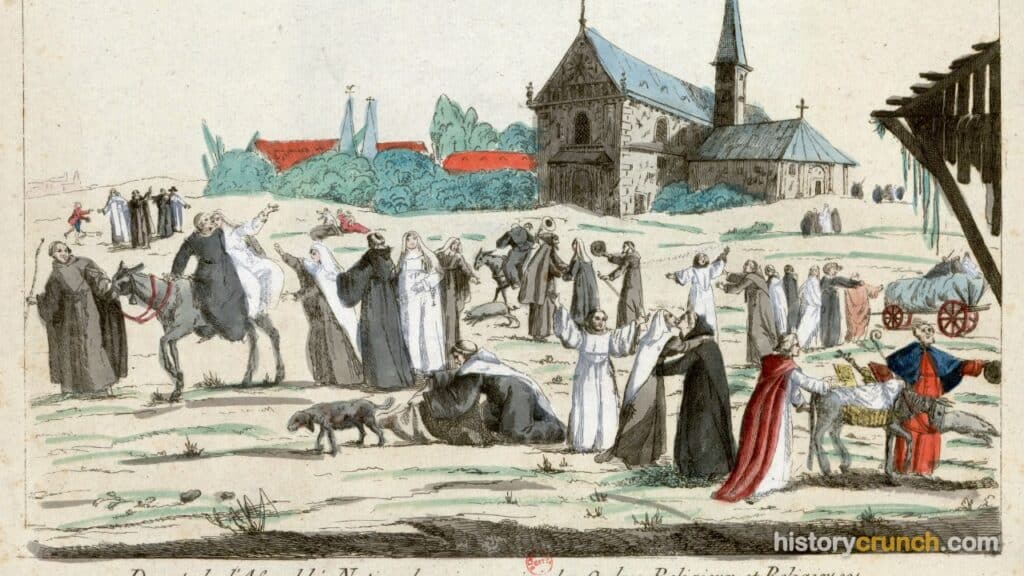
The tithe had been abolished on August 4th. On November 2nd, 1789 the Assembly voted that all Church land in France, perhaps a tenth of the country, belonged to the nation and could be sold to pay the debt that had started everything. The clergy would be paid salaries by the state instead.
LEARN MORESHOW LESSwhy it matters · key numbersECONOMICIt solved the money problem and created a worse one. A church that is paid by the state has to be organized by the state, and the law that did that eight months later split France in two and gave the counter-revolution its cause.
On December 19th, 1789 the Assembly authorized the first assignats: paper notes issued against the confiscated Church land, which holders could use to buy that land at auction. They were meant to be a short-term expedient. Instead every government that followed printed more, because printing was easier than taxing, and by 1796 an assignat was worth less than one percent of its face value.
LEARN MORESHOW LESSwhy it matters · key numbersECONOMICInflation is the quiet story running under the whole revolution. It is why bread riots keep returning, why the sans-culottes demanded price controls in 1793, and why the Directory was hated by 1799: a government that cannot pay its soldiers or feed its cities does not survive a general with an army.
For two years it looked as though the revolution might end with a king under law. A constitution was written, a festival on the Champ de Mars celebrated a nation at peace with itself, and Lafayette commanded a citizens' army. Then the Assembly reorganized the Church and forced every priest to choose; the king tried to run for the border and was caught at Varennes; the National Guard fired on a crowd asking for a republic; and in April 1792 France declared war on Austria. On August 10th, 1792 the crowd stormed the palace and the monarchy was finished.
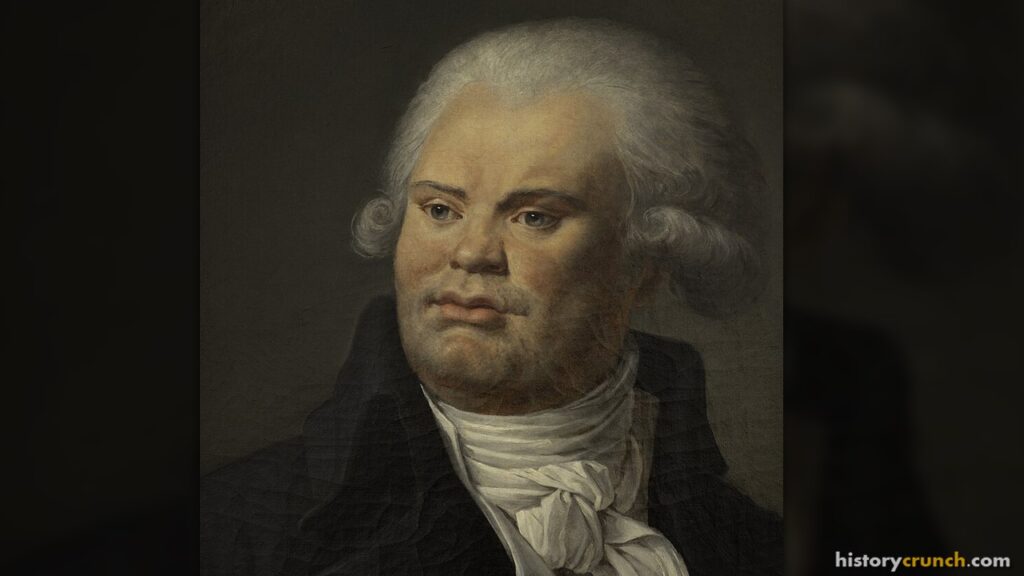
Georges Danton was born at Arcis-sur-Aube in 1759, took a law degree at Reims in 1784 and bought himself a post in the king's council. He was six feet tall, scarred by a childhood accident with a bull, and had a voice that carried across a square. On April 27th, 1790 he helped found the Cordeliers Club in his own district of Paris, where the entry fee was low enough for working men and the speeches were addressed to them.
LEARN MORESHOW LESSwhy it matters · key numbers · 2 key figuresPOLITICALThe Jacobins were deputies talking to deputies; the Cordeliers were lawyers and printers talking to the street. Danton's club is where the sans-culottes and the politicians met, and it is the reason the crowd and the Assembly moved together in August 1792.
Having taken the Church's land and its income, the Assembly reorganized it. The law of July 12th, 1790 redrew the dioceses to match the new departments, cut the number of bishops, and made bishops and parish priests elected by the same voters who elected officials, with salaries from the state. In February 1790 monastic vows had already been banned and most religious orders dissolved. On November 27th the Assembly ordered every priest to swear an oath to the constitution.
LEARN MORESHOW LESSwhy it matters · key numbers · a debateRELIGIONAbout half the parish clergy and all but seven bishops refused the oath, and Pope Pius VI condemned the law in the spring of 1791. France now had two churches, one sworn and one hiding, and millions of Catholics who had welcomed 1789 decided the revolution was against their religion. The split lasted until Napoleon patched it in 1801.
Was the Civil Constitution the revolution's greatest mistake?
It turned devout peasants who had gained from 1789 into enemies, and armed the Vendee with a cause. Without it the counter-revolution has no mass base.
The state had taken on paying the clergy and could not leave a foreign pope appointing officials it paid. The mistake was not the reform but the oath, which forced every priest to choose in public.
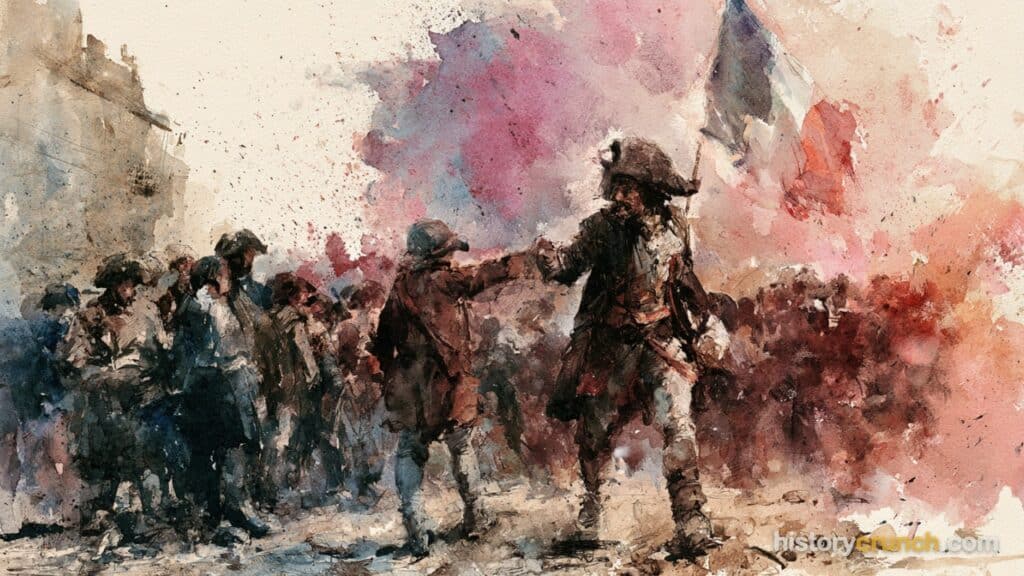
On July 14th, 1790, a year after the Bastille, about 300,000 people filled the Champ de Mars in Paris, a field they had dug out themselves in the weeks before, volunteers of every class working side by side. Delegates came from every department. Lafayette swore an oath on behalf of the nation, a bishop said mass at an altar in the middle of the field, and Louis XVI swore to uphold the constitution. It rained all day and nobody minded.
LEARN MORESHOW LESSwhy it matters · key numbers · 2 key figuresSOCIALThis is the day the revolution could have stopped: a king under law, a nation at peace with itself, feudalism gone. Within a year the king had tried to run, the Guard had fired on a crowd in that same field, and the men who embraced there were dividing into the sides that would kill each other.
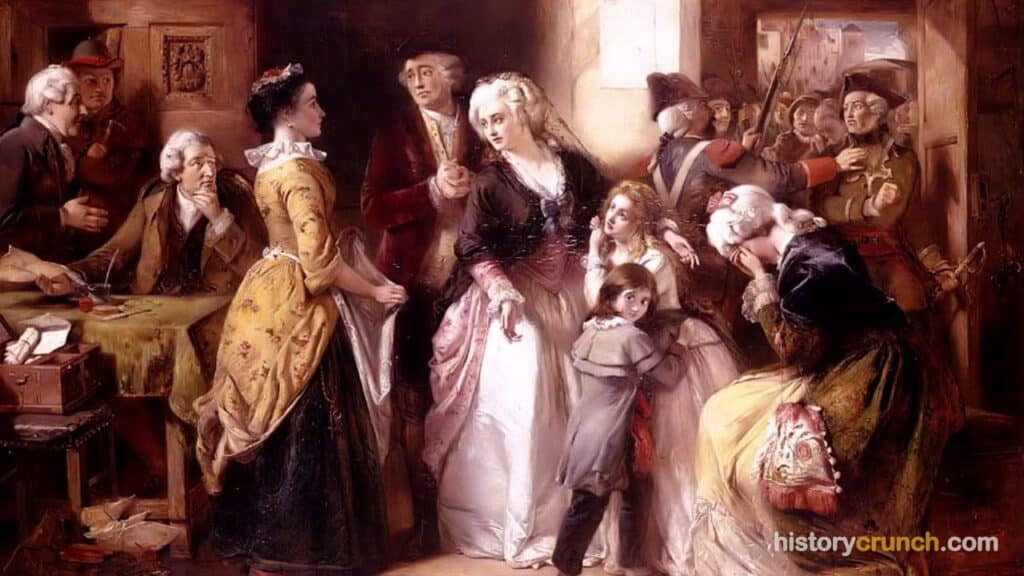
On the night of June 20th, 1791 the royal family left the Tuileries in disguise in a heavy coach, heading for a loyal army near the Austrian border. They travelled slowly, stopped often, and the king showed his face. At Varennes, about thirty miles short, a postmaster who had recognized him rode ahead and raised the town. They were arrested and driven back to Paris on the 21st through crowds ordered to stand in silence with their hats on. Louis had left behind a letter denouncing the revolution.
LEARN MORESHOW LESSwhy it matters · key numbers · 2 key figuresPOLITICALUntil Varennes most French people wanted a king; after it they had a king who had tried to leave and had written down what he really thought. The Assembly pretended he had been kidnapped, because it needed him, but the word republic entered ordinary conversation that summer.
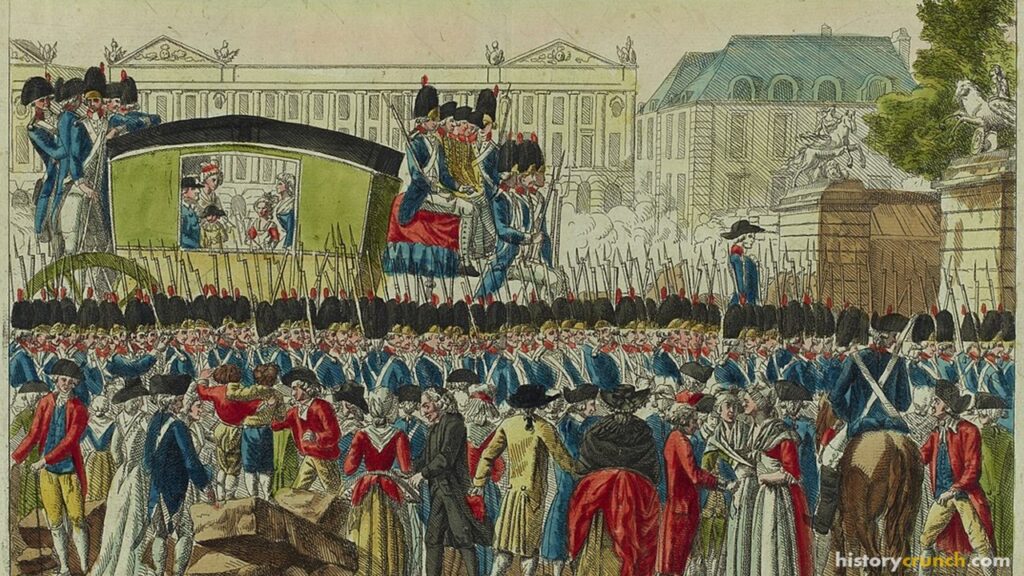
After Varennes the Cordeliers circulated a petition asking that the king be removed. On July 17th, 1791 a crowd of several thousand gathered on the Champ de Mars to sign it, on the same field where the Federation had been celebrated a year before. The city declared martial law and Lafayette's National Guard fired; about fifty people were killed. The leading radicals fled or went into hiding, and Marat's press was smashed.
LEARN MORESHOW LESSwhy it matters · key numbers · 1 key figurePOLITICALThe first time the revolution shot at its own people, it was moderates shooting radicals. It destroyed Lafayette, split the Jacobins, and taught the Paris crowd that Lafayette and the moderates were now against it. Fourteen months later the crowd came back with cannon.
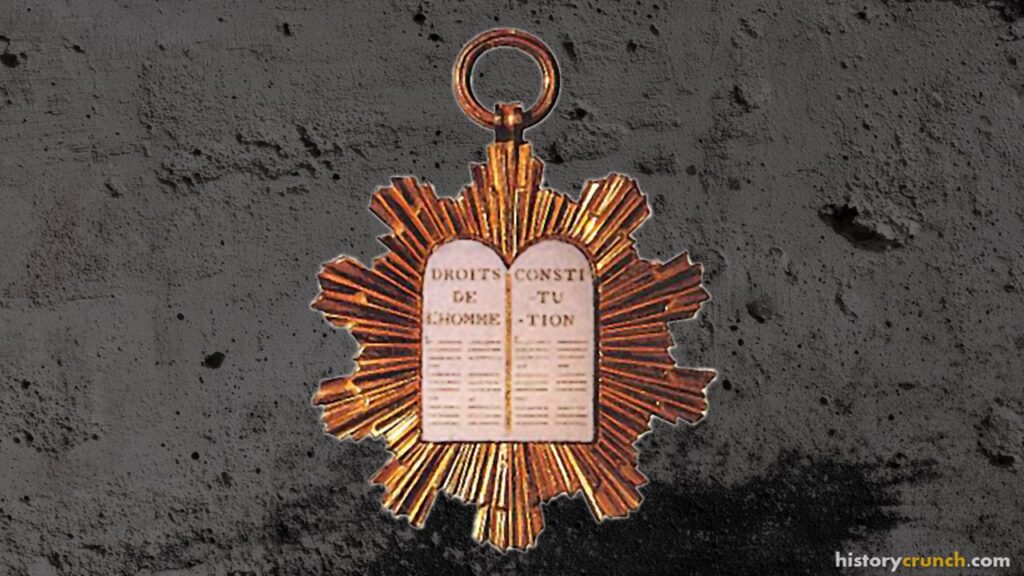
Two years of work produced a constitution, voted on September 3rd, 1791 and accepted by the king ten days later. France kept its king as head of state with a veto he could use to block a law for four years, and gained an elected assembly that made the laws. The vote went to men over twenty-five who paid direct taxes worth three days of work, about four million active citizens; the poorer three million were passive citizens with rights but no vote.
LEARN MORESHOW LESSwhy it matters · key numbers · 1 key figurePOLITICALThis is the settlement the moderates wanted and it lasted eleven months. It failed because it gave the country a king nobody trusted after Varennes and a veto he used at once, and because it told most French men that the Declaration's equality did not extend to voting.
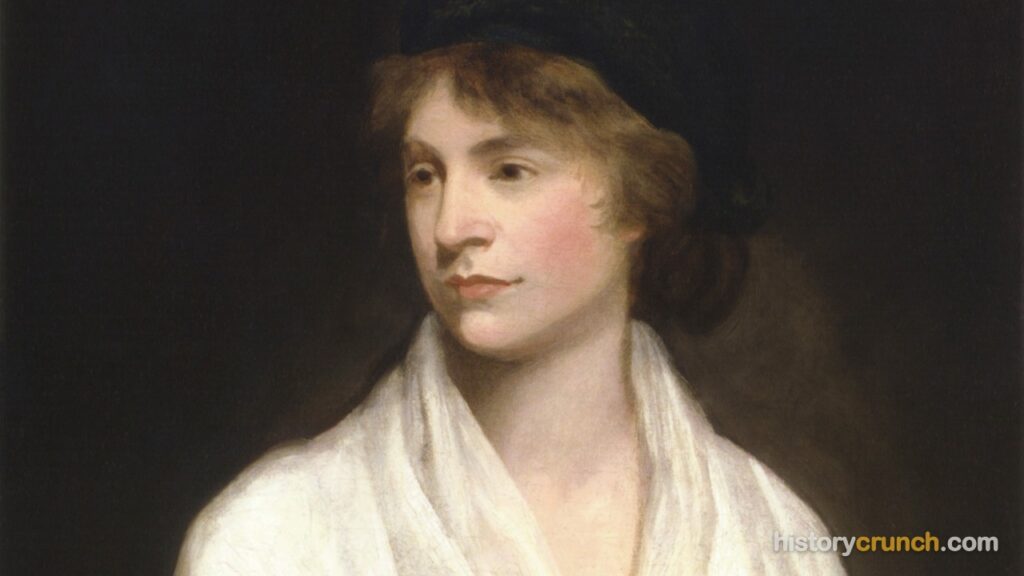
In September 1791 a butcher's daughter from Montauban who wrote plays under the name Olympe de Gouges published the Declaration of the Rights of Woman and of the Female Citizen, rewriting the seventeen articles of 1789 with women in them. Woman is born free and remains equal to man in rights. If a woman may mount the scaffold, she must equally have the right to mount the rostrum. In England the next year Mary Wollstonecraft published A Vindication of the Rights of Woman.
LEARN MORESHOW LESSwhy it matters · key numbers · a sourceIDEASFrench women marched, rioted, ran clubs and filled the galleries of the Assembly, and got nothing: no vote in 1791, no vote in 1793, their clubs banned in October 1793. Gouges was guillotined in November 1793. French women did not vote until 1944.
IN THEIR OWN WORDS“Woman has the right to mount the scaffold; she must equally have the right to mount the rostrum.”
Olympe de Gouges, Declaration of the Rights of Woman, 1791WHAT TO NOTICEShe was guillotined two years later.
The Legislative Assembly opened on October 1st, 1791 and ran for eleven months, until September 20th, 1792. Before dissolving itself the old Assembly had voted, on Robespierre's proposal, that none of its members could sit in the new one, so 745 men with no national experience arrived to run a country that went to war seven months later. They divided within weeks into the Girondins, who wanted war, and the Jacobins around Robespierre, who did not.
LEARN MORESHOW LESSwhy it matters · key numbers · 1 key figurePOLITICALThe self-denying ordinance was meant to prove the deputies were not in it for themselves. What it did was throw away two years of experience at the exact moment France needed it, and hand the argument to whoever could shout loudest about traitors.
On April 20th, 1792 the Legislative Assembly voted almost unanimously for war against Austria. The Girondins wanted it, believing a war would expose the king's treachery and spread liberty across Europe. The king wanted it, believing his army would lose and the Austrians would restore him. Robespierre argued against it, saying nobody loves armed missionaries and that war would produce a general who would take the republic. Both sides got what they expected, and so did he.
LEARN MORESHOW LESSwhy it matters · key numbers · a sourceMILITARYThe war never stopped: from 1792 to 1815 France was at war almost continuously. It killed the monarchy within four months, it produced the Terror as an emergency measure, and it produced Napoleon. Every later card on this timeline happens inside it.
IN THEIR OWN WORDS“Nobody loves armed missionaries.”
Maximilien Robespierre, arguing against the war, January 1792
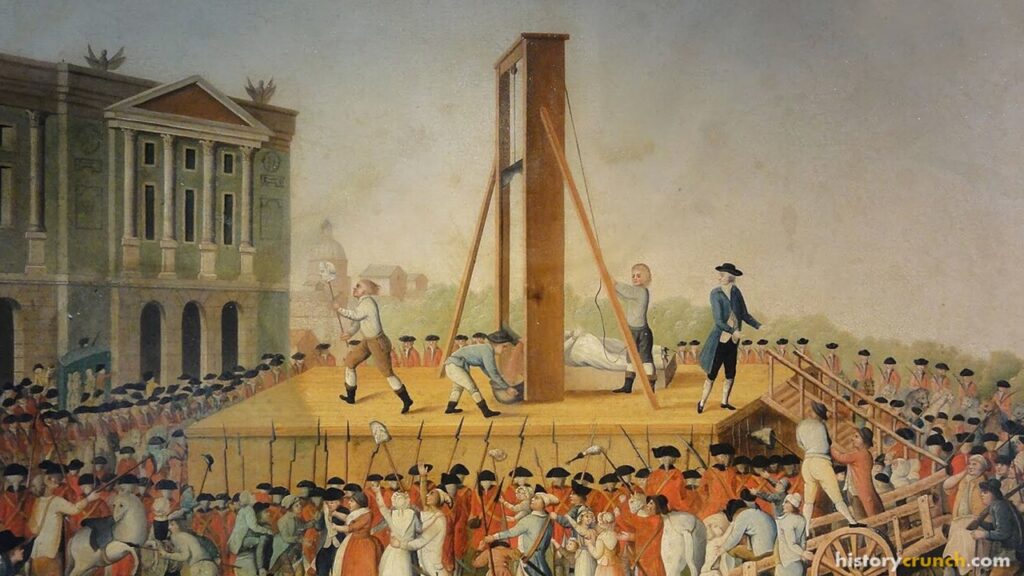
On April 25th, 1792 a highwayman named Nicolas Pelletier was executed in Paris by the new machine, in front of a crowd that found it disappointingly quick. The same week, in Strasbourg, an army officer named Rouget de Lisle wrote a marching song for the army of the Rhine. Volunteers from Marseille sang it on their way to Paris in July, and it has been called the Marseillaise ever since.
LEARN MORESHOW LESSwhy it matters · key numbersCULTURETwo things the revolution gave the world in one week: the machine and the anthem. Both were made for a France at war with Europe, and both outlived everyone who made them. The Marseillaise is still the national anthem.
The war went badly at once: French armies broke and ran, and officers deserted to the enemy. On July 25th, 1792 the Duke of Brunswick, commanding the Austrian and Prussian armies, issued a declaration promising an exemplary and forever memorable vengeance on Paris, and military execution and total destruction, if the royal family were touched. It reached Paris on August 1st.
LEARN MORESHOW LESSwhy it matters · key numbersMILITARYIt was written to frighten the revolutionaries into protecting the king. It convinced Paris that the king was in league with the invaders, which he was, and it gave the crowd the argument it needed. Sixteen days later the monarchy was gone.
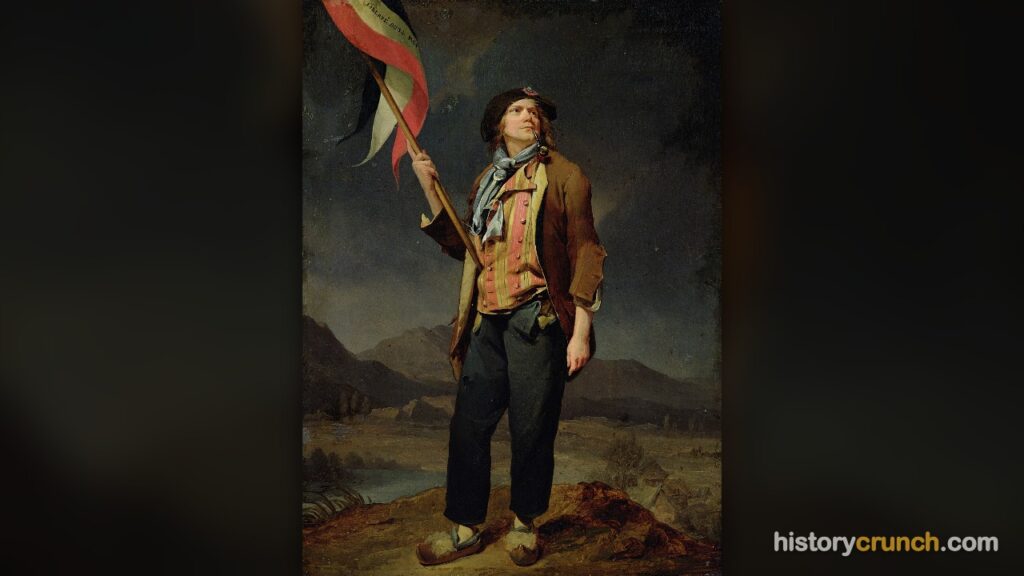
Before dawn on August 10th, 1792 the sections of Paris replaced the city government with an insurrectionary commune and marched on the Tuileries Palace with cannon and with volunteers from Marseille and Brittany. The king walked out to shelter in the Assembly; his Swiss Guards, left behind, fought and were killed almost to a man, about 600 of them. The Assembly suspended the king that afternoon and put the royal family in the Temple prison.
LEARN MORESHOW LESSwhy it matters · key numbers · 2 key figuresMILITARYAugust 10th is the second revolution. The first had made a constitutional monarchy; this one ended it, replaced the men who had made it, and handed power to the Paris sections and the Jacobins. The Swiss who died are remembered by a stone lion in Lucerne.
On September 2nd, 1792 news reached Paris that the fortress of Verdun had fallen and the road to the city was open. With the volunteers about to march away, a rumour ran that the prisons were full of royalists waiting to break out behind them. Over five days crowds went from prison to prison, held rough tribunals at the gates and killed about 1,200 people: priests, nobles, common criminals, and a hundred and fifty boys from a reformatory. Danton, as minister of justice, did not stop it.
LEARN MORESHOW LESSwhy it matters · key numbers · 2 key figuresSOCIALThe massacres are the revolution's first mass killing and the one nobody ordered. They frightened Europe, they frightened moderates like Charlotte Corday, and they hung over every later argument: the Girondins blamed the Jacobins for them, and the Jacobins killed the Girondins.
The republic was proclaimed on the day after the army saved it at Valmy, and it began by putting its king on trial. He was convicted by the assembly that had abolished him and beheaded in January 1793, and within weeks France was at war with Britain, Spain and the Dutch, the Vendee was in revolt and the cities were short of bread. In April the Convention handed the running of the country to a Committee of Public Safety; in June the armed sections of Paris purged the moderates from the Convention at gunpoint. The most democratic constitution of the revolution was written that month and locked in a box.
On September 20th, 1792 the Prussian army, marching on Paris, met the French at a windmill on a ridge near Valmy. The French had more and better artillery, and their infantry, half of it volunteers, did not run: they stood in the mud shouting long live the nation while the guns fired for most of the day. The Prussians turned back. About 500 men died, few for such a famous battle. The writer Goethe was there and told the Prussian officers that evening that a new age in the history of the world had begun.
LEARN MORESHOW LESSwhy it matters · key numbers · a sourceMILITARYValmy saved Paris and, on the same day, the Convention met for the first time. A revolution that had been an argument inside France became a state that could defend itself, which is why the republic was proclaimed two days later rather than negotiated away.
IN THEIR OWN WORDS“From this place and from this day forth begins a new era in the history of the world.”
Johann Wolfgang von Goethe, at Valmy, September 20th, 1792
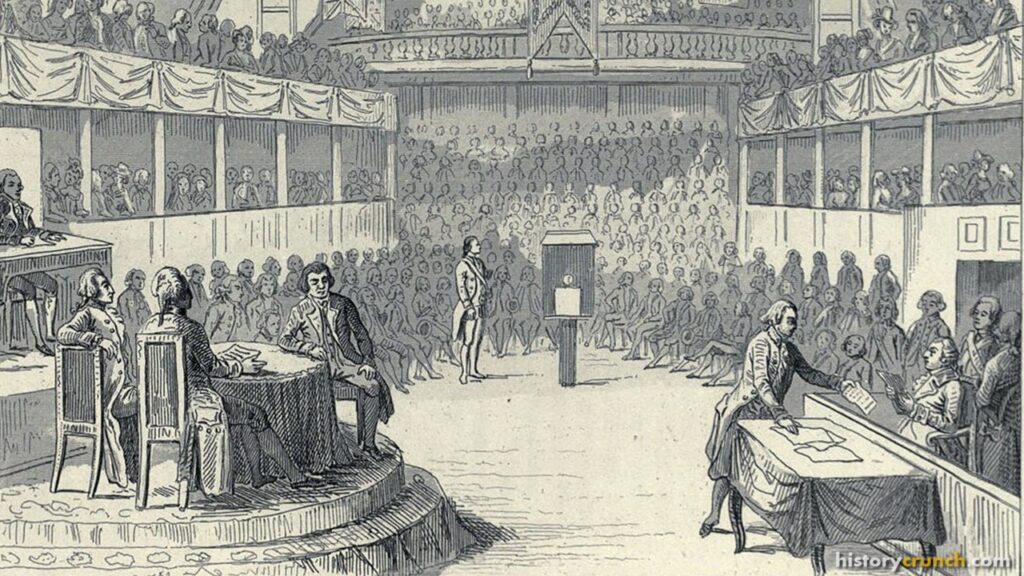
The National Convention met on September 20th, 1792, elected by all men over twenty-one, the first assembly in French history chosen that way. Its first act, on the 21st, was to abolish the monarchy without a single vote against. On the 22nd it declared the French Republic and decided that day would be the first day of Year One. Louis XVI was now a private citizen called Louis Capet, in a prison, waiting to find out what would happen to him.
LEARN MORESHOW LESSwhy it matters · key numbers · 1 key figurePOLITICALA thousand years of monarchy ended in a single sitting because the war had made the king an enemy. The Convention would govern France for three years, through the Terror and after it, and every government since has taken its shape from this one.
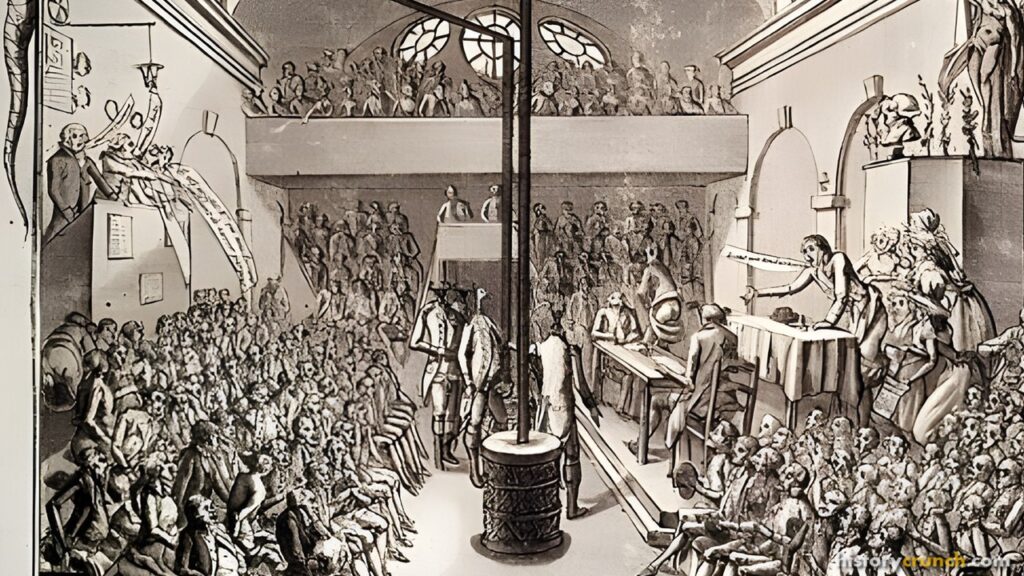
The Convention had no parties in the modern sense but it had sides, and they sat in different places. The Jacobins, with Robespierre, Danton and Marat, took the high benches on the left and were called the Mountain; they drew their strength from Paris and from the sections. The Girondins sat lower and spoke for the provinces, commerce and the war. Between them, on the level floor, sat the uncommitted majority, the Plain, about 400 deputies whose votes decided everything.
LEARN MORESHOW LESSwhy it matters · key numbers · 2 key figuresPOLITICALLearn the seating plan and every vote for the next two years makes sense. The king's death, the fall of the Girondins, the Terror and the fall of Robespierre were all decided by which way the Plain jumped, and it jumped toward whoever looked most likely to win.
In November 1792 an iron chest was found in the Tuileries containing the king's correspondence with foreign courts and with counter-revolutionaries. On December 11th he was brought before the Convention to hear the charges, and he answered them calmly over two hearings. The Convention voted in January: guilty, by 693 to nothing; no appeal to the people, by 424 to 283; and death, by 387 to 334. Among those voting for death was the king's own cousin.
LEARN MORESHOW LESSwhy it matters · key numbers · 1 key figurePOLITICALThere was no court in France with the standing to try a king, so the men who had abolished him tried him themselves, which is the objection his defenders have made ever since. The death vote passed by a margin of about one in twenty, and every deputy who cast it was now committed: if the monarchy ever came back, they were dead men.
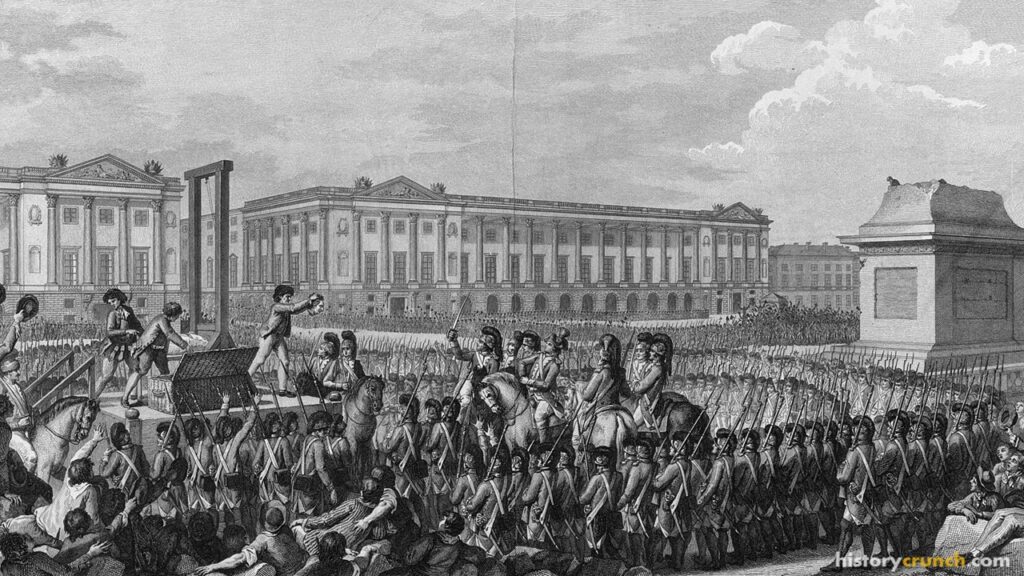
On the morning of January 21st, 1793 Louis XVI was driven through silent streets lined with troops to the square that is now the Place de la Concorde. He tried to speak to the crowd, saying he forgave those who were about to kill him and hoped his blood would not fall on France; a drum roll cut him off. He was beheaded at about ten past ten. Robespierre had told the Convention that Louis must die so that the nation may live.
LEARN MORESHOW LESSwhy it matters · key numbers · a sourcePOLITICALKilling the king was the point of no return, at home and abroad. Within two weeks France was at war with Britain, Spain and the Dutch Republic; within two months the Vendee rose. There was no longer any settlement available to the revolution except total victory.
IN THEIR OWN WORDS“I die innocent of all the crimes laid to my charge. I pardon those who have occasioned my death.”
Louis XVI, on the scaffold, January 21st, 1793
Did the king have to die?
He had plotted with foreign armies invading France, and the evidence was in his own handwriting. A republic that left a living king alive left its enemies a rallying point.
The trial was held by his political enemies acting as judge and jury, exile was available, and his death united Europe against France and made moderate reform impossible for a generation.
Eleven days after the execution, on February 1st, 1793, the Convention declared war on Britain and the Dutch Republic, and in March on Spain. Britain organized and paid for a coalition; the French navy was outmatched and the colonies were cut off. By the spring France was fighting on every frontier at once while its own west was in revolt, and its armies were short of officers, most of whom had been noblemen.
LEARN MORESHOW LESSwhy it matters · key numbersMILITARYThis is the emergency that produced everything else in 1793: the Committee of Public Safety, the levee en masse, price controls and the Terror were all justified by the war. Whether they were caused by it is the argument historians have been having ever since.
On March 11th, 1793, in the farming country south of the Loire, peasants refused to be conscripted for a war they did not want, by a Convention that had taken their priests. They killed the local officials, chose noblemen and a carter named Cathelineau to lead them, and marched under a sacred heart badge for God and the king. Within weeks the Catholic and Royal Army held most of the region and had beaten the troops sent against it.
LEARN MORESHOW LESSwhy it matters · key numbers · a debateMILITARYThe Vendee was the largest counter-revolution of them all, and it turned the republic's fear of enemies within into a fact. The war there lasted three years, and the columns sent to end it burned farms and killed without asking sides; the usual estimate is about 170,000 dead, most of them civilians.
Was the Vendee a genocide?
The Convention ordered the region destroyed and the infernal columns killed women and children as policy; some historians call it the first ideological genocide.
The killing was brutal and deliberate but aimed at a rebellion in arms rather than at a people, and the word genocide imports a later idea. Most historians call it a civil war fought without mercy on both sides.
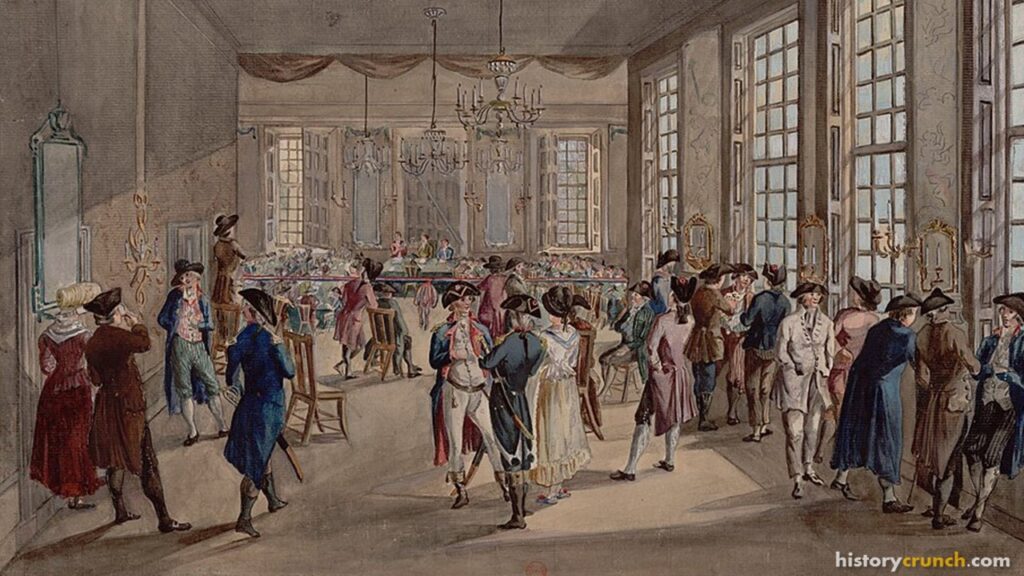
On April 6th, 1793, with the armies losing and the west in revolt, the Convention created a committee of twelve men to direct the war, the ministries and the police, renewed every month. It met in secret, worked through the night, and within months was the government of France in everything but name. Robespierre joined it in July. A Revolutionary Tribunal to try enemies of the republic had been set up a month earlier.
LEARN MORESHOW LESSwhy it matters · key numbers · 2 key figuresPOLITICALThe Committee was a wartime emergency government, and it worked: it raised the armies that saved France and won the war by the summer of 1794. It also ran the Terror, and the same twelve men did both things at the same desk.
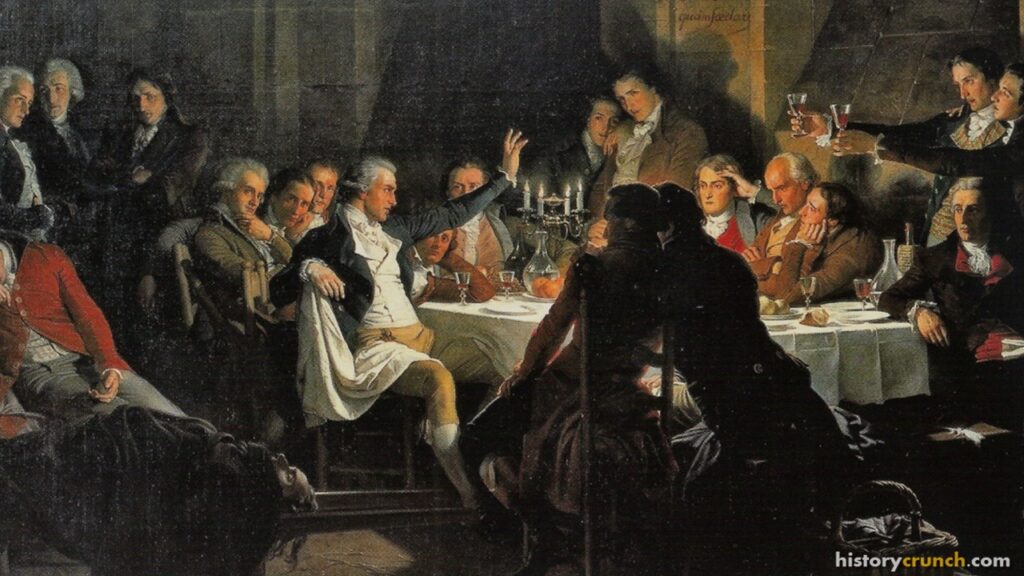
Bread was short, the war was lost in Belgium, and the Girondins had impeached Marat and lost. On May 31st and again on June 2nd, 1793 the armed sections of Paris surrounded the Convention with cannon and would not let the deputies leave until twenty-nine Girondins had been expelled and put under house arrest. Many escaped to the provinces and raised revolts; twenty-one of those who stayed were guillotined on October 31st, 1793.
LEARN MORESHOW LESSwhy it matters · key numbers · 1 key figurePOLITICALAfter June 2nd the Convention governed under the eye of the Paris crowd, and the Mountain governed the Convention. The purge also set off the federalist revolts in Lyon, Marseille, Bordeaux and Toulon, which is why the Terror arrived that autumn.
Three weeks after the purge, on June 24th, 1793, the Convention adopted a new constitution: the vote for every man over twenty-one, direct election, a right to work or to public relief, a right to education, and a duty of insurrection when the government violates the rights of the people. About 1.8 million voted to approve it in a referendum that summer. In October the Convention declared the government revolutionary until the peace, and the constitution was put in a cedar box and never used.
LEARN MORESHOW LESSwhy it matters · key numbersPOLITICALThe Constitution of 1793 is the promise the revolution made and suspended in the same year. Everyone afterwards claimed it: it was the text the risings of 1795 demanded, and the one nineteenth-century republicans and socialists looked back to.
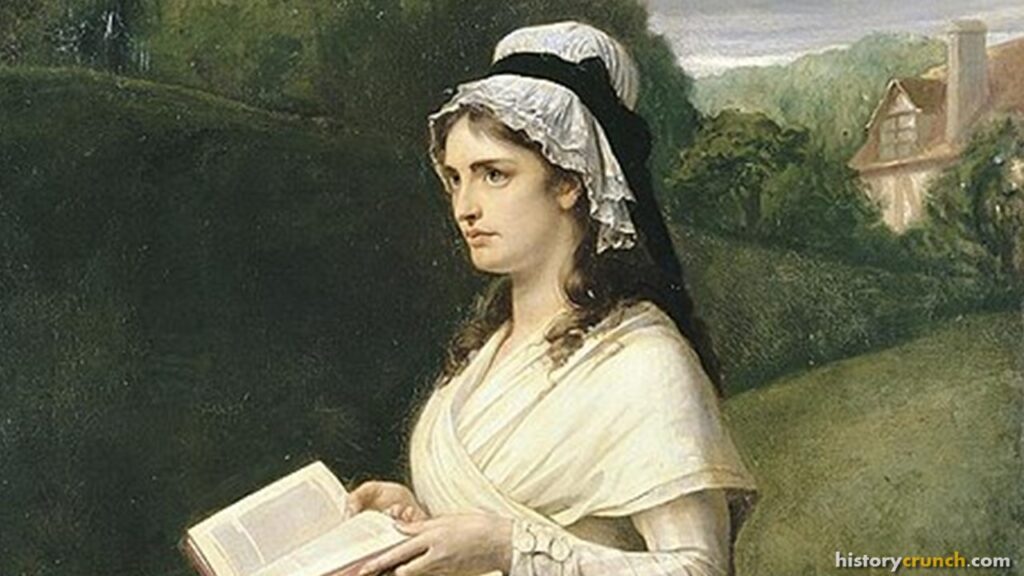
Charlotte Corday was twenty-four, from a minor noble family in Normandy, and had watched the expelled Girondins arrive in Caen to raise a revolt. Believing that Marat's newspaper was driving France toward civil war, she travelled to Paris, bought a kitchen knife at the Palais-Royal on July 13th, 1793, talked her way into his apartment with a list of traitors, and stabbed him once as he sat in the medicinal bath his skin disease kept him in. She made no attempt to escape. She was tried and guillotined on July 17th.
LEARN MORESHOW LESSwhy it matters · key numbers · a sourcePOLITICALCorday killed Marat to stop the Terror and helped start it: he became a martyr, painted by David as a dead saint, and the Jacobins used his death as proof that enemies were everywhere. She had expected that, and said at her trial that she had killed one man to save a hundred thousand.
IN THEIR OWN WORDS“I killed one man to save a hundred thousand.”
Charlotte Corday, at her trial, July 17th, 1793
On August 23rd, 1793 the Convention decreed that until the enemy had been driven from the republic, all French people were permanently requisitioned. Young men would fight; married men would forge weapons and carry supplies; women would make tents and uniforms and serve in the hospitals; children would tear old linen into bandages; old men would be carried into the squares to preach hatred of kings. About 800,000 men were under arms within a year.
LEARN MORESHOW LESSwhy it matters · key numbers · a sourceMILITARYThis is the first modern mobilization of a whole society for war, and it worked: the republic's armies outnumbered every professional army in Europe and did not run out of men. Every conscription law since, on every continent, is descended from this decree.
IN THEIR OWN WORDS“From this moment until that in which the enemy shall have been driven from the soil of the Republic, all Frenchmen are in permanent requisition for the service of the armies.”
Decree of the National Convention, August 23rd, 1793
On August 29th, 1793 the great naval base at Toulon, in revolt against the Convention, opened its harbour to a British and Spanish fleet and handed over most of the French Mediterranean navy. The republic sent an army, and its artillery came under a Corsican captain of twenty-four named Napoleon Bonaparte. He identified the headland that commanded the harbour, took it in December, and the fleet had to leave. He was made a brigadier general at twenty-four.
LEARN MORESHOW LESSwhy it matters · key numbers · 1 key figureMILITARYThis is where Napoleon enters French history, and he enters it as a Jacobin: a friend of Robespierre's younger brother, arrested briefly after Thermidor for exactly that. The republic that invented the career open to talent had just found its most talented man.
In September 1793 the Convention voted that terror would be the order of the day, and for ten months the French state used arrest and execution as a method of government. A law made suspicion itself a crime and about 300,000 people were arrested. Lyon was ordered demolished, prisoners were drowned at Nantes, the queen went to the guillotine in October and Danton in April. The Convention also abolished slavery in the colonies and invented a calendar that began the world again. Then the armies won the war, the excuse ran out, and in July 1794 the frightened men who had voted for the Terror voted for Robespierre's arrest.
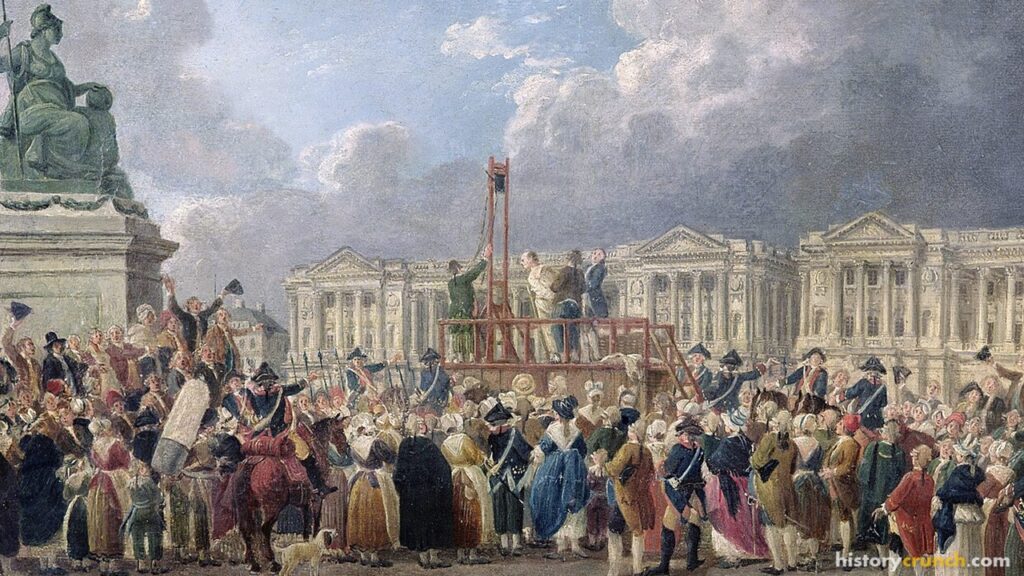
On September 5th, 1793 a crowd of sans-culottes came into the Convention demanding bread and the arrest of suspects, and the deputies agreed: terror would be the order of the day. Over the following month came a maximum price on grain and other goods, a revolutionary army to enforce it in the countryside, and a law defining who could be arrested. The Terror was a policy, voted by an assembly, not a breakdown of order.
LEARN MORESHOW LESSwhy it matters · key numbersPOLITICALEverything that follows was legal, which is what makes it frightening. For ten months the French state used arrest and execution as an instrument of government, and told itself it was an emergency that would end when the war did.
The law of September 17th, 1793 ordered the arrest of anyone who by their conduct, their contacts, their words or their writings showed themselves to be partisans of tyranny or enemies of liberty. Local watch committees decided who that was. Nobles, relatives of emigres, dismissed officials and anyone who could not produce a certificate of good citizenship were liable. About 300,000 people were arrested over the next ten months and about 10,000 died in prison without ever being tried.
LEARN MORESHOW LESSwhy it matters · key numbersPOLITICALThis is the sentence in the revolution that contradicts the Declaration of 1789 most exactly: the Declaration said no one may be accused except as the law provides, and here the law provided for accusation without an act. Once suspicion is a crime, everyone is guilty of something.
On October 5th, 1793 the Convention adopted a calendar that began on September 22nd, 1792, the first day of the republic. It had twelve months of thirty days with names taken from the weather and the harvest, Brumaire for fog, Thermidor for heat, Germinal for seed; each month had three ten-day weeks, which abolished Sunday; and five extra days at the end of the year were holidays. It was used for twelve years.
LEARN MORESHOW LESSwhy it matters · key numbersCULTUREThe calendar is the clearest sign of what the revolution thought it was doing: not reforming France but starting time over, without kings or saints. It is also why the coup that ended it is called 18 Brumaire and the fall of Robespierre is called Thermidor.
Lyon, France's second city, had risen against the Convention after the purge of the Girondins and held out under siege for two months. It fell on October 9th, 1793. The Convention sent a deputy as its representative on mission with full powers, and decreed that the city be demolished, that a column be raised on the ruins saying Lyon made war on liberty and Lyon is no more, and that it be renamed Ville-Affranchie. About 1,900 people were shot or guillotined there, some by cannon fire into groups tied together. At Nantes that winter, prisoners from the Vendee were drowned in the Loire by the hundreds.
LEARN MORESHOW LESSwhy it matters · key numbersMILITARYMost of the Terror happened outside Paris and most of its victims were not nobles: about 85 percent of those executed were commoners, and the heaviest killing was in the regions in revolt. The deputies sent out with unlimited powers, the representatives on mission, were the ones who did it.
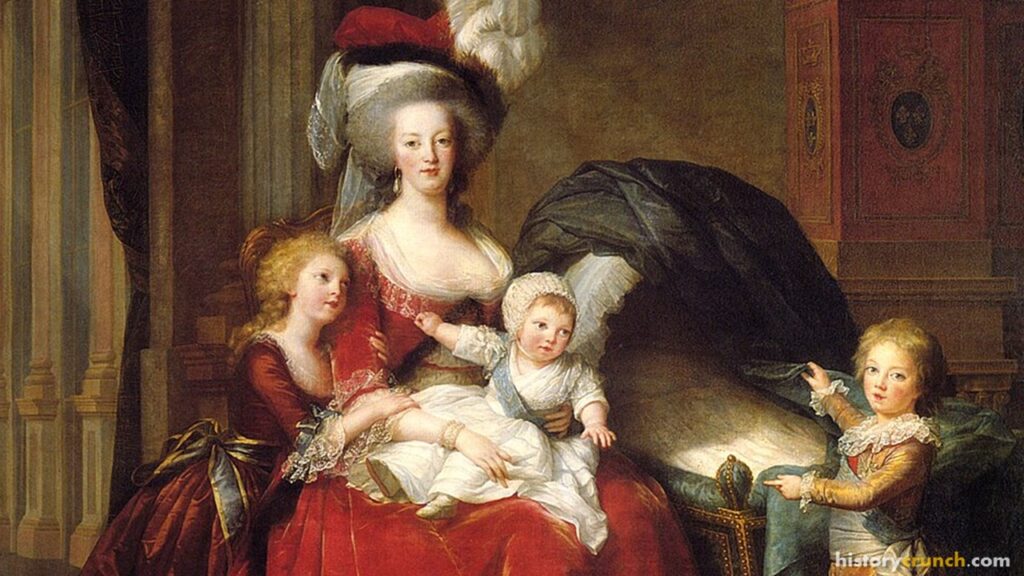
Marie Antoinette had been in prison for fourteen months, separated from her son, when she was tried on October 12th and 13th, 1793 for treason and for conspiring with Austria. The prosecution also accused her of abusing her son, a charge she refused to answer except to appeal to every mother in the room. She was condemned in the early hours of the 16th and taken to the scaffold that afternoon in an open cart, her hair cut short, aged thirty-seven.
LEARN MORESHOW LESSwhy it matters · key numbers · 1 key figurePOLITICALThe queen was tried for what she had actually done, corresponding with the enemy, and convicted with the help of accusations that were invented. Her death removed the last argument for a settlement with Austria and made her, in the century that followed, the revolution's most famous victim.
In the autumn of 1793 a campaign against Christianity spread from the provinces to Paris. Churches were closed and their silver taken for the war, streets and towns named after saints were renamed, and priests were pressed to resign and to marry. On November 10th, 1793 a Festival of Reason was held in Notre-Dame, with an actress as the goddess of Liberty on a mountain built in the nave. Robespierre disliked all of it and said atheism was aristocratic.
LEARN MORESHOW LESSwhy it matters · key numbers · 1 key figureRELIGIONThe campaign gave the counter-revolution its best recruiting argument and made enemies of villages that had gained land in 1789. It is also the reason Robespierre invented a state religion of his own the following June, which was one of the things his enemies used to destroy him.
The enslaved people of Saint-Domingue had risen in August 1791 and by 1793 controlled much of the richest colony in the world. On February 4th, 1794 three deputies from the colony, one of them formerly enslaved, arrived in Paris, and the Convention voted that slavery was abolished in all the colonies and that every man living there was a French citizen with all the rights of the constitution. The deputies embraced in the hall.
LEARN MORESHOW LESSwhy it matters · key numbers · a debateSOCIALFor eight years the Declaration of 1789 had not applied to the people France owned. This decree made it apply, and it is the revolution's furthest reach. Napoleon reversed it in 1802 and sent an army to retake Saint-Domingue; the army lost, and the colony became Haiti in 1804.
Did the Convention free the enslaved, or accept what they had already done?
The decree was a principled act by an assembly applying its own Declaration, and no other country abolished slavery in its colonies for another thirty years.
The rising had already made slavery unenforceable and France needed the colony's fighters against Britain and Spain. The Convention ratified a fact it could not reverse.
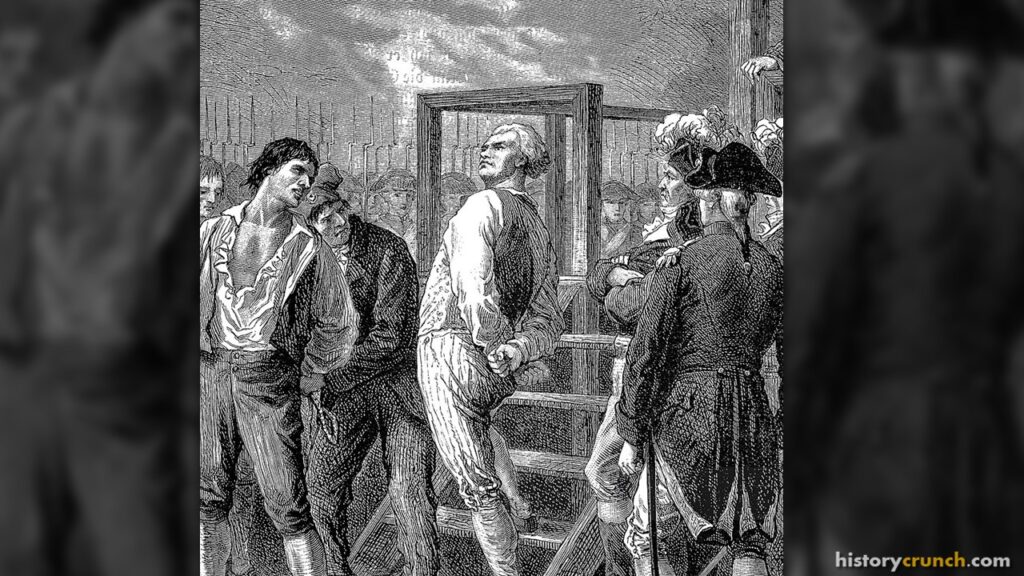
By the spring of 1794 the Committee was destroying both its flanks. In March it executed Hebert and the leaders of the sans-culottes for demanding more terror. Then it turned on Danton, who with Camille Desmoulins had been arguing in print for clemency and an end to the executions. He was arrested on March 30th, tried from April 3rd to 5th in a trial where the accused were forbidden to speak in their own defense, and guillotined on April 5th, 1794. He told the executioner to show his head to the people, it is worth seeing.
LEARN MORESHOW LESSwhy it matters · key numbers · a sourcePOLITICALWith Danton dead there was nobody left who could stand up to Robespierre and nobody left to defend him four months later. Killing the left in March and the right in April meant the Committee had run out of enemies except itself.
IN THEIR OWN WORDS“Show my head to the people. It is worth seeing.”
Georges Danton, on the scaffold, April 5th, 1794
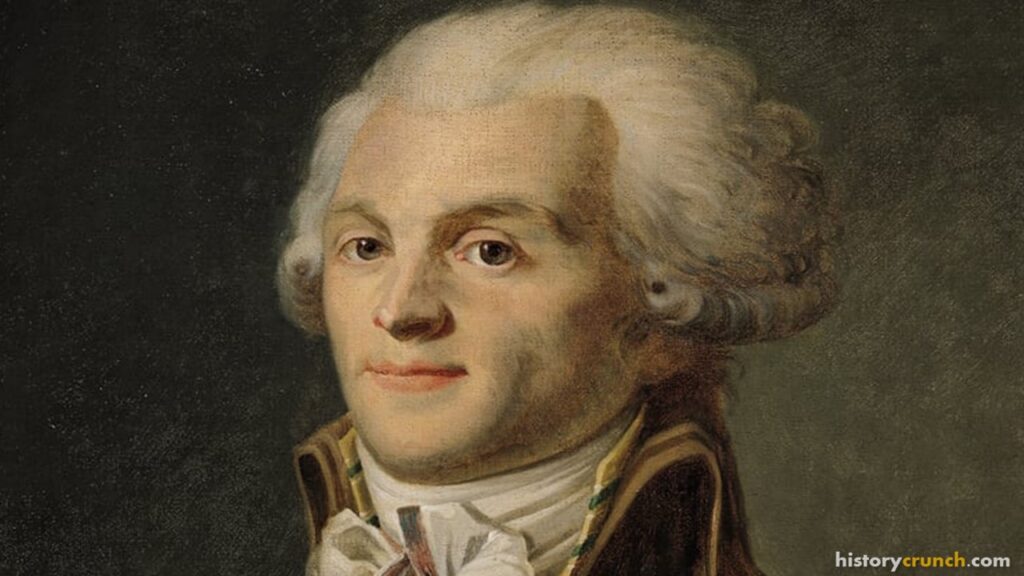
Robespierre was born at Arras in 1758, orphaned young, a provincial lawyer who had argued against the death penalty in 1791 and was called the Incorruptible because he could not be bought. Elected to the chair of the Convention on June 4th, 1794, Robespierre staged the Festival of the Supreme Being on June 8th: a procession from the Tuileries to an artificial mountain on the Champ de Mars, with Robespierre in a sky-blue coat carrying flowers, leading France in the worship of a god he had legislated into existence a month before.
LEARN MORESHOW LESSwhy it matters · key numbers · 1 key figureRELIGIONDeputies walking behind him were heard to say he was going too far. The festival made him look like a priest and a king at once, and it is the moment many historians date his fall from. Two days later he brought in the law that removed the right to a defense.
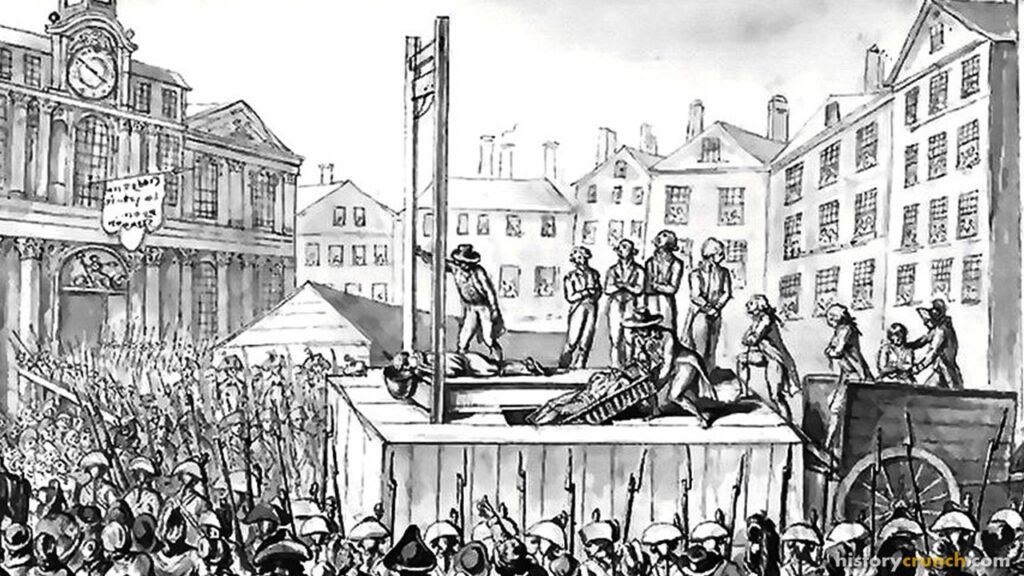
The law of June 10th, 1794 redefined enemies of the people so broadly that spreading false news or depraving morals qualified, removed defense counsel and witnesses, and left the Tribunal two verdicts: acquittal or death. In the seven weeks that followed, about 1,400 people were executed in Paris, more than in the previous fourteen months. The carts went to the guillotine daily and the machine was moved twice because of the smell.
LEARN MORESHOW LESSwhy it matters · key numbersPOLITICALThis is the Great Terror, and it is the part that had no military excuse: the armies were winning. When the Convention realized the law could be used against deputies as easily as against shopkeepers, its members began to count the days until it was used on them.
On June 26th, 1794 the French army beat the Austrians at Fleurus in what is now Belgium, using among other things an observation balloon, the first time an aircraft was used in war. The victory opened Belgium to France and ended the invasion scare that had justified emergency government for a year. The armies raised by the levee en masse were now winning on every front.
LEARN MORESHOW LESSwhy it matters · key numbersMILITARYThe Terror had been sold as the price of survival. Once France was safe, the argument for it was gone, and the men who had voted for it began to wonder why it was getting worse. Thermidor comes one month after Fleurus, and that is not a coincidence.
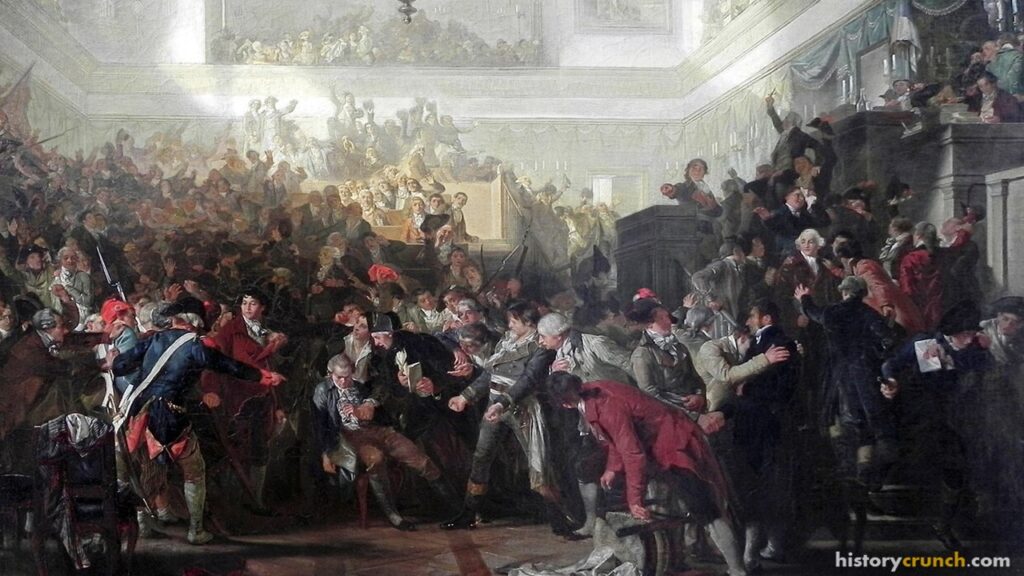
On July 26th, 1794 Robespierre told the Convention that there was a conspiracy of traitors within the government and refused to name them, which left every deputy thinking it might be him. The next day, 9 Thermidor in the new calendar, he was shouted down, and a voice called for his arrest. He was taken with his brother and Saint-Just. Freed by the Paris commune that evening, he sat in the Hotel de Ville doing nothing while the Convention declared him an outlaw, and troops arrived at two in the morning.
LEARN MORESHOW LESSwhy it matters · key numbers · 1 key figurePOLITICALRobespierre fell because he threatened the men who had done the Terror with him. It was not a rising of the moderates but a coup by frightened Jacobins, and it ended the Terror by accident: once the killing stopped, nobody could restart it.
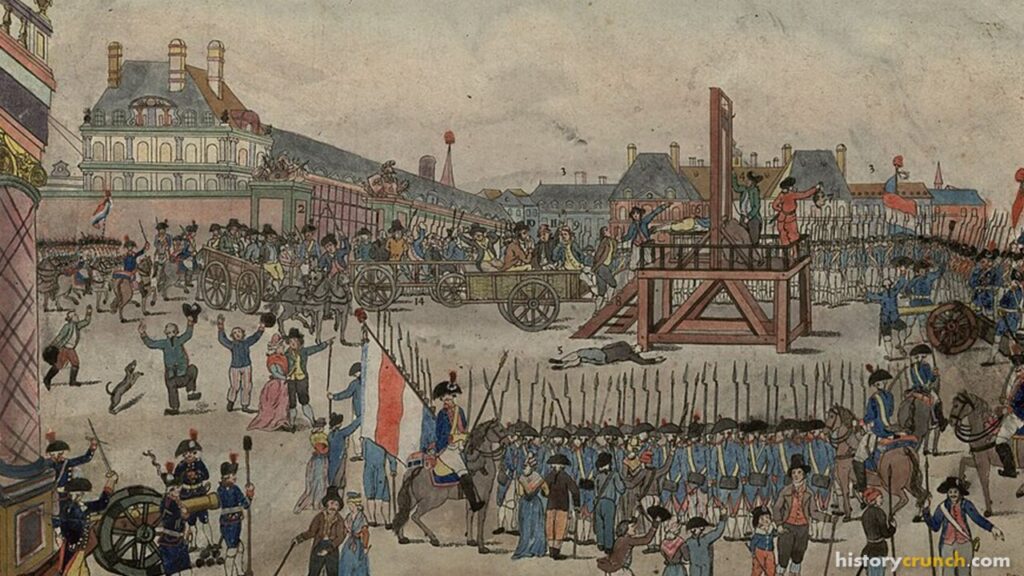
His jaw shattered by a pistol shot, whether his own or a gendarme's is still argued, Robespierre lay on a table in an anteroom of the Committee for most of July 28th, 1794 while people came to look at him. As an outlaw he needed no trial: his identity was confirmed and he was taken to the scaffold that evening with twenty-one others. The executioner tore off the bandage holding his jaw before the blade fell. The crowd cheered for fifteen minutes.
LEARN MORESHOW LESSwhy it matters · key numbers · a debatePOLITICALThe Terror ended with the man most identified with it, though he had not invented it and had not run it alone. Ninety more of his supporters were executed over the next two days, and then the killing simply stopped. What no one could agree on afterwards was whether the Terror had saved the republic or nearly destroyed it.
Was Robespierre a tyrant or a man trapped by a war?
He signed the warrants, defended the Law of Prairial and refused to name the traitors he accused; a man who kills without trial in the name of virtue is a tyrant whatever his intentions.
He was one of twelve on a committee, held no army and no personal power, argued against the death penalty in 1791 and against the war in 1792, and died the moment the Convention voted. The Terror was a policy of a frightened assembly, not one man's rule.
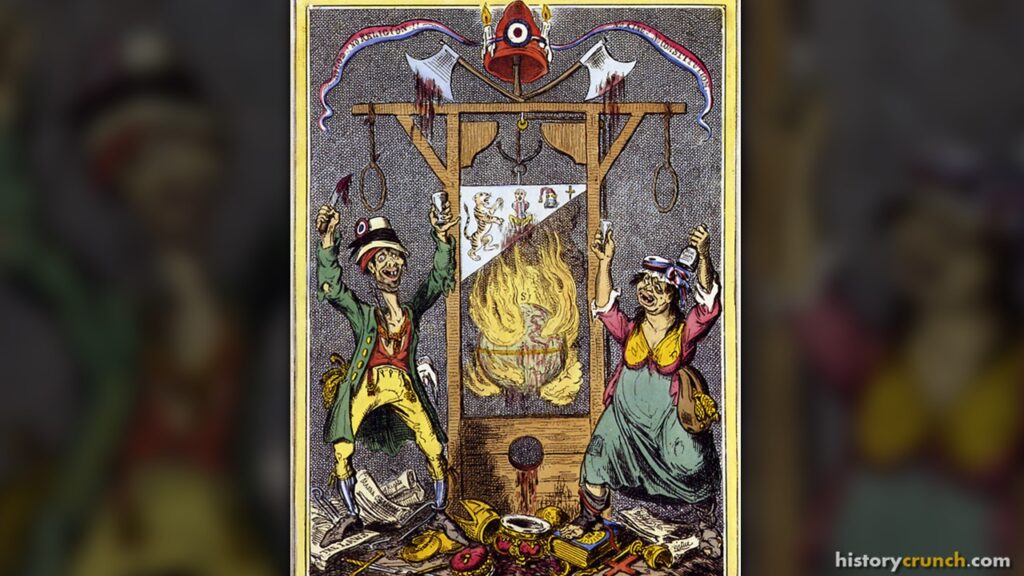
The courts of the Terror passed about 17,000 death sentences across France in ten months, of which about 2,600 were in Paris. Perhaps another 10,000 died in prison without trial, and several thousand more were shot or drowned without any court at all, mostly in Lyon, Nantes and the west. About 85 percent of those executed were commoners. The war in the Vendee killed about 170,000 people, most of them civilians on both sides.
LEARN MORESHOW LESSwhy it matters · key numbersSOCIALThe numbers matter because both the revolution's defenders and its enemies have spent two centuries choosing which ones to quote. The honest summary is that the Terror killed tens of thousands, that most of its victims were poor, and that the civil war in the west killed many more than the guillotine ever did.
What followed the Terror was five years of a republic that nobody loved and nobody could replace. The Jacobin Club was shut, the hungry sections of Paris rose twice and were broken by regular troops, and a new constitution divided power so carefully that nothing could be decided. The Directory annulled an election with soldiers in 1797 and survived on the loyalty of its generals, one of whom had cleared a royalist rising with cannon and then conquered Italy. On 18 Brumaire 1799 that general took the government, and the revolution ended where a hundred revolutions have ended since.
After Thermidor the men who had made the Terror spent a year proving they had been against it. The Revolutionary Tribunal was reformed, the Law of Prairial repealed, suspects released. Young men of property called the gilded youth broke up Jacobin meetings with sticks, and on November 12th, 1794 the club that had given the revolution its most famous name was closed for good. In the south in 1795 a white terror killed several hundred Jacobins, some in prison massacres.
LEARN MORESHOW LESSwhy it matters · key numbersPOLITICALThe Thermidorians ended the Terror and then ran one of their own in the other direction. What they could not do was find a settlement: with the Jacobins destroyed and the royalists growing, the republic was left balancing between two enemies, which is the whole story of the Directory.
The winter of 1794 to 1795 was the worst of the century: the price controls had been abolished, the assignat was collapsing, and people were freezing and starving in the streets of Paris. On April 1st, 1795, 12 Germinal, crowds invaded the Convention demanding bread and the Constitution of 1793. They were pushed out. On May 20th, 1 Prairial, they came back armed, killed a deputy and put his head on a pike in front of the president. This time regular troops cleared the faubourgs and disarmed them.
LEARN MORESHOW LESSwhy it matters · key numbersSOCIALThese were the last risings of the sans-culottes, and they lost. From Prairial the Paris crowd is out of French politics for thirty-five years, and the fights that decide the republic are between politicians and soldiers.
The Constitution of Year III, adopted on August 22nd, 1795, was designed by men who had seen where a single assembly led. It gave France two chambers, a five-man executive called the Directory renewed one member a year, and a vote restricted to property owners again. The Convention then decreed that two thirds of the new deputies had to be chosen from its own members, so that royalists could not simply win an election.
LEARN MORESHOW LESSwhy it matters · key numbersPOLITICALThe two-thirds decree is the Directory's birthmark: a republic that had to rig its first election to survive. The design made deadlock normal, and when the councils and the directors disagreed the only way to settle it was troops.
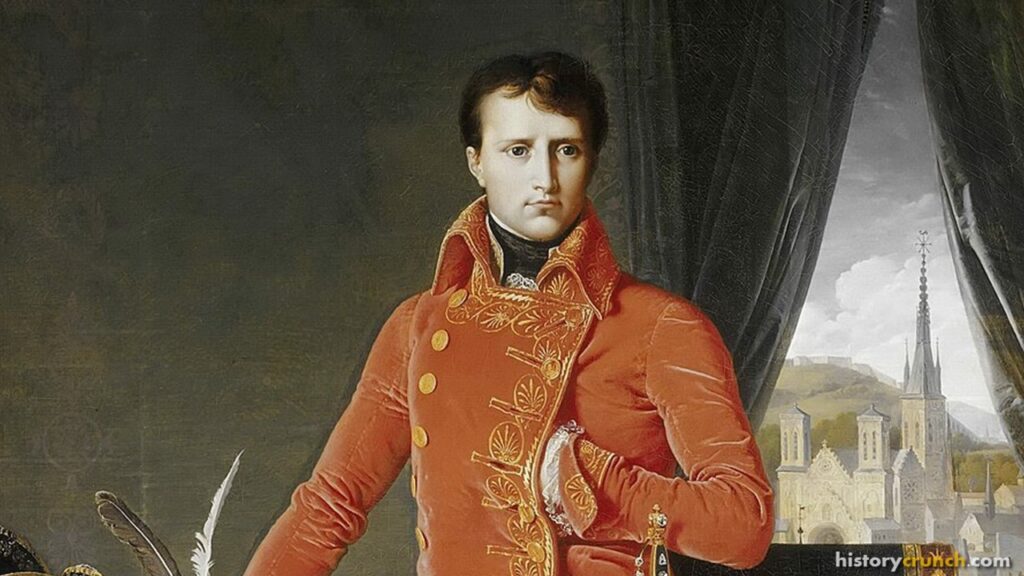
The two-thirds decree brought the royalist sections of Paris into the street on October 5th, 1795, 13 Vendemiaire, about 25,000 of them against 5,000 troops. The Convention gave the job to Napoleon Bonaparte, who had guns brought up overnight and fired grapeshot into the columns on the steps of the church of Saint-Roch. About 300 died. He was made commander of the Army of the Interior and, five months later, of the Army of Italy.
LEARN MORESHOW LESSwhy it matters · key numbers · 1 key figureMILITARYThe republic had just been saved from its own citizens by an army officer, and everybody noticed. Bonaparte's career from here is a straight line: Italy, Egypt, and then the day he did not need an invitation.
The Convention dissolved itself on October 26th, 1795 after three years, and the Directory took office on November 2nd. It inherited a treasury that was empty, paper money worth almost nothing, roads full of bandits, a war on several fronts and a population exhausted by six years of revolution. Its five directors were competent enough and trusted by nobody: the wealthy thought them Jacobins, the poor thought them thieves.
LEARN MORESHOW LESSwhy it matters · key numbersPOLITICALThe Directory lasted four years, longer than any revolutionary government before it, and is remembered as a failure because of how it ended. It did keep the republic alive, win the war and stabilize the currency, and it handed a functioning army to the man who used it against them.
Given command on March 2nd, 1796 of a ragged, unpaid army on the Italian border, Bonaparte told it that he would lead it into the most fertile plains in the world. He knocked Sardinia out of the war by May, beat the Austrians repeatedly through 1796 and at Rivoli in January 1797, and negotiated the Treaty of Campo Formio himself, which the government in Paris had to accept. He sent home paintings, statues and money the Directory badly needed.
LEARN MORESHOW LESSwhy it matters · key numbers · 1 key figureMILITARYIn Italy Bonaparte learned that a general who wins and pays his own way does not have to obey. He signed treaties without authority, ran a newspaper about himself, and by 1797 was the most famous man in France while the directors were the least popular.
The elections of the spring of 1797 returned a royalist majority to the councils, legally. On September 4th, 1797, 18 Fructidor, three of the five directors used troops sent by Bonaparte from Italy to surround the chambers, annulled the results in 49 departments, and deported 53 deputies and two directors to the fever colony of Guiana. The press was censored and the emigres and refractory priests were hunted again.
LEARN MORESHOW LESSwhy it matters · key numbers · 1 key figurePOLITICALAfter Fructidor nobody could pretend the republic ran on votes. It had used the army to overturn an election, and once that is done the only question left is which general does it next, and for whom.
Unable to invade Britain, the Directory agreed to Bonaparte's plan to take Egypt and threaten the route to India, partly because it wanted him out of France. He sailed from Toulon on May 19th, 1798 with 36,000 men and 167 scholars and scientists. He beat the Mamluks near the pyramids in July; ten days later Nelson destroyed the French fleet at Aboukir Bay and the army was stranded. Bonaparte left it there in August 1799 and sailed home.
LEARN MORESHOW LESSwhy it matters · key numbers · 1 key figureMILITARYMilitarily Egypt was a failure and Bonaparte abandoned his own army to it. Politically it was perfect: the news that reached France was of pyramids and victories, and he arrived in October 1799 as the one man who still looked like a winner.
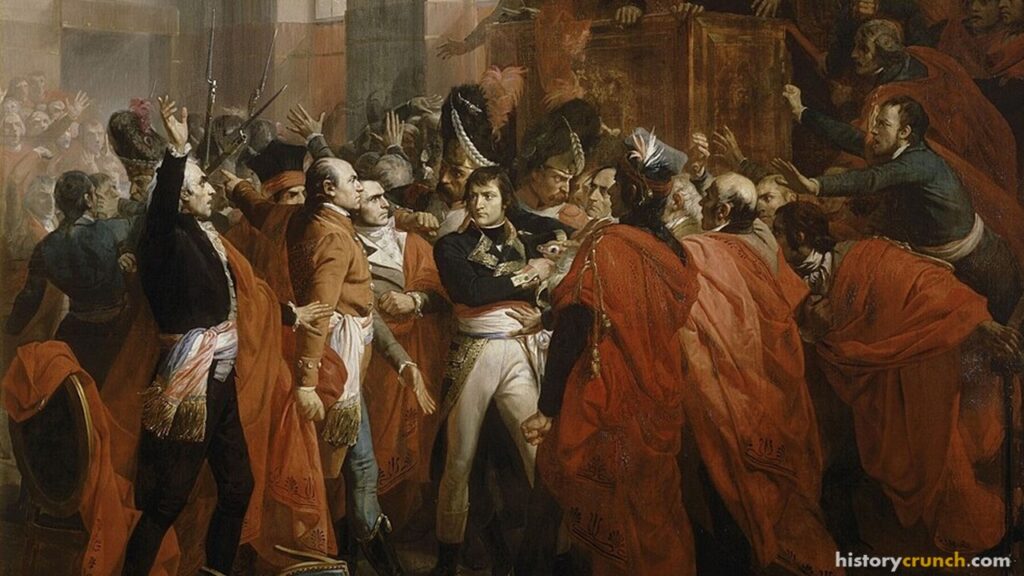
The plot was Sieyes', the same man who had written What Is the Third Estate? ten years before; he wanted a soldier and chose Bonaparte. On November 9th, 1799, 18 Brumaire, the councils were moved out of Paris on a false report of a Jacobin plot. The next day Bonaparte walked into the Council of Five Hundred and was shouted down and jostled; his brother Lucien called in the grenadiers, who cleared the hall. That evening a rump voted the Directory out of existence.
LEARN MORESHOW LESSwhy it matters · key numbers · a debatePOLITICALWithin six weeks a new constitution made Bonaparte First Consul with the real power; within five years he was Emperor. The revolution that began with a man asking what the Third Estate was ended with the same man handing France to a general.
The Napoleonic Era hub takes the story on from here: Austerlitz, Russia, Waterloo and the Congress of Vienna.
Did the revolution fail?
It ended with a dictator, a censored press and a restored slavery, and in 1814 a Bourbon king came back. Ten years of killing to arrive where it started.
Feudalism, the estates, seigneurial dues, the tithe and noble privilege never came back, and the Bourbons who returned had to rule with a charter. The revolution lost its politics and kept its society.
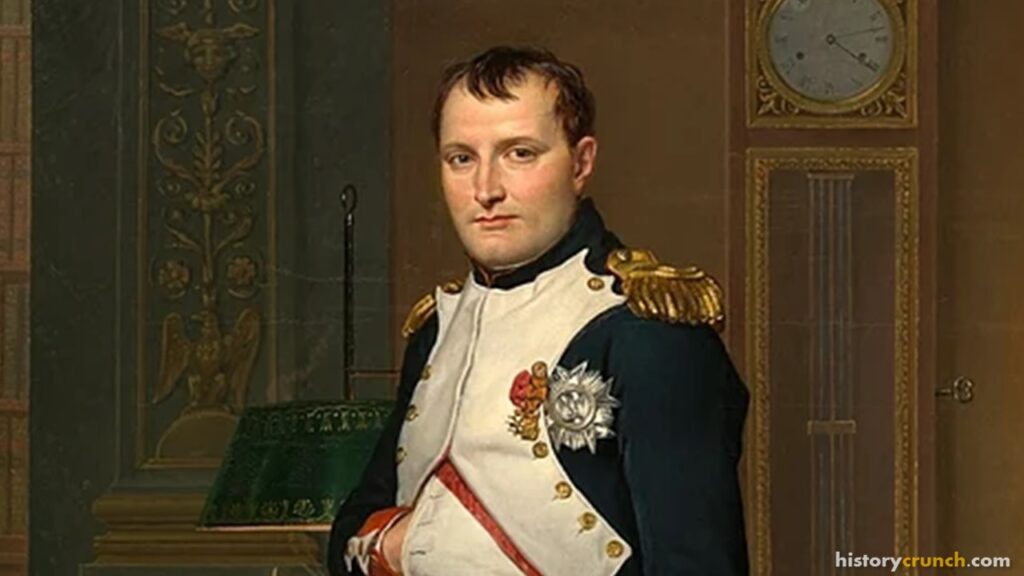
On March 21st, 1804 France adopted a single civil code to replace the hundreds of local law systems of the old regime. It kept the core of 1789: equality before the law, property rights, civil marriage and divorce, careers open to talent, no feudal dues and no privileges of birth. It also put wives under the authority of their husbands and, two years earlier, Napoleon had restored slavery in the colonies. Two months later he crowned himself Emperor.
LEARN MORESHOW LESSwhy it matters · key numbers · a sourcePOLITICALThis is what survived. The Code went wherever French armies went and is the ancestor of the civil law of much of Europe, Latin America and beyond. Napoleon said at the end of his life that his real glory was not his forty battles but his civil code, which nothing would destroy.
IN THEIR OWN WORDS“My real glory is not that I have won forty battles. What nothing will destroy, what will live for ever, is my Civil Code.”
Napoleon Bonaparte, in exile on Saint Helena

I'm a passionate history and geography teacher with over 15 years of experience working with students in the middle and high school years. I have an Education Degree with a focus in World History. I have been writing articles for History Crunch since 2015 and love the challenge of creating historical content for young learners!

I'm the founder of History Crunch, which I first began in 2015 with a small team of like-minded professionals. I have an Education Degree with a focus in Social Studies education. I spent nearly 15 years teaching history, geography and economics in secondary classrooms to thousands of students. Now I use my time and passion researching, writing and thinking about history education for today's students and teachers.

K.L. is a content writer for History Crunch. She is a fantastic history and geography teacher that has been helping students learn about the past in new and meaningful ways since the mid-2000s. Her primary interest is Ancient History, but she is also driven by other topics, such as economics and political systems.
To cite this timeline as a source, use one of the formats below.
MLA: Beck, E., et al. “French Revolution Timeline.” HistoryCrunch, 12 September 2026, https://historycrunch.com/french-revolution-timeline/.
APA: Beck, E., Millar, B., & Woida, K.L. (2026). French Revolution Timeline. HistoryCrunch. https://historycrunch.com/french-revolution-timeline/
Chicago: Beck, E., B. Millar, and K.L Woida. “French Revolution Timeline.” HistoryCrunch. September 12, 2026. https://historycrunch.com/french-revolution-timeline/
© History Crunch
France in 1789 was the richest country in Europe, with the largest army and the most admired culture. Why did it collapse?
Historians have argued for two centuries about whether the revolution was caused by class or by accident. The older view saw a rising middle class breaking the hold of a feudal nobility. Revisionists answered that the nobility and the bourgeoisie were not two hostile classes but one propertied elite, and that what broke France was a fiscal crisis badly handled by a weak king. Most now hold that the crisis was structural but the collapse was not inevitable: the same debts in Britain produced a budget, not a revolution.
The revolution began because the state was bankrupt. Ten years later it was still bankrupt. What happened to the money?
Was the assignat a reasonable emergency measure or the revolution's worst self-inflicted wound? Defenders point out that it funded the war that saved the republic when no tax system existed to do it. Critics note that the inflation destroyed the savings of exactly the small property owners the revolution depended on, and that the hunger it caused is what broke the alliance between the politicians and the Paris crowd.
In May 1789 France was an absolute monarchy. By Christmas it had a national assembly, no feudalism and a declaration of rights. How did one year do that?
Was 1789 a revolution from below or from above? One account gives the year to the deputies at Versailles, lawyers arguing a constitution into existence. Another gives it to the crowd: without July 14th the Assembly would have been dissolved, and without the Great Fear the nobles would not have surrendered anything on August 4th. The honest answer is that neither could have done it without the other, and that they did not trust each other for a moment.
France was governed by five different bodies between 1789 and 1799 and wrote three constitutions. Why did none of them last?
Was the revolution's instability a failure of design or of circumstances? Some historians blame the texts: a king given a veto he was certain to use, an assembly that barred its own experienced members, an executive of five who could not act. Others answer that no constitution survives a foreign invasion, a civil war and hyperinflation at once, and that the remarkable thing is that the republic survived at all.
The Bastille held seven prisoners and was about to be demolished anyway. Why is the day France's national holiday?
Was the storming of the Bastille heroic or squalid? It was both: a crowd risking cannon fire to arm itself against a coup, and the same crowd killing the governor after he surrendered and parading his head on a pike. The French Revolution offers this choice on almost every day of its calendar, which is why two centuries later people still argue about whether to celebrate it.
Six times between 1789 and 1795 the people of Paris came into the street and changed who governed France. The seventh time they were shot. What changed?
Was the Paris crowd the engine of the revolution or its tyrant? Without it there is no Bastille, no republic and no Terror; with it, the deputies elected by all of France could be dictated to by the armed sections of Paris. The Girondins made exactly this argument in 1793 and were guillotined for it, and every ruler of France since, from Napoleon to the presidents of today, has thought about what happens when Paris is in the street.
Louis XVI accepted a constitution, kept his throne for two years after the Bastille and was personally popular in 1790. How did he end on a scaffold?
Historians divide on whether Louis XVI was a victim or the author of his own end. One view holds that he was a decent, limited man destroyed by forces nobody could have controlled. Another points out that he agreed to the constitution while writing to foreign courts asking them to destroy it, and that a constitutional monarch who plots with the enemy in wartime has few defenders in any country.
Marie Antoinette was blamed for the bankruptcy of France, for its defeats and for its famine. How much of what the revolution believed about her was true?
Was the trial of Marie Antoinette justice or theater? She had written to Austria while France was at war with it, which is treason in any state. But the prosecution also accused her of abusing her son, a charge invented and coached, and the court that heard it was not one that acquitted. Historians generally hold that the verdict was defensible and the trial was not one.
The Declaration of 1789 says men are born free and equal in rights. Which men, and what about everybody else?
Did the revolution betray its own Declaration, or was the Declaration always meant to be read narrowly? Some historians see a straight line from equal rights to the Terror: once the nation has a single will, disagreeing with it is treason. Others argue the opposite, that the Terror was a wartime suspension and the Declaration survived it, coming back in 1795, 1848 and 1946, and that the promise outlived everyone who broke it.
In 1789 France was the eldest daughter of the Church. By 1794 its cathedral was a Temple of Reason and priests were in hiding. How did that happen, and what did it cost?
Was the attack on the Church necessary or self-defeating? Defenders argue that a state paying the clergy could not leave a foreign pope appointing them, and that the wealth of the Church was the only asset France had. Critics answer that the revolution turned millions of devout peasants who had gained from 1789 into enemies, handed the counter-revolution a mass base it could never have built on its own, and got a civil war for a reform it could have delayed.
The revolution ended with a dictator, and by 1815 a Bourbon king was back in Paris. So what, if anything, did it actually change?
Two centuries on, French historians still split over whether 1789 was the birth of modern liberty or the birth of modern tyranny. The republican tradition sees in it the rights of man, the citizen and the nation. The conservative tradition, which begins with Edmund Burke, sees an abstract idea imposed on a living society at the price of a hundred thousand lives, and it traces a straight road from the general will to the guillotine. Most working historians now treat both as descriptions of the same ten years.
The men who abolished torture in 1789 were arresting people for their opinions by 1793. How does that happen in four years?
Was the Terror caused by the war or by the revolution's own ideas? The circumstantial view says a republic invaded on every frontier with a civil war behind it would have used emergency powers whoever was in charge, and that the Terror ended when the emergency did. The ideological view answers that the Terror was worst after the war was won, that its language was about virtue rather than survival, and that a politics claiming to speak for the general will always treats opponents as traitors.
The Terror was at its worst in June 1794 and over by the end of July. What ended it?
Was Thermidor a return to principle or a panic? Those who made it claimed afterwards to have saved the republic from a tyrant, but almost every one of them had voted for the Terror and several had run it in the provinces. The honest reading is that the Terror ended when it threatened the people administering it, which is an argument about how emergency powers end in general, and not only in France.
France declared war on Austria in April 1792 and was still fighting in 1815. How did that war shape the revolution at home?
Was the war of 1792 a war of defense or of conquest? France declared it, but on a king who was hoping to lose and a coalition that had promised to destroy Paris. By 1795 French armies were annexing Belgium and setting up sister republics, which looks like conquest whatever the origin. Historians generally treat 1792 as defensive in its circumstances and the wars after 1794 as something else.
The largest killing of the French Revolution did not happen in Paris and had almost nothing to do with the guillotine. What happened in the west?
Since the 1980s some historians, led by Reynald Secher, have argued that the Vendee was the first modern genocide: a region ordered destroyed by a government, women and children included. Others answer that the killing, brutal as it was, was aimed at ending a rebellion in arms, that rebel atrocities were also considerable, and that applying a twentieth-century word to it obscures more than it explains. The argument is unusually bitter because it is also an argument about how France should remember 1789.
In 1791 Robespierre asked the Assembly to abolish capital punishment. Three years later he was the most powerful man in a government that executed 1,400 people in seven weeks. What changed?
No figure in modern history divides historians more. To one tradition Robespierre is the first modern tyrant, the man who invented government by ideology and killing. To another, largely French and republican, he is the democrat who defended the poor, opposed the war and the death penalty, held no army and no personal power, and died the moment a vote went against him. Both sides are arguing about the same documented facts.
In 1793 Napoleon Bonaparte was an unknown captain. Six years later he was the government of France. How?
Was Napoleon the revolution's heir or its undertaker? He kept equality before the law, the abolition of feudalism and the land settlement, and spread them across Europe; he also ended free elections, censored the press, restored slavery and made himself an emperor. French opinion has never settled it, which is why his tomb is a national monument and his name is still an argument.
Two of the revolution's most powerful men held no office for most of their careers. What made a journalist and a club orator more dangerous than a minister?
Is the revolutionary press to blame for the revolutionary violence? Marat called for heads by the hundred and got them, and the September Massacres followed three years of naming enemies in print. But the same press carried the Declaration to every town in France and made a national politics possible for the first time. The argument about whether free expression includes incitement began here, and has not finished.
No question matches that word.
Research question 1France in 1789 was the richest country in Europe, with the largest army and the most admired culture. Why did it collapse?
Research question 2The revolution began because the state was bankrupt. Ten years later it was still bankrupt. What happened to the money?
Research question 3In May 1789 France was an absolute monarchy. By Christmas it had a national assembly, no feudalism and a declaration of rights. How did one year do that?
Research question 4France was governed by five different bodies between 1789 and 1799 and wrote three constitutions. Why did none of them last?
Research question 5The Bastille held seven prisoners and was about to be demolished anyway. Why is the day France's national holiday?
Research question 6Six times between 1789 and 1795 the people of Paris came into the street and changed who governed France. The seventh time they were shot. What changed?
Research question 7Louis XVI accepted a constitution, kept his throne for two years after the Bastille and was personally popular in 1790. How did he end on a scaffold?
Research question 8Marie Antoinette was blamed for the bankruptcy of France, for its defeats and for its famine. How much of what the revolution believed about her was true?
Research question 9The Declaration of 1789 says men are born free and equal in rights. Which men, and what about everybody else?
Research question 10In 1789 France was the eldest daughter of the Church. By 1794 its cathedral was a Temple of Reason and priests were in hiding. How did that happen, and what did it cost?
Research question 11The revolution ended with a dictator, and by 1815 a Bourbon king was back in Paris. So what, if anything, did it actually change?
Research question 12The men who abolished torture in 1789 were arresting people for their opinions by 1793. How does that happen in four years?
Research question 13The Terror was at its worst in June 1794 and over by the end of July. What ended it?
Research question 14France declared war on Austria in April 1792 and was still fighting in 1815. How did that war shape the revolution at home?
Research question 15The largest killing of the French Revolution did not happen in Paris and had almost nothing to do with the guillotine. What happened in the west?
Research question 16In 1791 Robespierre asked the Assembly to abolish capital punishment. Three years later he was the most powerful man in a government that executed 1,400 people in seven weeks. What changed?
Research question 17In 1793 Napoleon Bonaparte was an unknown captain. Six years later he was the government of France. How?
Research question 18Two of the revolution's most powerful men held no office for most of their careers. What made a journalist and a club orator more dangerous than a minister?